No, therefore a client of ours has to hire it personally on their behalf. These insurances are not expensive and you can get them easily. Our travelers often have contracts with large international insurance companies or those from their home countries.
2. When is the best time to visit Vietnam?
Due to the terrain and geographical location, the climate in Vietnam is quite diverse from north to south.
When one area is wet, cold, or rainy, another may be sunny and dry. In our experience, the best time to travel to Vietnam is from October to April. More specifically, the best months are from October to November and mid-March to May, when the weather is pleasant, with little rainfall, conducive to a variety of tourist activities.
In July and August it is a bit hot (30-35 degrees), but Ha Long Bay is usually sunny. You'll also have the chance to see the northern mountains adorned with green or yellow rice fields and terraces that stretch as far as the eye can see. Meanwhile, in the south it's the rainy season, but the rains don't last all day, just an hour or two. The remaining days are sunny.
3. Do I need to be vaccinated to travel to Thailand?
Another topic that gets a lot of attention in Thailand's tourism is vaccination.
According to the latest announcements in October 2022, there is no mandatory vaccination to enter Thailand, including the Covid-19 vaccine. Only Argentines are exempt and need to be certified as a yellow fever vaccine to enter the country. Although not required, there are some major recommended vaccines, such as the hepatitis A, tetanus-diphtheria, and typhoid vaccine.
If you are still concerned about vaccination, you can consult the international vaccination center, your doctor, or the Thai embassy in your country for more information.
4. Do I need a visa to travel to Vietnam? If not, how can I get one?
If you are a citizen of the UK, France, Germany, Spain, Italy, Switzerland, Poland, the Czech Republic, Russia, Japan, South Korea, Norway, Sweden, Finland, Denmark, or Belarus, you can enter Vietnam visa-free for up to 45 days. Switzerland, Poland, and the Czech Republic have a special exemption from March 1 to December 31, 2025 for organized tours.
If you are from the US, Australia, Canada, or New Zealand, you must obtain a visa before arrival. The E-Visa (valid for up to 90 days) is the easiest option, available online in 3-5 days. Visa on Arrival (VOA) requires a pre-approval letter, or you can apply at a Vietnamese Embassy or Consulate.
To avoid issues, apply early, ensure your passport is valid for 6+ months, and have proof of onward travel. The E-Visa is recommended for convenience. Please contact us for visa assistance.
5. Can I make changes to the itinerary?
Yes, it is entirely possible to make changes to the provided itinerary. We specialize in private and tailor-made trips, and our advisors will be able to adjust the program according to your every wish.
6. What are the Cambodian visa requirements?
Travellers from the United States, Canada, the United Kingdom, Australia and most EU countries need a visa. You can either get a visa on arrival at the airport, currently 30 USD for a single-entry tourist visa allowing a stay of 30 days, or apply for an e-visa in advance at the official site evisa.gov.kh. Note that the e-visa is only valid at certain airports and land crossings, so check that your entry point is covered. Separately from the visa, every traveller must also submit the free Cambodia e-Arrival card online at arrival.gov.kh within seven days before arrival. The e-Arrival card is not a visa and does not replace one: you need both. Fees and rules change, so please check the official sites before you travel. Last checked: September 2026.
7. When is the best time to visit Cambodia?
The dry season, from mid-October to April, brings mild weather, clear skies and very little rain, and it is the easiest time for temple visits and travel between regions. The rainy season from May to September is still workable: showers are usually short and fall in the afternoon, the countryside is green, and there are fewer visitors at Angkor.
8. Can one reach Cambodia by air?
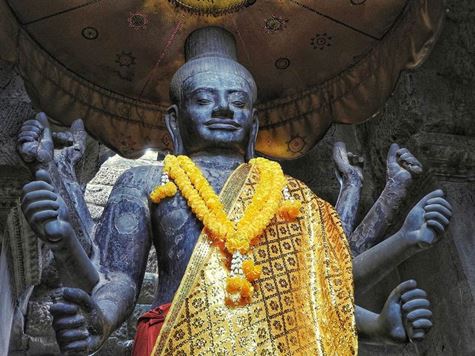
Yes, it is entirely possible to reach Cambodia by air. You can take a flight from Ho Chi Minh (or Hanoi) to Siem Reap and spend the rest of your journey exploring the magnificent Angkorian temples.
9. Can you provide me with more details about the night train?
Each train cabin is equipped with 4 soft berths. The amenities are located outside the cabins and are shared. The trains may experience vibrations and have a speed of only 50 to 60 km/hour. While the trains in our country are less comfortable than those in Europe, a night on the train will provide you with an experience of this type of local transportation.
10. Should we bring hiking shoes?
If your trip includes multiple days of hiking, you can bring hiking shoes. Otherwise, a good pair of sneakers will suffice.
11. What is the duration of the hikes offered in your tours?
The walks and hikes offered in our tours are of easy to moderate difficulty level and typically last for 3-5 hours per day. However, the duration and difficulty of the hikes depend on your fitness level. You can shorten or extend the duration of the hikes according to your preferences. This private program can be customized on-site.
12. Can we combine must-see sites and off-the-beaten-path excursions?
All our tours are private and tailor-made, and we can certainly customize the itinerary by combining must-see sites with off-the-beaten-path excursions. Feel free to let us know your preferences, and our advisors will be able to accommodate your every request.
13. What is the most beautiful region for hiking?
It's certainly the North, which comprises the Northeast and Northwest mountains. Located along the country's Laotian and Chinese borders, Northern Vietnam's mountains boast incredibly wild and breathtaking landscapes: limestone peaks and vast rolling hills as far as the eye can see, lush valleys with stunning terraced rice fields, winding roads and switchbacks on the mountain slopes. It's also the only region where the culture of minority ethnic groups remains strongly present: traditional villages, unique customs, colorful attire, and vibrant weekly markets. The region is a must-visit for nature enthusiasts, those interested in ethnic culture, and travelers looking to venture off the beaten path.
14. Which are the must-visit sites for a first exploration of the region?
Among the country's three regions, the North, the Central, and the South, it's the North that is the most beautiful and interesting. For your first exploration, don't forget to visit the ancient capital of Hanoi, the land-based Halong Bay in Ninh Binh, and, most importantly, Halong Bay on a cruise. If time allows, take a detour to the Northern mountains, such as Sapa or Pu Luong, to discover stunning landscapes and diverse, authentic cultures.
15. When to go to see the terraced rice fields?
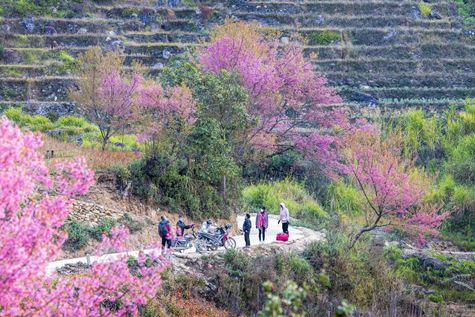
Terraced rice fields can be found in the Mai Chau, Pu Luong, Mu Cang Chai, and Sapa regions.
In Mai Chau and Pu Luong, there are two rice seasons each year: the first season is from February to May, and the second lasts from June to October.
As for Mu Cang Chai and Sapa, there is only one rice season per year, from May to September.
During the rest of the year, even though the fields may be empty, visits are still possible because these destinations not only feature rice fields but also pristine forests and, most importantly, ethnic villages with their traditional houses.




 Our team
 Our team
 Our team
 Our team