FITO Museum: Vietnamese Traditional Medicine Heritage
Located in Ho Chi Minh City, FITO Museum explores the history of traditional Vietnamese medicine through medicinal ingredients, preparation tools, historical documents and reconstructed medical spaces. Set inside an atmospheric wooden building, this private museum offers an accessible introduction to how traditional remedies were studied, prepared, stored and documented in Vietnam.
It is particularly suited to travellers interested in medicinal plants, old pharmacies, traditional craftsmanship and cultural attractions beyond the city’s most familiar landmarks.
Written by Oliver PHUNG (Tour Guide)
Updated on Jul 15, 2026
0 comment
Oliver Phung is a Northern Vietnam-based tour guide and blogger. His favorite topics to write about include cuisine, culture, travel, and under-the-radar experiences. Oliver possesses a deep, detailed understanding of the region, from the indigenous culture of the Hmong in the Northwest to the highland lifestyle of the Tay in the Northeast. Whether he is exploring ancient architecture or geological landscapes, he is always eager to share his insights with his readers.
Beyond his work at Kampá Tour, he produces specialized travel content on platforms such as Reddit, Instagram, LinkedIn, and various other publications.
Official name: FITO Museum of Traditional Vietnamese Medicine
Address: 41 Hoang Du Khuong Street, Hoa Hung Ward, Ho Chi Minh City
Opening hours: Daily from 8:30 am to 5:00 pm
Adult admission: VND 180,000
Reduced admission: VND 90,000 for students, senior visitors and children aged 2–15
Recommended visit duration: 60–90 minutes
Exhibition layout: 18 rooms across six floors
Collection: More than 3,000 objects related to Vietnamese traditional medicine
Best for: Travellers interested in Vietnamese culture, medicinal plants, old pharmacies, wooden architecture and specialist museums
Travel time from central District 1: Approximately 15–25 minutes, depending on traffic.
Opening hours, ticket prices and visitor services may change. Check the latest information before travelling to the museum.
Is FITO Museum worth visiting?
FITO Museum is worth visiting for travellers interested in traditional Vietnamese culture, medicinal plants, historical pharmacy practices or specialist museums.
As of July 2026, the museum held a rating of 4.4 out of 5 from more than 840 reviews on Tripadvisor, where it was ranked among the top attractions in Ho Chi Minh City and displayed Travelers’ Choice recognition.
Its collection shows how medicinal ingredients were identified and stored, which tools were used to prepare remedies and how medical knowledge was organised in different social settings, from public pharmacies to the imperial court.
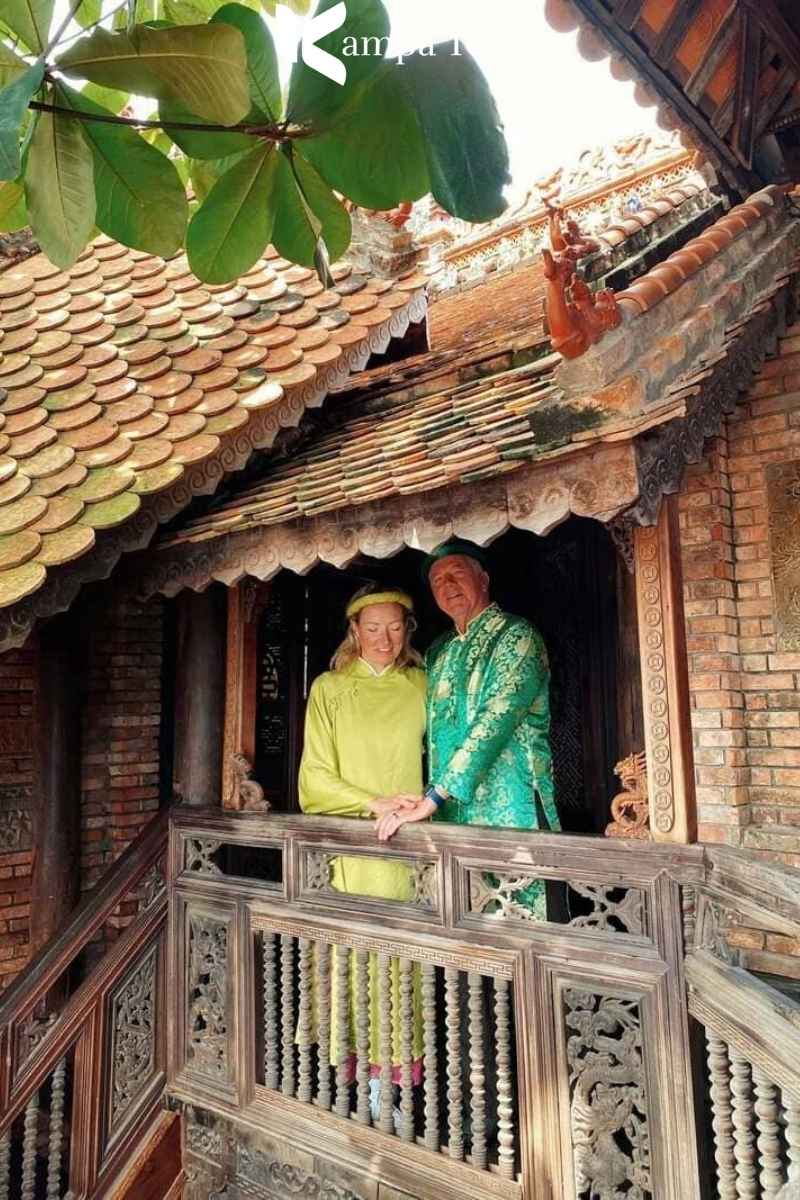
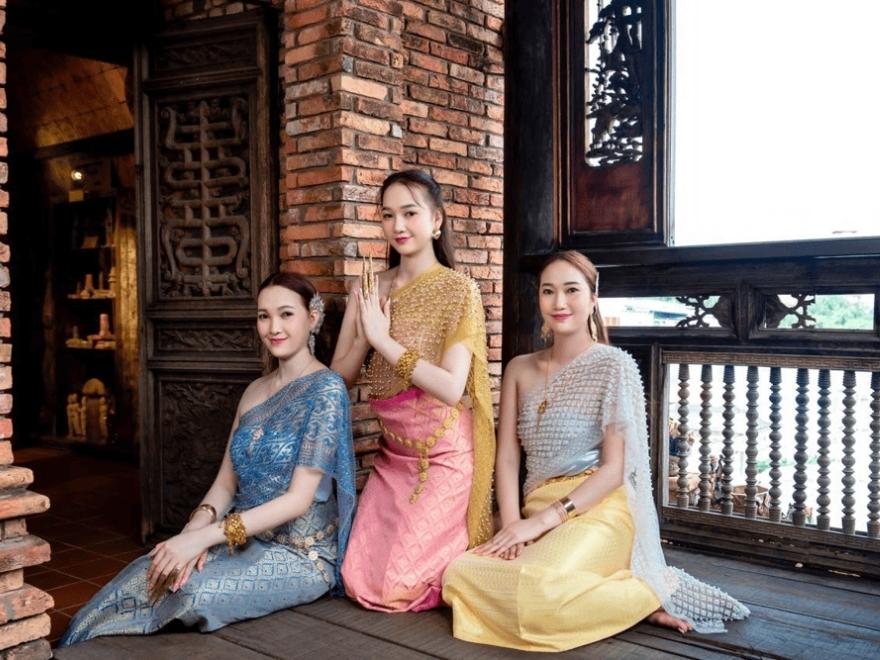
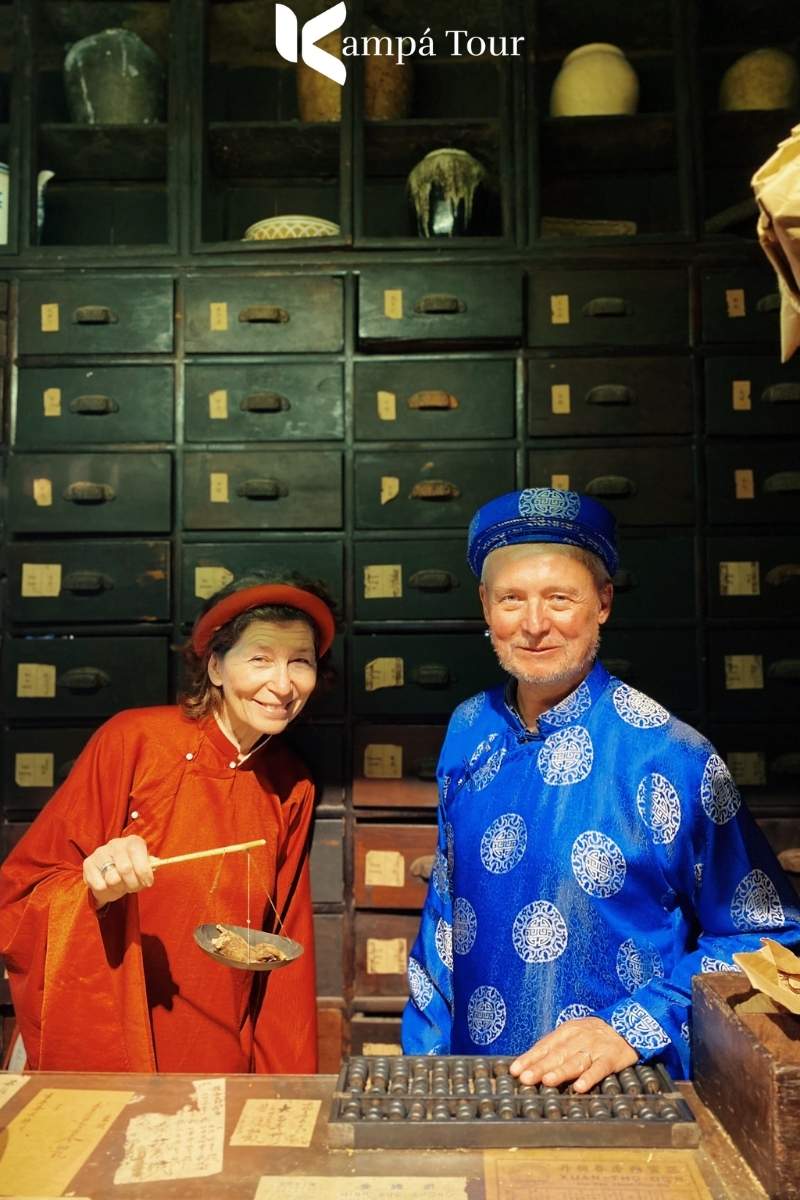
Images of tourists in traditional Vietnamese attire, capturing beautiful and lasting memories at the FITO Museum.
The museum’s wooden interiors give these objects a strong visual context. Cabinets, ceramic vessels, carved furniture and reconstructed working spaces make the subject easier to understand than an exhibition based only on documents and written explanations.
However, FITO Museum is not an essential attraction for every first-time visitor to Ho Chi Minh City. Its subject is specialised, and travellers spending only one day in the city may prefer to prioritise major historical landmarks.
The museum is best approached as a focused cultural experience rather than a general introduction to Vietnamese history.
What is FITO Museum?
FITO Museum, officially known as the FITO Museum of Traditional Vietnamese Medicine, is a private museum devoted to the history and development of traditional medicine in Vietnam.
It is also commonly referred to as the Museum of Traditional Vietnamese Medicine or simply FITO Museum.
The museum was created by Lê Khắc Tâm, whose work in the pharmaceutical industry and interest in traditional medicine led him to establish a dedicated cultural collection.
Construction began in 2003, and the museum officially opened to the public in 2007 after several years of preparation.
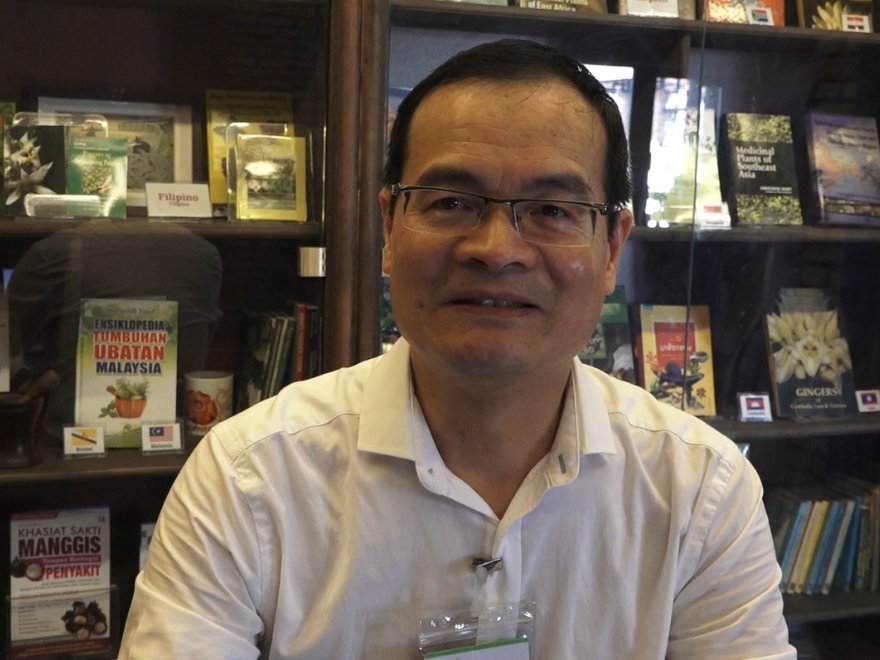
Dr. Le Khac Tam is the person who has dedicated 20 years to researching and building the museum.
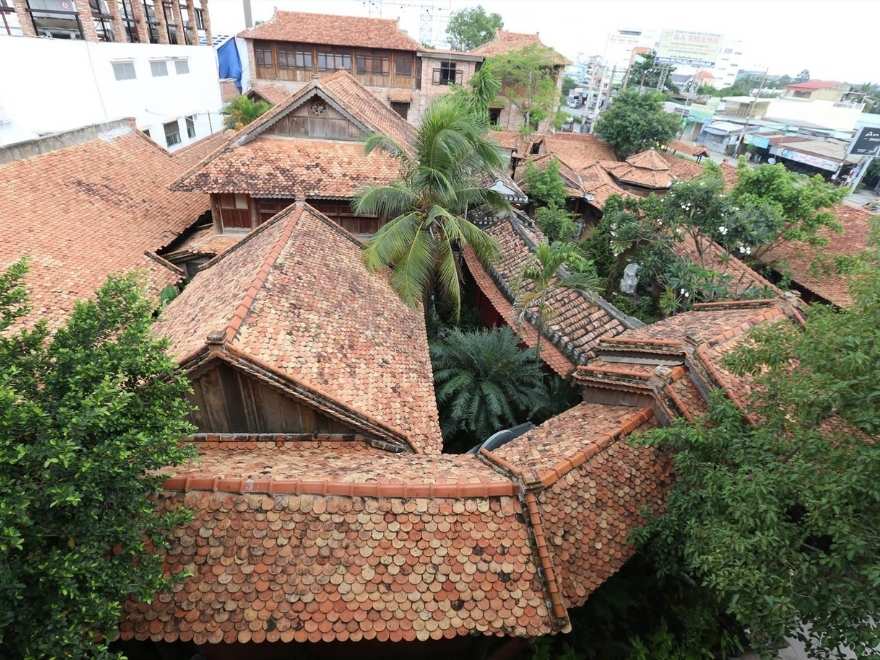
Photo taken by Kampá Tour in March 2025.
The name FITO is associated with FITO Pharma, a Vietnamese company specialising in products derived from medicinal plants and traditional medicine.
Through historical objects, medicinal materials, manuscripts, preparation tools and reconstructed spaces, the museum explains how remedies were organised and prepared. It also shows how medical knowledge was recorded and passed from one generation to another.
Good to know: FITO Museum is a cultural museum, not a medical clinic or treatment centre.
How is the museum visit organised?
A typical visit begins with an introductory film that provides a historical overview of Vietnamese traditional medicine.
The route then moves through themes such as influential physicians, medicinal ingredients, preparation techniques, ceramics, domestic objects and reconstructed medical environments.
The upper sections provide broader historical and regional context through the ancestral altar, portraits, early medical objects and architectural references to different parts of Vietnam.
The visit normally concludes near the pharmacy and souvenir shop, where herbal products, medicinal teas and museum-related items are displayed.
This thematic progression allows visitors to understand the collection without needing to follow or remember the number of every room.
What can you see inside FITO Museum?
The museum’s exhibition rooms cover different aspects of Vietnamese traditional medicine, from medicinal plants and pharmacy tools to court medicine, historical physicians and early healing practices.
Medicinal ingredients and Vietnam Ban Thao
One part of the museum is devoted to ingredients traditionally used in Vietnamese medicine.
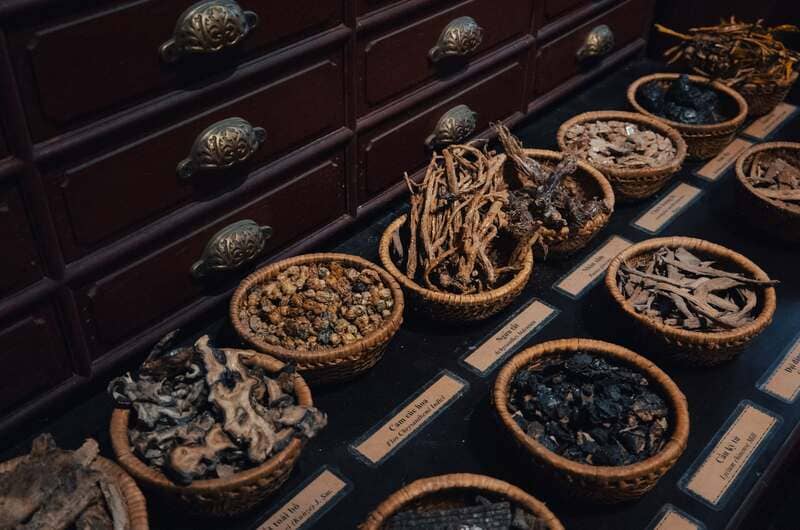
The displays include more than 300 specimens of medicinal plants, animal-derived materials and minerals. They show how raw ingredients were identified, classified and preserved before modern pharmaceutical production became widespread.
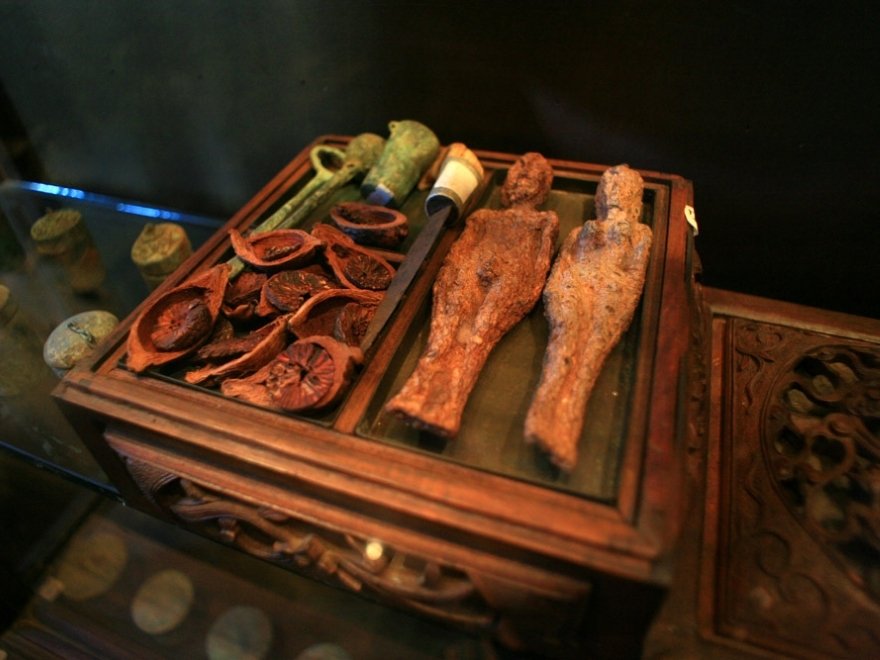
A box containing precious medicinal herbs.
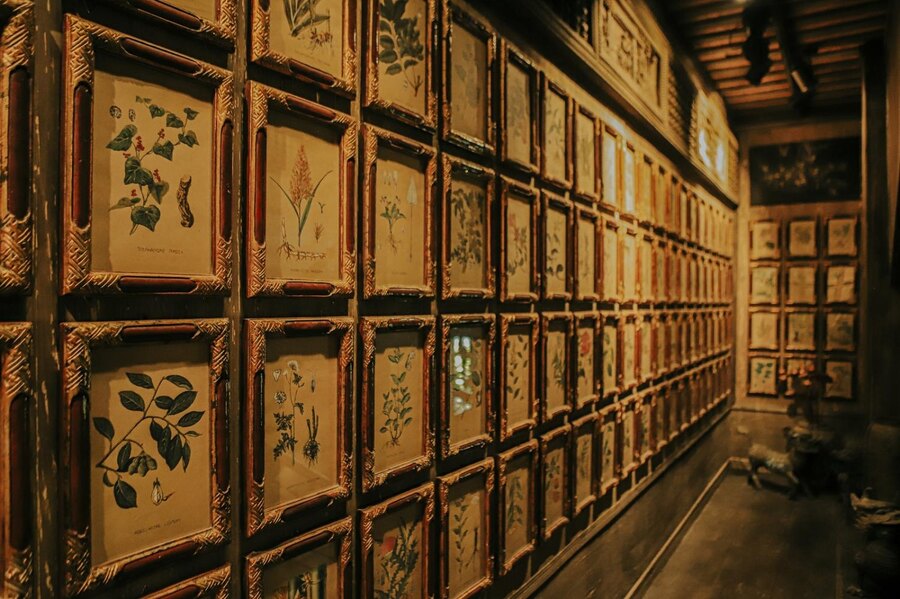
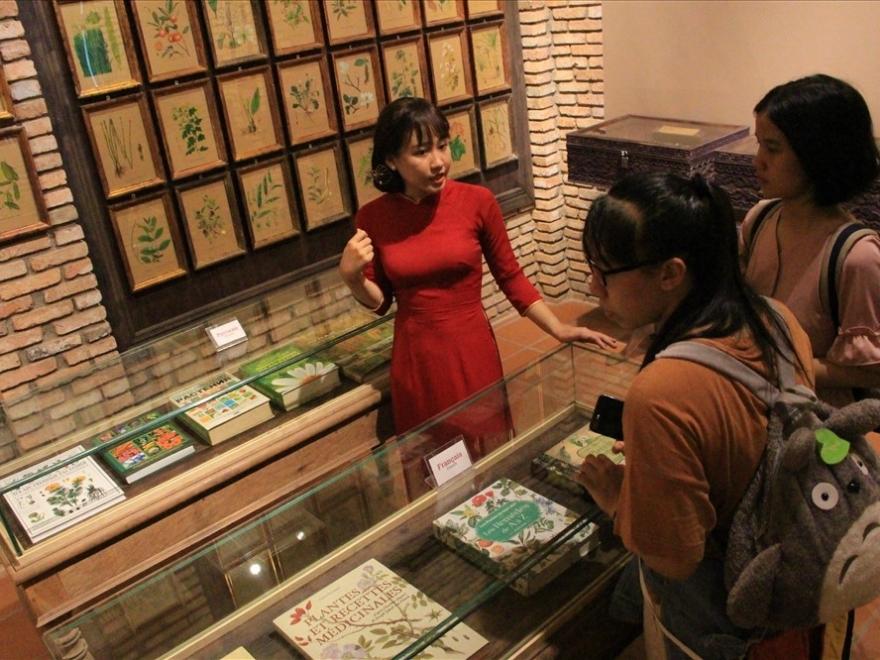
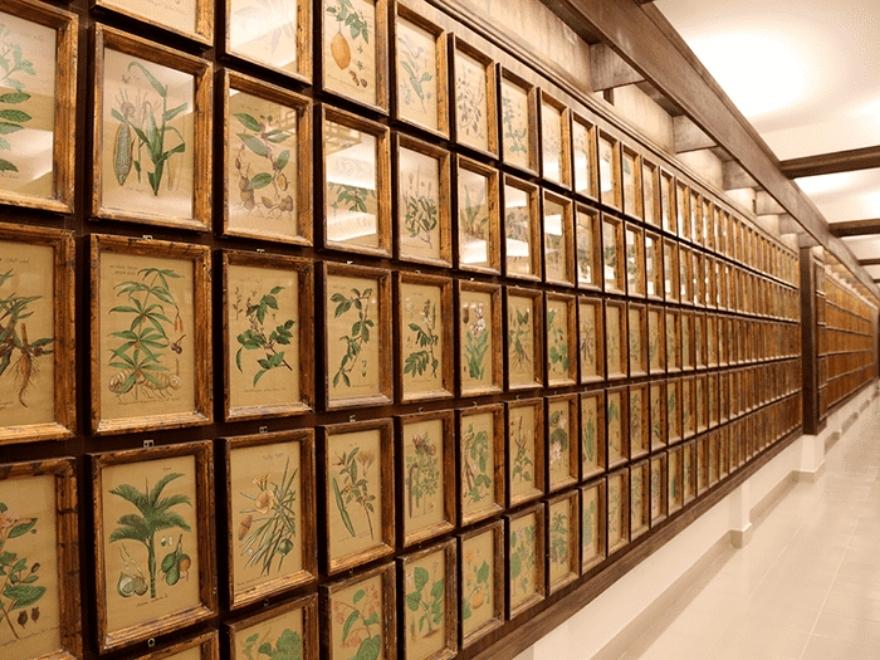
A particularly notable exhibit is Vietnam Ban Thao, an illustrated collection associated with nearly 2,000 medicinal plants. Its 20 illustrated pages provide a visual record of traditional botanical and pharmacological knowledge.
The value of this section lies primarily in its cultural and historical context. Visitors do not need to assess the effectiveness of individual remedies to appreciate the knowledge required to recognise, organise and preserve these materials.
Ban Thao's gallery
Tools used to prepare traditional medicine
The museum displays instruments once used to cut, grind, weigh and prepare medicinal ingredients.
These include mortars, pestles, traditional and Western-style scales, medicine knives, grinders and storage containers.
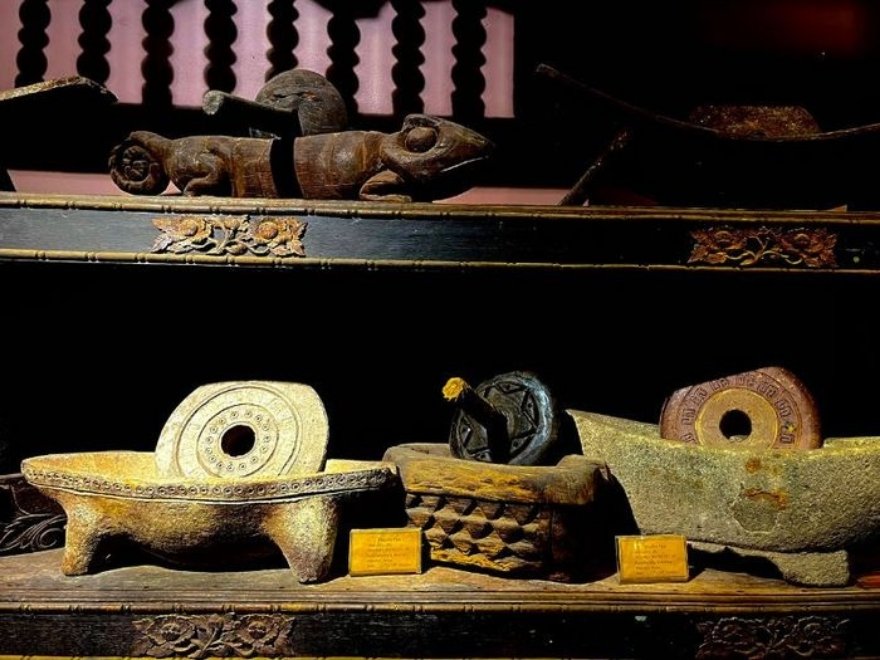
Thousands of traditional medicine tools were collected from all over the country.
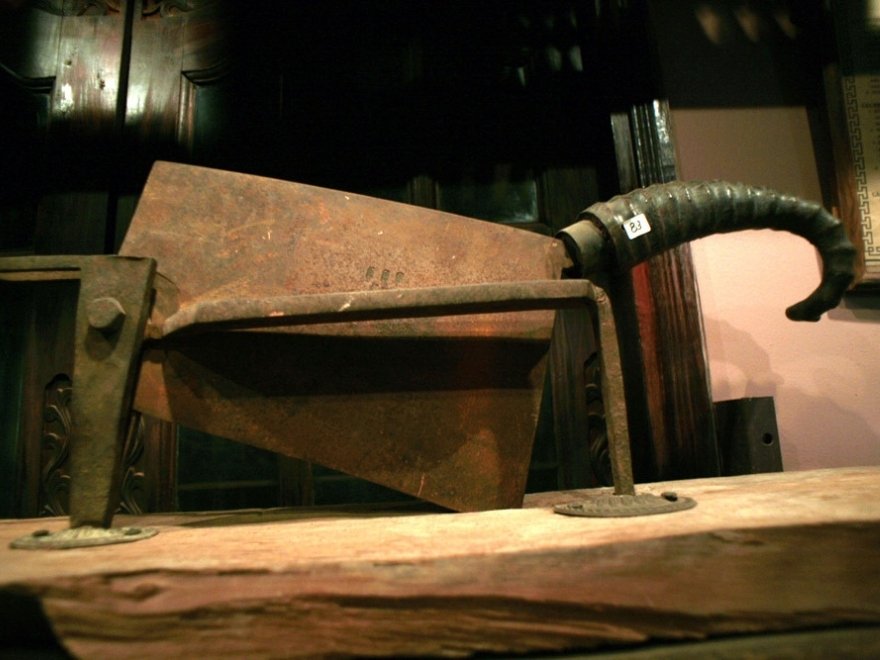
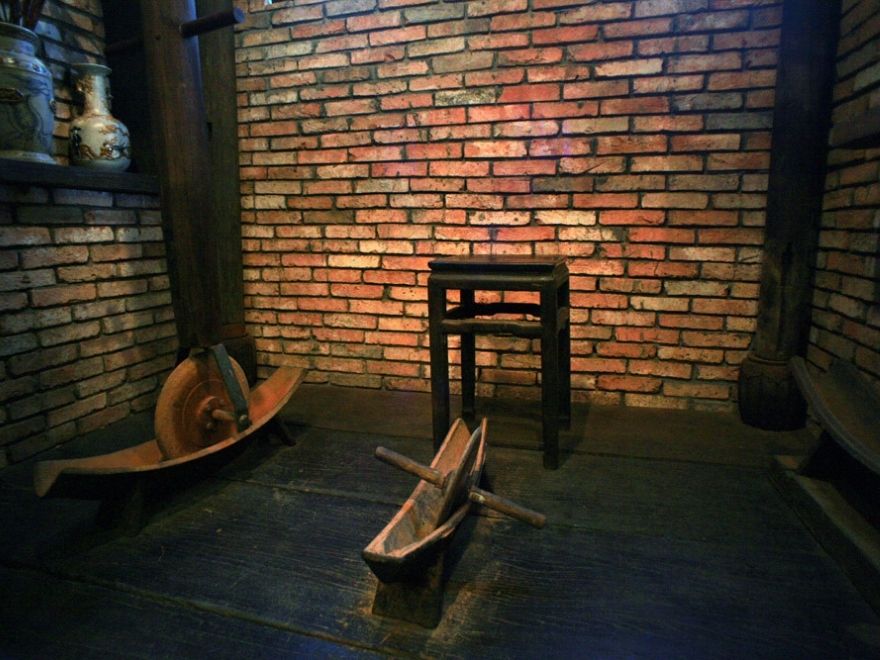
Among the most distinctive tools are the dao cau, a curved knife used to slice medicinal materials into thin pieces, and the thuyen tan, a boat-shaped grinder used to reduce dried ingredients to powder.
These objects reveal the practical work behind traditional medicine. They help visitors understand the manual processes and specialised equipment involved in preparing individual prescriptions.
Dao Cau.
Thuyen Tan.
The reconstructed 19th-century pharmacy
One of the museum’s most memorable spaces recreates a Vietnamese pharmacy from the 19th century.
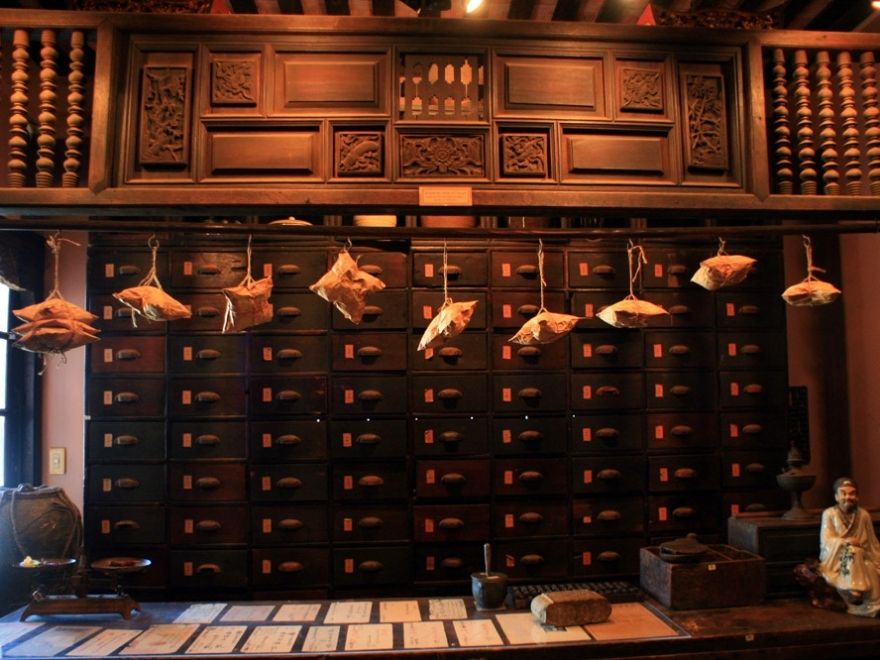
The room contains a traditional wooden counter, preparation equipment and a large medicine cabinet with 81 labelled drawers. Different ingredients would have been stored separately before being selected, measured and combined for patients.
A typical example of a traditional Chinese medicine shop...
The reconstruction helps visitors imagine how a traditional pharmacy operated before modern pharmaceutical systems became widespread.
It also illustrates the connection between medicine, commerce and skilled woodworking. The cabinets and tools provide a clearer practical context than a conventional arrangement of objects behind glass.
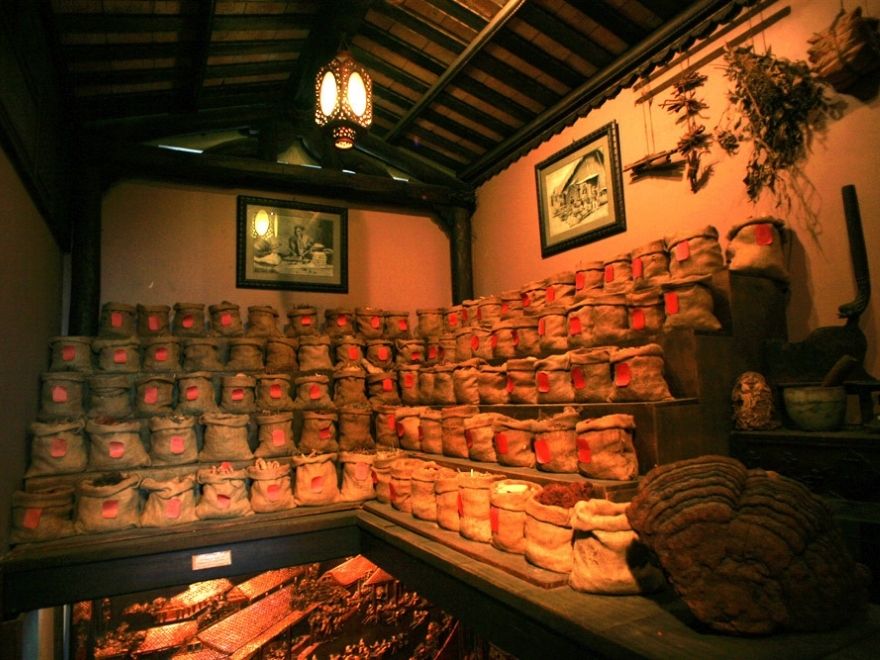
The traditional Vietnamese medicine shop model features multi-tiered shelves holding dozens of different medicinal herbs.
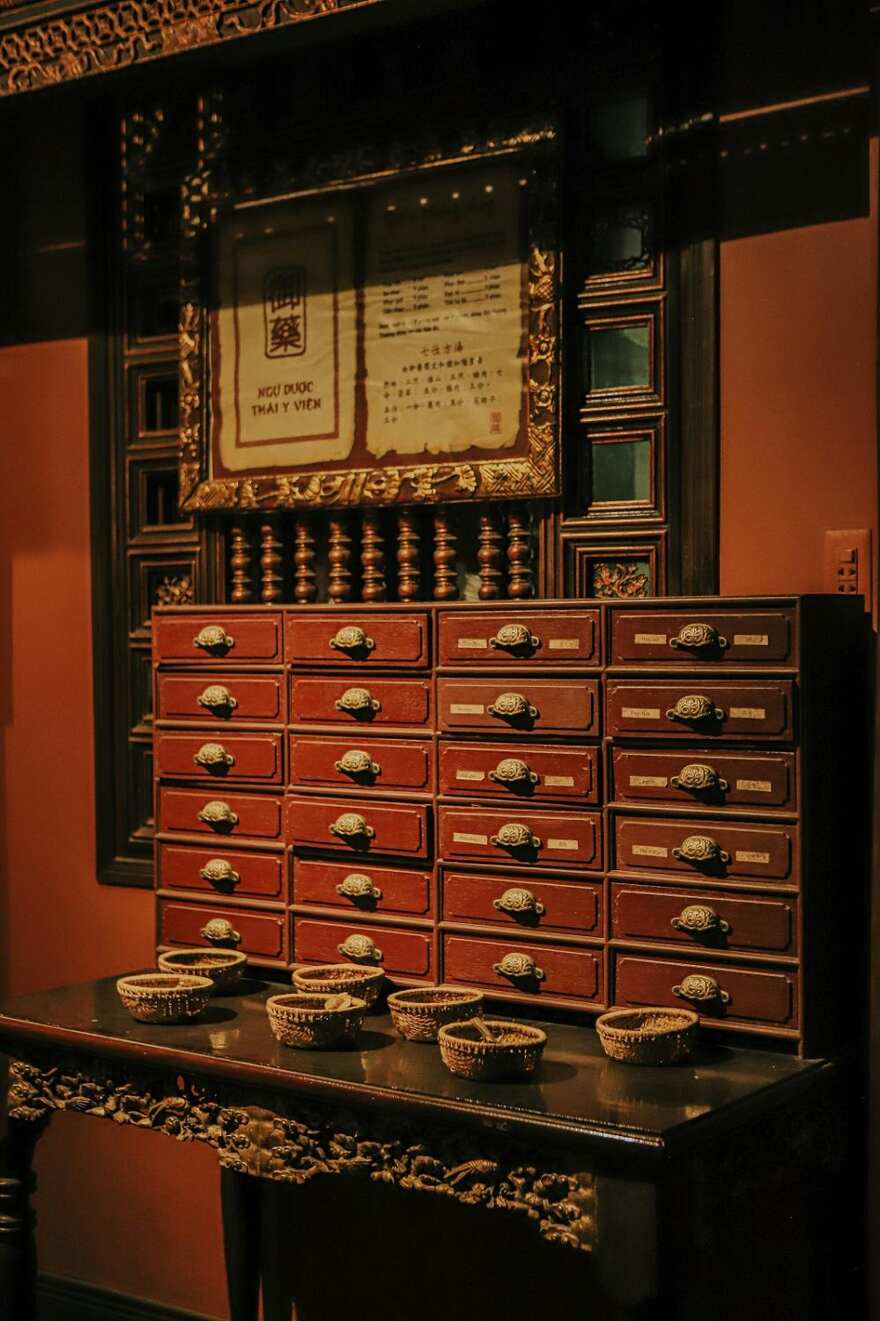
Royal Medicinal Academy (Thai Y Vien)
Another distinctive space recreates the Royal Medicinal Academy, the institution responsible for providing medical care to the emperor and members of the royal family.
The room is designed in a court style, with carved wooden furniture, decorative panels and gold-toned details that distinguish it from the more practical atmosphere of the public pharmacy.
The Royal Medicinal Academy provided medical care within Vietnam’s imperial court.
This reconstruction shows that traditional medical practice was not limited to village healers or commercial pharmacies. Medical knowledge was also formally organised and practised within the imperial court.
The contrast between these two reconstructed settings helps visitors understand how medical spaces could differ according to their social and historical context.
Medical jars, teapots and everyday objects
The collection extends beyond medicinal plants and preparation equipment.
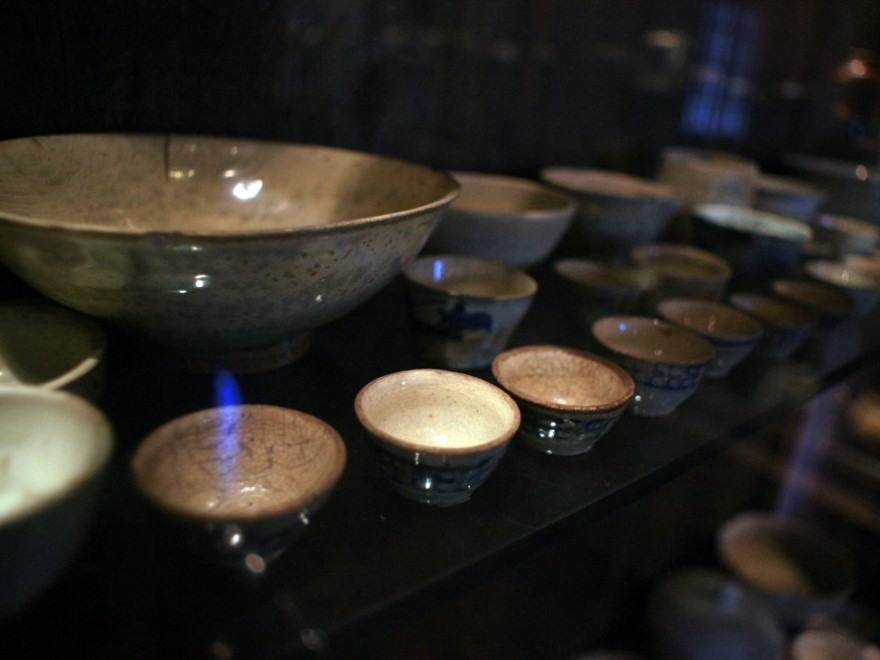
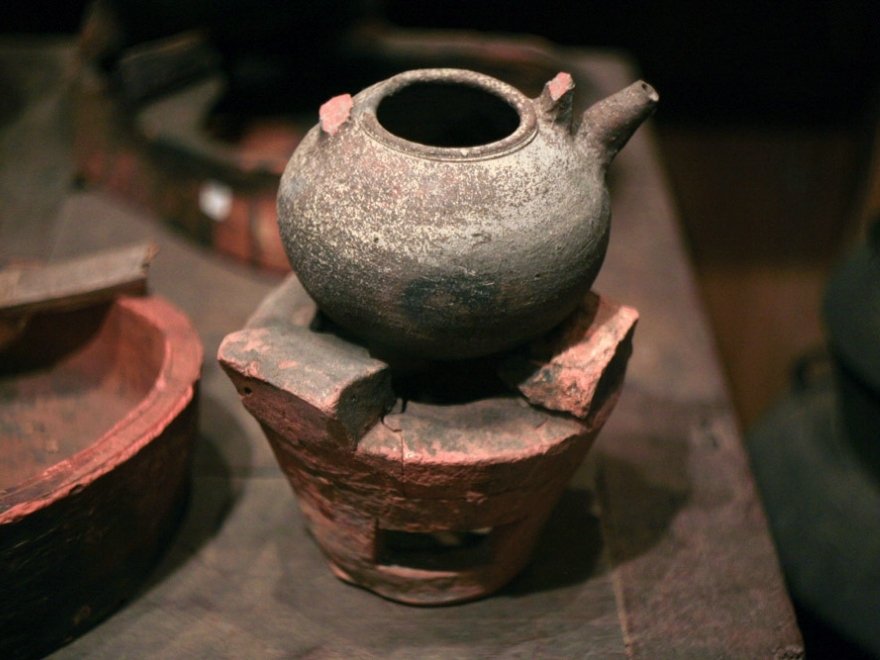
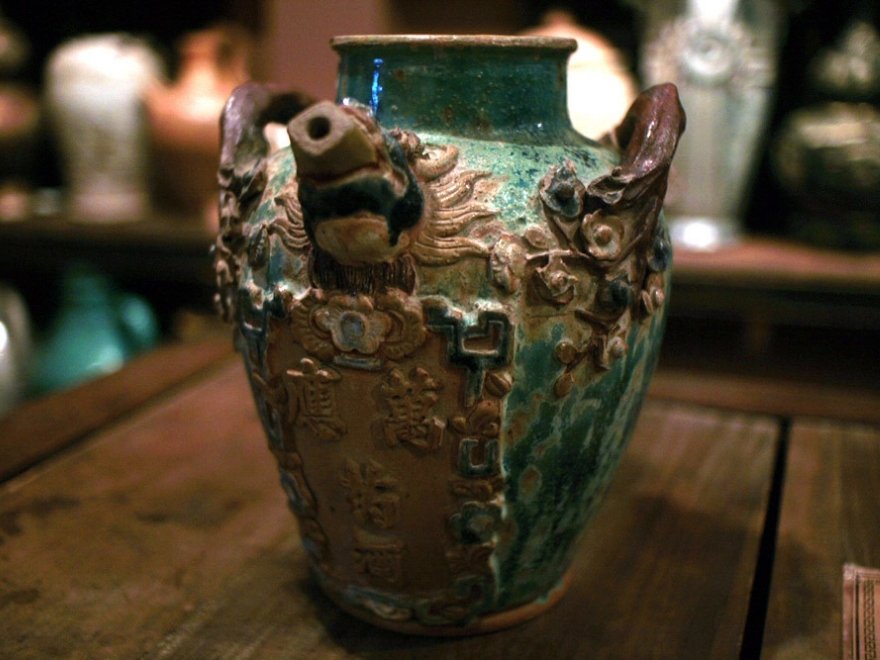
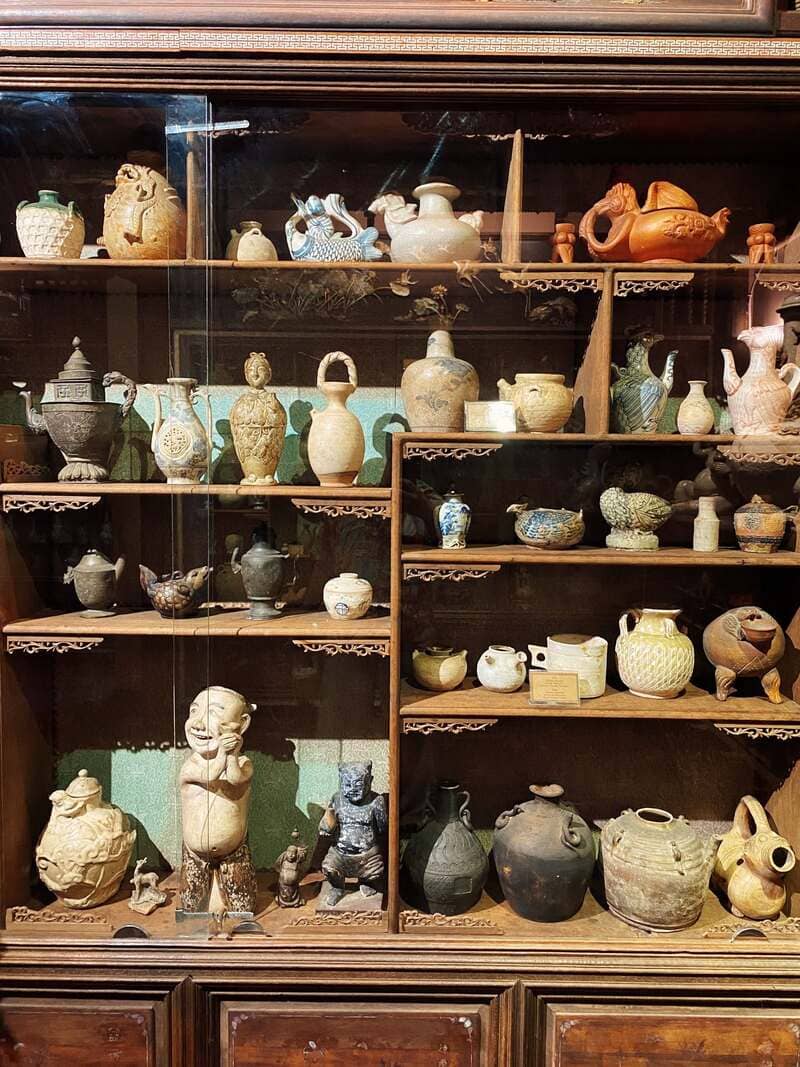
Visitors can see ceramic jars, medicinal wine containers, metal and ceramic teapots, medicine bowls, lime pots and vessels used to prepare herbal decoctions.
Everyday bowls and cups are also used for drinking herbal decoctions.
Some pottery dates from the first centuries of the Common Era, while later objects show how similar containers remained in use during the 19th and 20th centuries.
The displays include items produced in different regions of Vietnam, reflecting variations in materials, craftsmanship and local traditions.
Many herbal remedies require the user to boil them in water for a specific period of time, a process called decoction.
Earthenware decoction pots are the oldest and considered the best tools for this purpose.
Together, these exhibits show that traditional medicine formed part of domestic life as well as professional pharmacy practice.
Prehistoric medical objects
The museum also presents objects from the Stone and Bronze Ages associated with early healing practices.
Medicinal wine bottle
These exhibits place traditional Vietnamese medicine within a much longer historical timeline than the reconstructed pharmacy spaces alone suggest.
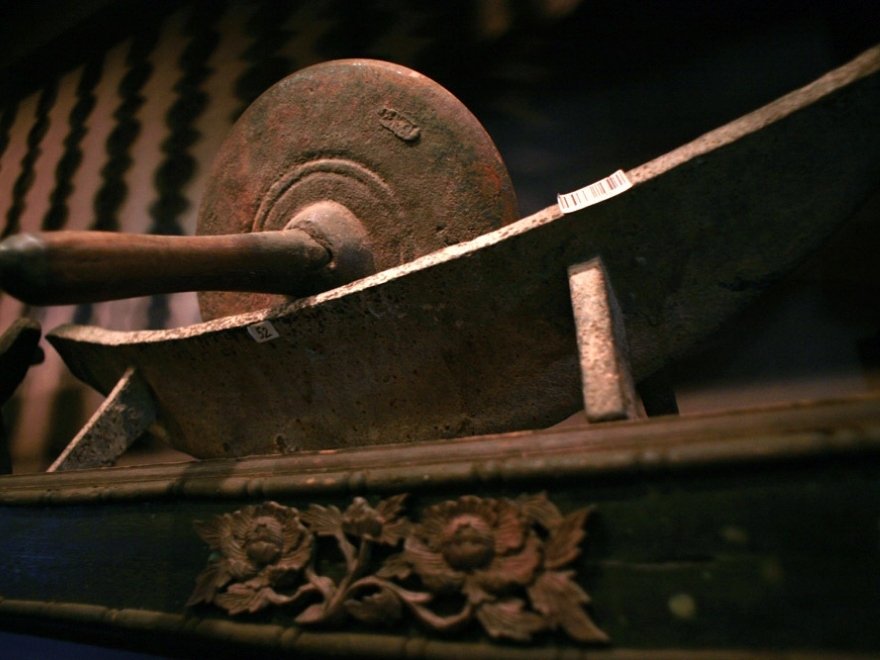
The pharmacist would sit in a chair and use both feet to turn the wheel of the rotating stool lying on the floor.
The exact medical use of some early objects may be difficult to determine. Nevertheless, they provide context for how tools, materials and healing traditions developed before the appearance of written medical records.
Tuệ Tĩnh, Hải Thượng Lãn Ông and other physicians
Several rooms explore the people who shaped the development of traditional medicine in Vietnam.
Among them is Tuệ Tĩnh, a 14th-century physician and Buddhist monk associated with the use of locally available medicinal plants.
Another major figure is Hải Thượng Lãn Ông, also known as Lê Hữu Trác, an influential 18th-century physician and medical writer.
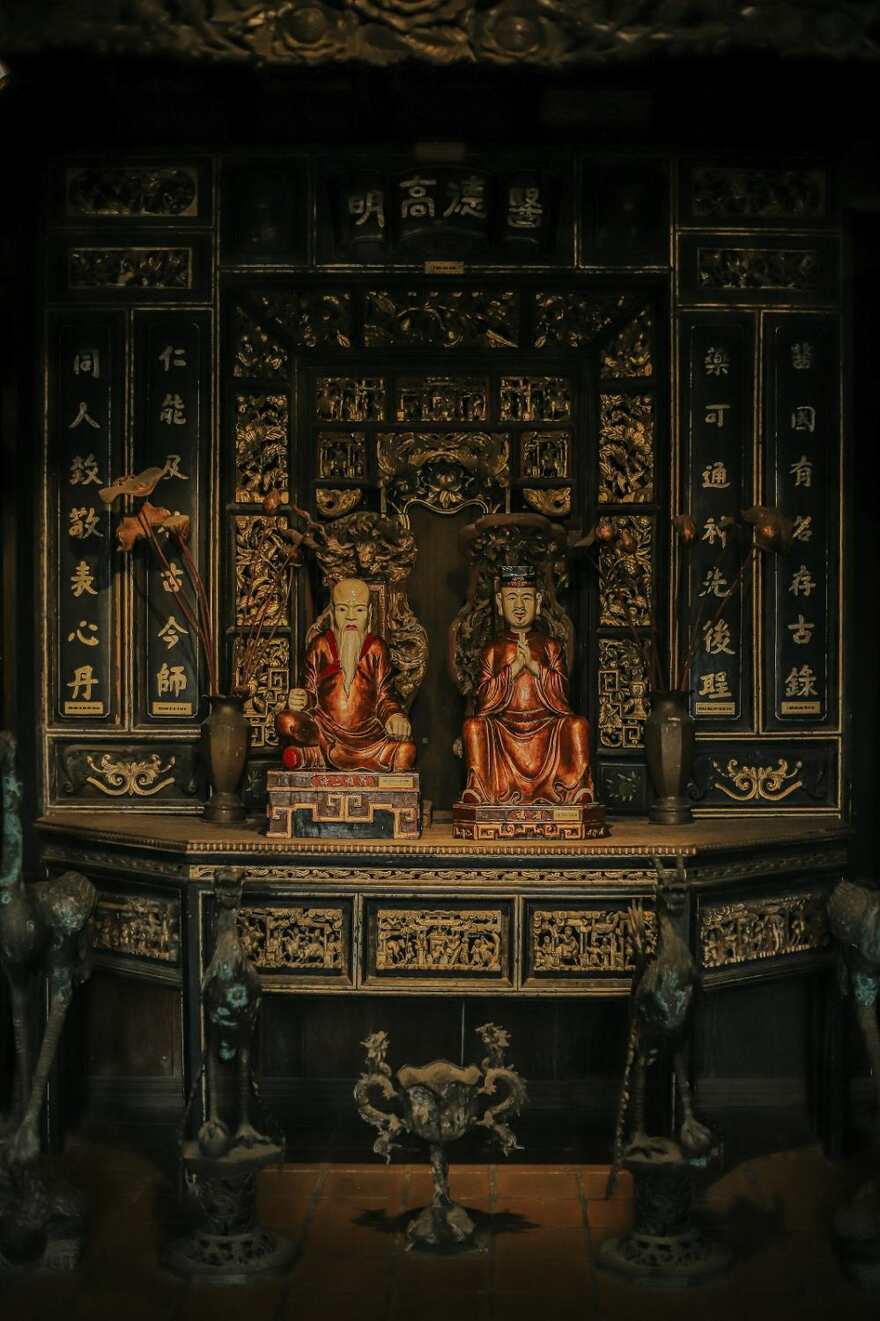
The altar is dedicated to the renowned physician Tuệ Tĩnh; the founder of Vietnamese traditional medicine,
and the renowned physician Hải Thượng Lãn Ông Lê Hữu Trác;
the author of a monumental work on traditional medicine, considered the encyclopedia of Vietnamese traditional medicine.
An ancestral altar inside the museum honours both figures.
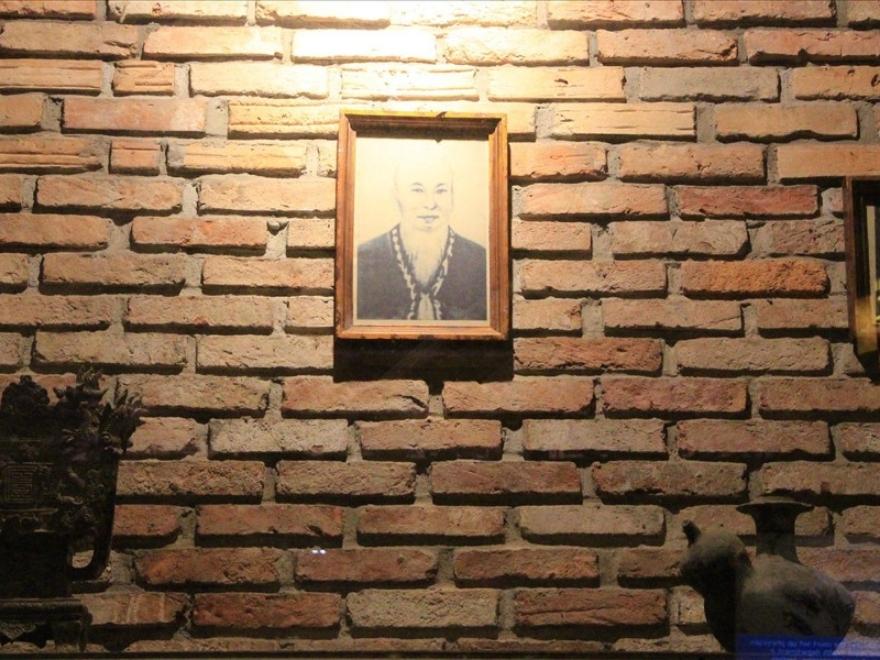
The collection also includes 15 portraits of notable Vietnamese physicians and medical authors. Another highlight is the carved wooden Vietnam Bach Gia Y, which bears the names of 100 people who contributed to Vietnamese traditional medicine from the 12th to the early 20th century.
A portrait of a famous physician.
These displays show that the country’s medical heritage developed through written scholarship and the transmission of knowledge, not only through the preparation of individual remedies.
Vietnamese medicine in a wider Asian context
One exhibition room places Vietnamese medicine alongside the traditional medical systems of China, Korea and Japan.
This comparative perspective helps visitors understand that Vietnamese medicine developed through both local knowledge and wider intellectual exchanges within East Asia.
At the same time, the exhibits emphasise the use of native Vietnamese plants, regional practices and the work of Vietnamese physicians who adapted inherited knowledge to local conditions.
The building and its wooden interiors
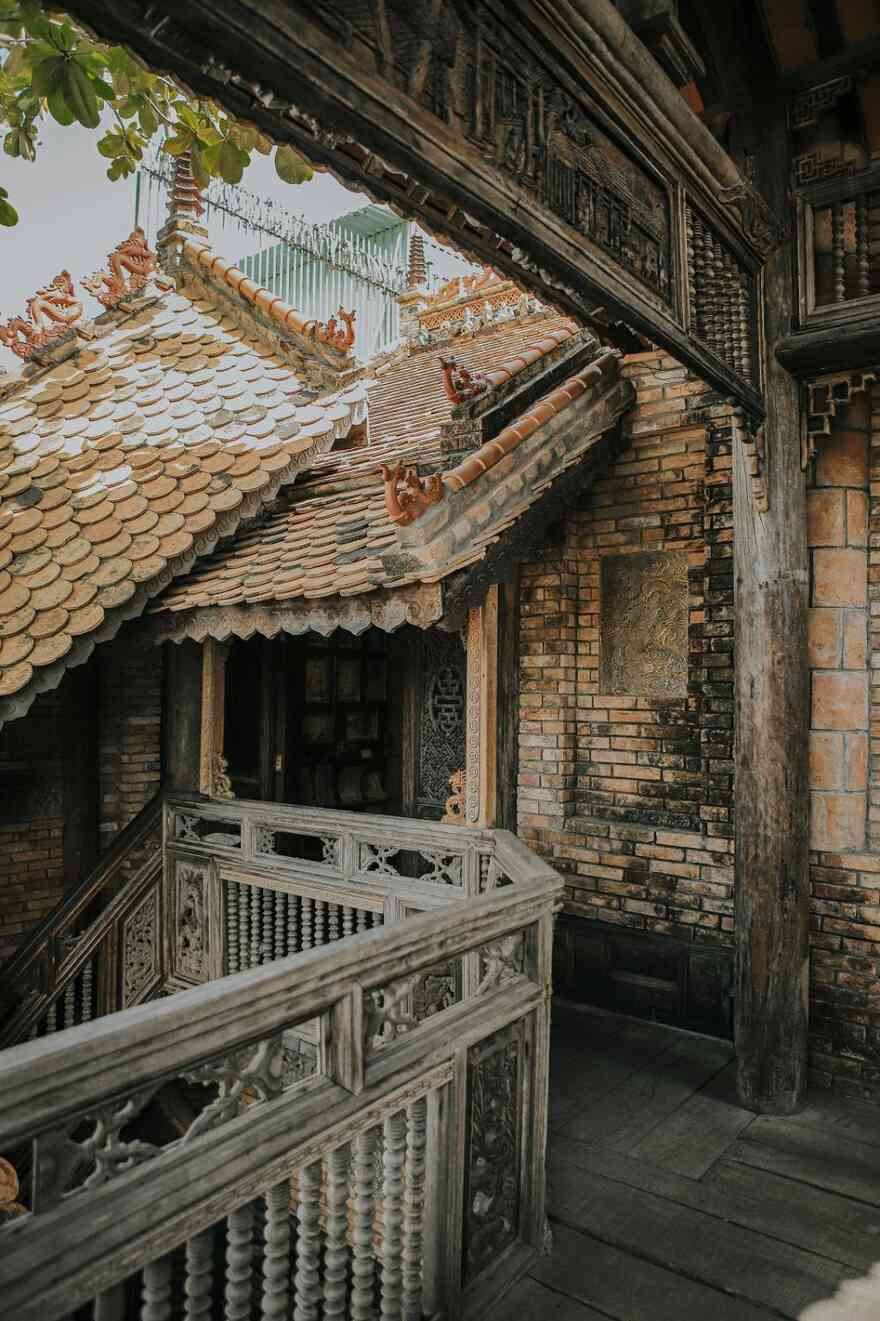
Although FITO Museum is primarily devoted to medicine, its architecture is one of its most distinctive features.
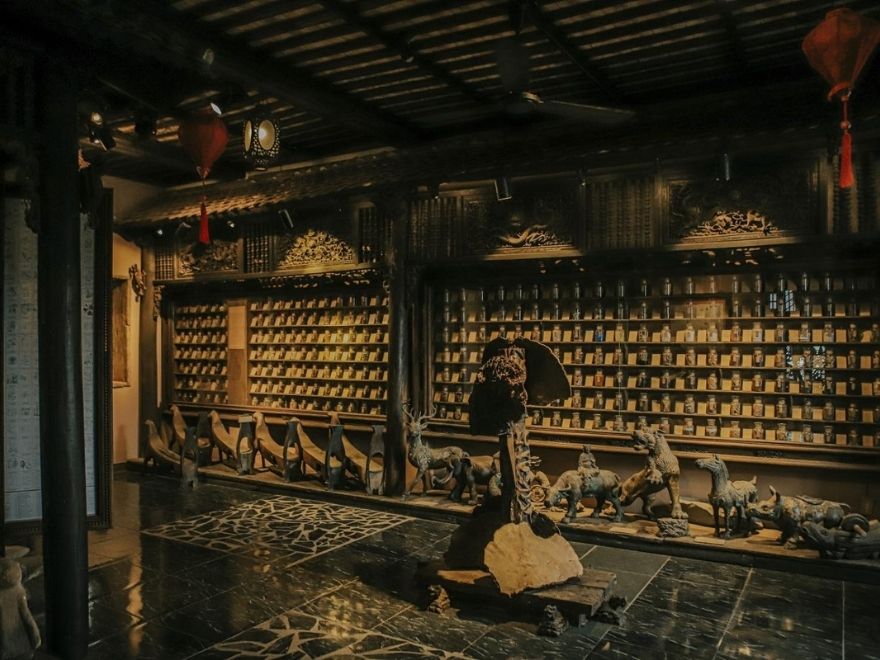
The exhibition space covers nearly 600 square metres. Its interiors are built mainly from wood and combine architectural influences associated with northern Vietnam, Hue and Cham culture.
With an area of 600 square meters, comprising 5 floors and a ground floor, and containing 18 rooms,
the museum houses more than 3,000 rare and valuable artifacts related to traditional medicine.
A small tower inside the museum evokes the entrance to the historical Medical Temple in Thang Long, Hanoi. Another section incorporates Cham-inspired details.
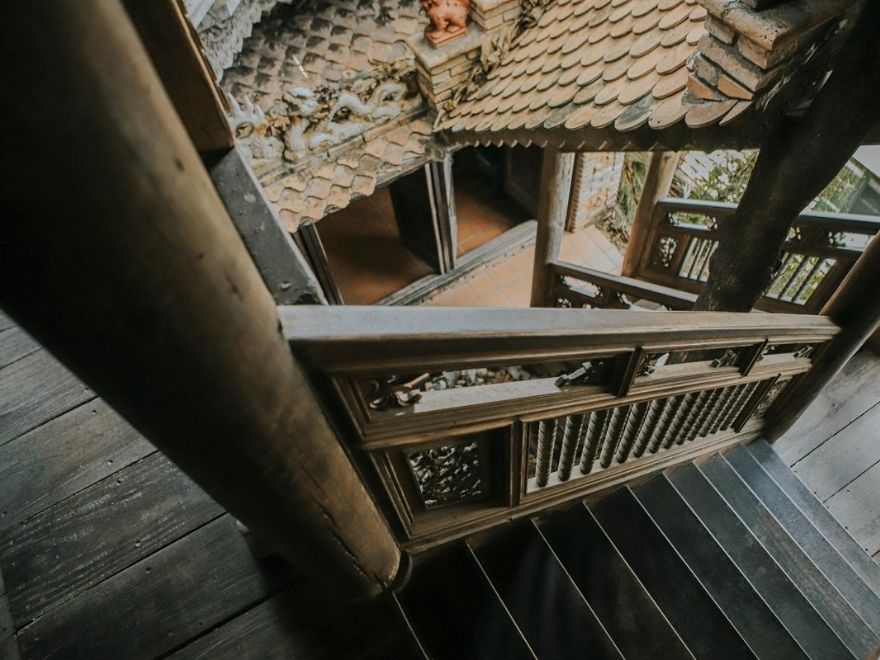
Parts of the interior were repurposed from an old house in Hanoi. Columns, bricks, roof tiles and other materials were dismantled, transported to Ho Chi Minh City and incorporated into the museum.
A replica of the entrance gate to the Thang Long Medical Temple.
Additional wooden house frames were brought from northern provinces. The staircases, carved handrails and frame surrounding the elevator were designed to complement the traditional setting.
The building therefore does more than contain the collection. It creates an environment that supports the historical objects and helps visitors imagine the spaces in which traditional medicine was once practised.
English information, guides and introductory film
The museum has a screening room with approximately 50 seats.
It shows a documentary of around 15 minutes introducing the history and development of Vietnamese traditional medicine.
The film is available in Vietnamese and English, with additional language or subtitle options including French, German and Russian.
Watching the film before entering the main exhibition rooms provides useful background, particularly for international visitors unfamiliar with the subject.
FITO Museum also advertises guides who speak Vietnamese and English. Independent visitors should confirm whether an English-speaking guide will be available on their chosen date, especially when visiting without a group reservation.
The quantity of written English information may vary between rooms, so guided support can be helpful for visitors seeking more detailed historical explanations.
Photography and traditional clothing
Author's note: Traditional clothing hire was listed at VND 120,000 for 30 minutes when checked in July 2026. Confirm current availability and pricing before visiting.
Regular visitor photography is permitted under the museum’s published ticket tariff.
Visitors planning professional, commercial or equipment-heavy photography should check the applicable rules in advance.
The museum also offers opportunities to take photographs in traditional Vietnamese clothing inside its wooden interiors.
Available outfits and booking arrangements may depend on the current programme, group size or advance request. Confirm the service, prices, sizes and reservation conditions before visiting.
Some rooms may occasionally become busier when organised groups or costume photography sessions are taking place.
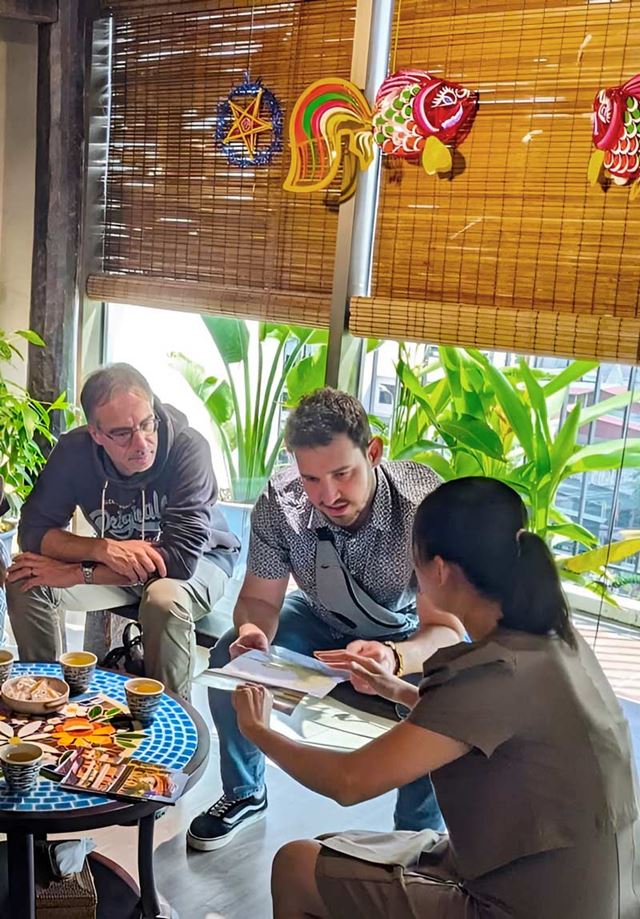
Kampá Tour customers experience Vietnamese traditional clothing at the Fito Museum.
Practical information for visiting FITO Museum
Where is FITO Museum?
FITO Museum is located at: 41 Hoang Du Khuong Street, Hoa Hung Ward, Ho Chi Minh City, Vietnam
Older listings may still use the former address format, “41 Hoang Du Khuong Street, Ward 12, District 10”. This refers to the same physical location, but the administrative address was updated following Ho Chi Minh City’s 2025 reorganisation.
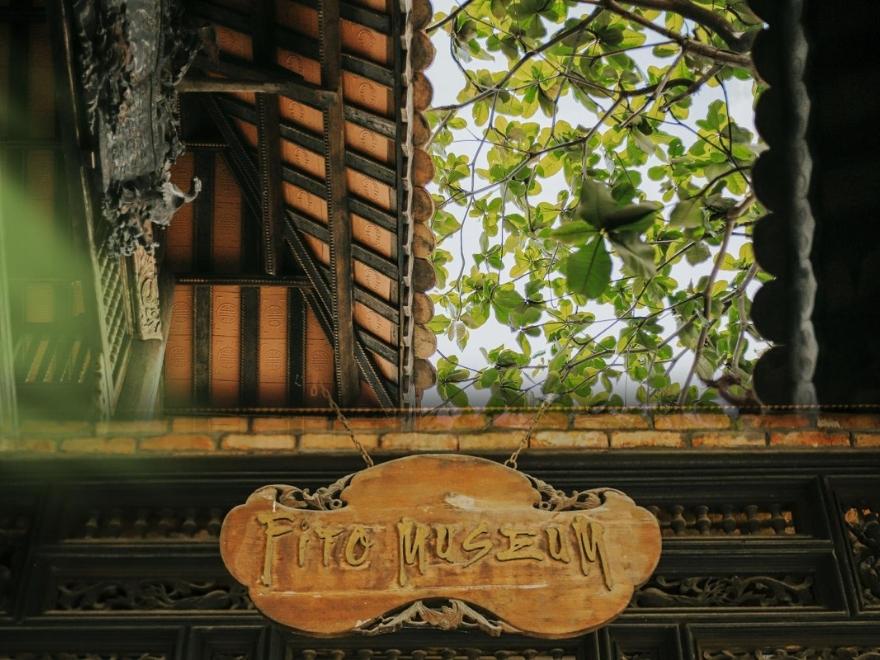
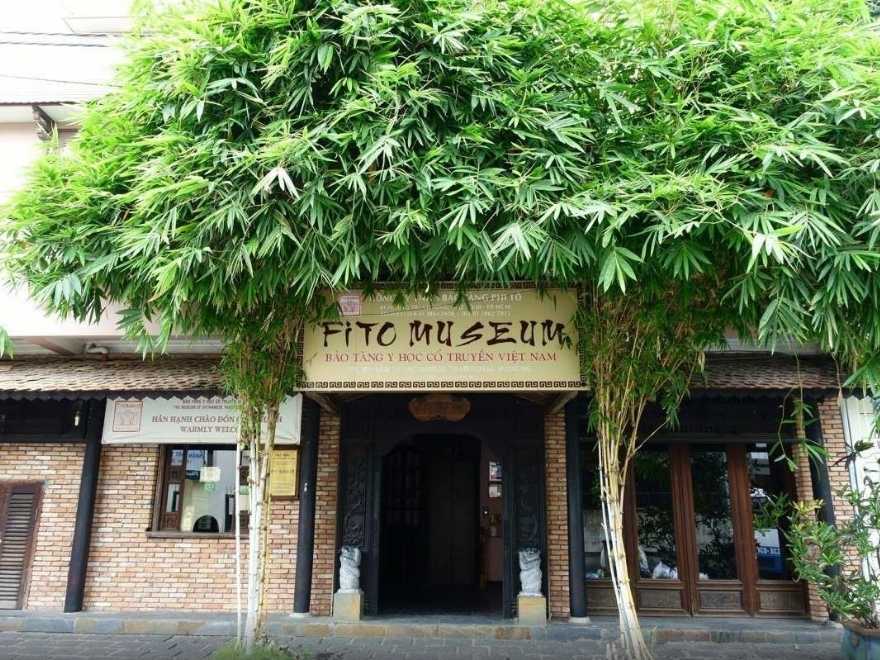
Fito Museum entrance
The museum lies outside the main concentration of tourist attractions in central District 1 but is relatively easy to reach by taxi, private car or motorbike taxi.
Travel time from the Ben Thanh Market area is typically around 15–25 minutes, depending on traffic. The journey may take longer during the morning and late-afternoon rush hours.
Enter the museum’s full name and street address into your navigation application before departure.
How to get to FITO Museum?
The simplest option from central Ho Chi Minh City is to use a taxi or ride-hailing application.
A motorbike taxi may be faster during busy traffic periods, particularly for solo travellers who are comfortable with this form of transport.
Public buses also serve the surrounding area, but routes and stops can change. Check a current local transport or navigation application before departure.
Visitors arriving by private car should confirm the current drop-off and parking arrangements, especially when travelling with a group.
FITO Museum is open: Monday to Sunday, from 8:30 am to 5:00 pm.
The museum is currently listed as open every day. It is still advisable to reconfirm the schedule during Vietnamese public holidays or special events.
FITO Museum ticket prices
The museum currently lists the following standard admission prices:
Adults: VND 180,000
Students, senior visitors and children aged 2–15: VND 90,000
The published adult tariff includes regular visitor photography.
Eligibility for discounted tickets, the policy for children under two and accepted payment methods should be confirmed directly with the museum.
How long should you spend at FITO Museum?
Allow approximately 60–90 minutes for a comfortable visit.
Around one hour may be sufficient for travellers who mainly want to see the principal exhibits and reconstructed spaces.
Visitors who watch the introductory film, read the explanations and examine the collection more carefully should allow closer to 90 minutes.
Including transport from central Ho Chi Minh City, most travellers should reserve approximately two to three hours for the complete outing.
FITO Museum is best treated as a short cultural visit rather than a half-day or full-day attraction.
Who is FITO Museum best for?
FITO Museum is particularly suitable for:
Travellers interested in Vietnamese history and culture
Visitors curious about medicinal plants and traditional remedies
People who enjoy specialist or less conventional museums
Travellers interested in old pharmacies and historical objects
Visitors who appreciate wooden interiors and traditional craftsmanship
People looking for an indoor cultural attraction outside District 1
It may be less suitable for visitors seeking a highly interactive attraction or a broad overview of Vietnamese history.
Travellers with very limited time in Ho Chi Minh City may prefer to prioritise central landmarks unless traditional medicine or architecture is a particular interest.
A suggested three-hour local route
FITO Museum can be combined with nearby cultural and local-life attractions without returning to District 1 between each stop.
A practical route is:
FITO Museum: Allow 60–90 minutes for the exhibitions and introductory film.
Viet Nam Quoc Tu: Located approximately 500 metres away, this Buddhist temple is known for its spacious grounds and prominent tower.
Ho Thi Ky Flower Market and Food Street: Approximately 1.5 kilometres from the museum, this area combines a working flower market with a lively local food scene.
This route is better suited to travellers interested in neighbourhood life, religious architecture and local food than to those following a conventional first-time city tour.
Visitors focused on major historical landmarks can instead combine FITO Museum with Independence Palace, approximately 3.2 kilometres away.
Our final verdict
FITO Museum’s main strength lies in the way it places a specialist medical collection within carefully reconstructed and architecturally distinctive spaces.
The displays do more than present medicinal plants and old tools. They show how traditional medical knowledge was organised in domestic, commercial, scholarly and royal settings.
This makes a technical subject more accessible and visually engaging, even for visitors without a strong prior interest in medical history.
At the same time, FITO Museum remains a specialist attraction. Travellers with little interest in traditional medicine, wooden architecture or unusual collections may find the experience relatively brief for the standard admission price.
It is not a must-see for every visitor, but it can be a rewarding cultural stop for travellers who have enough time to explore beyond Ho Chi Minh City’s headline attractions.
Planning your trip?
Save time and get expert advice for FREE!
✅ 15 years of local experience
✅ Save up to 40 hours of planning
✅ Travel stress-free from start to finish
Book your free consultation today!









 Our team
 Our team
 Our team
 Our team

.jpg)


 Other
Other Add us as a preferred source