














Exploring the Yin-Yang Tile Craft Village in Lang Son, Vietnam
Nestled in a lush valley at the foot of the Tam Canh Pass in Lang Son Province, this village attracts visitors not only with its untouched landscapes and ancient relics, but also with its fascinating traditional craft: the making of yin-yang roof tiles.

Just 50 meters off the foot of the pass, a short detour reveals a row of small workshops lining both sides of the road, where these centuries-old tiles are produced.
.jpg)
Inside, thousands of raw tiles are neatly arranged, waiting for their turn in the kiln.
.jpg)
In each workshop, everyone is busy: some skillfully knead the clay, while others cut and shape each piece with care.
.jpg)
.jpg)
Yin-yang tiles, also known as canal tiles, have been used for centuries to roof the stilt houses of the Tay and Nung ethnic groups. They are made of two complementary parts—one convex and the other concave—which, when layered together, form a natural air pocket that keeps homes cool in summer and warm in winter.
.jpg)
To create durable tiles, the process begins with selecting the right type of clay. Once brought back to the village, the clay is crushed to remove stones, moistened, and left to rest for around twenty days to reach the perfect consistency. Only then is it kneaded and carefully molded.
.jpg)
.jpg)
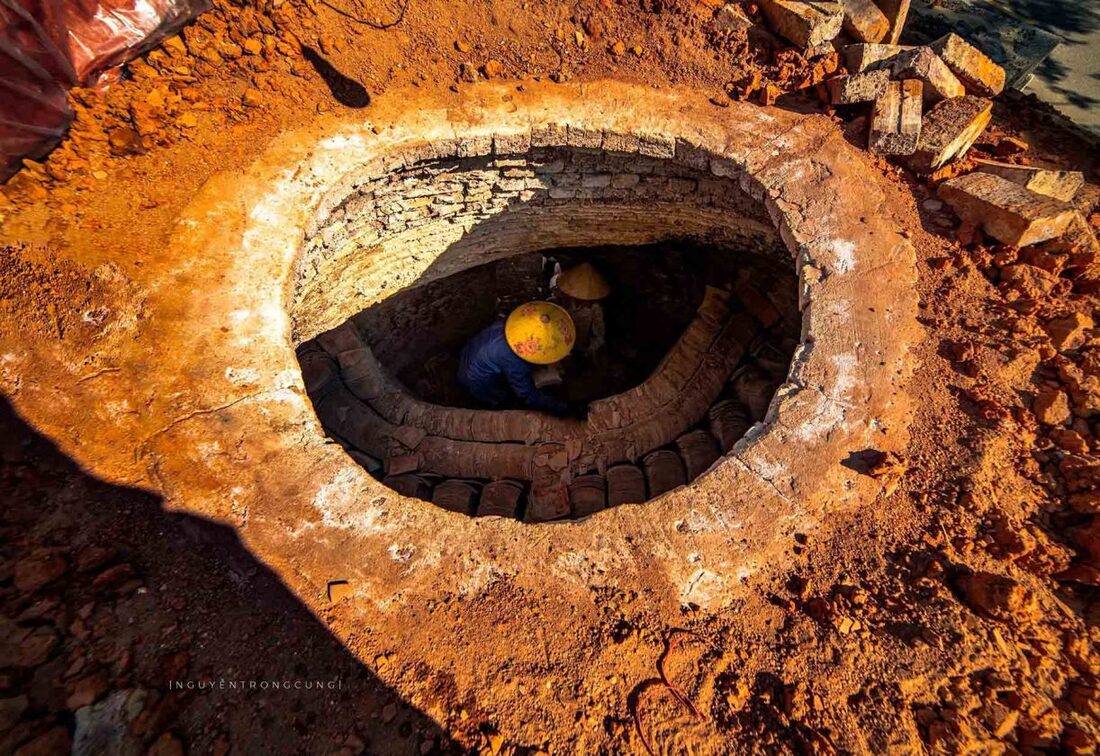
The final color of the tiles depends on the firing time and each family’s kiln secrets. On average, a single kiln can fire up to ten thousand tiles—the amount needed for a traditional three-bay house.
.jpg)
Drying is also essential: it takes between 30 and 50 days for each tile to reach the ideal dryness before firing. Depending on their size, kilns can hold several tens of thousands of tiles at once.
.jpg)
Visitors to Bac Son can witness the entire process right in the village: watch artisans at work, try kneading the clay, learn how to mold the tiles, or simply sit by the kiln and listen to the stories of those who have devoted their lives to earth and fire.
.jpg)
.jpg)
From traditional stilt houses to modern buildings inspired by local architecture, the yin-yang tiles of Bac Son are far more than a building material—they represent cultural memory, a living connection between nature, tradition, and the community.
Photos : Nguyen Trong Cung

Pu Luong Travel Guide 2026: How to Explore It Like a Local

Pu Luong homestays & hotels: Advice from local tour guide



 Other
Other