How to Spot a Bad Tour Operator in Vietnam: 10 Warning Signs
I have watched thirty people climb onto the same boat, take the same photo from the same spot, eat the same lunch, and go home genuinely happy. So no, a big group photo is not what I mean when I warn a friend off a tour. What I actually watch for has nothing to do with how many people are on board.
The tours that actually ruin holidays here are usually the quiet ones. Nobody shouts at you. Nothing dramatic happens. You just end up spending nine hours discovering that the day you paid for is not the day you were sold, and by then you are in a van somewhere outside Hanoi with no way to fix it.
The good part: Vietnam gives you more ways to check a tour company than almost anywhere else in Southeast Asia. Two of them are public databases run by the government, and almost no traveller uses them. Here is what I look for, and what I would want a friend to look for.
Written by Oliver PHUNG (Tour Guide)
Updated on Aug 28, 2026
0 comment
Oliver Phung is a Northern Vietnam-based tour guide and blogger. His favorite topics to write about include cuisine, culture, travel, and under-the-radar experiences. Oliver possesses a deep, detailed understanding of the region, from the indigenous culture of the Hmong in the Northwest to the highland lifestyle of the Tay in the Northeast. Whether he is exploring ancient architecture or geological landscapes, he is always eager to share his insights with his readers.
Beyond his work at Kampá Tour, he produces specialized travel content on platforms such as Reddit, Instagram, LinkedIn, and various other publications.
Note: this is about tours you book yourself, whether that is online in advance, at a hotel desk, or from someone who approaches you on the street in Hanoi or Hoi An. Multi-day trips arranged with one agency work differently and deserve their own article.
Sign #1: The details stay vague
A tour that has been running for years knows exactly what it costs and exactly how long it takes. The people selling it should be able to tell you where you go, what you pay for on the day, and when you get back. Not minute by minute. But they should have the answers ready.
The word I hunt for is not "included". It is "excluded". In Vietnam the gap between the price and what you actually spend is nearly always made of the same things: site entrance tickets, a sampan or boat fee inside a site, an electric buggy transfer, drinks with lunch, and tips for the guide and driver. A weak operator stays quiet because each amount is small. A decent one lists them. A good one has already paid them, so you never open your wallet all day.
The other vagueness worth catching is arithmetic. Ask for the pickup time, the driving time between each stop, and how long you actually stand still at each one. A lot of itineraries that look great on a webpage turn out to be five hours of van and twenty minutes of the thing you came for. Nobody is lying to you. They just never did the maths out loud, and they are hoping you will not either.
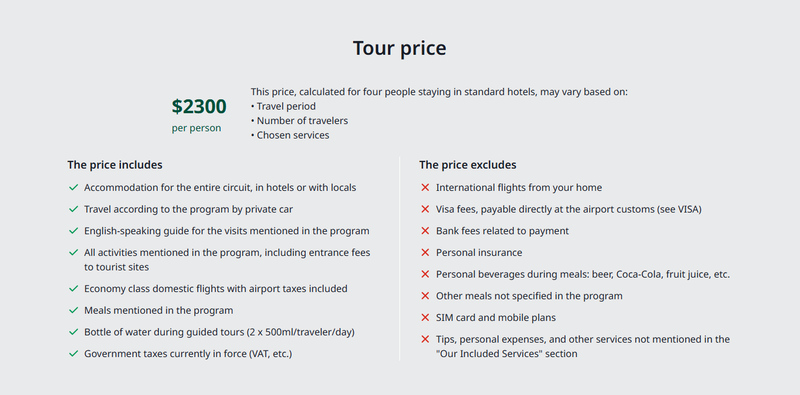
A tour that clearly states its prices.
Sign #2: Nobody will give you a licence number
This is the check that takes two minutes and almost nobody does. Every company legally selling tours to foreign visitors in Vietnam holds an international tour operator licence, and every one of those licences is published in a public database you can search by company name, by licence number, or by province.
It lives at quanlyluhanh.vn. When I looked on 27 August 2026, it listed 4,987 licensed international operators. Licence numbers look like this: 01-3177/2026/CDLQGVN-GP LHQT. You can also filter by scope, which matters more than it sounds: "inbound" means the company is allowed to handle foreign visitors. "Domestic only" means it is not, whatever the website says in English.
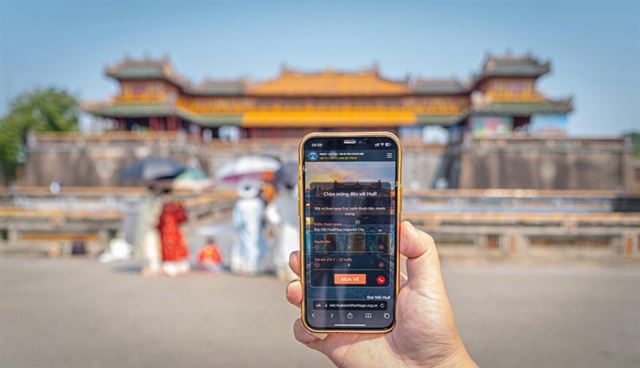
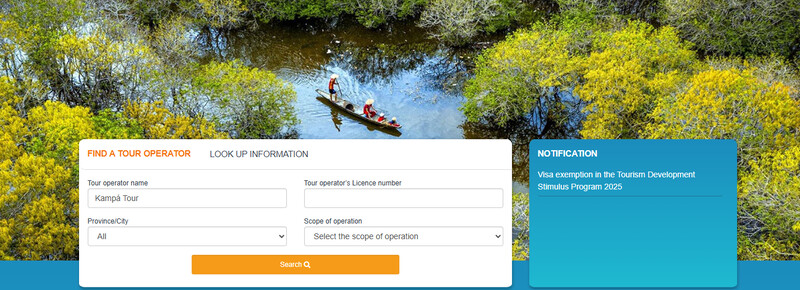
Enter the name of the company you are researching on quanlyluhanh.vn.
Two corners of that site deserve more attention than they get. One publishes licence revocations. The other publishes companies caught violating the rules. If a company you are about to pay shows up there, that is not fine print, that is the government telling you in advance and for free.
Now, the honest caveat. A licence does not make a tour good. There are licensed companies running thoroughly forgettable days out, and I have met unlicensed guides who love their city more than anyone. But a licensed company has money on deposit and a regulator to answer to. An unlicensed one has neither, and if the day goes wrong you have nobody to complain to.
Worth knowing:to hold an inbound international licence in Vietnam, a company keeps a bank deposit of 250 million VND frozen for as long as it operates. That money exists to protect travellers if the company folds. It is also a large part of why the cheapest operator in any town is often the one with no licence at all.
Sign #3: The guide's card never comes up
Guiding is a licensed profession in Vietnam. Guides carry a physical card with a number on it, and the international version states which language the guide is certified in. There is a national database of licensed guides at huongdanvien.vn, and yes, you are allowed to ask.
I know asking feels rude. It is not. Every professional guide I know carries their card without being asked and hands it over happily, because the only people who bristle at the question are exactly the people the question was invented for.
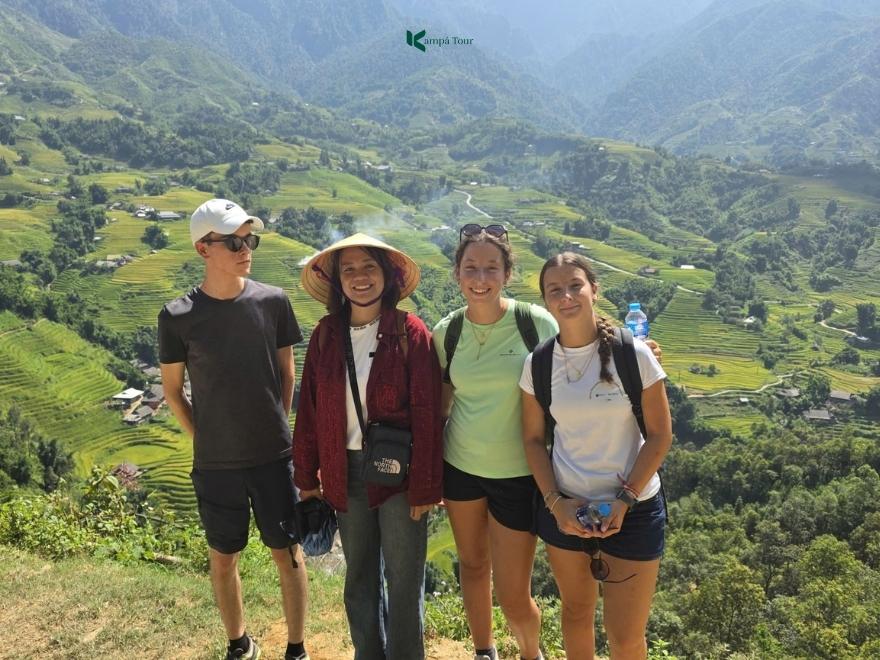
A Kampá Tour guide and travelers on a journey to explore Sapa.
What you are really protecting yourself from is not the card, it is the swap. A booking agent sells you an "expert local guide", then subcontracts your day to whoever is free that morning at whatever rate they will accept. You still get a guide. You just do not get the one you were promised, and you will never know unless you asked something specific up front.
Here's the honest caveat: this check gets less useful the further you get from a big city. Up in the mountains of the north, in Ha Giang, Cao Bang or Sa Pa, plenty of the guides who know the terrain best have never gone through the international certification process at all. What they have instead is years of walking those roads, which counts for more than a card in places like that. I would not hold a homestay owner's nephew who has led treks since he was a teenager to the same standard as a company selling day tours out of Hanoi.
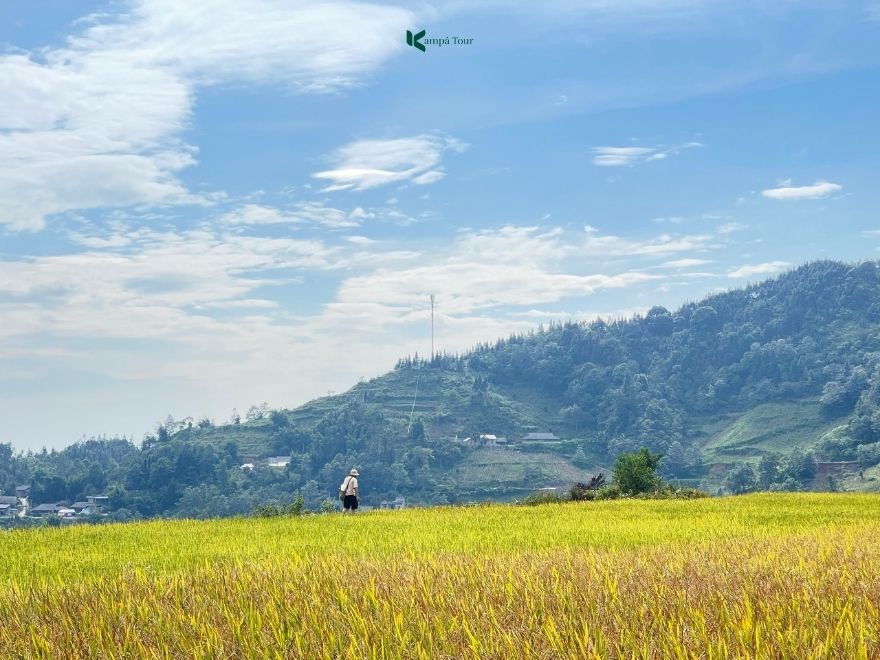
During my most recent trip to Bac Ha, I took guests to explore the golden ripe rice season there.
What a multi-day operator should be doing in those regions is pairing, not substituting. On a trip through the north, our guests travel with one licensed guide from Hanoi for the whole itinerary, and that guide works alongside a local guide at each stop who knows the specific trails, families and viewpoints a first-time visitor would never find alone. Ask which model an operator uses before you commit to a multi-day mountain route. A single local guide with no card and no backup is a different kind of risk than a local guide working alongside someone accountable for the whole trip.
Sign #4: Nobody can tell you how long their guide has actually been there
Back in the cities, there is a filter that happens before you ever meet your guide, one most travellers never think to ask about. Guides choose which companies they take work from too. You cannot see any of that directly, but there is a proxy signal you can ask for: how long this particular guide has been working with the company. Guides do not stay long with operators who cut corners on them, so two or three years with the same company is quiet evidence that the things you cannot check are probably fine. A company that has never thought about this question will fumble the answer. One that has will give you a name and a number without reaching for a script.
A commentary by an experienced French-speaking guide from Kampá Tour.
Sign #5: The price does not add up and nobody explains why
A day tour has to pay for a vehicle, fuel, a driver, a guide, entrance fees, lunch, insurance and the company behind it. When a quote lands far below what those things cost, the money has not disappeared. It is being collected somewhere else, and you are the one who supplies it.
It usually comes back as commission stops, a group bigger than advertised, an older vehicle, or a guide paid so little that tips are not a bonus but the job. Cheap on its own is not a red flag. I know a Ninh Binh day tour that regularly beats OTA prices, and it is not a mystery why: the operator owns the vehicle instead of renting it, the group runs bigger so the fixed costs spread further, and it books mostly in low season, when nothing gets marked up the way it does in July and August. Cheap with no explanation of how it is possible is a different thing entirely.
So ask. "How are you able to offer this price?" is not an aggressive question, and the answer is revealing either way. Operators with a real reason will tell you in one sentence.
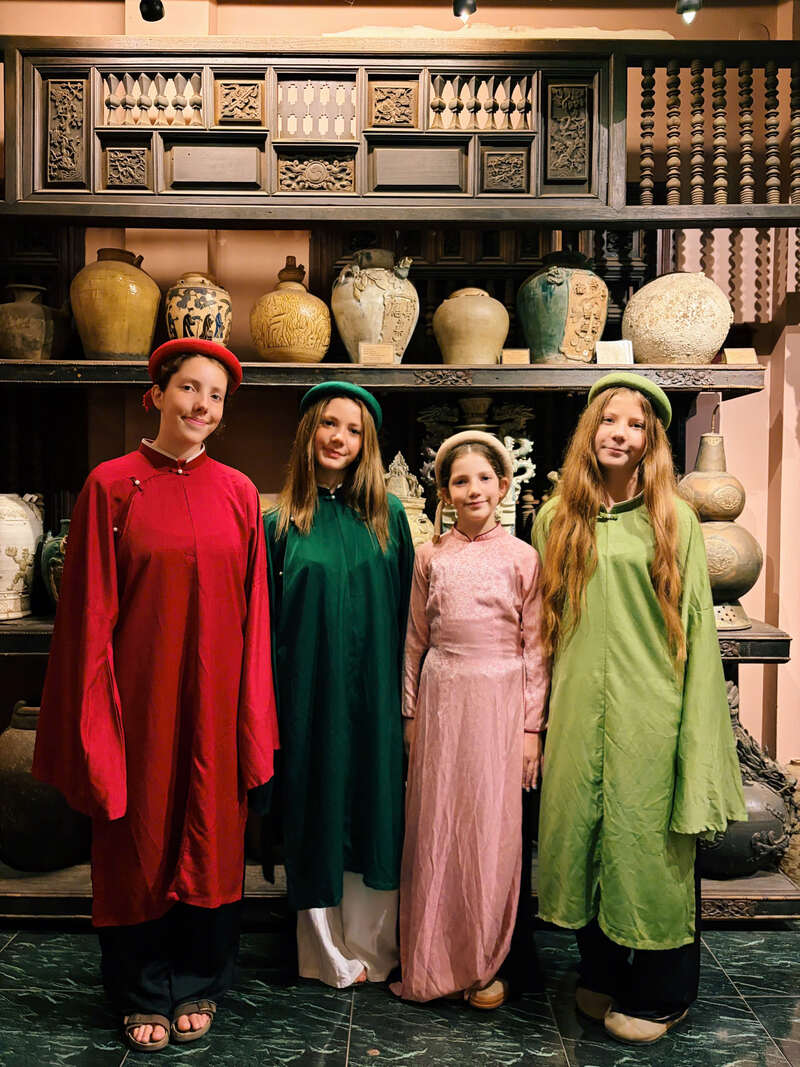
Renting costumes at the FITO Museum is a paid activity.
Sign #6: The day has more shopping stops than sights
Here is where I refuse to be absolute. A workshop in a village where people actually make things, with time to look and nobody hovering, can be the best hour of the whole day. A pearl showroom on the road home, entered through a door that somehow closes behind the group, is the same idea wearing a different shirt.
The stop is not the problem. The balance is. Ask how many stops there are, how long each one lasts, and whether they are optional. One commercial stop in a five-stop day is a trade-off, and honestly, some travellers enjoy it. The test I actually use is timing, not intent: if a stop eats twenty minutes out of an eight-hour day, fine, but if three stops eat two hours out of a five-hour day, the itinerary was built around the shops and the sightseeing got fitted in around them, not the other way round.
There is a structural difference here too. On cheaper, joined group tours, a shopping stop is often built into the route by default, it is part of how the price gets low enough to sell in the first place. On a private tour, it works the other way round: a stop like this is an optional suggestion your guide floats, not something baked into the itinerary, and you can simply say no.
Sign #7: You cannot find out who you are actually paying
Before money moves, get three things in writing: the registered name of the company operating your tour, the refund terms with actual dates attached, and confirmation of which account you are paying into. A personal bank account or a personal QR code is not a company account, and that is the hardest situation of all to unwind if the tour never happens.
Something that surprises a lot of travellers: the company that takes your booking, the company that runs the tour, and the guide who meets you can legally be three different businesses. That is normal here and not sinister by itself. What matters is knowing which one is responsible when something goes wrong, and whether the name on your confirmation is the name you found in the licence database.
And treat a vague refund policy exactly like a vague itinerary. "Message us and we will see what we can do" is not a policy. It is a mood.
Sign #8: Nobody will say what happens if the weather cancels it
This is the question hardly anyone asks and a lot of people end up needing. On the coast, tours are not cancelled by the operator. They are cancelled by the authorities. When a storm approaches Quang Ninh, the port authority stops issuing departure permits and every boat on Ha Long Bay stays at the pier, no matter what you paid or how far you came.
It happens more often than the brochures suggest. In early July 2026, as storm Maysak approached, overnight cruise boats and evening sightseeing boats on the bay were suspended from noon on 3 July, other passenger vessels from 5pm the same day, and boats already out on the water had to bring their guests back before that deadline. A guide from one large Quang Ninh operator told a Vietnamese newspaper that his company cancelled every day tour and overnight cruise that weekend and refunded guests 50% of what they had paid.
Fifty percent was that company's call, not a national rule. Which is exactly why you want the number before you book rather than after. Two questions do it: what do you refund when the authorities close the water, and is there a land alternative on the day. An operator who runs that route regularly will answer both instantly, because they have already lived it several times.
I can tell you exactly what that answer looks like for us, because it depends on the route. On the boat rides through Ninh Binh, if the waterway gets shut, we refund the boat ticket itself, VND 250,000, and usually add a free meal to soften the disappointment. On Ha Long Bay it works differently, because an overnight cruise already has a hotel night and transport booked before the boat is due to leave: we refund what is left after those costs are deducted, not the full amount.
It is not a tidy round number, and I will not pretend it is. But it is the honest answer, and it is the same answer whether you ask me in January or during typhoon season. If an operator gives you a suspiciously clean percentage without blinking, ask them to break down what that number actually covers.
Sign #9: The reviews say nothing, or say the same thing
Star ratings are the least useful part of any review page. What I read are the specifics and the replies. A review that mentions the route, the group size, the vehicle, the guide's name, or how a problem got sorted out is worth twenty reviews saying "amazing experience, highly recommend".
A few habits that clear most of the noise. Read only the last six to twelve months, because owners, guides and vehicles change fast here. Read the one and two star reviews first, then read how the company responded, because a calm and specific reply to a complaint tells you more than any five star rave. Be wary of clusters of short glowing reviews posted within days of each other.
And check the name. Copying a well known operator's name, with a word added or a word dropped, is a long-running trick in Vietnam. The imitator is counting on you recognising something familiar and not looking twice.
Sign #10: The group size is a mystery
I run private trips for a living, so please apply the appropriate scepticism to what follows. Small is not automatically better. I have watched a private day fall flat because the guide and the guests simply never clicked, and I have watched twenty people have a brilliant time because the guide was good and the day was built properly.
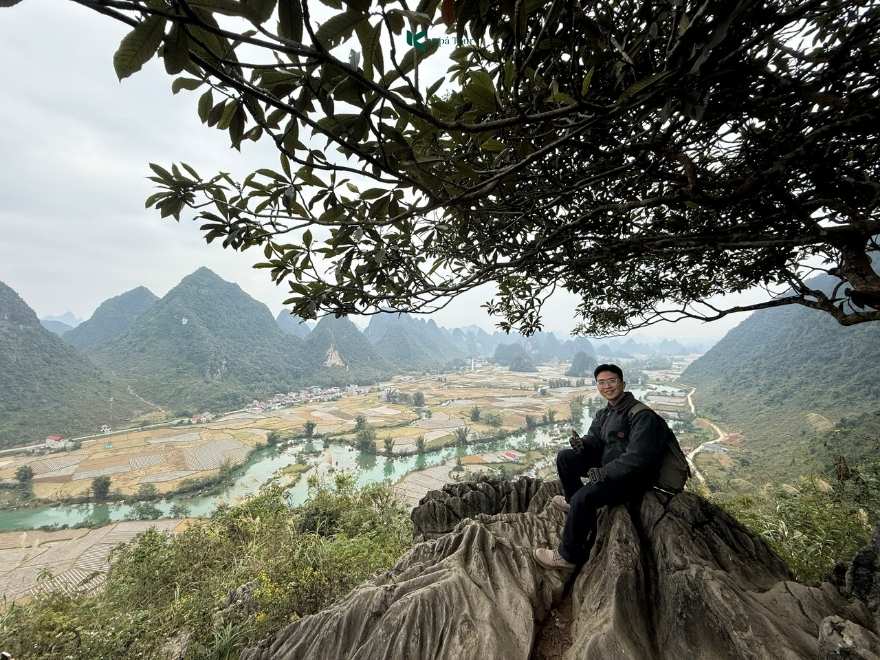
Me, while guiding tourists on an exploration of the Ngoc Con area in Cao Bang.
What group size really changes is pace. In a group of four you can linger somewhere you love. In a group of thirty the day belongs to whoever is slowest, and lunch takes an hour longer than it should.
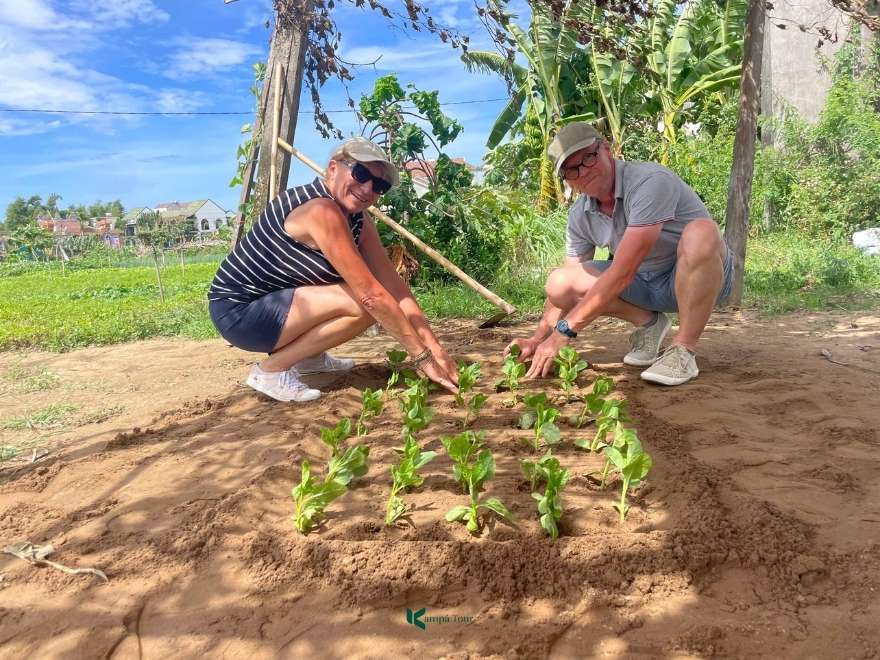
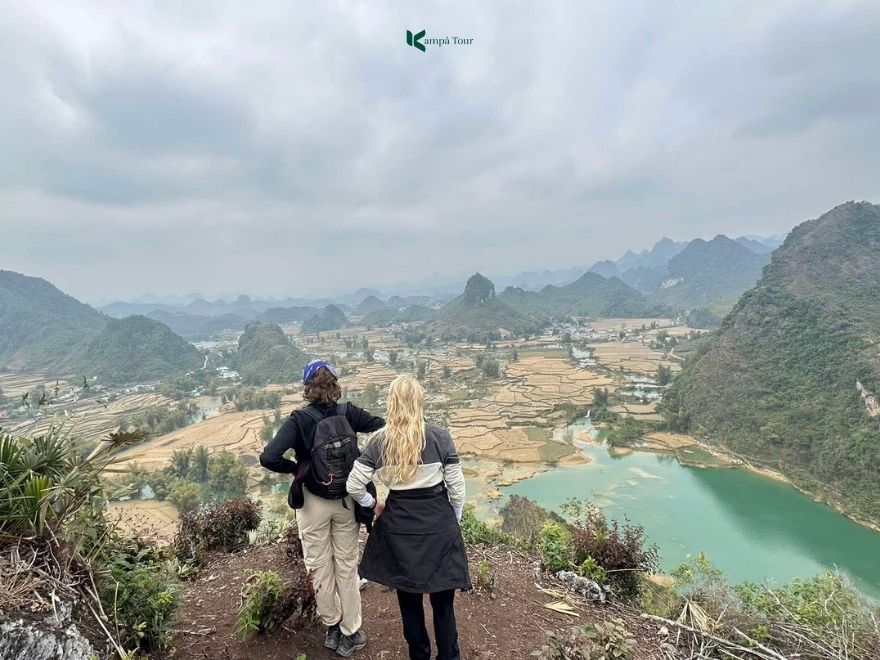
The couple of tourists on the trip with me.
So the number matters less than whether the number is stated. "Small group" with no maximum written anywhere is marketing language. "Maximum eight guests" is a promise you can hold someone to, and if they break it you have something to point at.
The ten questions I would send before paying
Copy these into one message. How fast the reply comes, and how specific it is, will tell you more than an afternoon of reading websites.
Ask this
A good answer looks like
What is your international tour operator licence number?
A number, given without hesitation, that matches the public database
Which company will actually operate my tour?
A registered name, even if it differs from the brand I booked with
Will my guide hold an international guide card in my language?
Yes, with the card shown or the number given
What will I still need to pay for on the day?
An itemised list, or a clear "nothing"
What is the maximum group size?
A number, in writing
How many stops are commercial, and can I skip them?
A straight answer instead of a change of subject
What are the driving times between stops?
Times that actually add up to the length of the day
What is the refund policy if I cancel, and if you cancel?
Percentages tied to dates
What happens if the weather or the authorities stop the tour?
A clear breakdown of what's refunded, what's deducted, and a backup plan
How long has my guide been working with you?
A real name and a real tenure, not "all our guides are experienced"
Is it better to book a tour in advance or once I arrive?
Neither is safer by default. A hotel desk is convenient and gives you a human being you can go back to, but plenty of desks resell tours on commission and genuinely do not know who operates them. Booking ahead gives you time to check the licence and read the terms. The safe version of either one is the version where you know the operating company's name before you pay.
Are Viator and GetYourGuide safe to use in Vietnam?
They are reasonably safe for your money, because the platform holds it and enforces a cancellation policy. What they cannot promise is who runs the tour on the ground, since the listings come from local operators of wildly varying quality. Use the platform for the financial protection, then still check the operator behind the listing.
Do I really need travel insurance for a day tour?
Yes, and read the activity list. Standard policies cover medical emergencies and cancellation but often exclude motorbike riding, caving and kayaking unless you add them on. The operator's insurance covers the operator's liability, which is not at all the same as covering you.
How do I know a company is really local?
Look at where it is registered and licensed, not at how the homepage describes itself. The licence database shows the registered name, the address and the province. Anyone can type the words "local expert". A licence issued in Vietnam to a company with an office you could walk into is a fact.
Anything extra for solo travellers?
Ask who else is confirmed on the tour, whether pickup is from your accommodation or a meeting point, what time the day ends and where you get dropped off, and whether you will have the guide's phone number. Operators used to solo guests answer all of that without blinking. Operators who find the questions strange are telling you something.
Planning your trip?
Save time and get expert advice for FREE!
✅ 15 years of local experience
✅ Save up to 40 hours of planning
✅ Travel stress-free from start to finish
Book your free consultation today!








 Our team
 Our team
 Our team
 Our team


 Other
Other Add us as a preferred source