





- Is Independence Palace worth visiting?
- Why is Independence Palace historically significant?
- What should you see inside Independence Palace?
- 1. The “From Norodom Palace to Independence Palace” exhibition
- 2. The state and reception rooms
- 3. The private quarters and upper levels
- 4. The underground bunker and command rooms
- 5. Tanks 843 and 390
- 6. The architecture
- Practical information for visiting Independence Palace
- Where is Independence Palace?
- Opening hours
- Independence Palace entrance fee
- Guided tours
- Is there a dress code?
- Tips for a better visit
- What can you visit nearby?
- Final thoughts
Independence Palace in Ho Chi Minh City: Is It Worth Visiting?
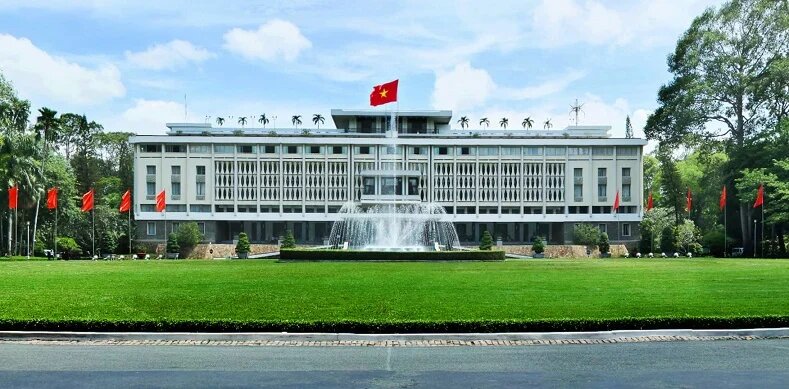
Independence Palace is one of Ho Chi Minh City’s most important historical landmarks. Also widely known as Reunification Palace, it is closely associated with the final events of the Vietnam War in April 1975.
But the palace is more than a stop for history enthusiasts. Its remarkably preserved reception rooms, presidential offices, private quarters, underground command bunker and distinctive 1960s architecture make it one of the few places in the city where visitors can step directly into the political world of South Vietnam before 1975.
Is Independence Palace worth visiting? Yes, especially if you are interested in modern Vietnamese history, architecture or the story behind present-day Ho Chi Minh City. Allow roughly 1.5 to 2 hours for a comfortable visit.
0 comment
Table of contents
What is Independence Palace?
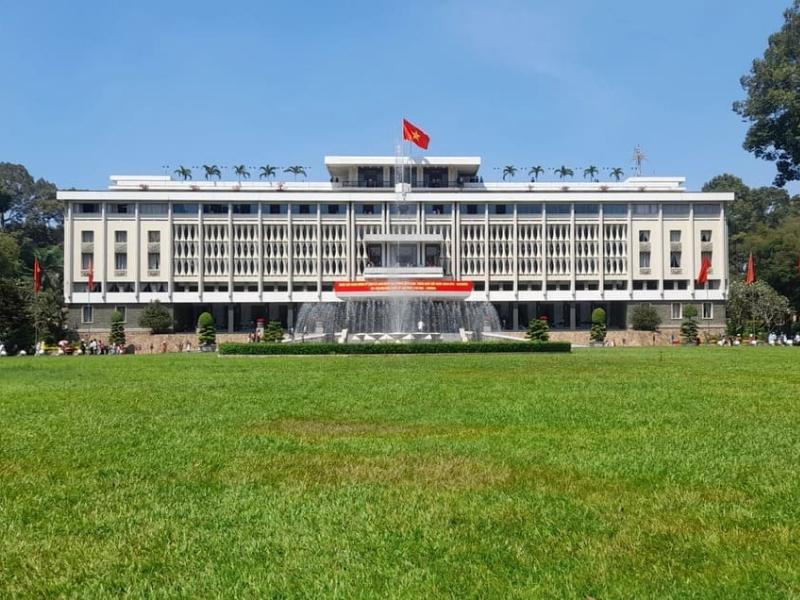
Located in central Ho Chi Minh City, Independence Palace served as a major seat of political power in southern Vietnam during the 20th century. The building visitors see today was designed by Vietnamese architect Ngô Viết Thụ and inaugurated in 1966.
Inside, you can walk through formal reception halls, presidential offices, private living areas and an underground command bunker, with much of the original furniture and equipment still in place.
The palace is also commonly referred to in English as Reunification Palace. Today, the historic site is officially presented as Independence Palace.
Is Independence Palace worth visiting?
For most first-time visitors to Ho Chi Minh City, yes.
What makes the visit worthwhile is that the history remains closely tied to the spaces where it happened. Rather than seeing objects removed from their original setting, you walk through the actual reception halls, offices, communications rooms and living areas once used for political, diplomatic and presidential life.
It is a particularly good choice if you:
- want to understand Vietnam’s modern history beyond dates and textbooks
- are interested in the Vietnam War
- enjoy modernist architecture and interior design
- are already visiting other historic sites in central Ho Chi Minh City
If you have very limited time and little interest in history, it may not be your highest priority. In that case, choose the attractions that best match your interests rather than visiting simply because the palace appears on every sightseeing list.
For history-focused travelers, Independence Palace and the War Remnants Museum work particularly well together. One preserves a former centre of political power, while the other approaches the war mainly through photographs, documents and exhibits.
Why is Independence Palace historically significant?
The story of the site stretches back more than 150 years, but a few key dates are enough to understand how it became one of Ho Chi Minh City’s most significant historical landmarks.
On February 23, 1868, French Governor Pierre-Paul de La Grandière laid the first stone of Norodom Palace. Completed in 1871, it initially served as the residence and headquarters of the Governor of Cochinchina and, from 1887 to 1945, as the seat of successive Governors-General of French Indochina.
In 1954, the palace was transferred to the State of Vietnam and renamed Independence Palace. On February 27, 1962, the original building was badly damaged in a bombing and could not be restored. A new palace, designed by architect Ngô Viết Thụ, was built on the same site. Construction began on July 1, 1962, and the present building was inaugurated on October 31, 1966.
President Nguyễn Văn Thiệu lived and worked here from 1967 until April 1975, making him the president most closely associated with the current building.
The palace’s best-known moment came on April 30, 1975. Tank 843 entered through a side gate, followed shortly afterwards by tank 390 breaking through the main gate. The government of the Republic of Vietnam subsequently surrendered, bringing the war to an end. Vietnam was formally reunified as one country in 1976.
The site was recognized as a National Historical and Cultural Relic in 1976. In 2009, it was classified as a Special National Monument, becoming one of the first ten sites in Vietnam to receive this status.
What should you see inside Independence Palace?
1. The “From Norodom Palace to Independence Palace” exhibition
If you have time, start with the exhibition house before entering the main palace.
The exhibition traces the transformation of the site between 1868 and 1966 and places the palace within the wider history of colonial Saigon and political developments in southern Vietnam. Photographs, documents and archival material help put the rooms you will see later into context.
Seeing this first makes the main palace much easier to understand, especially if you are unfamiliar with this period of Vietnamese history.
2. The state and reception rooms
The formal rooms show how the palace functioned as both a political and diplomatic centre.
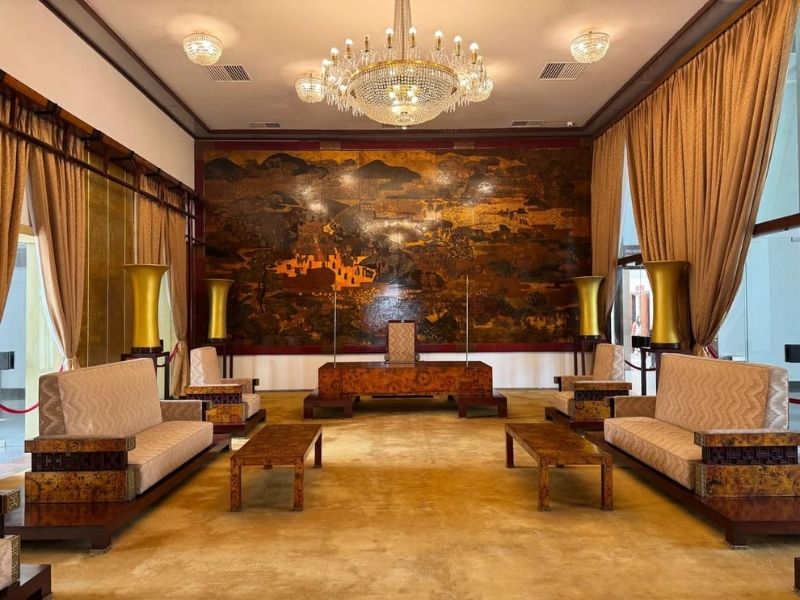
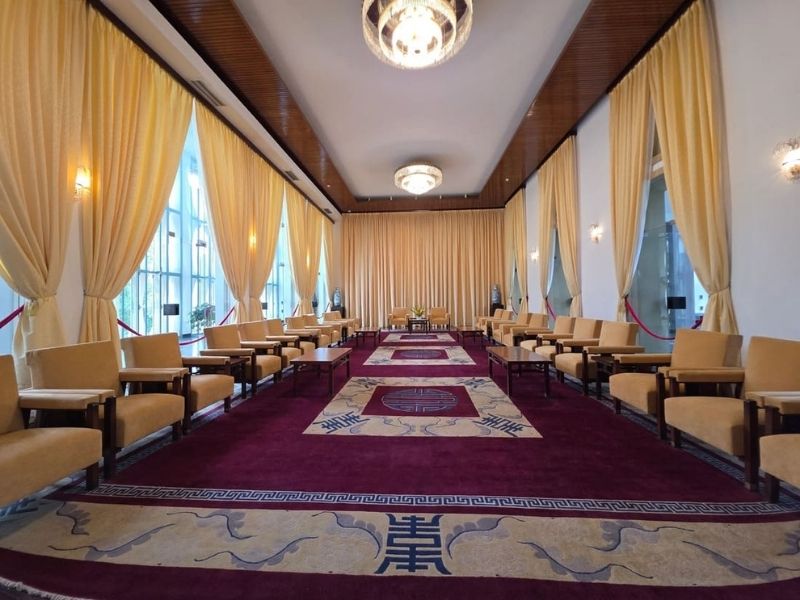
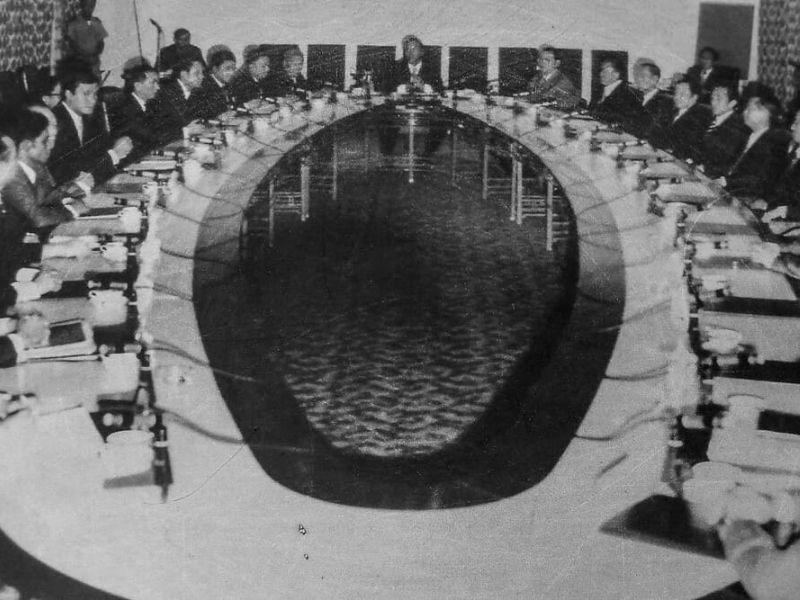
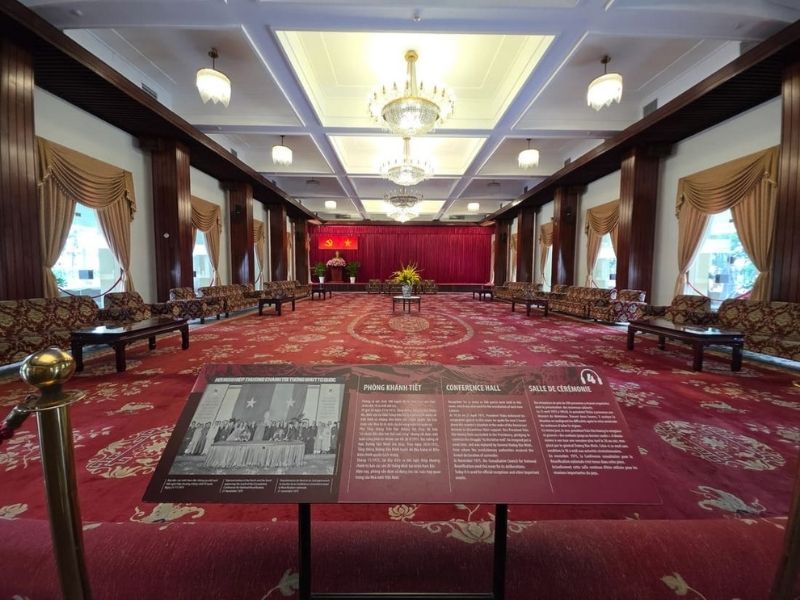
The route passes several of its most important spaces, including the Letter of Credence Room, Council of Ministers’ Chamber, Banquet Hall, presidential offices and reception rooms. There is no need to memorize every room name; what is more interesting is seeing how each space was designed for a different kind of official activity.
Much of the original interior remains in place. Carpets, curtains, period furniture, ceiling lights and large lacquer works give several rooms the feeling of a carefully preserved 1960s time capsule rather than a conventional museum reconstruction.
3. The private quarters and upper levels
The residential areas provide a more personal contrast to the formal rooms below and show that Independence Palace was not simply an administrative headquarters. It was also where the presidential family lived.
Ngô Đình Diệm lived and worked in the earlier palace on this site, while Nguyễn Văn Thiệu occupied the present building for the longest period, from 1967 to April 1975.
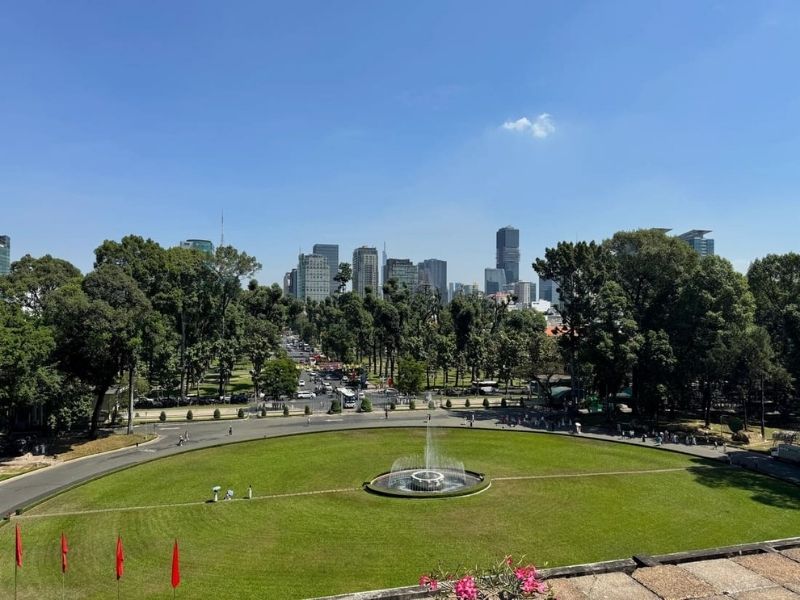
Continue upward and the atmosphere changes again. On the upper levels, visitors can see the former helicopter landing area and a UH-1 helicopter associated with the palace’s wartime history. The rooftop also includes the Pavilion of Universal Peace, or Tứ phương vô sự lầu, conceived as a space evoking peace in all directions.
From here, you can also look over the landscaped grounds, including the large oval lawn in front of the palace and the semi-circular lotus pond beyond the main entrance.
4. The underground bunker and command rooms
For many visitors, the basement is one of the most memorable parts of the palace.
The bright, spacious rooms above give way to narrow concrete corridors connecting communications rooms, briefing areas and command spaces filled with maps, telephones, radios and other equipment used during the war.
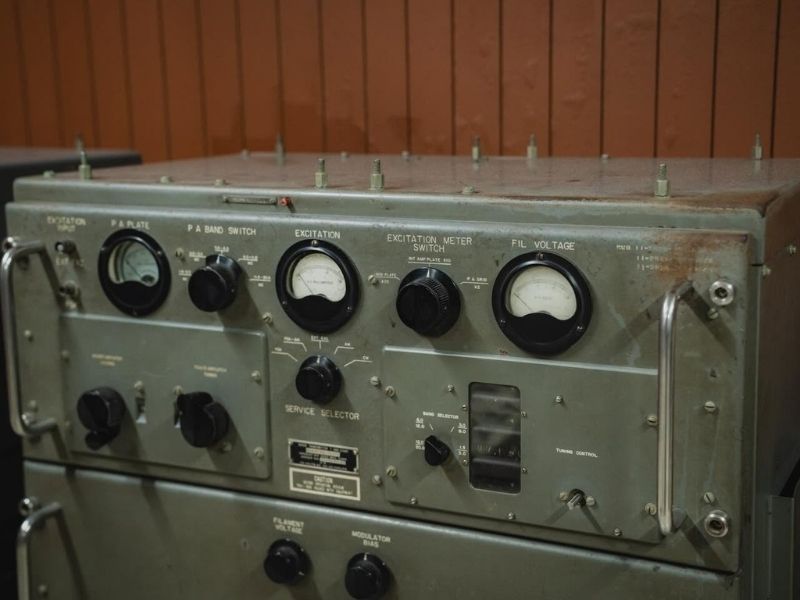
The bunker was built as a protected working area. Its interconnected rooms are lined with steel-armored walls about 5 mm thick and served by a dedicated ventilation system, giving this part of the palace a very different atmosphere from the ceremonial floors above.
Do not leave the bunker until the final few minutes of your visit. It deserves time of its own.
5. Tanks 843 and 390
The two tanks displayed in the palace grounds are closely associated with the events of April 30, 1975.
According to the official history of the site, tank 843 entered through a side gate before tank 390 broke through the main entrance.
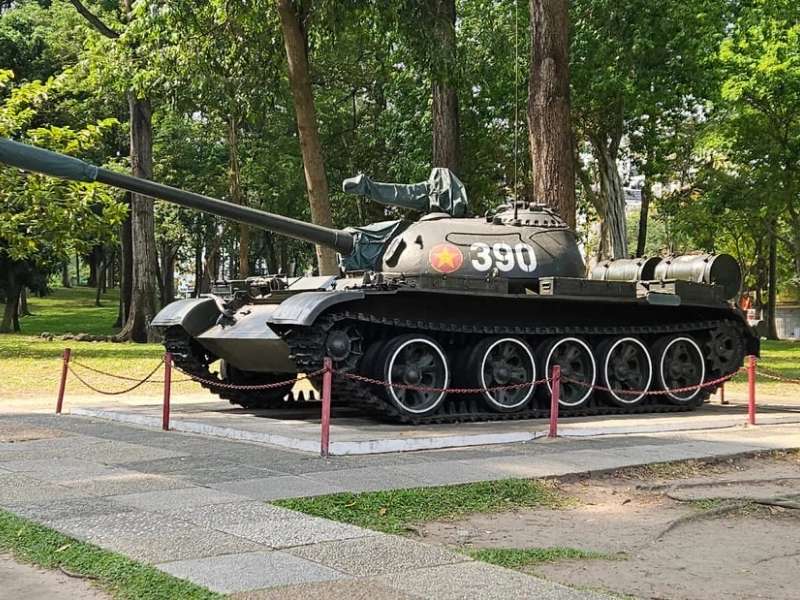
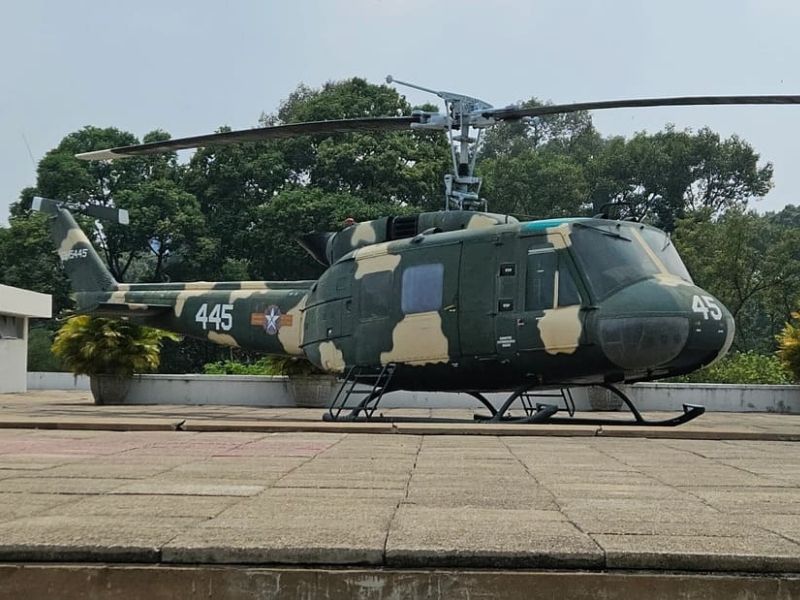
It is easy to treat them simply as photo stops, but take a moment to read the nearby explanations so you understand what each vehicle represents. This is particularly worthwhile when visiting with children or students, as the tanks provide a very concrete starting point for explaining what happened at the palace that morning.
6. The architecture
Even without its political history, Independence Palace would still be one of Ho Chi Minh City’s most distinctive modern buildings.
Architect Ngô Viết Thụ, the first Vietnamese architect to receive the Grand Prix de Rome, combined modernist principles with traditional East Asian ideas and symbolism.
The main building rises 26 metres and has about 20,000 m² of usable space. Its layout includes three main floors, two mezzanines, a ground floor, basement and rooftop terrace, with nearly 100 rooms serving different functions. The wider palace grounds cover approximately 12 hectares.
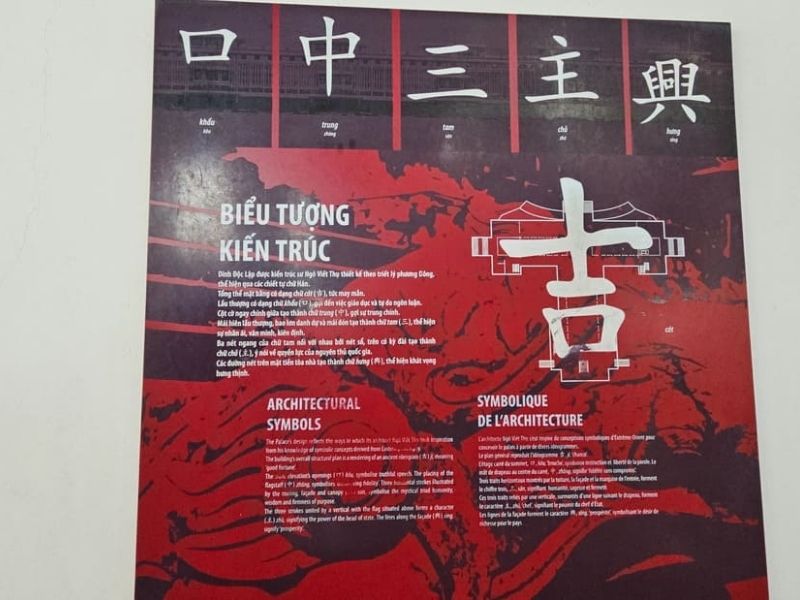
Some of the symbolism is built directly into the plan. The overall layout evokes the Chinese-Vietnamese character Cát (吉), associated with good fortune. The rooftop pavilion forms the character Khẩu (口); together with the central flagpole, it creates Trung (中), traditionally interpreted here as a symbol of loyalty and integrity.
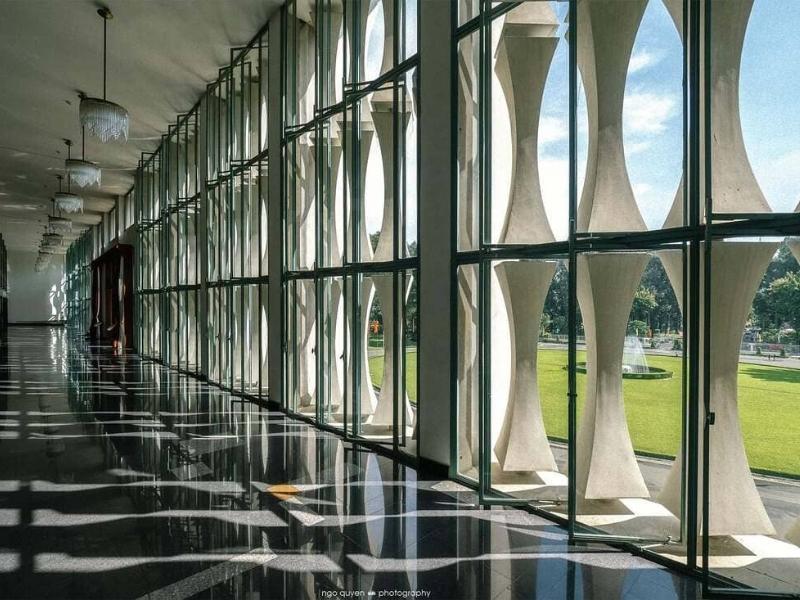
The façade is equally distinctive. Stone screens surrounding the second floor resemble stylized bamboo segments and were inspired by the traditional “cửa bàn khoa” found in the imperial architecture of Huế. They are decorative, but also practical, filtering direct sunlight while allowing natural light into the building.
The surrounding landscape is part of the architectural composition too. In front of the palace lies an oval lawn about 102 metres across, while a semi-circular pond filled with lotus and water lilies recalls the water features commonly seen in traditional Vietnamese temples and pagodas.
Practical information for visiting Independence Palace
Where is Independence Palace?
Main entrance:
135 Nam Ky Khoi Nghia Street, Ben Thanh Ward, Ho Chi Minh City
Nguyen Du entrance:
106 Nguyen Du Street, Ben Thanh Ward, Ho Chi Minh City
The palace is in the historic centre of Ho Chi Minh City and is easy to combine with other central attractions.
Opening hours
As of 2026, Independence Palace is open daily from 7:00 AM to 6:00 PM, including weekends and public holidays unless a special closure is announced.
Ticket sales operate at different times depending on the entrance:
- 135 Nam Ky Khoi Nghia: 7:00 AM to 6:00 PM
- 106 Nguyen Du: 8:00 AM to 4:00 PM
Independence Palace entrance fee
Ticket prices effective from May 1, 2026 are:
Palace + exhibition:
- Adults: 80,000 VND
- Seniors aged 60 and over: 40,000 VND
- Vietnamese university students: 40,000 VND
- Children: 20,000 VND
Palace only:
- Adults: 40,000 VND
- Vietnamese university students: 20,000 VND
- Children: 10,000 VND
Electric car: 25,000 VND per person, per ride.
Reduced-fare eligibility, particularly age limits for children and concessions for seniors, should be checked on the official website when booking, as these categories may be updated.
Guided tours
Official guided tours are available in Vietnamese and English, and a visit generally lasts around 60 to 70 minutes per site.
Published guide-service rates have included:
- One site, either the Palace or exhibition space: 350,000 VND per group
- Both the Palace and exhibition space: 600,000 VND per group
The official site currently states that guided-tour services start from 350,000 VND, so it is worth confirming the latest two-site rate before booking.
Tickets can also be purchased online through the official ticketing platform, which is particularly useful during weekends and public holidays.
Is there a dress code?
The current official visitor regulations do not state a specific dress code or explicitly prohibit shorts or sleeveless tops.
That said, Independence Palace is an important national historic site, so comfortable but respectful clothing is a sensible choice.
The official rules prohibit weapons, explosives, hazardous substances, animals and large items. Food, smoking and littering are also prohibited, and filming or audio recording may be restricted.
Tips for a better visit
- Go early if possible. The palace is more pleasant before large tour groups arrive, particularly on weekends and public holidays.
- See the exhibition first. Understanding the transition from Norodom Palace to the present building makes the rooms inside much more meaningful.
- Do not skip the bunker. Even if you are short on time, set aside part of your visit for the underground command rooms.
- Read before photographing. Many rooms can look similar at first glance. Their significance often becomes clear only once you understand what they were used for.
- Allow around 1.5 to 2 hours. Visitors mainly interested in architecture may move through more quickly, while history enthusiasts can easily spend longer.
- Buy tickets online during busy periods. On public holidays, booking online in advance or arriving when the palace opens can help reduce waiting time.
- Expect crowds around April 30. Independence Palace is closely associated with this anniversary and attracts particularly high visitor numbers around the national holiday.
What can you visit nearby?
Because Independence Palace sits in central Ho Chi Minh City, it can easily be included in a half-day walking or sightseeing route with several other landmarks.
Nearby places include the War Remnants Museum, Notre Dame Cathedral of Saigon, Saigon Central Post Office, Nguyen Van Binh Book Street and Ben Thanh Market.
If modern history is your main interest, Independence Palace and the War Remnants Museum make the strongest pairing. If architecture and city life interest you more, continue towards Notre Dame Cathedral, the Central Post Office and the surrounding streets.
Final thoughts
Independence Palace is worth visiting not simply because an important event happened here, but because so much of the place remains connected to the period it represents.
The contrast between formal reception rooms, private living spaces, a fortified underground command centre and the tanks outside makes the history unusually tangible. At the same time, details such as the stone screens, symbolic floor plan and carefully landscaped grounds make it rewarding even beyond its wartime history.
For a first visit to Ho Chi Minh City, it is one of the best places to understand how the city’s architecture, politics and modern history intersect, especially when you take the time to look beyond the famous façade.
>>> Related articles from Kampá Tour:
- FITO Museum: Vietnamese Traditional Medicine Heritage
- Best Things to Do in Ho Chi Minh City: A Complete Travel Guide
- Ben Thanh Market: From Swampland To Ho Chi Minh City's Vibrant Heart
- Explore Top 10 Ho Chi Minh City's Museums & Historical Sites
Do You Say Saigon or Ho Chi Minh City? Explore the Differences!
Visiting Saigon or Ho Chi Minh City, the capital of southern Vietnam, can be an intriguing experience because some people refer to the large city as Ho Chi Minh City, while others call it Saigon.
Discover the intriguing history of this fascinating city and learn which name is most commonly used today.

Saigon Foodie Guide: 20 Best Restaurants for All Budgets
Looking for the best restaurants in Saigon? Discover 20 places from affordable to upscale, serving delicious Vietnamese cuisine and street food delights.
The Cu Chi Tunnels: The Extraordinary History of an Underground World
Tiny trapdoors hidden under the foliage, dark and narrow passages, and dangerous traps concealed on every side to ensnare the enemy—these are the defining features of the Cu Chi Tunnels. This vast underground labyrinth, known as the Cu Chi Tunnels, is filled with astonishing stories about the Vietnam War (1954-1975) that most travelers are unaware of. This "underground village," complete with kitchens, dormitories, meeting rooms, and hospitals, was never destroyed despite numerous bombings. Join us as we explore the narrow passages and cavities of the Cu Chi Tunnels and discover this legendary underground complex, showcasing the ingenuity and heroism of the Vietnamese during the war.


 Other
Other