6 Timeless Traditional Villages in Cao Bang Worth the Journey
Heritage Traditional Villages in Cao Bang In the highlands of Cao Bang, tradition is more than just a site to visit, it is a living organism where every village plays a vital role. If the indigo of Xom Khao is the soul and the ancient stone walls of Khuoi Ky are the bones, then the Yin-Yang tiles of Lung Ri are the skin of this heritage. But to truly live, a body needs a pulse: the rhythmic strike of steel in Phuc Sen acts as the heartbeat, the fragrant smoke of Phia Thap serves as the breath, and the handmade paper of Dia Tren remains the memory that carries the story forward. Together, these villages create a tapestry of survival and pride that has remained unbroken for five centuries, offering a deep look into the resilience of the Nung, Tay, and Dao people.
Written by Oliver PHUNG (Tour Guide)
Updated on Mar 16, 2026
0 comment
Oliver Phung is a Northern Vietnam-based tour guide and blogger. His favorite topics to write about include cuisine, culture, travel, and under-the-radar experiences. Oliver possesses a deep, detailed understanding of the region, from the indigenous culture of the Hmong in the Northwest to the highland lifestyle of the Tay in the Northeast. Whether he is exploring ancient architecture or geological landscapes, he is always eager to share his insights with his readers.
Beyond his work at Kampá Tour, he produces specialized travel content on platforms such as Reddit, Instagram, LinkedIn, and various other publications.
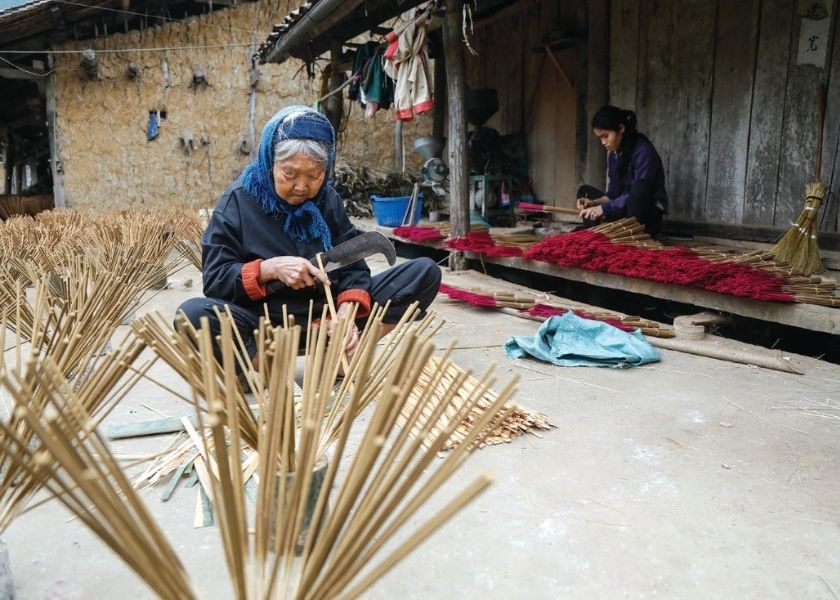
As one of the seven recognized traditional craft villages in Cao Bang province, Phia Thap (Quoc Dan commune, Quang Hoa district) is famous for its incense-making craft, which is still maintained by the Nung An people today. You won’t find any industrial chemicals here; everything is sourced directly from the surrounding limestone forest.
Phia Thap incense village is the main producer and supplier of traditional incense to the market in the northern mountainous region.
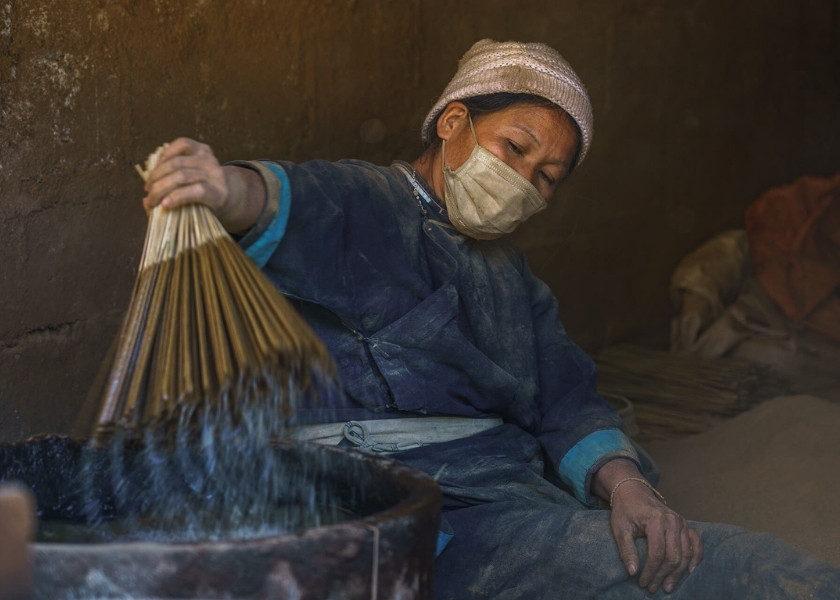
The process is manual from start to finish. It begins with apricot wood, which is cut into 40cm sections and whittled down until each strip is as thin as a chopstick. The "glue" that holds it all together comes from the leaves of the Bau Hat tree. These leaves, along with rice tree bark, are ground into a fine powder and mixed with sawdust.
Nung An women in Phia Thap are taught to make incense from a young age, and this work continues into their old age.
To build each stick, the artisans dip the apricot strips into water mixed with Bau Hat powder, a natural binder, and then roll them in the sawdust mixture. This coating process is repeated exactly four times to achieve the right thickness. Once the sun has done its job drying them, the bases are dyed a vibrant red before being tied into bundles for the local markets.
Phuc Sen is the largest blacksmithing hub in Cao Bang, with a history stretching back over 500 years to the Mac Dynasty. Back then, the king brought master craftsmen to this mountain region to forge weapons and cannons for border defense. Today, the Nung An people have shifted from guns to farming tools, but the spirit of the forge remains unchanged.
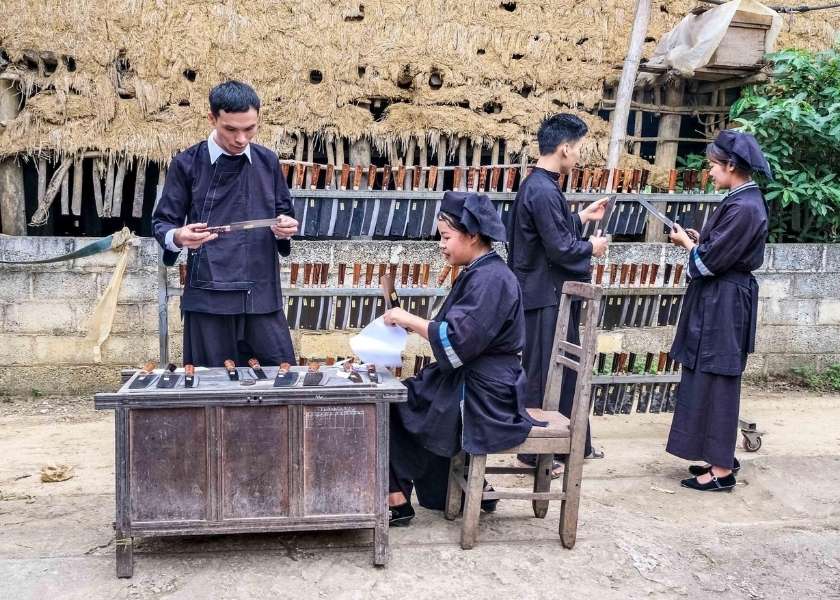
A display of traditional Nung knives in Phuc Sen village.
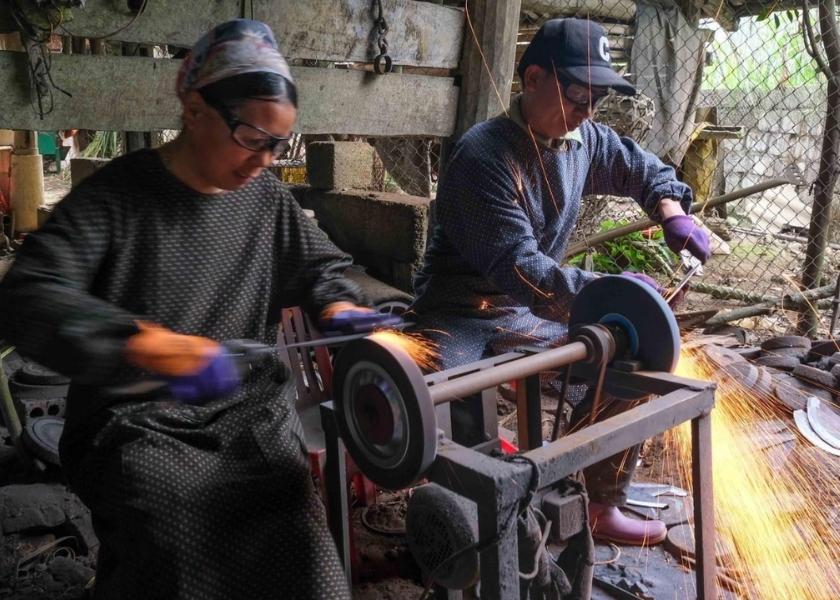
What makes a Phuc Sen knife famous isn’t high-tech machinery; it’s the "Truck Spring". Artisans recycle steel from old truck leaf springs because of its incredible durability and ability to hold a sharp edge. The process is entirely manual: heating the metal in charcoal forges, hammering it into shape by hand, and the most critical step, tempering (hardening). This secret technique is what gives Pac Rang knives their legendary toughness.
The Nung people in the village grew up amidst the sounds of hammering steel and sparks flying.
You will hear the rhythmic "clang-clang" of hammers echoing through the village long before you see the workshops. Even though these handmade knives cost three times more than mass-produced imports from China, people still seek them out. It’s not just a tool; it’s a piece of craftsmanship built to last a lifetime.
Dia Tren Papermaking Village
Located within the UNESCO Global Geopark, Dia Tren is a 500-year-old village where the Nung An people turn the forest into art. While Phia Thap provides the scent (incense), Dia Tren provides the medium: Giấy Bản (traditional handmade paper).
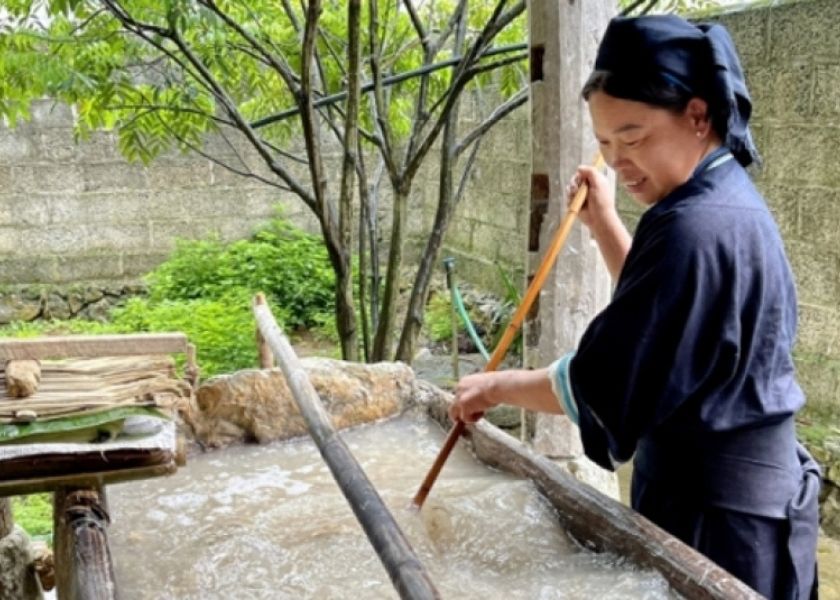
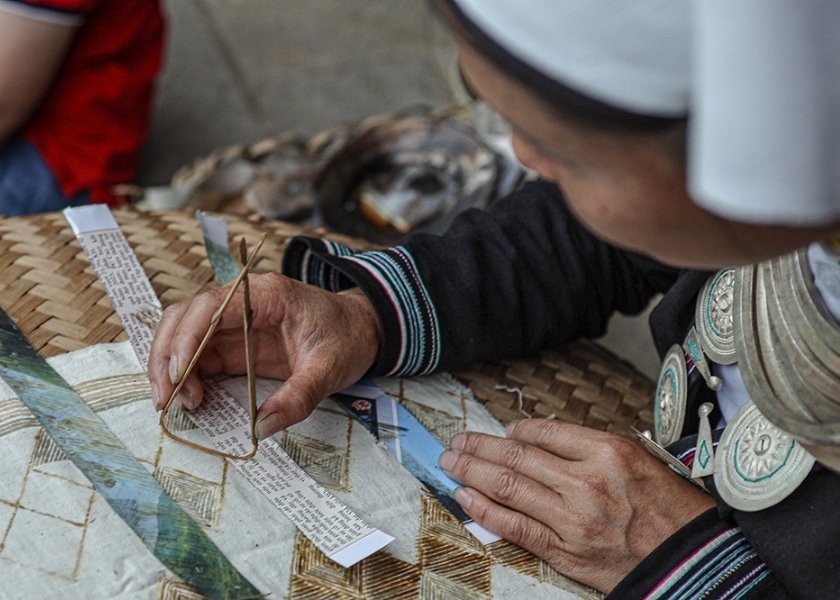
The secret lies in the May Sla bark. This local bark is cooked, pounded, and stirred into a watery pulp. Artisans then use a bamboo screen to "catch" the fibers, creating thin, durable sheets that have a characteristic earthy smell and a beautiful, raw texture. For centuries, this paper was used mainly for spiritual rituals, but today, the village has breathed new life into it.
In the village of Dia Tren, only four families still preserve this traditional craft.
You’ll find that Dia Tren is now a hub of eco-creative products:
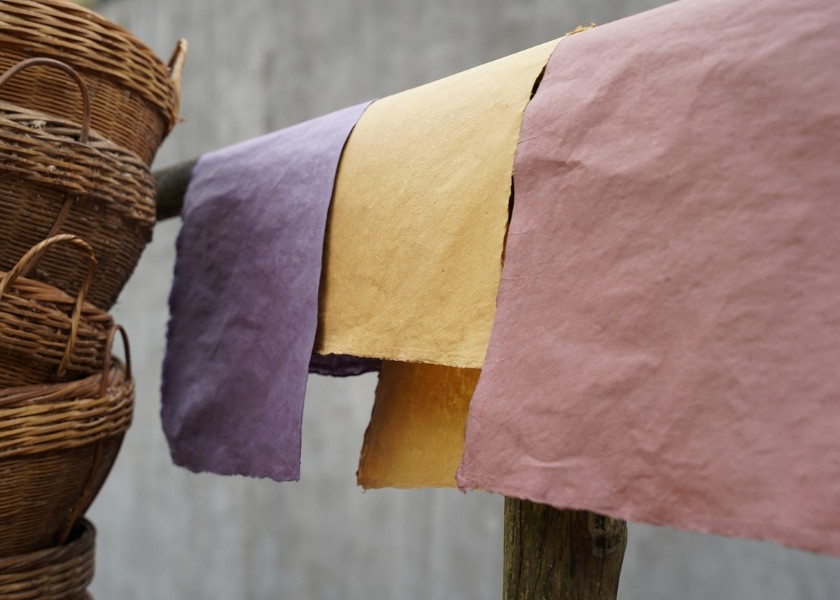
Paper Fans: Dyed with natural pigments from forest leaves, these fans are elegant, lightweight, and a favorite among travelers looking for a meaningful souvenir.
Artistic Canvas: Because the paper is chemical-free and highly absorbent, it’s a dream for calligraphy and sketch artists who want to capture the landscape of Northern Vietnam.
Hand-stitched Notebooks: Rustic, simple, and perfect for travel journaling. Each page feels like a piece of history.
Eco-Packaging: From gift bags to handmade cards and even delicate paper flowers, everything here showcases a deep commitment to environmental preservation.
Colorful handmade paper sheets from the Dia Tren paper-making village.
Each product bought here tells a story of cultural survival. In Dia Tren, "going green" isn't a trend; it's a 500-year-old tradition. You can watch the artisans stir the pulp, try your hand at the screens, and take home a piece of the Nung An soul that is both ancient and modern.
Xom Khao & Hoa Tham Villages: The Art of Indigo & Beeswax (Batik)
In the world of brocade in Northern Vietnam, indigo is the soul of the fabric. But in Cao Bang, two different ethnic groups, the Nung An and the Dao Tien, have their own ways of "writing" stories on the fabric. Although they share the deep blue hue of the mountains and forests, their techniques are two completely different worlds.
Xom Khao (Nung An Indigo)
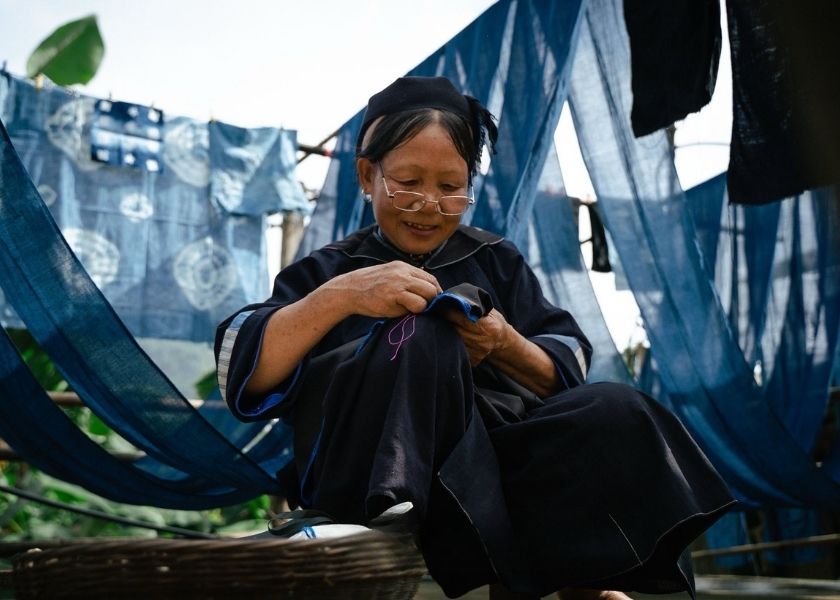
In Khao Hamlet, the Nung An people of Phuc Sen commune don’t look for patterns; they look for depth. You will find giant stone troughs standing like silent guardians outside their stilt houses, filled with the dark, shimmering liquid of fermented indigo plants and forest bark. This is the art of solid indigo dyeing, where the goal is a color so deep it almost looks like the night sky. The process here is a month-long test of endurance.
The traditional clothing of the Nung people in Cao Bang consists of garments woven from indigo-dyed fabric.
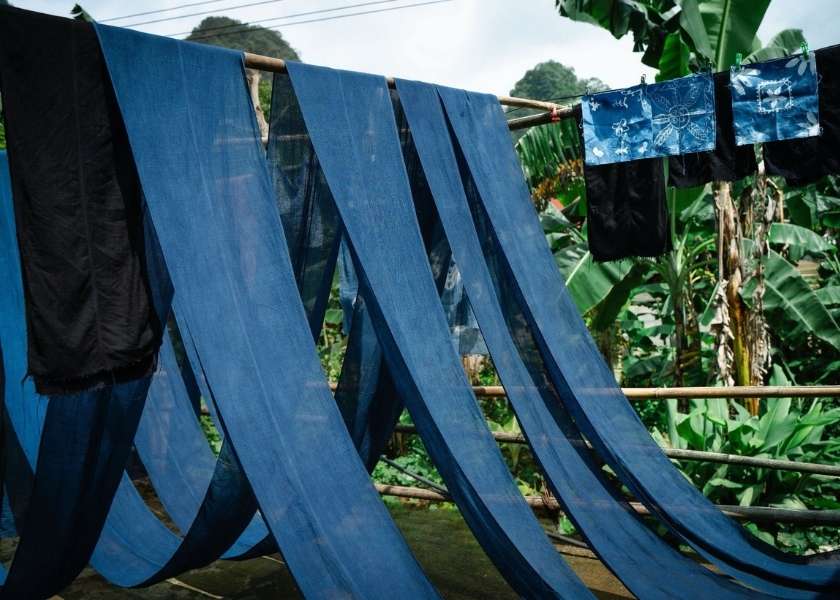
Every single day, for thirty days, the women dip and dry the cloth, letting the mountain sun bake the color into the fibers. By the time they finish, the fabric is no longer just cloth; it’s an inky, blue-black shield that carries a distinct, earthy scent. It takes ten meters of this hand-labored fabric to make one traditional outfit: a heavy, beautiful weight that represents a full month of an artisan's life and dedication.
The blue-dyed fabrics are drying in the sun.
Hoa Tham (Dao Tien Indigo)
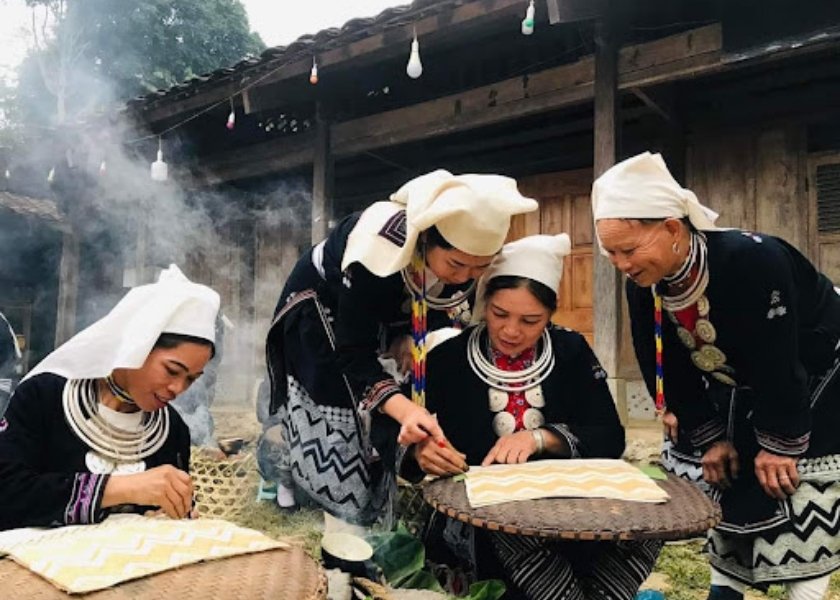
Then there is the story of the Dao Tien in Nguyen Binh, where the indigo is only the beginning. At Hoa Tham or Hoai Khao, the artisans shift the narrative to the exquisite art of beeswax printing, or Batik. They don't use industrial wax; they harvest from wild "ong khoái" colonies in local caves only after the bees have migrated for the season, ensuring the cycle of nature remains unbroken. Before the first drop of wax touches the cloth, they spend hours rubbing the surface with a wild boar tusk until it is as smooth and shiny as silk.
The Dao Tien people are a minority ethnic group in Vietnam, and currently only Cao Bang province still has them.
Using handmade bamboo stencils, they print geometric coins and mountain symbols in molten beeswax onto the white fabric. The artisan must master the fire; if the wax is too hot, the story smudges; if it's too cold, it refuses to stick. These patterns remain invisible, buried under layers of indigo during the dyeing weeks, only to be magically revealed when the cloth is finally boiled and the wax melts away.
They are known for their meticulous attention to detail in their attire, featuring silver jewelry and patterns painted with beeswax.
Lung Ri Yin-Yang Roof Making Village
If the indigo fabric is the soul and the stone walls are the bones, then the Yin-Yang tiles of Lung Ri are the "skin" of Cao Bang’s traditional architecture. For over 200 years, this village in Tu Do commune has been the primary source of the iconic curved tiles that protect stilt houses from the harsh mountain elements. Walking into Lung Ri, you won't see modern assembly lines; instead, you’ll witness a grit-and-sweat process that has remained unchanged for centuries.
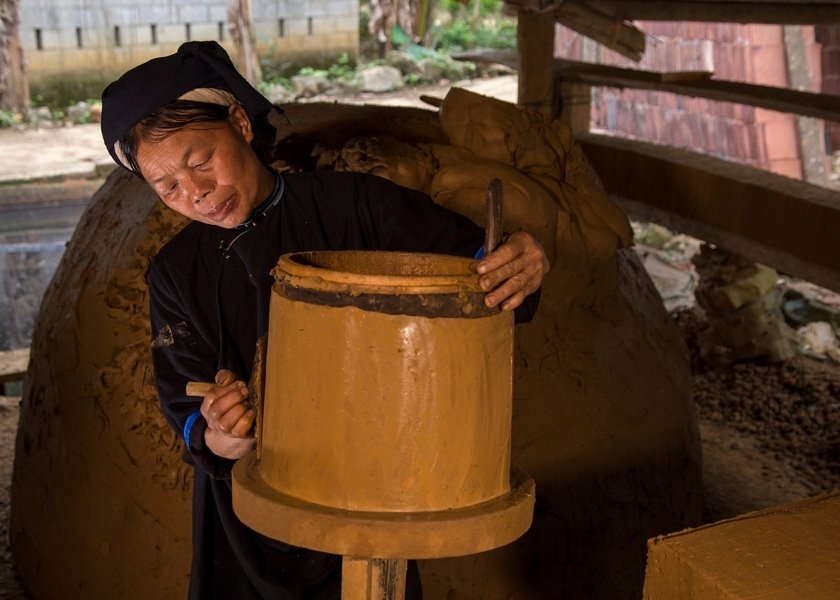
Nung artisans in Lung Ri village are meticulously carving and cutting terracotta surfaces to create yin-yang roof shapes.
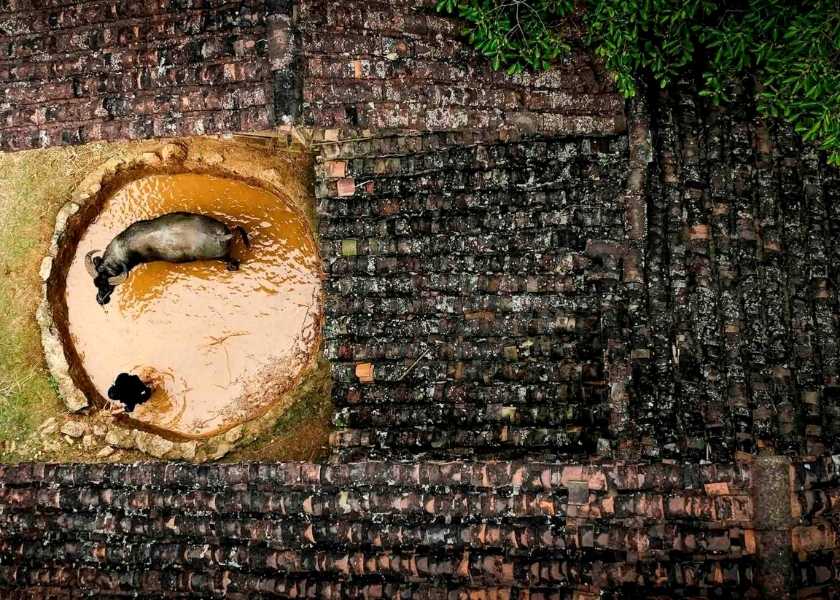
The journey of a single tile begins with the earth itself, a specific type of fine, elastic clay. In a scene that feels like stepping back in time, water buffaloes are used to trample and knead the mud until it reaches the perfect consistency. This raw, manual kneading is the secret to the tile’s durability. After the clay is aged and filtered for nearly a week, artisans use a clever circular mold with four internal ridges. With a skilled slap and a quick rotation on a wooden pedestal, one block of clay is shaped into a cylinder that will later be split into four separate tiles.
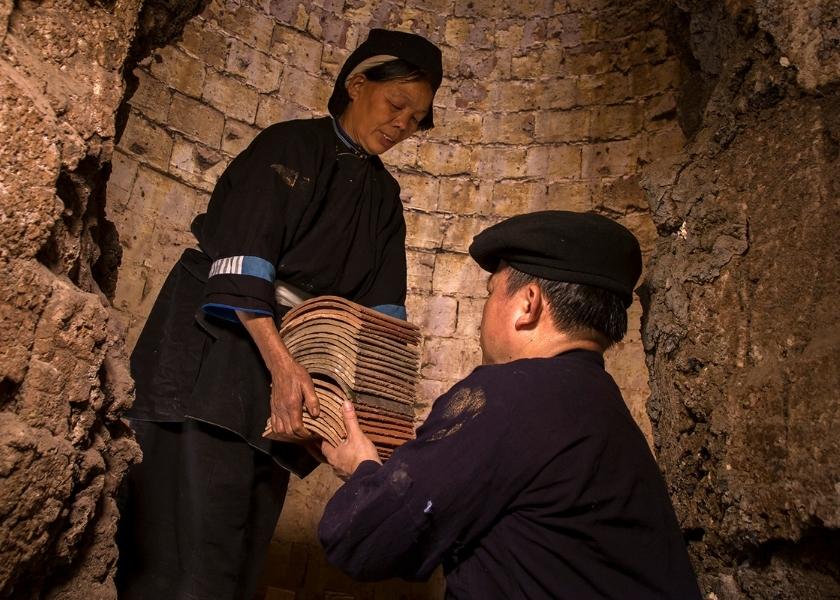
The Yin-Yang tile roofs after being shaped.
The final, and most grueling, stage happens at the kilns. For seven days and seven nights, the fire must be fed continuously. Villagers take turns watching the flames, ensuring the temperature stays consistent to bake 15,000 to 18,000 tiles per batch. These "Ngói máng" (trough tiles) are legendary for their climate-control abilities: they allow the house to "breathe," keeping it cool in the humid summers and trapping heat during the bone-chilling winters. In Lung Ri, making tiles isn't just a job; it’s a "family legacy" that ensures the ancient skyline of Northern Vietnam doesn't disappear under modern corrugated iron.
A panoramic view of the Yin-Yang tiled roof village from above.
The Architectural Icon: Khuoi Ky Stone Village
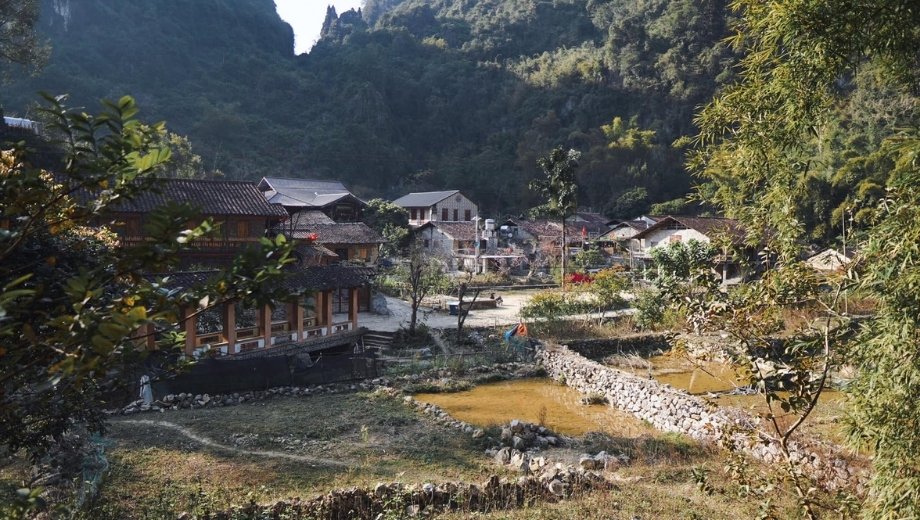
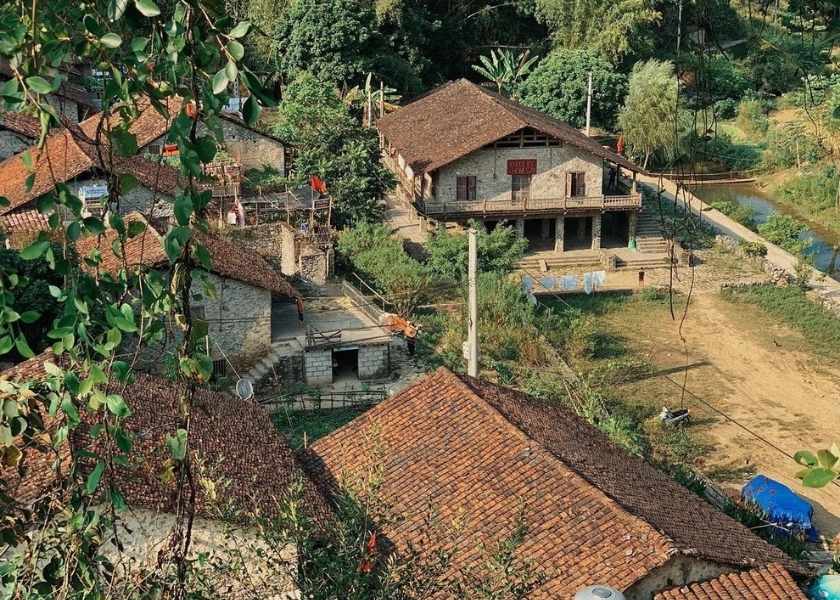
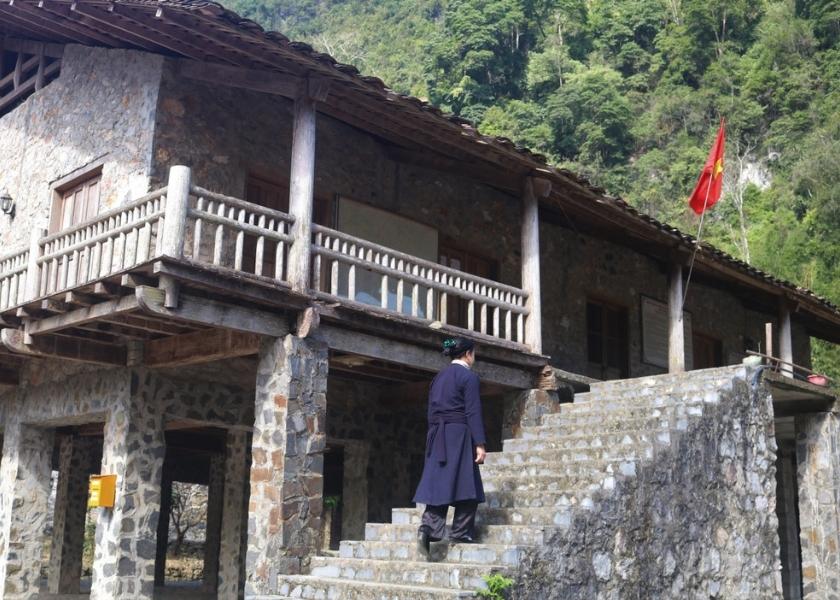
While Ha Giang is famous for the traditional houses of the Hmong and Dao ethnic groups in Lo Lo Chai, with their classic earthy yellow color, the houses of the Tay and Nung ethnic groups in Cao Bang offer a sturdy, fortress-like beauty. The most prominent example in Cao Bang is Khuoi Ky stone village, with its solid stilt houses built with interconnected stone blocks, without the use of concrete.
Architecture of Khuoi Ky stone village.
The Khuoi Ky stone village community is nestled neatly at the foot of the green hills and limestone cliffs of the Non Nuoc Geopark. These structures are not just homes, they are historical fortresses dating back to the 16th century, when the Mac Dynasty retreated to Cao Bang and built stone walls to defend the border. For the Tay people here, stone is a sacred protector. The walls are often 60cm thick, creating a natural climate control system that keeps the interior cool in the humid summers and warm during the bone-chilling winters.
These houses are made entirely of stone, so they are very cool in the summer.
In the winter, when heating is used, the heat clings to the stone, retaining and radiating more effectively.
Once solely engaged in farming and livestock raising, the village now maintains traditional occupations alongside tourism, welcoming visitors with authentic homestays. Here, you can not only admire the architectural beauty of these "interconnected blocks" but also immerse yourself in the local life, participating in farming activities alongside the locals in a landscape that has remained unchanged for centuries.
FAQ: Quick Answers for Cultural Travelers
What ethnic groups live in Cao Bang?
Cao Bang is home to a diverse population of 573,119 people representing 30 different ethnic groups. The cultural landscape is dominated by the Tay people, who make up over 40% of the population, followed closely by the Nung at over 30%. Other significant groups include the Hmong at over 11% and the Kinh at over 5%, creating a rich mosaic of traditions and languages throughout the province.
How difficult is the Cao Bang Loop?
When comparing mountain circuits in Northern Vietnam, the Cao Bang Loop is generally rated at a 6 out of 10 in terms of difficulty. For perspective, the Ha Giang Loop sits at a more challenging 9 out of 10. Travelers will find that Cao Bang has fewer steep mountain passes and the roads are often wider and more open, providing a smoother driving experience while still offering spectacular views.
Can I buy the knives at Phuc Sen and fly with them?
You can definitely buy the famous handcrafted knives from Phuc Sen to take home as a souvenir. These products are allowed for international export, but you must follow strict airline safety protocols. Knives are never permitted in carry-on luggage, so you must pack them securely and place them in your checked baggage before heading to the airport.
How is it different from Duong Lam Ancient Village?
The traditional villages in Cao Bang offer a starkly different atmosphere compared to Duong Lam Ancient Village near Hanoi. Duong Lam is a classic reflection of Kinh culture and customs, characterized by three-compartment houses built from laterite bricks. In contrast, the villages in Cao Bang are centers for indigenous ethnic groups where the architecture is defined by wooden or stone stilt houses that reflect a high-altitude lifestyle.
Conclusion
While many popular northern destinations have moved toward commercial tourism, Cao Bang remains a sanctuary for those seeking the rawest form of ethnic culture. It is the "Post-Ha Giang" choice for travelers who want to escape the crowds and witness heritage that is still used for survival, not just for display. The UNESCO Global Geopark status ensures that these villages maintain their ancient relationship with the limestone landscape, preserving a way of life that feels remarkably untouched by the modern world.
Planning your trip?
Save time and get expert advice for FREE!
✅ 15 years of local experience
✅ Save up to 40 hours of planning
✅ Travel stress-free from start to finish
Book your free consultation today!













 Our team
 Our team
 Our team
 Our team




 Other
Other Add us as a preferred source