Happy Water Ha Giang Loop: Culture, Meaning & Tips
If you're planning the Ha Giang Loop, there's one thing almost every traveler comes back talking about.
I've taken travelers through Ha Giang for years, and without fail, the moment they talk about at the airport on the way home isn't the Mã Pí Lèng pass. It's the night they sat on a wooden floor somewhere in Dong Van, drinking something that tasted like fire and laughter at the same time. It's Happy Water.
Happy Water on the Ha Giang Loop is a ritual, a gesture of friendship, and one of the most genuinely memorable cultural experiences northern Vietnam has to offer. But to appreciate it properly, and navigate it safely, there's quite a bit worth understanding before you take that first sip.
Written by Trang Nguyen (Local Expert)
Updated on Jun 18, 2026
2 comments
Trang Nguyen has lived in Vietnam for nearly three decades and spent much of her life exploring Asia. She has joined numerous field trips, stayed with ethnic communities in the northern mountains, and gained deep insights into local cultures and landscapes. Her writing reflects an honest passion for authentic travel and meaningful connections. If you have any questions about her journeys, feel free to reach out and leave a comment!
Happy Water is the nickname travelers use for traditional corn or rice wine: known locally as rượu ngô, brewed by ethnic minority families throughout Ha Giang Province. It's not a branded product or a commercial spirit. Every batch is homemade, every bottle is different, and the act of sharing it carries far more meaning than the drink itself.
Feature
Details
Local name
Rượu ngô (corn wine) or rượu gạo (rice wine)
Nickname origin
Travelers' term for the happiness of sharing
Alcohol content
30–50% ABV
Base ingredient
Corn (most common) or rice
Made by
H'Mong, Dao, Tay and other ethnic minority families
Where you'll find it
Homestay dinners, village gatherings, local markets
Cultural meaning
Hospitality, friendship, and community
What Is Happy Water on the Ha Giang Loop?
The Simple Definition
Happy Water is a traditional homemade corn wine known locally as rượu ngô, commonly offered to guests throughout Ha Giang Province. It's distilled in family stills from locally grown corn or rice, using techniques passed down through generations. You won't find it in a shop with a label on the bottle. More often it arrives in a repurposed plastic water bottle, poured into small ceramic cups or shot glasses at the dinner table.
The strength varies depending on who made it and how long it was fermented, but most batches run between 30% and 50% alcohol, roughly comparable to vodka or stronger.
The strength varies depending on who made it and how long it was fermented
Why Is It Called "Happy Water"? Is It a Real Brand?
Happy Water is not a brand. It's a nickname that the traveler community: mostly backpackers and loop riders from the late 2000s and 2010s onward, invented to describe the communal corn wine experience at Ha Giang homestays.
How much is Happy Water?
Type of Corn Wine
Original Price (VND/L)
Adjusted Price (+30,000 VND/L)
Approx. USD Price
Standard Corn Wine (Traditional Herbal Yeast / Biological Yeast)
45,000 – 60,000 VND/L
75,000 – 90,000 VND/L
$3.0 – $3.6/L
Aged Corn Wine (Clay Jar Aged / “Ha Tho”)
60,000 – 100,000 VND/L
90,000 – 130,000 VND/L
$3.6 – $5.2/L
Baby Corn / Young Corn Wine
100,000 – 120,000 VND/L
130,000 – 150,000 VND/L
$5.2 – $6.0/L
Premium Bottled Corn Wine (Gift Packaging)
100,000 – 200,000 VND per bottle (500ml–1L)
130,000 – 230,000 VND per bottle
$5.2 – $9.2 per bottle
What Locals Actually Call It
The H'Mong and other ethnic communities of Ha Giang don't call it Happy Water. Locals refer to it as rượu ngô (corn wine), rượu gạo (rice wine), or sometimes rượu táo mèo (apple pear wine, a regional variant made from the sour crab apple fruit Docynia indica that grows in the mountains). Each family has their own recipe and their own name for what they make.
Locals refer to it as rượu ngô (corn wine), rượu gạo (rice wine), or sometimes rượu táo mèo
What Does Happy Water Taste Like?
Flavor Profile and Aroma
The first thing most people notice is the smell: sharp and earthy, with a slightly sweet grain note underneath. The corn variety has a more rustic, farmhouse character than rice wine, which tends to be cleaner and lighter on the palate.
At its best, a well-made batch of rượu ngô is surprisingly smooth for its strength, with a warm finish and a lingering sweetness that catches you off guard.
At its worst, it burns all the way down and leaves you wondering whether you made a mistake.
The Origins of Happy Water in Ha Giang
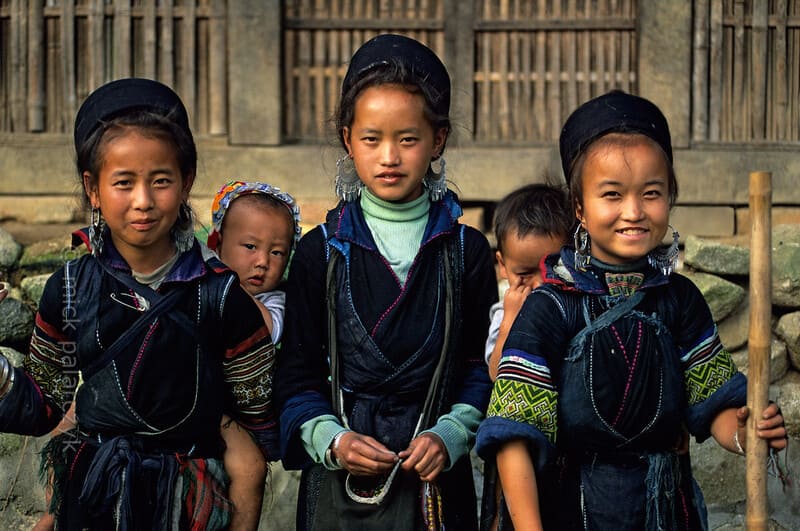
Ha Giang is one of the most ethnically diverse provinces in Vietnam, home to more than 20 different ethnic groups. The communities most closely associated with corn wine production are:
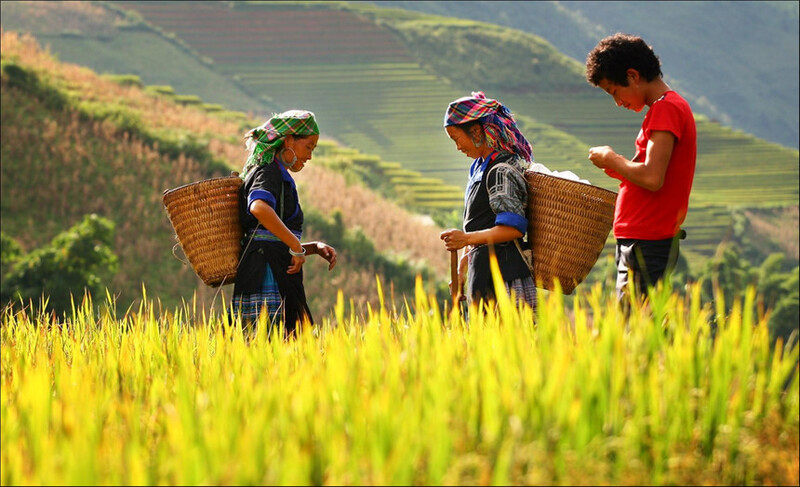
The Hmong are the largest ethnic minority group in Ha Giang and the most associated with rượu ngô in the traveler's imagination. They cultivate corn on steep terraced hillsides at high altitudes, and the wine they produce from that corn is integral to their social and ceremonial life.
The Dao (pronounced "Zao") also maintain strong brewing traditions, often producing herbal wine variants using mountain plants alongside the standard corn base. Their version sometimes has a medicinal quality and a distinctly different flavor profile.
The Tay tend to favor rice wine over corn wine and are concentrated in lower-altitude valleys. Their brewing tradition is older in documented history and the result tends to be milder.
Historical Roots
Fermented grain beverages have been part of mountain community life in northern Vietnam for centuries. Long before tourism existed, corn wine was part of every significant community event.
In many highland ethnic communities, sharing food and drink is a social contract. Accepting what a host offers signals trust and respect. Refusing, depending on how it's done, can communicate the opposite.
Happy Water is traditionally made from locally grown mountain corn (ngô nếp), though some families use glutinous rice or a mix of both. The grain is combined with men, a traditional fermentation starter made from rice flour, herbs, and local forest ingredients. Each family has its own recipe, which helps create distinct flavors.
After cooking, the corn or rice is cooled, mixed with the starter, and fermented in sealed clay pots or jars for several days to several weeks. Local mountain spring water is considered an important factor in the spirit's character. Longer fermentation typically results in higher alcohol content and more complex flavors.
Each family has its own recipe, which helps create distinct flavors.
The fermented mash is then distilled into a clear spirit. Many producers keep only the middle portion of the distillation for the cleanest taste, although methods vary from family to family.
How Strong Is Happy Water?
Typical Alcohol Content
Most Happy Water runs between 30% and 50% ABV, with the majority of what travelers encounter sitting around 35–45%. This puts it firmly in the same category as vodka or whisky, and considerably stronger than beer or wine.
Comparison with Other Alcoholic Drinks
Drink
Typical ABV
Beer
4–7%
Wine
11–15%
Happy Water
30–50%
Vodka
40%
Whisky
40–46%
Ranges based on figures commonly reported by local producers and tour operators.
Thẻ tour 8078, 3850, 5278
Where You'll Experience Happy Water on the Ha Giang Loop
Homestay Family Dinners
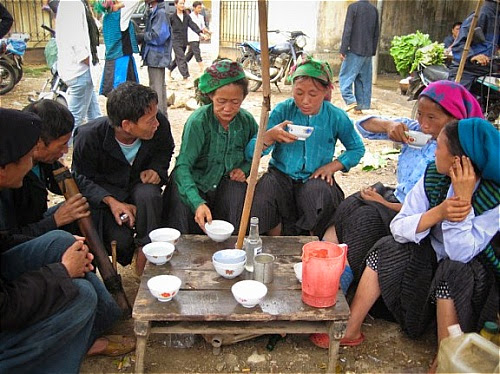
This is the primary setting. Almost every traveler's encounter with Happy Water happens at the dinner table of a homestay family. The meal usually begins with the host family bringing out dishes of home-cooked food: stir-fried vegetables, grilled meat, sticky rice and a bottle of their homemade wine.
The patriarch or matriarch of the family typically leads the first toast, welcoming guests formally before the meal begins.
Almost every traveler's encounter with Happy Water happens at the dinner table of a homestay family
Village Celebrations
If you happen to arrive during a wedding, a house-building celebration, or a community feast, you'll witness Happy Water at a completely different scale.
Village celebrations can involve dozens or hundreds of people, multiple large jars of wine, and a level of hospitality that makes homestay dinners look modest. These encounters are rarer but unforgettable.
Local Markets
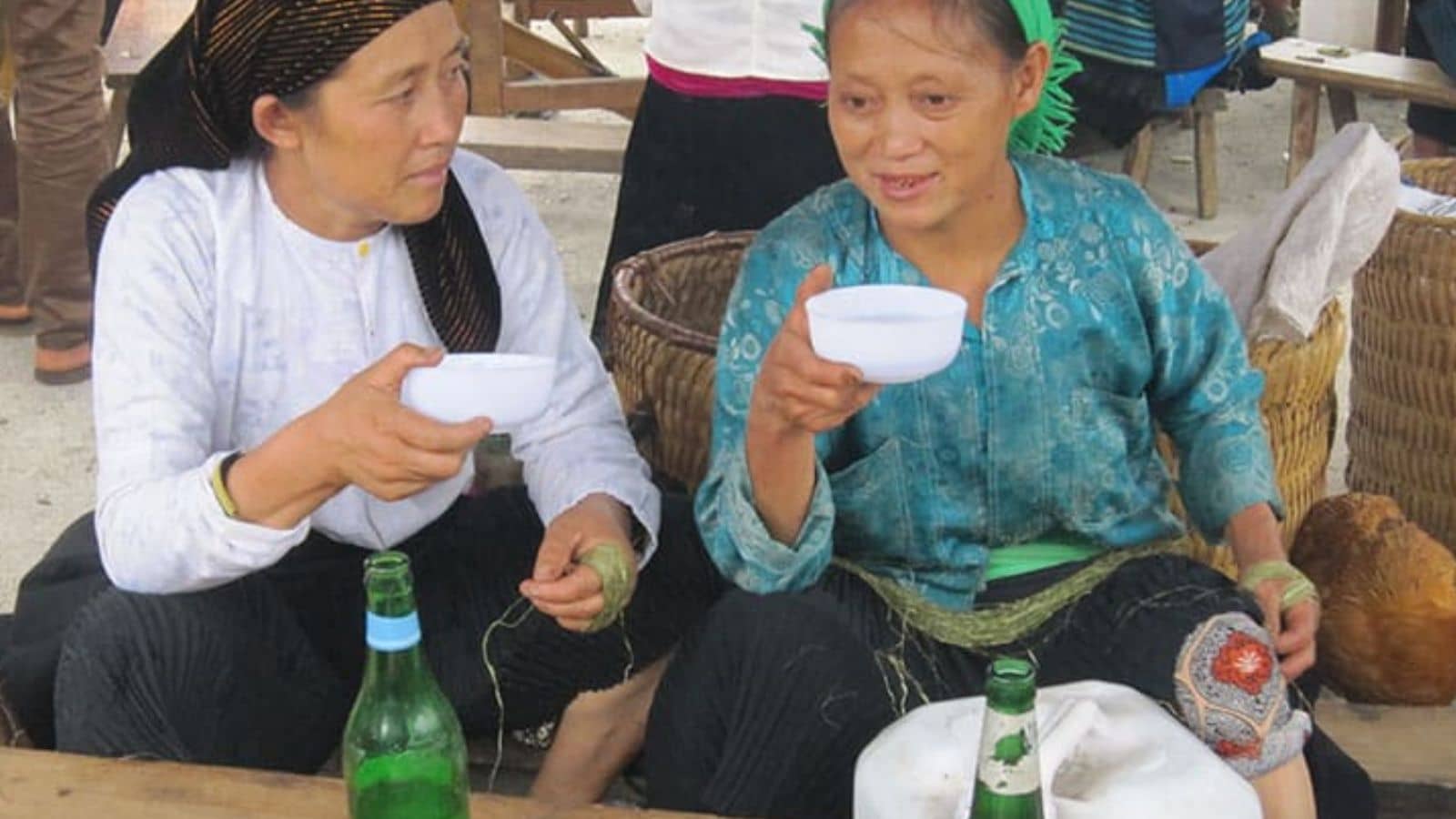
The weekly markets at Dong Van, Meo Vac, Lung Cu, and other towns along the loop are worth visiting partly for the food and partly for the produce - including bottles of corn wine and rượu táo mèo sold by local women.
This is one of the few places you can buy a bottle to take home. Prices are very low and the bottles are rarely labeled, so you're buying on trust.
Prices are very low and the bottles are rarely labeled, so you're buying on trust.
Festivals and Holidays
The biggest occasions for corn wine consumption are ethnic minority festivals: Tết (Lunar New Year), the H'Mong New Year (Tết Mông in November–December), harvest festivals, and spring planting celebrations.
If your visit coincides with any of these, the experience of Happy Water takes on an entirely different dimension - you're no longer a tourist guest but a participant in something genuinely ceremonial.
Traveler Tip: When someone offers Happy Water, they're often offering friendship rather than simply a drink. The way you receive it matters as much as whether you drink it.
Happy Water Etiquette: How to Drink Like a Local
Accepting a Drink Respectfully
The default response to being offered Happy Water by a host is to accept. Hold your cup with both hands, or at minimum with your right hand, when it's filled. Make eye contact with your host when toasting. Drink what's in the cup, or at least make a genuine attempt.
Common Vietnamese Toasts
The standard Vietnamese toast is "Dzô!" (sometimes written Dô! or Yo!), which roughly means "bottoms up." In Ha Giang's ethnic minority communities you may hear different toasts in H'Mong or Dao languages: just follow the rhythm, clink cups, and drink when everyone else drinks. If you attempt even one word of Vietnamese, your hosts will likely find it charming.
"Một, hai, ba, Dzô!" (One, two, three, cheers!) is the full version you'll hear at larger gatherings.
"Một, hai, ba, Dzô!" (One, two, three, cheers!) is the full version you'll hear at larger gatherings.
What NOT to Do
Don't wave your cup away rudely. A brief, polite decline is fine; dismissing the offer without acknowledgment can read as disrespectful.
Don't drink so much that you become incapacitated. Beyond the obvious health concerns, this puts your host family in an uncomfortable position and affects your ability to ride safely the next morning.
Don't try to out-drink your hosts. Locals have been drinking this since adolescence. You will not win and the attempt will probably make the evening worse for everyone.
Don't pour your own cup. Wait for your host to pour for you, and pour for others when their cup is empty. This reciprocal dynamic is part of the ritual.
Smile genuinely and thank your host before declining.
Explain briefly - "I don't drink alcohol, but thank you so much."
Accept a small cup anyway if you're comfortable just holding it to participate in the toast without drinking.
Avoid an abrupt or cold refusal - the tone matters much more than the words.
Ask for tea or water to toast with; many hosts are happy to accommodate this.
Thẻ tour 10313
Is Happy Water Safe? What Travelers Should Know
Understanding Homemade Alcohol
Homemade spirits carry a different risk profile than commercial alcohol. The risk of methanol contamination, which is the serious concern with homemade spirits, is low when the distillation is done properly, but it isn't zero.
Drinking Responsibly on the Loop
If you've had several cups of corn wine at dinner, be honest with yourself about your state the next morning before you get on a motorbike. Altitude, dehydration, and poor sleep compound the effects of alcohol in ways that are easy to underestimate until you're already on a cliff road.
Be honest with yourself about your state the next morning before you get on a motorbike
Choosing Reputable Homestays
Booking through a reputable Ha Giang tour operator, like Kampá Tour gives you some assurance that the homestays on your route have been vetted: not just for comfort, but for the safety of the food and drink they offer guests.
Common Traveler Mistakes
Drinking too much on night one and being miserable for the most scenic day of the loop.
Accepting every refill out of social pressure rather than genuine desire.
Mixing Happy Water with beer or other alcohol.
Not drinking enough water, staying hydrated is essential at altitude.
Riding the following morning while still impaired.
Happy Water is the traveler nickname for traditional homemade corn or rice wine (rượu ngô or rượu gạo) made by ethnic minority families in Ha Giang Province.
2. Is Happy Water made from corn or rice?
Most commonly corn. Ha Giang's highlands are major corn-growing areas, and corn wine is the dominant local tradition.
3. How strong is Happy Water?
Typically between 30% and 50% ABV, roughly equivalent to vodka. Strength varies between producers and batches with no standardization. It's considerably stronger than beer or wine and should be treated accordingly.
4. Can I refuse Happy Water politely?
Yes. A warm smile, a genuine expression of gratitude, and a brief explanation are all you need. Most hosts understand and will not take offense if the refusal is delivered with respect. You can hold an empty cup to participate in the toast without drinking.
5. Is Happy Water safe to drink?
Generally yes, particularly at established homestays with a track record of hosting travelers. The risk of serious harm from properly distilled homemade spirits is low.
6. Do all Ha Giang homestays serve Happy Water?
Most homestays along the loop will offer it, as it's a central part of the hospitality tradition.
Conclusion
Every time I bring a new group through Ha Giang, I watch for the moment at dinner when the bottle comes out. Some travelers hesitate. Some dive straight in.
But the ones who receive it well: who hold the cup with both hands, look the host in the eye, and say Dzô with genuine warmth, those are the ones who end the night still sitting there at midnight, long after the food is cleared, swapping stories through hand gestures and laughter with a family they'll probably never see again.
That's what Happy Water actually is. The drink is just the door.
Especially if it does.
Continue your Ha Giang preparation: read our full Ha Giang Loop itinerary guide, explore recommended local homestays, or subscribe for more Vietnam travel tips from Kampá Tour.
If you're looking to buy Happy Water in Hanoi, it's worth knowing that "Happy Water" isn't one specific drink. Locals and travelers often use the term to describe traditional Vietnamese rice or corn liquor (rượu trắng), while in northern Vietnam it can also refer to Rượu Táo Mèo.
Here are some good places to look:
Rượu Sơn Tinh: One of the best places to buy high-quality, professionally bottled Vietnamese rice liquor.
Convenience stores such as Circle K or WinMart+ sometimes carry bottled local rice liquor.
Liquor stores around Hanoi's Old Quarter often sell Rượu Táo Mèo, rượu trắng, and other locally made fruit wines.
If you're dining at a local restaurant, you can simply ask for rượu táo mèo or rượu trắng if you'd like to try the authentic local version.
If you're planning to take it home, it's recommended to buy a sealed bottle with the alcohol percentage clearly printed on the label, as these are much more likely to comply with airline and customs regulations than homemade bottles.
If you're looking for the truly authentic homemade version, you'll usually need to get it from a local family or producer rather than a regular shop.
Planning your trip?
Save time and get expert advice for FREE!
✅ 15 years of local experience
✅ Save up to 40 hours of planning
✅ Travel stress-free from start to finish
Book your free consultation today!










 Our team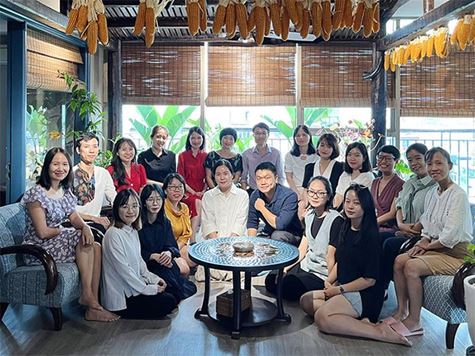
 Our team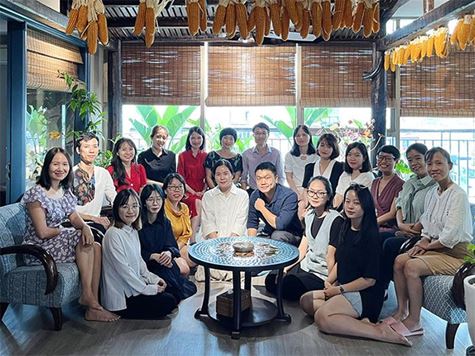
 Our team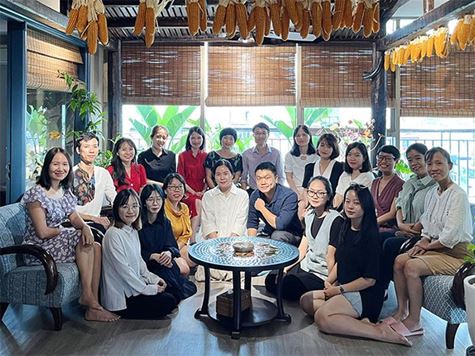
 Our team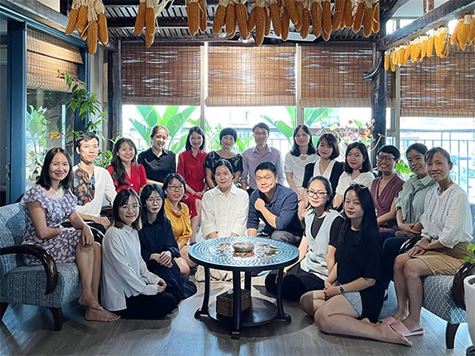
.jpg)
.jpg)
.jpg)
.jpg)
.jpg)
.jpg)
.jpg)
.jpg)
.jpg)
.jpg)
.jpg)
.jpg)


 Other
Other Add us as a preferred source






If you're looking to buy Happy Water in Hanoi, it's worth knowing that "Happy Water" isn't one specific drink. Locals and travelers often use the term to describe traditional Vietnamese rice or corn liquor (rượu trắng), while in northern Vietnam it can also refer to Rượu Táo Mèo.
Here are some good places to look:
If you're planning to take it home, it's recommended to buy a sealed bottle with the alcohol percentage clearly printed on the label, as these are much more likely to comply with airline and customs regulations than homemade bottles.
If you're looking for the truly authentic homemade version, you'll usually need to get it from a local family or producer rather than a regular shop.