Vietnamese Funeral Customs: A Traveler’s Guide to Etiquette, Attire and Rituals
Being invited to a funeral in Vietnam can feel intimidating, especially when the mourning clothes, music and rituals are unfamiliar. The most important thing to remember is simple: foreign guests are not expected to understand every custom.
Dress modestly, offer a brief expression of sympathy and follow the family’s lead. Do not assume that every guest must wear black, that every funeral follows Buddhist traditions or that the same rules apply throughout Vietnam.
Most of this guide focuses on customs associated with the Kinh, Vietnam’s ethnic majority, because these are the practices travelers are most likely to encounter. Funeral traditions can still vary considerably according to family background, religion, region and ethnic community.
Written by Oliver PHUNG (Tour Guide)
Updated on Aug 05, 2026
0 comment
Oliver Phung is a Northern Vietnam-based tour guide and blogger. His favorite topics to write about include cuisine, culture, travel, and under-the-radar experiences. Oliver possesses a deep, detailed understanding of the region, from the indigenous culture of the Hmong in the Northwest to the highland lifestyle of the Tay in the Northeast. Whether he is exploring ancient architecture or geological landscapes, he is always eager to share his insights with his readers.
Beyond his work at Kampá Tour, he produces specialized travel content on platforms such as Reddit, Instagram, LinkedIn, and various other publications.
Wear modest clothing in black, gray, navy, white or another subdued color.
Do not put on a white mourning headband unless the family gives you one.
Offer a short condolence message such as “Xin chia buồn.”
Check whether the family accepts condolence money before preparing an envelope.
Watch how other visitors bow or offer incense, then follow the family’s guidance.
Ask permission before taking photographs.
Avoid loud or disruptive behavior, but do not assume that every moment must be silent.
Treat the funeral as a private farewell, not a cultural attraction.
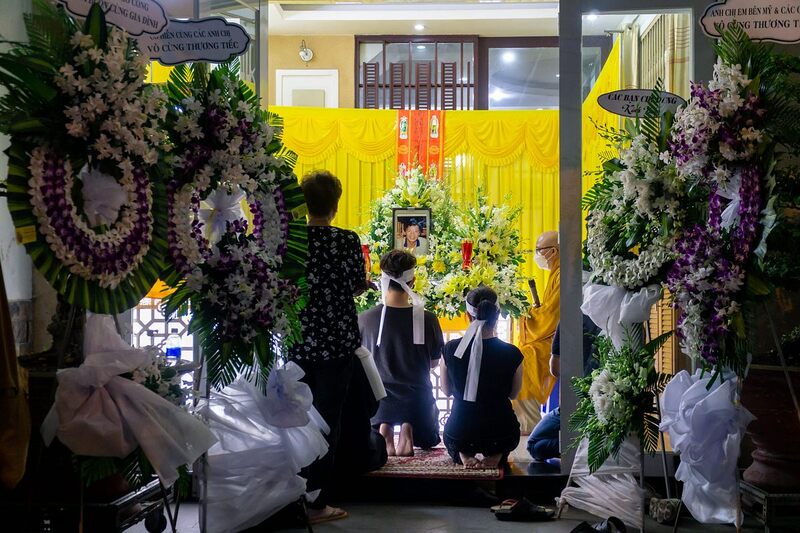
A Vietnamese funeral altar commonly includes a memorial portrait, flowers, incense and lights, although the arrangement varies between families.
Why do funeral customs matter in Vietnamese culture?
A Vietnamese funeral does more than mark a death. Like many other aspects of Vietnamese culture, it gives relatives time to say goodbye, allows the wider community to support them and begins a longer process of remembering the person who has died.
Remembering the deceased as part of the family
For many Vietnamese families, remembrance continues long after burial or cremation. A photograph of the deceased may later be placed on the family altar, a central feature of ancestor worship in Vietnam, where relatives light incense or prepare offerings on important occasions.
This practice is not always connected to one formal religion. A home altar, memorial portrait or incense may reflect family tradition as much as Buddhist or Catholic belief.
The deceased may also be remembered during Tết, family gatherings and the annual death anniversary known as giỗ. These occasions help younger relatives understand who the person was and how they remain connected to the family’s history.
Filial responsibility and the final farewell
Organizing the funeral is often understood as a final act of care toward the deceased. Relatives may receive visitors, arrange prayers and accompany the coffin to the cemetery or crematorium.
The meaning lies in the family’s participation, not in how large or expensive the ceremony is. A shorter urban funeral can carry as much emotional and cultural importance as a longer ceremony held at a family home.
Family and community support during grief
Near the entrance, neighbors or extended relatives may be pouring tea, receiving flower wreaths or showing visitors where to sit. Others prepare meals, manage practical arrangements or remain with the family overnight.
Their presence means the immediate family does not have to welcome every visitor or deal with every task alone. A short condolence visit from a friend, colleague or neighbor also reassures the bereaved that their loss is being recognized by the wider community.
Common Vietnamese funeral customs and rituals
The following sequence describes elements commonly found in funerals among the Kinh, Vietnam’s majority ethnic group. It is not a fixed procedure followed by every household.
The order, length and religious content of the ceremony depend on the family and the place where the funeral is held.
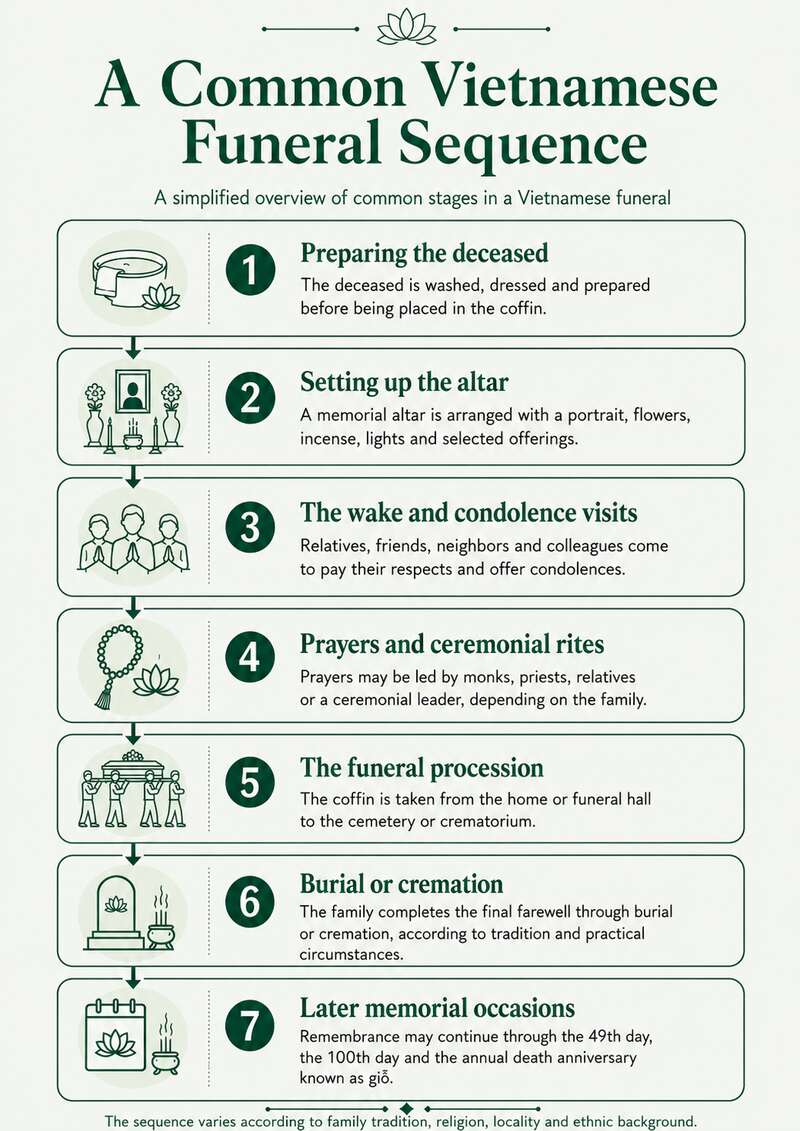
Common sequence of Vietnamese funeral customs from preparation to later memorial occasions
Preparing the deceased and setting up the altar
After a death, the deceased is washed, dressed and prepared before being placed in the coffin. The family may choose traditional clothing, a favorite outfit or another set of garments considered appropriate.
A funeral altar is usually arranged nearby. It commonly includes:
A portrait of the deceased.
Flowers.
Candles or electric lights.
Incense.
Food, fruit or other selected offerings.
The portrait becomes a focal point for visitors. Guests may stand before it to bow, pray or pause silently before offering condolences to the family.
The ceremony may take place at home, in a funeral hall, at a temple or in connection with a Catholic church. Urban families increasingly use professional funeral services when living space, time or ceremonial experience is limited.
The wake and condolence visits
During the wake, relatives, friends, neighbors and colleagues come to pay their respects.
A family member or attendant usually welcomes visitors near the entrance. Guests may sign a condolence book, hand over an envelope or identify the person or organization that sent a flower wreath.
Close relatives often take turns keeping vigil beside the coffin, while others receive visitors and handle practical arrangements.
The atmosphere is not uniformly silent. The area around the altar and coffin is usually more formal, while quiet conversations may continue near the entrance or around tables where tea is served.
The mood can change quickly when prayers begin, a close relative arrives or the coffin is moved. Rather than following a fixed idea of how grief should look, visitors should pay attention to the family and the moment in front of them.
Prayers and ceremonial rites
Prayers may take place during the wake, before the coffin is closed or shortly before the procession begins.
In a Buddhist-influenced funeral, monks may lead chanting or prayers. A Catholic family may invite a priest or pray together before a Funeral Mass. Other households rely on relatives or an experienced ceremonial leader to conduct family and local rites.
Guests are not expected to understand every word or movement. A non-Buddhist visitor does not need to chant, and a non-Catholic guest is not expected to participate in every church response. Remaining quiet and respectful is enough.
The funeral procession
The funeral procession takes the deceased from the family home or funeral hall to a cemetery or crematorium.
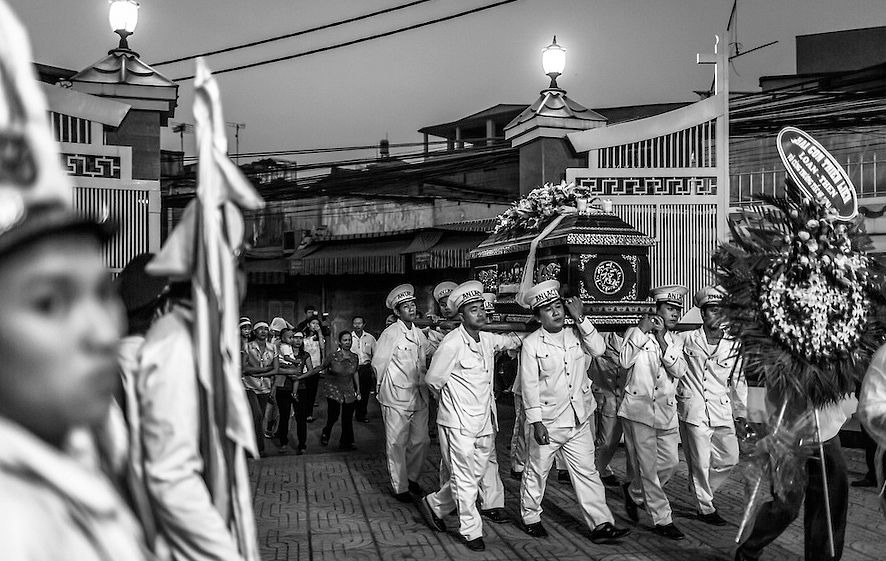
It may include a hearse, the portrait of the deceased, flower wreaths, ceremonial music and relatives walking or traveling behind. Some processions are large and highly visible, while others are short and private.
The moment when the coffin leaves the home can be especially emotional because it marks the deceased’s final physical departure from the family space.
Not every visitor is expected to join the procession. Acquaintances and colleagues often attend only the wake, while close friends and relatives continue to the cemetery or crematorium.
Burial or cremation
Both burial and cremation are practiced in Vietnam. The decision may reflect the wishes of the deceased, family tradition, religion and practical matters such as cemetery space, available facilities and cost.
At the cemetery or crematorium, relatives may take part in final prayers, bows or offerings. Visitors should remain behind the immediate family and avoid moving close to the grave, coffin or cremation area unless invited.
Burial customs are also changing between generations. Some families that once expected to exhume and reinter relatives later have moved toward cremation instead.
How long does a Vietnamese funeral last?
The main wake and funeral often take place over two or three days. Some families organize a shorter ceremony, while others need more time for religious rites, practical preparations or for relatives to travel home.
A guest’s condolence visit is usually much shorter. A colleague or casual acquaintance may stay only long enough to greet the family, offer condolences, pay respects at the altar and sit briefly for tea.
Close friends and relatives often remain longer, help with arrangements or return more than once.
The main funeral should not be confused with the later mourning and memorial cycle. The 49th day, the 100th day and the annual death anniversary are separate occasions.
White mourning clothes and headbands
White is traditionally associated with mourning in Vietnam.
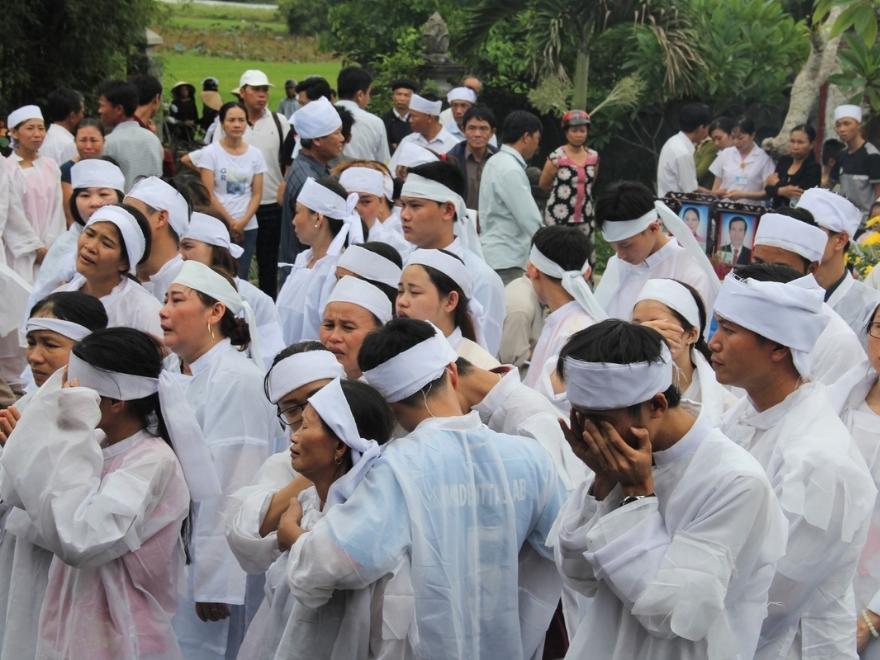
Close relatives may wear white garments, headbands or simpler mourning badges to show that they belong to the bereaved family rather than attending only as visitors.
Some households use colored marks or different headband styles to distinguish generations and family roles. These systems are not consistent throughout the country, so visitors should not try to identify someone’s exact relationship to the deceased from color alone.
A guest should never prepare or put on mourning clothes independently. Wear a headband, armband or mourning badge only when the family provides it or specifically asks you to do so.
A white mourning headband illustrating the clothing or mourning symbols commonly worn by close relatives at a Vietnamese funeral
What should guests wear, bring and do?
Foreign visitors are not expected to know every ritual. Modest clothing, a sincere condolence message and careful observation are usually enough.
What should you wear to a Vietnamese funeral?
Choose simple clothing in black, gray, navy, dark brown or another subdued color. Full black is appropriate but not universally required. A plain white shirt paired with dark trousers can also be suitable for an ordinary guest.
Clothing should generally cover the shoulders and knees. Avoid bright red, festive colors, large patterns, shorts, revealing clothing and accessories that attract unnecessary attention.
Do not wear an outfit that resembles the white mourning garments of the family. When the funeral notice or family provides a specific dress request, follow it instead of relying on a general rule.
Should you bring condolence money or flowers?
Condolence money, known as phúng điếu, is common but not required by every family.
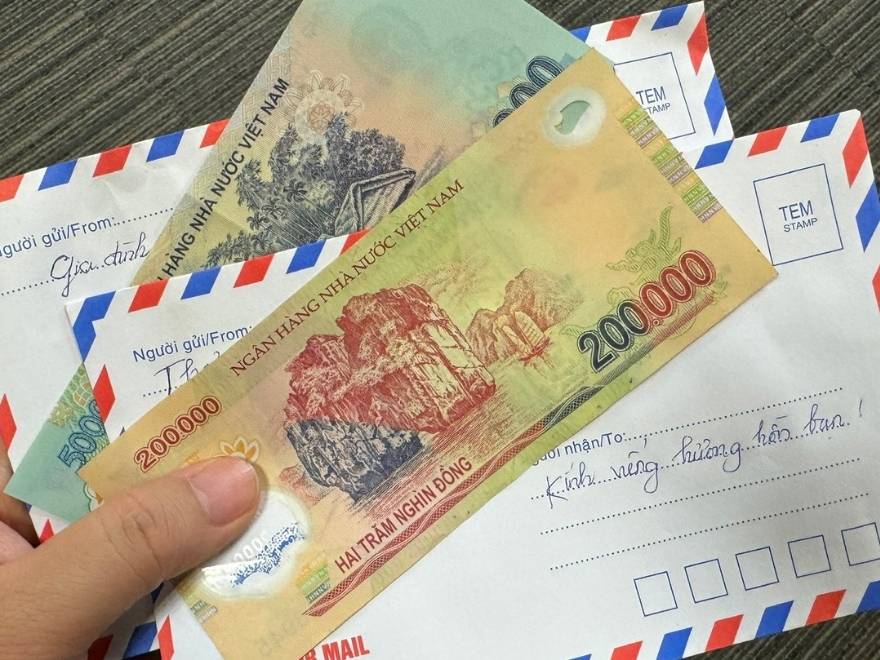
The money is normally placed in a plain envelope with the giver’s name written on it. There is no universal amount. It should reflect your relationship with the deceased or family and your own circumstances.
A few hundred thousand đồng may serve as a broad practical reference for an individual guest, but it should not be treated as a formal rate. Close friends and relatives may give more, while colleagues often contribute together.
Flowers or standing funeral wreaths are also appropriate, particularly when sent by a company, organization, group of colleagues or family unable to attend.
Fruit, incense, food and symbolic paper offerings are normally selected by the family. Visitors should not assume they need to bring them unless a relative or local host suggests it.
A funeral notice may include “không chấp điếu,” “xin miễn phúng điếu” or similar wording. This means the family does not wish to receive condolence money or offerings. Respect the request rather than trying to give an envelope privately.
When condolence money is accepted, guests normally leave the envelope and write their name at the reception table.
What should you do when you arrive?
Near the entrance, look for a reception table or a relative welcoming visitors. When the family accepts condolence money, this is normally where you hand over the envelope and write your name in the condolence book.
Offer a short expression of sympathy before approaching the altar or coffin. A family member may then show you where to stand and whether to light incense, bow or pause silently.
After paying your respects, you may be invited to sit for tea or a simple meal. A colleague or casual acquaintance can usually leave after completing the brief visit, while close friends and relatives may stay longer.
You do not need to imitate the gestures of immediate family members. Prolonged kneeling, formal prostrations and other mourning actions may belong to relatives with a specific ceremonial role.
What should you say to the family?
“Xin chia buồn” is enough for most situations. It means “My condolences.”
A slightly fuller expression is:
Xin chia buồn cùng gia đình.
This means “My condolences to the family.” A short English sentence such as “I’m very sorry for your loss” is also appropriate.
Avoid pressing the family for details about the cause of death unless they choose to discuss it. Long philosophical advice or forced optimism may also feel unhelpful. Speak gently and allow the family to guide the conversation.
Should you light incense or bow?
When incense is offered, a practice deeply rooted in Vietnamese worship culture, watch the guest ahead of you or wait for a family member to guide you.
You may be invited to light one or three incense sticks, pause briefly, bow and place them in the incense burner. The number of sticks and the sequence of bows are not identical at every funeral.
If incense is not part of your beliefs, a respectful bow or a brief moment of silence is enough.
When attending as part of a group, the family may prefer one representative to offer incense on behalf of everyone.
How long should you stay?
There is no required minimum. An acquaintance or colleague may remain long enough to greet the family, pay respects and sit briefly for tea.
Close friends and relatives usually stay longer, help with practical tasks or return for the funeral procession. When you need to leave, a quiet farewell to the person receiving visitors is sufficient.
Can you take photographs?
Some families hire a photographer to document the ceremony. This does not mean guests are free to take pictures.
Before using a phone or camera:
Ask a close family member for permission.
Avoid close-ups of people crying.
Do not photograph the deceased or coffin without explicit consent.
Never post images online without permission.
Do not photograph the funeral simply because it appears culturally unfamiliar.
A funeral remains a private family occasion even when the tent, procession or mourners can be seen from a public street.
Why do some funerals include music, meals and conversation?
Foreign visitors sometimes expect a funeral to remain completely silent. In Vietnam, mourning may also include music, shared food and long periods of conversation.
These elements do not make the occasion casual or celebratory. They help structure the farewell and support those who spend many hours with the family.
The role of funeral music
Music may accompany the arrival of visitors, prayers, the movement of the coffin or the funeral procession.
The style depends on the family, religion and locality. Some funerals use traditional ensembles, brass or wind instruments, while others rely on recorded music or have no musical performance at all.
Music gives mourners a shared way to express grief when words may feel inadequate.
Why are food and drinks served?
Tea, water and simple meals are often prepared for visitors and for those helping the family.
Relatives, neighbors and close friends may spend many hours receiving guests, keeping vigil or managing arrangements. Food allows them to continue supporting the household without leaving the funeral.
Serving refreshments also reflects Vietnamese hospitality and acknowledges people who have traveled to pay their respects. The meal should not be interpreted as a funeral party. Its purpose is care, hospitality and community support.
Tea and simple refreshments help care for visitors and those who remain with the family for many hours.
Is it disrespectful to talk or laugh?
Grief is not always expressed through silence.
Relatives may sit together and remember the deceased. A warm or humorous memory can produce a brief laugh without diminishing the family’s sadness.
Visitors should follow the family’s tone rather than initiate jokes or loud conversation. A quieter manner remains appropriate near the altar, coffin or during prayers.
What happens after the funeral?
Burial or cremation does not necessarily end family remembrance. Later ceremonies are usually smaller and more private than the funeral itself.
The 49th-day memorial
In some Buddhist-influenced families, the 49th day is an important memorial point. Relatives may gather for prayers, incense, food offerings and a family meal.
The ceremony reflects continued remembrance and religious ideas about the period following death, but it is not observed by every Vietnamese family.
The 100th-day ceremony
Some households hold another gathering on the 100th day after death. It is a memorial occasion rather than a second funeral.
The family may prepare offerings, pray, burn incense or share a meal. Its importance and form differ considerably between households.
Giỗ, the annual death anniversary
Giỗ is the annual anniversary of a person’s death, often observed according to the lunar calendar.
Relatives may gather at home, prepare a meal and place food or incense at the family altar. Unlike the earlier 49th- and 100th-day ceremonies, giỗ may continue every year and help maintain family connections across generations.
Cải táng and later reburial
In some families and regions, the remains of a person who was initially buried may later be exhumed and reinterred. This practice is known as cải táng or bốc mộ.
There is no universal schedule. Personal family accounts describe periods ranging from several years to several decades, while many other households do not practice it at all.
Some families have also moved away from later reburial and chosen cremation for younger generations.
Cải táng is a later mortuary rite. It should not be presented as part of every Vietnamese funeral or included in the duration of the initial ceremony.
How do Vietnamese funeral customs vary?
Religion, family history, ethnic identity, migration and whether the ceremony takes place in an urban or rural area can all shape a funeral.
Buddhist, Catholic and family-led funerals
A Buddhist-influenced funeral may include sutra chanting, prayers led by monks and merit-making rites for the deceased. Some families also place particular importance on ceremonies held during the first 49 days.
A Vietnamese Catholic funeral may include a vigil, prayers for the deceased, a Funeral Mass and final rites at a cemetery or crematorium. Cultural elements such as a memorial portrait, incense or white mourning headbands may also appear, depending on the family and parish.
Other households organize a family-led funeral without following one formal religious structure. They may maintain a funeral altar, offer incense and observe locally inherited rites led by relatives or a ceremonial specialist.
One visible element should not be used to identify a family’s religion. Incense, white headbands and an altar may appear in several different contexts.
Regional, urban and family differences
A family’s ancestral hometown can influence its funeral customs even after relatives have moved elsewhere.
In some northern communities, the ceremonial sequence may remain highly ordered and traditional musical ensembles may be used. In parts of southern Vietnam, community participation can be especially visible through music, food and longer periods of receiving visitors.
These tendencies should not be treated as fixed North–South rules. Family history and local practice are often more important than geography alone.
Urban funerals are frequently shorter and more professionally organized. Limited living space, work schedules and access to funeral halls or crematoriums can affect which rites are retained, shortened or omitted.
Funeral traditions among Vietnam’s ethnic communities
Vietnam officially recognizes 54 ethnic groups, so Kinh funeral customs cannot represent the entire country.
In some Hmong communities, the clan, ritual specialists and the khèn play important ceremonial roles. Among many Khmer communities in southern Vietnam, Theravada Buddhist monks and the local temple provide a central ritual framework. In some Black Lolo communities, bronze drums, songs and ceremonial movement carry meanings connected to ancestry and the completion of the life cycle.
These traditions vary by subgroup, locality and family. They are not performances for travelers to seek out or attend without invitation.
What should travelers do when they encounter a funeral procession?
A procession may temporarily slow traffic or occupy part of a road, particularly near a family home, cemetery or crematorium.
Drivers should reduce speed, give the procession space, avoid unnecessary horn use and never cut between its vehicles. When walking, wait for the group to pass instead of stepping between the hearse and the family.
Keep music and conversation at a reasonable volume. Do not photograph the procession simply because it looks unfamiliar.
Travelers are not expected to perform a ritual when they do not know the family. A brief pause, patience and respectful distance are enough.
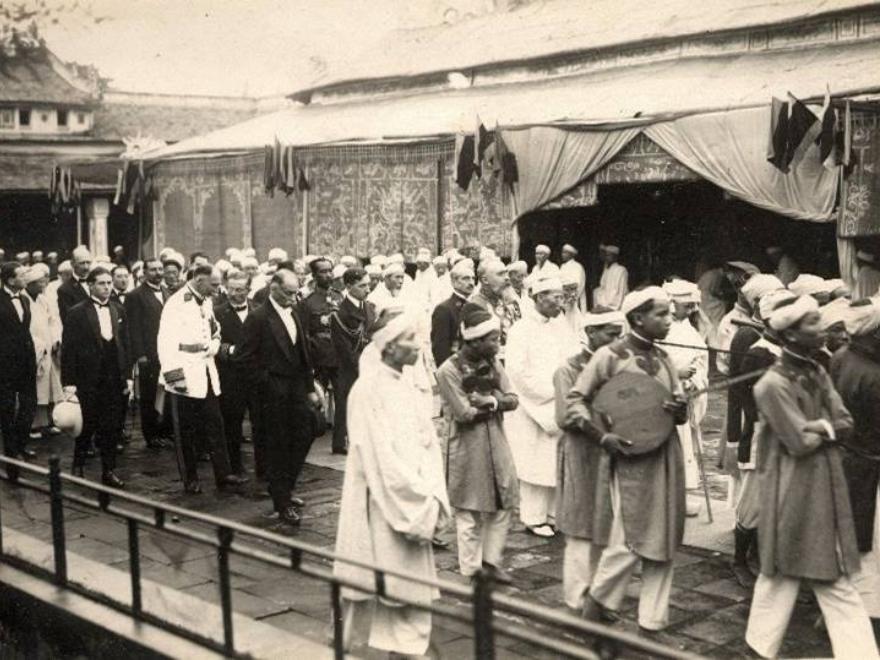
Funeral procession of Emperor Khải Định
Final guidance for foreign guests
Vietnamese funeral customs are diverse. A Kinh funeral in Hanoi, a Catholic service in central Vietnam, a Khmer ceremony in the Mekong Delta and a Hmong funeral in Ha Giang may reflect very different systems of belief and family responsibility.
No visitor is expected to understand every ritual perfectly.
Observe carefully, ask when necessary and allow the family to decide how you should participate.
Approach the occasion as a private farewell first and a cultural encounter second. Respect matters more than perfect knowledge.
Planning your trip?
Save time and get expert advice for FREE!
✅ 15 years of local experience
✅ Save up to 40 hours of planning
✅ Travel stress-free from start to finish
Book your free consultation today!







 Our team
 Our team
 Our team
 Our team



 Other
Other Add us as a preferred source