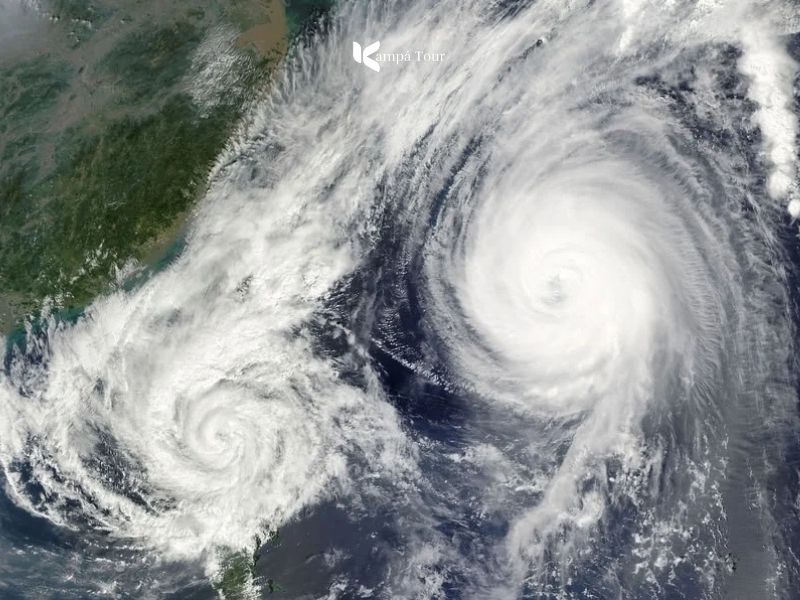
Typhoon in Vietnam: Season, Alert Tracking and Advice
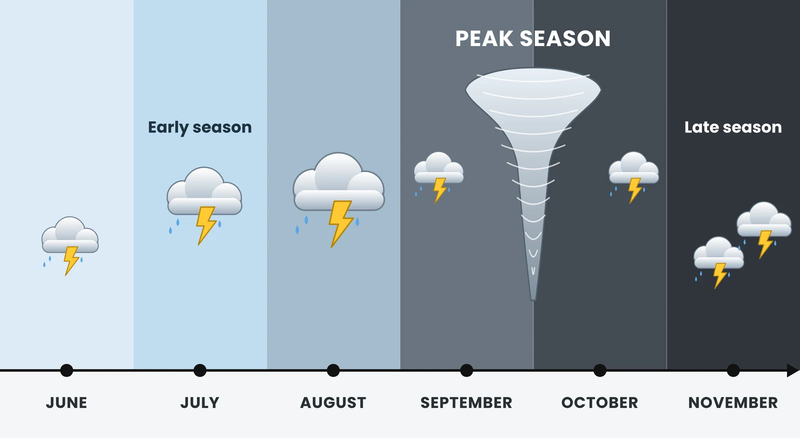
Vietnam’s main typhoon risk generally falls between August and November, within a wider tropical storm season from May to November (official travel advice). The North is most exposed from July to September, Central Vietnam from September to November, and the South is rarely hit. A typhoon usually means moving one stage, not cancelling the trip.
Written by Thom DOAN (Travel Consultant Manager & Director)
Updated on Nov 07, 2026
0 comment
Thom DOAN leads the travel consulting team at Kampá Tour and serves as the agency's director. She works with travellers in both French and English, and her career has taken her across multiple countries in Asia.
On this blog she writes about the destinations she knows first-hand, mostly in Vietnam and Cambodia: what a place is actually like, who it suits, and the practical details that decide whether a trip works. If you have a question about anything she covers here, leave it in the comments and she will answer you directly.
Season: main risk generally from August to November. Official travel advice gives a wider tropical storm season, May to November.
North: peak from July to September. Ha Long Bay suspends departures as soon as an alert targets it.
Central Vietnam: storms from September to November, then floods from October to December in Hoi An and Hue.
South: rarely hit, but the South-Central region (Nam Trung Bo) was affected by storms in November 2025.
Our view: a typhoon is mostly a reason to move one stage, not to cancel the whole trip.
How to track a typhoon in Vietnam
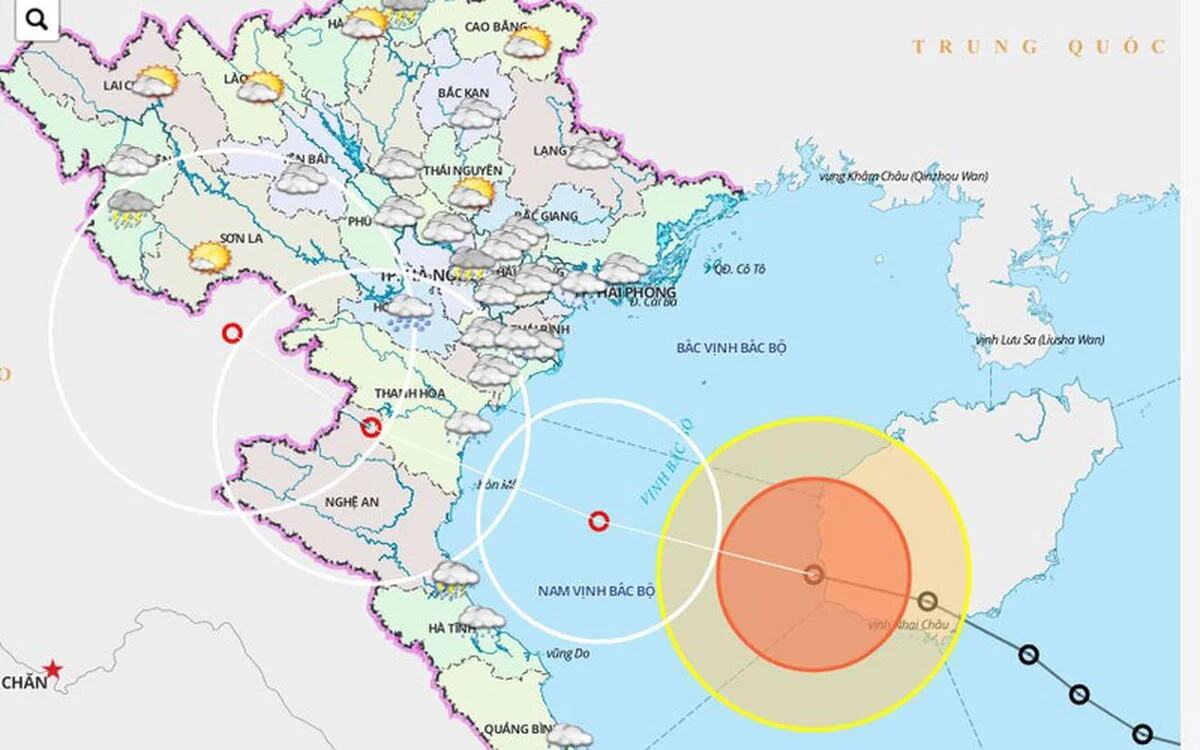
The National Center for Hydro-Meteorological Forecasting (NCHMF) handles official tracking. Its bulletins give the storm’s position, speed and intensity, with forecasts at 24, 48 and 72 hours. For a traveler, the key is the type of bulletin, because each type signals a different level of risk for Vietnam.
How can one track a storm in Vietnam?
Where to read the bulletins
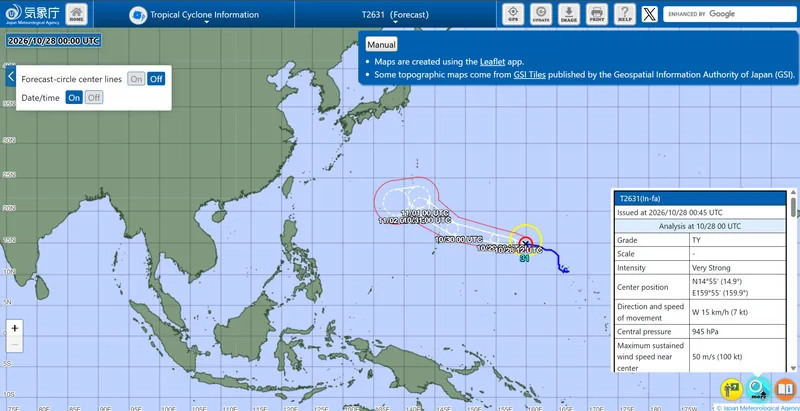
The NCHMF website publishes the official bulletins. For a storm that is still far from the coast, the US Joint Typhoon Warning Center and the Japan Meteorological Agency (JMA) offer useful analysis. Live maps such as Windy show where the storm is heading, but they do not replace the bulletins. One official source and one map, checked once a day, are usually enough.
The U.S. Joint Typhoon Warning Center and the Japan Meteorological Agency (JMA) provide useful analysis.
Reading a Vietnamese weather bulletin
A storm that enters the East Sea (Biển Đông, the Vietnamese name for the South China Sea) gets a number, in order of appearance during the year. Winds are measured on the Beaufort scale. Levels 8 and 9 are a bão (storm), levels 10 and 11 a bão mạnh (strong storm), levels 12 to 15 a bão rất mạnh (very strong storm), and level 16 or above a siêu bão (super typhoon). English-language media sometimes translate these categories differently, which can make a storm sound more or less serious than it is.
When to worry, and when to wait
A “storm near the East Sea” bulletin says a storm could enter the sea within 48 hours. It does not mean Vietnam will be hit. The emergency bulletin is different: it signals a likely direct impact on the mainland within 48 hours. That is the moment to contact your hotel, guide and airline, then review the next days of the itinerary.
Signal
What it means
What to do
“Storm near the East Sea” bulletin
A storm outside the East Sea could enter it within 48 hours, with no certainty of an impact on Vietnam
Watch the next bulletins. No change to the itinerary yet
Emergency bulletin
A direct impact on the mainland is likely within 48 hours
Contact your hotel, your guide and your airline, then review the next days of the itinerary
Alert issued for your area
Local authorities can suspend boat departures, such as Ha Long Bay cruises
Follow local instructions and stay off the sea, boats and mountain roads until the alert is lifted
The simple rule: treat the emergency bulletin as the trigger to act, and everything before it as information, not as a reason to rebook.
Sign up for alerts before you leave
Most governments let you register your trip, so that your embassy can reach you in a crisis, including a natural disaster. US travelers can enroll in the Smart Traveler Enrollment Program (STEP), a free service that sends emails from the local US embassy or consulate, including weather and disaster alerts. UK travelers can sign up for email alerts on the Foreign Office travel advice page for Vietnam. Canadian travelers can use the free Registration of Canadians Abroad service.
Typhoon season: which months and which regions
The season does not hit the whole country at once. The North gets its storms earlier, in summer. Central Vietnam carries the risk at the end of the season, with floods after the storms. The table shows the most exposed period for each region.
Region
Most exposed period
What to know
North (Hanoi, Ha Long Bay, Sapa)
July to September, sometimes into early October
For 2026, the NCHMF expected fewer storms than average.
Central Vietnam (Hue, Hoi An, Da Nang)
September to November
Storms first, then floods that can last until December.
South (Ho Chi Minh City, Mekong Delta)
Rarely hit
Storms affected the South-Central region (Nam Trung Bo) in November 2025.
In October, the NCHMF’s long-term average is about two tropical depressions or storms on the East Sea, and about 0.8 of them reach Vietnam. This is a multi-year average, not a forecast for a specific trip.
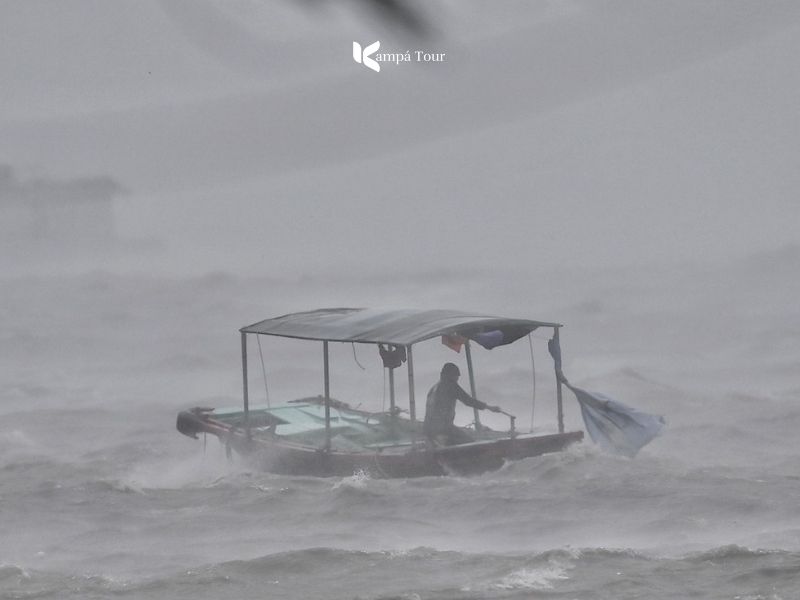
Typhoon Season in Vietnam
Typhoon or floods: what really disrupts Central Vietnam
Many travelers think a typhoon is the only threat in Central Vietnam. In reality, floods often arrive without a storm and hit riverside towns for several days. Confusing the two can lead you to cancel a trip for no reason, or to keep an itinerary that does not fit the conditions.
Why Hoi An and Hue flood without a typhoon
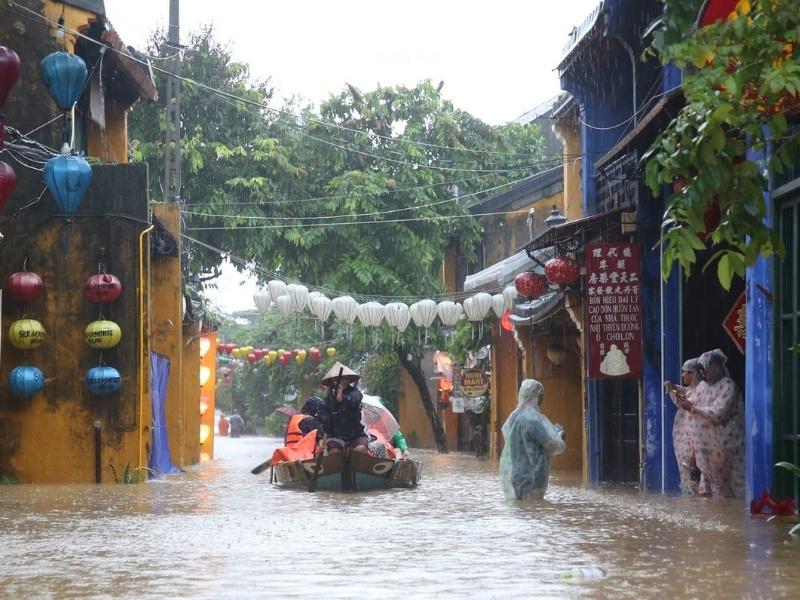
Heavy autumn rain on the central coast can cause floods even when no typhoon hits the region. The Thu Bon River runs through Hoi An, and its level can rise quickly. In October 2025, the flood forecast reached up to 3.50 m in Hoi An, about 0.10 m above the historic 1964 flood of 3.40 m. The old streets and single-story houses are the first to flood. Our guide to Vietnam in October shows how the flood risk on the central coast builds through the month.
Hoi An has been hit by flooding
Central Vietnam in October and November: comparing the cities
City
Main risk
What to check before you go
Hoi An
Thu Bon River flood, old streets
River level and accommodation on an upper floor
Hue
Heavy rain, roads and sites sometimes closed
Access to the sites and train timetables
Da Nang
Rain and wind, domestic flights
Status of the return flight
Give any central coast stage a spare day. It can then be moved without touching the return flight. For a month-by-month view of the rains, see our guide to the Vietnam rainy season.
October is the month that catches itineraries out. The North is at its best, which tempts travelers to fix dates in Hoi An or Hue as well, with no room for a flood.
Should you cancel or postpone your trip?
Most trips during typhoon season go ahead without major incident. The question is not whether there will be a storm, but whether a key stage could be affected, and whether the trip can be reorganized in time.
Who it suits, and who it does not
A trip can go ahead if the stages are interchangeable and the itinerary has spare days. Rethink the trip if it depends on an overnight cruise in Ha Long Bay, a mountain trek in the North, or a single flight to Central Vietnam with no time margin. Travelers who cannot tolerate uncertainty are better off choosing a period outside the season.
What closes, and for how long
Activity
What happens
Observed delay
Ha Long Bay cruise
Departures are suspended as soon as the alert is announced
About six days after Typhoon Yagi in 2024, boats set off again on 13 September
Phong Nha caves by boat
Departures close when the Son River rises
Suspended from mid-September to mid-November, according to an operator in the region
Son Doong and Hang En
The operating season ends before winter
Dates vary by source, so confirm them in writing with the operator
Cruises: refunds and a decision rule
Refunds depend on each operator’s contract. When departures were suspended in July 2025, one cruise offered its customers the choice of changing their trip or having their deposit refunded. Read the cancellation terms before you pay. The rule is simple: if the affected stage can be replaced within the same area, postpone it. If the return flight is at risk, change the date of the trip. Rerouting usually works better than cancelling, because most regions have enough alternatives to give a trip a Plan B. For northern itineraries, our guide to the best time to visit North Vietnam suggests Ninh Binh and Mai Chau as the inland alternatives when cruises are suspended.
What to do if a typhoon arrives during your stay
During a storm, the priority is to stay safe and keep in touch with your hotel, guide and airline. A few simple steps are often enough to get through the episode. Read the list below once before you fly, so that on the day you only have to follow it.
Steps to follow
Follow the official NCHMF bulletin and the instructions of the local authorities before social media.
Stay in a solid building, away from rivers, slopes and fragile trees.
Avoid the sea, boat excursions and mountain journeys until the alert is lifted.
Keep cash, a power bank and water, because power cuts are frequent during storms.
Keep receipts, tickets and cancellation messages for your insurance claims.
Before you leave, note the emergency contact details of your embassy or consulate, listed on your government’s travel advice page for Vietnam.
After the typhoon: mountain roads
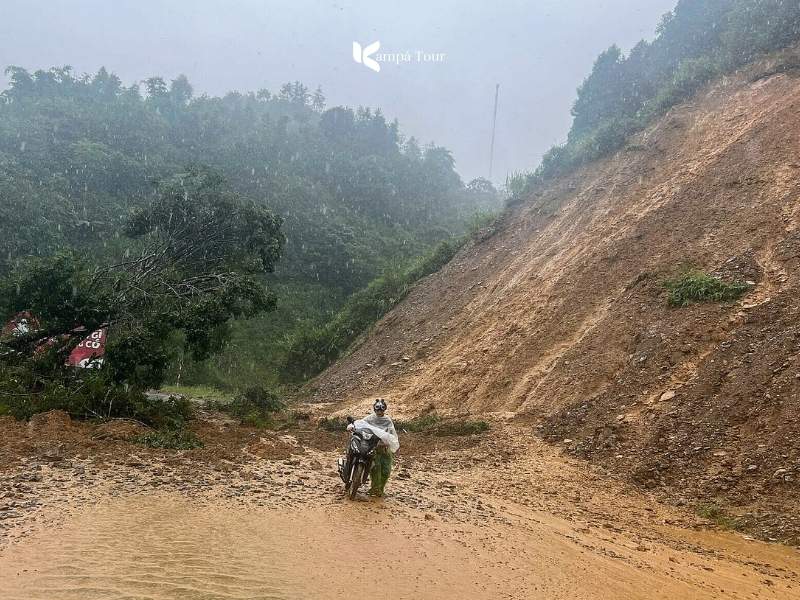
In the North, rain can cause landslides that cut mountain roads for an unpredictable length of time. Treks and trips to Sapa or Ha Giang are therefore the first to be postponed. Wait for your guide’s confirmation before setting off again, even if the town seems to have returned to normal.
Landslides in North Vietnam
🔖 With children:
Pack a bag with games, water and your child’s usual medication for the time spent indoors. In Central Vietnam, check that the accommodation has an upper floor in case of flooding. Avoid boat trips during an alert, whatever your children’s ages.
Insurance, cancelled flights and refunds
Three mechanisms can come into play: air passenger rights, the insurance that comes with a bank card, and cancellation insurance bought separately. Each has its own conditions, and none automatically covers every situation. Compare them before you leave, especially the list of accepted cancellation reasons.
Cancelled flights: what passenger-rights rules provide
When an airline cancels your flight, your rights depend on where the flight departs from and which airline operates it. Under US, UK and EU rules the core is the same: you can get your money back, and in the UK and EU you can choose rerouting instead. In the United States the refund is due whatever the reason for the cancellation, but cash compensation is not required. UK rules apply to flights departing from a UK airport, or arriving in the UK on a UK or EU airline. They exclude compensation when extreme weather causes the disruption. European Regulation (EC) No 261/2004 works on the same logic for flights departing from the European Union, and for flights arriving in the EU on an EU airline. It adds fixed compensation of €250 to €600 if the cancellation was announced less than 14 days before departure and the airline cannot prove an extraordinary circumstance. A flight from Vietnam to your home country on an airline outside these schemes may fall outside the UK and EU rules. Check which rules apply to your ticket before you rely on them.
Bank card and cancellation insurance
The cover offered by Visa or Mastercard cards varies with the bank and the level of the card. Some cover cancellation, provided the trip was paid for with the card and the reason meets the conditions. The ceiling and the list of covered reasons vary from one source to another. Check your bank’s policy notice before relying on this cover. Before you buy a policy of your own, check one thing first: whether weather disruption is listed as a covered reason, not only illness or injury. More information in our guide to travel insurance in Vietnam.
Domestic flights and ticket changes
During some typhoons, domestic airlines have offered free ticket changes, in waves and depending on the airports affected. These measures are temporary. Follow your airline’s notifications and keep your booking number handy.
Planning your trip around the season
School and public holidays often set departure dates. So the first step is to see where those dates meet the typhoon season, and the second is to choose a trip that fits.
Holiday periods that overlap with typhoon season
The table shows where the main holiday windows meet the exposed periods described above.
Holiday period
Timing
Overlap with typhoon season
Northern Hemisphere summer holidays
July and August
Peak exposure in the North (July to September), including Ha Long Bay cruises
Australian spring school holidays (Term 3 break)
Between 19 September and 18 October 2026, depending on the state
Start of the storm period in Central Vietnam (September to November)
US Thanksgiving week
26 November 2026
End of the season in Central Vietnam, where floods can last until December. Storms also reached the South-Central region in late November 2025
Christmas and New Year
Late December and early January
Outside the August to November period, but floods in Central Vietnam can still last into December
Australian school holiday dates differ from state to state, and UK school holidays are set locally, so check the calendar for your own region before you book. These dates apply to 2026.
Where to go during typhoon season
When your dates are fixed, the choice of region matters more than the choice of month. The North stays exposed from July to September, sometimes into early October, and Central Vietnam from September to November. For a fixed-date cruise in the North, aim for after mid-October, when the typhoon risk has mostly passed. The Mekong Delta is generally less affected by storms. From mid-August to the end of November, the seasonal flood also makes boat excursions an experience of their own. Our guide to things to do in the Mekong Delta explains more. Dalat, at altitude, is a common alternative, as long as you check its bulletin before booking. Our guide to Dalat has more detail.
Itinerary: placing the stages and the margins
Put the most exposed stages in the middle of the trip, so they can be moved without touching the start or the end. Add a spare day before the return flight, so that a delay does not force you to buy a new ticket. A changeable domestic flight often costs a little more, but it saves a paid night. Decide before you leave which signal from the table above will make you move a stage, so that you are not choosing under pressure. For day-to-day tips on the northern loops, see our guide to the best time to visit North Vietnam.
Vietnam stays open all year, and most trips go ahead without major incident. If your itinerary is fixed, avoid Central Vietnam in October and November, and keep a spare day in the itinerary to absorb any change.
How do you know if a typhoon threatens your region?
Check the bulletin of the National Center for Hydro-Meteorological Forecasting and a storm-tracking map. A “storm near the East Sea” bulletin does not mean a direct impact. The emergency bulletin, which announces a likely impact on the mainland within 48 hours, is the signal to review your itinerary.
Are Ha Long Bay cruises refunded in case of a typhoon?
It depends on the operator’s contract, and there is no general rule. An operator may offer a change of dates or a deposit refund when departures are suspended, but it is not guaranteed. Ask for the policy in writing before you book, and keep the operator’s messages.
Is Vietnam hit by typhoons in December?
The main risk period runs from August to November, and storms in December remain rare. Late episodes do exist, though, such as a storm in late November 2025. In December, the bigger risk is rain and floods in Central Vietnam.
How many spare days should you allow in Central Vietnam in November?
Allow at least one spare day in the itinerary to absorb a flight or road delay. If the stage is in Hoi An or Hue, two to three days of margin are safer in case the river floods. These durations are cautious recommendations, not official rules.
Planning your trip?
Save time and get expert advice for FREE!
✅ 15 years of local experience
✅ Save up to 40 hours of planning
✅ Travel stress-free from start to finish
Book your free consultation today!
















 Our team

 Our team

 Our team

 Our team




 Other
 Add us as a preferred source