Tuyen Quang: Beyond the Cradle of Vietnam’s Revolution (Travel Guide)
Tuyen Quang, set in the peaceful Lo River valley of northern Vietnam, remains one of the country’s least-explored provinces. Once the cradle of the country’s revolution, it shelters more than 500 historical relics amid serene mountains, emerald rivers, and ethnic villages that remain largely untouched by mass tourism.
This travel guide will show you why Tuyen Quang deserves a stop on your northern Vietnam journey; where to go, what to do, and how to experience it like a local.
Written by Oliver PHUNG (Tour Guide)
Updated on Jul 13, 2026
0 comment
Oliver Phung is a Northern Vietnam-based tour guide and blogger. His favorite topics to write about include cuisine, culture, travel, and under-the-radar experiences. Oliver possesses a deep, detailed understanding of the region, from the indigenous culture of the Hmong in the Northwest to the highland lifestyle of the Tay in the Northeast. Whether he is exploring ancient architecture or geological landscapes, he is always eager to share his insights with his readers.
Beyond his work at Kampá Tour, he produces specialized travel content on platforms such as Reddit, Instagram, LinkedIn, and various other publications.
Tuyen Quang is a mountainous province in northern Vietnam, known for both its revolutionary history and its rich natural landscapes. Before the August Revolution of 1945, it was recognized as the political center of the resistance zone, especially around Tan Trao. Beyond this historical role, the province is also a mosaic of ethnic cultures, with Tay, Dao, Nung, Hmong and other communities living among river valleys, limestone karsts, forests and mountain villages.
For travelers, this combination gives Tuyen Quang a character of its own: part historical destination, part nature escape, and part cultural stop on the route between Hanoi and the northern highlands.
Total area of Tuyen Quang province
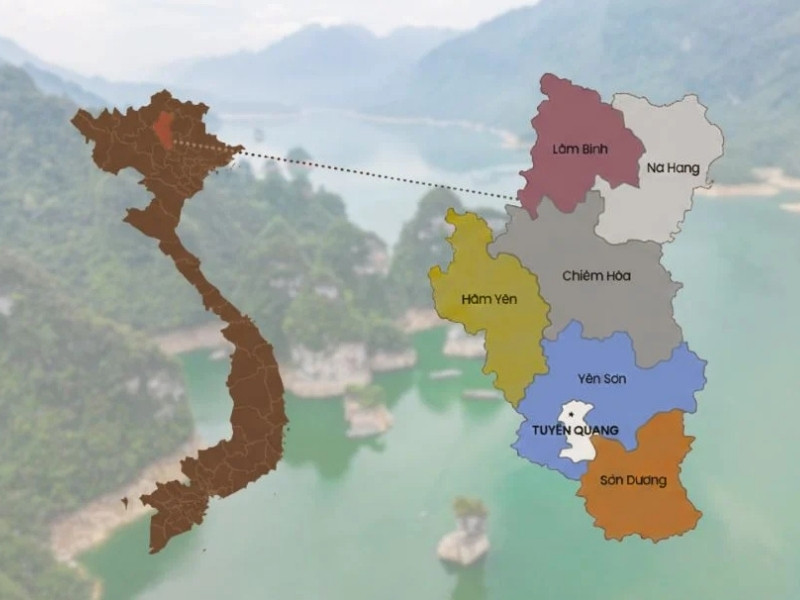
Where is Tuyen Quang located?
Tuyen Quang is a mountainous province in northern Vietnam, set on the inland route between Hanoi and the highland areas further north. It is around 140 kilometers northwest of Hanoi, or roughly 3 hours by road in good conditions. Depending on traffic, weather and your final stop in the province, the journey can take closer to 3.5 or 4 hours.
For travelers, Tuyen Quang works well as a bridge between the capital and places such as Ha Giang, Ba Be and Cao Bang. It does not have the sea-and-karst scenery of Ha Long Bay, nor the dramatic mountain passes of the Ha Giang Loop. What it offers instead is softer: river valleys, green hills, lake landscapes, forests and villages where local life still feels close.
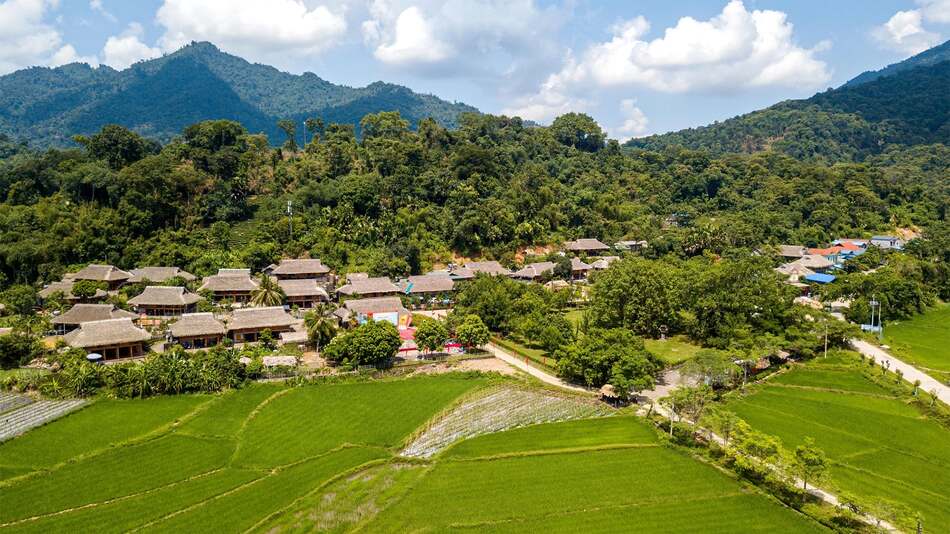
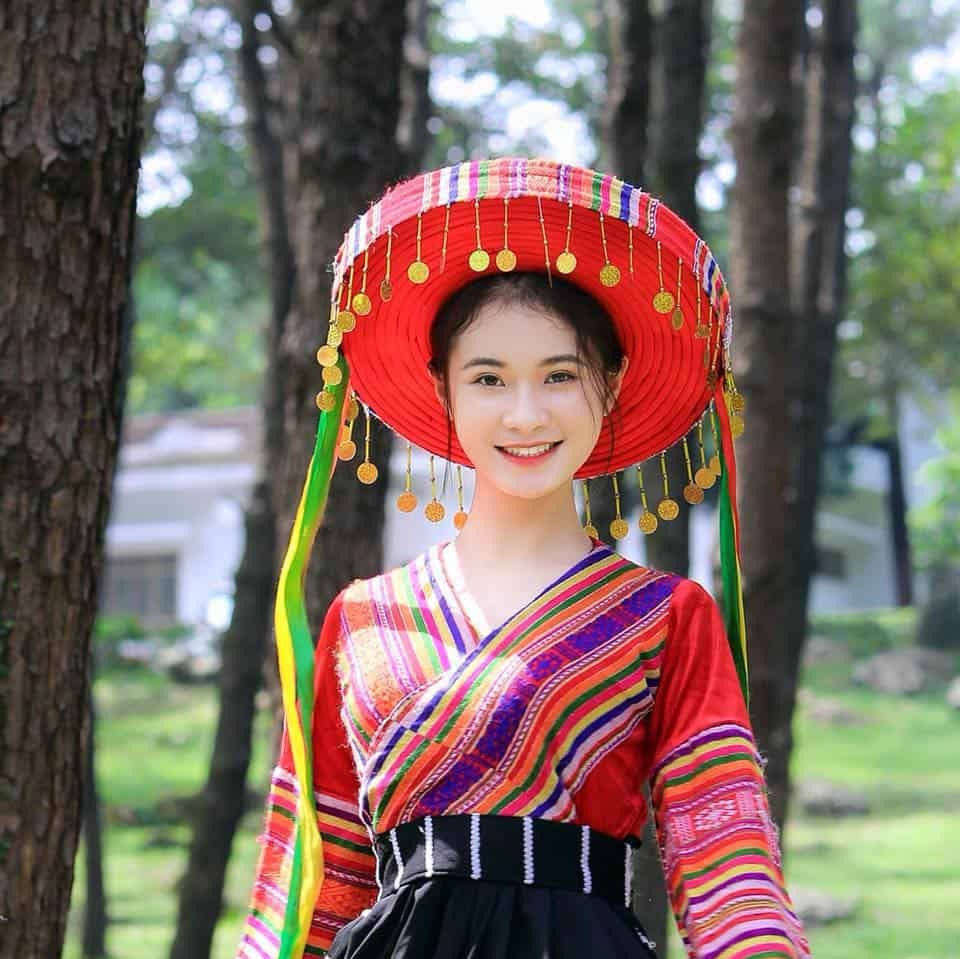
The Tay are one of the most common ethnic groups in Tuyen Quang
The province is closely linked to the Lo River valley and to ethnic communities such as the Tay, Dao, Nung and Hmong. This makes it a good stop for travelers who want to go beyond Vietnam’s classic highlights and see a quieter side of the north.
2025 update: Is Ha Giang part of Tuyen Quang now?
Since July 1, 2025, Tuyen Quang and Ha Giang have officially been merged into a new administrative province named Tuyen Quang. In administrative terms, the famous Ha Giang Loop is now part of the new Tuyen Quang province.
For travel planning, though, it is still useful to keep the two names separate:
The Tuyen Quang area is usually associated with Na Hang – Lam Binh, Tan Trao, My Lam Mineral Springs, Thanh Tuyen Festival and the Lo River valley.
The former Ha Giang area is still widely known for the Ha Giang Loop, Dong Van Karst Plateau, Meo Vac, Ma Pi Leng Pass and Hoang Su Phi.
So if you see both names in travel articles or itineraries, it is not a contradiction. On the administrative map, they are now one province. In travel language, however, “Ha Giang” will probably continue to describe the highland loop, while “Tuyen Quang” usually refers to the lower northern area around Tuyen Quang City, Tan Trao, Na Hang and Lam Binh.
What is Tuyen Quang famous for?
Tuyen Quang is best known for its revolutionary history, the Na Hang – Lam Binh lake area, ethnic minority cultures, the Thanh Tuyen Lantern Festival, My Lam Mineral Springs and quiet mountain scenery.
Historically, the province played an important role in Vietnam’s struggle for independence. Tan Trao, in particular, is often called the cradle of the revolution, as several important meetings and decisions took place there before the August Revolution of 1945.
Na Hang and Lam Binh show a very different side of Tuyen Quang. Here, limestone peaks rise above calm water, forested slopes surround the lake, and Tay villages offer a slower way to experience rural northern Vietnam.
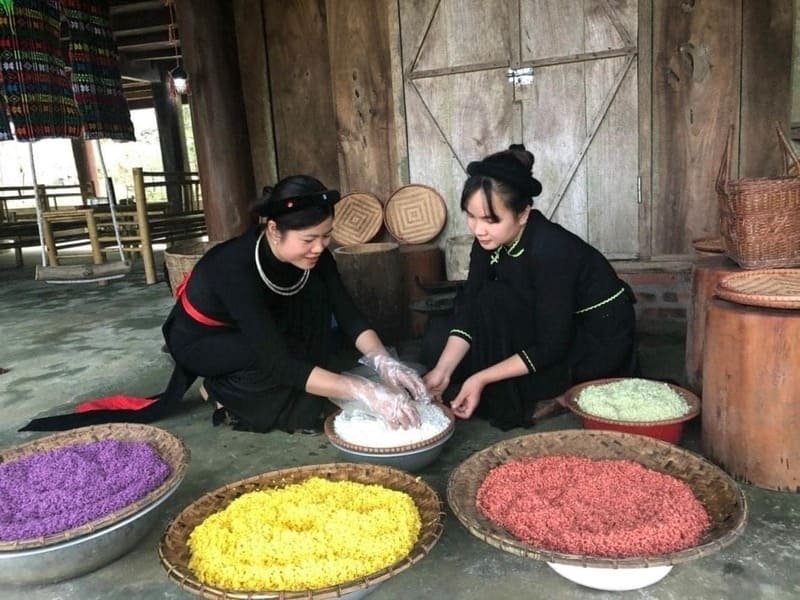
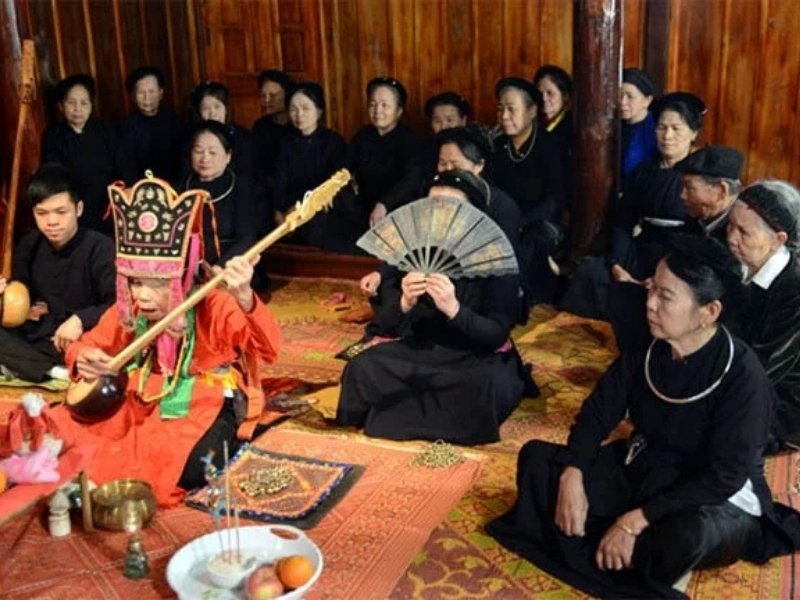
Culturally, Tuyen Quang is home to many ethnic communities. Their traditions can be seen in stilt houses, local markets, Then singing, village rituals and dishes such as five-color sticky rice.
The province is also known for the Thanh Tuyen Festival, a Mid-Autumn celebration where giant handmade lanterns parade through the streets of Tuyen Quang City.
Best places to visit in Tuyen Quang
Na Hang – Lam Binh ecological lake
Na Hang – Lam Binh is the natural highlight of Tuyen Quang. People often compare it to “Ha Long Bay in the mountains”, and while the phrase is used often, it does help first-time visitors picture the landscape: calm water, limestone peaks, forested slopes and quiet villages.
The lake area covers more than 8,000 hectares of water and is surrounded by 99 limestone peaks, where the Gam and Nang rivers meet. A boat trip is the best way to see the area. From Na Hang pier, a private boat usually costs around 40–60 USD, depending on the route and group size. Along the way, visitors can pass rock formations, stop near hidden temples and reach waterfalls surrounded by green hills.
Na Hang – Lam Binh ecological lake
One of the most recognizable sights is Coc Vai Pha, a solitary limestone pillar rising from the water. You may also come across Pac Ta Temple, small bays, forested slopes and quiet corners where the lake feels far removed from the busier routes of northern Vietnam.
But Na Hang – Lam Binh is not only about scenery. To feel the area more deeply, spend a night in a Tay homestay in Lam Binh. You can sleep in a traditional stilt house, share a home-cooked meal, listen to Then singing and observe the slower rhythm of village life.
Then singing of the Tay ethnic group
This is the part of Tuyen Quang to choose if you are looking for nature, photography, light adventure and a quieter rural experience. It is also the part of the province that most deserves an overnight stay.
Tan Trao Special National Relic Site
Tan Trao is the most important historical site in Tuyen Quang. Hidden in a quiet valley, it served as a revolutionary base before the August Revolution of 1945 and is closely linked to President Ho Chi Minh, General Vo Nguyen Giap and the Viet Minh movement.
The main places to visit include Na Nua Hut, where Ho Chi Minh lived and worked; the Tan Trao banyan tree, associated with the military order read by General Vo Nguyen Giap on August 16, 1945; and Tan Trao Communal House, where key national decisions were made.
Tan Trao
For travelers who are not familiar with Vietnamese history, Tan Trao may seem simple at first. The sites are not grand monuments; they are huts, trees, paths and communal houses. With a local guide, however, the place becomes much more meaningful, because you understand why this quiet valley carries such weight in modern Vietnamese history.
If your route includes Tuyen Quang City or the road toward the former Ha Giang area, Tan Trao is worth considering as a half-day cultural and historical stop.
My Lam Mineral Springs
Located about 12 kilometers from Tuyen Quang City, My Lam Mineral Springs is a gentle wellness stop after long hours on the road.
Its mineral water rises from more than 150 meters underground and can reach around 67°C at the source. The area is known for naturally warm mineral water and local bathing services, including private mineral baths, herbal baths, mud baths and spa-style treatments.
Mineral water bath in Tuyen Quang
It is not a polished luxury resort destination. It is better understood as a simple local wellness experience, rooted in the region’s natural mineral resources.
My Lam is a good option if you are staying in or near Tuyen Quang City, or if you want a relaxing break before continuing toward Na Hang, Lam Binh or Ha Giang.
Thanh Tuyen Lantern Festival
The Thanh Tuyen Festival is one of the most colorful moments of the year in Tuyen Quang. Held around the Mid-Autumn Festival, often in September depending on the lunar calendar, it turns Tuyen Quang City into a lively parade of giant handmade lanterns.
Local neighborhoods prepare large lantern models shaped like animals, mythical creatures, cartoon characters or scenes from folk tales. In the evening, these lanterns are paraded through the city, with music, families and children filling the streets.
The Tuyen Quang Mid-Autumn Festival is the largest autumn festival in Vietnam
The festival is known for some of Vietnam’s largest lantern models and for the way the whole city seems to take part. If your travel dates match the event, this is one of the best times to visit Tuyen Quang. It shows a very different side of the province: bright, festive and strongly rooted in local community life.
If you plan to come during the festival, book your accommodation early. The city can be much busier than usual.
Waterfalls in Tuyen Quang: Ban Ba, Mo and Nam Me
Tuyen Quang has several waterfalls hidden in forested valleys and lake areas. They are not as famous as Ban Gioc or the waterfalls around Sapa, but they add a good nature stop to a route through Na Hang, Lam Binh or Chiem Hoa.
Ban Ba Waterfall, in Chiem Hoa District, is one of the most impressive. It has three main levels and flows all year round through a green forest setting. It is a good choice if you enjoy nature, swimming spots and quiet eco-retreats.
Mo Waterfall, also known as Pac Ban Waterfall, is easier to combine with a boat trip on Na Hang Lake. The waterfall flows down from Pac Ban Mountain and creates natural pools that are pleasant in the warmer season. Facilities are still simple, so expect a rustic stop rather than a fully developed tourist site.
Nam Me Waterfall is the wilder option. With 15 levels stretching over more than 4 kilometers, it is better suited to travelers who enjoy trekking and are willing to go with a local guide.
Caves around Na Hang and Lam Binh
The limestone landscapes of Na Hang and Lam Binh hide several cave systems, including Song Long Cave, Dong Tien Cave and Khuoi Pin Cave.
Song Long Cave is one of the most striking, with high chambers where the ceiling can reach around 40 meters. Some caves are reached by boat, others by short hikes or local paths through forested terrain. Inside, visitors may find large chambers, stalactites, stalagmites and rock formations connected to local legends.
This part of Tuyen Quang is best for travelers who enjoy light adventure and do not mind simple access conditions. A local guide is useful, especially for caves where signs are limited or where the stories behind the site matter as much as the cave itself.
Mac Dynasty Citadel
The remains of the Mac Dynasty Citadel are located in Tuyen Quang City, near the Lo River. Built in the 16th century, between 1533 and 1548, the citadel once played a defensive role in the region and later witnessed several important historical periods.
Today, only parts of the old structure remain, including restored gates and sections of wall. It is not a large monument, so expectations should be realistic. Still, it adds a useful historical layer to a short walk around Tuyen Quang City.
If you have limited time, the citadel can be visited together with Nguyen Tat Thanh Square, Tuyen Quang Museum or a short city stop before heading to Tan Trao or Na Hang.
Good to know: “Che Thai, Gai Tuyen”
While visiting the remains of the Mac Dynasty Citadel, you may hear the old Vietnamese saying: “Che Thai, Gai Tuyen”, which means “Thai Nguyen tea, Tuyen Quang women”. It refers to the long-standing reputation of Tuyen Quang women for elegance and grace.
According to local stories, this reputation is linked to the period when the Mac Dynasty established its presence in the region. Young women from local families were said to be educated with great care, discipline and refinement, partly in the hope of entering the royal court. Over generations, these values of dignity, good manners and aristocratic refinement became part of the province’s cultural image.
Today, the saying is still remembered as a charming cultural detail, connecting Tuyen Quang’s historical past with its local identity.
Tuyen Quang Museum
Tuyen Quang Museum is a useful stop for visitors who want some background before exploring the province’s historical and ethnic sites.
With nearly 2,000 objects on display, the museum presents local history, ethnic communities and the revolutionary period. You can see traditional costumes of groups such as the Tay, Dao, Hmong and Pa Then, along with models and materials linked to Tan Trao and the independence movement.
It is especially worth visiting if you are interested in culture and history, or if bad weather makes outdoor sightseeing less convenient.
How to get to Tuyen Quang from Hanoi?
Tuyen Quang is not difficult to reach from Hanoi by road. Depending on traffic, weather and the type of transport, the journey usually takes around 3.5 to 4 hours.
By bus
Regular buses connect Hanoi with Tuyen Quang from major bus stations such as My Dinh and Giap Bat. This is the most economical option and works well for independent travelers who are comfortable using local transport.
The journey usually takes about 3.5 to 4 hours. Tickets generally cost around 150,000–200,000 VND, or about 6–8 USD. Outside busy travel periods, you usually do not need to book far in advance; buying a ticket at the station around 30 minutes before departure is often enough. During weekends, public holidays or festival periods, booking earlier is safer.
By limousine van
Limousine vans are more comfortable than standard buses. They usually come as 6- or 9-seat minivans, with reclining seats, air conditioning and, depending on the operator, more convenient pick-up or drop-off points.
This is a good middle option if you want more comfort without hiring a private car. Expect to pay around 250,000–300,000 VND, or about 10–12 USD, depending on the company and service level.
By private car
A private car is the most convenient way to reach Tuyen Quang, especially if you are traveling with family, carrying luggage or planning to combine several stops in northern Vietnam.
With a private vehicle, you can stop at Tan Trao, My Lam, Na Hang or other places along the way without depending on public transport schedules. This is also the most flexible option if Tuyen Quang is part of a wider itinerary including Ha Giang, Ba Be Lake, Cao Bang or Hanoi.
For travelers who prefer a smooth trip with a guide, this is usually the easiest way to include Tuyen Quang in a customized northern Vietnam route.
By motorbike
Experienced riders may include Tuyen Quang in a northern Vietnam motorbike route. The province has scenic roads, river valleys, mountain passes and quieter stretches than some of the more famous routes in Ha Giang or Sapa.
That said, self-driving in northern Vietnam is not for everyone. You need the right license, insurance, road confidence and awareness of local traffic conditions. If you are not used to mountain roads, a private car with driver or a guided trip is a safer and more comfortable choice.
How many days do you need in Tuyen Quang?
For most travelers, 2 to 3 days is enough to get a good first impression of Tuyen Quang. The right length depends on whether you only want a short historical stop, or whether you plan to include Na Hang – Lam Binh and a homestay experience.
One day is possible, but it will feel rushed. It only makes sense if you focus on one area, such as Tan Trao or My Lam Mineral Springs. A day trip from Hanoi to Na Hang – Lam Binh is not ideal because the travel time is too long.
Two days work well if you want to visit Tuyen Quang City, Tan Trao and My Lam Mineral Springs. This is a good option if Tuyen Quang is a stop between Hanoi and the northern mountains.
Three days are better if you want to include Na Hang – Lam Binh. This gives you time for the lake, a boat trip, a village stay and a slower return.
Best time to visit Tuyen Quang
Tuyen Quang has a tropical monsoon climate, with a hot and rainy season from around May to August and a cooler, drier period from September to April.
September to November
September to November is one of the best periods to visit Tuyen Quang. The weather is usually more comfortable, with clearer skies and cooler evenings. It is also the season of the Thanh Tuyen Festival, depending on the lunar calendar.
This period works well for travelers interested in outdoor scenery, photography and local culture. If the festival is part of your plan, check the lunar calendar and accommodation availability before finalizing your dates.
February to April
Spring is another pleasant time to visit. Temperatures are milder, the countryside feels fresh and traditional festivals such as Long Tong may take place in ethnic communities.
This period is suitable for travelers who want a softer climate and a more cultural experience. It is also a good time for village visits and slower road trips, especially if you prefer to avoid the summer rains.
May to August
The summer months bring rain, heat and humidity, but also lush scenery. Waterfalls are usually stronger, forests are greener and the lake landscapes can look especially atmospheric after rain.
The trade-off is that showers can be sudden, and road conditions may change in mountain areas. If you travel during this period, keep your schedule flexible and avoid planning very tight transfers.
December to January
Winter in Tuyen Quang is quiet, misty and atmospheric. Mornings can be beautiful around the lake and mountain areas, but evenings may feel cold.
Bring warm layers if you plan to stay in homestays or travel by motorbike. Northern Vietnam’s winter can feel colder than many travelers expect, especially outside the cities.
Tuyen Quang is located in northern Vietnam, around 140–150 kilometers from Hanoi. By road, the journey usually takes about 3.5 to 4 hours, depending on traffic, weather and your final destination in the province. It lies on the inland route between Hanoi and the highland areas leading toward Ha Giang, Ba Be and Cao Bang.
What is Tuyen Quang famous for?
Tuyen Quang is best known for Tan Trao revolutionary site, Na Hang – Lam Binh lake scenery, the Thanh Tuyen Lantern Festival, My Lam Mineral Springs and the cultures of ethnic communities such as the Tay, Dao, Nung and Hmong. The province is also appreciated for its quieter mountain landscapes, waterfalls, caves and local food traditions.
Is Ha Giang part of Tuyen Quang now?
Administratively, yes. Since July 1, 2025, Ha Giang and Tuyen Quang have officially been merged into a new province named Tuyen Quang. However, in travel language, “Ha Giang” is still commonly used to describe the highland loop area, including Dong Van, Meo Vac, Ma Pi Leng Pass and Hoang Su Phi, while “Tuyen Quang” usually refers to the lower northern area around Tuyen Quang City, Tan Trao, Na Hang and Lam Binh.
How far is Tuyen Quang from Hanoi?
Tuyen Quang is around 140–150 kilometers from Hanoi. In good conditions, the journey can take about 3 hours by private car, but most travelers should allow 3.5 to 4 hours by road, especially when traveling by bus, limousine van or during busy periods.
How do you get from Hanoi to Tuyen Quang?
The easiest way to get from Hanoi to Tuyen Quang is by road. Regular buses depart from stations such as My Dinh and Giap Bat and usually cost around 150,000–200,000 VND. Limousine vans are more comfortable and generally cost around 250,000–300,000 VND. A private car is the most flexible option if you want to stop at Tan Trao, My Lam, Na Hang or continue toward Ha Giang, Ba Be or Cao Bang.
How many days should I spend in Tuyen Quang?
For most travelers, 2 to 3 days is enough for a first visit to Tuyen Quang. One day is possible if you only focus on Tan Trao or My Lam Mineral Springs, but it will feel rushed. Two days work well for Tuyen Quang City, Tan Trao and My Lam. Three days are better if you want to include Na Hang – Lam Binh, a boat trip and a homestay experience.
Is Na Hang – Lam Binh worth visiting?
Yes, Na Hang – Lam Binh is one of the most rewarding areas in Tuyen Quang, especially if you enjoy lake scenery, limestone mountains and quiet village life. The lake area covers more than 8,000 hectares of water and is surrounded by 99 limestone peaks. A private boat trip from Na Hang pier usually costs around 40–60 USD, depending on the route and group size. To enjoy the area properly, it is better to stay at least one night.
What are the best places to visit in Tuyen Quang?
The best places to visit in Tuyen Quang include Na Hang – Lam Binh ecological lake, Tan Trao Special National Relic Site, My Lam Mineral Springs, Thanh Tuyen Lantern Festival, Ban Ba Waterfall, Mo / Pac Ban Waterfall, Nam Me Waterfall, Song Long Cave, Mac Dynasty Citadel and Tuyen Quang Museum. If you have limited time, prioritize Tan Trao for history and Na Hang – Lam Binh for nature.
When is the best time to visit Tuyen Quang?
The best time to visit Tuyen Quang is generally from September to November, when the weather is cooler, skies are clearer and the Thanh Tuyen Lantern Festival may take place. February to April is also a pleasant period, with mild weather, spring scenery and local festivals. May to August can be rainy and humid, but waterfalls are stronger and the landscapes are greener.
What is the Thanh Tuyen Lantern Festival?
The Thanh Tuyen Lantern Festival is a major Mid-Autumn celebration held in Tuyen Quang City, often in September depending on the lunar calendar. Local neighborhoods create giant handmade lanterns shaped like animals, folk characters, mythical creatures or scenes from children’s stories. The festival is one of the most colorful times to visit the province, but accommodation should be booked early.
What should I eat in Tuyen Quang?
Local dishes to try in Tuyen Quang include five-color sticky rice, grilled stream fish, seasonal ant egg sticky rice cake, bamboo shoots and simple homestay meals prepared by Tay families. Around Na Hang and Lam Binh, meals often include local vegetables, fish, sticky rice and corn wine. Some dishes are seasonal, so availability depends on when you visit.
Can I combine Tuyen Quang with Ha Giang?
Yes, Tuyen Quang combines very well with Ha Giang. It can break up the journey from Hanoi and add a softer lake-and-village experience before the more dramatic highland scenery of the former Ha Giang area. A practical route can include Hanoi, Tuyen Quang City, Tan Trao, Na Hang – Lam Binh and then Ha Giang, depending on how many days you have.
Is Tuyen Quang good for first-time visitors to Vietnam?
Tuyen Quang is not usually the first destination to choose if you only have a short classic Vietnam itinerary. First-time visitors often prioritize Hanoi, Ha Long Bay, Ninh Binh, Hoi An or Ho Chi Minh City. However, Tuyen Quang is a good choice if you want a deeper northern Vietnam route, enjoy history and nature, or prefer quieter destinations away from the most touristy areas.
Is Tuyen Quang worth visiting?
Yes, Tuyen Quang is worth visiting if you are interested in revolutionary history, lake landscapes, ethnic cultures and less-crowded parts of northern Vietnam. It is not a destination for nightlife or luxury resorts, but it offers a quieter travel experience through places such as Tan Trao, Na Hang – Lam Binh, My Lam Mineral Springs and local Tay villages.
Planning your trip?
Save time and get expert advice for FREE!
✅ 15 years of local experience
✅ Save up to 40 hours of planning
✅ Travel stress-free from start to finish
Book your free consultation today!













 Our team
 Our team
 Our team
 Our team

.jpg)
.jpg)

.jpg)
.jpg)
.jpg)




 Other
Other Add us as a preferred source