Many nations celebrate the breaking of their colonial yokes by commemorating a day symbolizing their independence. In the dragon-shaped country, the national holiday of September 2 is complemented, in a way, by another date of equal historical and political importance, known as 'Reunification Day.' It is a celebration of April 30, 1975, when American-backed forces were defeated in Saigon. This certainly says something to all United States foreign readers. But today, we invite you to learn more about this momentous event for the Vietnamese, and about the places that recall the bellicose times they suffered.
Written by Thao Le (Travel Consultant)
Updated on Apr 29, 2026
0 comment
Thao Le, a seasoned professional from Hanoi and a travel enthusiast, is passionate about Southeast Asia. Her extensive travels through the region have endowed her with deep insights into its various countries. Fluent in both French and English, Thao Le's thorough understanding of Vietnamese culture enhances her contributions to this blog. Currently working at Kampá Tour, she is a valued voice here. We invite you to share your comments at the bottom of her articles to engage directly with her. Your feedback is important, and she looks forward to responding to you personally.
For two decades, from 1955 to 1975, Vietnam was a nation physically and ideologically fractured. This era, widely known as the Vietnam War or the Second Indochina War, involved the communist North (led by the revolutionary figure Ho Chi Minh) and their southern guerrilla allies, the Viet Cong, against the U.S. backed government of the Republic of Vietnam.
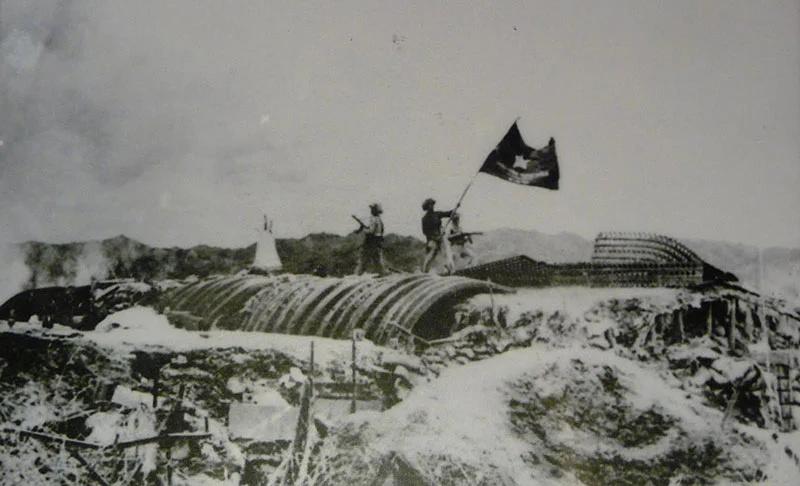
The victory of Dien Bien Phu in 1954 - source: wikipedia
The 1954 Split
The roots of the struggle go back to the French defeat at the Battle of Dien Bien Phu in 1954. Following that victory, the Geneva Agreement was signed, which split the country at the 17th Parallel as a temporary measure.
In the North: The Democratic Republic of Vietnam established its capital in Hanoi, led by Ho Chi Minh.
In the South: Power eventually moved from Emperor Bao Dai to Ngo Dinh Diem, who proclaimed the Republic of Vietnam in Saigon with heavy support from the United States.
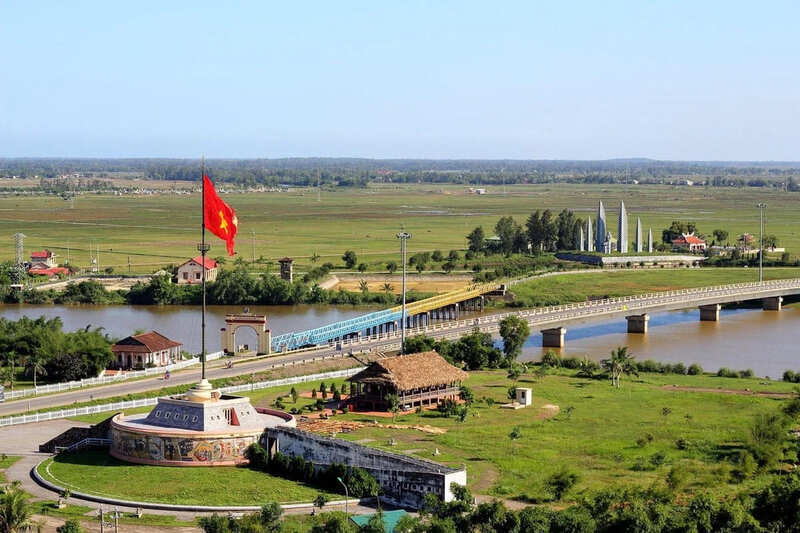
The 17th parallel on the Hien Luong Bridge crossing the Ben Hai River was the demarcation line separating the country in two
The Final Offensive and "Operation Frequent Wind"
By 1973, the Paris Peace Accords led to the withdrawal of American combat troops. However, the fighting did not stop until the Northern forces launched the Ho Chi Minh Campaign in early 1975.
For many of our international guests, the end of the war is often symbolized by Operation Frequent Wind. This was the massive, chaotic helicopter evacuation of US personnel and at-risk Vietnamese from the rooftops of Saigon as the final offensive approached the city.
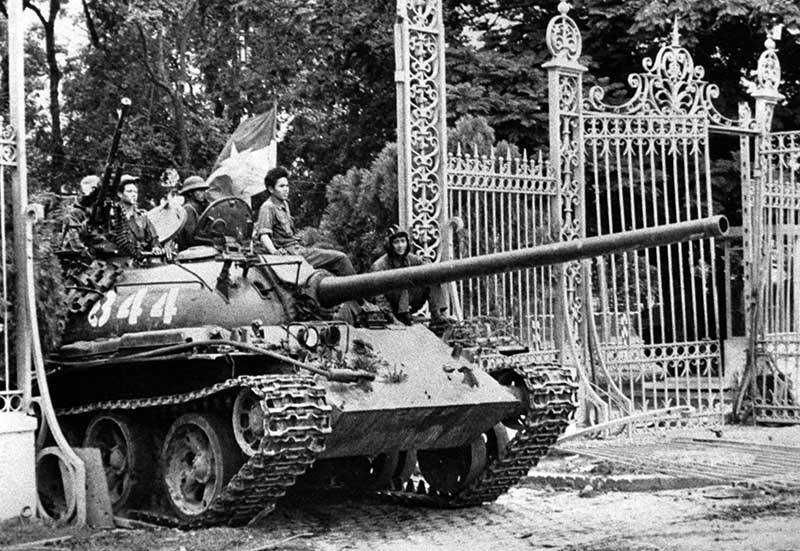
The North Vietnamese Army's tank 844 passing through the gates of the Norodom Palace (now the Reunification Palace)
April 30, 1975: The Gates of History
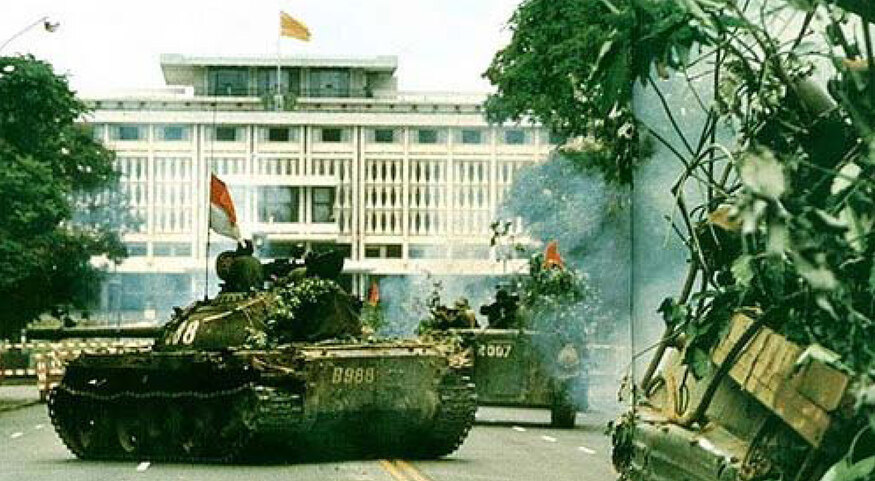
The end officially arrived on the morning of April 30, 1975. The world watched as Tank 843 and Tank 390 of the North Vietnamese Army crashed through the iron gates of the Independence Palace (now the Reunification Palace).
The South Vietnamese government surrendered shortly after. Whether it is called the "Liberation of the South" or the "Fall of Saigon", this specific moment turned the long-held dream of a unified Socialist Republic of Vietnam into a reality.
As we mark the 51st anniversary in 2026, April 30 remains a powerful reminder of the resilience that transformed a war-torn land into the thriving, singular nation you are visiting today.
Vietnam Today
In 2026, Vietnam operates as a global hub for high-tech manufacturing and tourism. Fifty-one years after the 1975 reunification, the country has moved entirely past the post-war recovery phase. The current landscape is defined by heavy infrastructure investment and a shift toward a digital economy.
Hanoi
Hanoi now integrates a functional Metro system that links the Old Quarter to new administrative hubs. The provinces surrounding the capital, such as Bac Ninh and Thai Nguyen, serve as primary manufacturing bases for global electronics brands. These zones drive a large portion of the national GDP and have modernised the logistics network across the North.
Central Vietnam
Da Nang has established itself as the center for Vietnam’s digital industry. By 2026, the city has implemented full 5G coverage and smart city management systems to support international tech professionals and digital nomads. While tourism remains a factor, the region’s identity is now tied to tech startups and digital services.
Ho Chi Minh City
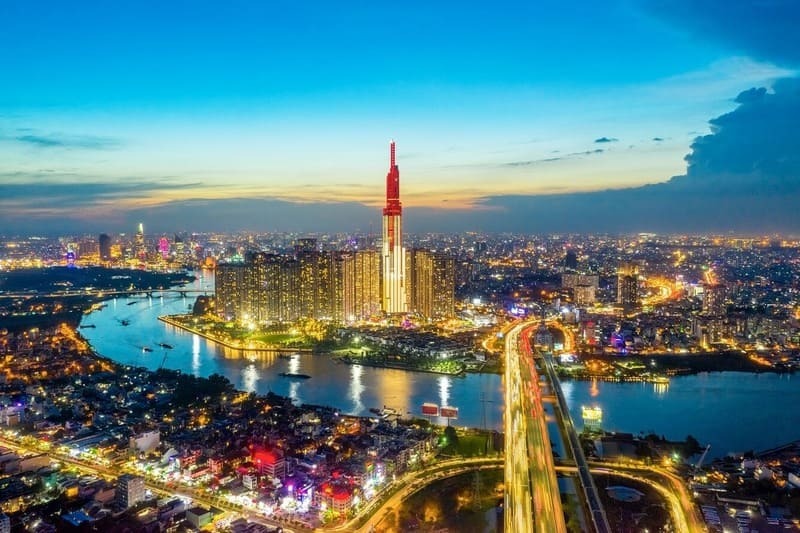
Ho Chi Minh City remains the primary economic engine of the country. The most significant urban development in 2026 is the Thu Thiem Peninsula. This area has been developed into a modern financial district with international banking headquarters and grade-A office spaces. This shift has moved the city’s commercial center across the Saigon River, creating a new skyline that reflects the country’s current financial status.
Vietnam in 2026 is a stable and well-connected destination. The expansion of highways and digital networks makes the country accessible for both business and leisure. Five decades after the conflict, Vietnam is fully integrated into the global supply chain and tourism market.
Ho Chi Minh City today
How Do Vietnamese People Celebrate Reunification Day Each Year?
Reunification Day, celebrated every April 30, is a major national holiday in Vietnam. In 2026, because the holiday falls on a Thursday and International Labor Day follows on Friday, the country enjoys a four-day long weekend (April 30 to May 3). For travelers, this means a unique festive atmosphere but requires careful logistical planning.
The Visual Experience: A Sea of Red Flags
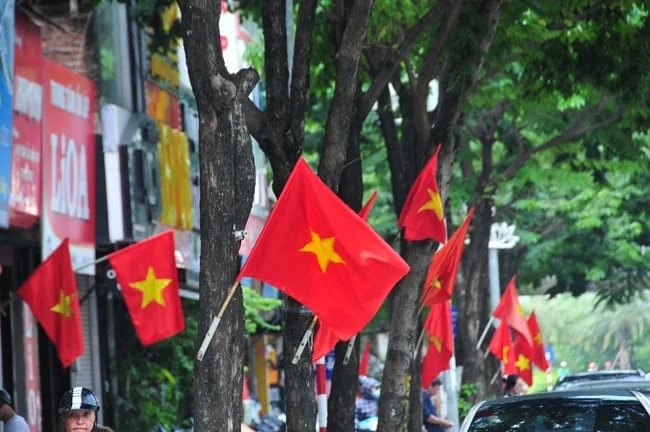
During this period, every household and shop across the country displays the Vietnamese national flag. The streets are heavily decorated with red banners and posters commemorating the 1975 victory.
Hanoi: The Old Quarter and areas around Hoan Kiem Lake are prime locations to see the dense display of flags and patriotic decorations.
Ho Chi Minh City: Major visual displays are concentrated around the Independence Palace and Le Duan Boulevard.
2026 Events and Fireworks
While there is no military parade in 2026, the city-wide celebrations remain a priority for both locals and tourists.
Fireworks: Ho Chi Minh City typically hosts firework displays at 9:00 PM on April 30. Key viewing spots include the Saigon River Tunnel (District 2) and Dam Sen Park (District 11).
Closures: Government offices, banks, and post offices will close for the entire four-day block. Most museums and historical sites stay open, but they will be significantly more crowded than usual.
The streets of Vietnam are decked out in red for the April 30 holiday, with flags,
banners and posters commemorating the country's reunification.
Logistics and Travel Tips for the 4-Day Break
With a four-day weekend, millions of Vietnamese people travel to coastal and mountain retreats. This creates specific challenges for international visitors:
Service
Status & Advice
Transport
Flights, trains, and private vans are often sold out 2 weeks in advance. If you must move between cities, book your tickets immediately.
Traffic
Expect heavy congestion at the gateways of Hanoi and Ho Chi Minh City on the afternoon of April 29 and the evening of May 3.
City Atmosphere
City centers feel surprisingly quiet during the day as locals leave for vacation, but walking streets become extremely busy at night.
Dining
Most restaurants stay open, though some may apply a small holiday surcharge (typically 10 to 15 percent).
As we mark the 51st anniversary in 2026, the holiday is a time for both historical reflection and modern relaxation. Understanding these local patterns will help you navigate the crowds and enjoy the patriotic energy of the season.
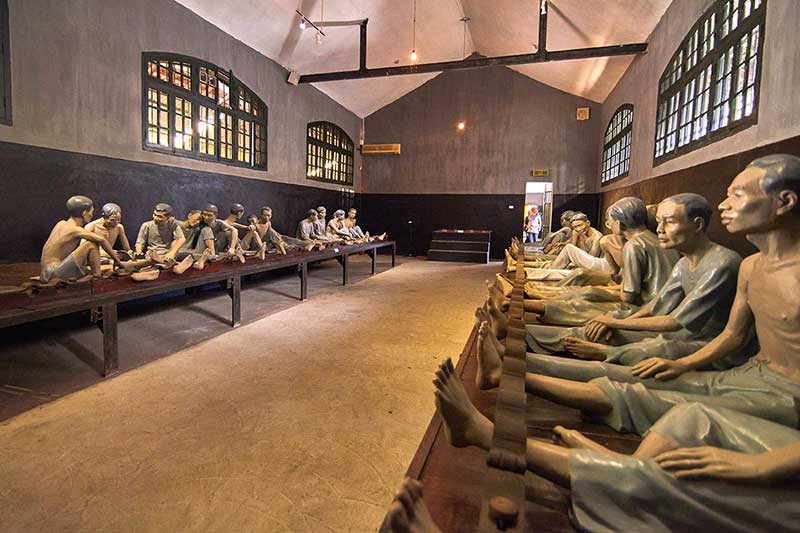
Located in the center of Hanoi, very close to the Old Quarter and the Opera House, the former 'Central House' of Hoa Lo Prison is a symbol of the sacrifice and endurance of the prisoners for their nationalist ideals. The Americans have nicknamed this museum 'The Hanoi Hilton'!
Originally, separatists fighting against the colonial French were detained in Hoa Lo. Later, during the conflict with the U.S.-backed South Vietnamese regime from Saigon, American prisoners of war were placed there.
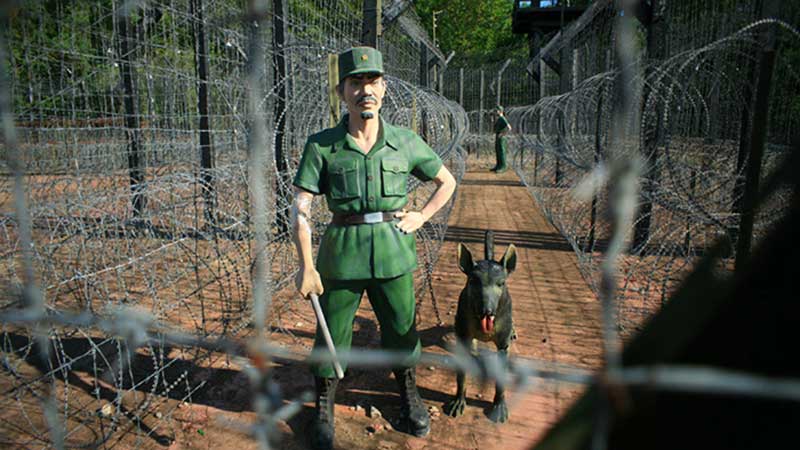
Inside Hoa Lo Prison are statues depicting Vietnamese prisoners
The Demilitarized Zone (DMZ) and the 17th Parallel
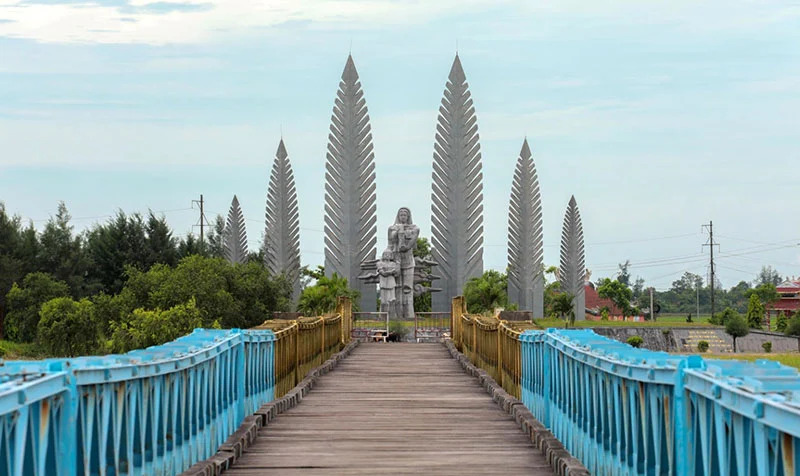
In Quang Tri Province, the Hien Lương Bridge crosses the Ben Hai River, a quiet stream that once divided Vietnam. Set by the 1954 Geneva Conference, the 17th parallel ran through this bridge, with the Demilitarized Zone, or DMZ, flanking both sides. Its name deceives, for during the Vietnam War, this land roared with some of the conflict’s fiercest battles, leaving scars that linger.
Hien Luong Bridge painted in two different colors with a white line in the middle of the bridge representing the 17th parallel line
Today, visitors tread softly past monuments to Vietnamese heroes and the crumbling ruins of old U.S. bases. At Khe Sanh Combat Base, a museum holds rusted relics, from helmets to shell casings, each whispering of a brutal past. Sites like the Rockpile, a jagged lookout, Hamburger Hill, scarred by bloody assaults, and the winding Ho Chi Minh Trails tell tales of grit. The Truong Son National Cemetery, with over 10,000 graves, stands as a solemn tribute to fallen soldiers.
Near the DMZ, the Vinh Moc tunnels reveal wartime resilience. Villagers dug this underground maze to escape bombs, living in damp, dark passages where families clung to hope. Crawling through them now, you feel their courage echo. A trip from Hue’s imperial city or a stop en route to Phong Nha’s stunning caves makes the DMZ a haunting yet vital journey into Vietnam’s soul.
Con Dao Prison
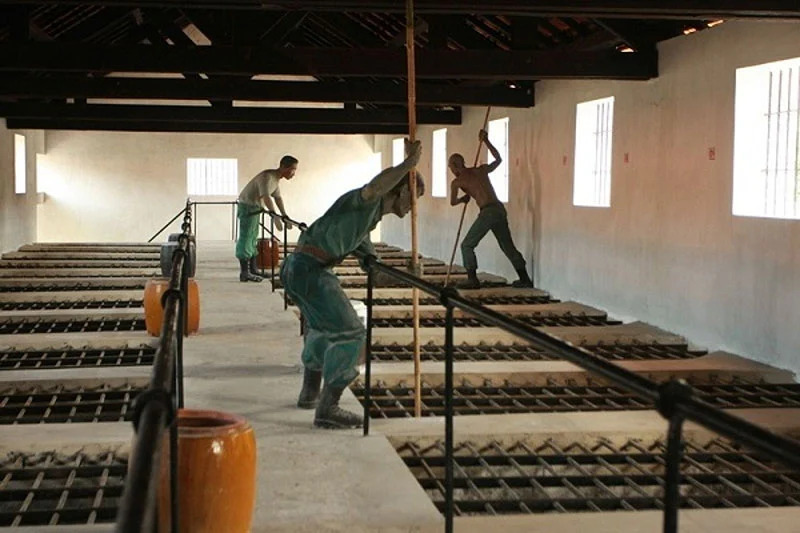
Off Vietnam’s southern coast, far from the bustle of Ho Chi Minh City, lies Con Son Island, the heart of the Con Dao archipelago. Here, the Con Đảo Prison museum stands as a haunting reminder of a brutal past. Its colonial buildings, built by the French in 1861, are both beautiful and chilling>* beautiful and chilling, with stark sculptures that echo the torture and suffering once inflicted on prisoners.
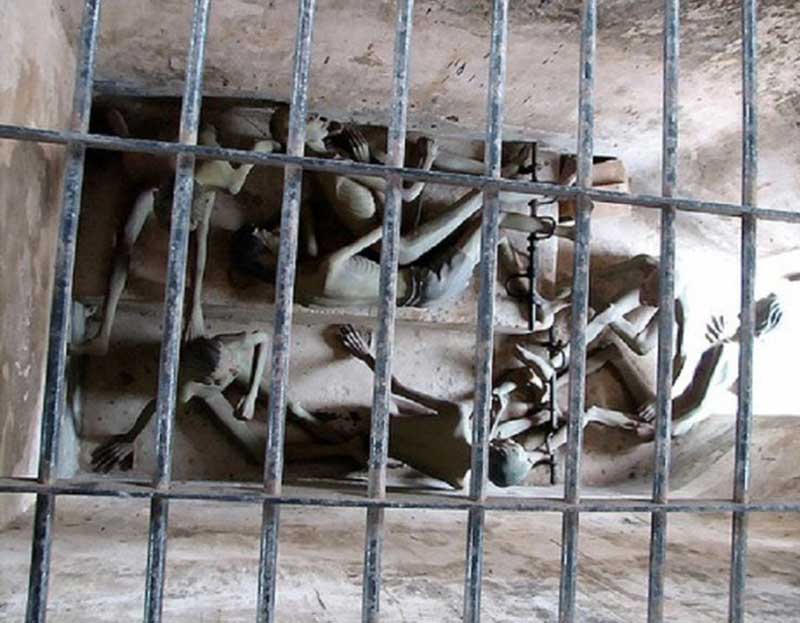
The "tiger cage" in Con Dao prison
Originally called Poulo Condor and featured in the 1990s film Indochina, the prison held political prisoners under French rule. Later, during the Vietnam War, the South Vietnamese, backed by the U.S., turned it into a grim penal colony. Men and women were crammed into “tiger cages,” tiny cells where they faced brutal torture, starvation, or worse. Walking through the museum today, you’ll feel the weight of their stories in every rusted bar and faded photograph.
Prisoners in the "tiger cage"
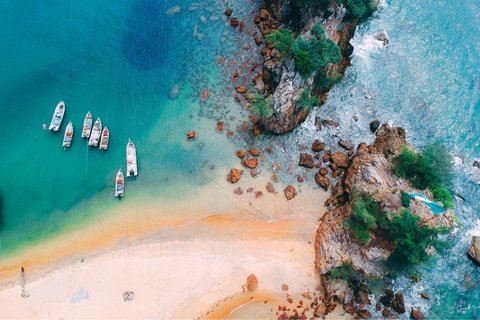
Yet Con Son, also known as Con Lon, is no longer just a place of pain. Now a jewel in Ba Ria-Vung Tau province, the island draws travelers with its turquoise bays, lush forests, and quiet beaches. Once a remote cage, it’s become a haven where history meets healing. You can explore the prison’s dark corridors in the morning and bask in tropical sunlight by afternoon, marveling at how a land of shadows transformed into a vibrant escape.
Reunification Palace
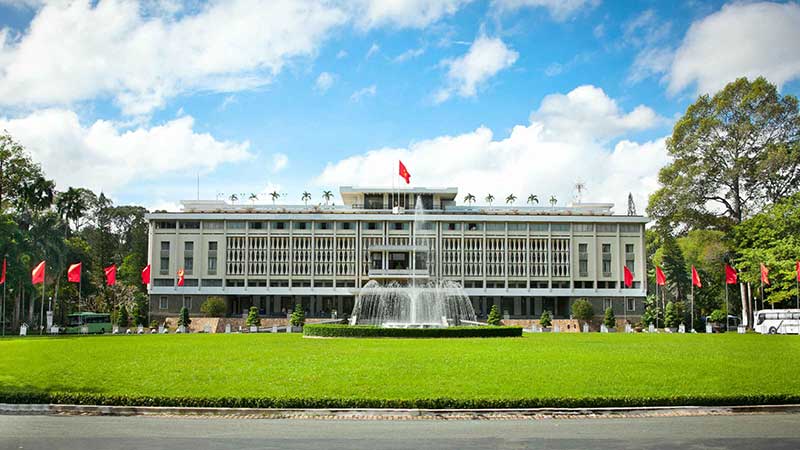
In the heart of Ho Chi Minh City, the Reunification Palace stands as a striking relic of war and renewal. Its sleek 1960s design, with airy halls and retro furnishings, feels frozen in time, yet its walls whisper a tragic tale of Vietnam’s divided past.
Built during French colonial days in the 19th century, the palace became the nerve center of South Vietnam during the Vietnam War. After the 1963 assassination of President Ngo Dinh Diem, General Nguyen Van Thieu, leader of a military junta, made it his home and command post, steering the South through turbulent years. On April 30, 1975, Northern tanks crashed through its gates, marking the fall of Saigon and the birth of a united Vietnam.
Today, the palace is a must-see in Ho Chi Minh City, drawing travelers to walk its grand rooms, where history lingers in old maps and faded radios. For anyone tracing Vietnam’s story, this is a place where the past feels alive, a testament to a nation’s journey from conflict to peace.
Reunification Palace (or Independence Palace) in Ho Chi Minh City
War Remnants Museum
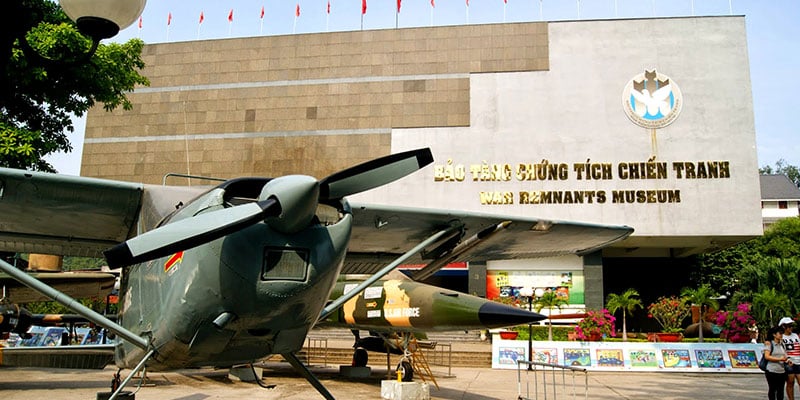
In Ho Chi Minh City, the War Remnants Museum stands as a powerful testament to the Vietnam War’s brutal legacy. Its halls, filled with relics and stories, draw travelers and history buffs to uncover a conflict that shaped a nation, often revealing truths less known in the West.
The War Remnants Museum in Ho Chi Minh City
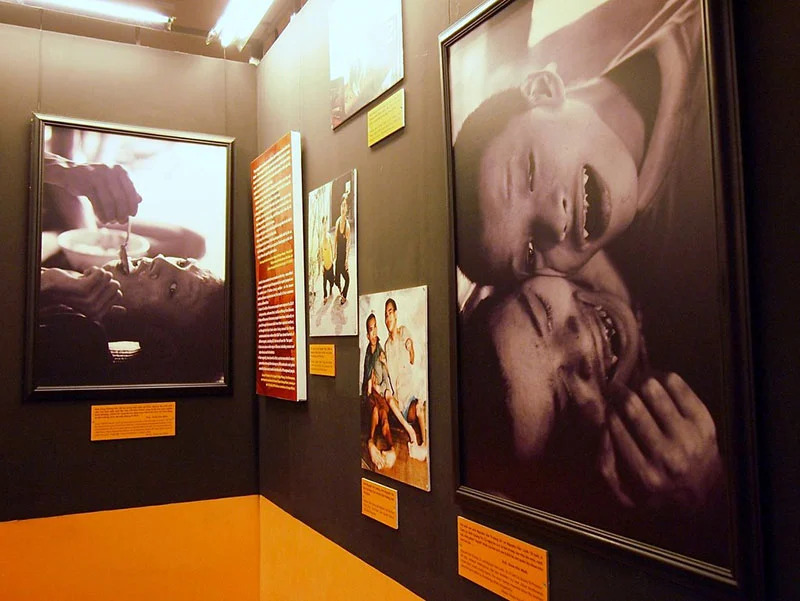
Eight permanent exhibitions unfold the war’s story through photos snapped by 134 reporters from 11 countries, alongside tanks, bombs, and rifles that tell of battles fought. You’ll walk past faded documents and maps, each a snapshot of a violent era. One display, both gripping and heartbreaking, reveals the devastation of Agent Orange, a chemical that scarred generations with illness and loss, its images lingering long after you leave.
Another haunting exhibit recreates the “tiger cages” of Con Dao’s prison, where prisoners were crammed into tiny, barbed-wire cells, barely 5 square meters, with no beds or light. These cramped spaces, used to break the spirit of captives, show the war’s cruelty up close. Stepping through the museum, you feel the weight of a nation’s scars, yet also its strength in facing the past.
The exhibition of moving photos on the victims of orange toxic at the War Remnants Museum
If you're interested in the history of the Vietnam War, you can't leave the country without visiting the Cu Chi Tunnels. An easy Cu Chi day trip from Saigon offers a fascinating insight into the guerrilla actions carried out by the North Vietnamese and Viet Cong against the U.S. Army and its southern allies. You can also discover the underground life of the soldiers and inhabitants of the region during the Vietnam War.
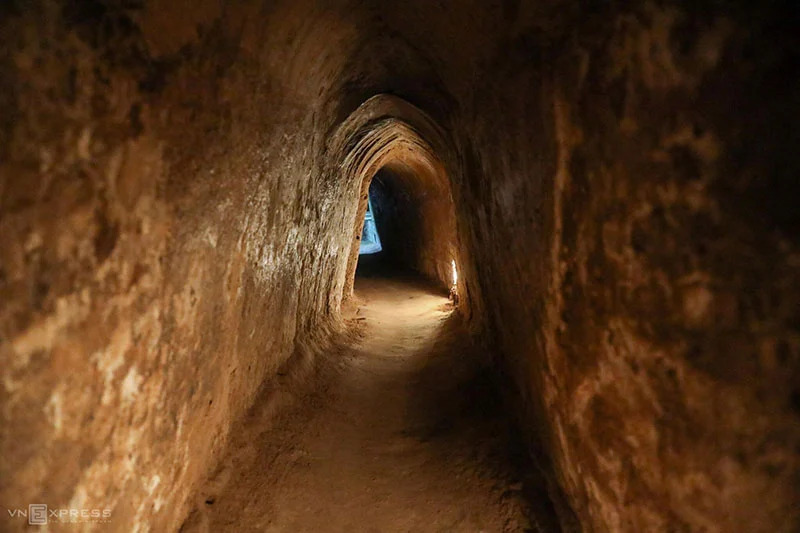
The site consists of a labyrinth of underground galleries stretching for more than 250 km in total. There were hatches, living spaces, kitchens, storage facilities, command centers, hospitals, and even schools.
The narrow passages in the Cu Chi tunnels
Phu Quoc Prison
The island of Phu Quoc – off the southeastern coast of Cambodia is renowned for its many paradisiacal beaches, but not only. It is also a destination steeped in the history of the Vietnam War, traces of which can still be seen in what has been preserved from the former penal colony. This place, where thousands of people were imprisoned and tortured in terrible conditions, is a testament to the turbulent, often dark, past of the S-shaped country.
Cocotier Prison in Phu Quoc
Also known as the 'Coconut Tree Prison,' this war museum now houses authentic instruments of torture, photographs of former detainees, and other displays of brutal punishments. The penal colony takes its name from the village where it was built and from the trees that grow everywhere in Phu Quoc. It was built by the French in 1949, shortly before their departure, and was expanded by the Americans during the Vietnam War.
It is estimated that 40,000 political and military opponents, French and then Americans, were detained there. Most of those who survived and were released after the two wars developed physical and mental disabilities as a result of the violence they suffered there. Learn more about Phu Quoc island.
Conclusion
The fall of Saigon on April 30, 1975, has become a landmark event in world history, constituting one of the most glorious victories of the twentieth century. This day has since been commemorated as the 'Day of Liberation' or 'Reunification Day' by the Vietnamese, as well as by many foreigners who see this date as a symbol of peace and justice. The Vietnam War had a major impact because of the millions of people who were victims of it. During a trip to the country, visiting sites that recall some aspects or episodes of this painful past allows you to experience unforgettable moments.








 Our team
 Our team
 Our team
 Our team

.jpg)


 Other
Other Add us as a preferred source