The rower has just brought the boat back to the dock in Tam Coc, and you are holding two blue banknotes that look almost the same. One is worth about US$0.77 and the other about US$19, which is exactly the kind of small panic that makes tipping in Vietnam feel harder than it is.
The reassuring part: tipping in Vietnam is optional, and nobody will chase you for skipping it. This guide covers who usually gets a tip, how much to give in Vietnamese dong, when you can skip it, and the mistakes that make tipping awkward. As a tour guide, I have a stake in this topic, so the guide amounts below are the ones Kampá Tour suggests to its own travelers.
Written by Oliver PHUNG (Tour Guide)
Updated on Oct 19, 2026
0 comment
Oliver Phung is a Northern Vietnam-based tour guide and blogger. His favorite topics to write about include cuisine, culture, travel, and under-the-radar experiences. Oliver possesses a deep, detailed understanding of the region, from the indigenous culture of the Hmong in the Northwest to the highland lifestyle of the Tay in the Northeast. Whether he is exploring ancient architecture or geological landscapes, he is always eager to share his insights with his readers.
Beyond his work at Kampá Tour, he produces specialized travel content on platforms such as Reddit, Instagram, LinkedIn, and various other publications.
No, you are not supposed to tip in Vietnam as a rule. Tipping is optional and most Vietnamese people do not tip in daily life. In tourism, though, a small tip for a guide, a driver, a boat rower or a massage therapist is common, and it is always welcome when the service was good.
Put simply, there is no fixed rule about tipping in Vietnam, because it is not a normal part of Vietnamese culture and no traveler is under any obligation to tip. Tips do happen, though, and they are more common for tour guides and in spas than in restaurants. That matches the ground: prices in local eateries, markets and taxis are meant to be complete, while people who work closely with visitors, such as guides, drivers and boat rowers, now often receive something extra.
Is Tipping Common or Mandatory in Vietnam?
Tipping is common in tourism but not mandatory anywhere in Vietnam. No law or custom makes it compulsory, and restaurants, cafés and taxis do not expect it. The one grey area is a tour or cruise quote listing a "compulsory tip": that is a fee set by the operator, so ask before you book.
Tipping in Vietnam is optional, but a small tip for good service is appreciated
As I see it, the Vietnamese version of a tip is quieter than the Western one: people round up, say "keep the change" or bring a small gift. If you tip in that spirit, for service you would remember rather than as a percentage, you will rarely get it wrong.
How Much to Tip in Vietnam: Quick Reference
This table sums up who is usually tipped and how much. The sections below explain each case.
Service
Is a tip expected?
Suggested amount (VND)
About
Tours and transport
Private tour guide, 1 to 3 travelers
Common
130,000 to 200,000 per traveler per day
US$5 to 8
Private tour guide, 4 to 6 travelers
Common
80,000 to 150,000 per traveler per day
US$3 to 6
Private tour guide, 7 travelers or more
Common
80,000 to 100,000 per traveler per day
US$3 to 4
Private driver
Common
About half of the guide's tip
US$1.5 to 4
Boat rower or cyclo (xích lô) driver
Common
25,000 to 50,000 per traveler
US$1 to 2
Trekking porter
Common
25,000 to 50,000 per traveler
US$1 to 2
Taxi or Grab
Not expected
Round up the fare
Small change
Food and stays
Street food, cafés, local restaurants
Not expected
Nothing, or leave the change
Small change
Upmarket restaurant
Optional
Nothing extra if a service charge is on the bill; otherwise round up or about 5%
n/a
Hotel porter or housekeeping
Optional
A modest 20,000 to 50,000
US$1 to 2
Homestay host
Optional
A small gift, or 25,000 to 50,000 per traveler
US$1 to 2
Wellbeing
Massage therapist
Common
25,000 to 50,000 per treatment, more for a long one
US$1 to 2
Shops and markets
Not customary
Nothing
n/a
Amounts in Vietnamese dong (VND). Dollar figures use about 26,000 VND to US$1, close to the Vietcombank rate on 19 October 2026. Guide, driver, rower, cyclo, porter, homestay and massage amounts are the ones Kampá Tour suggests to its travelers.
Tour Guides and Drivers
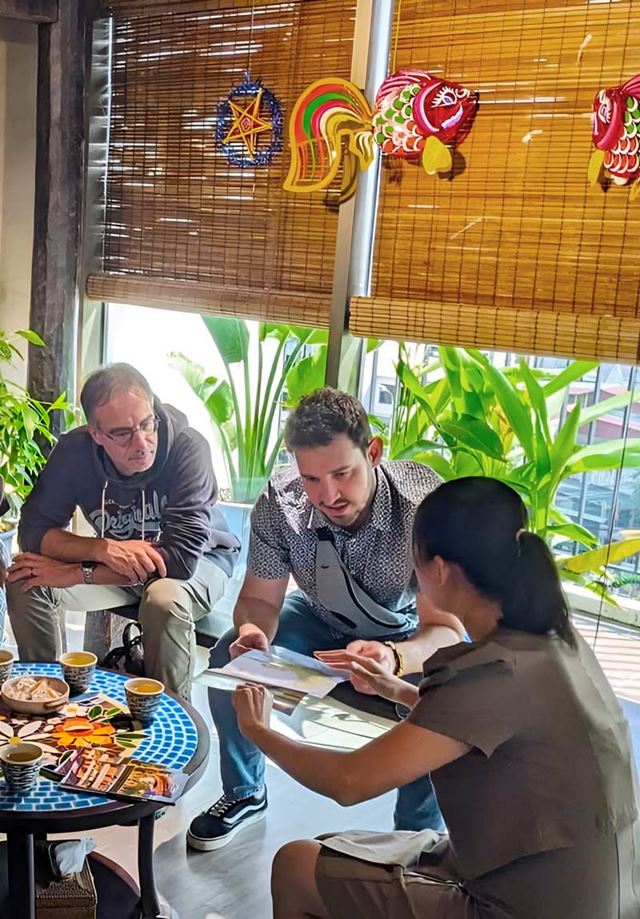
Guides and drivers are the people most often tipped in Vietnam, because you spend whole days with them and their work shapes the trip. A good guide does more than explain a temple. They sort out tickets, translate at lunch, deal with surprises and keep the day moving. On a private tour, a tip at the end of each day, or at the end of the trip, is the normal way to say thank you.
The tour guide is a travel companion
For a private guide, plan on 130,000 to 200,000 VND per traveler per day when you travel as one to three people, 80,000 to 150,000 VND for four to six, and 80,000 to 100,000 VND for seven or more. The amount per person falls as the group grows, because the total still adds up, and for a driver about half of what you give the guide is a fair rule.
Drivers are the ones who contribute to the success and safety of the trip
Hand each person their own tip, in dong, rather than asking the guide to pass part of it on; a folded note or a plain envelope at the end of the last day is the usual way. As a guide myself, I would add one thing. A few words about what you enjoyed mean as much as the amount.
When a Tour Quote Lists a "Compulsory" Tip
Some operators print a fixed tip per person per day in the itinerary and call it compulsory. That makes it a fee, not a tip, and a fee is better discovered before you pay a deposit than at the end of the tour. Ask your operator whether tips are included in the price, suggested or required, and get the answer in writing.
Group Day Tours and Ha Long Bay Cruises
On a shared day tour, people in the group often pool their tips and give one envelope to the guide and one to the driver. On an overnight Ha Long Bay cruise, there is often a tip box at reception. I would use the box, since the crew and the kitchen share it, and you can still thank a guide who looked after your group separately.
Boat Rowers, Cyclo Drivers and Trekking Porters
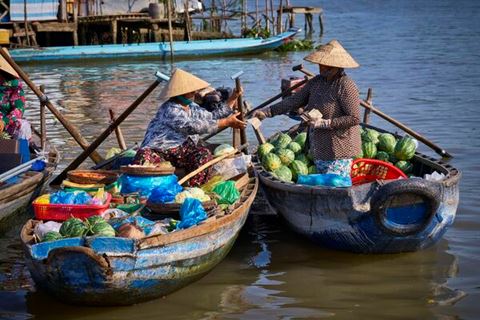
Some of the most tipped people in Vietnam are those who power the experience itself. Plan a tip if your trip includes a cyclo (xích lô) ride, a rowing boat in Tam Coc or the Mekong Delta, or a guided trek with porters. For a rower or a cyclo driver, 25,000 to 50,000 VND per traveler, handed over at the end of the ride, is about right.
Boat rowers in Tam Coc are often tipped at the end of the ride
Visitors in Ninh Binh often tip the rower after a good ride. In my view, the rowers who slow down at the best views, point out the caves and chat with you are the ones who have earned it.
On treks in the mountains of northern Vietnam, porters carry luggage on steep and often muddy trails, so plan 25,000 to 50,000 VND per traveler for each of them and hand it to each porter yourself at the end.
Porters in the Northern Mountain Region of Vietnam
Tipping in Vietnamese restaurants is not expected. At street stalls, noodle shops and local cafés you pay what the bill says, and nobody will chase you for more. If you want to leave something, round up to the next convenient note or tell the staff to keep the change.
Some upmarket and Western-style restaurants in the big cities add a service charge, shown on the bill as "service charge" or "phí phục vụ", and if it is there you do not need to add anything. If there is none and the service was attentive, I think rounding up or leaving about 5% is enough. If you want to reward a particular server, give a small amount to them directly in cash rather than leaving it on the table, where it can look like money you forgot.
Hotels and Homestays
Tipping in Vietnamese hotels is optional. A modest 20,000 to 50,000 VND for a porter who carries heavy bags or for housekeeping at the end of a longer stay is a kind gesture, especially in mid-range and upmarket hotels. Leave the housekeeping tip on the pillow with a short note so it is clearly meant for the staff.
In a family homestay, a gift often works better than cash. Biscuits, cake, fruit, flowers or soft drinks are all welcome when you visit a family home, and it is best to avoid anything black. A small item from your home country is also a good conversation starter. If you prefer to give money, 25,000 to 50,000 VND per traveler, given to the host, is a sensible amount.
Spas and massage shops are one of the few places where tipping is close to the norm, in the same group as tour guides. For a standard treatment, 25,000 to 50,000 VND is a sensible range, handed to the therapist rather than left at reception, and for a long treatment or a high-end spa you enjoyed, giving more is your call.
In some busy tourist areas, therapists ask for a tip before or during the massage. My view is simple: a tip that is asked for is no longer a tip, so pay the listed price and keep your thanks for the places that leave the choice to you.
Taxis, Grab and Food Delivery
Taxi and ride-hailing drivers in Vietnam do not expect a tip. Rounding up the fare, or adding 10,000 to 20,000 VND when a driver helps with heavy luggage or waits for you, is plenty. I also think a little extra for a rider who brings your food through heavy rain is a nice touch, since they are usually the only person in the whole transaction who got wet. The Grab and Xanh SM apps both let you add a tip when you pay, which helps if you carry no small notes. For any other driver, cash in hand is the easiest way to tip.
Tipping in Northern Vietnam Versus the South
I work in northern Vietnam, so this is where I can speak with confidence. In Hanoi, Ninh Binh and the northern mountains, tips usually sit at the lower end of the ranges in this guide, and in villages and family homestays a sincere thank you often does the job. I cannot say the same for Ho Chi Minh City or the beach resorts of the south, where habits may be different. If your trip goes there, ask your guide or your hotel what is usual before you decide.
Is 100,000 Dong a Good Tip in Vietnam?
Yes. 100,000 VND, about US$4 in October 2026, is a generous tip for a massage, a boat ride or a long taxi trip. It equals about four hours of pay at the highest 2026 minimum wage. For a private guide, it is fair per traveler per day in groups of four or more.
The 100,000 VND note is green, and the 500,000 VND note is blue, like the 20,000 VND note. A 500,000 VND tip, about US$19, is very large for a single service in Vietnam. Check which blue note you are holding, because mistaking one for the other is the most expensive way to say thank you.
Tipping Mistakes to Avoid in Vietnam
The biggest tipping mistake in Vietnam is to tip as you would in the United States: adding 15 to 20% everywhere, paying in US dollars or tipping because someone pushed for it. In Vietnam a tip is a small thank you in dong for service you noticed, handed to the person directly.
Tipping a percentage at street stalls. A 15% tip on a 40,000 VND bowl of noodles comes to 6,000 VND, an amount that confuses everyone and impresses nobody. Leave the change if you want to.
Paying in coins or foreign currency. Coins are rarely used, and dollars or euros cost the person time and fees to exchange.
Rewarding pressure. If someone demands a tip or says it is "not enough", you can politely say no. Pay the agreed price.
Mixing up the 20,000 and 500,000 VND notes. Both are blue. Check before you hand one over.
Making a show of it. Hand the tip over quietly with a thank you rather than in front of a crowd.
Tip in Vietnamese dong. Vietnam uses banknotes in everyday life, and the State Bank of Vietnam says polymer notes run from 10,000 to 500,000 VND while small cotton paper notes from 100 to 5,000 VND remain legal and in use. Coins are legal tender too, but you will rarely be handed one, and although cards are accepted in most hotels, tour companies and larger restaurants, tips are almost always given in cash.
Before you leave the airport or your first ATM, break a large note into 10,000, 20,000 and 50,000 VND notes, which are the ones you will use for tips. In rural areas someone may seem shy about accepting money, and in that case a sincere thank you is enough.
Common banknotes and their approximate value (about 26,000 VND to US$1, October 2026):
Tip for service you would tell a friend about, not for someone simply doing their job. A tip that someone asks for, before or during the service, is not a tip, and you are free to say no.
If you are on a tight budget, do not feel guilty. Rounding up, a few words in Vietnamese and a good review are a real thank you too. If you can afford it, a tip in dong for the guide, driver or rower who made your day is the kind of tip people here appreciate most.
Planning your trip?
Save time and get expert advice for FREE!
✅ 15 years of local experience
✅ Save up to 40 hours of planning
✅ Travel stress-free from start to finish
Book your free consultation today!
















 Our team

 Our team

 Our team

 Our team




 Other
 Add us as a preferred source