When Is the Best Time to Visit Vietnam? A Region-by-Region Guide
In Vietnam, the weather can change completely from one region to another. You might find misty mountains in the north, heavy rain along the central coast, and clear beach weather in the south during the very same week.
That is why choosing when to visit is not simply about finding one perfect month. It is about matching your route with the right season. Drawing on nearly ten years of guiding experience, Oliver Phung explains when each region is at its best, which periods require more flexibility, and how the seasons affect rice terraces, cruises, beaches, crowds, and travel costs.
Written by Oliver PHUNG (Tour Guide)
Updated on Oct 07, 2026
0 comment
Oliver Phung is a Northern Vietnam-based tour guide and blogger. His favorite topics to write about include cuisine, culture, travel, and under-the-radar experiences. Oliver possesses a deep, detailed understanding of the region, from the indigenous culture of the Hmong in the Northwest to the highland lifestyle of the Tay in the Northeast. Whether he is exploring ancient architecture or geological landscapes, he is always eager to share his insights with his readers.
Beyond his work at Kampá Tour, he produces specialized travel content on platforms such as Reddit, Instagram, LinkedIn, and various other publications.
When Is the Best Time to Visit Vietnam? Weather by Region and Month
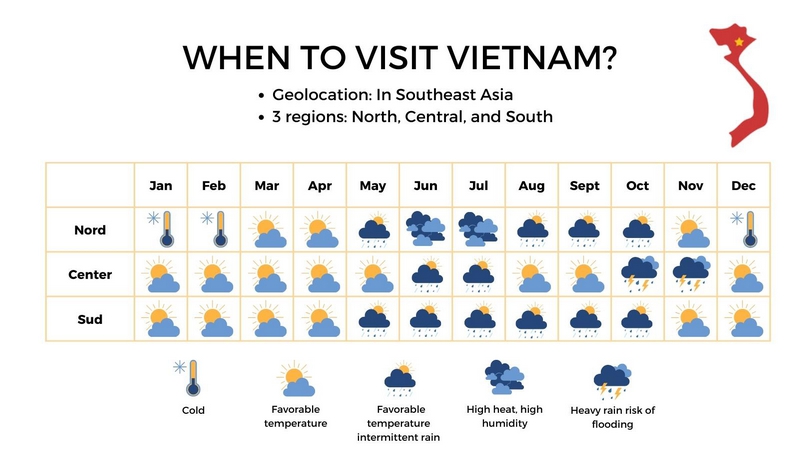
November to April is generally the best time to visit Vietnam. For a journey covering the north, central region, and south, March and April offer the most balanced weather.
At this time of year, northern Vietnam is beginning to warm up, central Vietnam is usually dry and sunny, and southern Vietnam is still within its dry season.
October and November are also excellent for northern and southern Vietnam. Central Vietnam, however, may still experience heavy rain, flooding, and tropical storms.
Vietnam’s weather varies considerably from one region to another. The best month for Hanoi and the northern mountains is not always the best time for Hoi An or Phu Quoc, so it is more useful to plan your trip by region than to look for one perfect month for the whole country.
Unlike most of Southeast Asia, northern Vietnam experiences four relatively distinct seasons.
Spring and autumn are generally the most pleasant periods, with moderate temperatures, less rainfall, and better visibility. These months are ideal for exploring Hanoi, Ninh Binh, Ha Long Bay, and mountain regions such as Sapa, Ha Giang, Cao Bang, Mai Chau, and Pu Luong.
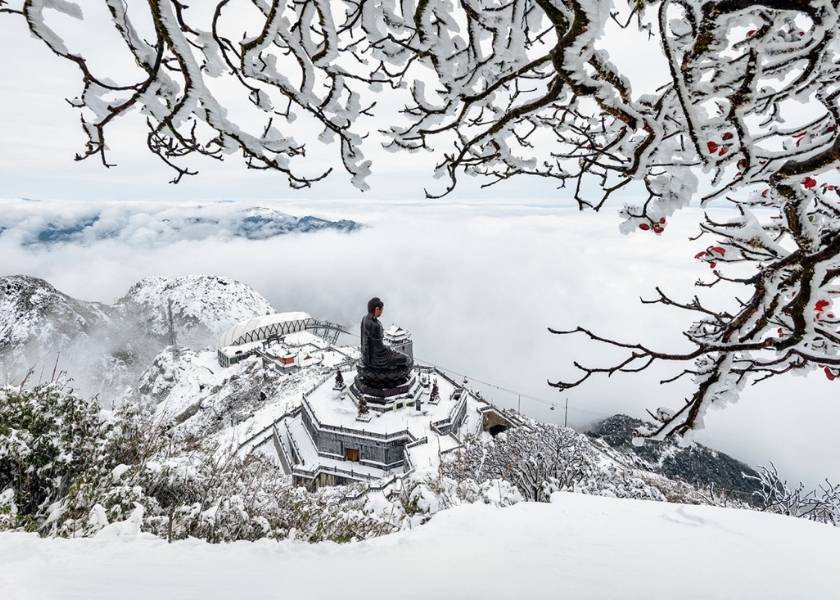
Winter lasts from December to February. Hanoi can feel cool, grey, and damp, while nighttime temperatures in Sapa and Ha Giang may fall below 10°C.
Fansipan peak in Sapa can experience snowfall during cold winter spells.
High humidity, persistent mist, and limited indoor heating can make the weather feel colder than the temperature suggests. Mist may also reduce visibility in Sapa or Ha Long Bay, although it can give the landscape a quiet, atmospheric character.
Summer, from June to August, is hot, humid, and rainy, with most showers falling in the afternoon or evening. Rice fields are at their greenest, and waterfalls are fuller.
Travelers visiting the northern mountains in summer should keep their itinerary flexible, as prolonged rain can occasionally affect roads and hiking conditions.
Ninh Binh is especially photogenic during the autumn months.
Central Vietnam follows a different monsoon pattern from the north and south.
February to August is generally the driest and sunniest period, making it the best time to visit Hue, Hoi An, Da Nang, Phong Nha, Quy Nhon, and Nha Trang.
March to May offers especially balanced conditions. Temperatures are warm without reaching the most intense levels of summer, making this a good period for combining heritage visits, cycling, outdoor activities, and time by the sea.
June, July, and August are usually sunny, but temperatures can rise above 35°C. Outdoor visits are more comfortable early in the morning or later in the afternoon.
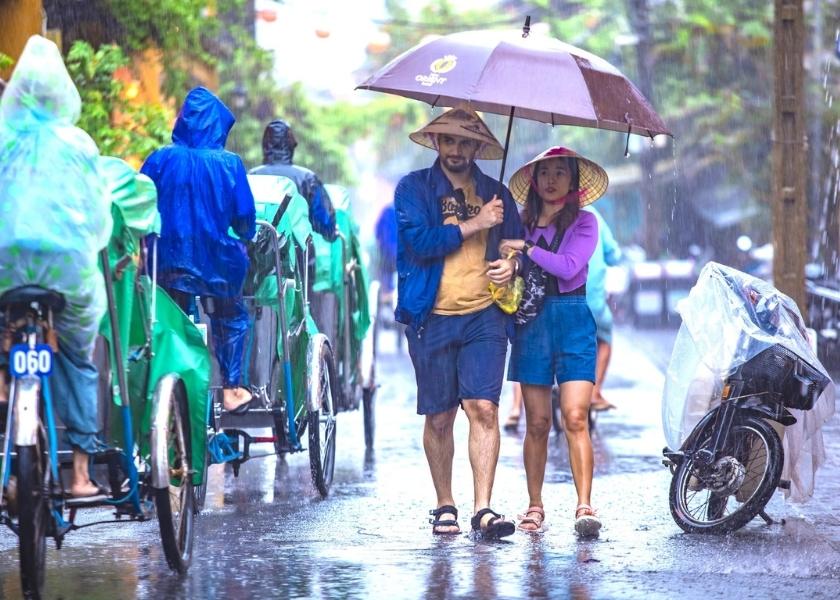
The rainy season generally begins in September and may continue through December. Hue, Hoi An, and Da Nang can experience prolonged rain, tropical storms, flooding, rough seas, and occasional service disruptions.
Local expert tip: Keep autumn itineraries flexible
Travelers visiting Vietnam in October or November should avoid building an itinerary that depends entirely on central Vietnam.
If a tropical storm develops near Hue or Hoi An, northern or southern Vietnam may have much better weather at the same time. A private itinerary with enough flexibility to adjust the route is especially useful during these months.
Southern Vietnam remains warm throughout the year, with temperatures generally ranging from 25°C to 35°C. The main difference between seasons is rainfall and humidity rather than temperature.
The dry season runs from November to April. This is the most convenient period for exploring Ho Chi Minh City, the Mekong Delta, Phu Quoc, Con Dao, and Mui Ne.
December to February usually brings sunny weather and slightly more comfortable humidity. March and April remain dry but can become very hot, especially in Ho Chi Minh City and the Mekong Delta.
The rainy season lasts from May to October. Rain often arrives in short, intense showers in the late afternoon rather than continuing throughout the day.
The rainy season can still work well if outdoor activities are planned in the morning and the late afternoon is kept flexible. The landscape is greener, the Mekong is fuller, and many popular sites are less crowded.
What is the best month to visit Vietnam?
March is usually the best single month for a full journey through Vietnam. The north is warming up, central Vietnam is generally dry and sunny, and the south is still within its dry season.
April is a close second, although temperatures rise noticeably in southern Vietnam toward the end of the month.
October and November also work well for trips focused on the north and south, but conditions are less reliable in central Vietnam.
Best time according to your travel priorities
Travel priority
Recommended period
Complete north-to-south journey
March and April
Northern mountains and trekking
March to May, September to November
Golden rice terraces
Late August to early October
Water-filled rice terraces
May and June
Central beaches
March to August
Southern beaches
November to April
Ha Long Bay cruise
March, April, October, and November
Better value and fewer visitors
May, June, and September
Tet atmosphere
Before and during Lunar New Year
Are there any months to avoid in Vietnam?
No month is unsuitable for the entire country. Weather problems are usually regional, but the following periods require more careful planning.
October to December in central Vietnam
This is the period with the highest weather risk for Hue, Hoi An, and Da Nang.
Heavy rain, flooding, rough seas, and tropical storms may affect:
Outdoor sightseeing
Beach activities
Road transfers
Domestic flights
Heritage sites
Boat excursions
Travelers should include alternative activities and avoid itineraries with no room for adjustment.
June to August in northern Vietnam
These months are hot, humid, and rainy. Mountain roads may occasionally be affected by landslides or poor conditions after prolonged rainfall.
This is still a beautiful season for green rice terraces and waterfalls, but longer or more demanding treks should be planned carefully.
July and August in Ha Long Bay
Summer is warm enough for swimming, but tropical storms may cause cruise cancellations.
Port authorities can suspend departures at short notice when conditions are unsafe. Travelers should check the cruise operator’s cancellation policy and avoid scheduling an international flight immediately after the cruise.
The main days of Tet
During the three or four main days of Tet, many shops, restaurants, museums, and local services close. Domestic flights, trains, and buses are also frequently fully booked.
Tet can be a fascinating cultural experience, but it requires early planning.
When is the rainy season in Vietnam?
Vietnam does not have one national rainy season. The timing varies by region:
Northern Vietnam: May to September
Central Vietnam: September to December
Southern Vietnam: May to October
In the north and south, rain often comes in short tropical downpours, especially in the afternoon or evening. It rarely rains continuously throughout the day unless a storm or unusual weather system is present.
Central Vietnam is different. Tropical storms and weather systems from the sea can bring sustained rain, flooding, and rough conditions, particularly in October and November.
Advantages of traveling during the rainy season
The rainy season can also offer:
Greener landscapes and fuller waterfalls
Fewer visitors at major sites
Better seasonal value in some destinations
Clearer light after short showers
A light poncho, breathable clothing, quick-drying shoes, and a flexible itinerary are usually sufficient for most trips.
Best time to see rice terraces in Vietnam
Northern Vietnam’s rice terraces change throughout the agricultural cycle.
The exact timing depends on altitude, location, and the weather conditions of each year, but three periods are particularly worth considering.
Water season: May and June
During the water season, farmers begin filling the terraces in preparation for planting.
The flooded fields reflect the sky, clouds, and surrounding mountains, creating the famous mirror-like landscapes seen in Mu Cang Chai, Hoang Su Phi, and parts of Sapa.
The fields are not yet green, but the reflections and farming activity make this one of the most photogenic times of year.
Green season: June to August
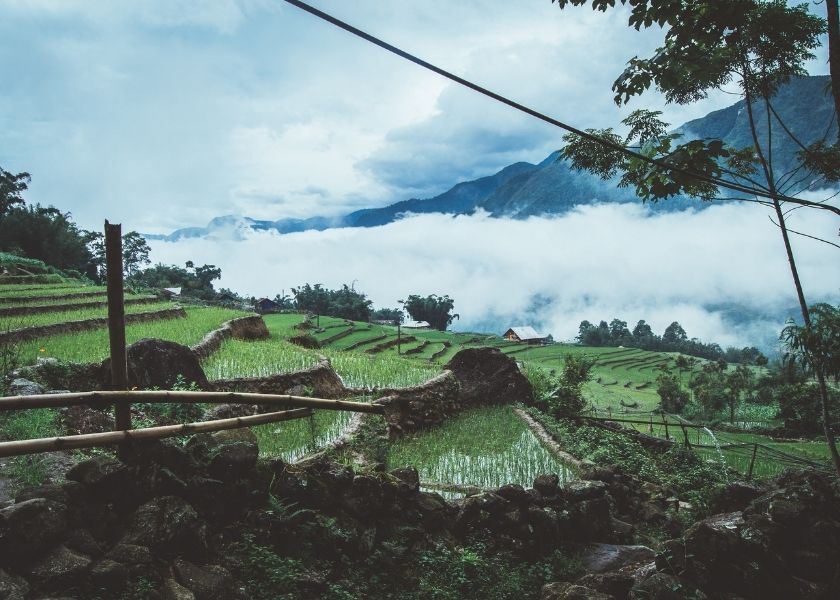
As the rice begins to grow, the terraces turn an intense green.
This is also the rainy season, so conditions are less predictable. Short showers, however, often leave behind clear light and dramatic clouds.
Sapa in the early days of the green rice season.
Golden season: Late August to early October
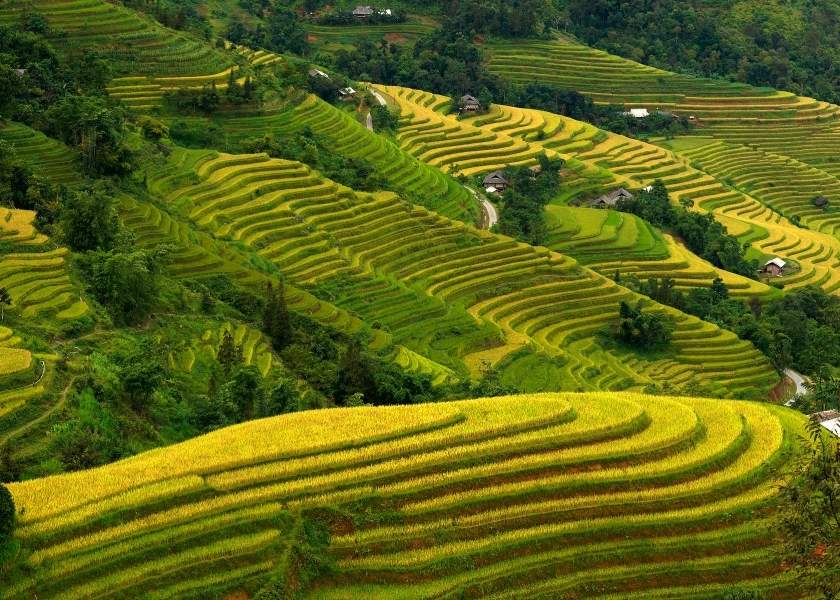
The rice turns yellow shortly before harvest.
Sapa and Mu Cang Chai often reach their golden period earlier, while lower-altitude areas such as Mai Chau and Pu Luong may remain colorful slightly later.
By November, the harvest is generally over and many terraces are empty.
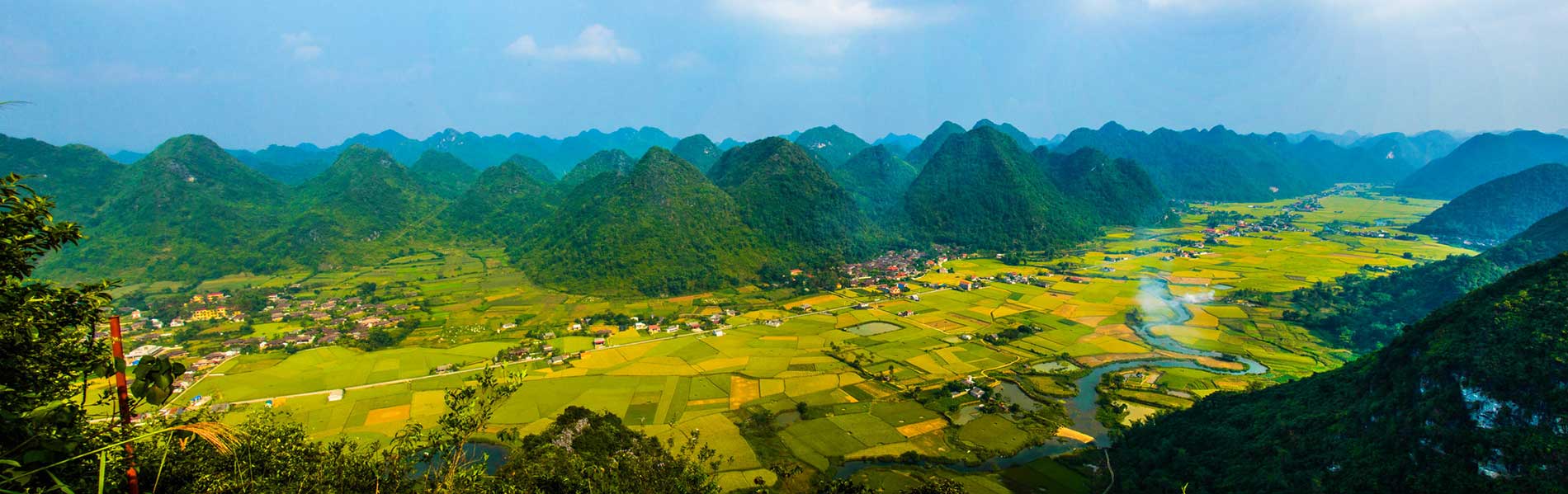
Hoang Su Phi turns golden during the rice harvest season.
Local expert tip: Do not choose a destination based only on the month
Rice conditions can vary between two valleys visited during the same week.
Before confirming a mountain route, check recent photographs and local conditions through a guide or tour operator working in the area. This is more reliable than relying only on a general seasonal calendar.
Best time for a beach vacation in Vietnam
Vietnam has more than 3,000 kilometers of coastline. Beach weather is available somewhere in the country during most months, but the best destination changes with the season.
Northern beaches and Ha Long Bay
Warmest period: May to September
The weather is hot and the water is warm around Ha Long Bay, Lan Ha Bay, and Cat Ba.
July and August, however, carry a higher risk of rain, tropical storms, and weather-related cruise disruption.
March, April, October, and November are generally better for sightseeing and cruising because temperatures are more comfortable and the skies are often clearer, although the water may feel cooler.
Clear weather offers the best views of Ha Long Bay’s limestone landscape.
Central beaches
Best time: March to August
Hoi An, Da Nang, Quy Nhon, and Nha Trang usually enjoy sunny weather during this period.
The central coast is a good summer beach option because it may remain dry while northern and southern Vietnam are experiencing their rainy seasons.
June to August can be extremely hot. Travelers may prefer outdoor activities in the morning, time by the pool in the afternoon, and sightseeing after 4 p.m.
Southern beaches
Best time: November to April
Phu Quoc, Con Dao, and Mui Ne generally enjoy sunny, dry weather and calmer seas during these months.
January to April often brings calmer seas and better underwater visibility around Phu Quoc and parts of Con Dao, although conditions vary by coast and from year to year.
Snorkeling and coral viewing in Con Dao.
Traveling during Tet, Vietnam’s Lunar New Year
Tet is the most important traditional celebration in Vietnam.
Its date changes every year, usually falling between late January and mid-February.
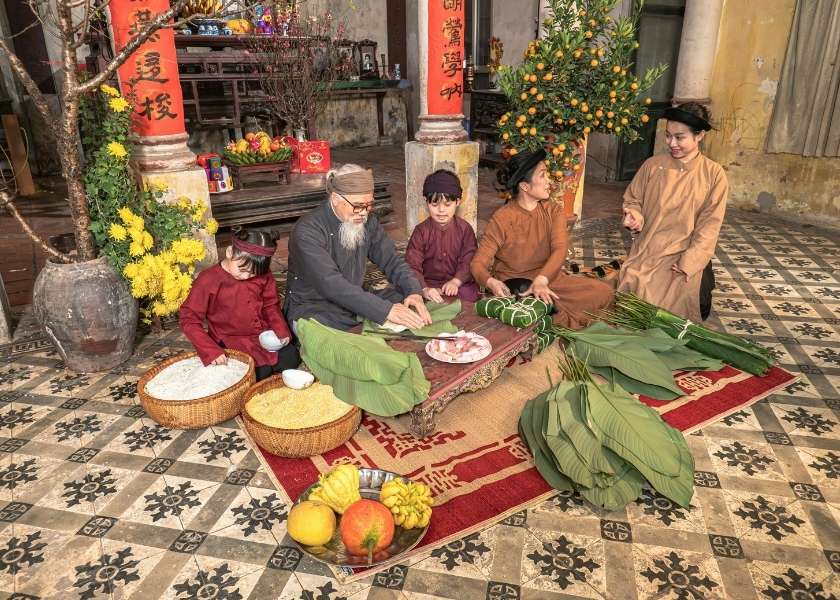
The weeks before Tet are lively and colorful. Streets fill with flowers and decorations, markets become busier, and families prepare food, clean their homes, and make offerings to their ancestors.
Tet Nguyen Dan is the most important traditional celebration in Vietnam.
For visitors, the weeks before Tet can be more rewarding than the holiday itself: the streets and markets are lively, while most services are still operating normally.
During the main days of Tet, however, daily life slows considerably. Many restaurants, local shops, museums, and independent services close as people return to their hometowns and spend time with their families. Transportation is crowded, and prices may rise because of limited availability.
When traveling during Tet:
Reserve domestic flights and trains early.
Avoid long transfers on the busiest travel days.
Choose a hotel or resort with reliable on-site services.
Confirm opening hours shortly before visiting attractions.
Tet does not necessarily need to be avoided. It simply requires more preparation and a different travel rhythm.
Yes. Northern Vietnam is green but hot and rainy, central Vietnam generally offers good beach weather, and southern Vietnam usually experiences short tropical showers.
Plan outdoor visits early in the day, avoid an overly fast itinerary, and leave room for weather-related changes.
Should I begin my trip in northern or southern Vietnam?
From December to February, starting in southern Vietnam allows you to enjoy warmer, sunnier weather before moving north.
From March to May, either direction can work. In September and early October, starting in the north may help you see the golden rice terraces before the harvest.
Does northern Vietnam get cold in January and February?
Yes, although the cold feels different from winter in Europe or North America.
Hanoi temperatures rarely remain below 10°C for long, but high humidity and limited indoor heating can make the weather feel colder. In Sapa and Ha Giang, nighttime temperatures may fall much lower.
Pack several light layers rather than relying on one heavy coat.
When is it cheaper to visit Vietnam?
May, June, and September often offer better value than the Christmas, Lunar New Year, and main summer holiday periods.
Hotels generally have more availability and popular attractions are less crowded. The trade-off is higher heat or a greater chance of rain, depending on the region.
Planning a trip to Vietnam?
Tell us your travel dates, the places you would most like to visit, and the experiences you have in mind.
Our local travel consultants will help you create a private itinerary suited to the seasons and weather patterns of each region.
Planning your trip?
Save time and get expert advice for FREE!
✅ 15 years of local experience
✅ Save up to 40 hours of planning
✅ Travel stress-free from start to finish
Book your free consultation today!









 Our team
 Our team
 Our team
 Our team


.jpg)
.jpg)





 Other
Other Add us as a preferred source