Why Duong Lam ancient village is Hanoi’s most authentic cultural escape
Duong Lam Ancient Village is widely regarded as the most intact ancient village in northern Vietnam. Recognised in 2005 as the country's first officially designated ancient village, and a National Historic and Cultural Monument - it preserves a living snapshot of Vietnamese rural life that has largely vanished elsewhere.
This guide by a local expert covers everything you need to plan a perfect visit: the village's fascinating history, how to get there, what to see, what to eat, practical costs, the best time to go, and sample itineraries for both a half-day escape and a leisurely full-day adventure.
Written by Trang Nguyen (Local Expert)
Updated on Jun 10, 2026
0 comment
Trang Nguyen has lived in Vietnam for nearly three decades and spent much of her life exploring Asia. She has joined numerous field trips, stayed with ethnic communities in the northern mountains, and gained deep insights into local cultures and landscapes. Her writing reflects an honest passion for authentic travel and meaningful connections. If you have any questions about her journeys, feel free to reach out and leave a comment!
Duong Lam's roots stretch back to the 11th century, when the village cluster first took its recognisable shape.
The village holds a proud place in Vietnamese national memory as the birthplace of two kings. Phung Hung led the resistance against the Tang dynasty's occupation of Vietnam in the 8th century, while Ngo Quyen orchestrated the legendary Battle of Bach Dang River in 938 AD – a decisive victory that ended nearly a thousand years of Chinese rule and opened an era of Vietnamese independence.
Temples dedicated to both heroes stand within the village boundaries and remain active sites of worship.
Why It's Unique
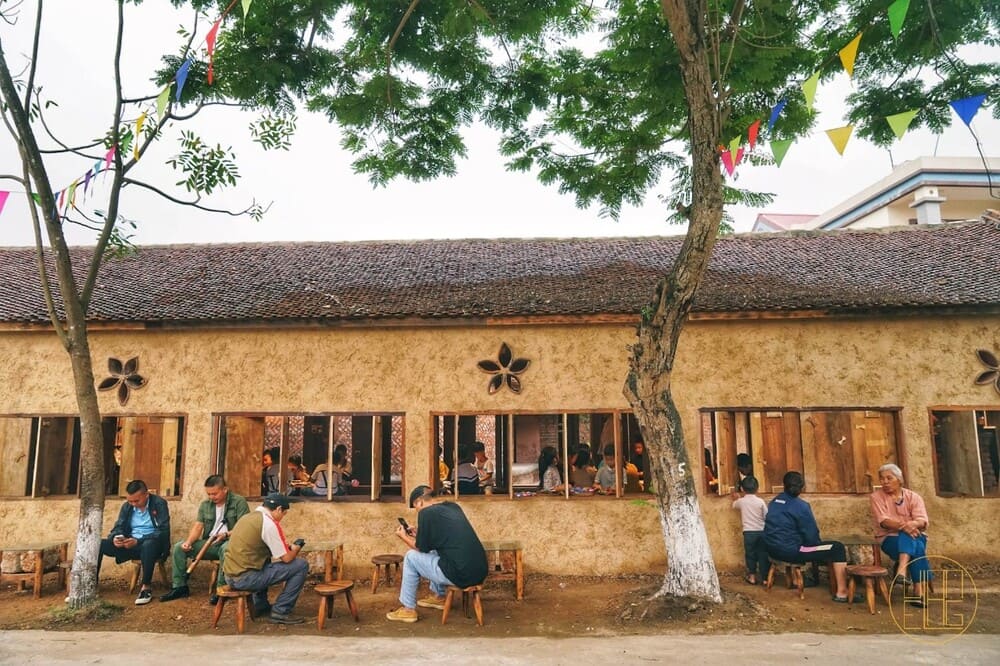
What sets Duong Lam apart from other heritage destinations in Vietnam is that it is genuinely inhabited. There are no rope barriers, no costumed guides performing staged demonstrations. Roughly 9,000 people live in the village today, and nearly all of the approximately 1,000 old houses – many dating to the 17th, 18th, and 19th centuries – are still occupied by the families who have owned them for generations.
Is Duong Lam Worth Visiting?
Short answer: yes. For travellers who have already ticked off Hanoi's Old Quarter and Hoan Kiem Lake and want to experience the rural soul of northern Vietnam without making a multi-day journey, Duong Lam represents remarkable value.
How to get to Duong Lam from Hanoi
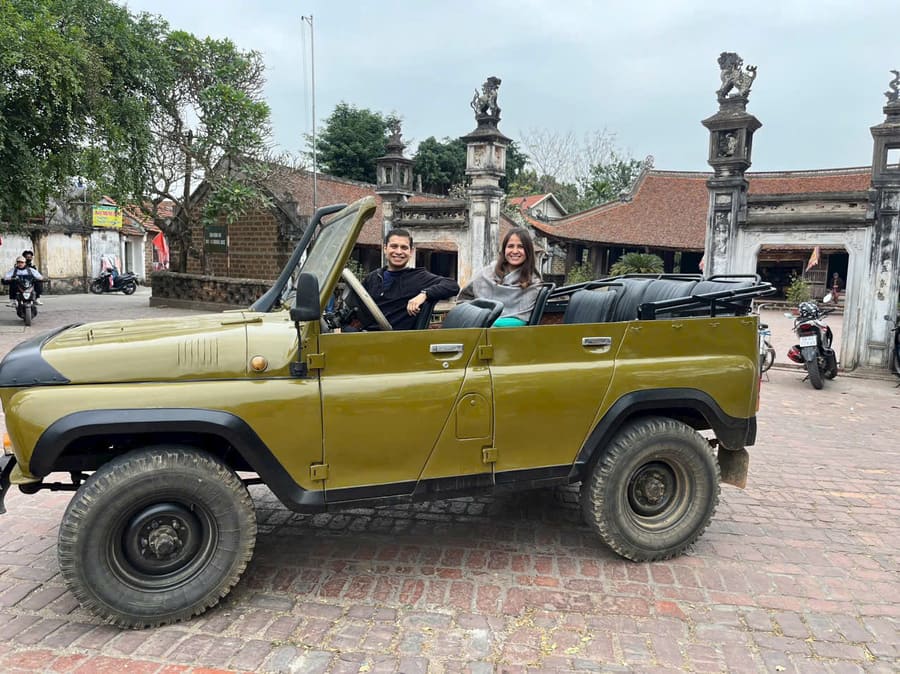
By private car or organised tour (best option)
Hiring a private car from Hanoi costs approximately 1,300,000–2,000,000 VND depending on vehicle size and negotiation, and takes around 1.5 hours.
Many tour operators in Hanoi offer half-day or full-day Duong Lam packages that include return transport, an English-speaking guide, entrance fees, and sometimes a meal.
These typically cost between $60 and $80 USD per person and represent excellent value if you want context and convenience without the effort of self-navigation. (Kampá Tour can help with this too, just in case ;)
(Kampá Tour can help with this too, contact us just in case ;)
By motorbike
Journey time is approximately 1.5 hours at a comfortable pace. Fuel costs are minimal – around 100,000 VND (roughly $4 USD) for the round trip. Most rental shops in the Hoan Kiem or Ba Dinh districts offer semi-automatic Hondas from around 120,000–180,000 VND per day. If you are not confident riding in Vietnamese traffic, it is worth booking a private car or an organised tour.
By bus
Public buses offer the most budget-friendly option. The total journey takes approximately 2 hours and costs between 30,000 and 50,000 VND one way (under $2.50 USD). The main drawback is inflexibility: buses run on fixed schedules, and the connecting leg from Son Tay to the village gate requires negotiation with local drivers.
Entrance fee, opening hours & costs
Duong Lam charges a modest entrance fee of approximately 20,000–30,000 VND per adult (roughly $1 USD), payable at the main gate. Children under 6 typically enter free. The ticket covers access to the communal house, the ancient wells, the main residential lanes, and the village temples.
The village is accessible year-round, generally from around 7:30 AM to 5:30 PM.
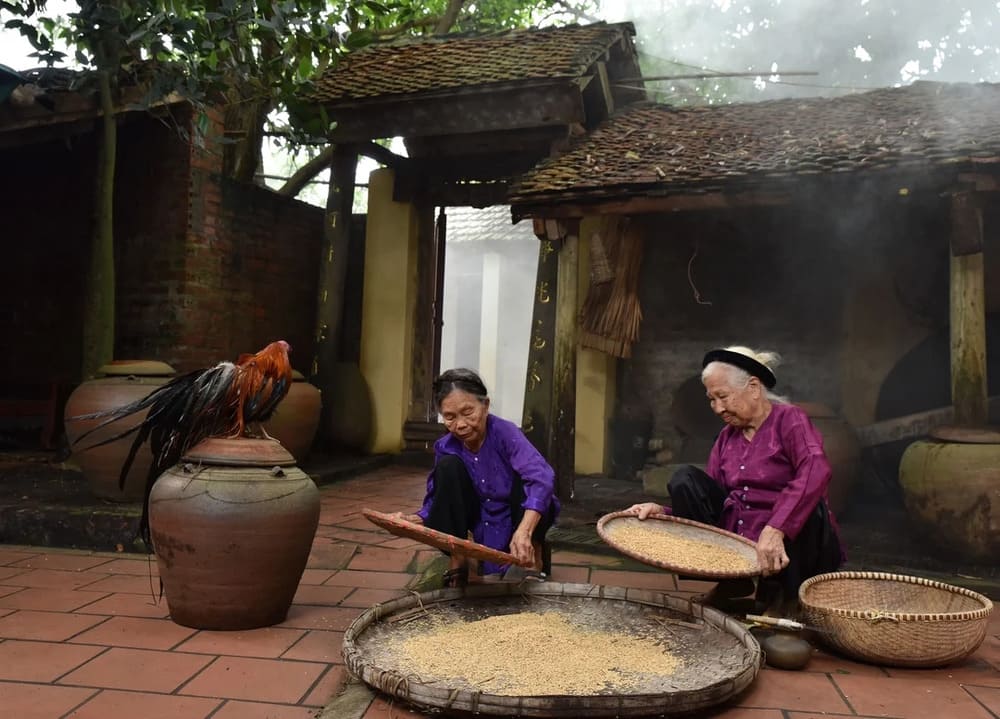
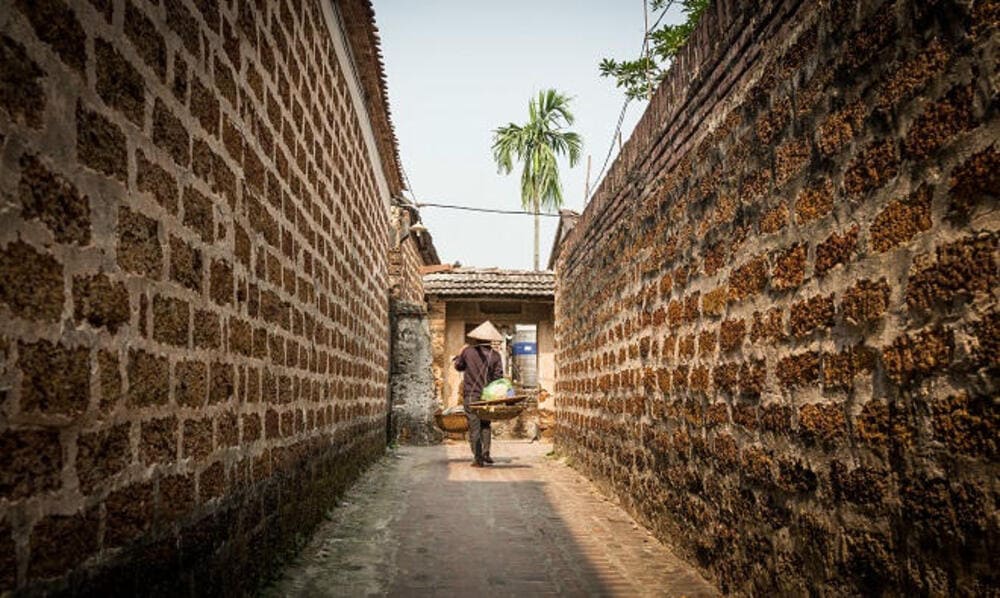
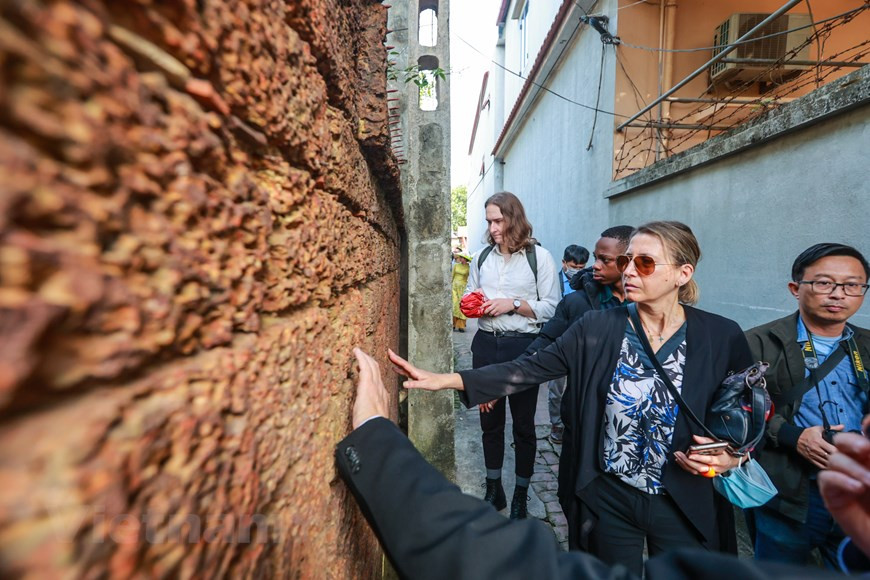
The roughly 1,000 old houses of Duong Lam – many dating to the 17th, 18th, and 19th centuries – are built from a remarkable local material: laterite stone that is soft enough to cut when freshly quarried underground, but hardens into a durable, rust-brown building block when exposed to air.
Their fish-scale clay-tile roofs, carved wooden door panels, and central altarrooms follow a five-bay layout that has barely changed in three hundred years. Several families open their homes to visitors; look for the painted signs on gates along the Mong Phu lane.
2. Visit the Mong Phu Communal House
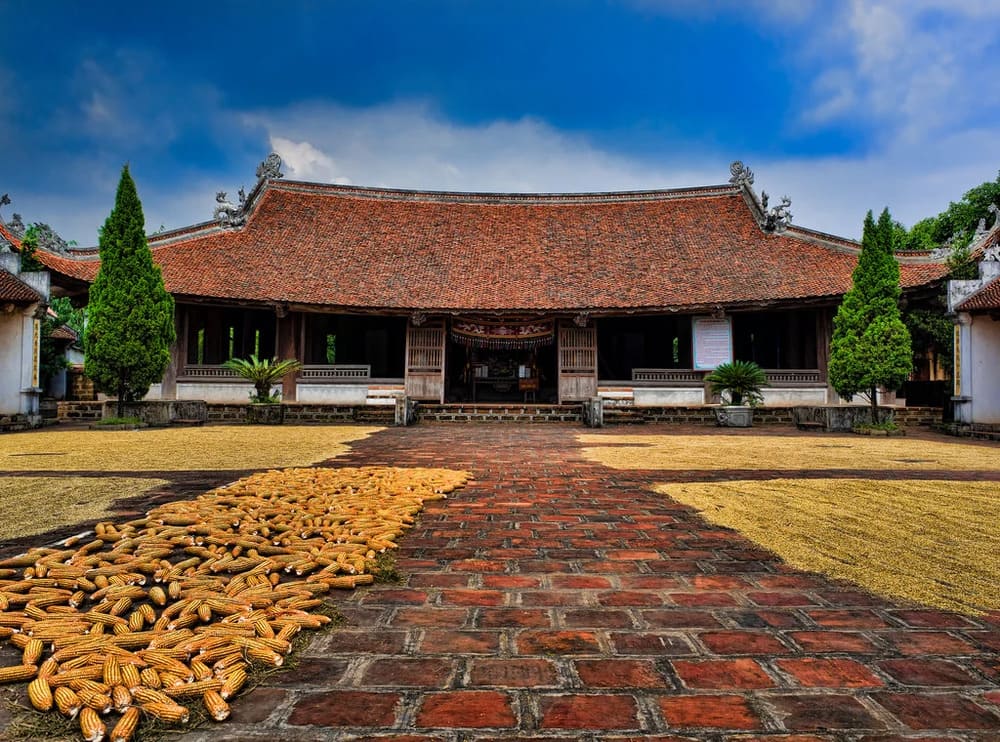
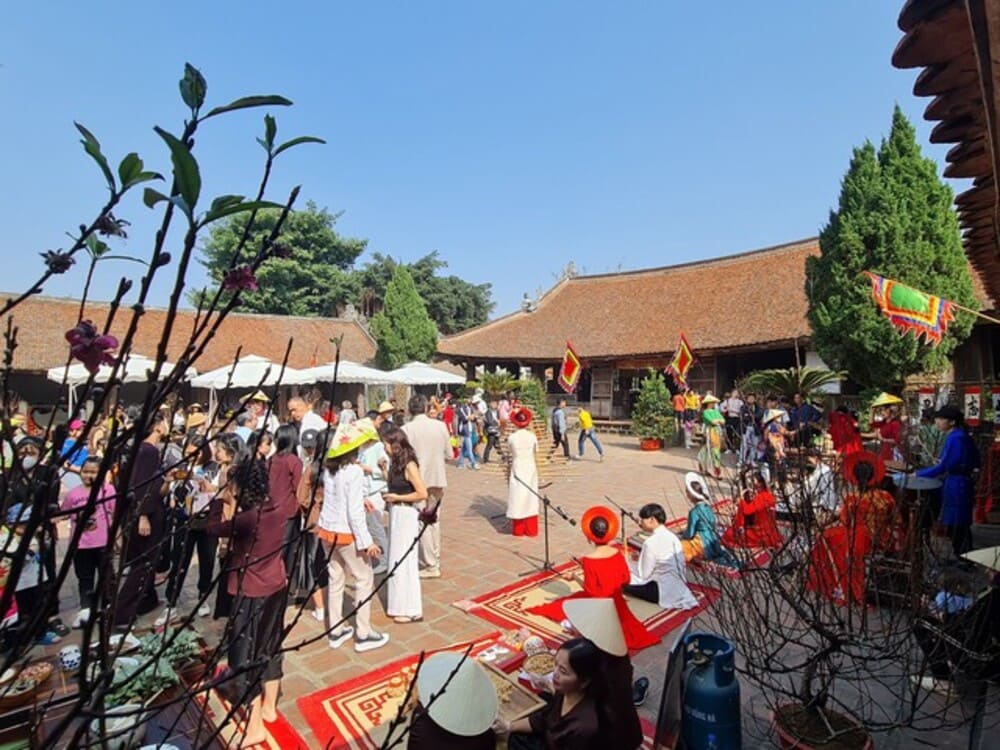
The 1553 Mong Phu Dinh is the spiritual and civic centrepiece of the village. Its raised-pillar construction, lacquered interior columns, and carved roof beams represent some of the finest surviving examples of communal architecture in northern Vietnam.
On festival days, the building fills with incense smoke and the sound of traditional music; even on quiet weekdays, it radiates a calm, ceremonial gravity worth taking time to absorb.
3. Discover Mia Pagoda
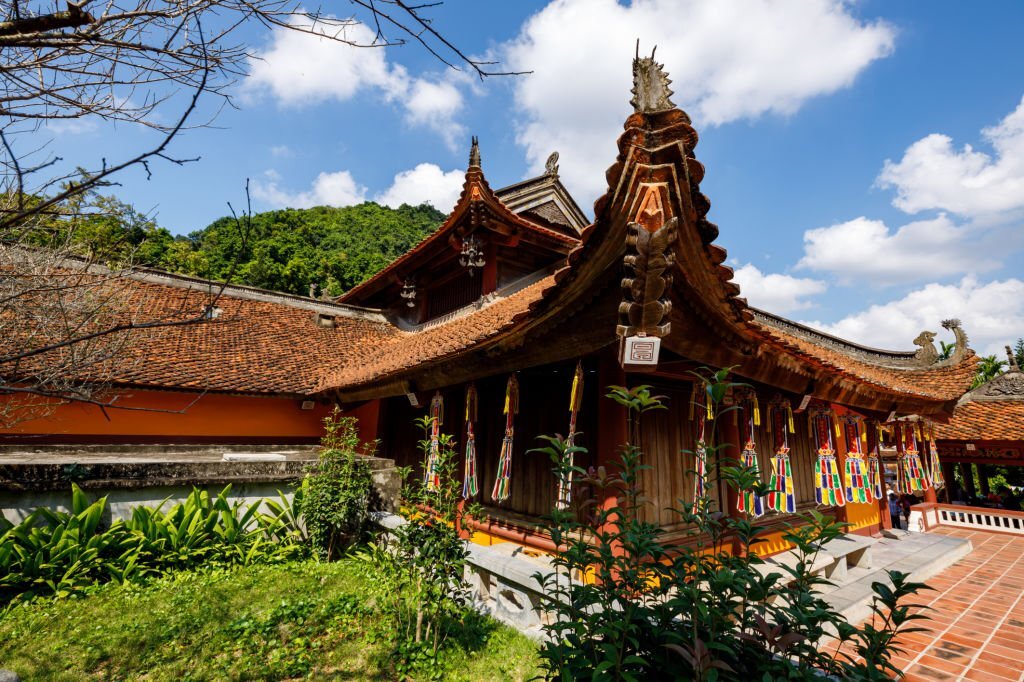
Located on the edge of the village, Mia Pagoda (Chua Mia) is one of the most artistically significant Buddhist sites in the Son Tay area.
The compound houses a remarkable collection of over 300 ancient statues – some dating to the 17th century – carved in stone, wood, and clay. The pagoda's garden setting, with its stone lanterns and shade trees, makes it a peaceful counterpoint to the bustle of the residential lanes.
4. Walk Through the Village Gate and Alleyways
The Gate of Mong Phu, built in 1833 from latérite and still flanked by its centuries-old banyan, is the classic postcard image of Duong Lam.
But the real photographic gold lies in the network of narrow alleys beyond – herringbone-paved lanes bounded by head-high stone walls, fringed with creeping vines and punctuated by ancient wells. Early morning, when low light rakes across the stone, is the best time for photography.
Thẻ tour 4819,5288,4821
5. Seek Out the Ancient Wells
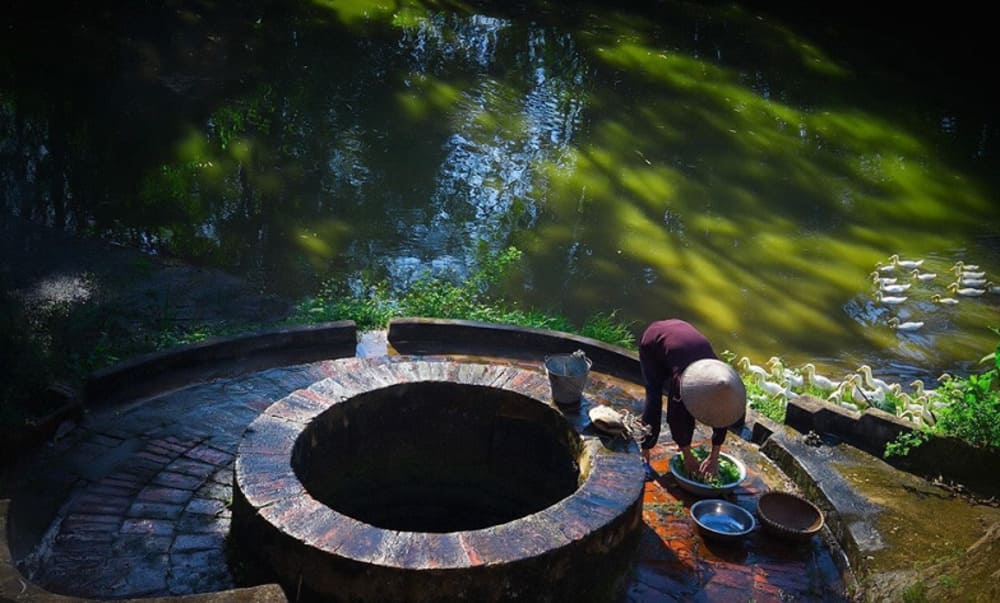
Each hamlet within Duong Lam has its own ancient well, named after its neighbourhood. The two most celebrated are Gieng Phu (the 'right eye of the dragon'), whose spring water is prized for cooking and soy-sauce production, and Gieng Mieu (the 'left eye'), used for washing and daily chores.
6. Experience the Harvest Season
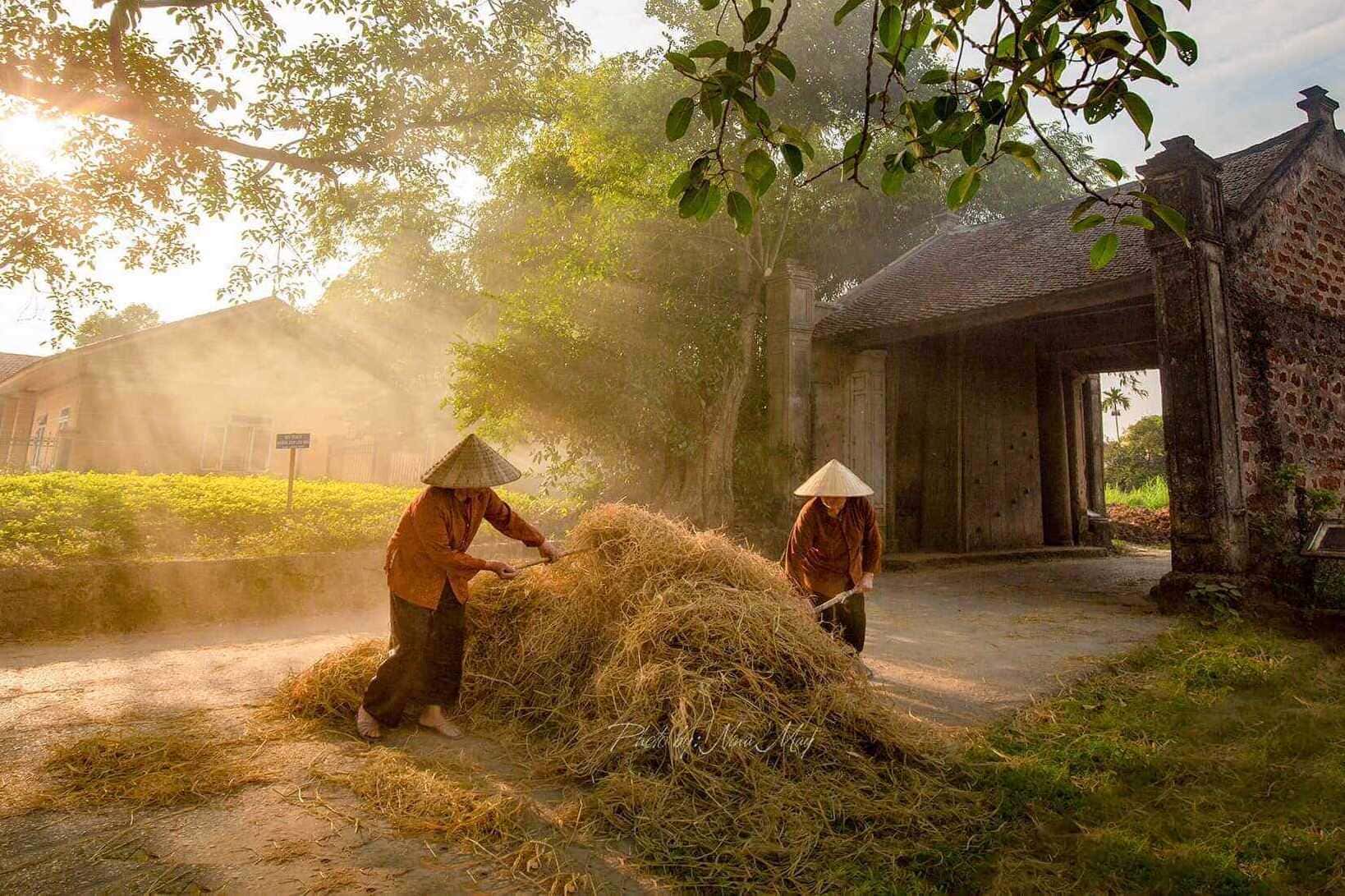
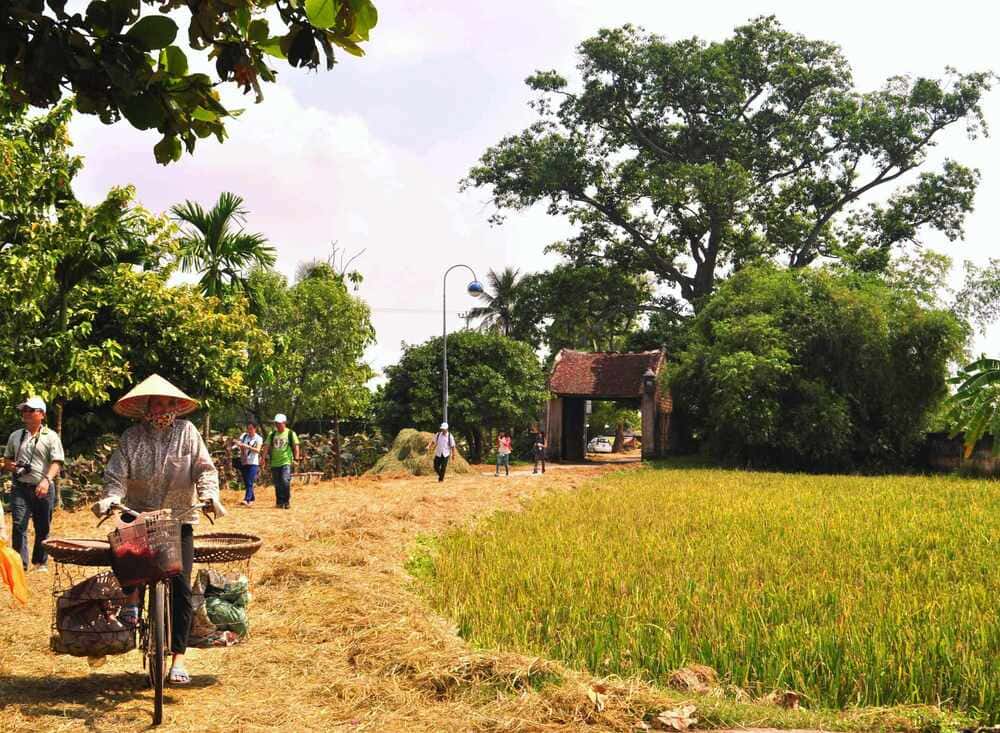
If your timing allows, visit Duong Lam in May, when the summer rice harvest transforms the surrounding paddies into a panorama of molten gold.
The sight of hand-operated threshing machines, farmers in conical hats working in the heat, and golden straw stacked beside rust-coloured walls is one of the most evocative rural scenes in northern Vietnam. The air carries the warm, grassy scent of cut paddy – something no photograph can fully convey.
7. Taste the Local Food
No visit to Duong Lam is complete without eating. The village has two signature foods you will not easily find elsewhere: che lam (sticky rice bars perfumed with ginger and studded with roasted peanuts) and ga mia (sugar-cane chicken, slow-cooked until the meat falls from the bone with a faintly sweet depth).
The centuries-old soy-sauce tradition, fermented by hand in clay pots from glutinous rice, soy, and mung beans – is also worth seeking out, either as a condiment with a local meal or as a small jar to take home.
Top-rated local guide tour of Duong Lam ancient village
Half-Day Itinerary (4–5 Hours)
8:00 AM – Depart Hanoi by motorbike or private car
9:30 AM – Arrive at the village gate; purchase entrance ticket
9:45 AM – Walk the Mong Phu alleyways; photograph the Gate and banyan
10:15 AM – Visit the Mong Phu Communal House
10:45 AM – Explore an open ancient house; try che lam from a lane-side vendor
11:30 AM – Walk to Gieng Phu (ancient well); browse local soy-sauce producers
12:00 PM – Lunch at a village restaurant (ga mia recommended)
1:00 PM – Depart for Hanoi
Full-Day Itinerary (7–8 Hours)
8:00 AM – Depart Hanoi
9:30 AM – Arrive; walk Mong Phu lane and Gate
10:00 AM – Mong Phu Communal House visit
10:30 AM – Ancient house tours (Hung house, The house for soy-sauce demo)
11:30 AM – Cycle or walk to Mia Pagoda (30-min visit)
12:30 PM – Lunch: ga mia, rice, local greens
2:00 PM – Visit remaining ancient wells; explore Dong Sang hamlet
3:00 PM – Photography golden hour in the paddy lanes
4:00 PM – Shop for local sweets (che lam, peanut candy, sesame bars)
4:30 PM – Depart for Hanoi
Best time to visit Duong Lam
Duong Lam can be visited at any time of year, but two periods stand out as especially rewarding.
May is widely considered the most beautiful month. The summer rice harvest turns the paddies surrounding the village a vivid, warm gold, and the combination of golden fields, latérite stone, and bright sunlight produces landscapes of extraordinary pictorial quality.
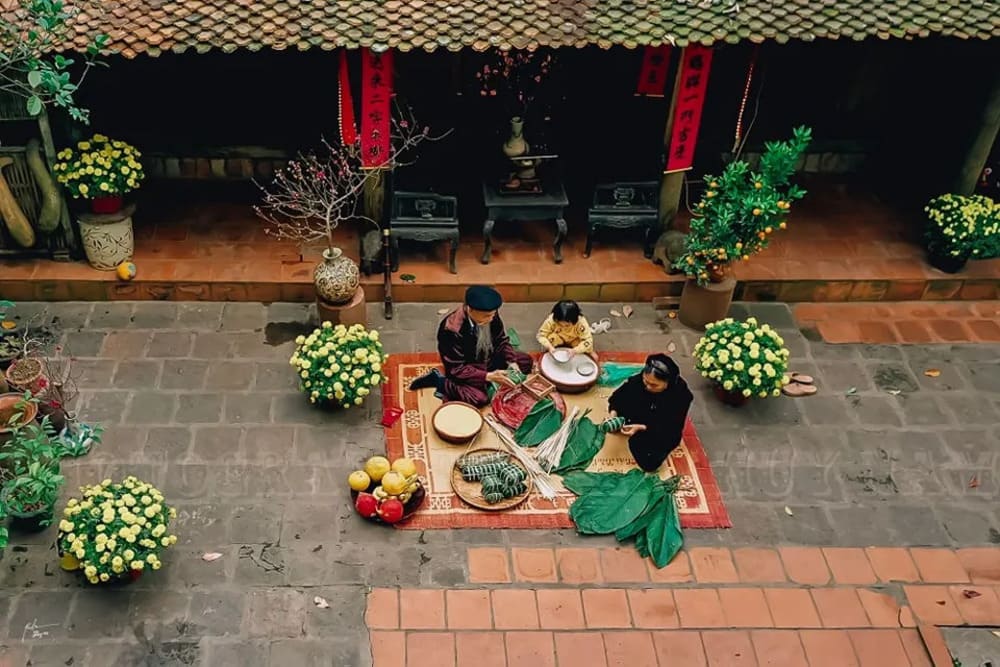
The Tet holiday period (late January to mid-February, depending on the lunar calendar) brings the village to life with traditional festivities. The annual village festival on the 10th day of the first lunar month features cock-fighting, human chess, and ceremonial processions at the communal house.
Note: You just need to avoid the hottest midday hours of July and August, when temperatures can exceed 38°C. (It’s very hot in Vietnam, and my travellers hate it, trust me!)
Tips for visiting Duong Lam
Arrive early. By 10 AM on weekends, tour groups begin arriving.
Wear comfortable walking shoes. The village lanes are paved with uneven stone and laterite, and some paths are narrow and unpaved.
Bring cash. Bring sufficient dong for entrance fees, food, and any purchases.
Respect the homes. Many ancient houses are private residences. If a door is open, it may indicate the family welcomes visitors, but always knock and wait before entering.
Hire a local guide. An English-speaking guide (often available at the entrance gate or through Hanoi tour operators) transforms the experience, unlocking stories behind the buildings and introductions to local families that independent visitors simply cannot access.
Carry water and sunscreen. Shade is limited in the paddy areas surrounding the village.
Try the soy sauce. Pick up a small jar of homemade tuong soy sauce from one of the traditional producers – it costs almost nothing and makes a wonderful edible souvenir.
Duong Lam vs other Hanoi day trips
Hanoi sits within easy reach of several outstanding day-trip destinations, so how does Duong Lam compare?
Ninh Binh, about 90 km south of Hanoi, offers dramatic karst scenery, ancient temples at Hoa Lu, and boat rides through flooded rice valleys. It is more visually spectacular than Duong Lam but also more commercialised, busier, and significantly more expensive. It is better suited to visitors primarily interested in landscape photography or cycling.
Perfume Pagoda, a day-long river-and-cable-car pilgrimage into a mountain shrine complex, is fascinating for those interested in Vietnamese Buddhism but involves significant travel time and physical effort. It does not offer the slow-village atmosphere that defines Duong Lam.
Ba Vi National Park, situated only a few kilometres from Duong Lam, makes an excellent pairing on a full-day trip – cool highland air, French colonial ruins, and mountain trails complement the low-lying village perfectly.
Duong Lam is the right choice for travellers who prioritise cultural immersion over dramatic scenery, who want to understand how Vietnamese village life has been lived across centuries, and who are happy to exchange adrenaline for atmosphere. It is one of the few places near Hanoi where you leave feeling genuinely connected to something older and quieter than the city.
FAQs about Duong Lam ancient village
1. Is Duong Lam free?
There is a small entrance fee of around 20,000–30,000 VND per person. Children under 6 are usually free.
2. How far from Hanoi?
About 40–45 km west of central Hanoi, roughly 1.5 hours by road.
3. Can you stay overnight?
Yes! Several local families offer homestay accommodation for an authentic village experience.
4. What makes it special?
It's Vietnam's first officially recognised ancient village, with 1,200-year-old architecture, latérite houses, and living cultural traditions.
5. Is it suitable for kids?
Absolutely. Wide lanes, open fields, and the relaxed pace make it ideal for families.
6. How long to spend there?
Half a day is sufficient; a full day lets you explore leisurely and enjoy a local meal.
7. Do locals speak English?
Rarely. A basic phrasebook or a local guide is recommended for deeper interaction.
Conclusion
Duong Lam Ancient Village is, above all, a reminder that Vietnam's story did not begin with the 20th century.
A visit here is about slowing down long enough to notice the texture of a stone wall worn smooth by ten thousand hands, the way a communal house holds silence as thoughtfully as it holds ceremony, the particular quality of afternoon light in a lane where nothing has changed since your great-grandparents were born.
If you have a day to spare in Hanoi, give it to Duong Lam. You will not regret it.
Ready to plan your trip? Explore our complete Hanoi travel guide for more day-trip ideas and hidden gems in northern Vietnam.
Planning your trip?
Save time and get expert advice for FREE!
✅ 15 years of local experience
✅ Save up to 40 hours of planning
✅ Travel stress-free from start to finish
Book your free consultation today!















 Our team
 Our team
 Our team
 Our team



.jpg)
.jpeg)

.jpg)




 Other
Other Add us as a preferred source