Hanoi Airport Guide: Transfers, Terminals & Local Tips for Noi Bai Airport
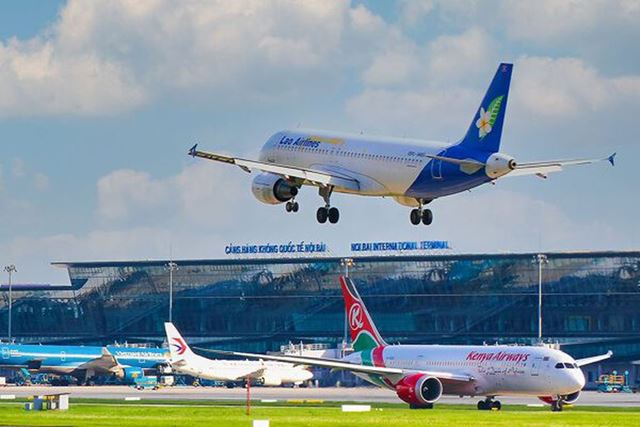
Hanoi Airport and Noi Bai International Airport are the same place: there's no second airport you need to worry about finding. You'll use either Terminal 1 or Terminal 2 depending on whether you're flying domestically or from abroad, and the ride into the Old Quarter takes somewhere around 40 to 60 minutes, covering roughly 30 kilometres, depending on traffic and the time of day.
What follows is everything I'd tell a guest if we had the full ride into town to talk it through: terminals, transport options, facilities, a few scams worth knowing about, and the small details that only show up after you've done this walk a thousand times.
Written by Trang Nguyen (Local Expert)
Updated on Aug 04, 2026
0 comment
Trang Nguyen has lived in Vietnam for nearly three decades and spent much of her life exploring Asia. She has joined numerous field trips, stayed with ethnic communities in the northern mountains, and gained deep insights into local cultures and landscapes. Her writing reflects an honest passion for authentic travel and meaningful connections. If you have any questions about her journeys, feel free to reach out and leave a comment!
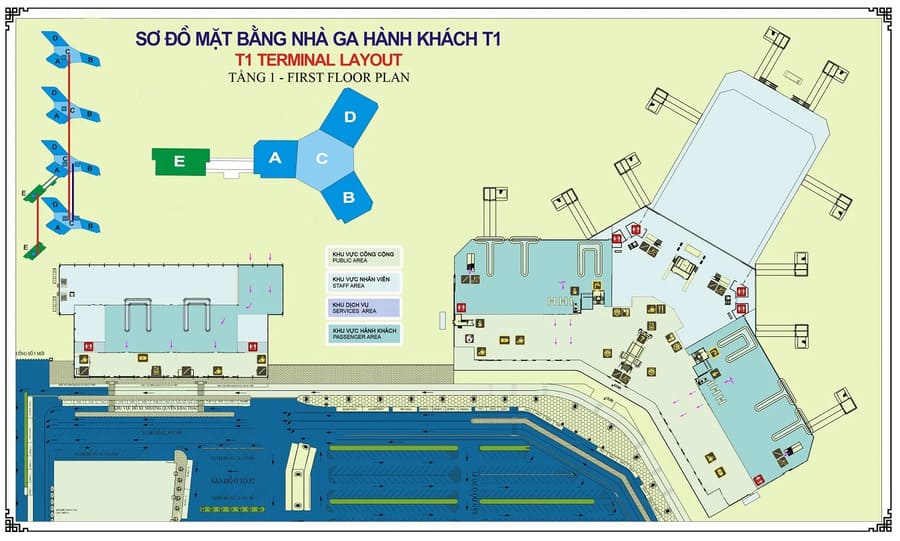
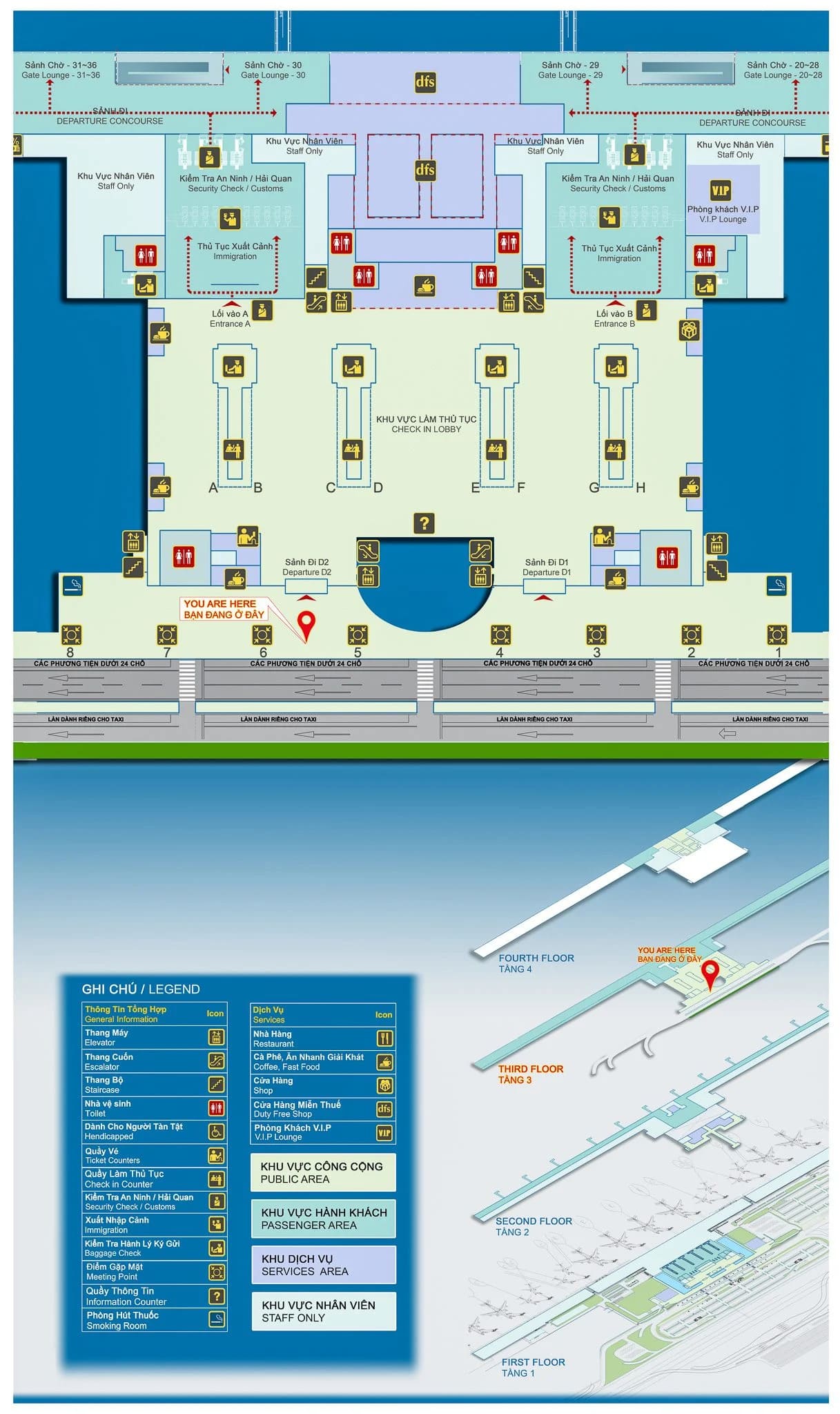
Terminal 1 handles domestic flights. It is generally smaller and easier to navigate than Terminal 2, with a selection of food outlets and ATMs in the arrivals and check-in areas.
Level 1: Baggage claim area for arriving domestic passengers, with exits leading to the pickup area. Facilities include restaurants, food outlets, ATMs, and lost luggage services.
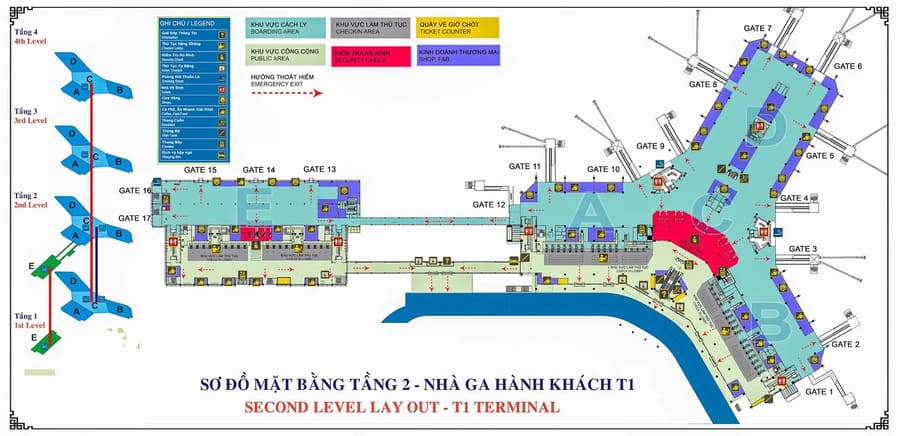
Level 2: Departure area for check-in, baggage drop, and security screening. It also includes waiting areas, restaurants, currency exchange counters, and shops.
Level 3: Office area and VIP lounges, along with several service counters, shops, restaurants, and cafés.
Level 4: Main dining area with restaurants, cafés, and refreshment counters.
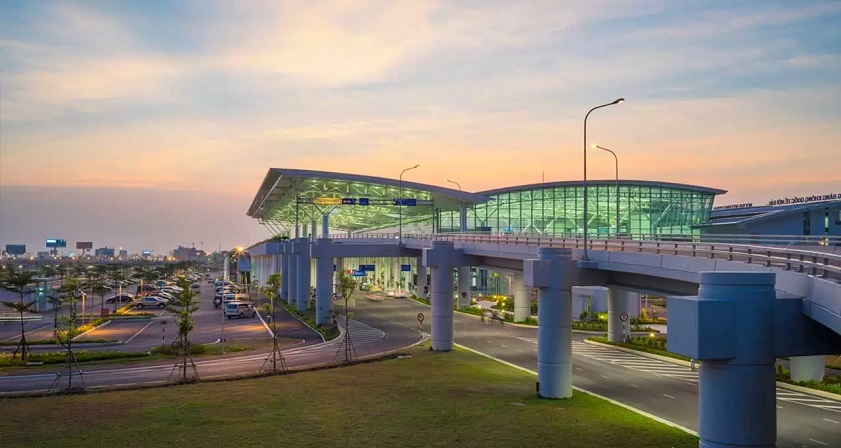
Terminal 1 for domestic flights
Terminal 2 for international flights
Terminal 2 handles international flights. Arrivals, immigration, baggage claim, and customs are on Level 1, while check-in and departures are on Level 3.
Level 1: Baggage claim, customs clearance, and the international arrivals hall. Passengers can exit through Gates A1 or A2 to meet drivers or greeters.
Level 2: Immigration, health screening, visa processing, and transit facilities for arriving international passengers. After completing these procedures, passengers go down to Level 1 to collect their luggage.
Level 3: International departures area for check-in, immigration, security screening, and access to boarding gates. Check-in islands are assigned according to the airline.
Level 4: Restaurants, offices, VIP lounges, and business-class lounges.
How to travel between Terminal 1 and Terminal 2
Method
Approximate time
Best for
Free shuttle
5–15 minutes plus waiting
Most passengers
Walking
Around 15–20 minutes
Light luggage, good weather
Taxi
Usually unnecessary
Mobility or luggage issues
Minimum connection time between terminals
Domestic-to-international connections carry their own version of this problem in reverse, plus a security and immigration queue on top.
My advice, every time: give yourself a noticeably larger buffer than the theoretical transfer time suggests, particularly if baggage has to be reclaimed and rechecked.
Arriving at Hanoi Airport: Step-by-Step
Step 1: Immigration and entry documents
Keep your passport, visa, or proof of visa exemption easy to reach. For an e-visa, save a copy on your phone and confirm that Noi Bai is listed as a valid entry point. Ignore anyone inside arrivals offering paid “help” with visa paperwork.
Step 2: Baggage claim and customs
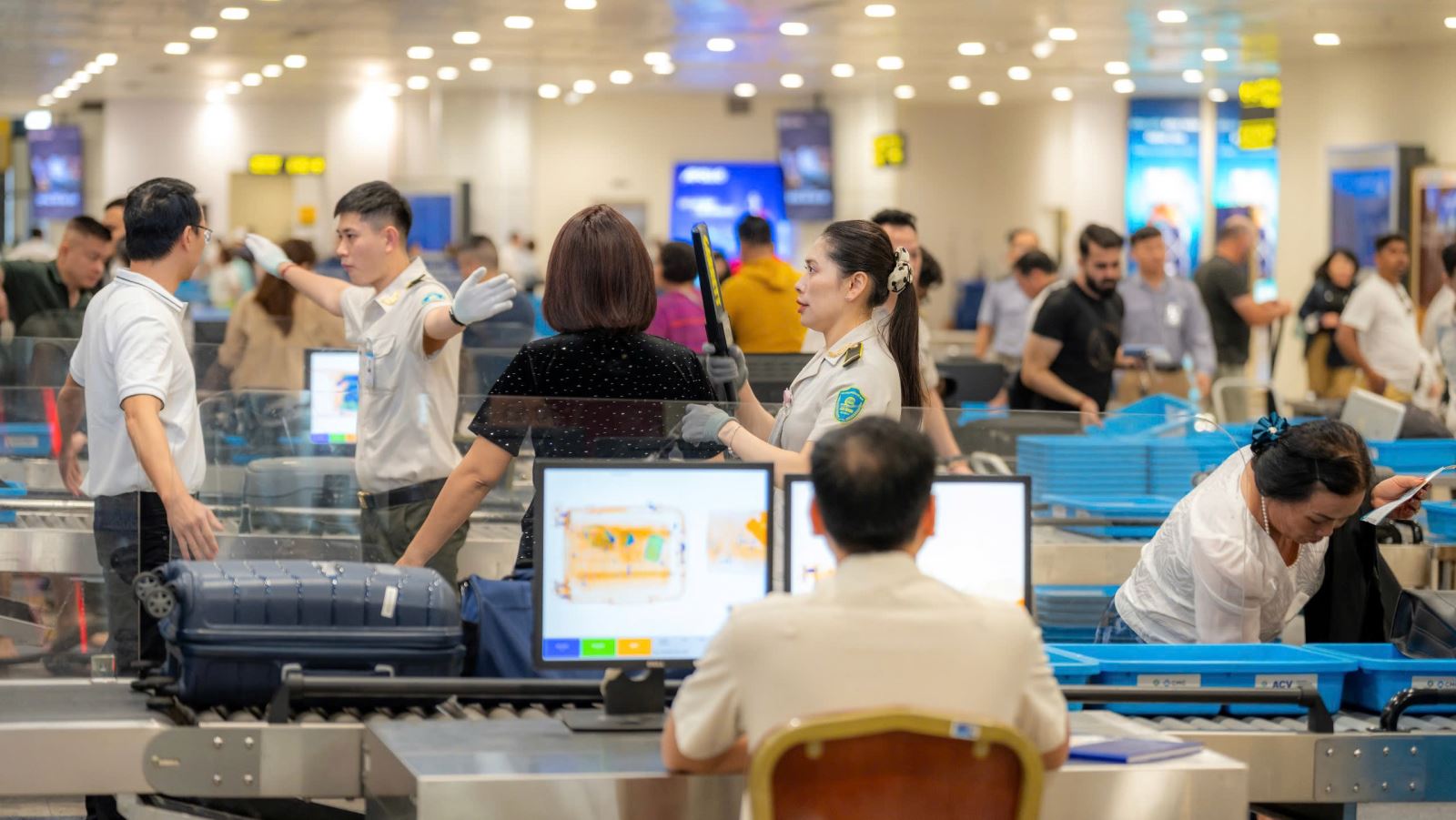
After immigration, check the monitors for your baggage carousel. Keep your baggage tag until you have collected your luggage, as you may need it if anything is missing.
Step 3: ATM, cash and currency exchange
I usually tell guests to withdraw just enough Vietnamese dong to cover the first day or two rather than a large sum right at the airport. ATM withdrawal fees vary by bank, so it's worth comparing before you commit to one machine.
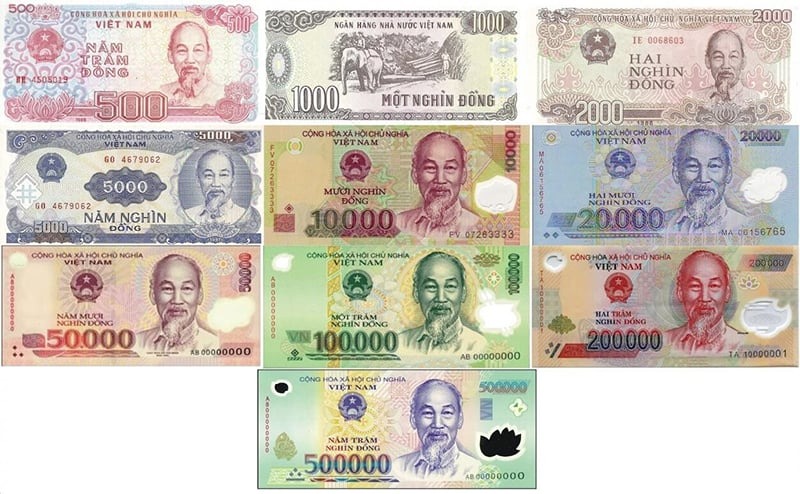
Preliminary information about the currency denominations currently in circulation in Vietnam
If you need internet as soon as you land for maps, ride bookings, or messaging your driver, an airport SIM counter can get you connected within minutes and help with setup, though it may cost a little more. Alternatively, buy an eSIM before your trip and activate it when you arrive.
Step 5: Find your driver, taxi or Grab pickup
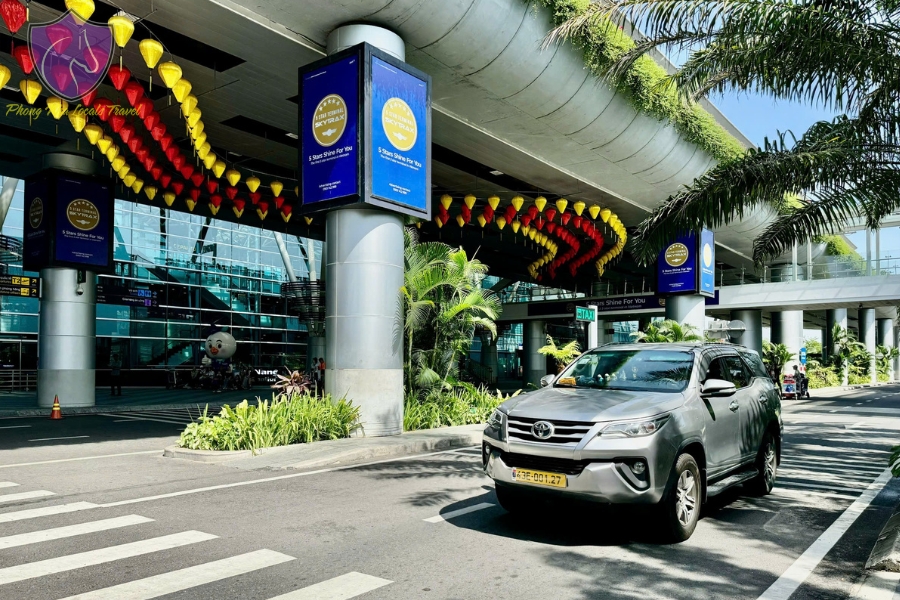
From experience, it’s best to leave the arrivals hall with your luggage before booking Grab or meeting your driver. Check the correct terminal and pickup lane, then confirm the driver’s name and plate number before getting in. Ignore anyone inside the terminal calling out “Grab” if you have not booked them through the app.
Hanoi Airport to the Old Quarter
Transport option
Typical cost
Travel time
Best suited for
Main drawback
Public bus
Lowest
40–75 minutes
Budget-conscious travelers
Limited service late at night
Grab or Xanh SM
Moderate
25–60 minutes
Independent travelers
Pickup points can be confusing
Metered taxi
Moderate to high
25–60 minutes
Travelers wanting an immediate ride
Risk of unofficial drivers or fare issues
Pre-booked private transfer
Higher
25–60 minutes
Families, groups and first-time visitors
Advance booking is required
Hotel-arranged transfer
Usually the highest
25–60 minutes
Travelers prioritizing convenience
Often more expensive than other options
Prices, bus routes and operating hours change. Last checked: July 2026 — please verify current fares before you travel.
Hanoi airport bus
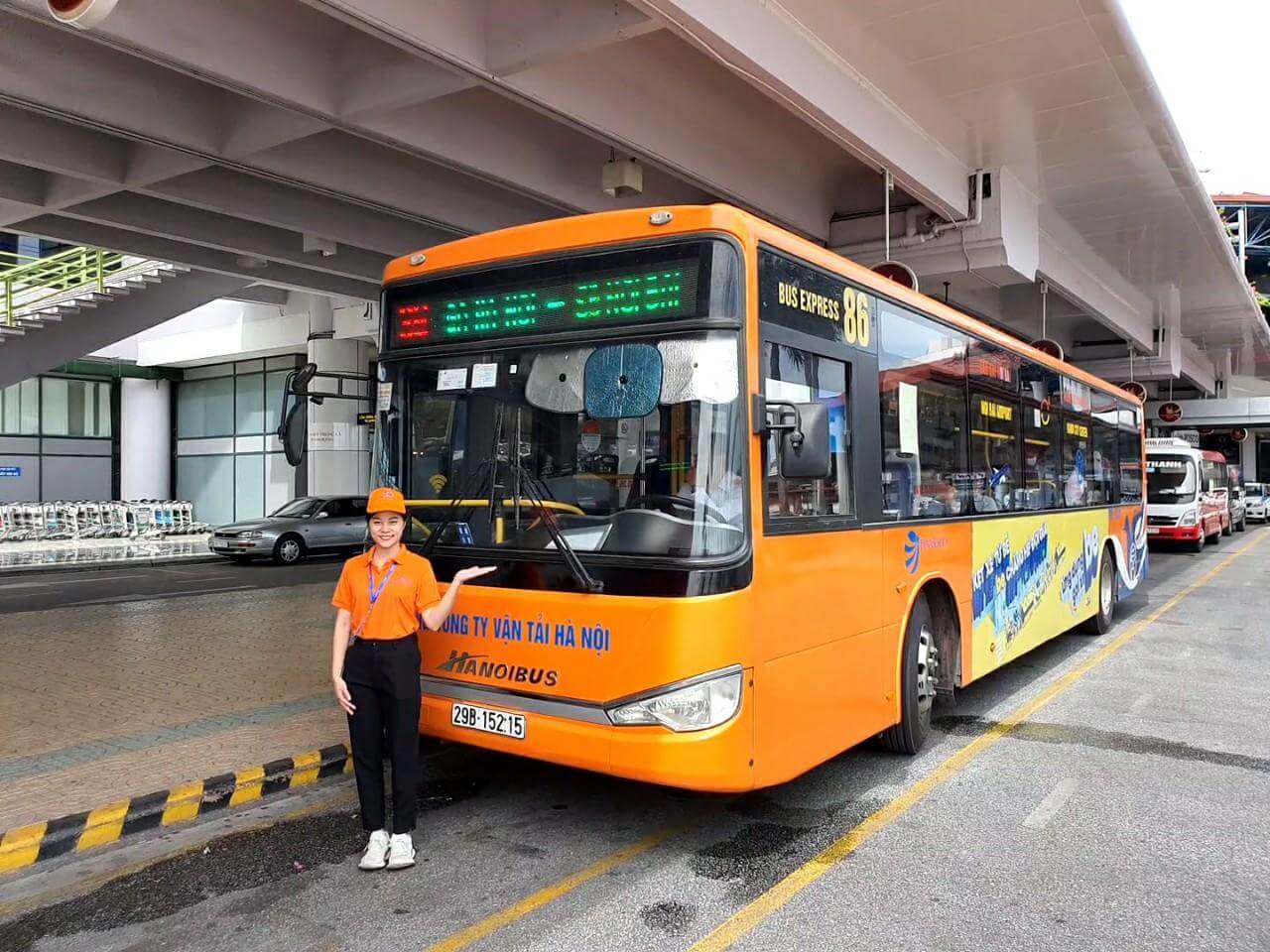
Bus 86 is the route most international visitors end up using, since it runs between the airport and central Hanoi with stops useful for Old Quarter travelers.
Tickets are bought directly from the conductor on board, and there's generally enough room for a normal-sized suitcase, though it can get tight during busy periods.
Note: This option falls short for late-night arrivals, as buses do not run around the clock.
Grab/GreenSM from Hanoi Airport
Grab and GreenSM operate normally at Noi Bai. Book only after reaching the designated pickup point outside arrivals. Tolls are usually included in the app fare, but check before confirming.
For families or bulky luggage, choose a larger vehicle. If a driver asks you to cancel, do it only through the app.
GreenSM
Hanoi airport taxi
Use the official taxi queue and avoid drivers approaching you inside the terminal.
Confirm whether the fare is metered or fixed and whether tolls are included.
Keep your hotel address in Vietnamese and note the license plate if anything feels unusual.
Private airport transfer
After a long international flight, a pre-booked private transfer is the easiest option for families, older travelers, and groups with several suitcases.
Your driver meets you at arrivals with a name sign, there is no taxi queue, and the price is fixed in advance.
This service is included in Kampá Tour’s private travel packages.
Thẻ tour 5587, 5568, 4821
Getting from Hanoi Airport to Other Destinations
Hanoi Airport to Halong Bay
Travel directly by private car, shared limousine, or cruise-arranged transfer. Going through central Hanoi usually adds unnecessary time. Leave a generous buffer between landing and cruise check-in for immigration, baggage collection, and the drive.
A direct private transfer is the most convenient option and avoids backtracking through Hanoi. Shared vans are also available, but schedules vary and late-night services are limited.
The Trang An complex, declared a UNESCO World Heritage Site in 2014
Hanoi Airport to Sapa
You can take a direct limousine or sleeper bus, or travel into Hanoi first for a train or bus connection. Direct services may involve waiting for departure. After a long flight, spending one night in Hanoi can be the more comfortable choice.
The journey to Ha Giang is long and tiring after a flight. A private car offers the most direct route, while buses are cheaper. For most travelers, staying overnight in Hanoi before continuing is easier.
Free Wi-Fi is available throughout both terminals, although you may need to reconnect during a long wait. Charging points can be found near some seating areas, but carrying a power bank is still advisable during busy periods.
Food and Restaurants
Both terminals have coffee shops, Vietnamese food counters, and several international fast-food options, with more choice in the international terminal. After security, the selection is smaller, and fewer outlets remain open late at night.
Airport lounges
Lounge
Terminal
Access
Best feature
Lotus Lounge
T1/T2
Eligible passengers or program access
Airline lounge
Song Hong Lounge
T1/T2
Paid or membership access
Independent option
ACV Business Lounge
T2
Paid access
Space and business facilities
Luggage Storage and Wrapping
Luggage storage is available in the landside area, making it useful during long layovers or before a late flight. Prices can change, so check the current rate at the airport.
ATMs, Exchange Desks and Banking
ATMs and currency exchange counters are available in both terminals. Compare withdrawal fees where possible and exchange only a small amount at the airport, as city rates are often better.
Showers, Medical Help and Accessibility
Some airport lounges provide showers. Basic medical assistance is available on-site, while wheelchair or mobility support should be arranged with your airline in advance. Elevators, assistance points, and information desks are available throughout the terminals.
Sleeping at Hanoi Airport and Nearby Hotels
Can You Sleep Inside Hanoi Airport?
Sleeping inside the airport is possible, but not especially comfortable. Seats are limited, the air conditioning can feel cold, and announcements continue overnight.
Sleep Pods Inside the Airport
Sleep pods are available in the public areas of both terminals and can be rented by the hour or overnight. They are generally landside, and bathroom facilities are shared.
Best Hotel Type for Each Traveler
Choose a walking-distance hotel for a short overnight stay, a shuttle hotel for easier late-night transport, or a hotel with 24-hour reception if arriving after midnight. Central Hanoi offers better value when your flight times are not too early or late.
Hanoi Airport Scams and Mistakes to Avoid
Avoid unofficial taxis: Use the official taxi queue or a ride-hailing app.
Don't book Grab too early: Wait until you reach the designated pickup area.
Exchange only a little cash: Better rates are usually available in the city.
Check your terminal: T1 is for domestic flights, T2 for international flights.
Allow enough transfer time: Self-transfers require immigration, baggage claim, terminal change, and check-in.
Local Expert Tips for a Smooth Arrival
Save your hotel address: Keep the hotel name, address, phone number, and map pin handy.
Screenshot pickup details: Avoid issues if Wi-Fi or mobile data isn't working.
Plan extra time during Tet: Expect heavier traffic, longer queues, and limited transport.
Keep your arrival day light: Leave time to rest and recover after your flight.
Local insight from me: Most first-time arrival problems are not caused by the airport itself. They come from unclear pickup instructions, choosing the wrong terminal, or leaving too little time between separate flights.
It is about 30 km away. The drive usually takes 40–60 minutes, but allow longer during rush hour, bad weather, or holidays.
Which terminal is international at Hanoi Airport?
Terminal 2 is for international flights, while Terminal 1 handles domestic flights. You will need to change terminals if connecting between the two.
Is Grab available at Hanoi Airport?
Yes. Book only after collecting your luggage and reaching the correct pickup area. Always check the driver’s name and plate number before getting in.
How much is a taxi from Hanoi Airport to the city?
Fares depend on traffic, vehicle type, tolls, and your destination. Use the official taxi queue, Grab, or a pre-booked transfer, and confirm whether tolls are included.
What is the cheapest way to reach central Hanoi?
Public buses are the cheapest option. Bus 86 is popular with visitors because it connects the airport with central Hanoi, but check the latest schedule and fare before traveling.
Can I sleep at Hanoi Airport?
You can stay overnight, but the seats are not very comfortable and many services close late at night. Sleep pods or a nearby airport hotel are better for a long wait.
How early should I arrive at Hanoi Airport?
Aim for two hours before a domestic flight and three hours before an international flight. Allow extra time during Tet, holidays, and peak travel periods.
Final Hanoi Airport Checklist
Confirm Terminal 1 or Terminal 2.
Save your accommodation address.
Prepare your visa and passport.
Choose your transfer before landing.
Screenshot pickup instructions.
Carry a small amount of Vietnamese dong.
Allow extra time for immigration and baggage.
Match the driver and number plate.
Avoid overly tight connecting flights.
Keep your first day in Hanoi flexible.
Want this checklist as a printable PDF? Download it here before you fly.
Conclusion
Noi Bai isn't a complicated airport once you understand the two-terminal system — T1 for domestic, T2 for international — and everything else really does build outward from that one fact.
If your trip continues beyond the capital, explore our custom Vietnam itineraries built around exactly this kind of onward travel.
Planning your trip?
Save time and get expert advice for FREE!
✅ 15 years of local experience
✅ Save up to 40 hours of planning
✅ Travel stress-free from start to finish
Book your free consultation today!





















 Our team
 Our team
 Our team
 Our team

.jpg)




.jpeg)
.jpg)


 Other
Other Add us as a preferred source