Things to Do in Halong Bay in 2026 and 2027: An Honest Guide
Halong Bay is still one of Vietnam’s most spectacular places, but in 2026, how you visit it matters almost as much as the bay itself. The classic day-trip routes can feel crowded, while quieter routes and overnight stays offer a very different experience.
This guide focuses on what actually matters when planning a trip today: the best things to do, official entrance fees, when to go, which routes are quieter, and how Halong compares with Bai Tu Long and Lan Ha. It also takes a frank look at the complaints about crowds and floating rubbish, with practical ways to avoid the worst of both.
Written by Oliver PHUNG (Tour Guide)
Updated on Sep 25, 2026
3 comments
Oliver Phung is a Northern Vietnam-based tour guide and blogger. His favorite topics to write about include cuisine, culture, travel, and under-the-radar experiences. Oliver possesses a deep, detailed understanding of the region, from the indigenous culture of the Hmong in the Northwest to the highland lifestyle of the Tay in the Northeast. Whether he is exploring ancient architecture or geological landscapes, he is always eager to share his insights with his readers.
Beyond his work at Kampá Tour, he produces specialized travel content on platforms such as Reddit, Instagram, LinkedIn, and various other publications.
Where is Halong Bay, and how far is it from Hanoi?
Halong Bay sits in Quang Ninh Province in northeastern Vietnam, on the Gulf of Tonkin. It is not in Hanoi. Getting there takes about 2.5 to 3 hours by road, a drive of roughly 130 to 170 km depending on where in the city you set off from.
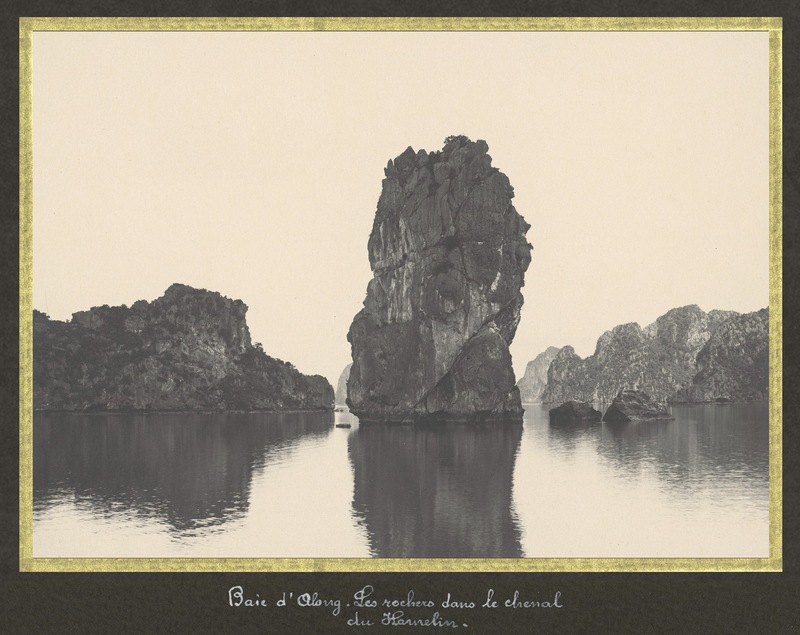
The bay covers 1,553 km² and holds 1,969 islands and islets, of which 989 carry names. It borders Bai Tu Long Bay to the northeast and the Cat Ba archipelago to the southwest. Those three areas share the same limestone geology, which is why travellers often use "Halong Bay" as shorthand for all of them.
Halong Bay is located in northern Vietnam
If you are deciding how to make the journey, the choice between a shuttle bus, a limousine van and a private car changes the day more than most people expect. We cover that, along with departure times and pick-up points, in our guide to choosing a Halong Bay cruise.
>>> Map of Halong Bay and surrounding areas:
Please click on the "[ ]" at the top right for better visibility
Ha Long Bay is located in Quang Ninh province, northeast of the capital Hanoi
What does "Ha Long" mean?
"Ha Long" means "descending dragon". The name comes from a legend in which a mother dragon and her children came down from the sky to defend the coast against invaders, scattering pearls that hardened into the limestone islands still blocking the sea lanes today. Bai Tu Long, the bay next door, refers to the dragon's children.
Ha Long means descending dragon in English
Is Halong Bay worth visiting in 2026?
Yes, if you stay overnight and choose your route. The scenery holds up to its reputation. What disappoints people is the format: a day trip from Hanoi means five to six hours in a vehicle for roughly four hours on the water, on the busiest corridor of the bay, at the same hour as everyone else.
Halong Bay suits you if you want landscape at scale, a slow day on the water, caves, kayaking and a sunrise you will remember. It suits you less if you are chasing empty beaches, clear tropical water for snorkelling, or a destination you can explore independently on foot. Those expectations are the source of most negative reviews, not the bay itself.
Sunset at Halong Bay
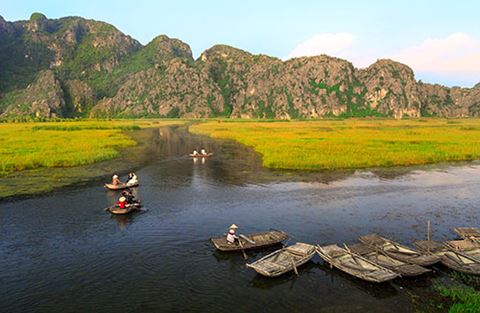
If limestone scenery is the draw and time is short, Ninh Binh is the serious alternative. It is often called Halong Bay on land, sits closer to Hanoi, and can be explored by bicycle rather than by boat. Plenty of travellers who do both end up preferring Trang An for the immersion, and Halong for the scale.
Is Halong Bay one of the 7 Wonders of the World?
Halong Bay is one of the New7Wonders of Nature. Public voting closed on 11 November 2011 and the result was officially confirmed in 2012. That campaign was run by the private New7Wonders Foundation. It is not a UNESCO title, and it is separate from the New7Wonders of the World list, which covers man-made sites only.
Why UNESCO protects it
UNESCO first inscribed Halong Bay in 1994 for its scenic value, then extended the listing in 2000 to recognise its geology. In 2023, Cat Ba Archipelago was added through a significant boundary modification and the property became Ha Long Bay - Cat Ba Archipelago, now spanning Quang Ninh Province and Hai Phong City.
The listed property covers 65,650 hectares with 1,133 islands and islets, plus a buffer zone of 34,140 hectares, under criteria (vii) and (viii). What makes it unusual is not the limestone itself but the fact that the sea invaded it. Halong is the most extensive example of marine-invaded tower karst anywhere, with three distinct cave types recording different stages of that flooding.
>>> GOOD TO KNOW: The figures you see online differ because they measure different things. 1,553 km² and 1,969 islands describe Halong Bay as Vietnam defines it. 65,650 hectares and 1,133 islands describe the UNESCO property after the 2023 extension. Both are correct.
What is the best time to visit Halong Bay?
For most travellers, March to May and September to November offer the best balance of comfortable temperatures, calmer weather and good visibility. September to November is also one of the busiest periods, so the better overnight cabins tend to sell first.
June to August is hotter and better for swimming, but tropical storms can interrupt sailings. December to February is cooler and often misty. The bay can look beautifully atmospheric then, but it is less reliable if beach time is a priority. For a fuller month-by-month breakdown, transfers and cruise planning, see our Halong Bay cruise guide.
Things to do in Halong Bay
Almost everything worth doing here happens from a boat, which is why the activity you pick matters less than the route your operator is licensed to sail. The six below are what a well-planned day or overnight itinerary actually contains.
Caves: Sung Sot, Thien Cung and Me Cung
Sung Sot (Surprise Cave) is the one nearly every itinerary includes. It is the largest in the bay at roughly 12,200 m², reached by about 60 stone steps from the jetty, and it opens into chambers that genuinely surprise first-time visitors. It is also the most crowded cave in Halong, especially between 10am and 2pm.
Sung Sot Cave is the largest cavern in Halong Bay
Thien Cung (Heavenly Palace) sits closer to the harbour on Dau Go island and spans around 10,000 m². The formations are more intricate than Sung Sot's and the walk is shorter, which makes it the better choice on a half-day trip. Me Cung (Maze Cave) is the quiet one: smaller, less developed, with a saltwater lake inside and traces of human settlement dating back 7,000 to 10,000 years.
Which to choose: If your itinerary offers only one, take Sung Sot for scale and Thien Cung for detail. If you want to avoid queues, ask your operator whether the cave stop falls before 9am or after 3pm.
Kayaking and bamboo boats
Kayaking is the only way into the parts of the bay a motorised boat cannot enter: low cave tunnels, enclosed lagoons and mangrove channels. You do not need to swim to take part, and children from around five can paddle with an adult. Kayaking is permitted at designated spots only, and the list changes.
Travellers kayak through Luon Cave
Luon Cave is the classic paddle, a tunnel that opens into a still lagoon ringed by cliffs. Dark Cave (Sang Toi) is done by bamboo boat with a local rower rather than by kayak, since it needs a light. Both fees are sometimes charged separately from the cruise price, so confirm before you board.
A boat ride with local rowers in the Dark Cave (Sang Toi Cave)
Can you swim in Halong Bay?
Yes, but only where you are told to. Swimming is limited to designated areas, and in practice that means the beaches at Ti Top, Soi Sim and Ba Trai Dao, or an anchorage where your crew gives the go-ahead. Water is warmest from April to October. Avoid swimming anywhere near the ports.
Swimming time!!!!
Two practical notes. Jellyfish appear in the bay in high summer and cause itching rather than danger, so ask the crew before you get in. And keep sessions short, around 15 to 20 minutes, because swimming in warm saltwater in high humidity dehydrates you faster than it feels.
Climbing Ti Top for the view
Ti Top is a 3.7-hectare island with a crescent beach and a staircase to a viewpoint that produces the photograph most people associate with Halong Bay. Travellers report a little over 400 steps to the top, on an uneven path. Allow 30 to 40 minutes for the climb and the descent.
Ti Top island and its viewpoint over the bay
Go early or late. The viewpoint platform is small, the queue backs up in the middle of the day, and the light is flat anyway. Sunrise from the deck of a moored boat is the other shot worth planning for, and it is the single best argument for spending a night on the water.
Floating villages, and what Typhoon Yagi changed
Four floating communities are still visited by boat: Vung Vieng, Cua Van, Cong Dam and Ba Hang. Most lie around 20 km from the nearest pier, so reaching them takes 45 to 60 minutes on the water and only certain routes are licensed to go. Visits are done by rowboat, guided by residents.
The quiet of Vung Vieng fishing village
Typhoon Yagi hit the bay in September 2024 and the damage was significant. Provincial reports recorded 33 conservation floating houses at Cua Van, Vung Vieng and Ba Hang sinking completely, serious damage to the Cua Van floating cultural centre, and broken stone railings on the approaches to Thien Cung, Dau Go, Ti Top and Sung Sot. Sightseeing routes have since reopened, but reconstruction is ongoing, so ask your operator which villages are actually on the itinerary rather than assuming.
On land: what to do in Ha Long city
Most visitors treat Ha Long as a pier rather than a place, and for a one-night cruise that is the right call. If you are staying two nights or arriving by ocean liner, the city side has a provincial museum, a genuine local market, waterfront parks and a cable car crossing the bay to a hilltop park with a Ferris wheel.
You can visit the Quang Ninh Museum to see ancient marine creatures.
The city splits in two. Bai Chay is the tourist side, with hotels and the cruise ports. Hon Gai, across the bridge, is where people actually live and eat, and where prices drop. Cruise passengers have reported the hop-on hop-off bus running late or arriving full, so plan on a taxi or a booked car rather than counting on it.
Halong, Bai Tu Long or Lan Ha: which bay should you choose?
The scenery is closely related, but the experience is not identical. Your choice is less about finding the "most beautiful" bay and more about deciding what you want from the route.
Bay
Best for
What stands out
Main trade-off
Halong Bay
First-time visitors who want the classic route
Sung Sot Cave, Ti Top, the widest choice of cruises
Swimming, kayaking and combining the bay with Cat Ba
Small beaches, calm water and more outdoor activities
Many itineraries do not include the classic Halong landmarks
Our rule of thumb: choose Halong for the iconic first visit, Bai Tu Long for a quieter cruise, and Lan Ha if water activities and Cat Ba matter most. If avoiding crowds is your priority, do not judge the trip only by the bay name. The exact route and sailing times matter just as much.
Halong Bay entrance fees in 2026
Every visitor pays a route fee to the Halong Bay management board, separate from what you pay your boat. The bay is divided into numbered routes and you buy the whole route, not individual attractions. The figures below are the official rates published by the management board, checked on 14 September 2026.
Route
Main stops
Fee per person
Daytime visits (06:30 to 18:30)
Route 1
Thien Cung grotto, Dau Go cave, Cho Da islet, Ba Hang, Dinh Huong islet, Trong Mai islet
250,000 VND
Route 2
Soi Sim beach, Ti Top island, Sung Sot cave, Me Cung, Bo Nau, Luon cave, Trong cave, Trinh Nu
250,000 VND
Route 3
Cua Van floating culture centre, Tien Ong cave, Ba Ham lake, Ba Men temple, Du lagoon
200,000 VND
Route 4
Co cave, Thay cave, Cong Do, Cap La cave, Vung Vieng, Tung Ang ecological area, Xep islet
200,000 VND
Route 5
Tuan Chau to Gia Luan harbour on Cat Ba, via Cho Da, Ba Hang, Dinh Huong, Trong Mai
250,000 VND
Overnight stays (1 night = 24 hours from departure)
Route 2 + 1 night
Overnight anchorages at Trong cave, Trinh Nu, Ho Dong Tien, Lat 690 islet, Ti Top 587
550,000 VND
Route 2 + 2 nights
Same anchorages
750,000 VND
Route 3 + 1 night
Overnight at Tien Ong cave area
500,000 VND
Route 3 + 2 nights
Overnight at Tien Ong cave area
650,000 VND
Route 4 + 1 night
Overnight at Cong Do area
500,000 VND
Route 4 + 2 nights
Overnight at Cong Do area
650,000 VND
Additional official routes introduced from 1 May 2025
VHL6
Port - Chan Voi Islet - Vung Ba Cua - Tung Lam Island - Cap Bai Islet, connecting toward Gia Luan / Lan Ha Bay
150,000 VND
VHL7
Combined sightseeing across Routes VHL1, VHL2, VHL3 and VHL4
600,000 VND
VHL8
Tuan Chau International Marina - Ha Long International Cruise Port - Nam Cau Trang area
70,000 VND
Route 2 is the one most international visitors sail, because it holds Sung Sot and Ti Top. Route 4 is the quieter option toward Bai Tu Long. If your operator cannot tell you which numbered route your boat is licensed for, that is a useful warning sign.
>>> GOOD TO KNOW: The rates are set by the provincial authority. Three additional routes, VHL6, VHL7 and VHL8, began charging from 1 May 2025. You can check the Ha Long Bay Management Board notice before travelling. Reputable operators normally include the sightseeing route fee in the cruise price. If you depart through Ha Long International Cruise Port, note that a separate port passenger ticket of 80,000 VND for a return journey has applied since 1 July 2026; see the official port notice. The 200,000 VND note in Vietnam's currency shows Dinh Huong islet, which you pass on Routes 1 and 5.
The crowds and the litter: an honest answer
Both complaints are real, but both can be reduced significantly by choosing the right route and timing. Crowding is concentrated rather than constant. It is most noticeable on the day-trip corridor and at the cave jetties between roughly 10am and 2pm. In peak season, the difference can be dramatic, which is why two travellers visiting the same bay at different times can come away with completely different impressions.
The further you sail from the ports, the emptier the water gets
Floating rubbish is another recurring complaint, and reviews from 2025 and 2026 still mention it. In our experience, it tends to collect near ports, aquaculture areas and the shoreline, then becomes less noticeable as boats travel deeper into the bay. That is one of the strongest practical reasons to choose a route that goes beyond the near-shore islands.
We do not want to gloss over the problem because our own team has taken part in cleaning it up. On 2 October 2024, after Typhoon Yagi left large amounts of debris across Halong Bay, Kampá Tour joined partner operators in the “Green Mission: Reviving Ha Long Bay” campaign. In one day, the group collected more than 1,700 plastic bottles, around 1,600 pieces of polystyrene and 189 abandoned fishing nets.
That was not a one-off effort. In 2025, our team returned to take part in another environmental activity on the bay, continuing to work with local partners to remove waste and protect the waters where we regularly send our travellers.
What these clean-ups taught us is that the rubbish does not come from one source. We found plastic bottles, but also polystyrene floats, fishing nets and other debris linked to aquaculture and marine activity. It also moves with currents and weather, so a clean area one week may not look the same a few weeks later. Clean-up campaigns matter, but so do route planning, waste management and choosing operators that take environmental responsibility seriously.
For travellers, four choices make the biggest difference: stay overnight rather than visit on a day trip, consider Route 4 or a Bai Tu Long itinerary instead of the busiest central corridor, travel in shoulder season, and ask whether cave visits can be scheduled outside the midday rush. These are small decisions, but they can completely change how Halong Bay feels.
What has changed in Halong Bay recently
Seaplane tours have stopped. The Hai Au Aviation service linking Hanoi and Halong Bay ceased operations on 1 April 2026 after more than a decade. The closure was reported to travel partners in early March; see the 6 March 2026 industry notice. Any guide still listing the old 25-minute scenic flight is out of date. Ti Top is now the practical classic viewpoint from above.
The UNESCO property was extended in 2023. Cat Ba Archipelago was added, and the site is now inscribed as Ha Long Bay - Cat Ba Archipelago, jointly managed across two provinces.
Route fees were revised in 2025. Three additional routes, VHL6, VHL7 and VHL8, were introduced into the official fee schedule from 1 May 2025, so older fee tables circulating online are incomplete.
Recovery from Typhoon Yagi is still in progress. Sightseeing routes reopened after September 2024, but some floating village infrastructure and cave access paths were rebuilt rather than restored.
Kong: Skull Island (2017) filmed here, as did Pan (2015) and the Oscar-winning Indochine (1992). The James Bond film Tomorrow Never Dies was scheduled to shoot in the bay in 1997 but lost its permit and moved to Thailand, so despite what you may read, those scenes are not Halong.
Does a Halong Bay cruise actually sail, or does it mostly anchor?
It does less sailing than the word "cruise" suggests. Boats move between licensed stops and then sit at anchor, sometimes for several hours. This is a common source of disappointment on longer itineraries. Ask how many hours per day the boat is under way before you book a three-day trip.
Are seaplane tours over Halong Bay still operating?
No. The Hai Au Aviation service ceased on 1 April 2026. If a guide still quotes a seaplane fare or recommends a 25-minute sightseeing flight, that information predates the 2026 closure.
What happens if my trip is cancelled because of bad weather?
The decision is not your operator's. When seas are rough the authorities close the bay to navigation, and every boat stays in port. Depending on timing, your trip may be shortened, rerouted or refunded under the operator's own policy. Read that policy before paying, and travel insurance is worth having between June and September.
Is a day trip from Hanoi enough?
It is enough to see the landscape and not much else. You will spend five to six hours in a vehicle, reach only the near islands, and leave before the day-boat fleet does. If your schedule genuinely allows one day, it beats skipping the bay. If it allows two, one night on the water is a different experience entirely.
How many days should I spend in Halong Bay?
1 day: enough if your schedule is tight, but a large part of the day is spent travelling from and back to Hanoi, and you will use the busiest sightseeing corridor.
2 days, 1 night: the best default for most first-time visitors. You get sunset, sunrise and time on the water after the day-trip crowds have gone.
3 days, 2 nights: better for a slower pace and a deeper route, but ask how many hours the boat is actually under way each day because longer cruises can also spend long periods at anchor.
For boat categories, sample itineraries and the practical differences between a day cruise, one night and two nights, see our Halong Bay cruise guide.
Do I need to book in advance?
For September to November and the spring months, yes, several weeks ahead, because the better cabins on smaller boats sell out first. Outside those windows there is usually last-minute availability, though your choice narrows quickly.
Thẻ tour 4855, 4834
✈️Explore other attractions in the north of Vietnam:
I’ve read your guide and I’m still wondering what you’d recommend if I have three or four nights in the Ha Long area but don’t want to spend all of them on a cruise. Are there any quieter islands or coastal places nearby where I could stay for a night or two, kayak, swim, and get away from the busiest tourist spots?
0Reply
Oliver PHUNG21 Sep 2026
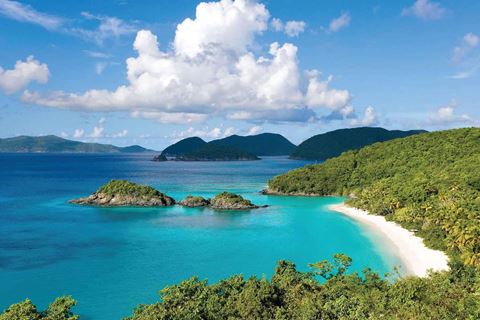
Yes. If you have three or four nights, I would not spend all of them cruising Ha Long Bay. One night on the bay is enough for most first-time visitors, then you could continue to Quan Lan or Minh Chau in the Van Don area for one or two nights.
They are better suited to travellers looking for beaches, a slower pace and more time outdoors rather than another organised cruise. You can swim, explore the island and simply spend some time by the sea without following a fixed sightseeing schedule. If kayaking is your main priority, Bai Tu Long or Lan Ha Bay still offer better options.
Just keep in mind that Quan Lan and Minh Chau are no longer completely off the beaten path. Summer weekends and Vietnamese holidays can be busy, so visit on weekdays if possible. If you are willing to travel farther, Co To is another option, but I would choose it for a longer island stay rather than as a quick side trip from Ha Long.
Planning your trip?
Save time and get expert advice for FREE!
✅ 15 years of local experience
✅ Save up to 40 hours of planning
✅ Travel stress-free from start to finish
Book your free consultation today!


















 Our team
 Our team
 Our team
 Our team

.jpg)


.jpg)

.jpg)
.jpg)

.jpg)
.jpg)






 Other
Other Add us as a preferred source










Yes. If you have three or four nights, I would not spend all of them cruising Ha Long Bay. One night on the bay is enough for most first-time visitors, then you could continue to Quan Lan or Minh Chau in the Van Don area for one or two nights.
They are better suited to travellers looking for beaches, a slower pace and more time outdoors rather than another organised cruise. You can swim, explore the island and simply spend some time by the sea without following a fixed sightseeing schedule. If kayaking is your main priority, Bai Tu Long or Lan Ha Bay still offer better options.
Just keep in mind that Quan Lan and Minh Chau are no longer completely off the beaten path. Summer weekends and Vietnamese holidays can be busy, so visit on weekdays if possible. If you are willing to travel farther, Co To is another option, but I would choose it for a longer island stay rather than as a quick side trip from Ha Long.