10 Things Nobody Tells You Before Visiting Hanoi's Old Quarter
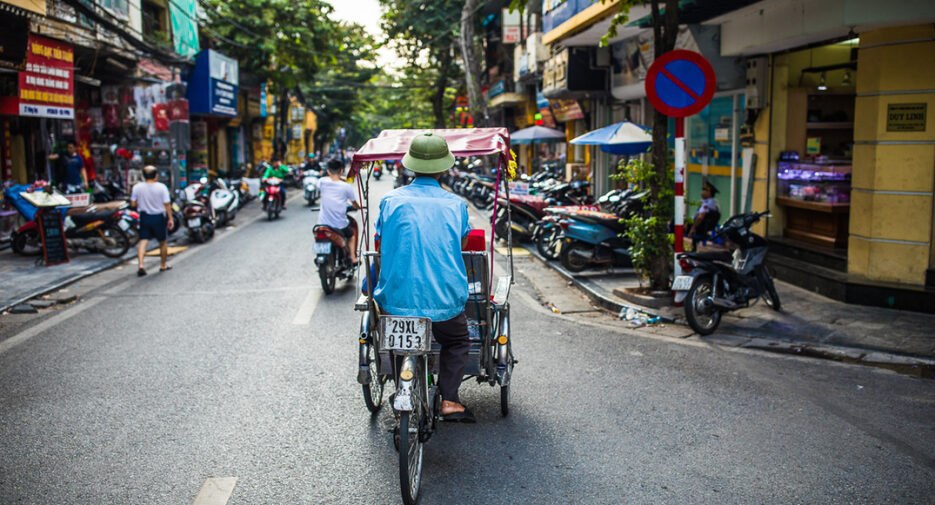
If you've never been to Hanoi's Old Quarter, it's easy to underestimate it. You picture old shophouses, a few motorbikes, maybe a quick photo outside a temple, and then you move on. That assumption tends to last about the length of your first block.
Hanoi's Old Quarter turns out louder, busier and more physically demanding than most visitors plan for, mostly because the streets were built for foot and cart traffic centuries before cars or crowds of this size existed. According to Vietnam's official tourism authority, the walking street around the Old Quarter and Hoan Kiem Lake draws an average of about 20,000 visitors on a typical weekend day, and Hoan Kiem District, which contains the Old Quarter, logged 2.2 million overnight international visitors in 2024 alone, up 48.5% on the year before. Add to that the fact that most people around you, other visitors, first-timers like you, are also figuring it out as they go, and a few things are worth knowing before you're in the middle of it.
None of this makes the Old Quarter a place to avoid. It just rewards a bit of preparation. Here are ten things worth knowing before you go, the kind of details a first walk usually teaches you the hard way.
Written by Oliver PHUNG (Tour Guide)
Updated on Sep 22, 2026
0 comment
Oliver Phung is a Northern Vietnam-based tour guide and blogger. His favorite topics to write about include cuisine, culture, travel, and under-the-radar experiences. Oliver possesses a deep, detailed understanding of the region, from the indigenous culture of the Hmong in the Northwest to the highland lifestyle of the Tay in the Northeast. Whether he is exploring ancient architecture or geological landscapes, he is always eager to share his insights with his readers.
Beyond his work at Kampá Tour, he produces specialized travel content on platforms such as Reddit, Instagram, LinkedIn, and various other publications.
1. The Old Quarter Takes Longer to Explore Than It Looks
Distances on the map are short, but walking speed here is slow, and two kilometres can easily take two hours once you add food stops and sightseeing. The sheer amount happening at street level, motorbikes, goods, furniture set up on the pavement, catches visitors off guard. Even a short walk takes longer than expected, because standing still in the middle of the pavement to take a photo usually means stepping aside first. Crossing streets asks for its own kind of patience.
If you're travelling with kids, in a group, or on a tight schedule, plan around this rather than against it. The Old Quarter is manageable, but only once you accept that it rarely lets you move quickly. Picking one cluster of streets per outing works better than trying to cover the whole area on a checklist.
2. The Pavement Is Part of the Neighbourhood's Working Space
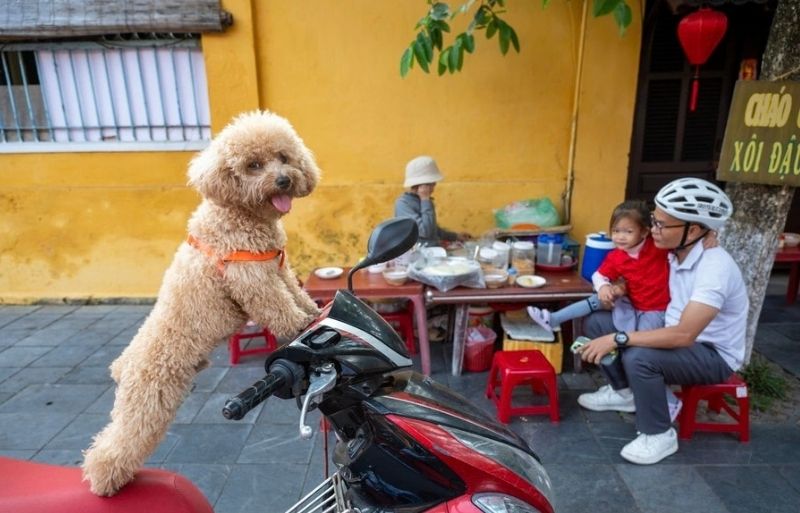
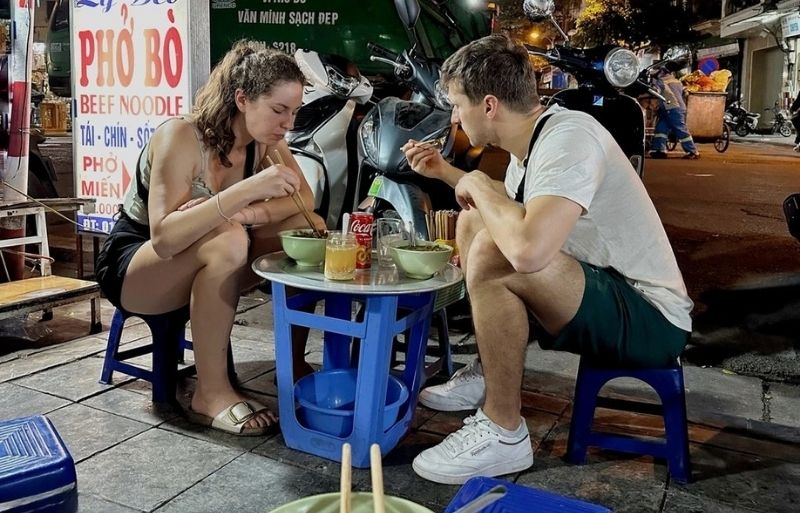
The pavement here is not just for walking. It doubles as parking, a shop counter, a kitchen, a delivery drop point and, for a lot of families, the only open space they have. Stepping into the road because the pavement is occupied is not a wrong turn, it's how a normal walk through the Old Quarter goes.
It helps to think of this as an economic and domestic space rather than an obstacle course. A pho stall's stools, a delivery bike being unloaded, a family eating dinner on plastic chairs: all of it is someone's workday or someone's evening, not a display for visitors. Wear shoes with a decent grip, leave the oversized suitcase at the hotel if you can, and keep an eye on motorbikes riding close to the kerb where the road narrows.
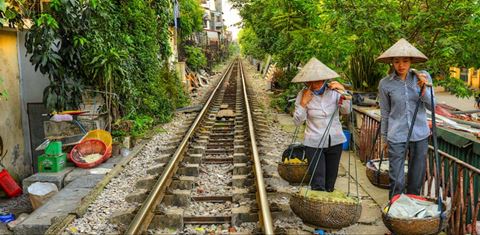
Communal living spaces in Hanoi's Old Quarter
3. Crossing the Street Is More About Predictability Than Speed
The common advice to "just walk steadily and the bikes will go around you" is only half the picture. Use marked crossings and traffic lights where they exist, and cross with a cluster of locals if you're unsure. Where there's no crossing, wait for a reasonable gap, then hold a steady line and pace. Motorbikes read a predictable walker easily; darting forward or freezing halfway is what actually causes near misses.
Buses, cars and the odd electric shuttle are a different case. They can't weave the way a motorbike can, and their drivers often have a narrower view of the road, so give them more room and more time than you would a scooter.
4. Your Taxi or Ride-Hail Car May Not Reach the Hotel Door
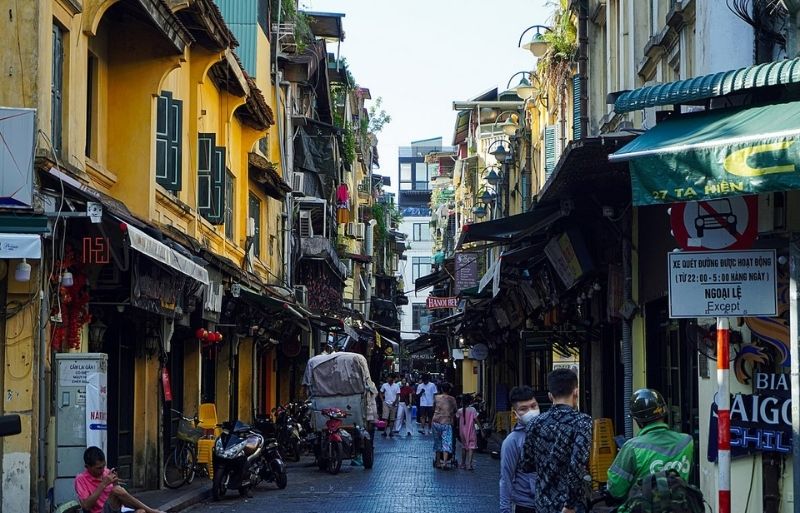
Several streets in the Old Quarter restrict vehicles on weekend evenings or during events, and narrow alleys mean a car often can't get all the way to your hotel's front door. The pickup pin in a ride-hailing app sometimes lands on the opposite side of a building or on the nearest main road instead of right outside.
If you're arriving with luggage, ask your hotel in advance which street a car can actually reach and where they'd like you dropped off.
>>> Oliver's note:
Before you arrive, save your hotel's phone number, its address written in Vietnamese, and the name of the nearest street a car can reach.
5. A Central Address Can Also Mean Noise, Stairs and a Windowless Room
Being in the middle of the Old Quarter does not guarantee a quiet room. A street-facing window can mean traffic, bars, vendors and deliveries from early morning, and some listed "window rooms" only look onto an internal airshaft. A number of smaller hotels here occupy converted tube houses, with narrow stairs or a lift barely big enough for one suitcase.
A short list of questions before you book saves most of the surprises:
Does the window face the street or an internal courtyard?
Is there a lift, and does it reach every floor?
Is the room away from the main bar streets?
Can a car reach the hotel on weekend evenings?
Is breakfast served on site or at another property nearby?
6. Morning and Late Evening Feel Like Different Neighbourhoods
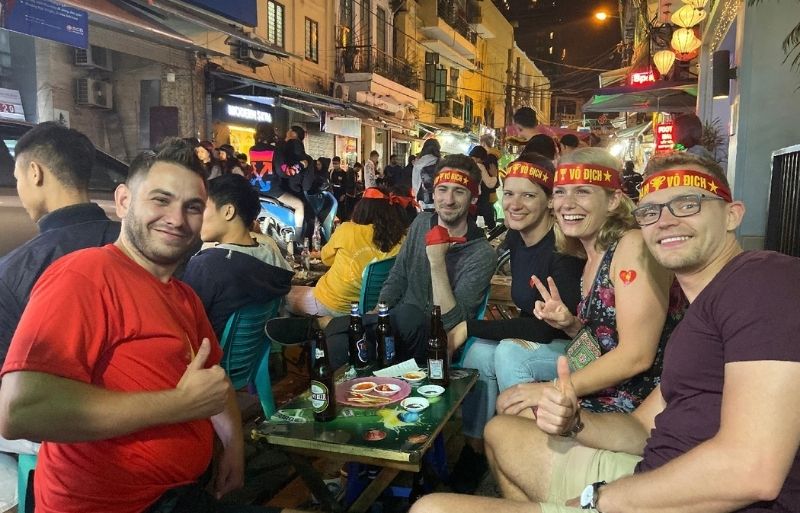
The same street can feel like a different place depending on the hour. Early morning belongs to deliveries, breakfast stalls, coffee and local errands; the middle of the day fills up with shopping and visitor traffic; evening brings out the food stalls, beer and the weekend walking streets. Judging the whole Old Quarter from a single visit, at a single hour, misses most of what's actually going on.
If your schedule allows it, walk through once before 8am and come back after dark. Use the middle of the day for an indoor site, lunch, or simply a rest, since that's usually the least interesting stretch to be outside anyway.
Mornings in Hanoi's Old Quarter capture the bustling rhythm of the capital.
The neighborhood seems to shift its pace in the evening, coming alive with a bustling nightlife.
7. Many Food Stalls Do Not Serve the Same Dish All Day
A stall serving noodle soup or steamed rice rolls at 7am may sell something completely different by evening, because street-level space in the Old Quarter tends to rotate between a morning tenant, a midday tenant and a night tenant. Space is limited and rents are shared, so the fastest, most portable food (pho, bun, banh mi, banh cuon) tends to hold the morning slot and clears out by mid-morning.
Midday leans towards heartier, filling options such as com binh dan, bun cha or bun dau mam tom, and those stalls often close again in the early afternoon. By evening, the same spot can turn into a hotpot stall, a grill, or a late-night noodle or congee stand. If a place you read about online is serving something else entirely when you arrive, that's usually the reason, not a wrong address.
>>> Two habits help: read the small hand-written or laminated sign at street level rather than trusting only the large lit signboard above, and if you're unsure what's on offer at that hour, ask someone nearby rather than guessing. This isn't a restaurant list. For where to actually eat, see what to eat in Hanoi and the Hanoi restaurants guide, and for specific dishes, pho, bun cha and banh mi.
8. Cash and Small Notes Are Still Surprisingly Useful
Hotels and larger shops generally take cards, but small eateries, street stalls and most vendors deal in cash only, and often prefer small notes. Carry enough small denominations for food, drinks, minor tickets and tips, and ask the price before you order anywhere without a posted menu.
Count your change on the spot if you're unsure, but keep it low-key rather than treating every transaction as suspect. Most sellers here deal with tourists all day and expect the occasional double-check.
>>> Oliver's note:
Keep small notes in a separate pocket so you don't need to open your full wallet for every purchase.
9. Weekend Pedestrian Streets Are Both Convenient and Inconvenient
From Friday evening through the weekend, the streets around Hoan Kiem Lake and part of the Old Quarter close to traffic for the walking street, which makes some areas easier to walk but harder to reach by car. A taxi or ride-hailing driver may only be able to drop you at the edge of the closure, not at your hotel.
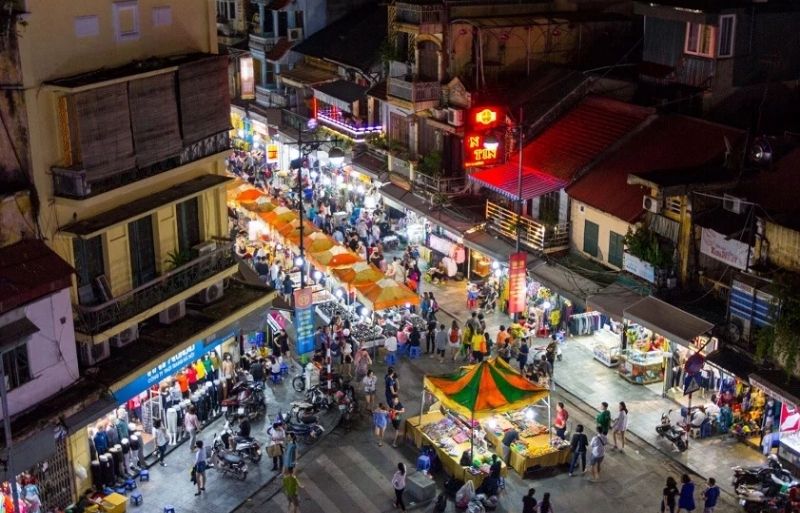
The night market adds to the crowding along Hang Dao towards Dong Xuan on the same evenings. If you have an early flight, an early tour, or heavy luggage during that window, confirm your pickup point with your hotel or driver in advance rather than assuming a car can reach the door. Closure times can shift around public holidays or events, so it's worth checking current hours close to your travel dates.
Night market area
10. The Biggest Mistake Is Trying to Do Too Much
Fatigue in the Old Quarter comes from noise, heat, traffic and visual overload, not from distance. Trying to fit in too many sights back to back usually means you only see the busy, commercial surface of the district, not what makes it worth visiting.
Alternating a walk with an indoor stop, a coffee, or a rest by the lake works better than a packed itinerary. Give yourself permission to turn down a small street with no particular plan, or to just sit and watch for ten minutes instead of chasing the next item on a list. The Old Quarter becomes easier to understand once you stop trying to complete it.
A Simple Plan for Your First Day
Early morning: walk through the market and breakfast streets while they're still working, not performing.
Late morning: go inside one heritage house, temple or communal house rather than passing several from the outside.
Afternoon: rest, have a coffee, or explore another part of central Hanoi during the hottest, most crowded hours.
Evening: come back for food, the night market, or a quieter walk near the lake.
For the map, the official boundary, the 36 Streets and the historic sites inside them, see our complete guide to Hanoi Old Quarter.
It depends more on the exact street than the neighbourhood as a whole. Rooms near Ta Hien or other bar streets can stay loud into the early hours, while blocks a few streets away are much quieter. Ask your hotel specifically whether your room faces the street or a bar area before you book.
Can taxis enter Hanoi Old Quarter at night?
Generally yes, but access depends on the exact street and the time. Some streets restrict vehicles during the Friday to Sunday walking street hours or around events, so a car may only be able to drop you at the edge of that zone rather than at your door.
How much cash should I carry in Hanoi Old Quarter?
There's no fixed amount to aim for. Carry enough small notes to cover a day of food, drinks, minor tickets and tips, since many street stalls and small shops don't take cards, and split your cash across more than one place rather than keeping it all in one wallet.
What should I wear when walking around the Old Quarter?
Sturdy, closed shoes with grip matter more than style, since pavements are uneven and often shared with parked motorbikes. Keep clothing light for the heat, carry a layer for sudden rain in the wet season, and dress more modestly if you plan to step inside a temple or communal house.
Is Hanoi Old Quarter safe at night?
The main streets stay busy and lit late, and serious incidents are uncommon. The usual precautions apply in the most crowded evening blocks: keep bags closed and worn across the body, watch your phone in a packed crowd, and pay attention to traffic more than to strangers.
Planning your trip?
Save time and get expert advice for FREE!
✅ 15 years of local experience
✅ Save up to 40 hours of planning
✅ Travel stress-free from start to finish
Book your free consultation today!














 Our team
 Our team
 Our team
 Our team

.jpg)
.jpg)


 Other
Other Add us as a preferred source