What to Do in the Mekong Delta: Beyond the Tourist Boats
Mekong Delta is a region in southern Vietnam renowned for its gentleness and greenery. Unlike the majestic mountains of the north or the magnificent beaches of the central region, it offers you landscapes of rice fields, fruit orchards, winding rivers, and narrow canals. Join us to explore what to do in the Mekong Delta with a comprehensive guide.
Written by Nhu PHAM (local expert)
Updated on Apr 07, 2026
0 comment
Nhu PHAM is a Saigon native with a passion for travel, adventure, the French and English language, and making discoveries as a digital nomad. She has already explored many Southeast Asian countries, including Cambodia, Laos, and Thailand. Originally from the South, she has a particular expertise in the South and the Mekong Delta. Currently based in Hanoi, she works for Kampá Tour and is the author of many highly appreciated articles on this blog. If you have any questions or comments, please feel free to share them at the bottom of her articles so that she can answer you directly.
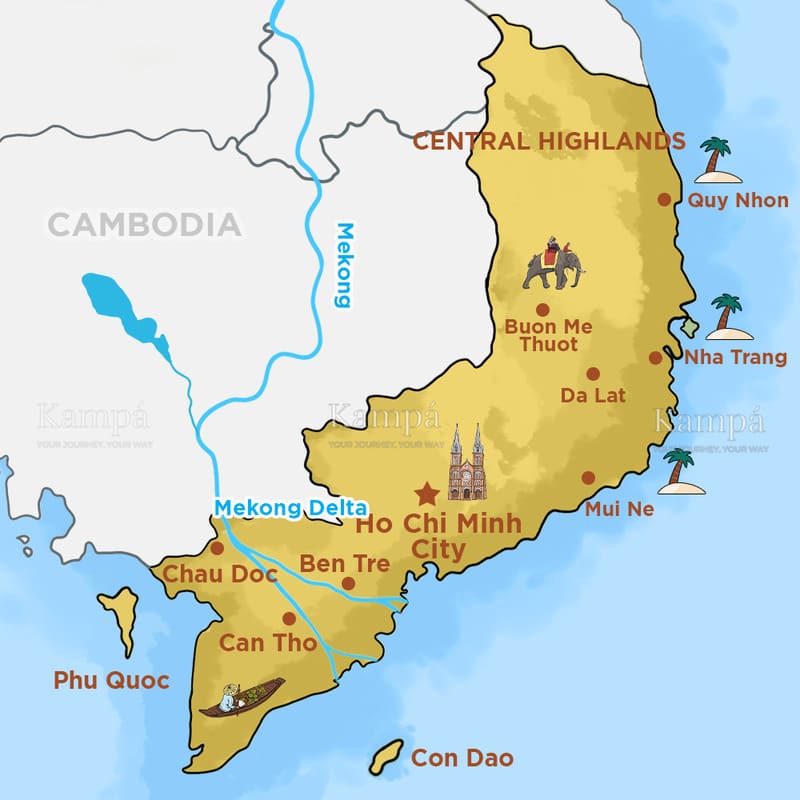
The Mekong Delta sits at the southern tip of Vietnam, bordered by Cambodia to the north, the Gulf of Thailand to the southwest, and the East Sea to the east. From Ho Chi Minh City, you can reach the edge of the delta in roughly 2 hours. It is worth noting that because the region spans numerous provinces and cities, exact travel times will vary depending on your specific destination within the network.
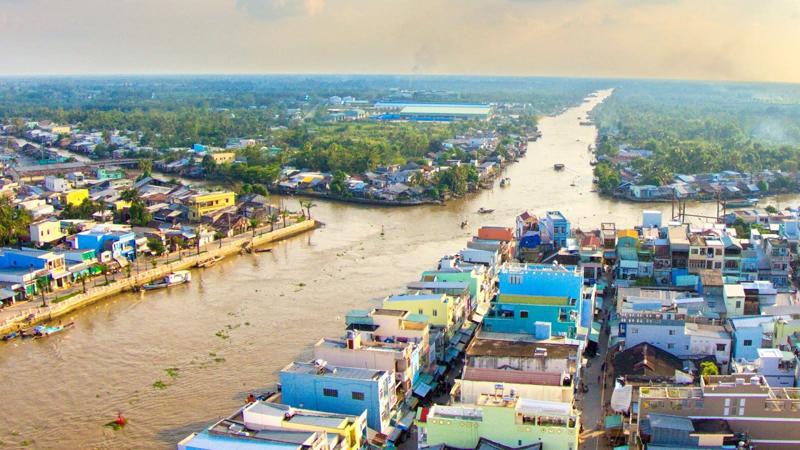
Mekong Delta: Region of canals and waterways
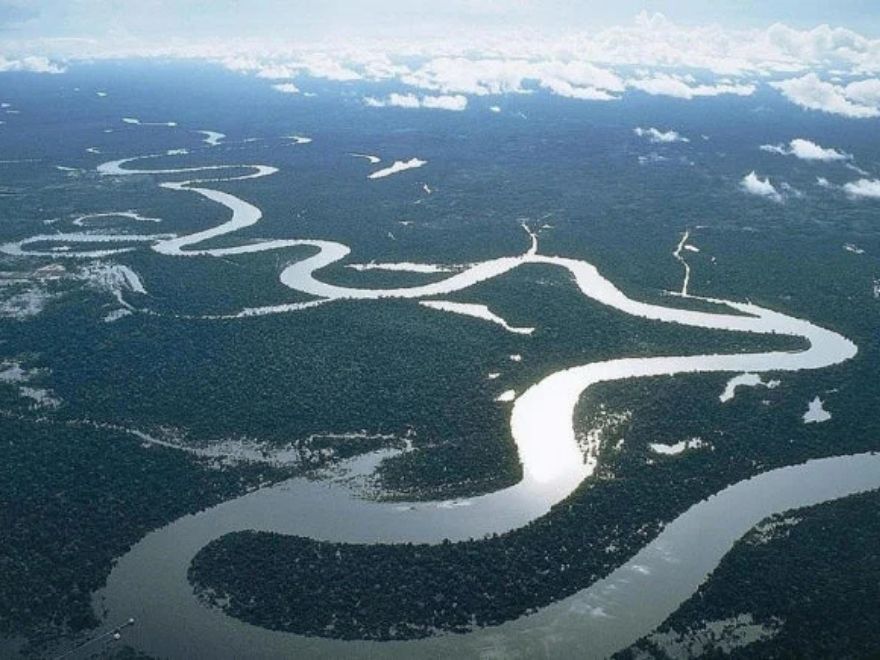
As the most fertile region in the country, the delta relies on the consistent alluvial deposits of the Tiền and Hậu rivers. This nutrient-rich land supports vast rice fields and verdant orchards that produce a wide variety of seasonal fruits year-round. The landscape is defined by an intricate social fabric of rivers and canals, which sustain a high level of biodiversity across its virgin forests and protected wetlands.
The Mekong Delta is located in the south, near Ho Chi Minh City
2. Must-See Cities in the Mekong Delta
The Mekong Delta is an expansive network of provinces, each offering a distinct window into river life and local industry. Choosing where to stop depends on whether you seek the energetic pulse of floating markets or the serene heritage of ancient pagodas.
2.1. My Tho and Ben Tre
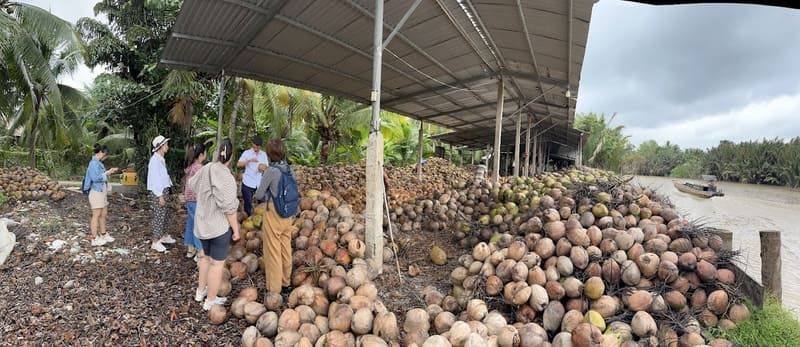
As the primary entry points from Ho Chi Minh City, these areas provide an immediate immersion into the delta’s intricate canal systems. You can navigate the weathered waterways of Ben Tre, known as the "Kingdom of Coconuts," to observe how the social fabric of the region remains tied to traditional coconut processing. While My Tho serves as a practical gateway, Ben Tre offers a more authentic, rustic atmosphere for those looking to escape the busier tourist routes.
2.2. Can Tho
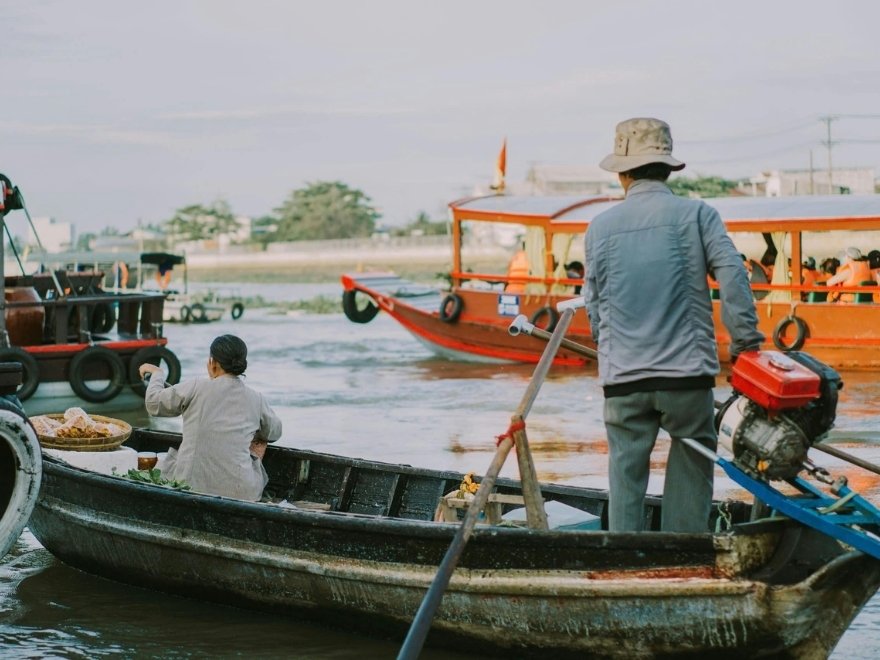
Can Tho is the delta’s central hub, defined by the early morning trade at the Cai Rang floating market. You will find the most activity here at sunrise, where wholesale vendors anchor their boats to trade seasonal produce in a tradition that has sustained the local economy for generations. Beyond the water, the city provides a reliable base with more developed amenities while maintaining its connection to the river’s heritage.
2.3. Sadec
This colonial-era town remains famous for its connection to Marguerite Duras’s The Lover, featuring several well-preserved heritage houses. Today, its local pulse is driven by a vast floral industry that serves as the primary supply point for flowers across Southern Vietnam. Walking through the weathered streets offers a refined look at a town that feels caught between its French influence and its modern agricultural identity.
2.4. Vinh Long and An Binh Island
Famous for artisanal brick production, the riverbanks here are lined with traditional kilns that resemble weathered red pyramids. On An Binh Island, you can cycle through verdant orchards and stay in local houses that offer a direct connection to the region’s fruit-growing heritage. The experience here is grounded and serene, focusing on the simple logistics of island life and seasonal harvests.
2.5. Tra Vinh
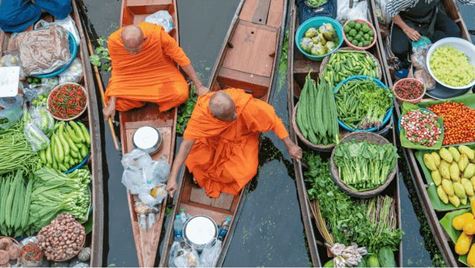
Tra Vinh serves as the heart of Khmer culture in Vietnam, home to more than 140 distinct pagodas. You will notice a shift in the cultural landscape here, marked by the presence of monks in saffron robes and a deep sense of conviviality within the Khmer communities. It is a location that rewards those interested in cultural exchange and seeing a different side of the delta’s social fabric.
2.6. Chau Doc
Positioned near the Cambodian border, Chau Doc is a unique site for religious and cultural diversity. Beyond the verdant Tra Su cajeput forest, the city is defined by its Cham Muslim communities and floating villages. You can visit local mosques and observe an Islamic way of life that is well-anchored in the heart of the delta, providing a perspective that is rarely mentioned in standard guidebooks.
>>>Map of cities in the Mekong Delta
Please click on the "[ ]" in the top right corner for better visibility.
3. What to do in Mekong Delta?
3.1. Cycling
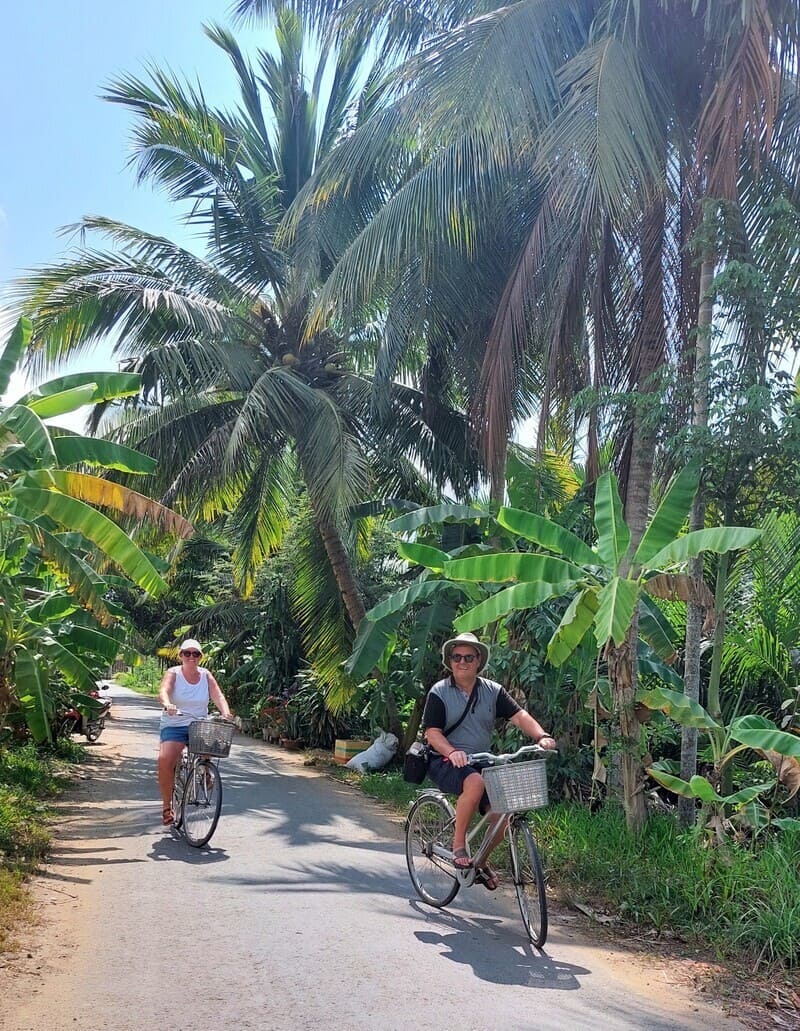
Cycling is a practical and serene way to explore the deeper layers of the Mekong Delta, particularly in the quiet stretches of Ben Tre. You will navigate a network of narrow country lanes, crossing verdant rice fields and fruit orchards at a pace that encourages spontaneous local interaction.
Do you feel like cycling in a peaceful countryside, shaded by refreshing coconut trees, just like our travelers?
Along the route, you can stop at family-run workshops to observe the traditional processing of coconuts, sweets, and local crafts. These moments offer a direct look at the region’s social fabric through simple encounters with residents in their daily environment.
3.3. Go on a boat ride in the waterways
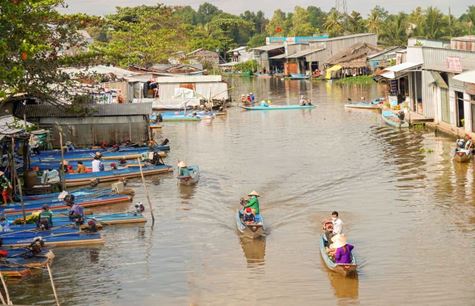
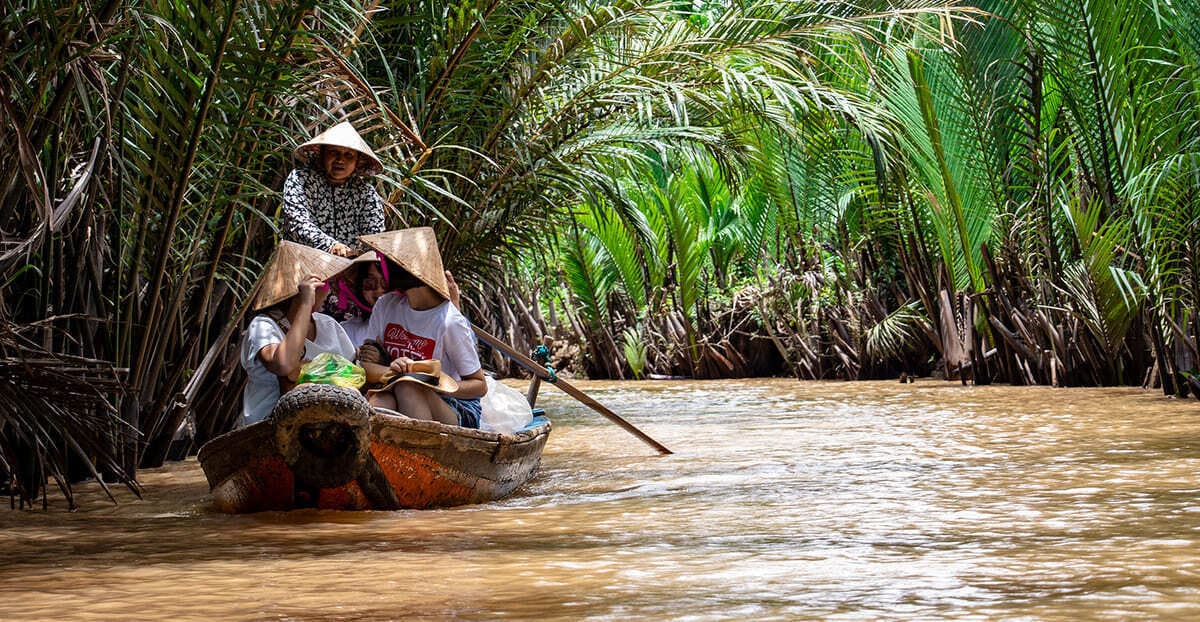
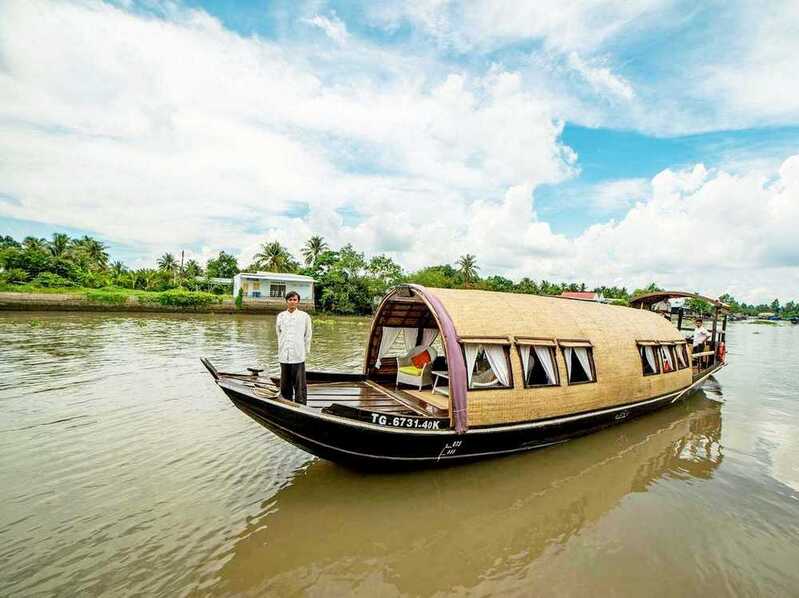
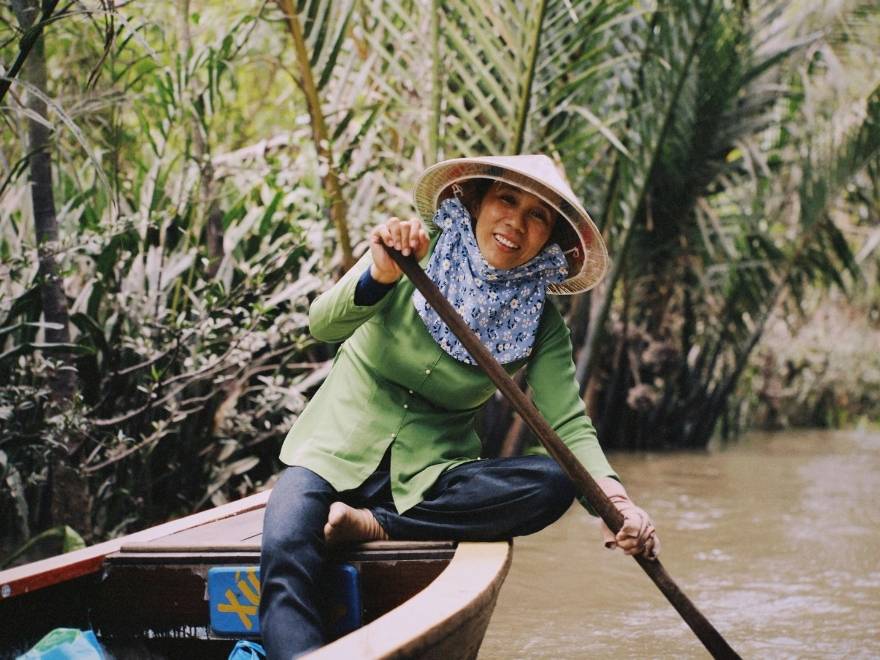
The Mekong Delta functions through an intricate network of narrow arroyos and secondary canals. Small boats provide the most direct way to observe the agricultural rhythm away from the main shipping lanes. You pass through coconut groves and rice paddies, seeing how local families utilize the riverbanks for daily work.
This provides a serene contrast to urban energy, focusing on a pace dictated by the tide. You observe the practical logistics of river life and rural heritage through unscripted encounters. The environment remains grounded and authentic, offering a clear view of how the region's social fabric is tied to the water.
3.4. Explore the floating markets
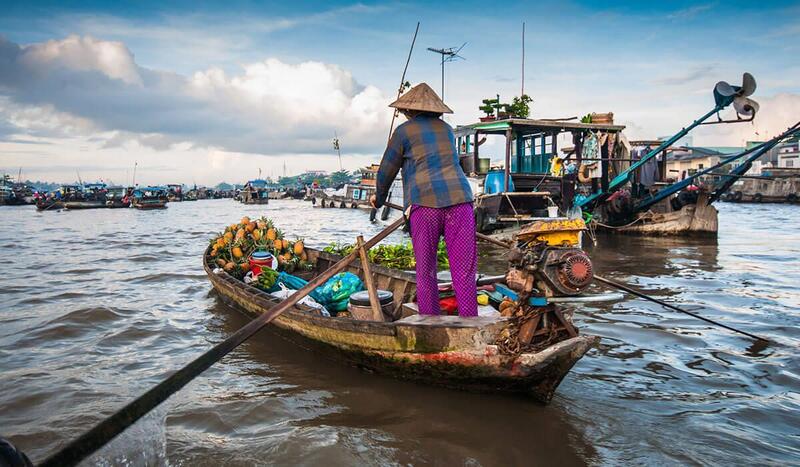
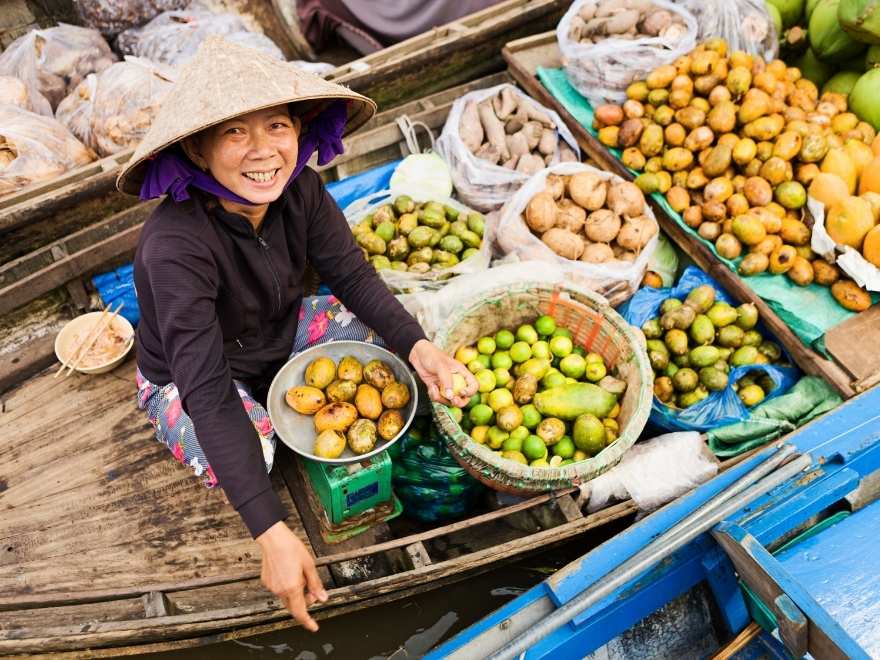
Cai Rang serves as the primary hub for wholesale river trade in Can Tho. Arriving around sunrise provides the most direct view of the logistics, where boats gather to exchange seasonal produce. It is useful to know that the market is less crowded than in previous years, but it remains a practical site for understanding the region’s floating commerce.
For a realistic local experience, order a bowl of hu tieu from a passing noodle boat. This breakfast is prepared directly on the water, reflecting the traditional culinary habits of the southern delta. Observing these morning interactions offers a grounded perspective on a way of life that continues to adapt to modern changes.
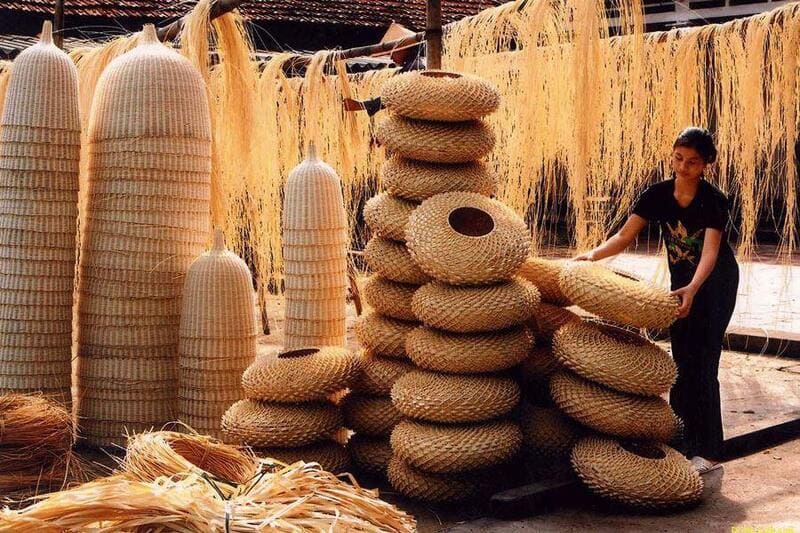
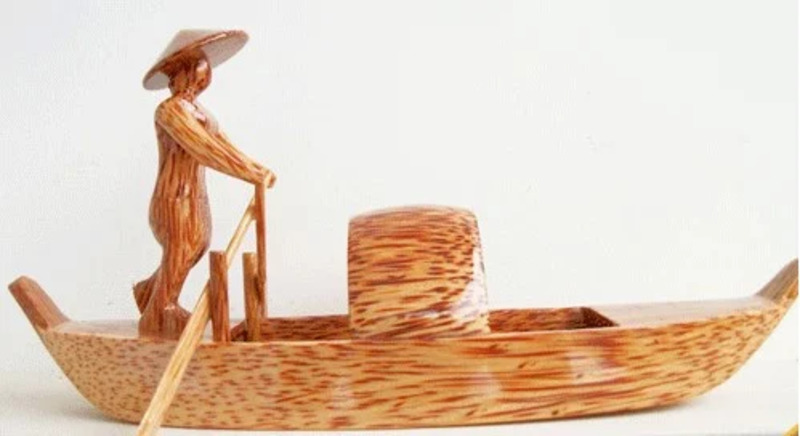
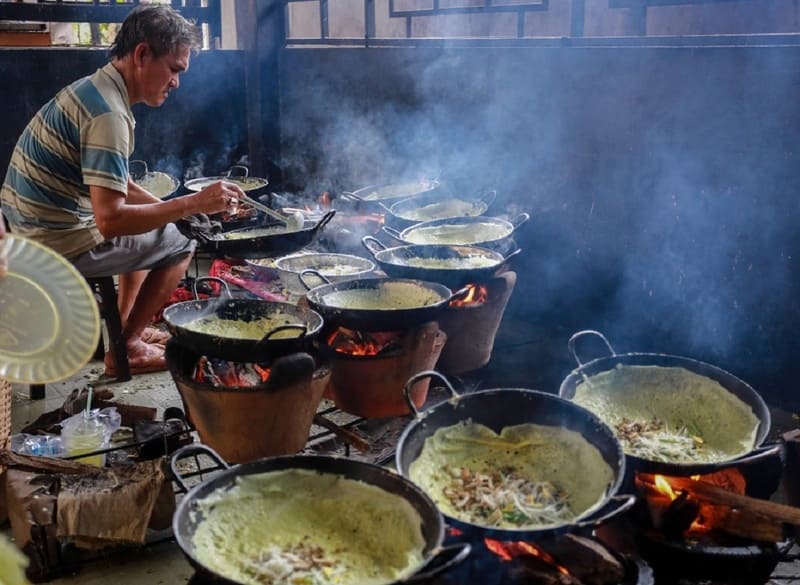
Many villages across the Mekong Delta still sustain themselves through specialized crafts like mat weaving, pottery, and making conical hats. Visiting these family-run workshops allows you to see the specific techniques used to turn raw, local materials into household goods. Much of the local industry revolves around the coconut, which is processed into everything from furniture and utensils to oil and sweets.
These small-scale operations offer a clear view of how regional history is preserved through daily work rather than in a museum. For more on finding authentic items, you can read our guide on buying souvenirs in Vietnam.
Artisanal factories
A coconut souvenir: The infinite creativity of the natural resources in the Mekong Delta
3.6. Embark on a cruise
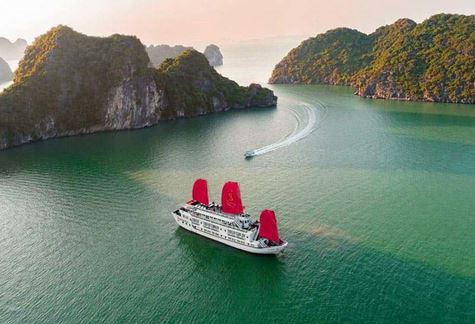
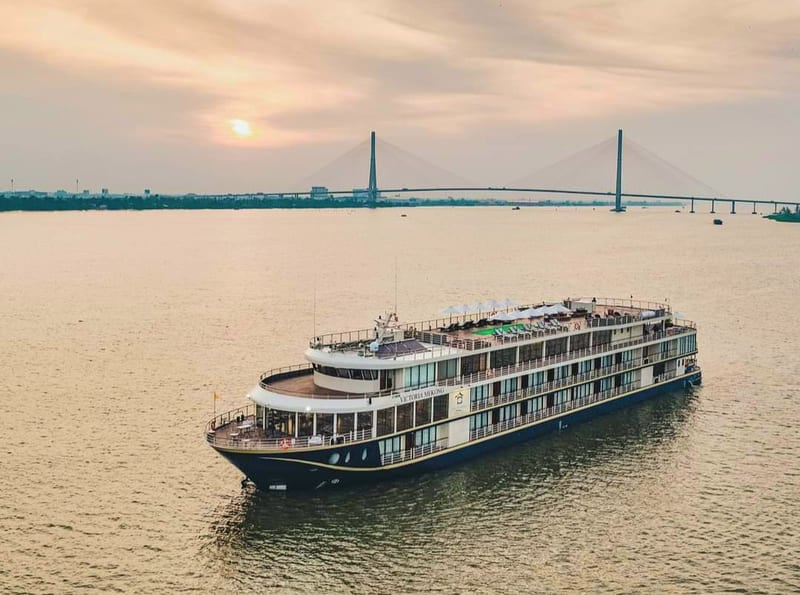
In addition to boat rides, you also have the option to choose other options, such as cruises. Multi-day cruises offer a broader view of the river than standard day trips. You can have meals on deck while observing the trade along the banks, and watch the sunset from the upper deck.
The cabins provide a comfortable retreat from the heat, with a crew that handles the logistics of moving between provinces. This allows you to cover more distance without the need for constant road transfers.
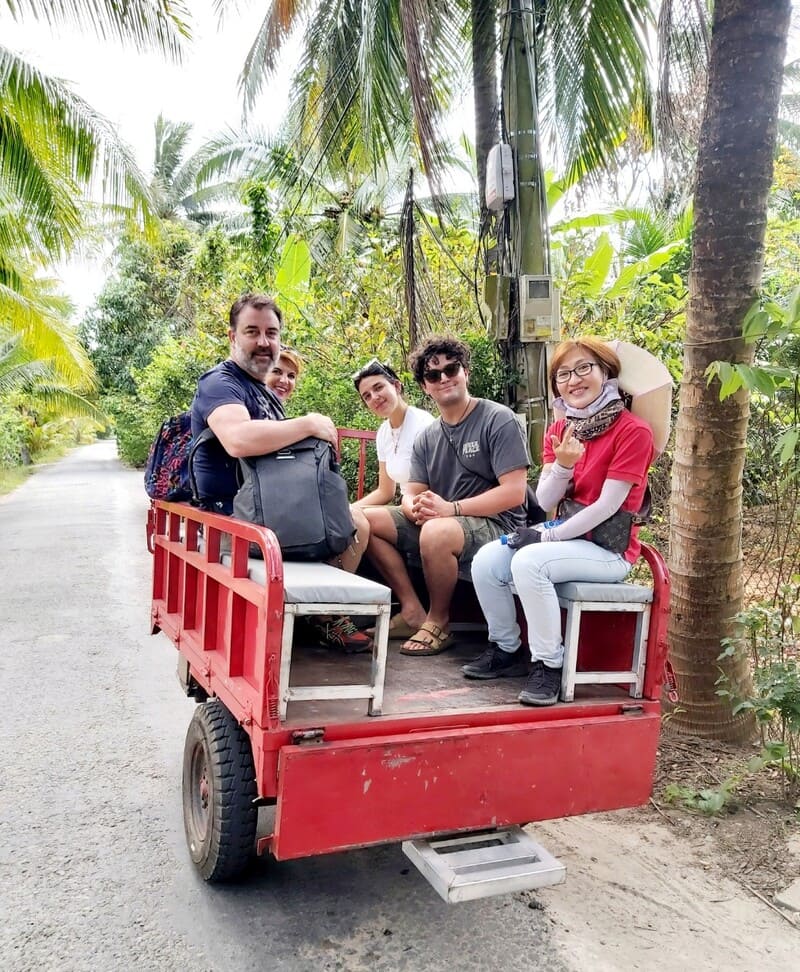
In the early 2000s, the xe lôi was the primary way to travel across the Mekong Delta. Most original bicycle-pulled versions have since been replaced by motorized models, but their function remains the same. These carriages are still a common sight in rural areas, used by locals as a practical tool for daily transport rather than a museum piece.
Discover the Mekong Delta by Xe lôi with Kampá Tour
A ride on a motorized xe lôi provides an open-air perspective of the countryside that you miss from inside a car. It is an effective way to navigate narrow village lanes and see the delta at its own speed.
3.8. Mekong Delta homestays
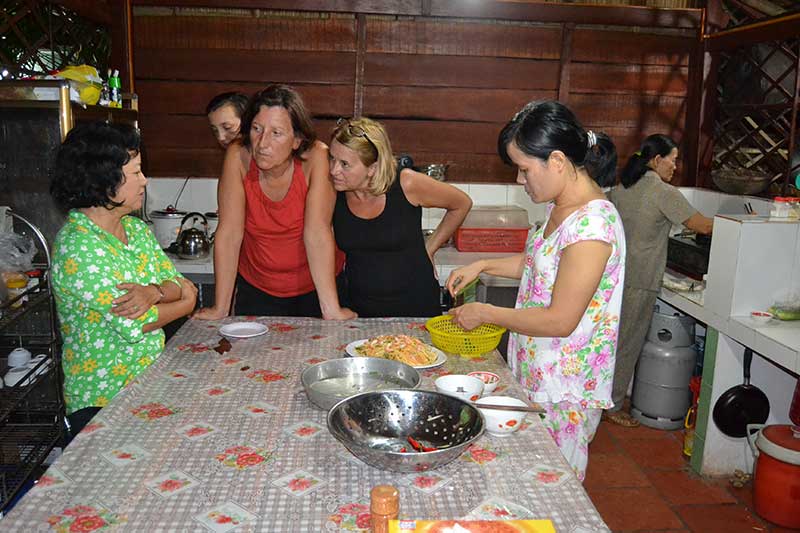
A homestay moves you away from the standard hotel circuit and into the daily rhythm of a family-run farm. These are often simple, open-air houses where you eat meals prepared with ingredients pulled directly from the garden. It is a practical way to see how life functions in the rural south without the barrier of a tour bus window.
You can join the family in the kitchen or help with seasonal farm work, but the real value is in the shared evening meal. It is a grounded, unscripted experience that focuses on local hospitality rather than resort amenities. For more on what to expect, you can read our guide on sleeping in a homestay.
Cooking with locals is an experience not to be missed
3.9. Following the footsteps of the colonial era
In Can Tho and Sa Dec, you can still stay in private colonial-era villas that have been converted into small hotels. These houses are a practical choice if you prefer the high ceilings and shuttered windows of the past over standard, modern accommodations.
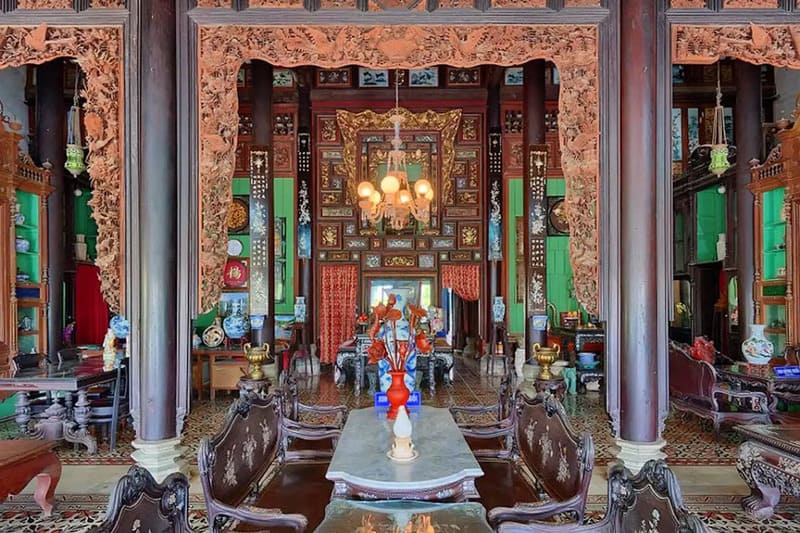
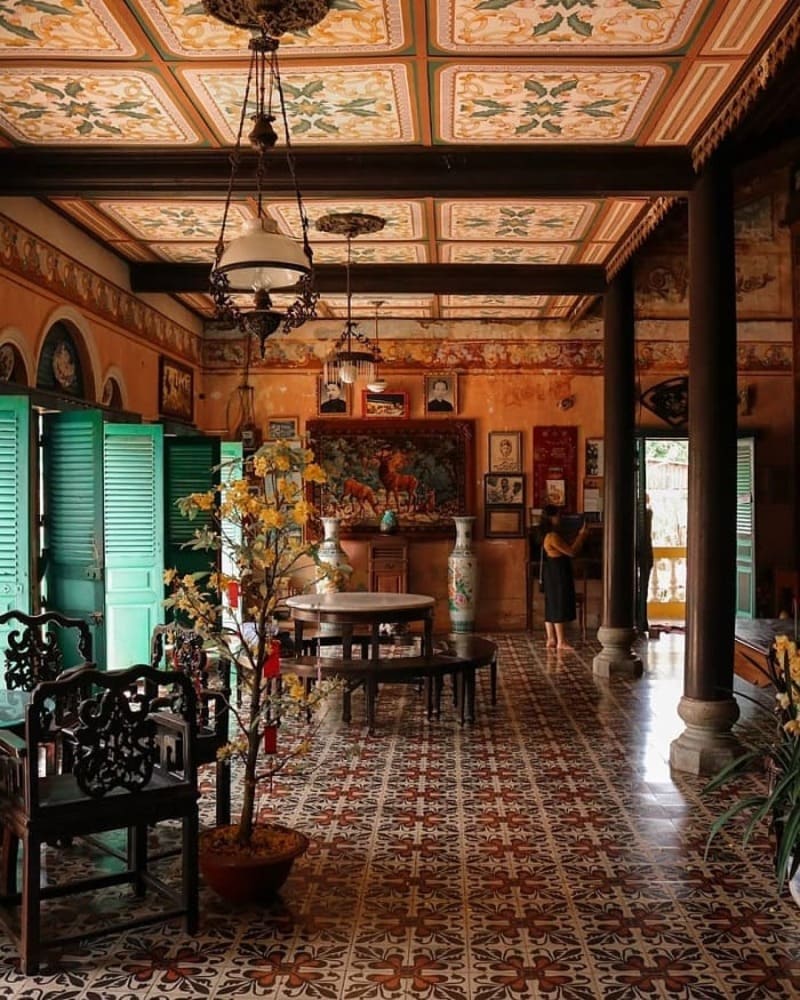
The Binh Thuy Ancient House
Binh Thuy in Can Tho remains the most intact mansion from this period. It is known for its blend of French floor tiles and traditional Vietnamese woodcarving, which famously served as the backdrop for the film The Lover. You can find more about the region's cultural history in our list of great 11 movies and books about Indochina.
An impressive interior for visitors
3.10. Catching lunch the delta way
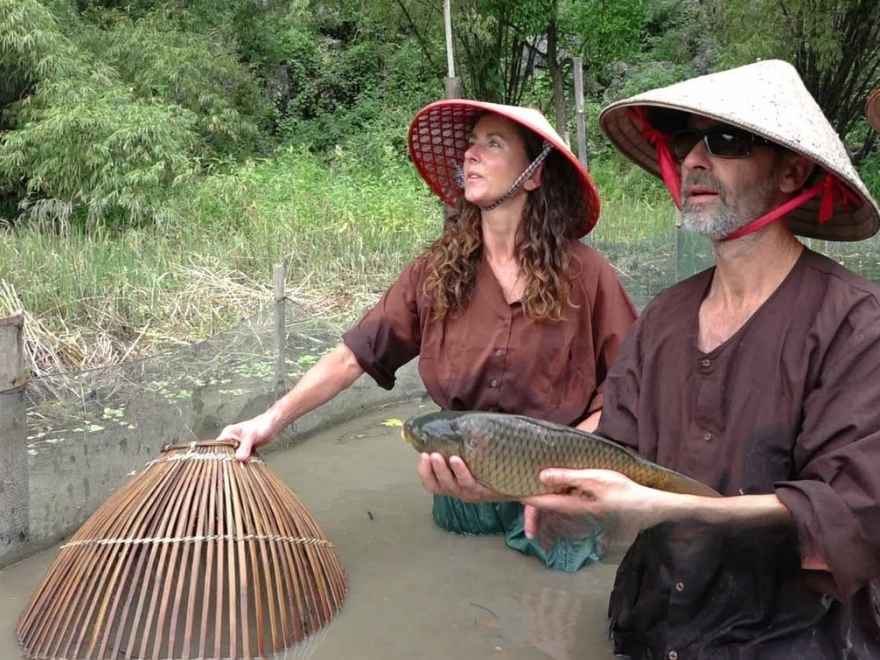
Forget the formal dining rooms. In the Mekong Delta, some of the best meals start with you knee-deep in a muddy canal. You begin by swapping your clothes for the local ao ba ba (brown cotton pajamas) and heading out to a family pond.
The tradition of tat muong bat ca is all about splashing and teamwork. You help bail out the water and then use your bare hands to find silver carp or elephant ear fish hiding in the silt. It is messy and loud, but there is plenty of laughter when the fish prove to be faster than you are.
Experience scooping water and catching fish.
Nothing beats the feeling of catching your own food. By the time the fish is grilled over a wood fire and wrapped in rice paper with fresh herbs, you will realize that a bit of mud makes the flavors even better. It is a hands-on adventure that turns a simple lunch into a genuine memory.
3.10. Cultural diversity in the delta
Beyond the Buddhist pagodas, you will find active Cham Muslim communities living along the riverbanks. These villages are centered around white-and-green mosques that follow their own religious calendars and daily traditions. It is a side of the delta that most travelers do not expect, adding a layer of diversity that is visible right from the water.
The region is far from a fixed scenery. It is a working landscape shaped by generations of different groups living together, from the Khmer to the Cham. Everything here is tied to the movement of the river, which has served as a highway for both trade and culture for centuries.
3.11. Khmer and Cham culture in An Giang
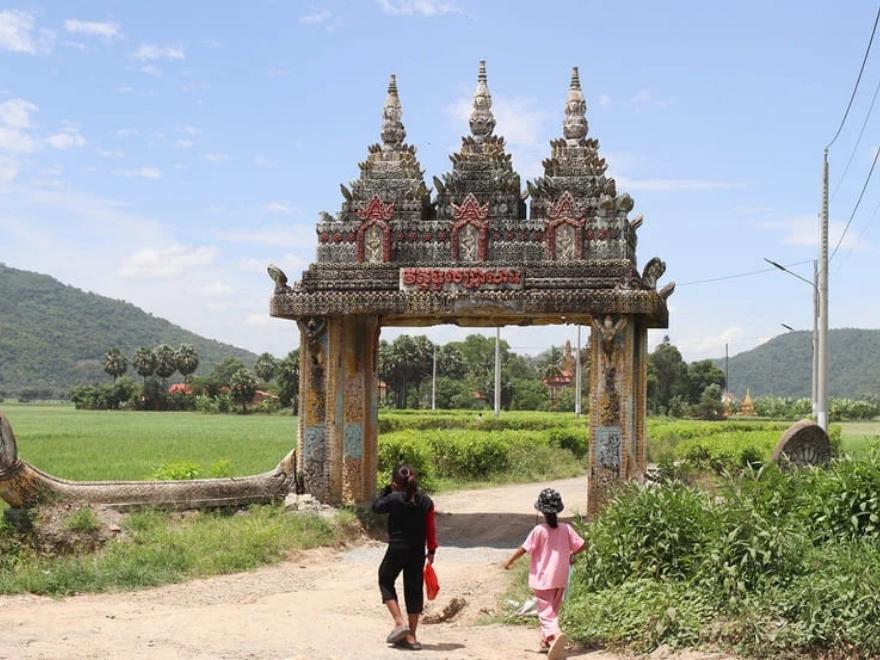
In border provinces like An Giang, the architecture shifts from traditional Vietnamese temples to pointed Khmer pagodas and white-domed mosques. This area is home to nearly 100,000 Khmer residents and a significant Cham Muslim population, each maintaining their own languages and religious calendars. It is one of the few places in the delta where you can see these different traditions functioning side by side.
Ancient Khmer-style architecture in An Giang
The heritage here is active rather than ceremonial. With over 200 pagodas and numerous riverside Cham villages, the cultural mix is a visible part of the local economy and social life. It offers a realistic look at a region shaped by centuries of movement across the Cambodian border.
4. What are the local specialties not to be missed?
Benefiting from extremely fertile lands, the Mekong Delta region is renowned as the rice basket, orchard, and vegetable garden of Southern Vietnam. This region is also famous for its thriving aquaculture. The abundant produce from this land nourishes a fabulous cuisine influenced by Khmer, Thai, and Chinese cultures. The gastronomy of the Mekong Delta stands out for its freshness and originality, drawing directly from the garden and skillfully blending spicy and sweet flavors. During your stay in this region, do not miss the opportunity to taste some of its must-try specialties:
The Mekong Delta experiences a tropical climate with two distinct seasons: the dry season and the rainy season. While temperatures can be high, the region enjoys a pleasant climate throughout the year.
The dry season extends from December to April, characterized by low rainfall. Sunny days and mild temperatures provide ideal conditions for exploring the natural beauty of the region.
The rainy season spans from May to November, and although it is marked by occasional afternoon showers, it adds a special touch to the region. These refreshing rains bring renewed vitality to the surrounding nature, bringing lush rice fields to life and adding a beautiful color palette.
It is possible to visit the Mekong Delta throughout the year, with the dry season considered the preferred period.
Our team conducted a reconnaissance trip to the Mekong Delta in October 2023 to provide you with the best-customized itineraries
6. How to get there and depart?
To reach the Mekong Delta, there are several options available to you, making it easy to enjoy this picturesque region from different cities.
From Ho Chi Minh City, you can reach the Mekong Delta by car, just a two-hour drive away. As you leave behind the hustle and bustle of the city, you enter a world of tranquility and lush vegetation as far as the eye can see.
If you are in Hanoi or Da Nang, several daily flights allow you to reach the Mekong Delta by landing in Can Tho, the capital of the region.
>>>Good to know
The Mekong Delta is also accessible from Phnom Penh, the capital of Cambodia if you start your journey from Cambodia. In this case, you can take a speedboat from Phnom Penh, cruising down the Mekong River to Chau Doc. The boat journey takes approximately 5 to 6 hours.
To leave the region, if you arrive by car from Ho Chi Minh City, you can, of course, use the same means of transportation. Please note that there is currently no international airport in the Mekong Delta region. So, if you need to leave the country, you will have to travel to Ho Chi Minh City or Hanoi for your departure flight.
7. Interesting Facts of the Mekong Delta
7.1. Where does the Mekong River come from?
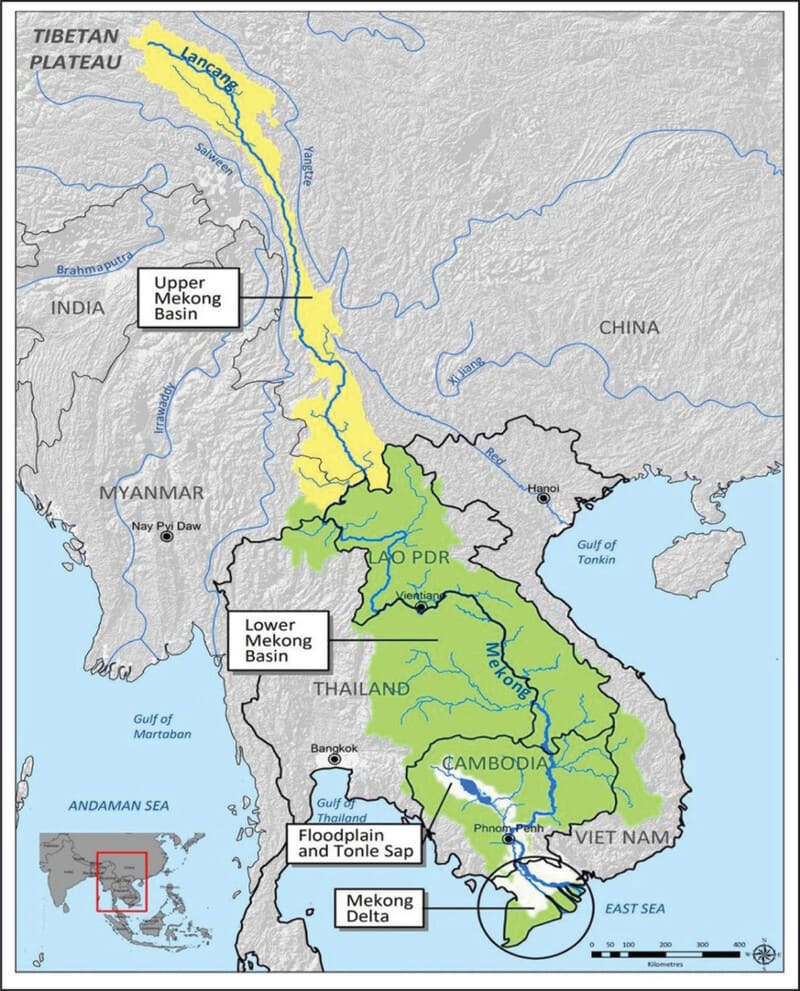
The Mekong River travels over 4,000 kilometers from the Tibetan Plateau through China, Myanmar, Laos, Thailand, and Cambodia before reaching Vietnam. By the time it enters the delta, the river is thick with the sediment that sustains the region’s entire agricultural system.
7.2. Why it is called the Nine Dragons?
Upon entering Vietnam, the Mekong splits into two primary branches: the Tien and the Hau. These further divide into nine estuaries as they flow into the East Sea. This unique formation resembles nine dragons, giving the region its famous nickname. This sprawling network of waterways created the fertile plains that now produce the majority of the country's rice and fruit.
7.3. Navigation and daily transport
While motorbikes are common in cities, life in the rural delta is defined by its canals. Boats and ferries remain the primary tools for moving everything from sand and rice to seasonal fruit. In many remote areas, these waterways serve as the only practical roads for daily commerce.
7.4. Life on the water
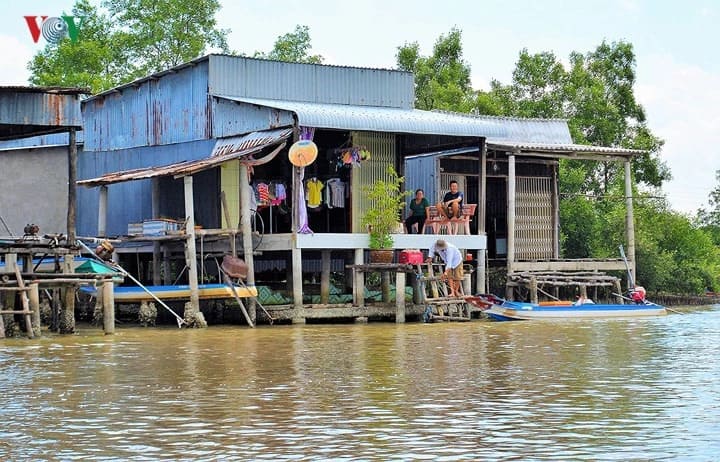
The culture of the delta is built on movement. Floating markets emerged from the need to trade directly on the river, and houses are often built on stilts or rafts to handle the fluctuating water levels. For many who grew up here, the local supermarket was a small boat selling snacks and household goods directly to their riverside door.
7.5. The blessing of the flood season
The flood season, from late July to November, is a vital part of the regional cycle. Rather than a disaster, these moderate floods are seen as a gift that brings fresh alluvium to the fields and an abundance of fish and shrimp. It is a period of regeneration for the entire ecosystem.
7.6. A regional fruit paradise
The combination of tropical heat and rich river sediment makes the delta the primary fruit producer of Vietnam. Orchards throughout the region produce mangoes, rambutans, and pomelos year-round.
7.7. The traditional ao ba ba
The ao ba ba is the standard garment of the delta. It is a simple, loose-fitting shirt with a front button slit, designed for comfort in the humid heat. While women's versions are often more tailored, the men's version typically features two large pockets for practical use in the fields or on boats.
7.8. Don ca tai tu: The music of amateurs
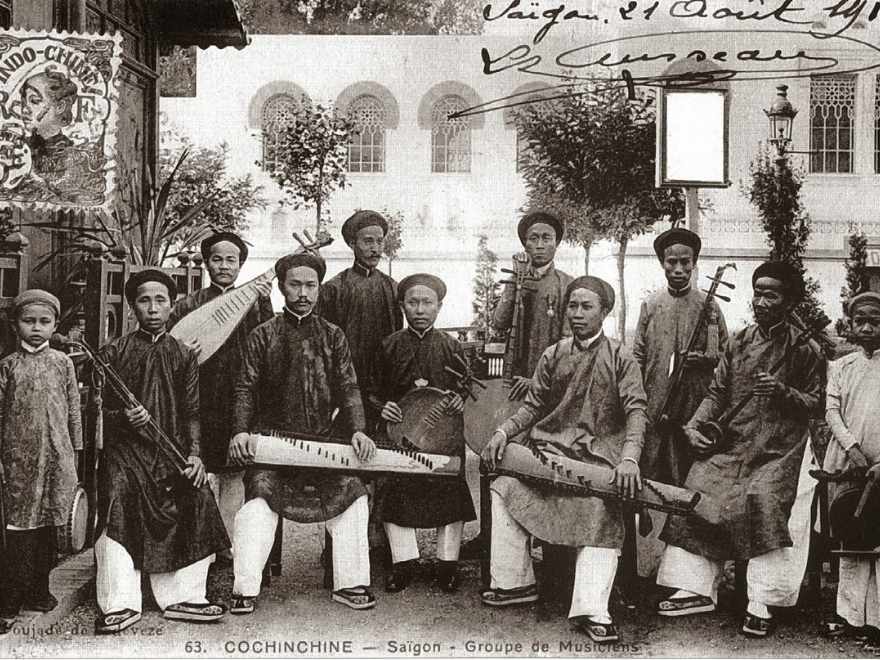
Don ca tai tu is the iconic musical art of the south, performed using instruments like the moon-shaped lute and sixteen-stringed zither. Recognized by UNESCO in 2013, this "music of amateurs" is a staple of local social life and reflects the steady, rhythmic pace of the river.
Our final words,
The Mekong Delta is a serene land to discover. If you are captivated by this region, delve into the following article to explore fascinating facts about the Mekong Delta: "Mekong Delta: 12 Interesting Facts to Know!"
To make your trip easier and customize each itinerary according to your preferences, Kampá Tour would be delighted to assist you in creating a tailor-made journey. Please don't hesitate to contact us!
Planning your trip?
Save time and get expert advice for FREE!
✅ 15 years of local experience
✅ Save up to 40 hours of planning
✅ Travel stress-free from start to finish
Book your free consultation today!






 Our team
 Our team
 Our team
 Our team

.jpg)
(1).jpg)


 Other
Other Add us as a preferred source