Boun Awk Phansa 2026: Luang Prabang’s Festival of Light
Few celebrations reveal the spirit of Laos as vividly as Boun Awk Phansa in Luang Prabang. Each October, the old royal capital glows with candlelit temples, colorful lanterns and magnificent fire boats parading through its historic streets before reaching the Mekong. For a few special days, local families, monks and communities come together, offering travelers a memorable glimpse into the city’s riverside atmosphere and deeply rooted spiritual traditions.
Written by Oliver PHUNG (Tour Guide)
Updated on Sep 08, 2026
0 comment
Oliver Phung is a Northern Vietnam-based tour guide and blogger. His favorite topics to write about include cuisine, culture, travel, and under-the-radar experiences. Oliver possesses a deep, detailed understanding of the region, from the indigenous culture of the Hmong in the Northwest to the highland lifestyle of the Tay in the Northeast. Whether he is exploring ancient architecture or geological landscapes, he is always eager to share his insights with his readers.
Beyond his work at Kampá Tour, he produces specialized travel content on platforms such as Reddit, Instagram, LinkedIn, and various other publications.
Boun Awk Phansa, or Boun Ok Phansa or the End of Buddhist Lent, marks the conclusion of a three-month rainy-season retreat that begins with Boun Khao Phansa. During this period, monks remain based at the same temple or monastery and devote more time to meditation, prayer and Buddhist study. Tourism Laos identifies it as the final day of Buddhist Lent.
For Lao Buddhist communities, the festival is a time of spiritual completion and renewal. Families return to temples to make merit and mark the end of an important religious period.
As Boun Awk Phansa follows the Lao Buddhist lunar calendar, its date changes each year. The confirmed date and the main public celebrations are covered in the following sections.
Boun Khao Phansa vs Boun Awk Phansa
Although their names are similar, Boun Khao Phansa and Boun Awk Phansa mark opposite ends of the same three-month Buddhist retreat.
Festival
Role in the Buddhist calendar
Boun Khao Phansa
Marks the beginning of Buddhist Lent. Monks settle at the same temple or monastery for approximately three lunar months, traditionally corresponding with the rainy season.
Boun Awk Phansa
Marks the end of the retreat. Monks resume their usual activities, while local communities return to temples to make merit and celebrate the completion of this important religious period.
In simple terms, Boun Khao Phansa opens the retreat, while Boun Awk Phansa brings it to a close.
When Is Boun Awk Phansa in 2026?
In 2026, Boun Awk Phansa falls on Monday, October 26. The date is listed in the 2026 events calendar published by Tourism Laos. Office Holidays also lists October 26 as a national public holiday in Laos.
The festival follows the Lao Buddhist lunar calendar rather than the Gregorian calendar. Boun Awk Phansa falls on the fifteenth day of the eleventh lunar month, which is why its Gregorian date changes from one year to the next.
In Luang Prabang, the celebrations continue into the following day. The Tourism Luang Prabang festival calendar lists Boun Ork Phansa on October 26 and Boun Lai Heua Fai, the Festival of Light Boats, on Tuesday, October 27, 2026. Travelers planning to experience both events should therefore keep both dates available.
Event
2026 date
Location
Source and status
Boun Awk Phansa
Monday, October 26
Nationwide
Listed by Tourism Laos
Boun Lai Heua Fai
Tuesday, October 27
Luang Prabang
Listed by Tourism Luang Prabang
Detailed procession time and route
To be confirmed
Luang Prabang
Awaiting the local 2026 programme
Boat races and supporting events
Vary by destination
Selected riverside towns
Confirm separately for each location
Last verified: July 27, 2026.
Boun Awk Phansa and Boun Lai Heua Fai: Are They the Same Festival?
Not exactly. Boun Awk Phansa is the religious observance that marks the end of Buddhist Lent across Laos. Boun Lai Heua Fai is the Festival of Light Boats associated with the same festive period and is especially prominent in Luang Prabang.
The two celebrations are closely connected and may overlap in local practice. Temple ceremonies, merit-making and candlelight observances form the religious foundation of Boun Awk Phansa. Boun Lai Heua Fai brings the celebrations into the streets and onto the river.
Boun Awk Phansa
Boun Lai Heua Fai
Main meaning
The end of Buddhist Lent
The Festival of Light Boats
Geographic scope
Observed across Laos
Celebrated in several areas, but especially famous in Luang Prabang
Main setting
Temples, homes and local communities
Temples, city streets and the river
Main activities
Merit-making, prayers and candlelight observances
Preparing, parading and launching illuminated boats
Symbolic purpose
Completing the monastic retreat and making merit
Giving thanks for water, sending away misfortune and welcoming good luck
What travelers mainly experience
The religious and cultural meaning of the occasion
The public light boat celebrations
How the Two Events Connect in Luang Prabang?
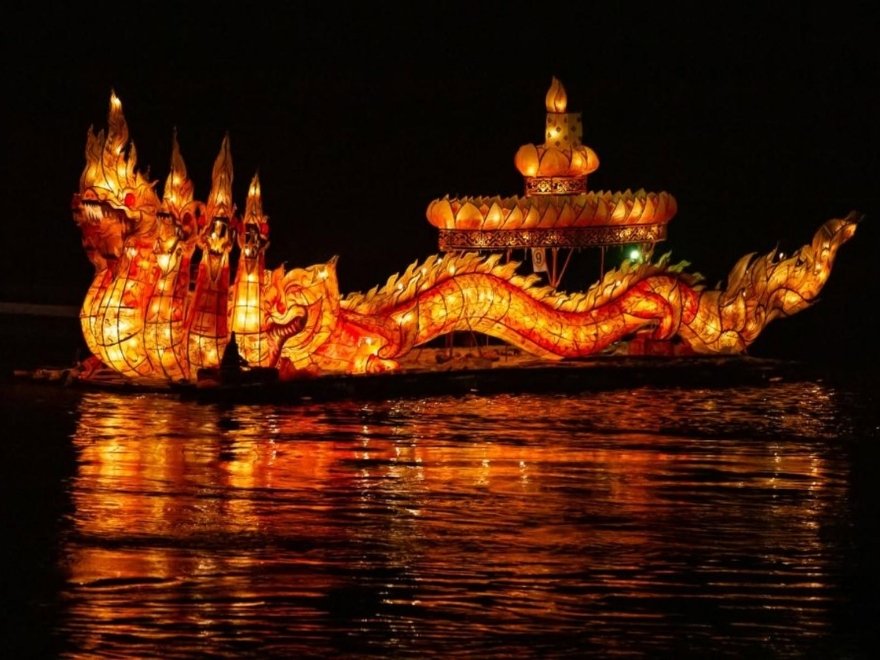
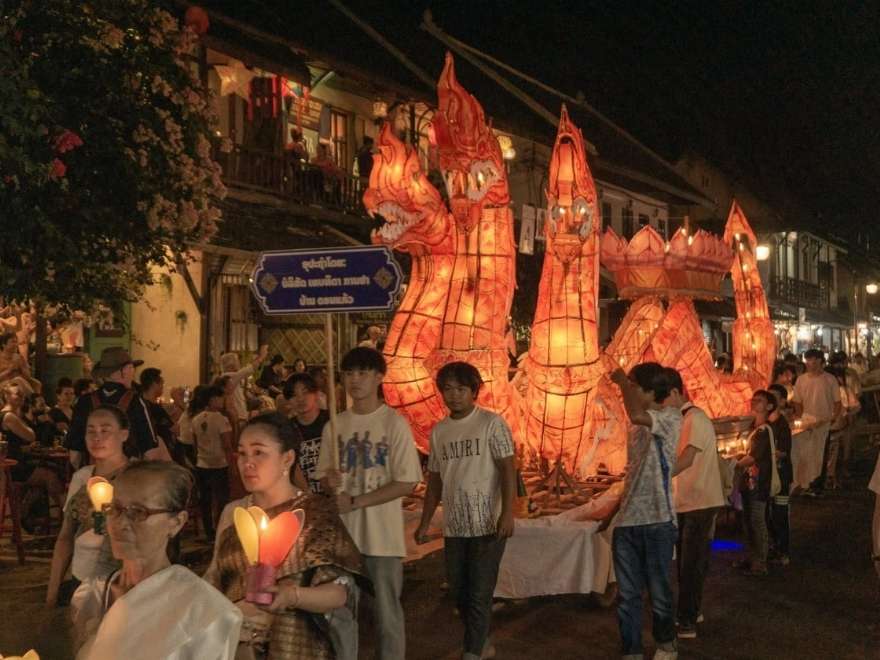
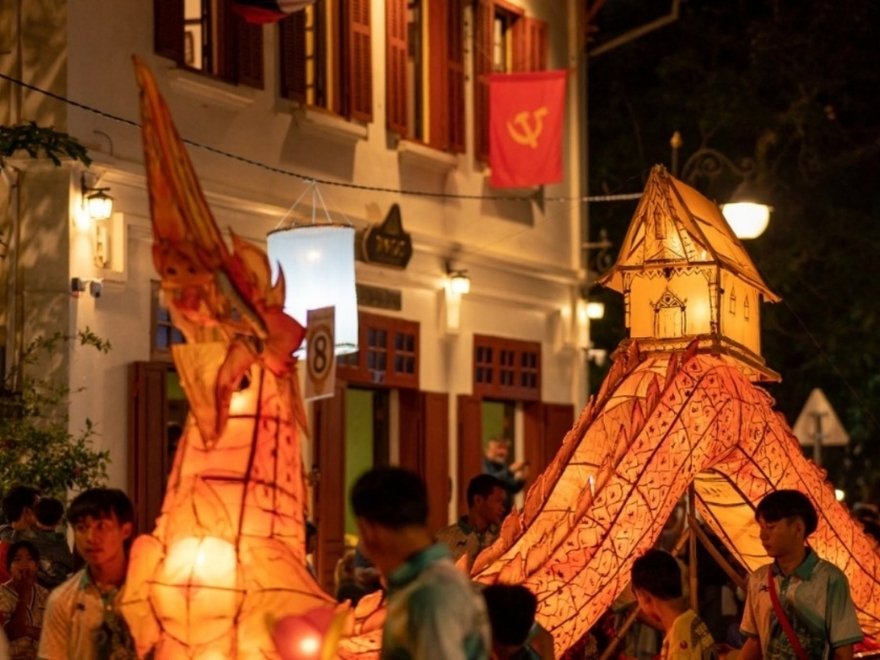
In Luang Prabang, Boun Awk Phansa provides the religious context, while Boun Lai Heua Fai brings the celebrations into public spaces. Temples and communities prepare lanterns and illuminated boats, which are later carried through town and released onto the Mekong.
The events belong to the same festive period, but their dates may be listed separately. In 2026, Luang Prabang’s tourism calendar places Boun Ork Phansa on October 26 and Boun Lai Heua Fai on October 27. Detailed procession times and the local programme may be announced closer to the event.
What Happens During Boun Awk Phansa?
Boun Awk Phansa unfolds gradually throughout the day, beginning with quiet religious observances at local temples and ending with candlelit community activities after dark. Although customs vary between temples and regions, the celebrations generally combine merit-making, reflection and community preparation.
Preparations often begin the day before, when families gather food, flowers, candles and useful items to offer at their local temples.
Early Morning Merit-Making
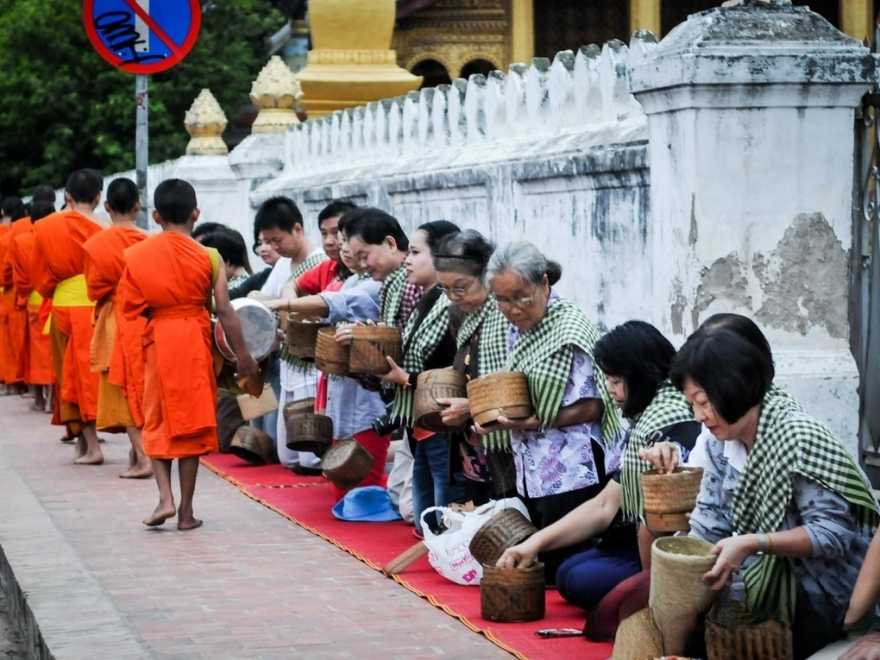
The main festival day begins early, as families gather at temples for the traditional alms-giving ceremony. Worshippers may offer sticky rice, food, candles and useful items for monastic life.
Festival merit-making at temples should not be confused with Luang Prabang’s daily dawn alms-giving procession, commonly known as Tak Bat, although both involve offerings to monks.
After presenting their offerings, people may listen to sermons and receive blessings from senior monks. Some families also pour water onto the ground as a symbolic way of sharing the merit they have made with deceased relatives and ancestors.
The morning remains calm and deeply spiritual, with temples serving as an important center of family and community life.
Daytime Temple and Community Activities
Religious activities continue throughout the day. At some temples, monks and laypeople reflect on the three-month retreat, considering the good practices they wish to continue and the shortcomings they hope to correct.
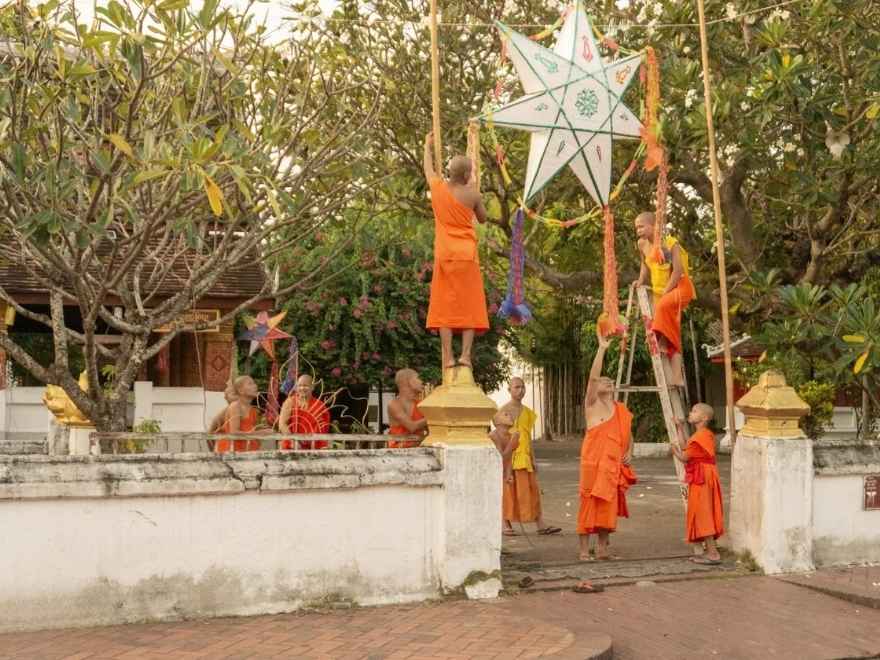
At the same time, families, monks and neighborhood groups prepare candles, lanterns and other decorations for the evening.
In Luang Prabang, festival preparations become increasingly visible by late afternoon.
Evening Candle Rituals
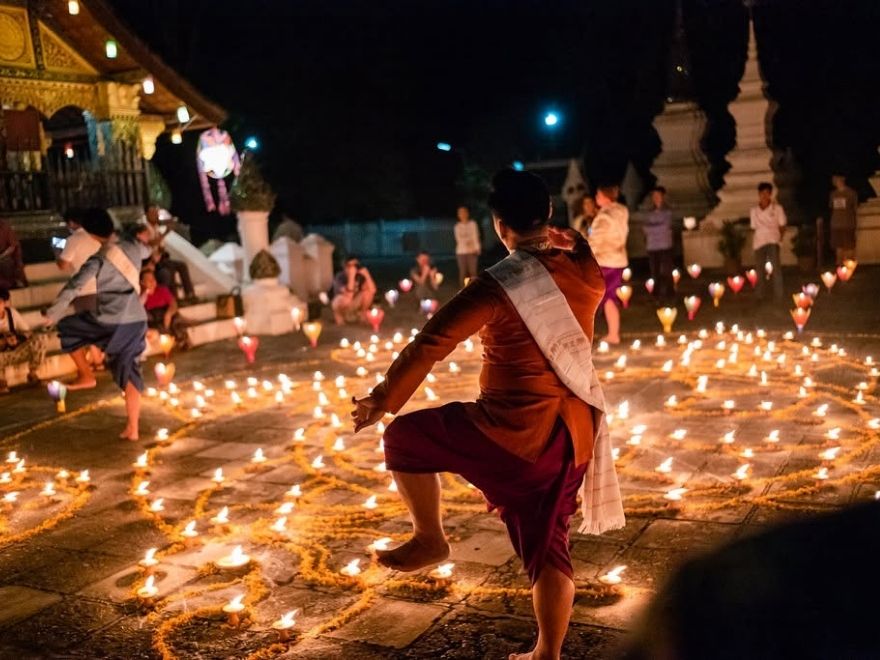
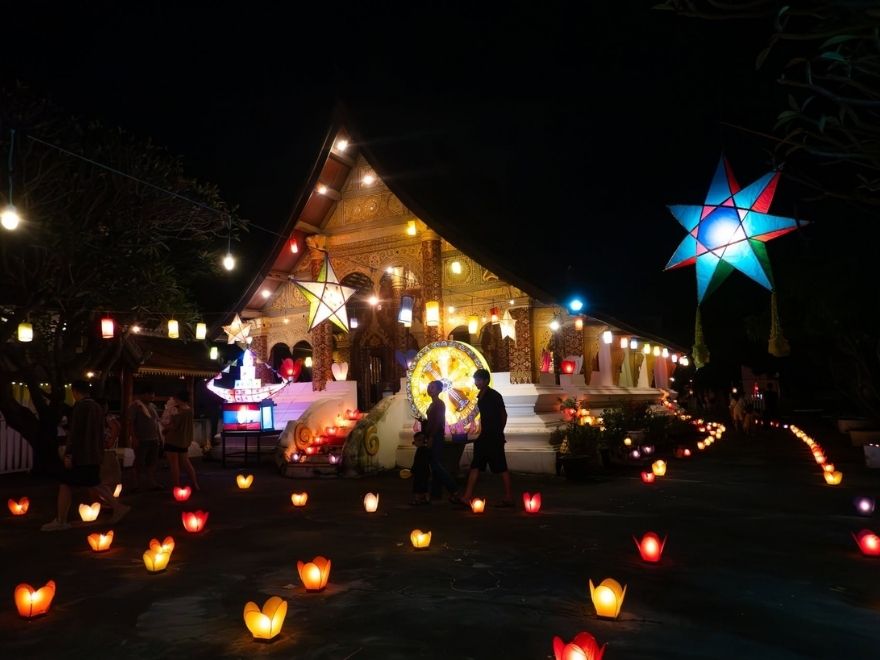
After sunset, temples are illuminated with candles and lanterns. Worshippers may take part in a candlelight procession, commonly walking three times around the temple while carrying candles, incense and flowers.
In some neighborhoods, families place candles along balconies, fences and entrances. The temples remain peaceful, even as more local families arrive to see the displays and take part in the evening observances.
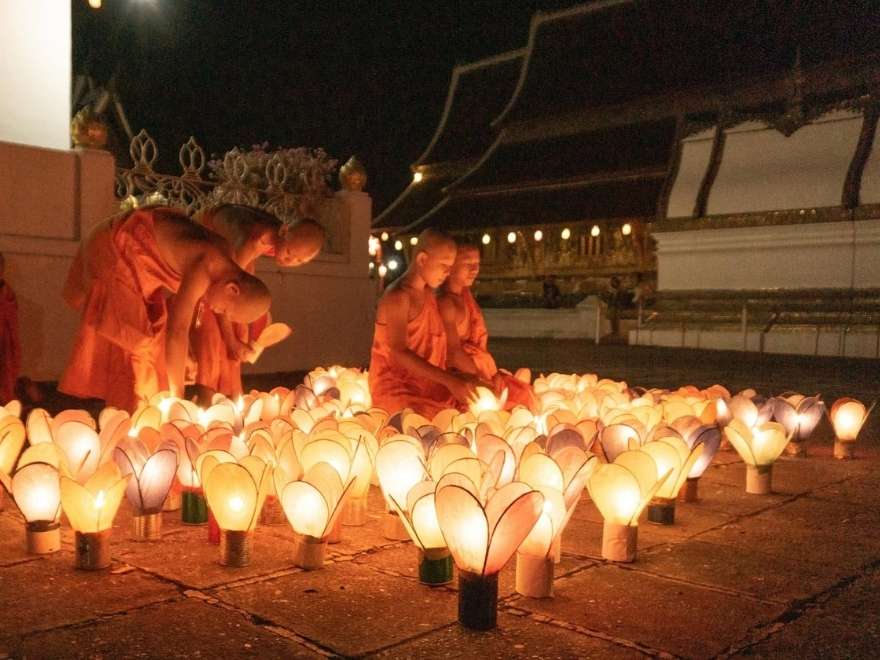
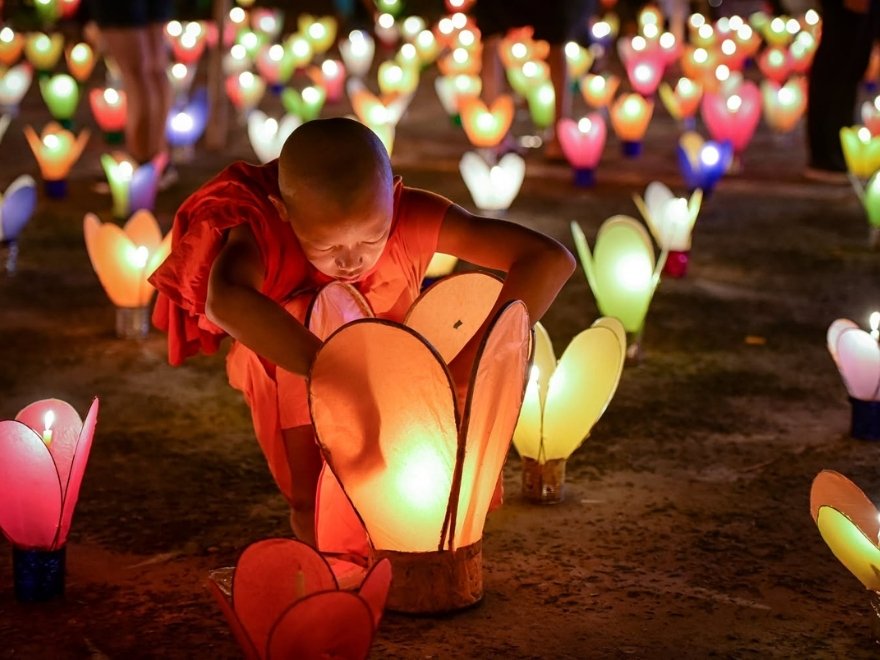
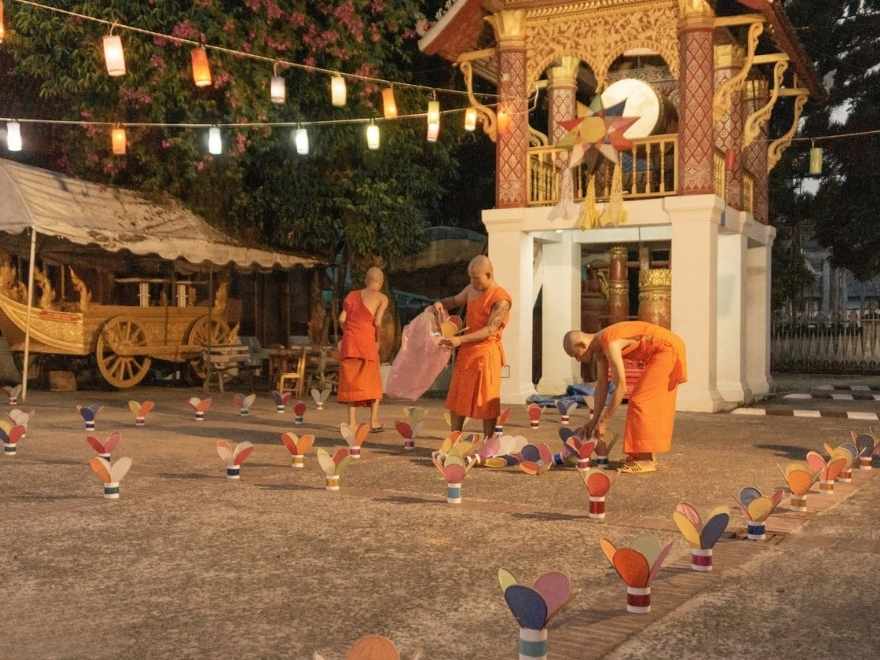
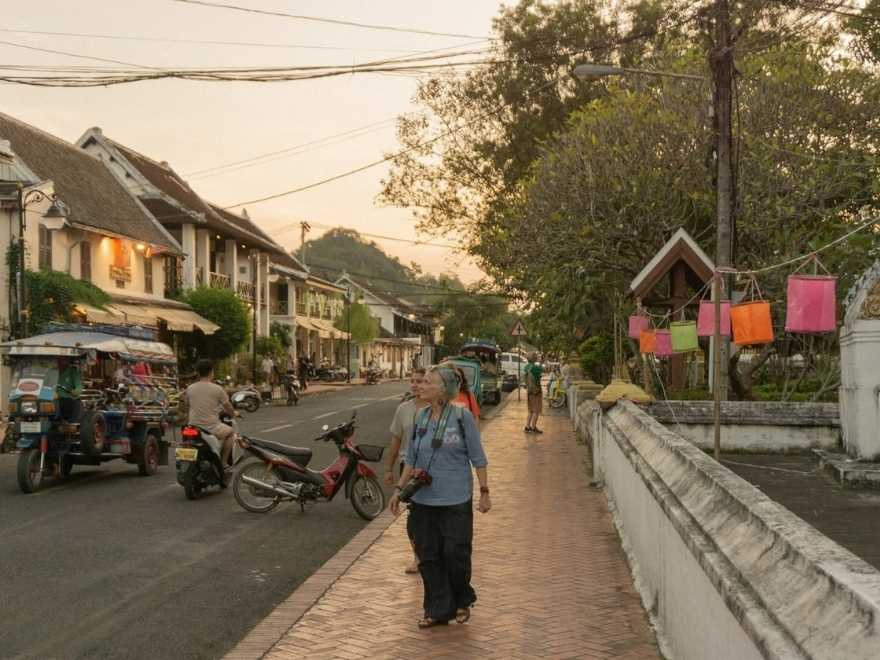
At Wat Xieng Thong and other temples in Luang Prabang, novice monks arrange flower-shaped lanterns across the courtyards and begin lighting them as darkness falls.
The following evening, attention shifts toward the much larger illuminated boats associated with Boun Lai Heua Fai.
Community Celebrations After Dark
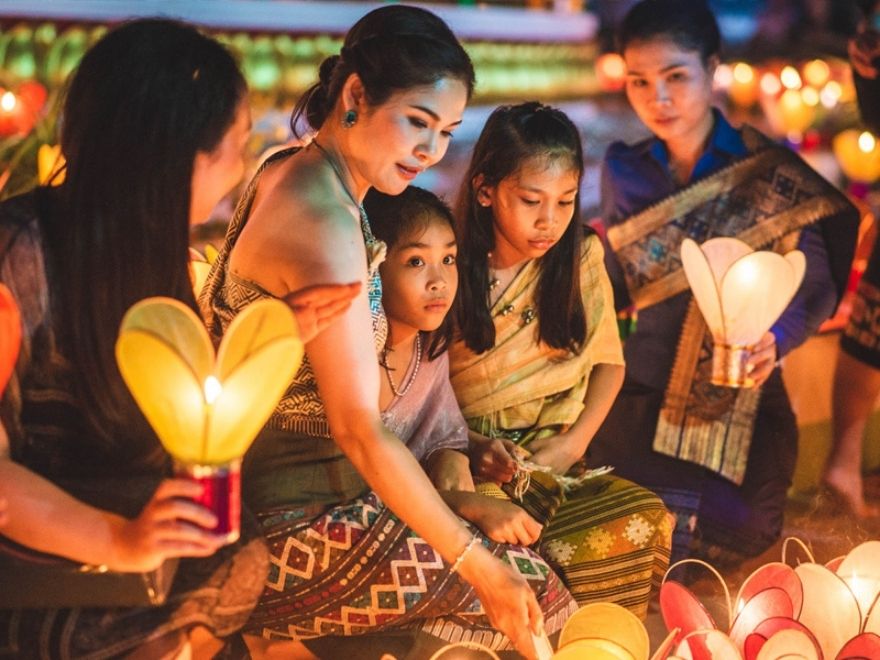
Later in the evening, riverside communities may release small illuminated boats, known as heua fai, onto local rivers. These offerings are commonly made from natural materials and decorated with flowers, incense and candles. Some may also contain sticky rice, coins or other symbolic items.
Before releasing them, families light the candles and make prayers or wishes. The boats express gratitude for water, carry hopes for future well-being and symbolically send away misfortune from the past year.
Local customs vary according to geography. Communities far from a river may instead display model boats made from banana stems or light candles outside their homes. Larger boats may represent temples, villages or community groups, while families prepare smaller versions of their own.
In Luang Prabang, the large public procession is listed separately as part of Boun Lai Heua Fai. Beyond the temple rituals, parts of the old town may take on a livelier atmosphere, with families gathering along the streets and music, food stalls and other community activities organized locally.
From Our Experience in Luang Prabang:
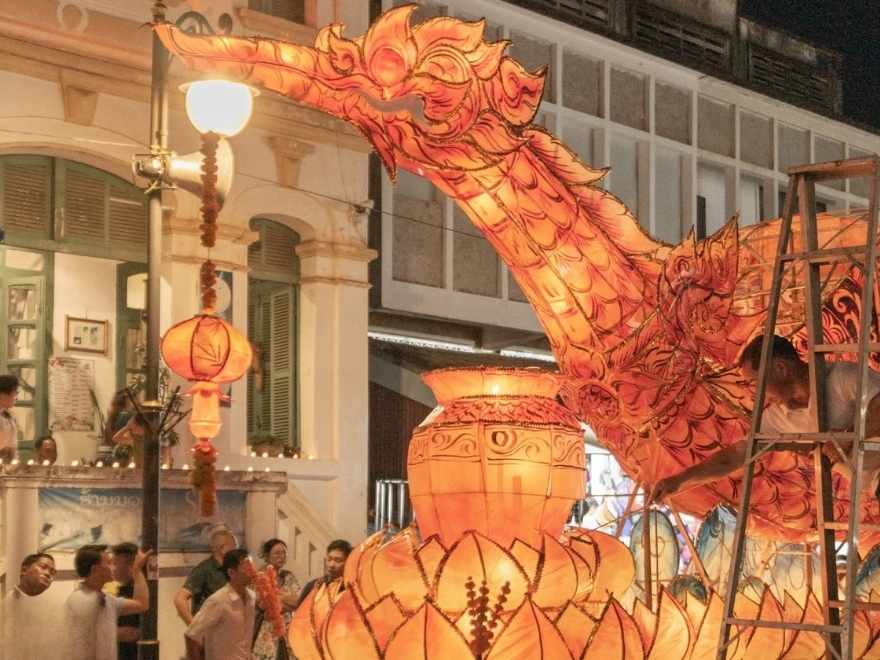
During the 2025 celebrations, our team observed the old town changing hour by hour. Novice monks arranged flower-shaped lights across temple courtyards, while families gathered as the candles were lit. By the following night, these smaller temple displays gave way to the giant light boats of Boun Lai Heua Fai.
Source: Kampá Tour team observations and photographs, Luang Prabang, 2025.
Luang Prabang or Vientiane: Where Should Travelers Experience the Festival?
Both cities celebrate Boun Awk Phansa, but they offer different experiences. Luang Prabang is better known for its illuminated boats and historic setting, while Vientiane offers a broader, more urban celebration along the Mekong.
Luang Prabang
Vientiane
Best for
Light boats, heritage atmosphere and photography
Temple life, riverside gatherings and urban celebrations
Main character
Compact and visually distinctive
Larger and more spread out
Atmosphere
Historic and atmospheric
Lively and city-based
Ease for first-time visitors
Easier to explore on foot
Requires more local planning
Main consideration
Crowds and high accommodation demand
Distances and locally varying programmes
Choose Luang Prabang If You Want...
Luang Prabang is the stronger choice for travelers who want to make the festival a highlight of their trip. Its compact old town brings temples, community decorations and the Boun Lai Heua Fai light boat celebrations into a walkable heritage setting. It is particularly appealing for first-time visitors and photographers.
Choose Vientiane If You Want...
Vientiane offers a more urban and locally focused experience, with religious activities at temples and public gatherings along the Mekong. It may also be combined with boat racing and other city events when these are confirmed in the local programme. As activities can take place across different areas, some advance planning is useful. Travelers combining both cities can also review the best ways to travel from Vientiane to Luang Prabang.
For most first-time international travelers, Luang Prabang is the easier place to experience the festival. Its compact old town brings the temples, decorations and light boat celebrations within a relatively small area. Vientiane is a good alternative for travelers already visiting the capital or looking for a larger urban celebration. Both cities can also be combined with other highlights in our guide to the best places to visit in Laos.
How to Experience Boun Lai Heua Fai in Luang Prabang?
Boun Lai Heua Fai is best experienced as more than a single evening procession. In the days before the main event, lanterns and candles begin appearing around temples, homes and businesses, while communities prepare their illuminated boats.
Before the Main Festival Evening
Spend some time walking through temple neighborhoods before the main celebration. Monks, novice monks, families and children may be seen arranging flower-shaped lights, decorating courtyards and preparing large community boats.
Some temples and preparation areas are open to visitors, but they remain active religious and working spaces. Observe quietly, avoid blocking entrances and ask permission before photographing people at close range.
Where the Procession Usually Takes Place?
The detailed 2026 procession route had not been announced at the time of writing. Based on the route documented by Luang Prabang Culture and in recent editions, the fire boats assemble on the main road near the fountain before moving through the old town.
The procession passes the former Royal Palace and continues toward Wat Xieng Thong. From there, the boats are carried down the main staircase behind the temple and launched onto the Mekong River.
In recent editions, the Royal Palace area, the main street, the approaches to Wat Xieng Thong and the river access points were among the busiest sections.
When to Arrive?
Based on our team’s experience, reaching the heritage center by late afternoon is the safest approach. Access becomes more difficult as residents and visitors gather along the main streets.
Families and older travelers should choose one comfortable viewing area rather than trying to follow the entire procession. Photographers should select a position before darkness falls, as movement becomes difficult once the large boats enter the main street.
Seeing both the street procession and the river launch may not always be practical. It is usually better to choose one as your priority.
Respectfully observe merit-making at a local temple
Late morning
Explore the old town at a relaxed pace
Afternoon
Visit decorated temples and check the latest programme
Late afternoon
Eat early and reach your chosen viewing area
Evening
Watch either the main procession or the ceremonies near Wat Xieng Thong and the Mekong
Festival Etiquette for Foreign Visitors
Boun Awk Phansa is an important religious occasion. Visitors are welcome to observe, but should follow local customs and avoid disturbing worshippers.
At Temples
Cover your shoulders and knees, remove your shoes where required and keep your voice low. Follow instructions from monks or temple staff, and avoid standing between worshippers and the altar.
During Alms-Giving and Religious Ceremonies
Observe from a respectful distance and participate only when invited or guided by a local person. Do not interrupt monks, worshippers or prayers for a photo.
Photography Etiquette
Ask permission before taking close portraits, especially of monks and children. Avoid flash during prayers and candle rituals. Do not block processions or move offerings and decorations for a better photograph.
River and Environmental Respect
Use only offerings accepted by the local community and avoid plastic or non-biodegradable materials. Do not release anything into the river simply because other visitors are doing so. Ask a guide or local host before taking part.
Practical Travel Tips for the Festival Period
Book Accommodation Early
Accommodation demand usually rises during the festival, especially in central Luang Prabang.
Staying near the heritage center reduces the need for evening transport.
Book as early as practical, but avoid relying on a fixed lead time unless current availability has been checked.
Expect Walking and Traffic Restrictions
Some central streets may be closed or difficult to access.
Drivers may need to stop outside the main celebration area.
Wear comfortable walking shoes.
Confirm pickup and drop-off points with your hotel or driver in advance.
Check Opening Hours Locally
Banks, government offices and some services may follow holiday schedules.
Restaurants, shops and attractions may adjust their opening hours.
Check locally during the holiday.
Prepare for Crowds and Evening Conditions
Carry only essential belongings.
Keep phones, cameras and valuables secure.
Keep children close in busy areas.
Bring drinking water where appropriate.
Check the latest weather forecast and read our guide to the best time to visit Laos before preparing for heat, humidity or rain.
Confirm the Final Programme Before Arrival
Religious dates are often known well in advance, but procession routes and event times may be announced later.
Confirm the latest details with:
The local tourism office
Your hotel
A trusted local guide or tour operator
Planning a longer journey around the festival? See how Luang Prabang and Vientiane can fit into a one-week Laos itinerary.
Are Awk Phansa, Ok Phansa and Ork Phansa the Same Festival?
Yes. They are different English spellings of the same Lao festival. This article uses Boun Awk Phansa, but you may also see Boun Ok Phansa or Boun Ork Phansa.
Is Boun Awk Phansa a Public Holiday in Laos?
Yes. Boun Awk Phansa is listed as a national public holiday in Laos by Office Holidays. Banks, government offices and some businesses may change their opening hours.
Are Restaurants and Bars Open During Boun Awk Phansa?
Opening hours vary during the holiday. Check directly with your hotel, restaurant or bar before visiting. Do not assume that alcohol rules in Thailand also apply in Laos.
Is Boun Awk Phansa Suitable for Children?
Yes. Families can enjoy the temple decorations and cultural activities. However, the evening procession can become crowded. Arrive early, choose one viewing place and avoid staying until late with very young children.
Is Boun Lai Heua Fai the Same as Loy Krathong?
No. Both festivals use candles, water and floating offerings, but they belong to different cultural traditions. Boun Lai Heua Fai should not simply be called “the Lao Loy Krathong.”
Planning your trip?
Save time and get expert advice for FREE!
✅ 15 years of local experience
✅ Save up to 40 hours of planning
✅ Travel stress-free from start to finish
Book your free consultation today!





 Our team
 Our team
 Our team
 Our team



 Other
Other Add us as a preferred source