Hanoi to Cao Bang: Bus, Car or Motorbike? Compare Every Travel Option
Cao Bang doesn't get the same crowds as Sapa or the same buzz as Ha Giang, and that's exactly the point. It sits close to the Chinese border, roughly 280 to 300 km from Hanoi, and getting there takes real commitment – there's no airport, no railway, and the road winds through some of the most mountainous terrain in northern Vietnam.
This guide breaks down every way to make the trip, current 2026 prices and travel times, and how Cao Bang compares to Ha Giang if you're trying to decide between the two for your northern Vietnam itinerary.
Written by Trang Nguyen (Local Expert)
Updated on Aug 05, 2026
0 comment
Trang Nguyen has lived in Vietnam for nearly three decades and spent much of her life exploring Asia. She has joined numerous field trips, stayed with ethnic communities in the northern mountains, and gained deep insights into local cultures and landscapes. Her writing reflects an honest passion for authentic travel and meaningful connections. If you have any questions about her journeys, feel free to reach out and leave a comment!
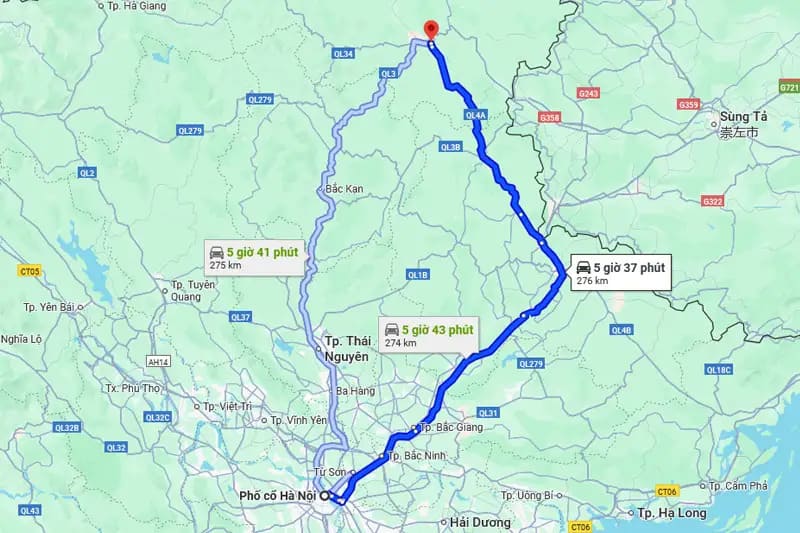
Cao Bang City sits about 280–300 km (175–186 miles) north of Hanoi, close to the border with China. There's no train connection and no airport in Cao Bang province – the road is the only way in. Most routes follow Highway QL3, a paved, well-maintained road passing through Thai Nguyen and Bac Kan provinces, before the terrain turns mountainous in Cao Bang's final stretch.
Because of that mountainous final leg, travel time varies more than the distance alone suggests – a fast limousine van can make it in around 6 hours, while a standard sleeper bus with multiple stops can take closer to 8 or 9. If you have a spare day before heading north, it's worth spending it exploring some of the things to do in Hanoi first, since most buses depart in the evening anyway.
Cao Bang sits close to the Chinese border, about 280–300 km north of Hanoi
4 Ways to Travel from Hanoi to Cao Bang
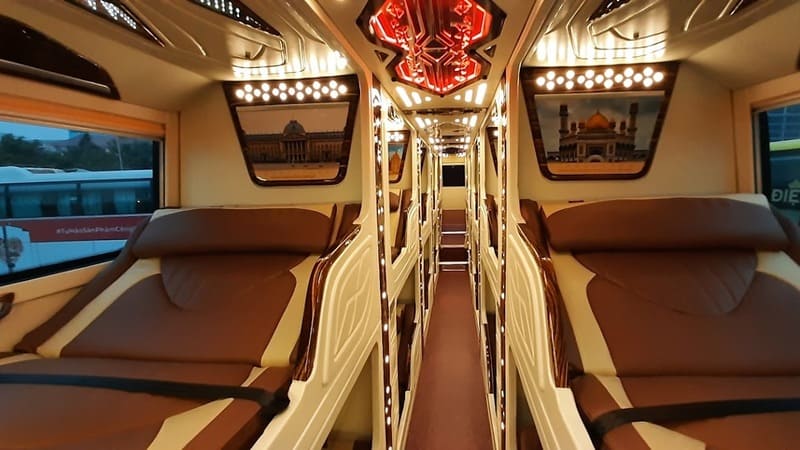
Sleeper Bus (Best for Most Travelers)
This is the standard way most visitors reach Cao Bang. Buses typically leave Hanoi between 8:00 PM and 10:00 PM and arrive early the next morning, usually between 4:00 AM and 6:00 AM, which means you skip a night of accommodation entirely.
Price: ~$12–18 USD (300,000–450,000 VND) one-way
Time: 7–9 hours overnight
Best for: Budget travelers comfortable with an early arrival
Standard sleeper buses have tightly packed reclining beds with limited privacy; VIP sleeper or private-cabin buses cost a bit more but offer wider berths, curtains, and fewer passengers per vehicle. Multiple operators run this route daily from My Dinh and Giap Bat bus stations, and tickets can be compared and booked through platforms like Vexere.
Overnight sleeper buses save you a night of accommodation before starting your first day in Cao Bang
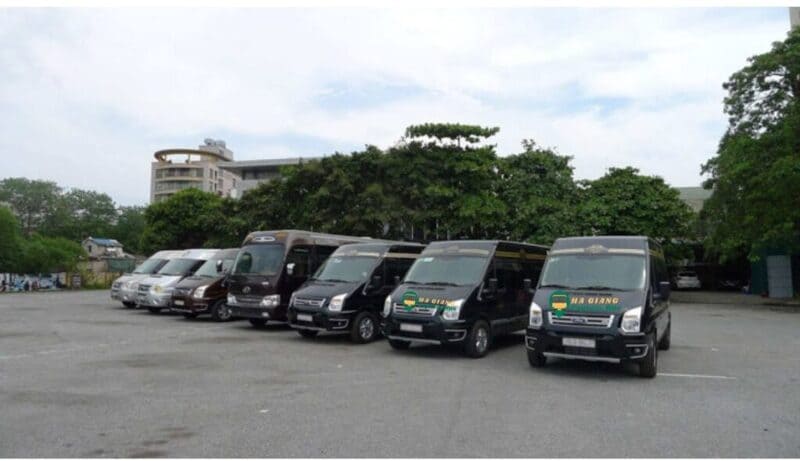
Limousine Van (Faster, More Comfortable)
Limousine vans run the same route with fewer, roomier seats, and tend to be the fastest daytime option since they make fewer stops than standard buses.
Price: ~$18–25 USD (450,000–600,000 VND) one-way
Time: 6–7 hours
Best for: Travelers who want a daytime departure without the price of a private car
Several companies offer free hotel pickup within the Old Quarter, which is worth confirming when you book – it saves an early-morning taxi to the bus station.
Private Car or Taxi (Maximum Flexibility)
A private car makes the most sense if you want to stop along the way, travel with a group, or head straight to Ban Gioc Waterfall rather than Cao Bang City itself.
Price: ~$120–350 USD per vehicle, one-way, depending on car size and exact destination
Time: ~6–7 hours to Cao Bang City; longer to Ban Gioc Waterfall directly
Best for: Families, small groups, or travelers heading straight to the waterfall on a tight schedule
Many operators can arrange a private transfer as part of a full Cao Bang or northern Vietnam loop itinerary, which usually works out cheaper than booking transport and a guide separately.
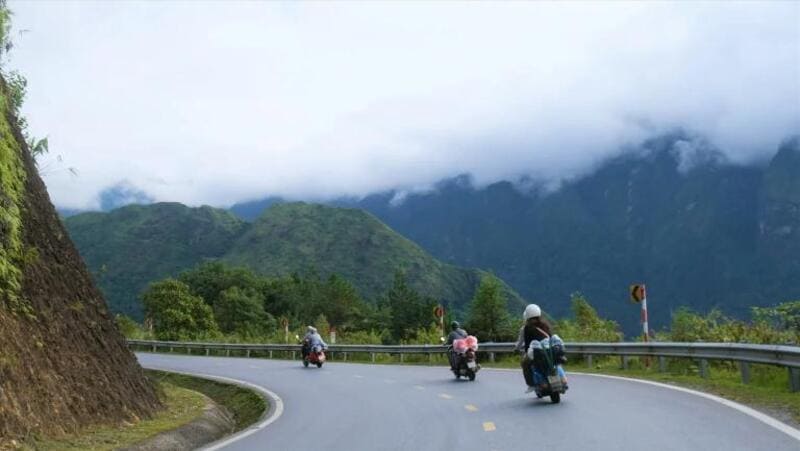
Self-Drive Motorbike (Experienced Riders Only)
Some riders take on the whole Hanoi–Cao Bang stretch themselves, but it's worth knowing that road conditions in parts of the province aren't as consistent as the well-paved highway leading up to it.
Price: Motorbike rental from ~$8–12/day, plus fuel
Time: 8–10 hours of riding
Best for: Confident, experienced riders comfortable with mountain roads and variable surface conditions
Most visitors instead take the overnight bus to Cao Bang City and rent a motorbike in Vietnam locally to ride the Cao Bang Loop once they've arrived, rather than covering the highway leg on two wheels.
Mode
Price (USD)
Time
Best For
Sleeper Bus
$12–18
7–9 hrs
Budget travelers
Limousine Van
$18–25
6–7 hrs
Comfort, daytime departure
Private Car
$120–350/vehicle
6–7 hrs
Groups, families, direct to Ban Gioc
Self-Drive Motorbike
$8–12/day + fuel
8–10 hrs
Experienced riders
Is There a Train to Cao Bang?
No. Cao Bang province has no railway station and no airport, so road transport is the only realistic way to get there. Some guides mention combining a train to Lang Son with a bus transfer, but this route takes about as long as a direct bus and adds an extra connection – it's rarely worth it unless you're already passing through Lang Son for another reason.
Good to know: a growing number of travelers skip the either/or decision entirely and combine Hanoi, Ha Giang, and Cao Bang into one continuous northern loop rather than treating them as separate trips.
Both provinces sit roughly the same distance from Hanoi and share a similar karst landscape, so travelers often weigh one against the other when planning a limited number of days in the north. If you're still deciding between the two, here's how they stack up.
Cao Bang
Ha Giang
Distance from Hanoi
~280–300 km
~300 km
Typical travel time
6–9 hours
6.5–8 hours
Main draw
Ban Gioc Waterfall, Nguom Ngao Cave, Thang Hen Lake
Ma Pi Leng Pass, Dong Van Karst Plateau, motorbike loop
UNESCO status
Non Nuoc Cao Bang UNESCO Global Geopark (2018)
Dong Van Karst Plateau UNESCO Global Geopark (2010)
In short: Cao Bang suits travelers who want a quieter, waterfall-and-cave-centered trip without committing to several days of motorbiking, while Ha Giang is the better pick if the Ha Giang Loop itself – the riding, not just the destination – is what you're after.
Thẻ tour 5585, 4856, 4822, 9916
What You're Traveling Toward
The long ride up from Hanoi is buying you access to the Non Nuoc Cao Bang UNESCO Global Geopark, recognized by UNESCO in 2018 as Vietnam's second global geopark after Dong Van. At its center is Ban Gioc Waterfall, one of the largest border waterfalls in the world, cascading across the Quay Son River on the boundary between Vietnam and China.
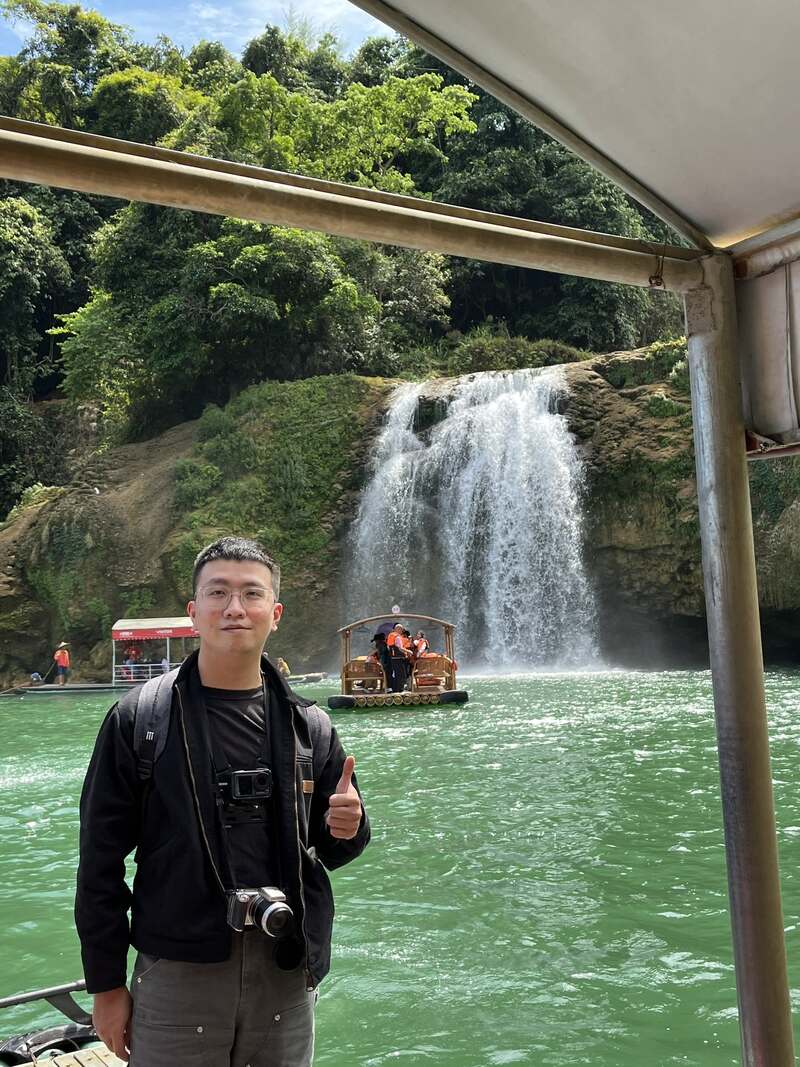
Rafting at Ban Gioc Waterfall is a must-do
Nearby, Nguom Ngao Cave and the peaceful rice fields of Phong Nam Valley round out the natural side of the trip, while history-minded travelers often add Pac Bo Cave, tied to Vietnam's revolutionary history, to their route. For something a little different, the Ba Quang burning grass hill has become a favorite stop for its striking golden-brown seasonal colors.
The region is also home to Tay and Nung ethnic communities, alongside Hmong villages in the more remote districts.
Practical Tips for the Journey
Book ahead during autumn and around Vietnamese holidays, when Ban Gioc's rice harvest season and Tet travel both push demand up.
Confirm your exact drop-off point. Some buses stop at Cao Bang City's bus station, which is still roughly an hour's drive from Ban Gioc Waterfall itself.
Pack for cooler temperatures. Cao Bang's higher elevations, especially around Phia Oac, get noticeably colder than Hanoi, particularly from November to February.
Carry small VND bills. Cards are rarely accepted outside hotels and larger restaurants in Cao Bang City.
Save room for the local food. Once you arrive, it's worth planning around a few regional specialties – see what to eat in Cao Bang for recommendations.
If self-driving, check road conditions beforehand. Some sections beyond the main highway are narrower and less maintained than the Ha Giang Loop route.
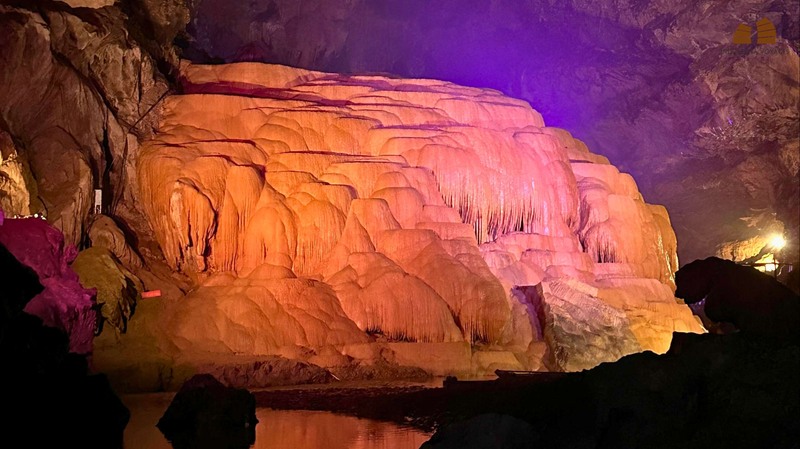
Nguom Ngao Cave is one of several stops worth building into a Cao Bang itinerary
Frequently Asked Questions
How long does it take to get from Hanoi to Cao Bang? Around 6 to 9 hours by road, depending on whether you take a limousine van, sleeper bus, or private car, and how many stops the journey includes.
Is there a train or flight to Cao Bang? No. Cao Bang province has no airport and no railway station, so road transport is the only option.
What's the cheapest way to travel from Hanoi to Cao Bang? A standard sleeper bus, typically $12–18 USD one-way, is the most affordable and most commonly used option.
Should I visit Cao Bang or Ha Giang? Cao Bang suits a quieter, waterfall-focused trip over 2–3 days; Ha Giang is better if a multi-day motorbike loop is the main goal. Many travelers now combine both into a single northern Vietnam route.
Can I go straight to Ban Gioc Waterfall instead of Cao Bang City? Yes – private cars and some tour operators can take you directly to the waterfall, though it adds travel time compared with stopping in Cao Bang City first.
Whichever transport you pick, the journey up is the part to get through efficiently, not linger over – the reason to make the trip is what's waiting at the border: a waterfall, a cave system, and a province that still sees a fraction of the visitors Sapa or Ha Giang do.
✈️Explore other attractions in the north of Vietnam:
Planning your trip?
Save time and get expert advice for FREE!
✅ 15 years of local experience
✅ Save up to 40 hours of planning
✅ Travel stress-free from start to finish
Book your free consultation today!
















 Our team
 Our team
 Our team
 Our team

.jpg)





 Other
Other Add us as a preferred source