TL;DR: Hanoi in February
February marks the transition from winter to early spring. Temperatures generally rise toward the end of the month, although damp days and cold fronts are still possible.
-
Typical weather: Average daytime highs are around 22°C (72°F), with nighttime lows near 16°C (61°F).
-
Rain: Total rainfall is low. Drizzle is usually light or intermittent rather than a continuous downpour.
-
What it really feels like: Humidity and wind can make Hanoi feel colder than the thermometer suggests.
-
What to pack: Bring layers, closed shoes and a wind-resistant jacket. Keep one warmer layer for evenings, motorbike rides and cruises.
-
Tet planning: Tourist areas usually retain some restaurants and services, but transport and food choices may be reduced.
-
Nearby trips: Ninh Binh and Ha Long Bay remain worth visiting. Sapa and Ha Giang require warmer clothing and more flexibility.
Do not pack based only on the phrase “Hanoi in February.” Check the forecast for the exact week of your visit.
What Is Hanoi’s Weather Like in February?
February falls between Hanoi’s coldest winter period and the beginning of spring. Afternoons are often mild enough for sightseeing, while mornings and evenings usually require an extra layer.
| Weather factor |
Typical February conditions |
What it means for travelers |
| Average daytime high |
Around 22°C (72°F) |
Many afternoons are comfortable for walking |
| Average nighttime low |
Around 16°C (61°F) |
A sweater or jacket is usually useful |
| Mean temperature |
Around 19°C (66°F) |
February is generally milder than January |
| Monthly rainfall |
Around 22 mm (0.85 in) |
Heavy or prolonged rain is uncommon |
| Relative humidity |
Around 76% |
Cloudy days may feel damp and cooler |
| Daylight |
Around 11¼ to 11¾ hours |
Outdoor sightseeing becomes slightly easier later in the month |
Low monthly rainfall does not guarantee blue skies.
Light drizzle may appear on and off without developing into heavy rain. A grey forecast also does not mean it will rain all day or that a walking tour must be canceled. A compact umbrella or light rain jacket is normally enough for city sightseeing.
Mist, low cloud and haze can reduce visibility, particularly in the morning.
Temperatures generally rise during the month. Average daytime highs increase from about 20°C (68°F) in early February to around 22°C (72°F) near the end. Nighttime lows rise from roughly 14°C (58°F) to 17°C (62°F).
A northeast cold front can temporarily bring cooler, damper and windier conditions.
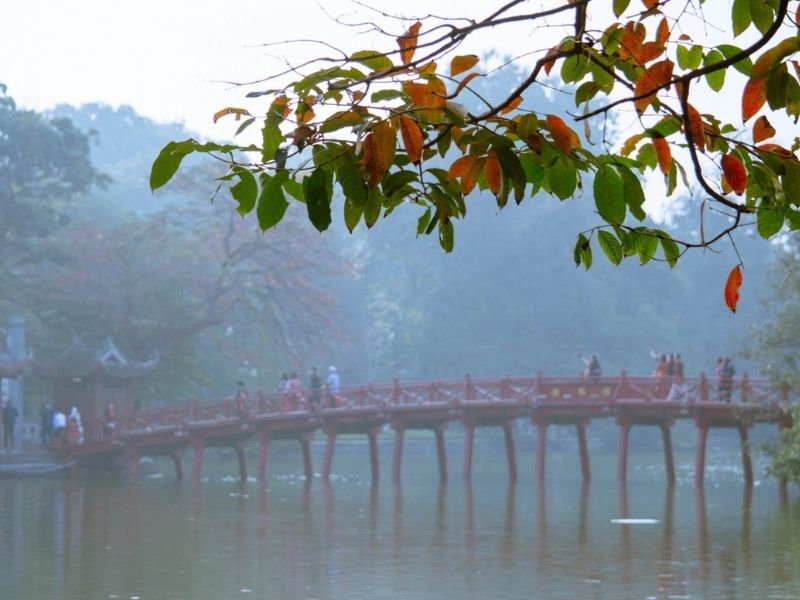
Early February vs Late February
Early February usually feels more winter-like, with cooler mornings and a greater chance of damp or windy spells. Warmer clothing should remain easy to reach, especially for early starts and evenings.
Late February is generally milder. Pleasant afternoons become more frequent, and Hanoi receives around 30 minutes more daylight than at the beginning of the month. Lighter, flexible layers often become more useful.
Light drizzle may become slightly more common later in February, although a cold front can still arrive at any point. These are seasonal tendencies rather than a forecast for specific travel dates.
Tet may fall in late January or February, depending on the year. Check the calendar for your travel year before applying any advice about transport, restaurant openings or holiday services. For a broader picture of conditions across the country, see our guide to Vietnam in February.
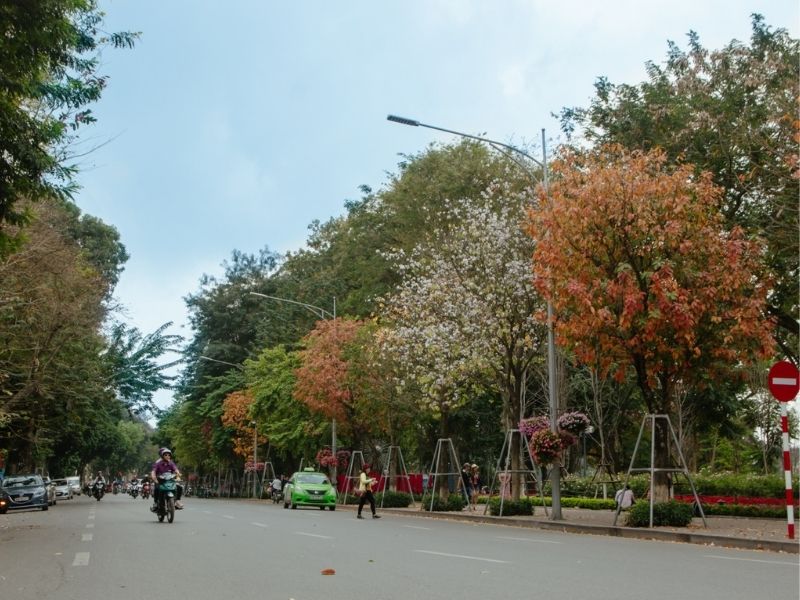
- Sources and methodology: Average temperature, rainfall and humidity figures are based on reports collected at Ha Noi Airport between 2012 and 2021, published by Time and Date. Daily temperature, rainfall probability and daylight trends are cross-checked with WeatherSpark. Figures have been rounded for practical trip planning.
Is February a Good Time to Visit Hanoi?
Yes. February is a good month for travelers who prefer mild weather to the heat and humidity of summer.
Walking is usually less tiring, and it is easy to combine temples, museums, historic neighborhoods, cafés and local food within the same day.
The trade-off is less predictable sunshine. Grey skies, damp air and brief cold spells are possible, while Tet may affect some businesses and travel services.
February suits travelers who enjoy:
- Walking without intense summer heat
- Exploring temples and historic neighborhoods
- Eating hot local dishes and spending time in cafés
- A slower trip focused on culture and everyday life
- Seeing Hanoi around the Lunar New Year period
February may disappoint travelers who expect:
- Blue skies every day
- Stable temperatures throughout the trip
- Summer clothing from morning to night
- Consistently clear views in Ha Long Bay or the mountains
- Every family-run restaurant to operate normally during Tet
Cloudy weather does not necessarily make sightseeing difficult. Many visitors find overcast conditions more comfortable for walking than strong sunshine, although visibility and photography are less predictable.
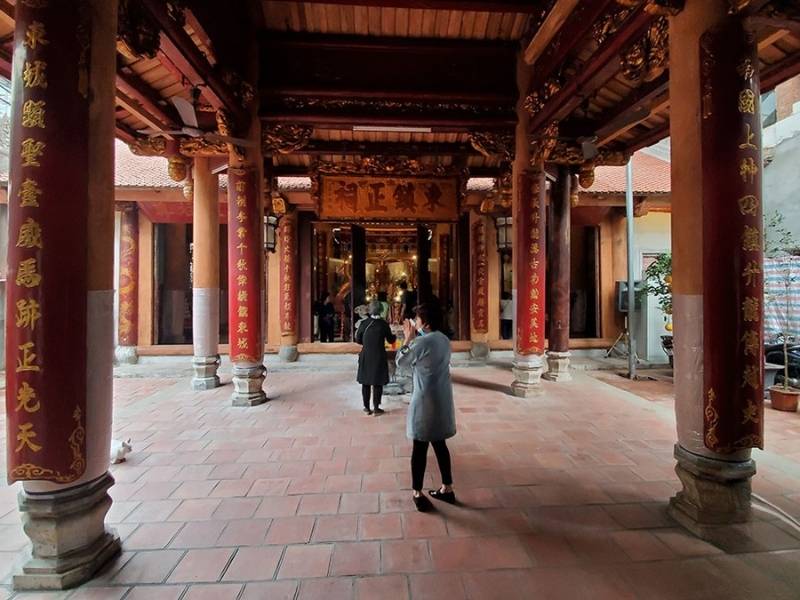
Which Services Change During Tet?
Hanoi does not completely close during Tet, but the experience depends greatly on where you stay and which days you visit.
The Hanoi Old Quarter usually retains more restaurants, cafés, convenience stores and visitor-oriented services. Residential neighborhoods farther from the center may have far fewer options.
The greatest disruption normally occurs around Lunar New Year’s Eve and during the first one to three days of the new year. Some businesses reopen quickly, while others remain closed for several more days.
Expect:
- Fewer Grab and taxi drivers
- Longer waiting times
- Possible holiday surcharges
- Reduced restaurant menus
- Busy intercity transport before and after Tet
- Changes to tour and attraction schedules
Staying near the Old Quarter makes it easier to find food and basic services.
Confirm important restaurants, airport transfers and excursions directly instead of relying only on their usual online opening hours.
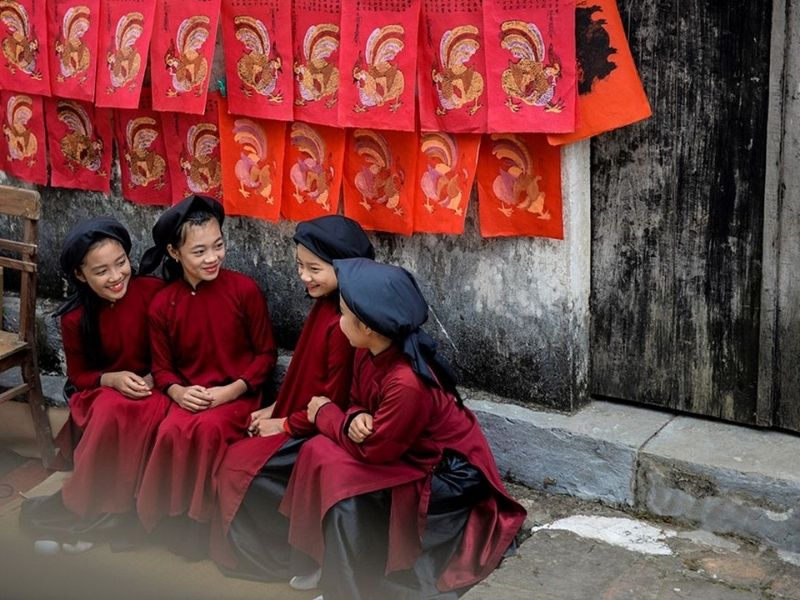
What Does Hanoi Actually Feel Like in February?
Temperature alone does not fully explain February weather in Hanoi.
On a mild and sunny day, the morning may feel cool while the afternoon becomes pleasant enough for long walks. Cloudy but dry weather is usually comfortable for a mix of indoor and outdoor sightseeing.
Grey, damp days often feel colder than the thermometer suggests. Light drizzle may hang in the air, and reduced visibility can make the city look more wintry. When a northeast cold front arrives, wind can make conditions noticeably colder and a warm outer layer becomes much more important.
Travelers visiting only one or two weeks apart may therefore give very different descriptions of the weather.
One visitor may experience afternoons of 24–25°C (75–77°F) and need only a T-shirt with a light jacket. Another may arrive during a cold front and need thermal layers, a scarf and warmer outerwear.
Your plans also matter. Walking through the sheltered lanes of the Old Quarter may feel comfortable, while a motorbike ride, an early-morning market visit or time on an open cruise deck can feel much colder.
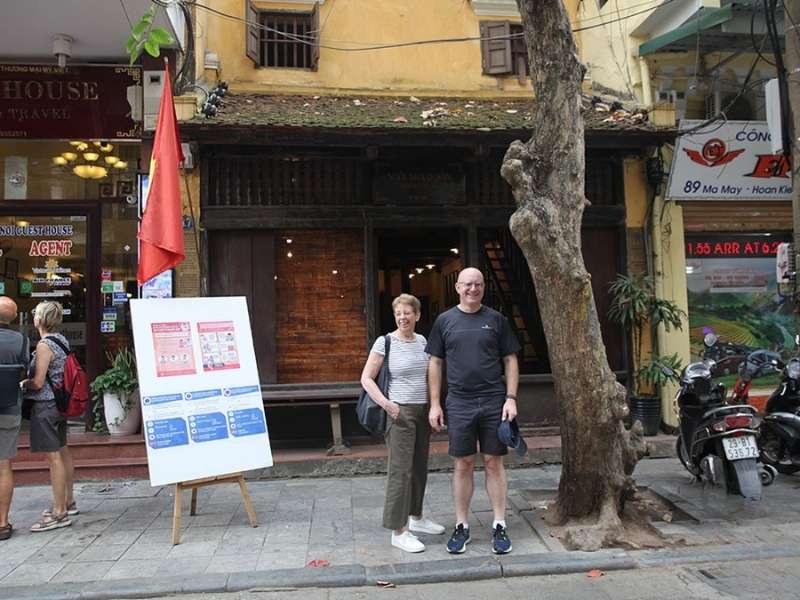
Why Can Hanoi Feel Cold Indoors?
Stepping indoors does not always mean entering a warm space.
Central heating is uncommon in smaller hotels, guesthouses, cafés and older buildings. Tiled floors, limited insulation and damp air can leave rooms feeling chilly, particularly in the morning and at night.
Check whether your room’s air conditioner has a heating mode. Bring a sweater comfortable enough to wear indoors.
Air Quality, Mist and Haze
A grey February morning is not always caused by mist alone.
Cloud, drizzle and air pollution can all reduce visibility, and it can be difficult to distinguish between them simply by looking outside.
Travelers who are sensitive to pollution should check Hanoi’s live air quality and carry a close-fitting N95 or equivalent mask.
What to Wear and Pack for Hanoi in February
The most reliable approach is to pack several layers rather than depend on one heavy winter coat.
A cool morning may turn into a mild afternoon before temperatures fall again in the evening. Conditions can also differ greatly between weeks.
| Short-term forecast |
What to wear |
| 22–26°C (72–79°F), sunny |
T-shirt or light long sleeves, with a thin jacket for the evening |
| 17–22°C (63–72°F), cloudy |
Sweater or light jacket, long pants and closed shoes |
| 12–17°C (54–63°F), damp or windy |
Warm wind-resistant jacket, scarf and warm socks |
| Below 12°C (54°F) |
Thermal base layer, packable puffer and thicker socks |
These are practical guidelines rather than fixed rules.
Some travelers remain comfortable in a T-shirt at 18°C (64°F), while others need a sweater and jacket. Several light layers are more useful than dressing only for the monthly average.
For Motorbike Rides and Ha Long Bay Cruises
Continuous wind exposure can make the air feel much colder than it does while walking in central Hanoi.
Bring:
- A wind-resistant outer layer
- A scarf or neck covering
- Closed shoes and comfortable socks
- Light gloves when colder weather is forecast
Sneakers or Sandals?
Comfortable sneakers or closed walking shoes are more practical than sandals in February.
Pavements, temple grounds and boat steps may be damp. Closed shoes also provide more warmth during early mornings, windy days and trips outside Hanoi.
Sandals may be useful during an unusually warm spell, but they should not be your only footwear.
Small Items Worth Packing
- Compact umbrella or lightweight rain jacket
- Lip balm and moisturizer
- N95 or equivalent mask
- Comfortable walking shoes
- Packable jacket
- A sweater suitable for wearing indoors
Check the forecast seven to ten days before departure and review it again as your travel date approaches.
Historical climate data explains the season, but it should not be treated as your final packing list.
What to Do in Hanoi in February
February works best when you avoid an overly rigid itinerary.
Choose outdoor activities according to the short-term forecast, and keep at least one museum, café or indoor cultural experience available as a backup.
| Daily forecast |
How to plan your day |
| Bright and above 22°C (72°F) |
Prioritize walking, West Lake, temples and historic neighborhoods |
| 17–22°C (63–72°F), cloudy |
Combine one outdoor area with a museum or café |
| Light drizzle |
Break outdoor sightseeing into shorter sections |
| Cold, damp and windy |
Focus on museums, food and indoor cultural activities |
Walk Around West Lake, Truc Bach and Ba Dinh
Mild February afternoons are well suited to slower neighborhood walks.
West Lake offers open views and a mix of religious sites, cafés and residential streets. Truc Bach is more compact and easy to combine with local food, while Ba Dinh brings together historic landmarks, tree-lined roads and quieter neighborhoods.
On colder or windier days, choose shorter walking routes rather than trying to remain outdoors continuously.
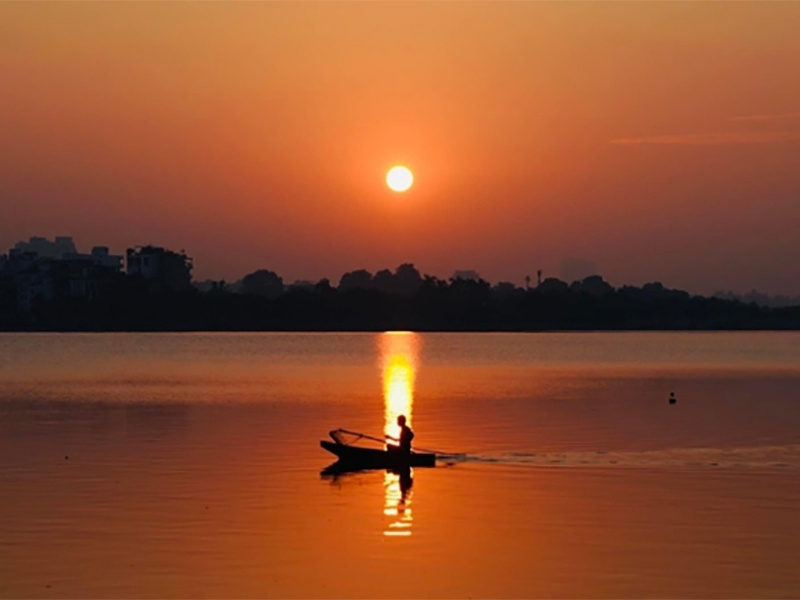
Visit Temples in the Early-Spring Atmosphere
February is closely associated with the beginning of spring in northern Vietnam.
Tran Quoc Pagoda, Quan Thanh Temple and Tay Ho Palace are especially atmospheric during this period. They may also become crowded around Tet and on important lunar-calendar days.
Visit early if you prefer a quieter experience, and dress respectfully.
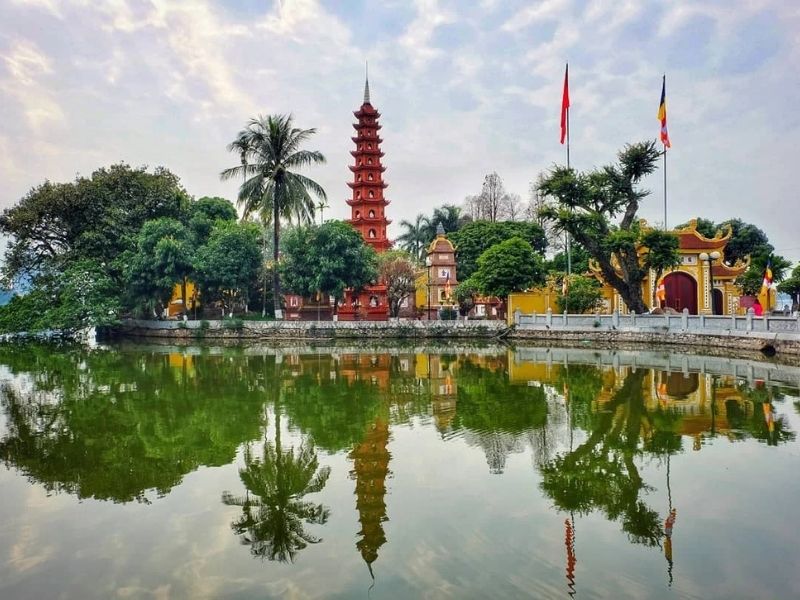
Make the Most of Cloudy or Drizzly Days
Grey skies do not mean the day is lost.
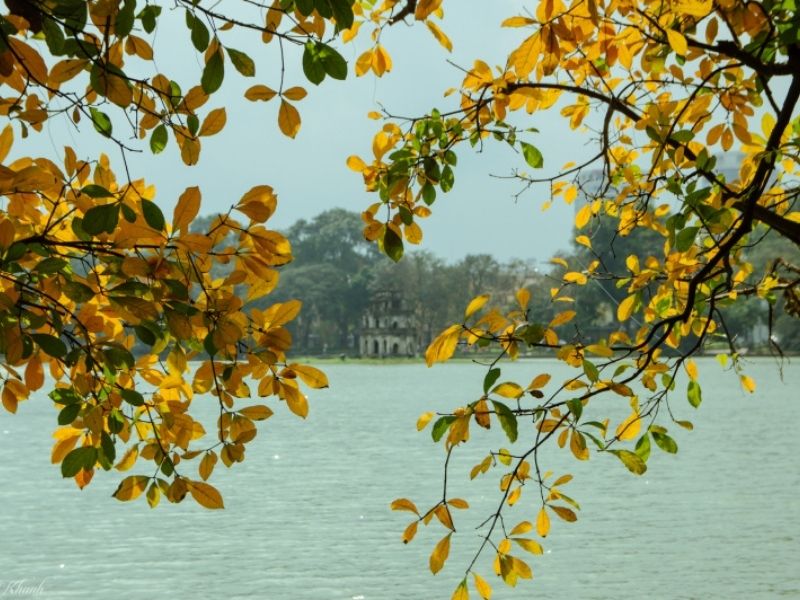
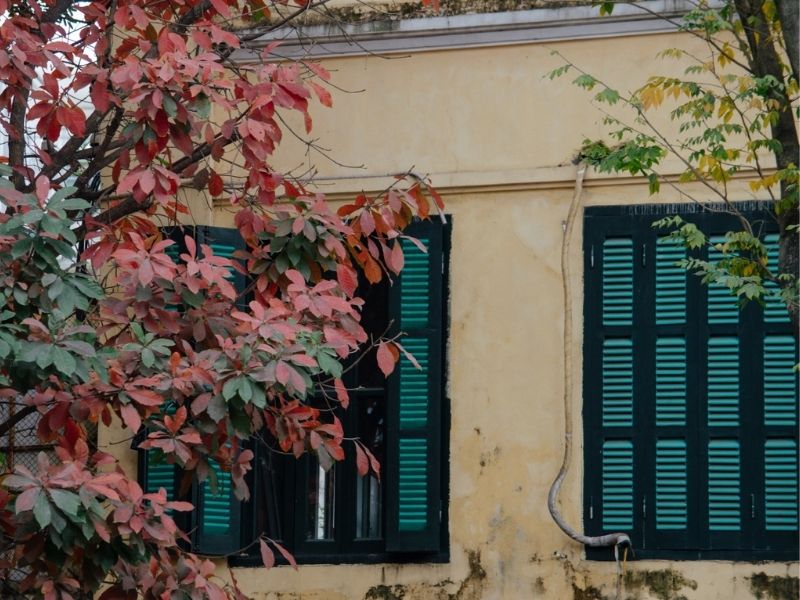
Mist and light drizzle can give Hoan Kiem Lake, West Lake, old temples and historic streets a quieter mood. Instead of focusing only on blue-sky photographs, pay attention to street life, wet trees, steaming food stalls and the city’s early-spring atmosphere.
If drizzle continues, combine a short walk with Hoa Lo Prison, the Vietnamese Women’s Museum or one of the places featured in our guide to the best museums in Hanoi.
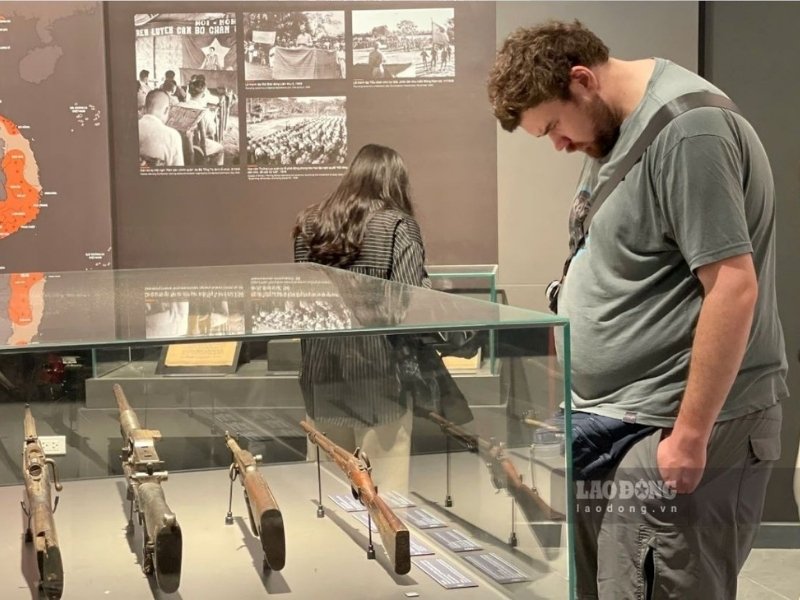
A water puppet performance or one of Hanoi’s coffee, cooking and craft workshops is another practical option when the weather is unsuitable for a long walk.
Try Hanoi’s Cold-Weather Dishes
February remains cool enough for hot local food to become one of the highlights of the trip.
Alongside pho and bun thang, try bánh đúc nóng, pork rib congee, ốc nóng served with dipping sauce, bánh trôi tàu or a hotpot dinner.

These meals are especially satisfying after a damp afternoon or a windy evening. Our guide to what to eat in Hanoi includes more local dishes and practical suggestions.
A cloudy afternoon is also a good reason to slow down and explore Hanoi’s coffee culture rather than trying to complete an inflexible landmark checklist.
Experience Hanoi Around Tet
When Tet falls close to your travel dates, Hanoi takes on a different rhythm.
Before Tet
The city becomes busier and more colorful.
Hang Ma Street fills with lanterns, red decorations and Lunar New Year items. Quang Ba Flower Market becomes lively with peach blossoms, kumquat trees and seasonal flowers, particularly early in the morning.
You may also visit the peach blossom gardens of Nhat Tan or the kumquat-growing area of Tu Lien. Flowering periods and visitor access vary each year, so check current conditions first.
Traffic is usually heavier during the preparation period. Choose one or two nearby areas for the same half-day rather than crossing the city repeatedly.
During Tet
Some residential neighborhoods become quiet as people return to their hometowns. Meanwhile, Hoan Kiem Lake, temples and popular photography locations may remain busy with families wearing ao dai, visiting religious sites and enjoying the holiday.
This is a good time to walk through the central districts and observe New Year traditions, but avoid building the day around too many specific restaurants or shops.
After Tet
Hanoi gradually returns to its usual rhythm.
Restaurants and services reopen according to their own schedules, while peach blossoms, kumquat trees and Tet decorations often remain visible for several days.
This period can be particularly pleasant for exploring Truc Bach, Ba Dinh or West Lake without the intense pre-holiday traffic.
Trips Beyond Hanoi in February
Trips from Hanoi remain possible throughout February, but wind, elevation, mist and longer periods outdoors can make nearby destinations feel colder than the capital.
Ninh Binh
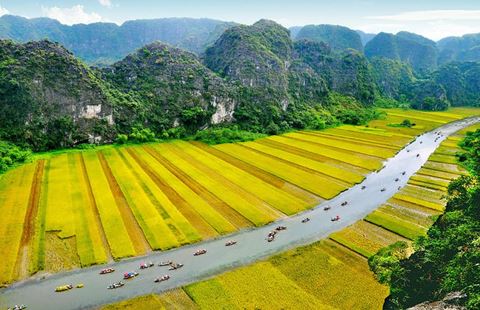
Ninh Binh is still worth the trip in February, even without the green rice fields many travelers expect.
Overcast skies may make photographs less colorful, but light mist can give the limestone cliffs and rivers a quieter, more atmospheric appearance.
The Trang An or Tam Coc boat ride often feels colder than sightseeing on land because travelers remain seated and exposed to damp air. Bring a warm, wind-resistant outer layer even if Hanoi feels mild.
February is outside the main rice-growing season. Visit for the limestone scenery, waterways and temples rather than expecting green or golden fields.
A day trip is possible, while an overnight stay gives you more flexibility if the morning weather is unsettled.
Avoid booking a non-refundable activity immediately after a day trip. Traffic may make your return time difficult to predict, particularly before and after Tet.
Ha Long Bay
A Ha Long Bay cruise is still possible in February, but the bay often feels colder and windier than Hanoi.
Mist, low cloud and grey skies may reduce visibility. The trip can still be beautiful, but clear panoramic views are not guaranteed.
A T-shirt and hoodie may be enough on a mild day. Colder or windier forecasts call for a warmer outer layer.
February is better for cruising and sightseeing than swimming.
Confirm cruise operations and transfers in advance if your dates overlap with Tet. For a day cruise, avoid booking an evening activity too close to your expected return time.
Sapa and Ha Giang
Sapa and Ha Giang are considerably colder than Hanoi in February, particularly at night and on higher mountain passes.
Mist and low cloud may hide the views for several hours. Treat these as flexible winter journeys rather than trips with guaranteed mountain scenery.
The rice terraces are not green or golden at this time of year.
Sapa can still be rewarding for its mountain atmosphere and local culture, but a day trip from Hanoi is too rushed. Two nights provide a more realistic experience. Our detailed guide to Sapa weather in February explains the temperatures, landscape and packing considerations in greater detail.
Ha Giang requires even more time and flexibility. Avoid planning long riding days under strict time pressure when the roads are misty or damp.
Travelers without solid mountain-riding experience should use an experienced local driver or easy rider instead of self-driving.
Does It Rain a Lot in Hanoi in February?
No. Total rainfall is relatively low.
Light drizzle, mist and damp streets are more common than prolonged heavy rain. Drizzle is often intermittent, so most sightseeing can continue with an umbrella or light rain jacket.
Is Hanoi Very Cold in February?
Most days are cool or mild rather than severely cold.
Average daytime highs are around 22°C (72°F), while nighttime lows are near 16°C (61°F). Damp air, wind and occasional cold fronts can make the city feel colder than those figures suggest.
Is February Warmer Than January?
Yes, on average.
Temperatures generally rise throughout February, and the days become longer. A cold front can still bring several chilly days.
Is Early or Late February Better?
Late February is generally milder and has more daylight.
However, drizzle may become slightly more common, and a cold front can arrive at any point. The Tet calendar may matter more than the small difference in average temperature.
Can I Wear Shorts in Hanoi in February?
Possibly, during a warm and sunny afternoon.
Long pants and a light jacket are safer for mornings, evenings and cloudy days.
What Remains Open During Tet?
The Old Quarter usually retains some restaurants, cafés and convenience stores.
Many family-run businesses close during the first days of the new year, so confirm any restaurant, transfer or tour that is important to your plans.
Is February a Good Time for Ninh Binh and Ha Long Bay?
Yes, with realistic expectations.
Ninh Binh may have grey skies and no green rice fields, while Ha Long Bay may be misty and windy. Both can still be enjoyable with warm clothing and a flexible schedule.
How Many Days Should I Spend in Hanoi?
Two full days cover the main highlights, while a three-day Hanoi itinerary allows more time for neighborhoods, food, cafés and indoor cultural experiences without rushing.
.jpg)
Final Takeaway
February is a good month to visit Hanoi for walking, local food and the city’s early-spring atmosphere.
The weather is generally milder than in January, but a damp cold front can feel much colder than the monthly average suggests.
Pack flexible layers, keep at least one indoor alternative available and use the short-term forecast to make final decisions.
When Tet overlaps with your trip, leave more room in the itinerary and confirm important services in advance.
Ninh Binh and Ha Long Bay remain worth visiting, while journeys into the northern mountains require warmer clothing, more time and realistic expectations.









 Our team
 Our team
 Our team
 Our team



 Other
Other Add us as a preferred source