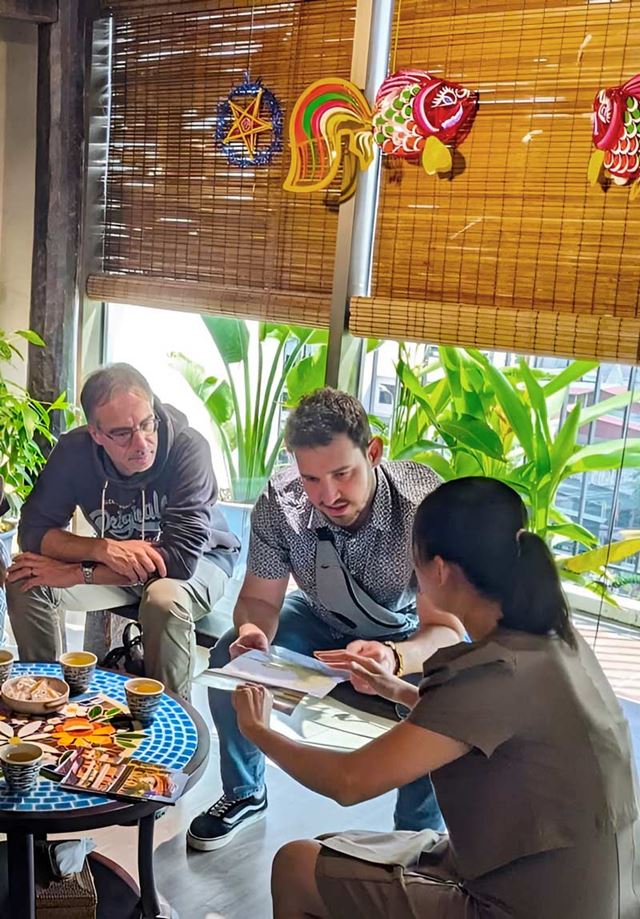
15 Unusual Things to Do in Hanoi (Local Gems Guide) in 2026
Most travelers arrive in Hanoi and make a beeline for the same checklist: the Old Quarter, Hoan Kiem Lake, a water puppet show, maybe a bowl of pho. And don't get me wrong, those things are wonderful. But if you're looking for unusual things to do in Hanoi that go beyond the surface, you're in the right place.
This guide is for the traveler who wants to see Hanoi the way locals actually live it.
Why does this matter? Because the Hanoi that tourists see and the Hanoi that exists are two very different cities. Whether it's your first visit or your fifth, this guide will show you a city you haven't seen yet.
Written by Trang Nguyen (Local Expert)
Updated on Jun 10, 2026
0 comment
Trang Nguyen has lived in Vietnam for nearly three decades and spent much of her life exploring Asia. She has joined numerous field trips, stayed with ethnic communities in the northern mountains, and gained deep insights into local cultures and landscapes. Her writing reflects an honest passion for authentic travel and meaningful connections. If you have any questions about her journeys, feel free to reach out and leave a comment!
Here's why stepping off the tourist trail in Hanoi is worth every effort:
You'll witness real daily life: morning markets, neighborhood temples, street chess games, and family gatherings that no tour bus stops for.
Lower costs: Once you leave the tourist zones, prices drop dramatically. A bowl of xôi (sticky rice) in a local alley costs a fraction of what you'd pay at a guesthouse restaurant.
Nobody wants to come home with the same photos as everyone else. Hidden gems give you stories that are genuinely yours.
Hanoi's main attractions can feel suffocating in peak season. The places in this guide are refreshingly calm.
Hanoi's sunset scene in Long Bien bridge
15 Unusual Things to Do in Hanoi
1. Eat Bánh Mì Dân Tổ - Hanoi's Midnight Bánh Mì
Forget the tourist bánh mì spots with neon signs and English menus. Bánh Mì Dan To is Hanoi's worst-kept secret among night owls: a street vendor that only opens well past midnight, drawing a loyal crowd of locals who've been coming for years.
This is street food as a social ritual. Come hungry, stay late, and let the city eat around you.
When to go: After midnight.
Where: 32 Trần Nhật Duật, Phố cổ Hà Nội, Hoàn Kiếm, Hà Nội, Vietnam
Long Bien Bridge is one of Hanoi's most iconic structures, a century-old iron bridge built by Gustave Eiffel that still carries trains, motorbikes, and pedestrians across the Red River.
At 5:30am, the bridge belongs to joggers, fish vendors, and a handful of photographers. The light is extraordinary: warm and hazy, catching the rust-colored iron and the silver surface of the Red River below.
Tip: Come on a weekday to avoid weekend cyclists. Wear flat shoes because the bridge surface is uneven.
3. Drink Wine on a Cyclo Tour Through the Old Quarter
A cyclo (three-wheeled bicycle rickshaw) tour sounds like a tourist cliché until you do it at dusk with a glass of local wine, no fixed route, and a driver who's spent 30 years navigating these streets.
The narrow lanes of the 36 Streets historically dedicated to a single trade, from bamboo ladders to paper lanterns look completely different from the slow pace of a cyclo. Read more:Vietnamese Cyclo
Llocal wine, no fixed route, and a driver who's spent 30 years navigating these streets of Hanoi Old Quarter
Best time: 5–7pm, when golden hour hits the French colonial facades.
Cost: 250,000–300,000 VND/person for an hour.
4. Attend a Live Music Night
Hanoi has a jazz scene, and most visitors never find it. The Blake House of Jazz is a dimly lit, intimate venue tucked into the Old Quarter that hosts regular live performances. The venue itself is half the draw: peeling walls, candlelight, the smell of old wood and strong coffee.
The Blake House of Jazz is a dimly lit, intimate venue tucked into the Old Quarter that hosts regular live performances
And if you want a different side of Hanoi after dark, head to Savage for underground DJ nights and electronic music, Polygon Musik for live rock shows, or Tranquil Books & Coffee for open mic show.
Tip: Arrive early for a good table. Stick to wine and local beer (because I have heard some feedback that the cocktails are inconsistent). The instrumental sets between vocal numbers are worth staying for.
Located just a few minutes from Hoàn Kiếm Lake, Ta Hien Street is one of the easiest nightlife spots to explore on foot in Hanoi. Hidden within the heart of the Old Quarter, the street naturally becomes a gathering place for both locals and travelers after sunset.
5. Visit an Artisan Village in Hanoi
Bat Trang (pottery village) has been producing ceramics for over 700 years. Walk the village lanes, watch potters at their wheels, and commission a piece to take home, all for a fraction of what you'd pay in a Hanoi shop.
You will find plenty of ceramic products at abodable prices
Duong Lam ancient village (làng cổ Đường Lâm) is Vietnam's first recognized ancient village: a living museum of traditional Kinh architecture, communal houses, and multigenerational family homes built from laterite stone.
Duong Lam ancient village (làng cổ Đường Lâm) is Vietnam's first recognized ancient village
There’s also Van Phuc Silk Village, one of the oldest silk weaving villages in Vietnam. This place also lets visitors watch artisans at work, discover unique silk products, and join hands-on workshops
How to get there: Grab or motorbike to Bat Trang (about 30 min); bus or private car to Duong Lam (about 45 min). Half-day trips are easy to self-organize.
6. Explore Vietnamese Local Brands
Hanoi has a growing creative culture, and two spaces have become its unofficial headquarters.
Tired City is a concept store and community hub celebrating Vietnamese design, streetwear, art prints, and independent brands.
The Vietnamese-favorful designs of Tired City
The Raw Compound is harder to categorize: part café, part gallery, part creative co-working space. It attracts Hanoi's artists, photographers, and designers, and hosts regular pop-ups, exhibitions, and workshops. Both places are experience-worthy in the most honest sense, they look good because they are good.
Tip: Follow both on Instagram before you visit to check for events. Weekend afternoons tend to be the most lively.
7. Go Secondhand Shopping at a Local Flea Market
The three locals actually go to are Đông Tác, Đặng Văn Ngữ, and Hòa Bình Market, Hanoi’s famous “chợ trời.” They’re open almost every day, and you’ll find everything from vintage Vietnamese jackets and old propaganda posters to French-era furniture, lacquerware, fabrics, and pre-loved áo dài.
The three locals actually go to are Đông Tác, Đặng Văn Ngữ, and Hòa Bình Market, Hanoi’s famous “chợ trời.”
A small tip from locals: never accept the first price too quickly. If you can, go with a Vietnamese friend because the best stalls are often hidden deep inside the market, and locals know how to spot the genuinely interesting pieces from the overpriced tourist stuff.
8. Try a Secret Speakeasy Bar
Hanoi's bar scene has a well-kept secret: an emerging speakeasy culture where the best drinks are hidden behind bookshelves, down unmarked stairwells, and through unmarked doors.
Part of the experience is finding them. Ask your hotel bartender, ask a local, search the deeper corners of Hanoi expat Facebook groups. The discovery is half the drink.
What to expect: Craft cocktails with Vietnamese ingredients like lemongrass, kumquat, green rice.
9. Watch a Wedding Photoshoot at Hoan Kiem Lake
This one costs nothing and requires nothing. On weekend mornings and late afternoons, the shores of Hoan Kiem Lake are quietly taken over by Vietnamese wedding couples having their pre-wedding photos taken.
The outfits range from traditional ao dai to dramatic Western ball gowns, and the settings: the red Huc Bridge, the Turtle Tower, the banyan-lined promenades are genuinely cinematic.
Best time: Saturday and Sunday mornings, or late afternoon (4–6pm) for golden hour light.
Just beneath Long Bien Bridge, hidden behind a small dirt path that most people cycle past without noticing, is Bãi Giữa: a quiet island in the middle of the Red River filled with banana plantations, vegetable gardens, wild grass fields, and simple wooden homes.
What many visitors don’t realize is that there’s a small creative community here too. Places like Banana Island regularly host laid-back music nights, poolside gatherings, and communal dinners where locals, artists, and expats all mix together. If you’re lucky, you might stumble into a live acoustic session or a weekend barbecue by the river.
Places like Banana Island regularly host laid-back music nights, poolside gatherings, and communal dinners
Local tip: the best way to explore Bãi Giữa is by bicycle. Cross Long Bien Bridge slowly and watch carefully for the hidden path leading down on the river side.
11. Hidden Café Hopping
Hanoi's café culture is one of the city's greatest treasures, and the best cafés are almost always the hardest to find. Tucked inside old colonial villas, up unmarked staircases, behind potted plant façades, Hanoi's hidden cafés offer something the tourist district cannot: calm.
Right in the bustling Old Quarter, Ta Coffee is an unexpected little hideaway.
Some favorites among locals include rooftop cafés in Ba Dinh District with views over tree-lined boulevards, basement cafés in Hoan Kiem where time seems to slow, and villa cafés in Tay Ho with garden seating and French windows.
Tip: Search "cà phê sân vườn Hà Nội" (garden café Hanoi) on Google Maps or Instagram to find current favorites. New places open constantly. For more information, please read: Must-visit cafes in Hanoi.
12. Visit the Vietnam Museum of Ethnology
If you only visit one museum in Hanoi, make it this one. The Vietnam Museum of Ethnology documents the lives, traditions, and material culture of all 54 of Vietnam's ethnic minority groups.
The outdoor section alone is worth the trip: full-scale reconstructed traditional houses from different regions, set in a quiet garden.
Address: Nguyễn Văn Huyên Street, Nghĩa Đô, Cầu Giấy. Entry: 50,000 VND ($2).
Allow: At least 2 hours.
13. Join a Workshop: Perfume-Making, Natural Dyeing, or Coffee Blending
Hanoi's workshop scene has quietly grown into something exceptional. You can now spend a morning learning to blend your own signature fragrance at a perfume atelier, learning natural fabric dyeing techniques from artisans, or cupping and blending Vietnamese single-origin coffees.
Learning natural fabric indigo dyeing techniques from artisans
Where to look: The Scent Note Workshop, Hanoi Creative City, Complex01 and various Instagram-based artisan studios.
14. Watch the Flag Raising & Lowering Ceremony at Ba Dinh Square
Every morning at sunrise and every evening at sunset, a military ceremony takes place at Ba Dinh Square: the heart of Vietnamese national identity.
Soldiers march in perfect formation, the flag is raised or lowered with absolute precision, and a crowd of Vietnamese citizens watches in respectful silence.
Timing: Sunrise and sunset (times vary by season). Arrive 15 minutes early. Photography is allowed, but be respectful.
15. Take a Grab to a Random Residential District
This is the most unconventional item on this list, and possibly the most rewarding. Open Grab, pick a neighborhood you've never heard of: Cau Giay, Hoang Mai, Long Bien, Ha Dong and just go. Eat at whatever looks busy. Sit at a sidewalk bia hơi (fresh beer) stand and watch the street.
You won't have a plan. You won't need one.
Discover more local things to do in Hanoi!!!
Map of Hidden Gems in Hanoi
Tip: Don't limit yourself to Hoan Kiem District. Book a Grab, pick a direction you've never gone, and see what life looks like in a residential district. It's one of the most underrated things you can do in Hanoi.
My Local Insider Tips
Best Time to Explore Hidden Spots
Early morning (5–7am) is Hanoi's golden hour for hidden gems. Markets are in full swing, the heat hasn't arrived yet, and the tourist crowds are still asleep.
Late afternoon (4–7pm) is ideal for neighborhoods, cafés, and sunset spots. The light is softer and the heat dissipates.
Cultural Etiquette to Know
Dress modestly at temples and village sites: cover shoulders and knees.
Ask before photographing people, especially at markets or in residential areas. A smile and a gesture goes a long way.
Eat where locals eat, if a plastic-stool restaurant is full of Vietnamese customers at 7am, it's almost certainly excellent.
Learning a few words like "cảm ơn" (thank you) and "xin chào" (hello) will open more doors than you'd expect.
Haggling is normal at markets, but remember that the difference of 10,000 VND (less than $0.50) means much more to a vendor than to you.
Common Mistakes to Avoid
Attractions like Train Street have had periodic closures. Always verify current status through local sources or your accommodation before making a special trip.
Ignoring weather conditions: Hanoi's summers are hot and rainy. A sudden downpour can make an outdoor market or riverside cycle significantly less enjoyable.
Don't schedule every hour. Leave afternoons open. Say yes to the alley your instinct tells you to explore.
FAQs About Unusual Things to Do in Hanoi
Q1: What are the most unique things to do in Hanoi?
The most unique experiences include visiting Banana Island (Bãi Giữa) below Long Bien Bridge, watching the flag ceremony at Ba Dinh Square, eating midnight bánh mì at a local-only cart, exploring the Vietnam Museum of Ethnology, and getting genuinely lost in a residential district by booking a random Grab ride.
Q2: Is Hanoi safe for solo travelers?
Yes, Hanoi is considered one of Southeast Asia's safer capital cities for solo travelers, including solo women. The main risks are traffic (cross streets carefully, using other pedestrians as shields) and petty theft in crowded areas.
Q3: What is the best time to visit hidden spots in Hanoi?
Early morning (5–8am) is consistently the best time for markets, bridges, and outdoor hidden gems. Late afternoon (4–7pm) is ideal for neighborhoods and cafés.
Q4: Are there non-touristy places in Hanoi?
Absolutely. Truc Bach neighborhood, Long Bien Market, Ba Dinh's residential streets, and the village of Bac Cau across Long Bien Bridge are all genuinely local spaces with almost no tourist presence.
Q5: How many days do you need in Hanoi?
Most travelers do Hanoi in 2–3 days, but if you want to properly explore beyond the tourist circuit, 4–5 days allows you to go deeper.
Dieu house, a river bank cafe
Conclusion
Hanoi rewards those who look past the obvious. The city's surface is genuinely beautiful, but underneath it lies something richer: a city that moves to its own ancient rhythms, that feeds itself at midnight and wakes before sunrise, that has been building beauty in hidden alleys for a thousand years.
The Hanoi that stays with you is the one you found yourself.
Planning your trip?
Save time and get expert advice for FREE!
✅ 15 years of local experience
✅ Save up to 40 hours of planning
✅ Travel stress-free from start to finish
Book your free consultation today!










 Our team
 Our team
 Our team
 Our team



 Other
Other Add us as a preferred source