Metro in Bangkok Thailand: Complete Guide to BTS and MRT in 2026
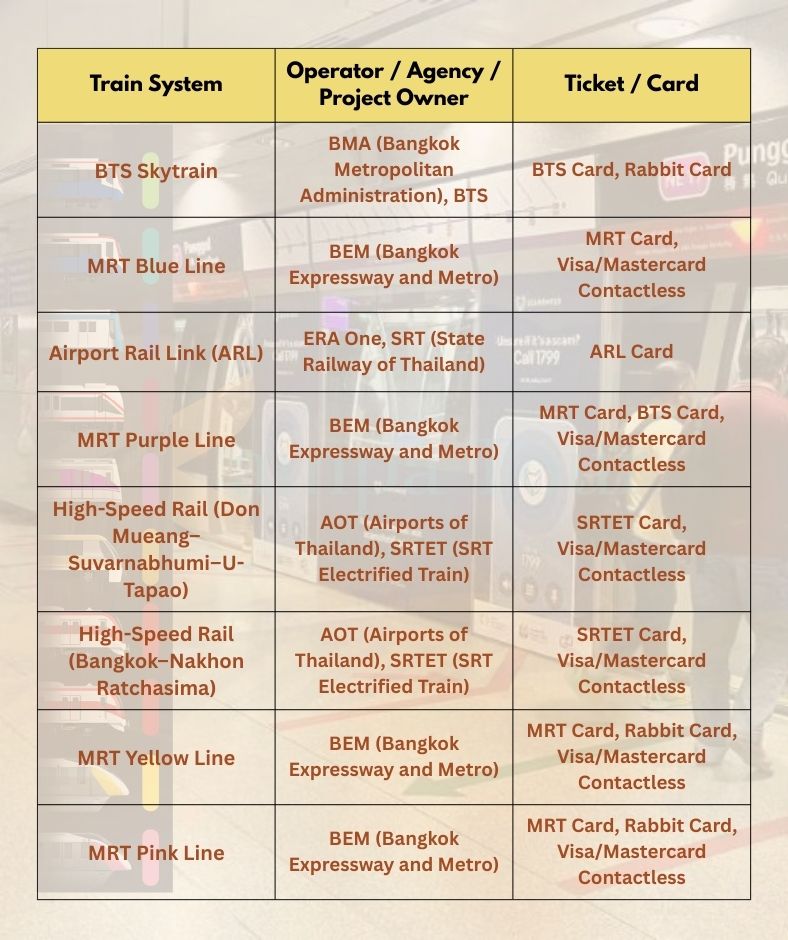
Bangkok’s metro system has grown rapidly since the launch of the BTS Skytrain in 1999, with the MRT Subway following in 2004. Today, the system includes multiple interconnected lines, including the newly inaugurated Yellow Line and Red Line, providing extensive coverage across the city for both locals and tourists.
Although getting around Bangkok has become much easier thanks to these train networks, it is helpful to know the different lines and ticketing systems. This guide introduces you to Bangkok's metro system in detail and explains how to use each mode of transportation to make getting around one of Asia's busiest cities easier.
Written by Preetika Narula (Local Expert)
Updated on Oct 12, 2026
16 comments
At 35 years old, Preetika is an enthusiastic explorer deeply connected to Thailand, Laos and Cambodia's rich heritage. As a Bangkoker, her local insights and experiences imbue authenticity into her narratives. She discovers solace within the pages of a book as much as amidst Southern Asian vibrant landscapes and bustling street markets. With an ardent passion for travel and a profound affection for literature, Preetika effortlessly integrates her personal adventures into captivating stories, providing a perspective uniquely rooted in local experience.
1. Bangkok Metro Network – What you need to know first
If it’s your first time in Bangkok, the metro might look a little confusing at first, but once you understand how it works, it quickly becomes one of the easiest ways to get around the city.
Bangkok’s rail system has been growing steadily since 1999 and today it connects most of the areas travelers actually visit. Instead of one single metro, the city uses two main networks that work side by side.
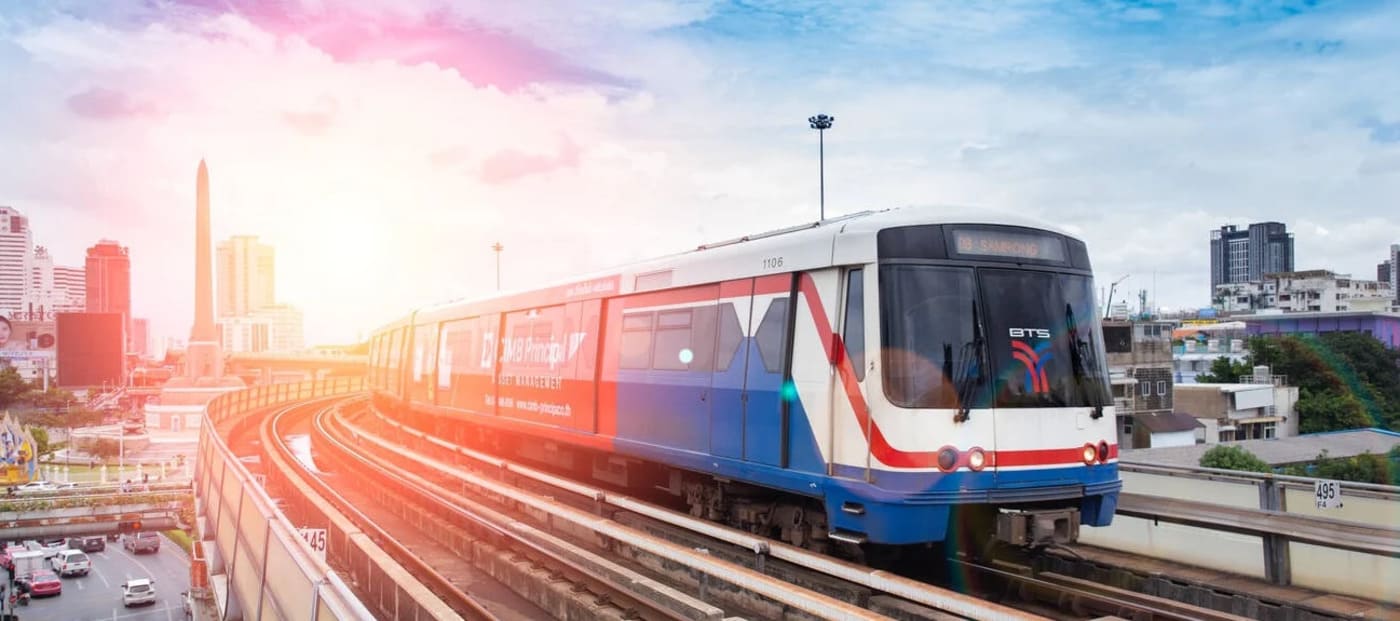
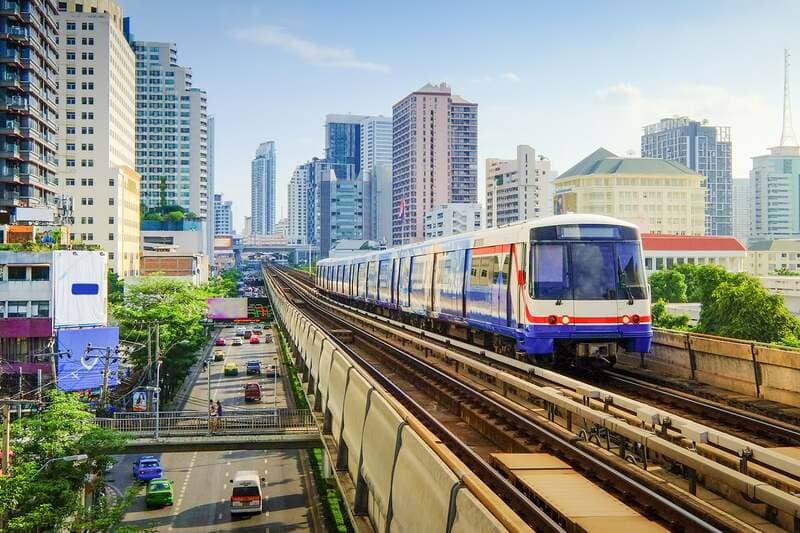
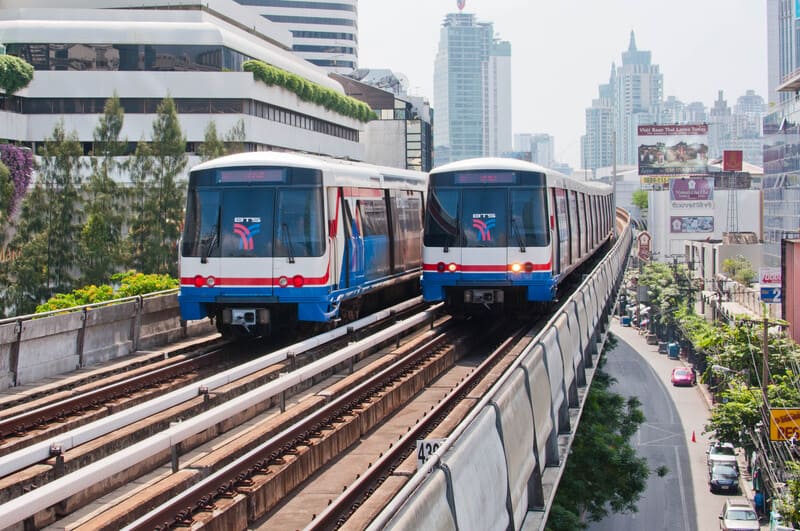
The BTS Skytrain runs above the streets. It’s the line most visitors end up using, especially around Siam, Sukhumvit and Silom. Best for: shopping malls to business districts, many of Bangkok’s busiest areas.
The MRT Subway, on the other hand, runs underground. Best for: different parts of the city, including areas like Chinatown and the local neighborhoods.
The good news is that the two systems connect with each other, so moving between lines is usually straightforward. The maps are color-coded, easy to read, and displayed clearly in every station. Trains are air-conditioned and come frequently, even during busy hours, a big relief in Bangkok’s heat.
📌 Note: Although you may see the Yellow Line labeled as “MRT,” it operates separately. Tickets from the BTS or MRT Blue and Purple lines cannot be used on it. Rabbit cards and contactless bank cards are accepted on the Yellow Line.
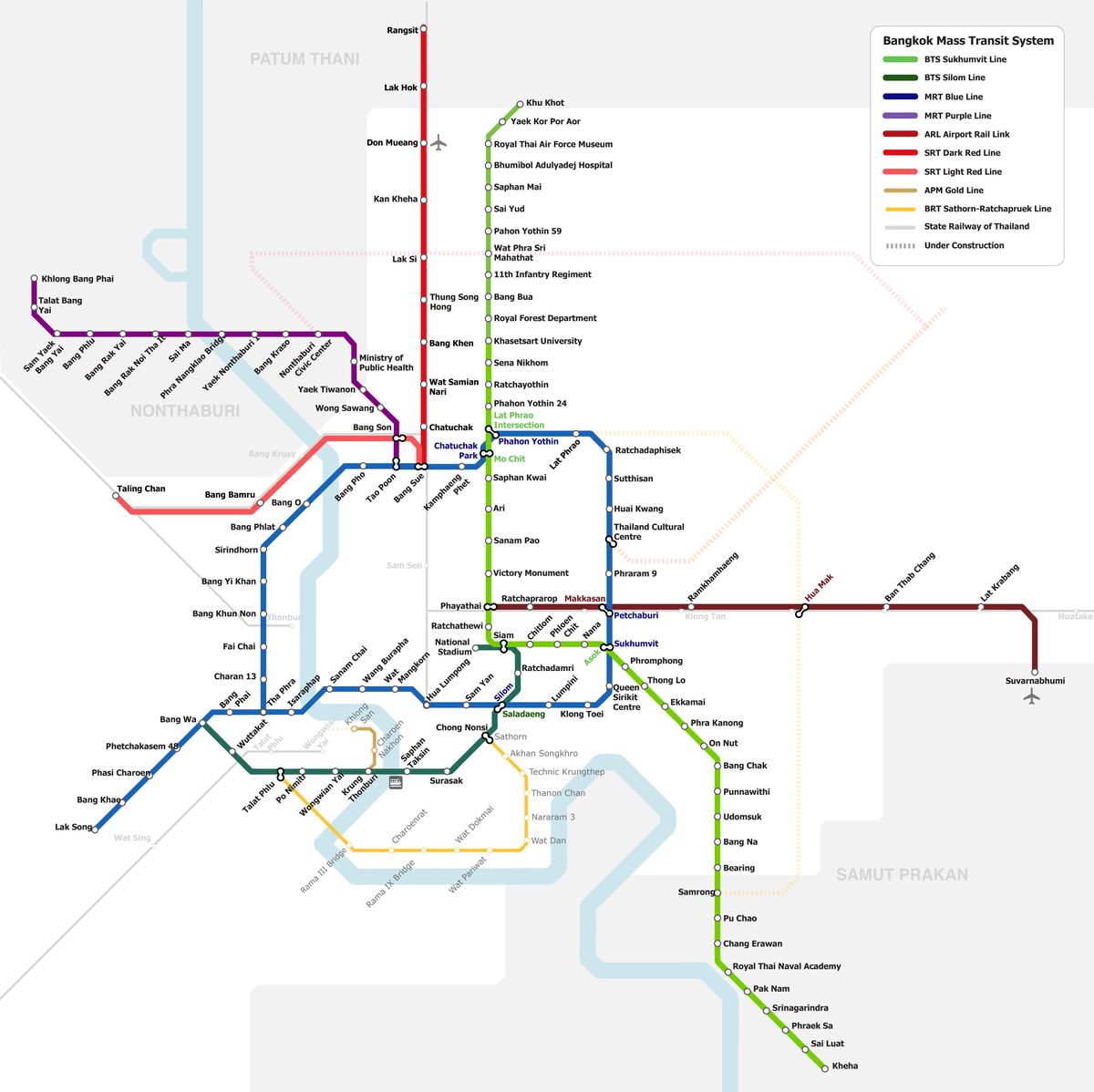
The public transportation system map in Bangkok is usually distributed for free at airports. You can find them at information desks. There are also self-service public display stands. Please click in or save the map right below for better view:
Otherwise, you can use the map on your phone by searching for 'Mmap Bangkok' on Google.
2. Is BTS and MRT in Bangkok the same?
The BTS Skytrain and MRT Subway are not the same system, although they complement each other well.
The BTS Skytrain runs above ground, which means you often get a view of the streets below. It is extremely convenient for travelers staying around Sukhumvit, Siam, or Silom, and it connects directly to many shopping malls and entertainment areas.
The MRT, on the other hand, operates underground. It covers different zones of Bangkok and is particularly useful for visiting places such as Chinatown or traveling to local districts where the BTS does not reach.
Although relatively expensive by Asian standards, the BTS remains a practical option for travelers from Europe or North America. For short distances, it can even be cheaper than taking a taxi for groups of three or four people.
What are the BTS timetables?
The BTS Skytrain operates daily with increased frequency during morning and evening rush hours. However, it does not run very late compared to metro systems in other major cities.
First trains depart around 5:15 a.m. on the Sukhumvit Line
Around 5:30 a.m. on the Silom Line
Last trains run between midnight and 12:30 a.m., depending on direction
Exact timetables are displayed at stations, and transfers at Siam Station may require extra time during busy periods. Source: Timetable (bts.co.th)
3. Bangkok metro lines and map explained (BTS, MRT & Airport Rail Link)
Besides the BTS, Bangkok also has the MRT subway, which is very useful for places the Skytrain does not reach.
From my experience, the MRT is often a bit cheaper than the BTS and feels less crowded outside rush hours. Locals use it a lot, especially for daily commuting and getting around residential areas.
The MRT subway currently has two main lines (the Yellow and Pink monorails also carry the MRT name, but they run as separate systems):
Blue Line: this is the one you will use the most as a traveler. It passes through important areas such as Chinatown, Chatuchak Weekend Market, Silom, and parts of Sukhumvit.
Purple Line: mainly serves the outer suburbs and is used mostly by locals. It connects with the Blue Line at Tao Poon station.
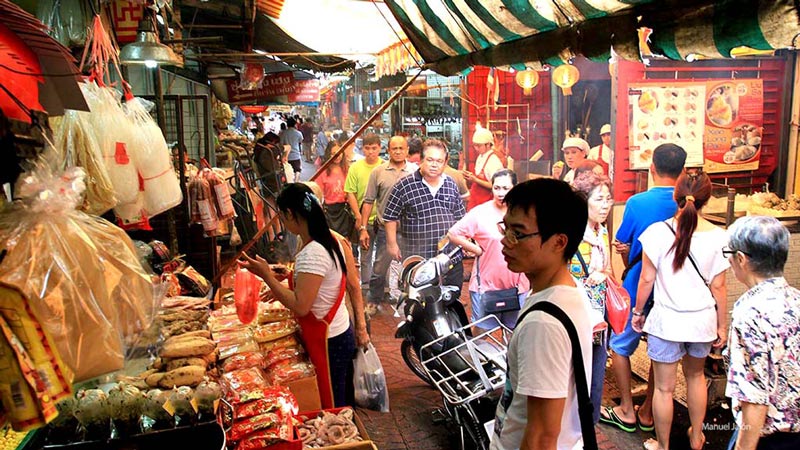
Sampeng Lane, Chinatown in the morning
About operating hours, you do not need to worry too much as the system runs late enough for most plans:
Weekdays: around 5:30 a.m. to midnight
Weekends and public holidays: around 6:00 a.m. to midnight
On the Blue Line, peak hours are officially 7:00-9:00 a.m. and 4:30-7:30 p.m., when trains come at least every four minutes; outside these times the wait is normally no more than about seven minutes. The Purple Line is a little less frequent (about every six minutes at peak, every nine minutes otherwise).
Tips for using the tickets:
Single trips use black plastic tokens, bought from vending machines or ticket counters. According to an MRTA/BEM announcement, tokens are due to be replaced by QR-code tickets from 1 January 2027.
Since 1 June 2026, the old MRT and MRT Plus stored-value cards are no longer accepted on the Blue and Purple lines. If you plan to use the MRT several times, simply tap a contactless Visa, Mastercard or UnionPay card at the gate, and use the same card to enter and exit.
From my point of view, the MRT is very easy to use once you try it once or twice, and it is a good complement to the BTS when you want to explore areas that feel more local.
4. Bangkok metro tickets, fares and travel cards (BTS & MRT)
Both the BTS and MRT use distance-based fares, so the price depends on how far you travel. You can buy tickets directly at the station, either from vending machines or at the ticket counters nearby.
On the BTS, you’ll find single-journey tickets and day passes. If you plan to use the Skytrain several times, the Rabbit Card is worth considering.
It saves time during busy hours and can also be used in some convenience stores, cafés, and restaurants around the city.
To manage your card more easily, there are two helpful apps:
My Rabbit – for checking balance and topping up
Rabbit Rewards – for tracking trips and discounts
System
Ticket type
Price range
Validity
Notes
BTS Skytrain
Single Journey Ticket
From 17 baht
Same day only
Time limit 120 minutes inside paid area
One-Day Pass
150 baht
Valid until midnight of purchase day
Unlimited BTS rides only
Rabbit Card
Pay per trip
Stored value
Saves time, small fare discount
MRT Subway
Single Journey Token
17 to 44 baht (Blue Line, since 3 July 2026); Purple Line 14 to 42 baht
Same day only
Time limit 90 minutes
Contactless bank card (EMV)
Pay per trip
Tap in and out with the same card
Visa, Mastercard or UnionPay. Old MRT / MRT Plus stored-value cards no longer accepted since 1 June 2026
Airport Rail Link (ARL)
Single Journey Ticket
15 to 45 baht
One ride
Connects city to Suvarnabhumi Airport
Bangkok Monorail (Yellow Line)
Single Journey Ticket
15 to 45 baht
One ride
Separate system, ticket not interchangeable
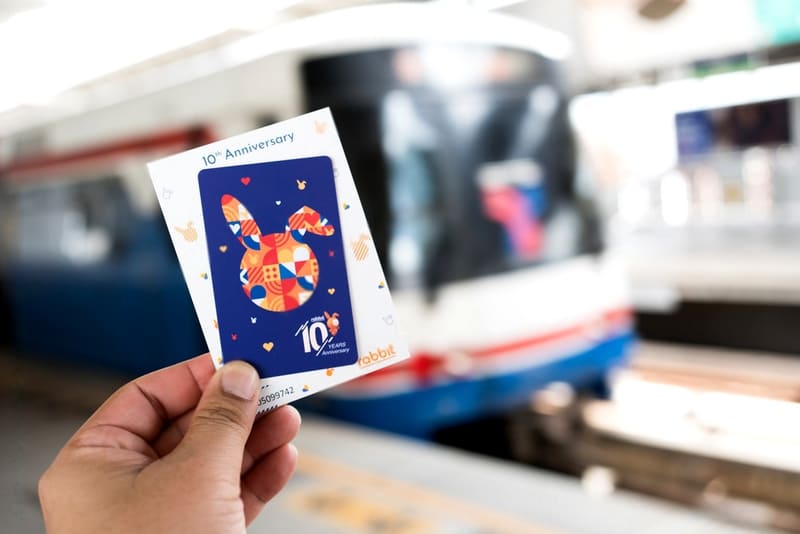
Rabbit Card - 10th Anniversary Version
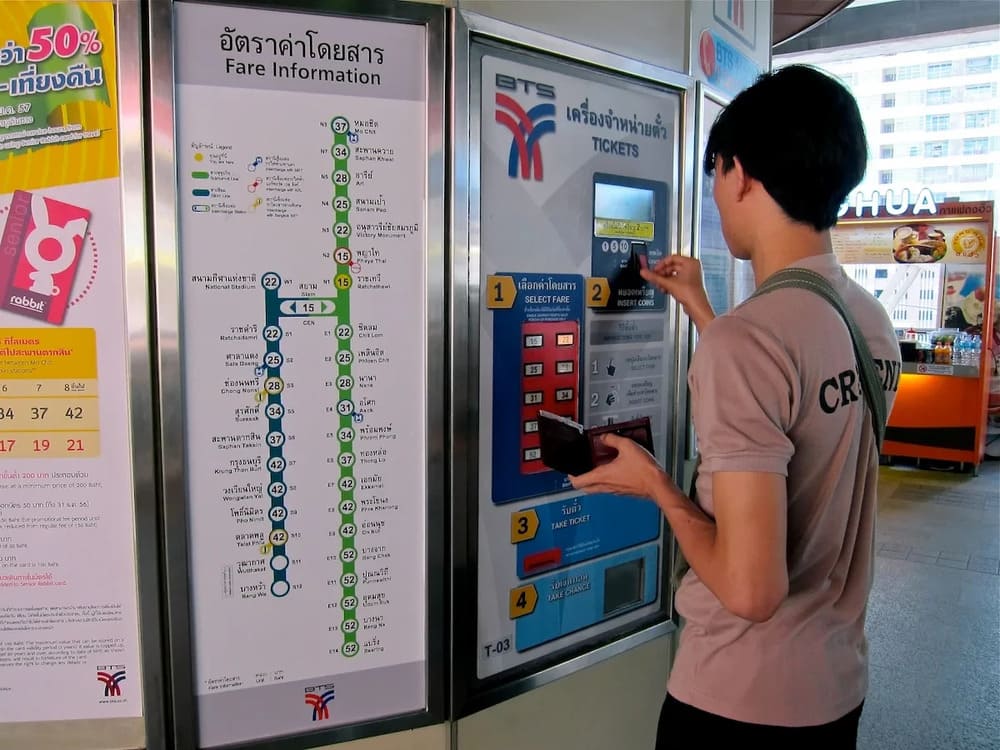
At many BTS stations, older ticket machines still accept coins only, which can surprise first-time visitors. Newer machines have touchscreens and are much easier to use. If you’re using a paper ticket, insert it at the gate when entering, the machine will keep it when you exit. Just remember that the maximum time allowed inside the paid area is 120 minutes.
On the MRT, tickets work a little differently. You’ll receive a small black token for single journeys, or you can simply tap a contactless bank card (the old stored-value MRT cards were withdrawn on 1 June 2026). Unlike the BTS, the MRT does not offer daily or multi-day passes.
How to buy an MRT ticket
Buying an MRT ticket is usually easier than the BTS, especially if it is your first time using Bangkok’s metro. Here is how it works:
MRT stations have both vending machines and ticket counters.
You can buy a single journey token at the counter, or skip the ticket altogether and tap a contactless bank card at the gate.
Staff usually speak basic English and are used to helping travelers.
How to get around by Thailand MRT subway?
For a single ride:
Go to the vending machine near the entrance.
Select English on the screen.
Choose your destination station from the map.
Insert coins or banknotes.
The machine will give you a black token and your change.
To enter the station:Tap the token on the reader at the gate.
To exit: Insert the token into the slot at the exit gate.
If you plan to use the MRT several times, tap a contactless Visa, Mastercard or UnionPay card at the gate instead of buying a token each time, and use the same card to enter and exit.
Local tip: MRT machines usually accept banknotes more easily than BTS machines.
5. How to use the BTS and MRT in Bangkok step by step
Using Bangkok’s metro system is quite straightforward once you try it a couple of times. Here is how locals usually do it:
Start by checking the route map inside the station to find your destination and the correct line. The maps are color coded and easy to follow.
Buy your ticket from the vending machine or prepare your travel card before entering the gates.
At the entrance, tap your card or insert your paper ticket. Keep your ticket if you are using a single journey fare.
Platforms are clearly labeled, and train directions are shown on screens above the tracks.
Announcements are made in both Thai and English, so it is easy to know when to get off.
When transferring between lines, follow the station signs carefully. Large interchange stations can be busy, especially at peak hours.
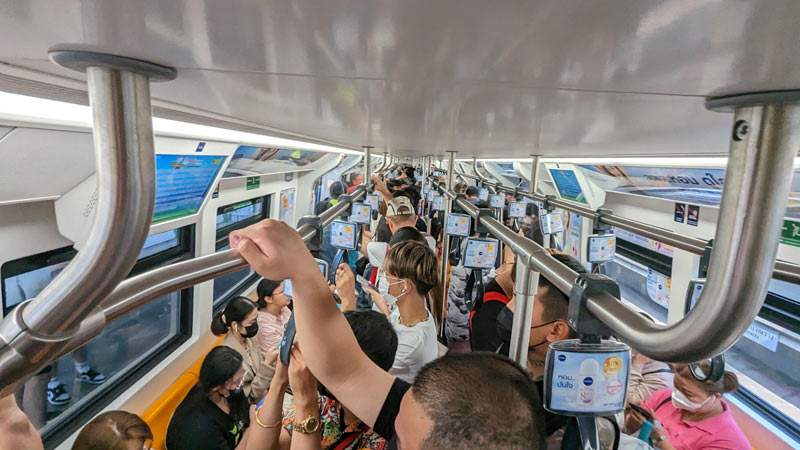
During rush hours, trains may be crowded, but services remain frequent and reliable, so the next train usually arrives quickly.
After one or two rides, you will feel much more confident. The system may look confusing at first, but it becomes very intuitive once you are inside the stations.
6. How to get from Bangkok airports to the city by train?
From Suvarnabhumi Airport
The Airport Rail Link is one of the easiest and most affordable ways to reach central Bangkok. It connects the airport directly to Phaya Thai Station in about 30 minutes, where you can transfer to the BTS Skytrain.
Trains run daily from early morning until midnight, with frequent departures throughout the day. Tickets are purchased as tokens from machines or counters inside the station, located on the basement level of the airport.
From Don Mueang Airport
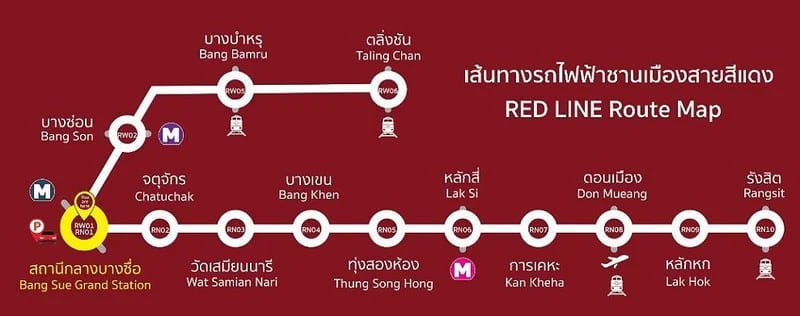
Don Mueang Airport is connected to the city by the SRT Red Line. The station is located opposite the terminal and can be reached by following the clearly marked signs.
Trains run about every 15 minutes (about every 10 minutes at peak times) and arrive at Krung Thep Aphiwat Central Terminal, where passengers can transfer to the MRT Blue Line.
7. Places you can easily reach by Bangkok metro (BTS & MRT)
Bangkok's iconic temples accessible by BTS and MRT
The Grand Palace, Wat Phra Kaew, and Wat Pho - MRT Sanam Chai
Wat Arun - BTS Saphan Taksin (Sathorn Pier), then a Chao Phraya Express Boat to Tha Tien Pier and a short cross-river ferry; or MRT Sanam Chai, a short walk to Tha Tien Pier and the same ferry
Wat Traimit - MRT Hua Lamphong
Jim Thompson House - BTS National Stadium
Erawan Shrine - BTS Chit Lom
The city's liveliest markets
Chatuchak Weekend Market - BTS Mo Chit / MRT Chatuchak Park
Patpong Night Market - BTS Sala Daeng / MRT Si Lom
Pratunam Market - BTS Chit Lom, followed by 10 minutes walk
Rot Fai Market Ratchada - MRT Thailand Cultural Center
Sampeng Market - MRT Wat Mangkon
Shopping centers in Bangkok
Siam Paragon - BTS Siam
CentralWorld - BTS Chit Lom
MBK Center - BTS National Stadium
ICON SIAM - BTS Saphan Taksin, followed by a free shuttle
Terminal 21 - BTS Asok / MRT Sukhumvit
EmQuartier - BTS Phrom Phong
Attractions for children in Bangkok
Sea Life Bangkok Ocean World - BTS Siam
Lumpini Park - MRT Lumphini
8. Bangkok metro tips and common mistakes to avoid
Rush hours in Bangkok are usually between 7:00–9:00 a.m. and 4:00–7:00 p.m. During these times, trains can become very crowded, especially in central areas such as Siam, Asok, and Silom.
Here are my tips that can make a big difference:
During peak hours, it is common to wait for the next train because the first one may already be full. This is normal and locals are used to it.
If you are traveling with large suitcases, a stroller, or several people, the metro can feel stressful. In this case, taking a taxi or a ride-hailing service is often more comfortable.
The BTS does not connect directly to the airport. You need to use the Airport Rail Link first and then transfer to the BTS or MRT.
If possible, try to travel after 10 a.m. or before 4 p.m.. Stations are calmer and moving around is much easier.
Outside rush hours, the metro is one of the most pleasant ways to get around Bangkok. Trains are frequent, stations are clean, and the air-conditioning is a welcome break from the heat.
This is why many locals rely on the BTS and MRT every day. Once you get used to the system, it quickly becomes the most reliable way to explore the city.
The Bangkok metro (MRT) is an affordable way to travel, especially when moving between popular districts like Sukhumvit or Silom to reach Hualamphong Train Station. Blue Line ticket prices range from 17 THB (roughly US$ 0.50) to 44 THB (roughly US$ 1.30) since 3 July 2026. The MRT does not sell a one-day pass; the BTS Skytrain one-day pass costs 150 THB (roughly US$ 4.50). The metro operates frequently from 6 AM to midnight.
2. Is the metro in Bangkok 24 hours?
No, Bangkok’s MRT operates from 6 AM until midnight. Park & ride facilities are available at several Blue Line stations, for example Lat Phrao and Thailand Cultural Center; check the MRTA park & ride page for the current list.
3. What is the cheapest way to travel in Bangkok?
The BTS Skytrain is one of the cheapest and fastest ways to get around the city. As an elevated metro system, it allows you to travel more quickly between destinations compared to taking a taxi.
4. How to buy a 3-day pass in Bangkok?
Three-day passes allow unlimited travel for three consecutive days (from the first use until midnight two days later) and cost 230 THB (approximately US$ 6). These passes can be purchased from ticket counters at any BTS station.
5. Is it better to use cash or card in Bangkok?
While using cards for payments can be more secure, especially to avoid carrying large amounts of cash, it's important not to rely entirely on cards. Many places in Bangkok still prefer cash, so it's wise to carry some for smaller transactions.
6. How do you pay for the Metro in Bangkok?
The Bangkok MRT uses a single-journey fare system. You can pay in three main ways:
Contactless bank card: tap a contactless Visa, Mastercard or UnionPay card at the gate when you enter and use the same card when you exit. No ticket is needed.
Ticket Machines: Located at every station entrance, these machines are user-friendly. Simply choose your destination, select the number of tickets you need, and pay with cash (coins and banknotes).
Ticket Counters: Alternatively, you can purchase tickets from the staff at station counters if you prefer personal assistance.
Our last words
The Bangkok Metro is more than just a transportation system. It is a gateway to the diversity, cultural richness, and wonders of this dynamic city. Whether you want to visit iconic temples, venture into bustling markets, shop at renowned malls, or treat your children to unforgettable moments, the BTS and MRT will take you to all these places, allowing you to discover the fascinating juxtaposition of tradition and modernity that defines Bangkok.
Is there all day ticket for the MRT ? Is there an all day ticket to use both MRT & BTS together ? is there discount for disabled ?
0Reply
Kampá Tour21 Feb 2025
Yes, both the MRT and BTS offer all-day tickets, but they're separate. The MRT has a One-Day Pass for unlimited travel within the MRT network (Blue and Purple Lines), while the BTS also has a One-Day Pass for unlimited rides on its system. Unfortunately, there's no combined all-day ticket for both.
Additionally, both the MRT and BTS offer a 50% discount for disabled passengers, and some stations also provide free access or special assistance. Let me know if you need more info!
Kind regards,
Preetika.
0Reply
H
Hugo Yap07 Nov 2024
Where to buy the mrt card for children and seniors benefit from a 50% reduction?
0Reply
Kampá Tour07 Nov 2024
Hi Hugo,
Here’s how to get an MRT card with a 50% discount for children and seniors in Bangkok:
Visit any MRT station: Just head to the ticket office or vending machines at any MRT station.
Pick the right card: Choose the Child Card (for kids under 14 and under 120 cm tall) or the Elder Card (for anyone 60+).
Bring an ID: For kids, a birth certificate or any ID that shows their age works. For seniors, just bring an ID or passport.
Pay for the card: It costs THB 180, which covers THB 100 in stored value, a THB 50 deposit, and a THB 30 issuing fee.
You can top up the card at MRT stations, kiosks, or even 7-Eleven stores, making it super convenient for discounted travel around Bangkok!
0Reply
Hugo Yap08 Nov 2024
Can tourists (age 60+) buy the Elder Card?
0Reply
Kampá Tour08 Nov 2024
Tourists aged 60 and above are generally not eligible to purchase the Elder Card (Senior Rabbit Card) in Thailand. This card is specifically designed for Thai citizens aged 60 and older. If you have more questions, feel free to let us know! Have a nice day
0Reply
H
Hugo Yap07 Nov 2024
How much? - The Express Line connects the airport to Makkasan station (A6) in 15 minutes non-stop. You can take the MRT Blue Line there
0Reply
Kampá Tour07 Nov 2024
Hi Hugo, thanks for your question!
The Express Line from Suvarnabhumi Airport to Makkasan Station (A6) takes just 15 minutes non-stop. From Makkasan, the MRT Blue Line fare (updated July 3, 2024) ranges from 17 to 45 THB, depending on the distance traveled. For more details on travel costs, check outHow Much Does It Cost to Travel to Thailand? Prices and Tips 2024.Let me know if you have more questions!
0Reply
Hugo Yap08 Nov 2024
How much is the Express Line from Suvarnabhumi Airport to Makkassan Station (A6)? any senior fare? thank you
0Reply
Kampá Tour08 Nov 2024
Hi Hugo,
For Thai nationals aged 60 and over, the BTS offers a 50% discount on fares. This means if the full fare is 36 THB, seniors would pay 18 THB.
To get this discount, the person needs a BTS Senior Rabbit Card, which verifies their age and nationality.
0Reply
M
Marianne16 Aug 2024
Will be spending most of the time using Bangkok MRT. Can I buy like daily or 3 day pass to get around faster?
0Reply
K
Kampá Tour22 Aug 2024
Hi Marianne,
You can’t buy a daily or 3-day pass for the Bangkok MRT, but you can use a stored value card specifically for the MRT system. Most short-term visitors find it more convenient to use their Visa or MasterCard with EMV chip technology to tap on and off the MRT. Just be aware that you might incur international transaction fees depending on your card.
0Reply
C
Charlie22 Jul 2024
we are a family of four looking to do a week long trip in Bangkok, is it worth it to spend more to stay near stations to use the public transport system or just do Grab full time since we are a family of four?
2Reply
Kampá Tour23 Jul 2024
Hi Charlie, thanks for reaching out.
Certainly, when considering your transportation options in Bangkok with your family, it's useful to compare costs and convenience. A BTS Skytrain ticket typically costs between 25 to 40 baht per person. In contrast, a 20-minute taxi ride using services like Grab or Bolt might cost around 100 baht, which can be cost-effective for a family of four as it may equal the total public transport cost but offers the convenience of door-to-door service.
However, the decision between public transport and taxis can also depend on several factors such as the time of day, weather conditions, proximity to a station, and whether your destination is near a public transport stop. Taxis provide comfort and direct routes, especially in hot or rainy weather. Yet, it's advisable to avoid taxis during rush hour due to heavy traffic, where public transport would save you both time and the hassle of being stuck in traffic.
2Reply
R
Reijnaldo Marino Twerda28 Apr 2024
In Thailand is a child of 4 years old allowed to bring his step bike on the metro
1Reply
K
Kampá Tour29 Apr 2024
Hi Reijnaldo, thank you for reaching out to Kampá Tour.
It depends on a few things:
The size of the step bike: Small, foldable ones might be okay, but larger balance bikes could have restrictions like regular bicycles.
Which metro system: The Bangkok MRT and BTS Skytrain might have rules, especially during busy times.
Off-peak travel: It might be easier to bring the bike during less crowded hours.
We hope this helps! Contact their customer service of the metro if you can't find the info online.
Planning your trip?
Save time and get expert advice for FREE!
✅ 15 years of local experience
✅ Save up to 40 hours of planning
✅ Travel stress-free from start to finish
Book your free consultation today!















 Our team
 Our team
 Our team
 Our team

.jpg)
.jpg)
.jpg)
.jpg)
.jpg)
%20%e2%80%93%20Ratchaprarop%20%e2%80%93%20Phaya%20Thai%20(.jpg)
.jpg)


 Other
Other Add us as a preferred source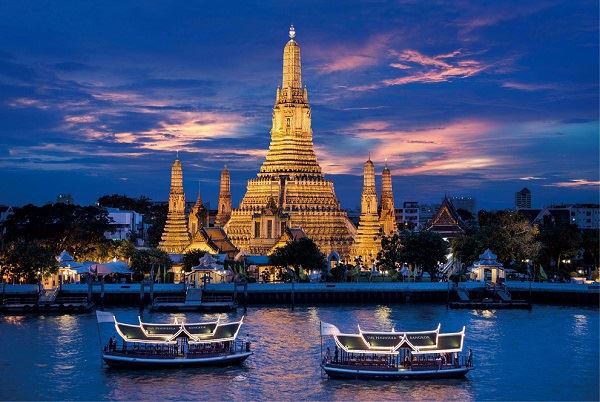








Yes, both the MRT and BTS offer all-day tickets, but they're separate. The MRT has a One-Day Pass for unlimited travel within the MRT network (Blue and Purple Lines), while the BTS also has a One-Day Pass for unlimited rides on its system. Unfortunately, there's no combined all-day ticket for both.
Additionally, both the MRT and BTS offer a 50% discount for disabled passengers, and some stations also provide free access or special assistance. Let me know if you need more info!
Kind regards,
Preetika.
Hi Hugo,
Here’s how to get an MRT card with a 50% discount for children and seniors in Bangkok:
You can top up the card at MRT stations, kiosks, or even 7-Eleven stores, making it super convenient for discounted travel around Bangkok!
Tourists aged 60 and above are generally not eligible to purchase the Elder Card (Senior Rabbit Card) in Thailand. This card is specifically designed for Thai citizens aged 60 and older. If you have more questions, feel free to let us know! Have a nice day
Hi Hugo, thanks for your question!
The Express Line from Suvarnabhumi Airport to Makkasan Station (A6) takes just 15 minutes non-stop. From Makkasan, the MRT Blue Line fare (updated July 3, 2024) ranges from 17 to 45 THB, depending on the distance traveled. For more details on travel costs, check out How Much Does It Cost to Travel to Thailand? Prices and Tips 2024. Let me know if you have more questions!
Hi Hugo,
For Thai nationals aged 60 and over, the BTS offers a 50% discount on fares. This means if the full fare is 36 THB, seniors would pay 18 THB.
To get this discount, the person needs a BTS Senior Rabbit Card, which verifies their age and nationality.
Hi Marianne,
You can’t buy a daily or 3-day pass for the Bangkok MRT, but you can use a stored value card specifically for the MRT system. Most short-term visitors find it more convenient to use their Visa or MasterCard with EMV chip technology to tap on and off the MRT. Just be aware that you might incur international transaction fees depending on your card.
Hi Charlie, thanks for reaching out.
Certainly, when considering your transportation options in Bangkok with your family, it's useful to compare costs and convenience. A BTS Skytrain ticket typically costs between 25 to 40 baht per person. In contrast, a 20-minute taxi ride using services like Grab or Bolt might cost around 100 baht, which can be cost-effective for a family of four as it may equal the total public transport cost but offers the convenience of door-to-door service.
However, the decision between public transport and taxis can also depend on several factors such as the time of day, weather conditions, proximity to a station, and whether your destination is near a public transport stop. Taxis provide comfort and direct routes, especially in hot or rainy weather. Yet, it's advisable to avoid taxis during rush hour due to heavy traffic, where public transport would save you both time and the hassle of being stuck in traffic.
Hi Reijnaldo, thank you for reaching out to Kampá Tour.
It depends on a few things:
We hope this helps! Contact their customer service of the metro if you can't find the info online.