Songkran 2027 in Thailand: Top Questions from First‑Time Visitors
One of the most important festivals in Thailand is Songkran, also known as the Thai Water Festival. This event marks the beginning of the new year according to the Buddhist calendar and fills the country with religious rituals, colorful processions, traditional dances, and lively water fights. As Thais come together to wish one another a happy new year by joyfully splashing water, the atmosphere becomes one of celebration and purification.
Having lived in Thailand for 30 years, I can say that this excitement is not felt only by foreigners. Even for locals like me, the arrival of the Thai New Year still brings a genuine sense of joy and anticipation every single time.
Written by Preetika Narula (Local Expert)
Updated on Oct 06, 2026
0 comment
At 35 years old, Preetika is an enthusiastic explorer deeply connected to Thailand, Laos and Cambodia's rich heritage. As a Bangkoker, her local insights and experiences imbue authenticity into her narratives. She discovers solace within the pages of a book as much as amidst Southern Asian vibrant landscapes and bustling street markets. With an ardent passion for travel and a profound affection for literature, Preetika effortlessly integrates her personal adventures into captivating stories, providing a perspective uniquely rooted in local experience.
Songkran is Thailand’s traditional New Year, celebrated with water as a symbol of cleansing bad luck and welcoming a fresh start.
In 2027, the main festival runs from 13 to 15 April (Tuesday to Thursday) across Thailand as official public holidays, with longer celebrations in hotspots like Chiang Mai and Pattaya.
Typical activities include playful water fights, temple visits, merit-making, cleaning homes, and big family gatherings.
The most popular places to experience Songkran are Bangkok, Chiang Mai, Ayutthaya, and major beach destinations such as Phuket and Pattaya.
To stay safe and respectful, avoid splashing monks or unwilling people, dress for getting soaked, protect your valuables, and never drink and drive.
1. What is the Thailand Water Festival?
Songkran, also known as the Water Festival, commemorates the Thai New Year according to the Buddhist calendar. This ancient celebration occurs annually starting on April 13 and can last between 3 to 7 days, depending on the province in Thailand. In 2027, it will officially take place from Tuesday, April 13 to Thursday, April 15, 2027, as these three days are fixed national public holidays.
The term 'Songkran' originates from Sanskrit, signifying 'passage'. It denotes the hottest period, signifying the shift from the dry season to the onset of the rainy season, a crucial phase for Thai agriculture. Songkran is absolutely epic, an amazing and unique time to come visit for every tourist.
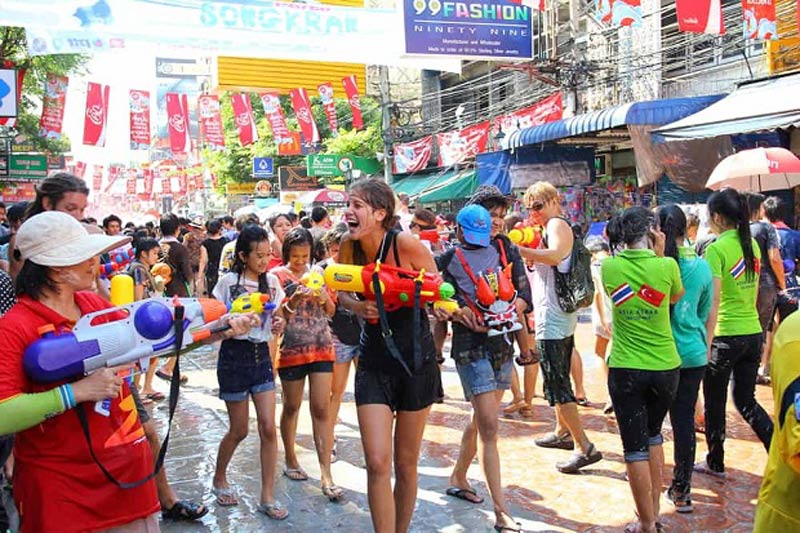
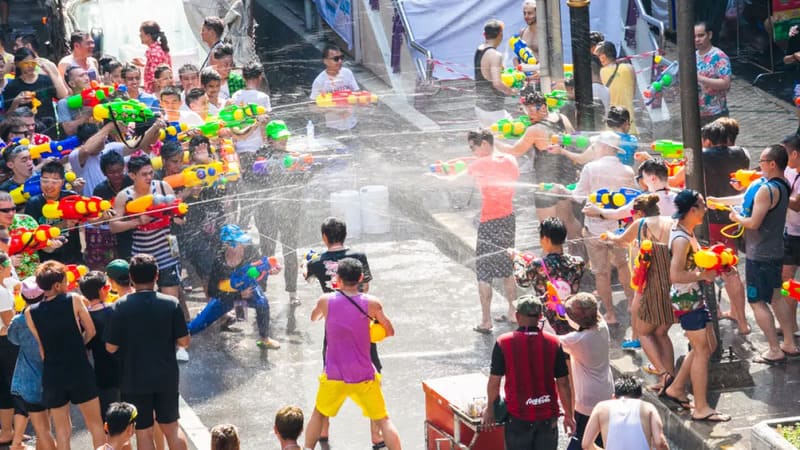
People participating in gigantic “water fights”
There are two myths regarding Songkran's beginnings. According to one, a Bodhisattva led a group of people to reestablish their faith via generosity and dedication, and they celebrated their harvest by playing in the water and using colorful powders to represent rebirth.
In the other, a smart youngster named Thammabal solves a puzzle, which leads to the self-sacrifice of the god Kabila Phrom. In order to avert catastrophe, his daughters carried his skull in a magnificent procession. This marked the Sun's transition into Aries and into Songkran, which represents reverence, rebirth, and the changing of the seasons.
Kabila Phrom is the Thai adaptation of the Hindu god Brahma, the deity of creation.
>>>> Do you know?
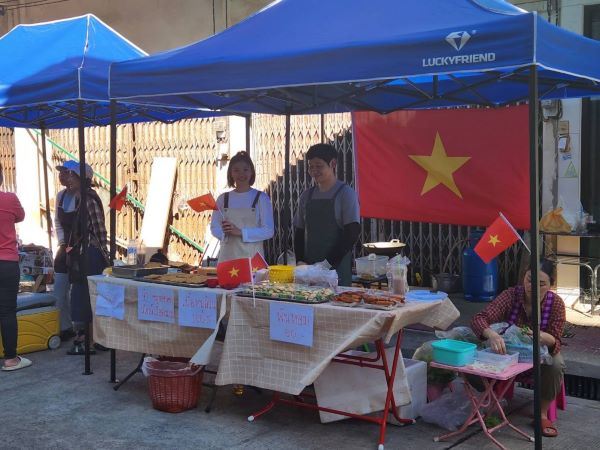
The New Year celebrations in Thailand, Laos, Cambodia and Southern Vietnam occur from April 13 to April 16. These festivals - Chaul Chnam Thmey in Cambodia, Boun Pi Mai in Laos, and Songkran in Thailand or Chôl Chnăm Thmây in Vietnam.
What does water symbolize in Songkran and how do people express wishes?
In Thai tradition, water is at the heart of Songkran. According to long-held beliefs and customs taught from one generation to the next, water is used to wash away bad luck and troubles from the past year. This is how I was taught growing up in Thailand. The idea is simple: by cleansing the old, you make space for a better year ahead.
This belief is reflected in how people celebrate Songkran today. During the festival, water fights are a way of sharing good wishes, hoping for happiness, good health, and prosperity for family, friends, and even strangers.
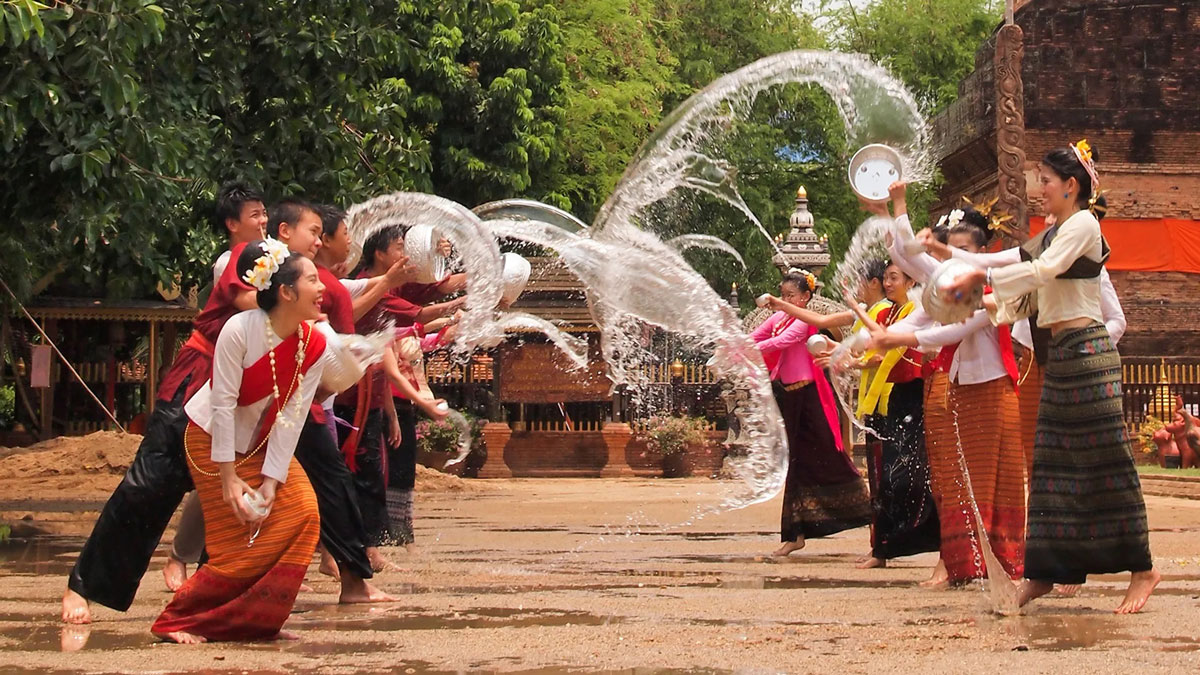
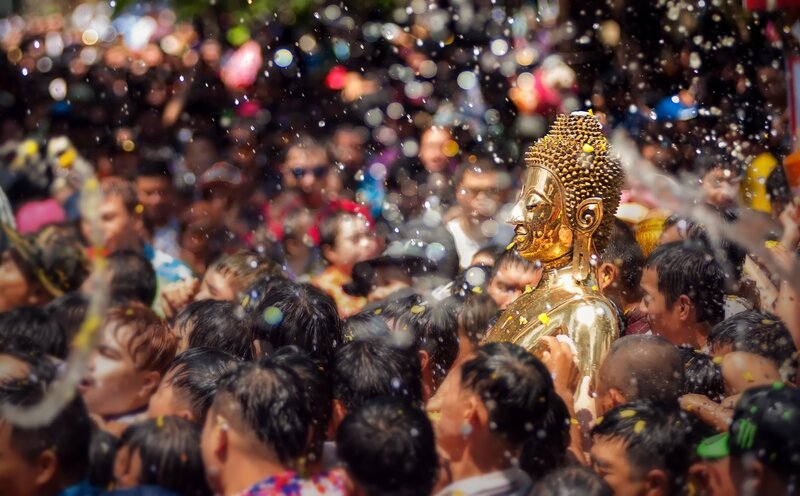
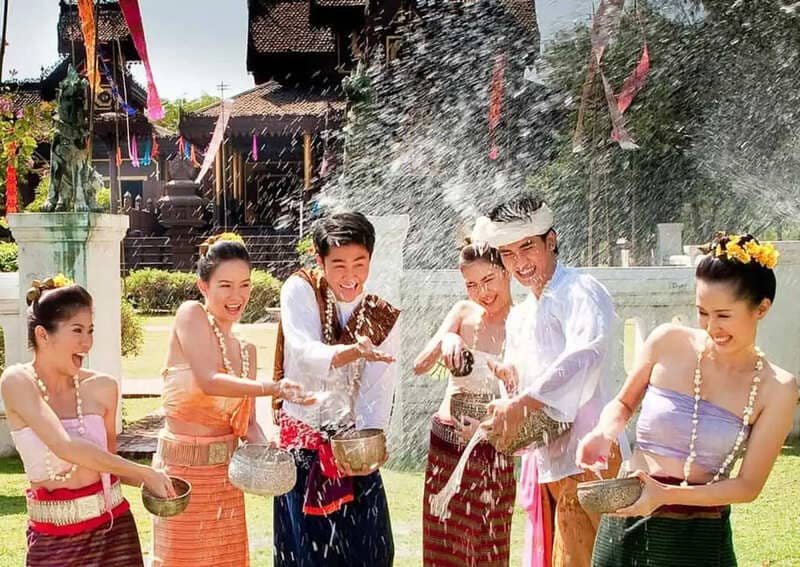
Participants sprinkle each other with water in the Songkran festival
During the three-day Songkran festival, numerous traditional activities take place, including water splashing, house and Buddha statue cleaning, temple offerings, and lively street and beach parties.
2.1. The Tradition of Water Pouring
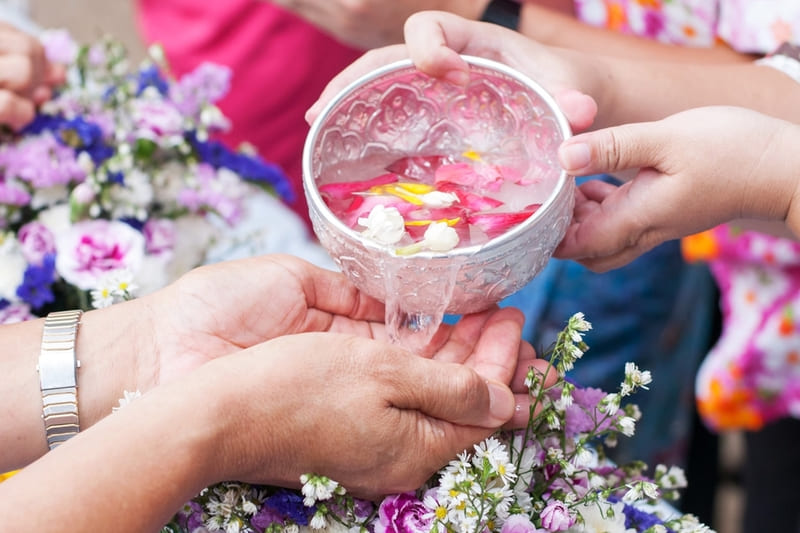
The practice of water splashing originated from collecting water used to cleanse Buddha statues. This water was then poured over family members and elders for blessings. Thais believe in the spiritual purity of water, attributing to it the ability to absolve sins and grudges accumulated in the previous year.
Thai people believe in purifying water to cleanse past sins
Over time, this ritual evolved into a national splashing event, focusing on both joy and spirituality. While locals revel in this aquatic excitement, they also dedicate part of their Songkran to visiting Wats (Buddhist temples) for donations and to accrue merit.
Central to Songkran is the ceremonial bathing. Thais believe water holds the power to purify and rejuvenate the mind and body. During the festivities, participants sprinkle water on each other, wishing a happy new year while cleansing themselves of past year's transgressions.
>>> Good to know: The blue PVC water guns are the most powerful, delivering high pressure. They are typically prohibited, and the police frequently patrol to confiscate them.
Participants sprinkle each other with water to wish each other a happy new year
2.2 Religious Observances During Songkran
Songkran offers an opportunity for Thais to make offerings to monks. They visit temples to present food, clothing, and other gifts, showing respect and appreciation for the monks' spiritual teachings and seeking blessings for the new year.
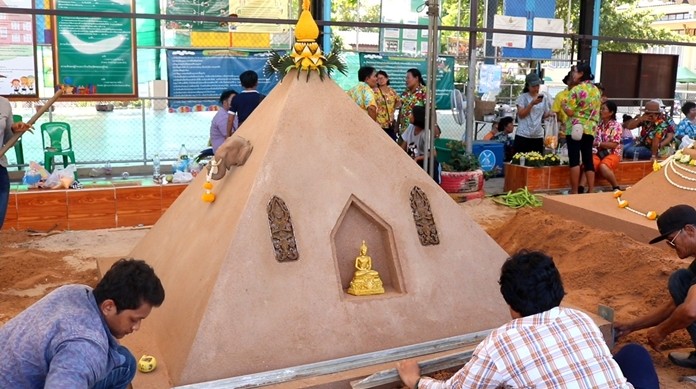
Thai people frequently attend temples for prayers and religious ceremonies. They construct sand stupas, known as "chedi," symbolizing renewal and prosperity.
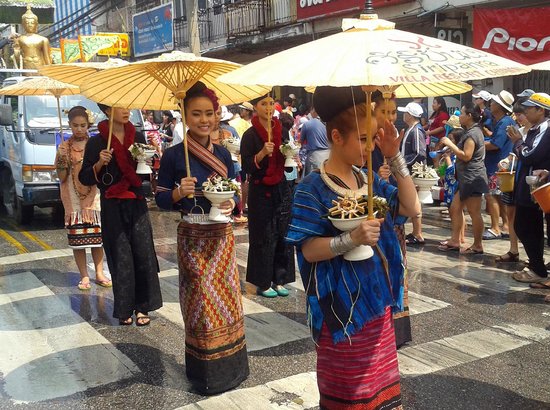
During Songkran, processions enliven the streets in celebration. Participants don traditional attire and carry Buddha statues alongside offerings to temples, often accompanied by music and traditional dances.
Sand stupa, called "chedi"
2.3. Decorations and Family Gatherings
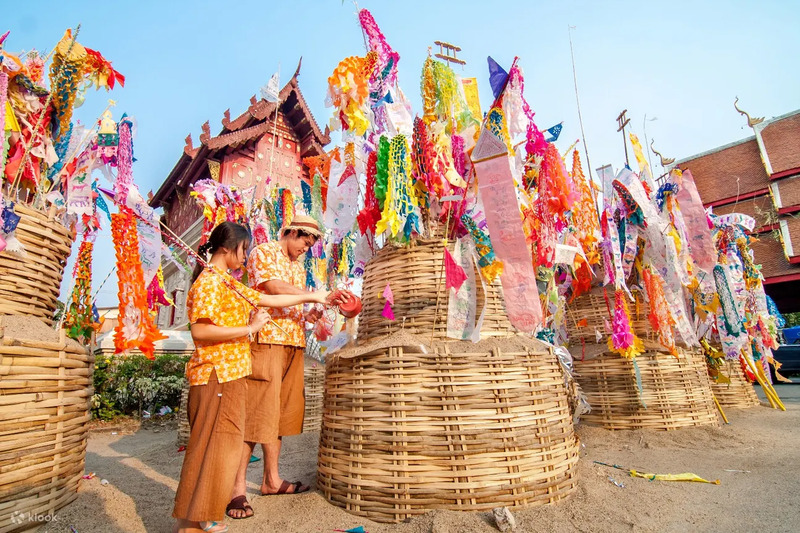
Throughout Songkran, houses and temples gleam with garlands of flowers and vibrant flags, as there's a popular belief that these decorations bring luck and ward off evil spirits. Thais embrace the tradition of cleaning their homes and temples, ridding them of negative energies amassed in the past year to usher in the new year with positivity.
Another significant custom during Songkran is “sabai sabai,” which translates to “relax” in Thai. At this time, Thais take moments to unwind, gather with family and friends, and relish outdoor activities.
Decorations of flower garlands and colorful flags
Families often come together to partake in sharing traditional meals, playing games, and participating in various outdoor pursuits. It's also a chance for individuals to don traditional Thai attire, such as the "Thai shush" for women and the "chong kben" for men.
Nowadays, Songkran is officially observed in Thailand on April 13th, with main celebrations on 3 days:
Wan Sangkhan Luang: April 13th
Wan Nao: April 14th
Wan Phya Wan: April 15th
According to tradition, which has been recognized and recorded in Chiang Mai, the former capital of the Lan Na Kingdom, the New Year festival (Songkran) traditionally lasted for six days:
Wan Sangkhan Luang: The first day of Songkran, also known as "Sangkhan Day" in Northern Thailand.
Wan Nao: The second day, when preparations are made for the New Year rituals.
Wan Phya Wan: The third day, which is the actual New Year's Day. On this day, people show respect and offer tributes to their parents, elders, and departed loved ones.
Wan Pak Pi: The fourth day, representing the end of the old year and beginning of the new.
Wan Pak Duan: The fifth day, which corresponds to the beginning of the new month.
Wan Pak Wan: The sixth day, symbolizing the beginning of the new week.
The first four days are dedicated to honoring elders, paying respect to one's family, and maintaining a spirit of humility. Offerings typically include clothing, food, land, or silk.
Songkran in Chiang Mai, the former capital of the Lan Na Kingdom
The Royal Institute of Thailand defines Sangkhan as the movement of the sun into Aries, which marks the beginning of the new solar year. Songkran is traditionally observed over three key days: Wan Maha Songkran on April 13, Wan Nao on April 14, and Wan Thaloeng Sok on April 15. These dates are well documented in Thai cultural and academic sources. (Source: UNESCO; Thammasat Museum of Anthropology)
Nang Songkran represents one of the seven daughters of Kabillaprom
4. Where to Celebrate Songkran in Thailand?
4.1. Bangkok
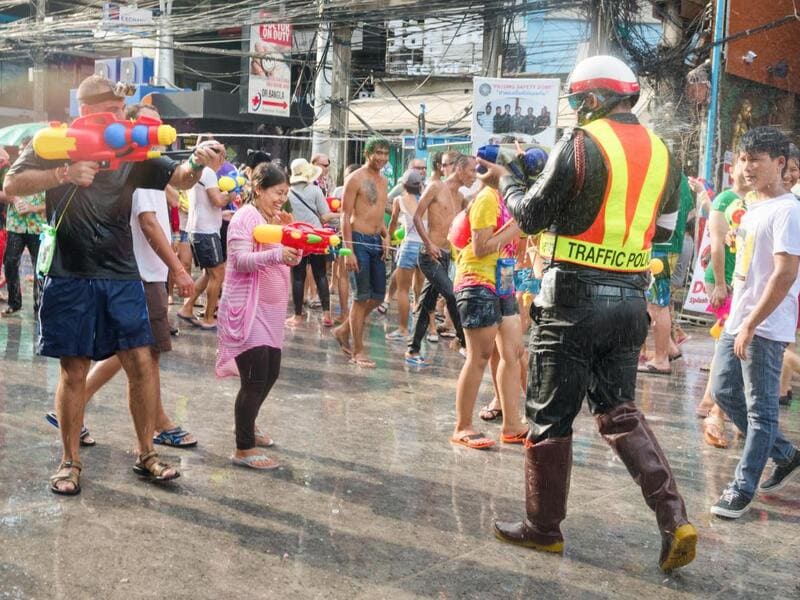
As the capital of Thailand, Bangkok emerges as one of the prime spots to immerse yourself in the vibrant spirit of Songkran. Silom Road, Khao San Road, and Rama 9 Road are among the most iconic places to experience it. Or, give a motorcycle taxi driver ฿1000 to drive you around for a few hours. You'll get soaked.
Songkran festival in Bangkok
4.2. Ayutthaya
For a more traditional Songkran affair, Ayutthaya, an ancient capital of the Kingdom of Siam, beckons. Here, you'll partake in traditional Buddhist rituals such as bathing sacred statues and presenting offerings to monks. Ayutthaya offers a serene and spiritual setting to celebrate Songkran.
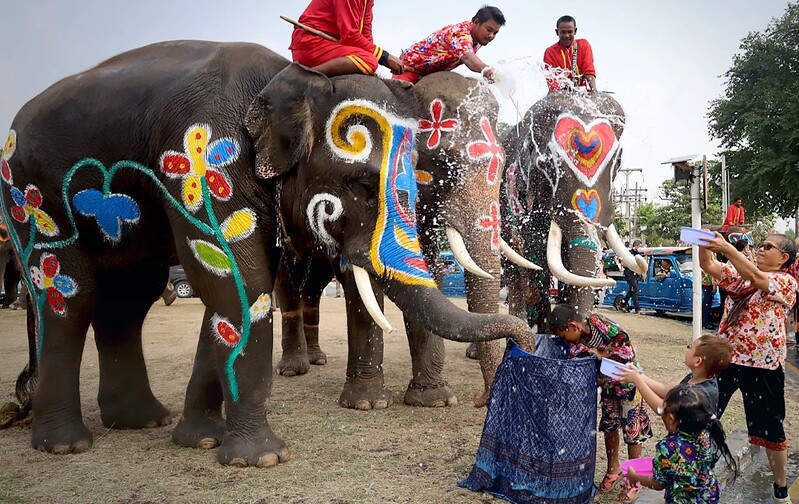
The Songkran water festival in Ayutthaya
4.3. Chiang Mai
Nestled in Northern Thailand, Chiang Mai boasts renowned Songkran celebrations.The historic city center of Chiang Mai becomes the hub of Songkran festivities, including the not-to-miss Miss Songkran parade showcasing the grace of Thai contestants.
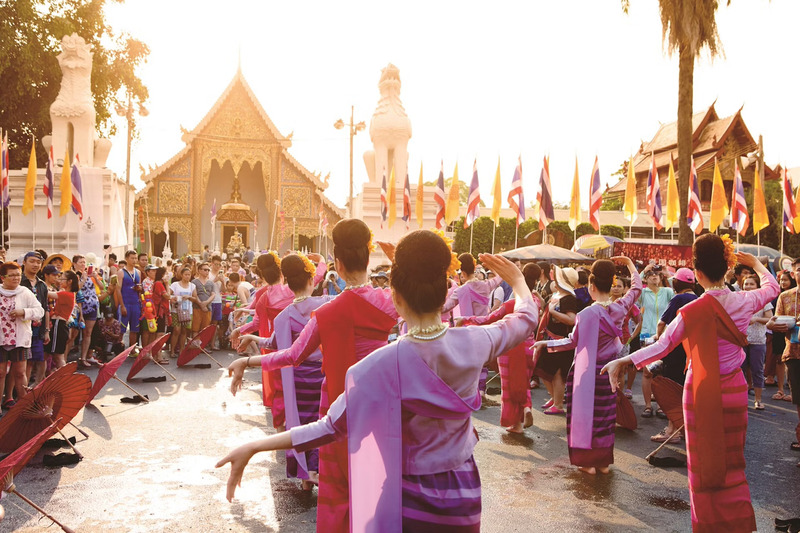
Songkran water festival in Chiang Mai
4.4 South Thailand
Southern Thailand is also a great place to celebrate Songkran . With its beautiful beaches, vibrant islands, and rich culture, this region offers plenty of options for fun and relaxation.
Koh Samet: A small island close to Bangkok, known for its white sand beaches and lively atmosphere. Perfect for quick getaways and parties during Songkran.
Koh Phangan: Famous for its Full Moon Parties, this island combines vibrant nightlife with tranquility. It also offers yoga retreats and beautiful beaches.
Koh Lanta: A peaceful island ideal for those looking to escape the crowds. It offers national parks, secluded beaches and diving opportunities.
Koh Tao: Renowned for its exceptional diving sites, this small island is a paradise for snorkeling and diving enthusiasts. Its relaxed atmosphere makes it a perfect place to relax.
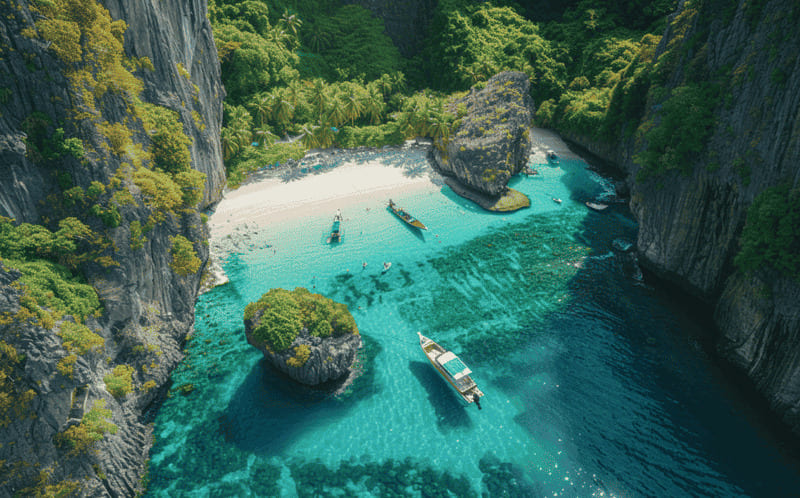
Krabi: Known for its spectacular karst cliff scenery and beautiful beaches, Krabi offers a variety of water activities and a relaxing atmosphere.
Koh Samui: A tropical island popular for its beaches, renowned for its luxury. Koh Samui offers quality services and unmatched relaxing experiences, perfect for those seeking refinement.
4.5. Phuket
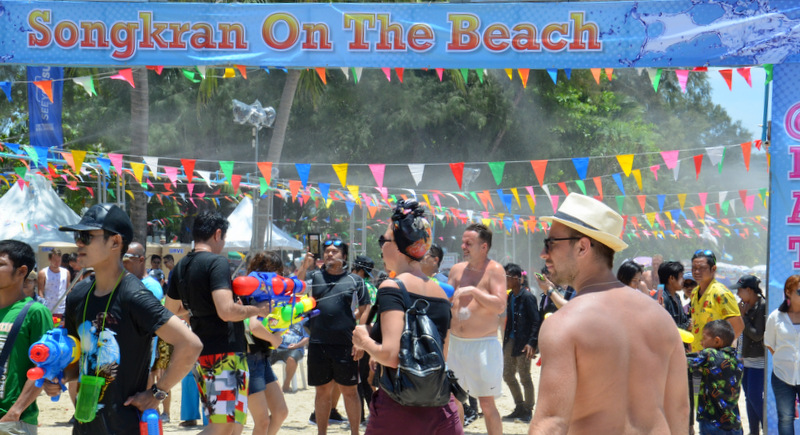
The southern paradise of Phuket also ranks high as a Songkran celebration spot. Its beaches transform into colossal water fight arenas where celebrants joyously drench each other. Patong Beach, Karon Beach, and Kata Beach host the main celebrations.
4.7 Songkran and the Wan Lai Festival in Pattaya
Pattaya celebrates the official Songkran holidays like the rest of Thailand (April 13–15), but the city is famous for stretching the party much further with its own "Wan Lai Festival." In recent years the extended celebrations have run for roughly a week after the official holidays, with the peak "Wan Lai Pattaya" beach day typically falling around April 19. For 2027, expect a similar pattern – the main Songkran holidays on April 13–15, with Pattaya's Wan Lai festivities picking up again in the days leading up to and including April 19 – though local authorities usually confirm the exact Wan Lai schedule only a few weeks beforehand, so it's worth checking closer to your trip.
Songkran water festival at Pattaya beach
Here's a map which will guide you to the best place to celebrate Songkran in Thailand!!
Source: Amazing Thailand
5. Tips for maximizing your Thai New Year from a local expert
5.1. What to Do During Songkran
Extend warm greetings to the Thai people by saying “Sawadee Pee Mai,” conveying “Happy New Year.”
Show respect during processions by maintaining humility and restraint, refraining from interfering with rituals unless invited to participate.
Opt for public transport due to potential heavy traffic during Songkran; taxis may refuse soaked passengers.
Carry only essential items, securely stored in plastic bags.
Wear suitable shoes that dry quickly. As Songkran falls in April, Thailand's hot season, wearing lightweight, breathable clothing ensures comfort throughout the day.
During Songkran, most offices, banks, and numerous small shops and restaurants remain closed, while major shopping malls typically stay open.
Savor traditional Thai dishes such as Tom Yum, Pad Thai, and Mango Sticky Rice. Also, indulge in a delicious Thai Margarita to quench your thirst!
Before the event, street vendors sell waterproof pouches, perfect for protecting your phone from water. You’ll also find goggles on offer—a handy purchase, as you'll quickly realize when water gets sprayed into your eyes.
Remember to respect the monks even when in the Songkran
5.2. What NOT to do on Songkran
Avoid getting drunk or behaving inappropriately during the festivities. Respect local customs and traditions.
Exercise caution when joining water fights to refrain from accidents. DON'T spray water on non-participants such as the elderly or monks. Use clean water responsibly, avoiding wastage.
Try not to get shot directly in your ears or eyes it can lead to infections.
Avoid using colored powder during Songkran, as these products can be toxic and cause skin and eye irritation. It's safer to opt for water splashing instead.
Do not drive under the influence of alcohol or intoxicants during Songkran; congested roads during the festivities pose significant risks.
Do not target unwilling participants or using forceful water jets or dangerous objects during celebrations.
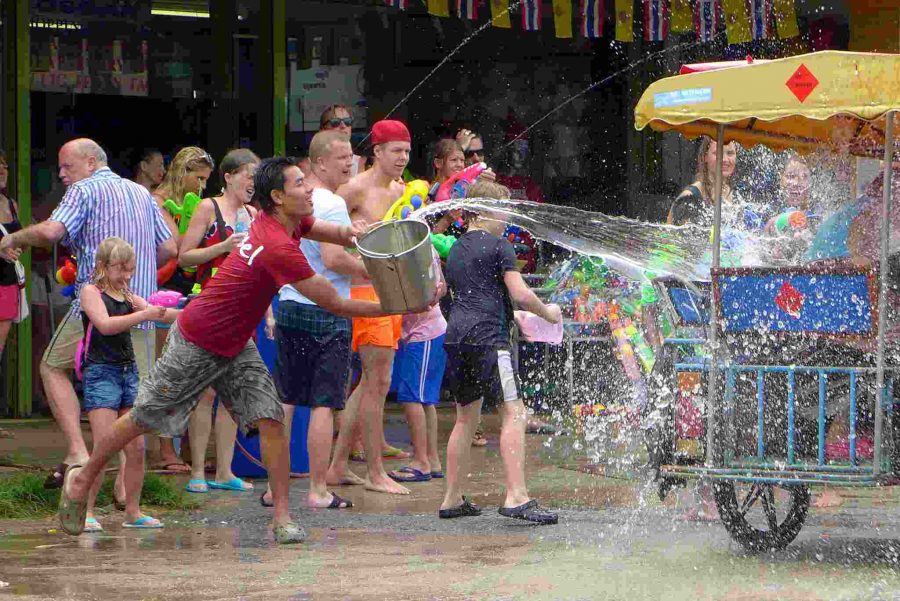
Participants take full advantage of the Thai New Year
6. FAQs
Q1. What are the best places to celebrate Songkran in Thailand?
Bangkok, Chiang Mai, Ayutthaya, Phuket and Pattaya are the most popular places to celebrate Songkran, with busy streets, big water fights and lots of local atmosphere.
Q2. What are the Songkran 2027 dates and schedule?
In 2027, Songkran will be officially celebrated across Thailand from 13 to 15 April (Tuesday to Thursday), as these are fixed national public holidays. Hotspots like Pattaya and Chiang Mai keep the water fun and events going for several extra days – in Pattaya, the season traditionally wraps up with the Wan Lai Festival around April 19.
Every year the Songkran season across Thailand comes with a packed schedule of music and events
Q3. What traditional rituals take place during Songkran?
During Songkran, people visit temples, make merit, bathe Buddha statues, pour water on the hands of elders for blessings, clean their homes and sometimes build sand stupas in temple grounds.
Q4. What is the history and origin of the Songkran festival?
Songkran comes from an old New Year celebration marking the sun’s move into Aries, and over time the gentle water‑pouring rituals on Buddha images and elders turned into the modern mix of religious ceremonies and playful street water fights.
Q5. What are some important Songkran water fight safety tips?
Avoid spraying water at monks, elderly people, children or motorcyclists, don’t use high‑pressure water guns, wear shoes with good grip, protect your phone and money in a waterproof pouch and never drink and drive
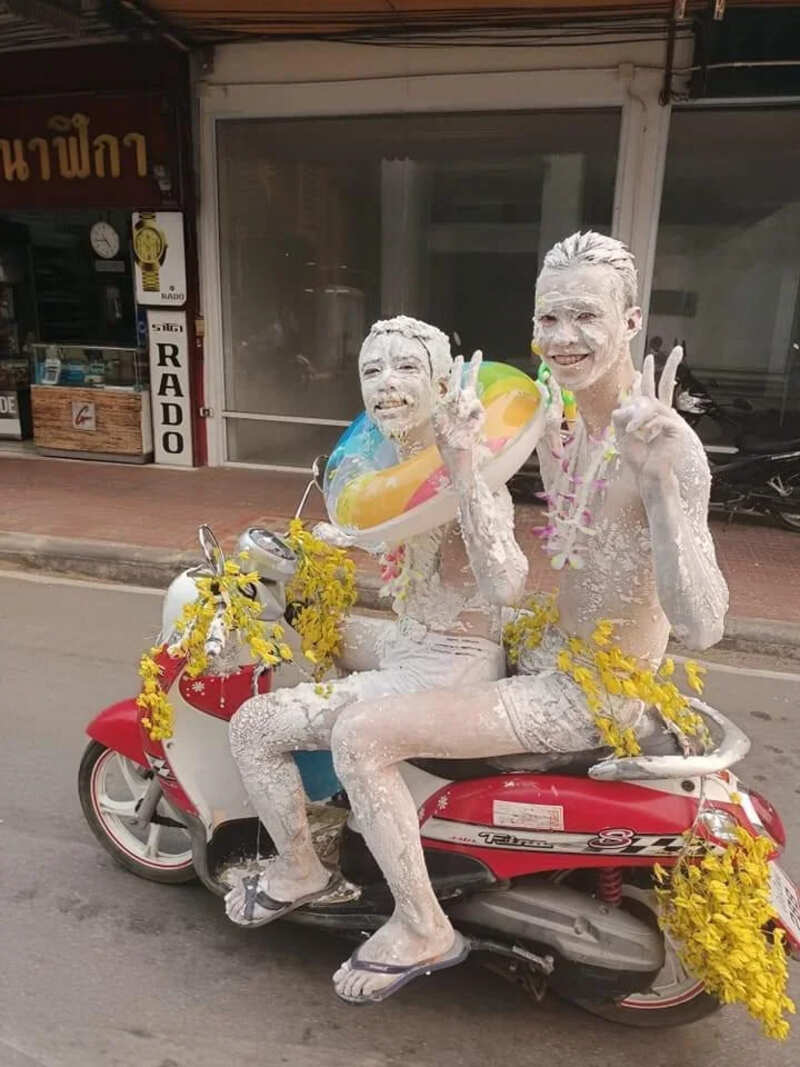
A troll photo of Songkran
Songkran stands as a joyful and spiritually rich celebration, shining a light on Thai traditions and culture. The symbols and rituals of this holiday have deep roots spanning centuries, offering both Thais and visitors a distinct chance to unite, purify, and extend New Year's wishes. Whether you're a local resident or a tourist, engaging in Songkran promises an unforgettable immersion into the essence of Thai culture.
Get ready to embrace the fun and water-filled festivities of Songkran 2027!
Thẻ tour 4886, 5575, 5417
🚌 Love Thailand? Continue your journey with those articles! 🚌:
Planning your trip?
Save time and get expert advice for FREE!
✅ 15 years of local experience
✅ Save up to 40 hours of planning
✅ Travel stress-free from start to finish
Book your free consultation today!






 Our team
 Our team
 Our team
 Our team

.jpg)
.jpg)
.jpg)
%20(2).jpg)
.jpg)


 Other
Other Add us as a preferred source