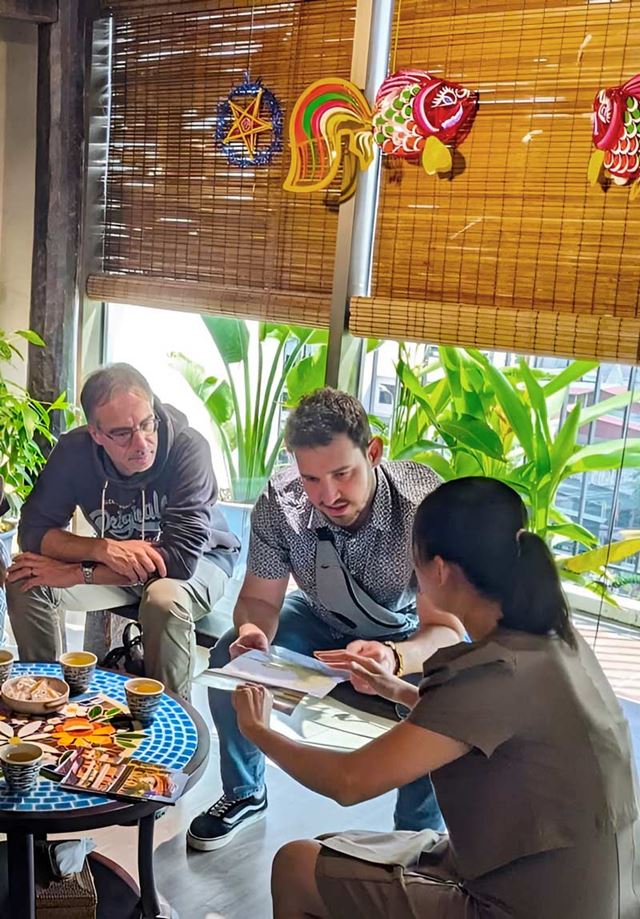
Hanoi weather in August: What to expect and how to plan?
August in Hanoi is hot, humid, and very rainy, so the best way to enjoy the city is to start early, keep afternoons flexible, and check storm forecasts if Halong Bay is part of your trip. Daytime temperatures are usually around 31–34°C, nights stay warm, and heavy showers are common.
You do not need a perfectly dry day to enjoy Hanoi in August. You need a plan that can move with the weather. If I were arranging an August day for guests, I would use one simple rhythm: outdoors early, indoors around midday, flexible again in the evening.
Written by Oliver PHUNG (Tour Guide)
Updated on Aug 18, 2026
0 comment
Oliver Phung is a Northern Vietnam-based tour guide and blogger. His favorite topics to write about include cuisine, culture, travel, and under-the-radar experiences. Oliver possesses a deep, detailed understanding of the region, from the indigenous culture of the Hmong in the Northwest to the highland lifestyle of the Tay in the Northeast. Whether he is exploring ancient architecture or geological landscapes, he is always eager to share his insights with his readers.
Beyond his work at Kampá Tour, he produces specialized travel content on platforms such as Reddit, Instagram, LinkedIn, and various other publications.
August is one of Hanoi's wettest periods, but many days still have useful dry windows for sightseeing.
What is Hanoi's August Weather Like?
Hanoi in August is hot, humid, and near the peak of the summer rainy season. Expect daytime highs around 31–34°C, warm nights around 25–27°C, high humidity, and frequent heavy showers.
Typical August condition
Approximate level
What it means for your trip
Daytime temperature
Around 31–34°C (88–93°F)
Do longer outdoor visits early in the day.
Night temperature
Around 25–27°C (77–81°F)
Evenings stay warm and humid.
Monthly rainfall
Around 300 mm or more
Keep the itinerary flexible and expect sudden showers.
Humidity
Often around 80% or higher
The heat can feel stronger than the forecast suggests.
Rainy days
More than half the month
Rain is common, but it does not necessarily last all day.
Usually, no. August rain often comes in heavy bursts rather than steady rain from morning to night. A morning can begin bright and hot, then clouds build quickly before a strong afternoon shower. After that, the weather may open up again.
This is why I would not cancel a Hanoi day just because the forecast shows rain. Use the dry windows when they appear. If the morning is clear, take advantage of it. If a shower arrives after lunch, move to a museum, café, market, or longer meal and check the sky again later.
Why is August so Rainy and Humid?
August sits deep in Northern Vietnam's summer monsoon, when warm, moisture-rich air and strong daytime heating create frequent showers and thunderstorms. The result is not only more rain but also air that can feel much hotter than the thermometer suggests.
What August feels like on the ground
August feels less like continuous bad weather and more like a daily negotiation between heat, humidity, sun, and sudden rain. Mornings are often the easiest part of the day. By late morning, the streets become hotter and the air feels heavier. A downpour may then cool the city for a while, although some low-lying streets can hold water after stronger rain.
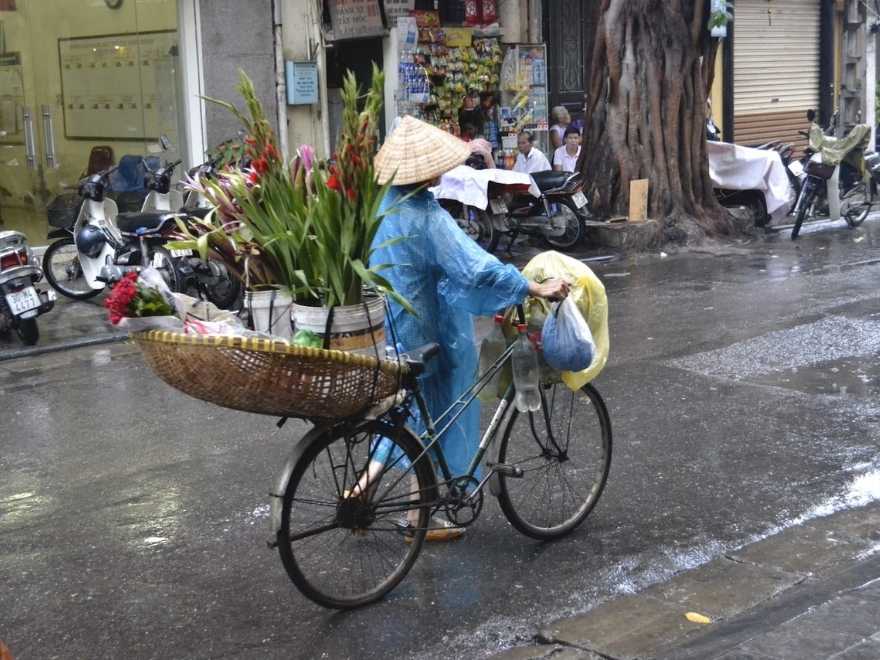
After a shower, Hanoi can become surprisingly atmospheric. Wet pavements reflect shop lights, traffic starts moving again, cafés fill up, and the temperature may feel easier for a short walk. You start doing what locals do: use the good weather when it appears rather than expecting the whole day to stay the same.
Early starts make August sightseeing much more comfortable.
Humidity: hotter than the thermometer says
High humidity is what makes August more tiring than the temperature alone suggests. At 31 or 32°C, Hanoi may not look extreme on a weather app, but long walks become harder when the air is already saturated with moisture.
If I were planning a day for guests, I would keep roughly noon to 3 PM mostly indoors. A lunch break, museum, café, or workshop during those hours usually makes more difference to comfort than carrying extra travel gear.
Typhoon Season: What August Travelers Need to Know
August is within Northern Vietnam's tropical-storm season, so travelers should pay particular attention to forecasts if their itinerary includes Halong Bay, Bai Tu Long Bay, or other coastal areas. For a normal Hanoi city stay, this does not mean your whole trip is likely to be disrupted. The bigger issue is flexibility.
A tropical storm can bring heavier rain than normal, short-term flooding, slower traffic, delayed transfers, or changes to bay-cruise schedules. If Halong Bay is an important part of your trip, do not place the cruise immediately before your international flight.
I would leave at least one buffer night whenever possible and check the cruise company's weather, cancellation, and rescheduling policy before booking. For a specific travel date, follow current forecasts rather than relying on seasonal averages.
August weather can affect Halong Bay plans, so a flexible cruise schedule is useful.
Hanoi's Air Quality in August
Air quality can vary from day to day, so sensitive travelers should check live AQI data rather than relying on a fixed monthly number. Frequent summer rain can temporarily wash dust and fine particles from the air, and Hanoi sometimes feels noticeably fresher after a strong shower.
On hot, dry, still days, traffic pollution can still build up. For most visitors, however, heat and humidity are often a more noticeable comfort issue than air pollution during August.
If you have asthma or another respiratory condition, check the AQI before planning a long walk along busy roads and keep more time for lakes, museums, cafés, and shaded streets.
Hanoi can feel fresher after rain, although humidity remains high in August.
Who is August Suitable For?
August works best for flexible travelers who are comfortable changing plans around heat and rain. It suits people who enjoy food, cafés, museums, shorter city walks, local neighborhoods, and evening activities rather than long outdoor days.
It is harder for travelers with a tightly packed itinerary, anyone depending on several clear days at sea, or families and older travelers who are especially sensitive to heat and humidity. If a Halong Bay cruise is the centerpiece of your trip, a later month can offer a more comfortable margin. For a sense of that transition, see Vietnam in September.
What to Do in Hanoi in August?
The best August itinerary follows the rhythm of the weather: outdoor sightseeing in the morning, indoor activities in the afternoon, then food and culture in the evening. Trying to force a full outdoor schedule is usually what makes the month feel harder than it needs to be.
Morning: Outdoor sightseeing (6:00–9:30 AM)
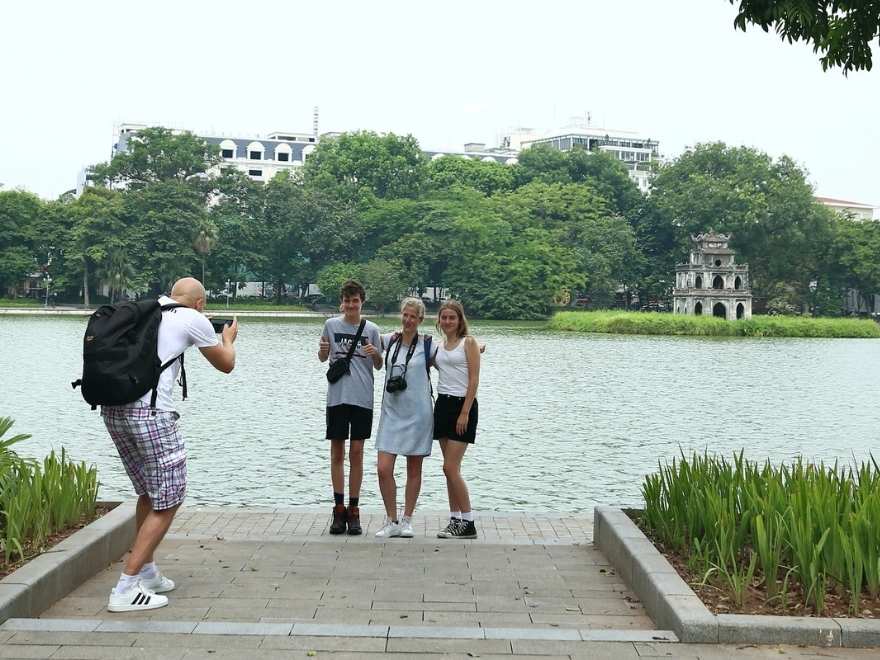
Early morning is the best time for outdoor sightseeing in August. Start at Hoan Kiem Lake shortly after sunrise, while the air is at its coolest and locals are out exercising.
From there, walk into the Old Quarter before the heat builds. Keep the route short rather than trying to cover every street. Around breakfast time, stop for a bowl of pho or bun cha at a street-side stall.
After breakfast, choose one main cultural stop instead of trying to fit in several. That keeps the day comfortable and leaves room to adjust if clouds build early.
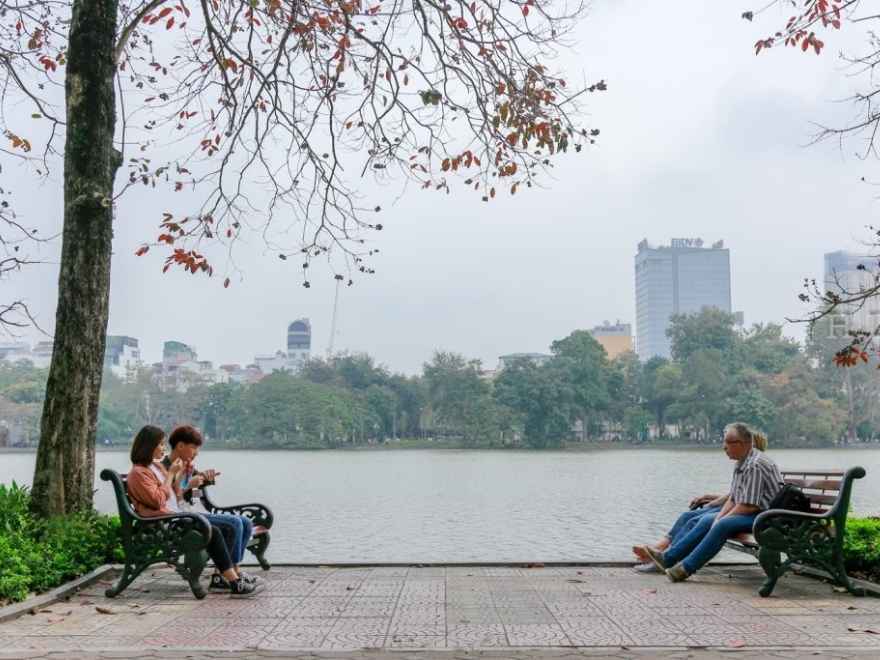
Hoan Kiem Lake is at its easiest in the early morning before August heat builds.
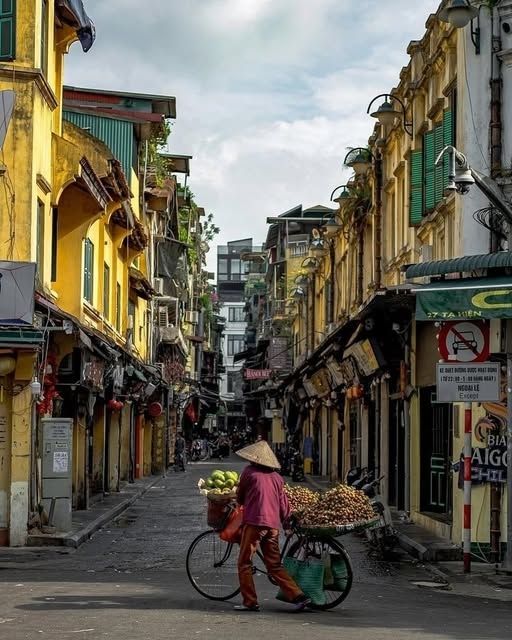
A short Old Quarter walk and local breakfast fit naturally into an August morning.
Afternoon: Indoor activities
Use early afternoon for indoor activities. Once the heat and humidity rise, moving indoors is not a fallback; it is simply the more comfortable way to use the day.
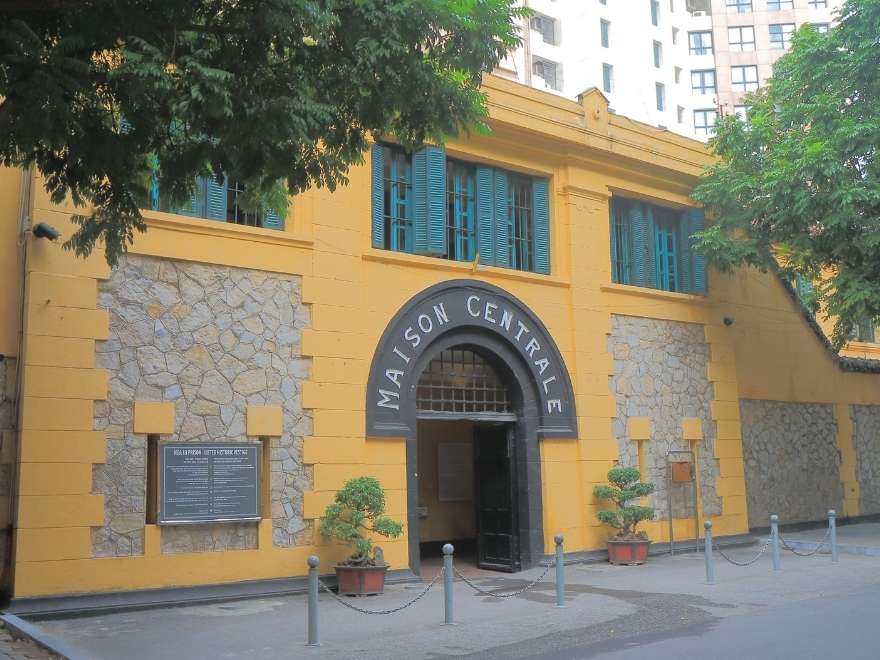
Hoa Lo Prison is a strong option because it is central and easy to combine with the Old Quarter. Dong Xuan Market is another practical choice when a shower interrupts your walk, and an air-conditioned café can be a very good use of a rainy hour.
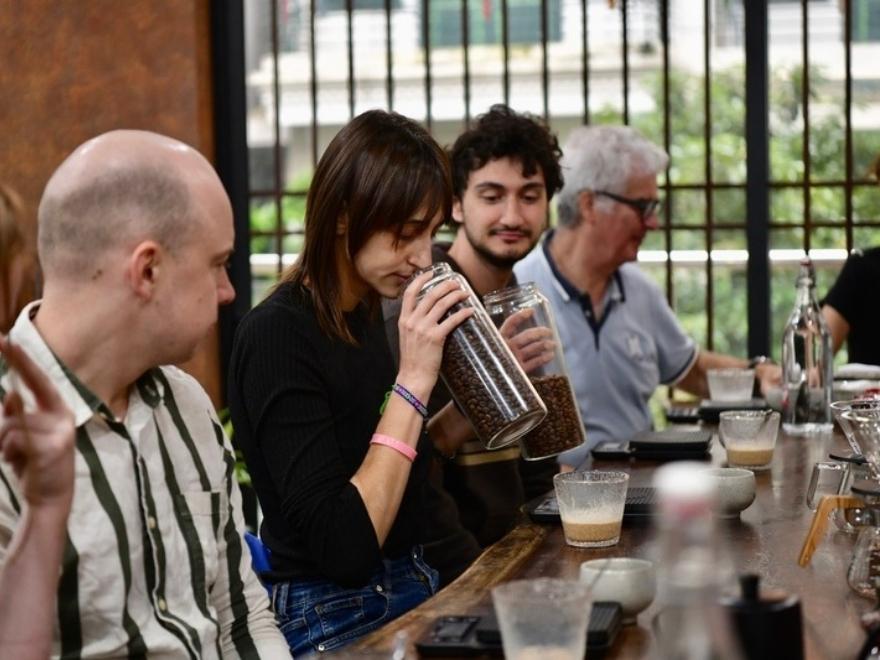
If I were arranging the day, I would use this window for lunch, a museum, a coffee break, or a hands-on workshop and then decide what to do next once the weather settles.
Museums and other indoor stops work well during Hanoi's hottest and wettest hours.
A café or coffee workshop can turn an afternoon shower into part of the Hanoi experience.
Late August: Hanoi's first taste of autumn
Late August can show the first small signs that Hanoi is moving toward autumn, even though the weather is still very much summer. Around tree-lined streets such as Phan Dinh Phung and Hoang Dieu, you may begin noticing ripe sấu fruit falling from the trees. Early-season cốm can also start appearing, although its better-known season comes later.
These details are easy to miss if you only visit major attractions. For me, they are part of what makes late August interesting: the city is still hot and rainy, but small changes begin appearing in its food, streets, and daily rhythm.
August 19 marks the anniversary of the August Revolution, while late August leads into preparations for Vietnam's National Day on September 2. Depending on the year and your exact dates, museums and historical sites may have commemorative exhibitions or displays. Check current programs rather than assuming the same events run every year.
If your dates line up, Vu Lan falls on the 15th day of the seventh lunar month. Pagodas can be busier around this period as families honor ancestors and give thanks to their parents. Visitors are welcome at many temples, but the best approach is quiet and respectful rather than treating ceremonies as a performance.
Night: Dining and culture
Evening is usually one of the easiest times to enjoy Hanoi in August. Temperatures remain warm, but the day feels less intense after sunset, especially if rain has cleared.
One neighborhood, one good meal, and one cultural stop is often enough after a humid August day.
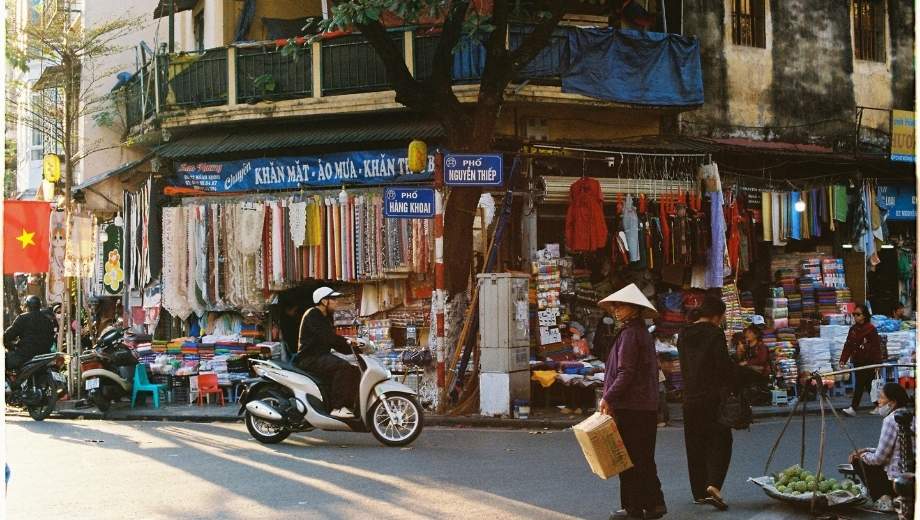
When the rain clears, Hanoi's Old Quarter becomes lively again in the evening.
What to Pack for Hanoi in August?
Pack for heat first and sudden rain second. You do not need heavy gear, but a few practical choices make August much easier.
A light rain jacket or poncho: More reliable than an umbrella when a shower arrives with wind.
Quick-dry, breathable clothing: Light fabrics are more comfortable in high humidity and dry faster after rain.
Grippy, water-resistant footwear: Wet pavements and tiled sidewalks can become slippery.
A dry bag or waterproof pouch: Useful for your phone, passport, camera, and power bank.
SPF 50+ sunscreen: Strong UV is still possible between showers and under bright cloud.
A light layer: Optional for air-conditioned spaces or if you are continuing to cooler northern destinations.
Most importantly, keep your day bag light. Carrying too much in Hanoi's humidity becomes tiring surprisingly quickly.
Logistics, Safety, and Travel Disruptions
Heavy August rain can slow Hanoi down, so give yourself more travel time during and immediately after a strong shower. Short-term flooding on lower-lying streets can affect traffic even when the rest of the city is operating normally.
Transport: During or just after heavy rain, a taxi or Grab Car is often more practical than walking or using a motorbike taxi.
Safety: Avoid wading through flooded streets when you cannot judge the depth or road surface.
Halong Bay and coastal plans: Follow your cruise operator's instructions closely if a tropical storm is forecast, and confirm the weather policy when you book.
Forecast checks: Recheck conditions in the morning and again later in the day because August weather can change quickly.
Verify current conditions: Check recent rainfall and active storm warnings close to your departure date instead of relying only on monthly averages.
Confirm practical details: Make sure your hotel's air-conditioning is reliable and review any cruise cancellation or rescheduling policy in writing.
Prepare backup options: Keep a short list of indoor attractions saved on your phone so a sudden shower changes the plan rather than ending the day.
Is August a Good Month to Visit Hanoi?
Yes, August can still be a good month to visit Hanoi if you are flexible, but it is not the easiest month for long outdoor days. You trade consistently dry weather for a city that still feels lively and local: early-morning lakes, sudden summer rain, long café breaks, warm evenings, and the first subtle signs that autumn is getting closer.
If I were planning the trip, I would not try to beat the weather. I would build the itinerary around it: start early, keep afternoons loose, watch the forecast, and leave room for a change of plan.
Yes, if you are flexible. August is hot, humid, and rainy, so it works best for travelers who are comfortable changing plans around the weather.
What is the rainy season in Hanoi?
Hanoi's wetter season generally runs from around May into October. Rain becomes a regular part of summer travel, with August among the wettest periods.
How much does it rain in Hanoi in August?
Monthly rainfall is commonly around 300 mm or more, depending on the climate dataset and averaging period. Much of the rain comes in heavy showers or thunderstorms rather than steady all-day rain.
Which month should you avoid in Hanoi?
There is no single month everyone needs to avoid. June through August are harder if you dislike heat, humidity, and heavy rain, while winter can feel cool and damp. October and November are usually easier for long walks and outdoor sightseeing.
Is August a good time to visit Vietnam?
It depends on the region. Northern Vietnam, including Hanoi and Halong Bay, is in a wetter and more storm-exposed period, while weather patterns can be very different in Central and Southern Vietnam. Plan by region rather than expecting one weather pattern across the whole country.
Will a typhoon affect my Halong Bay cruise in August?
It is possible, but not guaranteed. August is within the northern tropical-storm season, so check current forecasts and your cruise operator's policy. A buffer day is useful if the cruise is a major part of your itinerary.
What should I pack for Hanoi in August?
Pack light, quick-dry clothing, rain protection, footwear with good grip, sunscreen, and waterproof protection for electronics and documents.
Planning your trip?
Save time and get expert advice for FREE!
✅ 15 years of local experience
✅ Save up to 40 hours of planning
✅ Travel stress-free from start to finish
Book your free consultation today!











 Our team
 Our team
 Our team
 Our team





 Other
Other Add us as a preferred source