Hanoi January weather at a glance
| Weather factor |
Typical January conditions |
What it means for travelers |
| Average daytime high |
Around 20–21°C (68–70°F) |
Late morning and early afternoon are usually the most comfortable times for outdoor sightseeing |
| Average nighttime low |
Around 14–15°C (57–59°F) |
A sweater or jacket is normally useful after sunset |
| Monthly rainfall |
Around 15–40 mm (0.6–1.6 in) |
Heavy or prolonged rain is uncommon |
| Rainy days |
Only a few days with measurable rain |
Brief drizzle may still occur |
| Relative humidity |
Around 75–76% |
Cloudy days may feel damp |
| Sky conditions |
A mix of cloud, haze and brighter intervals |
Clear blue skies are possible but not guaranteed |
| Daylight |
Roughly 11 hours |
Plan longer outdoor visits before late afternoon |
| Cold fronts |
Short colder periods may occur |
Your travel dates may feel colder than the monthly average |
January has little rain overall, but brief drizzle can still leave the streets damp and the sky grey. This is why Hanoi may feel drizzly at times even though January is part of the dry season.
On brighter days, afternoon temperatures may reach 22–24°C (72–75°F) and feel pleasantly mild. These warmer periods are possible, but they should not be treated as the average for the entire month.
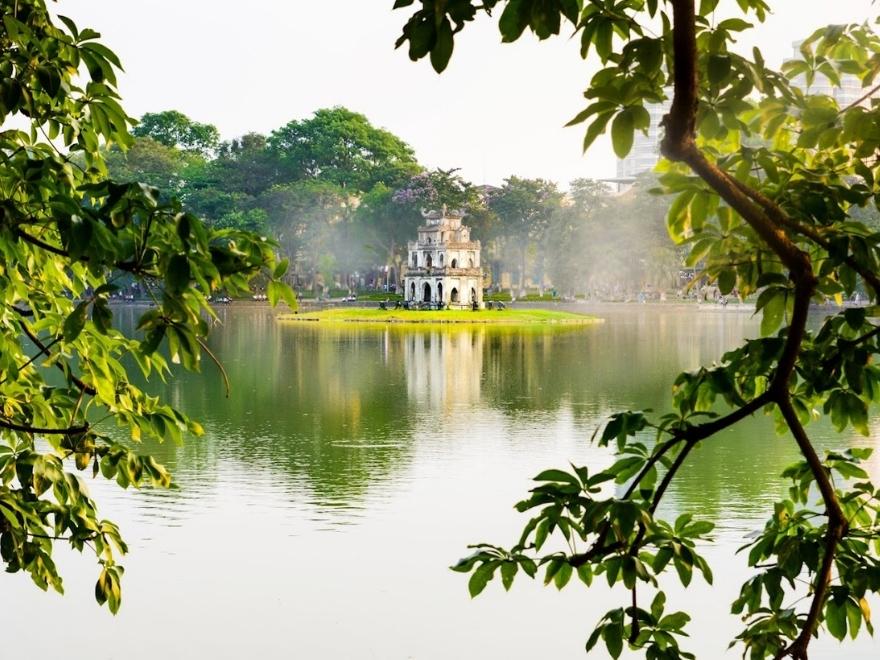
Is January the coldest month in Hanoi?
January is usually Hanoi’s coldest month by average temperature, although individual days can range from mild to noticeably cold.
A brighter afternoon may feel comfortable for walking. When a winter cold front arrives, however, temperatures can fall for several days, while cloud and wind make outdoor sightseeing less comfortable.
December and February are generally a little milder, but the difference may not be obvious during a short trip. The forecast for your actual travel week matters more than the monthly ranking.
Early January vs late January
| Timing |
What travelers can usually expect |
| Early January |
Hanoi follows its normal winter routine, apart from activities around the Western New Year |
| Mid-January |
Daily conditions depend more on individual cold fronts than on the date |
| Late January 2027 |
Temperatures remain variable, while the city gradually begins preparing for Tet |
Late January is not always warmer than early January. A cold front can arrive at any point during the month, so the forecast for your travel dates matters more than the week you choose.
In 2027, the main late-month difference is likely to be the atmosphere rather than the weather.
Data note: These ranges combine recent January records with long-term January averages from WeatherSpark and historical climate data from Time and Date. They describe typical January conditions, not the exact forecast for your trip. Check the weather seven to ten days before arrival and again shortly before departure.
.jpg)
Is January a good time to visit Hanoi?
Yes, January can be a good time to visit Hanoi if you enjoy cool-weather sightseeing, local food and cultural experiences more than tropical warmth and reliable sunshine.
Walking is less tiring than during the summer, and museums, temples, markets and cafés are easy to combine in the same day. The main drawback is the possibility of grey skies, damp weather and occasional cold spells.
January is a good fit if you enjoy:
- Exploring Hanoi on foot without intense summer heat
- Museums, temples and historical sites
- Hot local food and café stops
- Markets, small streets and everyday neighborhood life
- A cooler and slower-paced city break
January may not suit you if you expect:
- Clear blue skies throughout your stay
- T-shirts and shorts all day
- Warm evenings for long outdoor dinners
- Consistently bright conditions for photography
- Tropical or beach-style weather
In practice, January suits a food-and-culture trip better than a holiday built around sunshine. With flexible clothing and realistic expectations, you can still spend most days exploring Hanoi normally.
.jpg)
What changes in late January 2027 before Tet?
Tet falls on February 6 in 2027, so January visitors will see Hanoi preparing for the holiday rather than experiencing Tet itself.
The festive atmosphere is usually limited during the first half of the month, then becomes easier to notice toward late January. Because the official holiday has not yet begun, most attractions, restaurants and travel services are still expected to follow their normal schedules.

How cold does Hanoi actually feel in January?
Hanoi in January usually feels cool rather than severely cold, but the experience can change quickly. A sunny afternoon may be comfortable for walking, while a grey, windy or drizzly day can feel much chillier.
How cold you feel also depends on where you come from, how long you stay outdoors and whether you travel on foot, by motorbike or by boat.
What different January days may feel like
| Situation |
What it may feel like |
What it means for your day |
| Mild and sunny |
Cool in the morning, comfortable by midday |
Good for longer walks |
| Cloudy and damp |
Colder than the temperature suggests |
Break up outdoor visits with a café or indoor stop |
| Cold and windy |
Noticeably chilly in open areas |
Keep long outdoor plans flexible |
| Motorbike ride or open cruise deck |
Colder than walking at the same temperature |
Wind protection becomes more important |
Will Hanoi feel cold to you?
That depends partly on the climate you are used to. Travelers from tropical countries may find temperatures of 15–18°C surprisingly cold, particularly in the morning and after sunset. Visitors accustomed to European or North American winters may consider many January days mild.
Even travelers used to colder weather can feel uncomfortable after several hours outdoors, a motorbike ride or an evening in a room without effective heating. This is why two visitors may describe the same January day very differently.
Local people may also appear more warmly dressed than you expect. Many Hanoians are used to a warmer climate and spend part of the day riding motorbikes, where the wind makes the cold more noticeable.
A heavy winter coat is not necessary every day, but prepare for your own tolerance to cold and the activities you have planned rather than copying what other people are wearing.
Why damp and windy days feel colder
Hanoi’s winter humidity does not feel hot and sticky like summer. Instead, cloud, light drizzle and damp air can make a cool day less comfortable, especially when the wind picks up.
You will notice this most on a motorbike, beside West Lake or on an open cruise deck. A day that feels comfortable while walking through the sheltered streets of the Old Quarter may feel much colder in these exposed situations.
Light drizzle can also leave shoes or outer clothing slightly damp without disrupting the whole day. In January, sunshine, wind and time spent outdoors can matter as much as the temperature shown on your weather app.
Why Hanoi may feel cold indoors
Going inside does not always mean entering a warm space. Central heating is uncommon in many smaller hotels, guesthouses, apartments, local cafés and older buildings.
Tiled floors and limited insulation can leave some rooms feeling chilly in the morning or at night. Some air conditioners have a heating mode, but this is not available or effective everywhere.
Not every hotel has this issue, but it is worth checking the room facilities if you are sensitive to cold. Keep one comfortable sweater nearby for your room, cafés and restaurants rather than assuming that every indoor space will be heated.
A quick note on fog, haze and air quality
A grey January morning may be caused by cloud, fog or haze, and you cannot always tell the difference by looking outside. Air quality can also change from one day to another.
Check Hanoi’s live AQI rather than judging the whole month from one hazy day or an alarming online comment. Travelers who are sensitive to pollution may also find it useful to carry an N95 mask.
What to wear and pack for Hanoi in January?
Pack for the short-term forecast and the activities you have planned rather than relying only on Hanoi’s monthly average.
Layers work best because a chilly or damp morning may become more comfortable by midday before temperatures fall again after sunset.
What to wear based on the forecast
| Short-term forecast |
Practical clothing choice |
| 20–24°C (68–75°F), sunny |
A T-shirt or long-sleeved top, with a light jacket for the morning and evening |
| 15–20°C (59–68°F), cloudy |
A sweater, jacket, long pants and closed shoes |
| 10–15°C (50–59°F), damp or windy |
A warm wind-resistant jacket, scarf and warmer socks |
| Below 10°C (50°F) or a strong cold front |
A packable puffer, warm inner layers and thicker socks |
These are practical guidelines rather than fixed rules. Add or remove one layer according to your own tolerance to cold.
Adjust for the activity, not only the temperature
The same forecast may require different clothing depending on how you spend the day.
| Activity |
Main exposure |
What matters most |
| Walking in central Hanoi |
Temperatures changing during the day |
Removable layers that are easy to carry |
| GrabBike or motorbike ride |
Continuous wind exposure |
Wind-resistant jacket, scarf and closed shoes |
| Ha Long Bay cruise |
Wind and long periods sitting still |
A warm outer layer that blocks the wind |
| Sapa or Ha Giang |
Lower temperatures, elevation and fog |
Thermal layers and warmer outerwear |
At the same temperature, a motorbike ride or open cruise deck will normally feel colder than walking. In these situations, a wind-resistant outer layer can be more useful than simply adding a thicker sweater.
For a normal sightseeing day in central Hanoi, flexible layers are usually more practical than wearing your warmest coat from morning until evening.
Small items worth packing
- Compact umbrella: Useful for brief drizzle
- Lightweight rain jacket: Convenient for walking or motorbike rides
- Lip balm: Helpful on cooler and windier days
- Moisturizer: Useful if your skin reacts to winter air
- N95 mask: Worth carrying for hazy days or if you are sensitive to pollution
- Closed walking shoes with reasonable grip: Better for damp pavements than sandals
Clothing suitable for Hanoi may be too light for Sapa or Ha Giang and unnecessarily warm for southern Vietnam. Finalize your packing after checking the forecast for every stop on your itinerary.
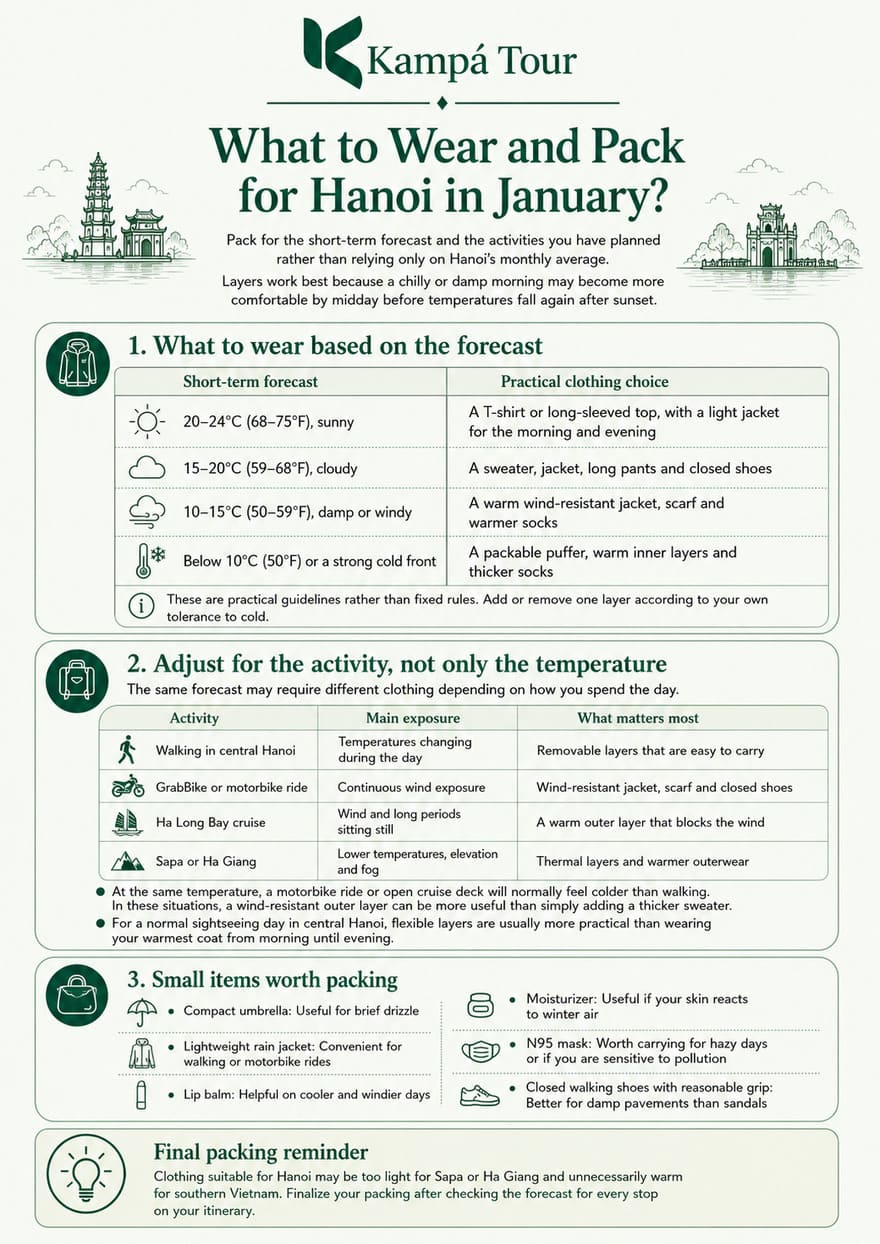
Best things to do in Hanoi in January
January does not greatly limit the things you can do in Hanoi, but it may change the order and pace of your day.
Longer walks are generally more comfortable from late morning to early afternoon, while museums, cafés and hot food provide natural breaks when the weather turns cold or drizzly.
Explore the Old Quarter during the milder hours
January’s cooler temperatures make Hanoi’s Old Quarter easier to explore on foot than during the city’s hot and humid summer.
Late morning and early afternoon are usually the best times for a longer walk through its small streets, traditional shops, temples and food stalls.
On a grey or drizzly day, shorten the route and choose streets with plenty of cafés, shops and covered stops. Light drizzle rarely ruins the entire day, but several uninterrupted hours outside may become uncomfortable.
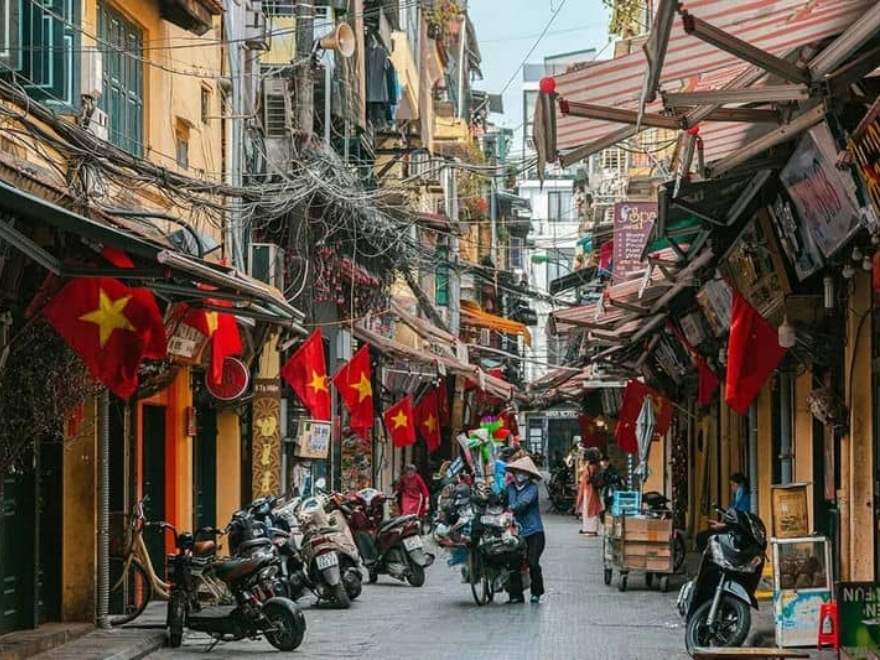
Combine outdoor sights with museums and cultural stops
January works well for Hanoi’s cultural attractions because you can easily alternate between indoor and outdoor spaces.
A visit to the Temple of Literature or the Ba Dinh area can be followed by the Vietnam Women’s Museum, the Vietnam Museum of Ethnology or another indoor cultural site. On a colder day, avoid placing several large outdoor complexes back to back.
The most comfortable approach is to combine one main outdoor visit with a museum, hot meal or café stop rather than moving the entire day indoors as soon as the sky becomes cloudy.
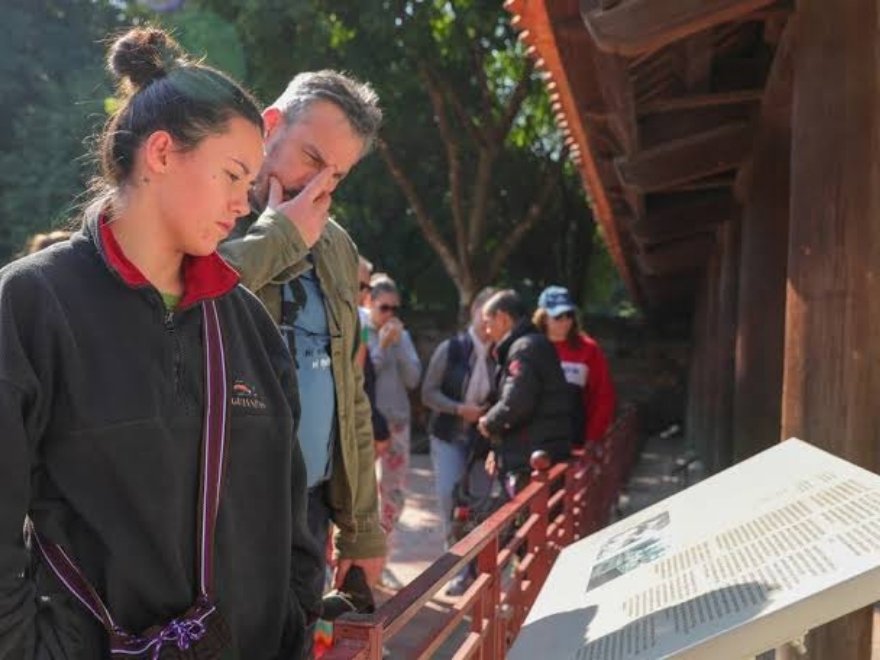
Enjoy Hanoi’s cold-weather food
When deciding what to eat in Hanoi in January, hot dishes can become part of the way you plan the day rather than simply a meal between visits.
Along with pho, look for bánh đúc nóng, cháo sườn, ốc nóng, grilled food or a shared hotpot. Roasted corn, sweet potatoes and bánh trôi tàu, served warm in ginger syrup, are also well suited to colder evenings.
Use meals and café stops as natural breaks after outdoor walks or before an evening activity. This makes a cold or damp day easier to enjoy without abandoning your sightseeing plans.
.jpg)
Spend time in markets and local neighborhoods
January suits travelers who enjoy everyday city life as much as famous monuments.
Dong Xuan Market and the commercial streets around it offer food products, clothing, household goods and local snacks. The covered market is convenient during light drizzle, although the surrounding streets often provide the more interesting experience.
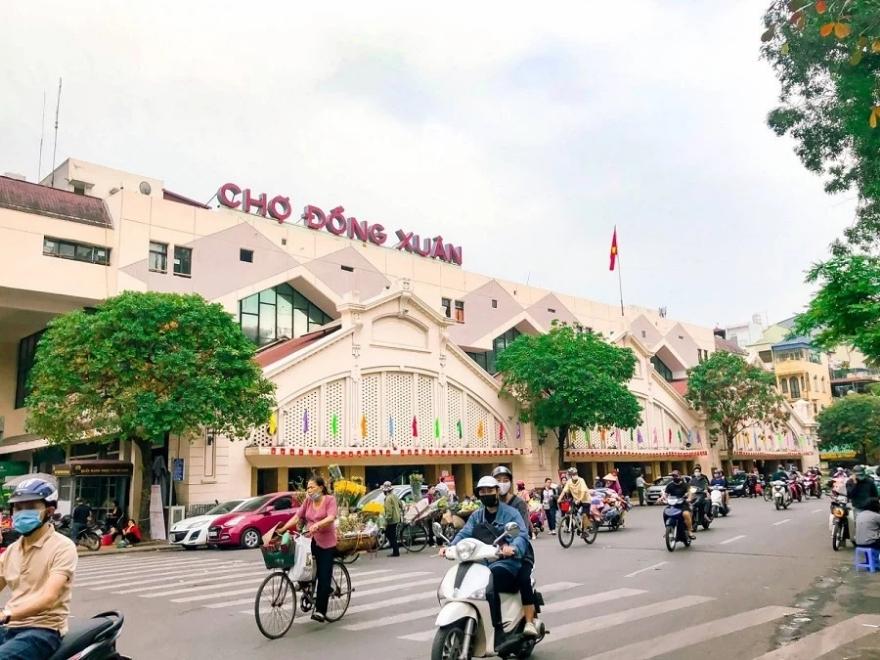
On a brighter day, Truc Bach and the neighborhoods around West Lake offer cafés, temples and quieter residential streets. Keep in mind that lakeside areas may feel colder when it is windy.
Choose one neighborhood and explore it at a relaxed pace rather than trying to cover several areas in one day.
Look for pre-Tet Hanoi in late January 2027
Toward the end of January, red decorations and seasonal goods begin appearing around Hang Ma Street and traditional markets. Peach trees, kumquat trees and flowers also become more visible as local families prepare for Tet.
Quang Ba Flower Market offers one of the most atmospheric experiences, but it is busiest very early in the morning. Dress more warmly than you would for daytime sightseeing and plan a hot breakfast afterward.
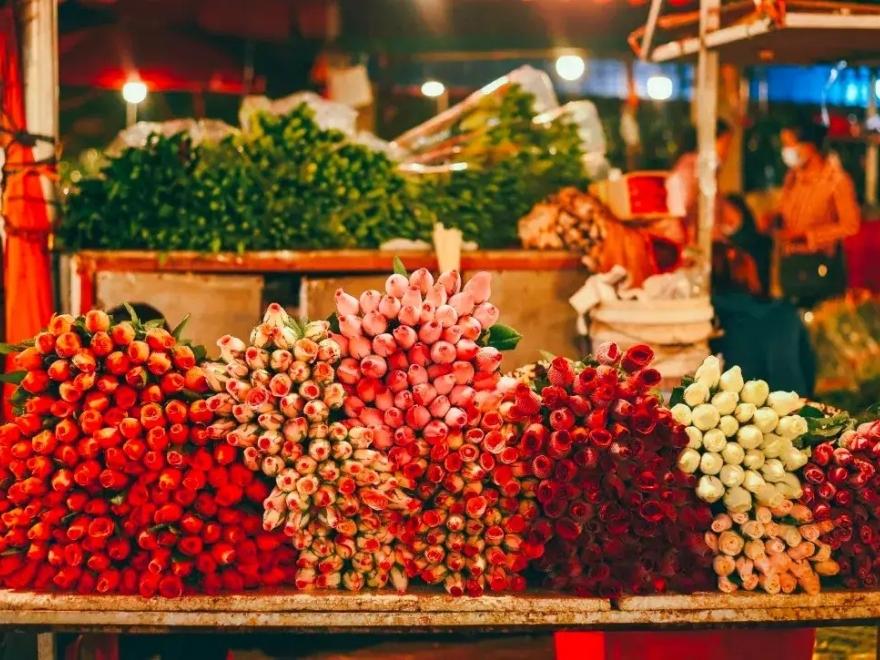
Closer to Tet, you may also visit the peach-growing area of Nhat Tan or the kumquat gardens of Tu Lien. Conditions vary with the weather, so flowers and trees may not be at their best on every January date.
Late January is a good time to enjoy Hanoi’s growing festive mood while most sightseeing services are still operating normally.
Plan the day around the weather
| January conditions |
A practical way to plan |
| Mild and brighter |
Take a longer walk and prioritize outdoor historical sites |
| Cold but dry |
Combine temples and monuments with food and café stops |
| Grey or drizzly |
Choose museums, covered markets and shorter neighborhood walks |
| Late January |
Add pre-Tet streets, flowers or seasonal markets |
A good January day in Hanoi usually includes one main outdoor period and several flexible cultural, food or indoor stops. In most cases, changing the order and pace of the day is enough.
How January weather affects trips beyond Hanoi
January travel beyond Hanoi is still possible, but wind, elevation and time spent outdoors can make nearby destinations feel colder than the capital.
Ninh Binh
Ninh Binh has similar temperatures to Hanoi, but sitting still on a boat can feel colder. January is not rice season, so visit for the rivers, limestone scenery and temples rather than green fields.
An extra layer and a flexible schedule are usually enough.
.jpg)
Ha Long Bay
A January Ha Long Bay cruise is better suited to sightseeing than swimming. Mist may reduce visibility, while wind on the open deck can feel much colder than Hanoi.
Bring a warm, wind-resistant layer and do not expect clear views throughout the entire cruise.
.jpg)
Sapa
Sapa is colder and foggier than Hanoi, and mountain views may disappear for part of the day. The rice terraces are not green or golden in January, so the main reasons to visit are local culture and the winter atmosphere.
Stay at least two nights if possible.
.jpg)
Ha Giang
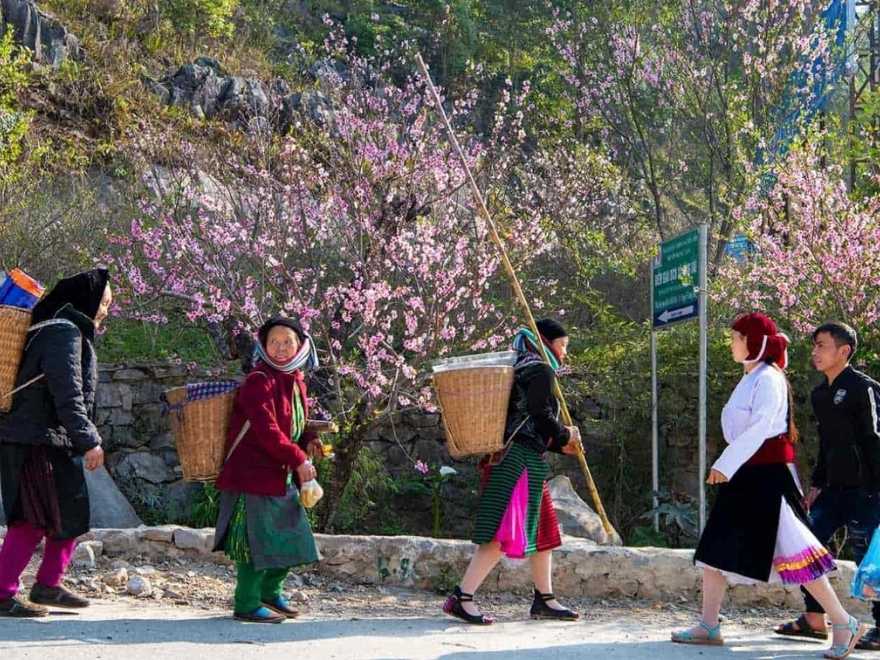
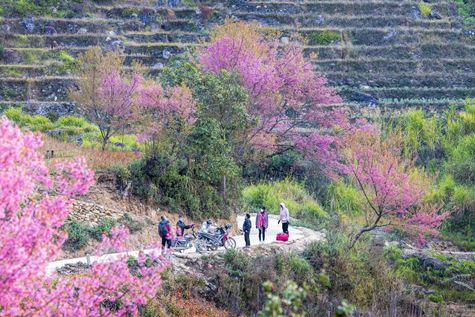
Wind, fog and damp roads have a greater impact in Ha Giang, especially during long motorbike rides.
Keep daily distances reasonable and pack more warmly than for Hanoi. Less experienced riders may prefer traveling with an easy rider or local driver.
Hanoi is the easiest northern destination to manage in January. The farther into the mountains you travel, the more warmth, flexibility and time you should allow.
Planning a January trip that combines Hanoi with Ninh Binh, Ha Long Bay or the northern mountains? Kampá Tour can help you create a private itinerary around realistic travel times, seasonal conditions and your preferred pace, with enough flexibility to adjust when the weather changes.
.jpg)
Final Takeaway
January is one of the more comfortable months for exploring Hanoi on foot, enjoying hot local food and experiencing the city at a slower pace.
It is not reliably sunny, and a damp cold front may feel much colder than the average temperature suggests. Pack layers, keep one indoor alternative available and use the short-term forecast to make final decisions.
For journeys beyond Hanoi, plan around visibility and travel time rather than assuming every winter day will deliver clear mountain or bay views.









 Our team
 Our team
 Our team
 Our team



 Other
Other Add us as a preferred source