Hoa Lu: Vietnam’s Ancient Capital That Time Almost Forgot!
Hoa Lu was Vietnam's capital from 968 to 1010, set in a limestone valley about 100 km south of Hanoi. What survives today is not an intact citadel but a compact historic complex of royal temples, a 10th-century pagoda and archaeological remains tied to the Dinh and Early Le dynasties.
It is also one of Ninh Binh's easiest places to misunderstand, because Hoa Lu Ancient Capital, Hoa Lu Ancient Town and modern Hoa Lu City are three different places. This guide explains what you will actually see, why the old capital matters, how much time you need, and how to combine it with Trang An, Tam Coc and the rest of Ninh Binh.
Written by Oliver PHUNG (Tour Guide)
Updated on Aug 20, 2026
0 comment
Oliver Phung is a Northern Vietnam-based tour guide and blogger. His favorite topics to write about include cuisine, culture, travel, and under-the-radar experiences. Oliver possesses a deep, detailed understanding of the region, from the indigenous culture of the Hmong in the Northwest to the highland lifestyle of the Tay in the Northeast. Whether he is exploring ancient architecture or geological landscapes, he is always eager to share his insights with his readers.
Beyond his work at Kampá Tour, he produces specialized travel content on platforms such as Reddit, Instagram, LinkedIn, and various other publications.
Ticket: 20,000 VND per adult, reduced for children. Cash at the gate, no booking needed.
Opening hours: 7:00 AM to 5:00 PM daily.
Time needed: 1 to 2 hours for the temples, plus 15 to 30 minutes if you stop at the excavation site.
What you actually see: two 17th-century royal temples, a 10th-century pagoda and an open archaeological dig, not the ruins of the original citadel.
Best paired with: Trang An, which is 10 minutes away and protected by the same limestone walls that once defended Hoa Lu.
Worth it if: you want to understand where Vietnam began. Less so if you are here purely for landscape.
Which Hoa Lu do you mean?
Three different places in Ninh Binh now carry this name, and travelers mix them up constantly. Sorting them out takes thirty seconds and saves an afternoon.
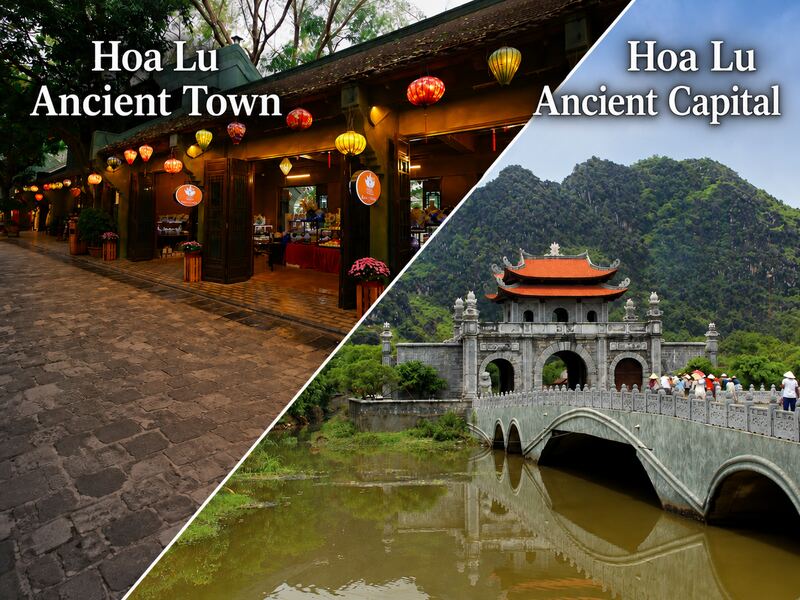
Hoa Lu Ancient Capital (Cố đô Hoa Lư), in Truong Yen, is the historic site this guide covers: royal temples, a pagoda and an excavation, open daytime only.
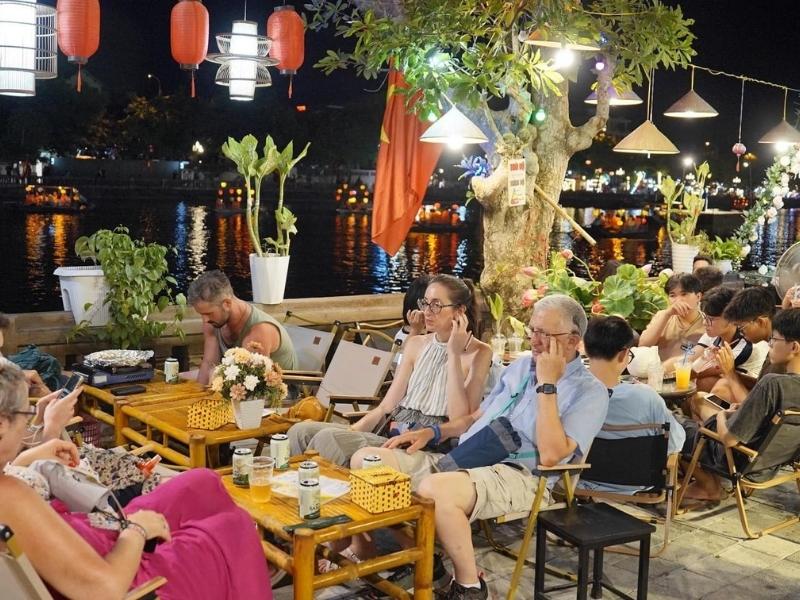
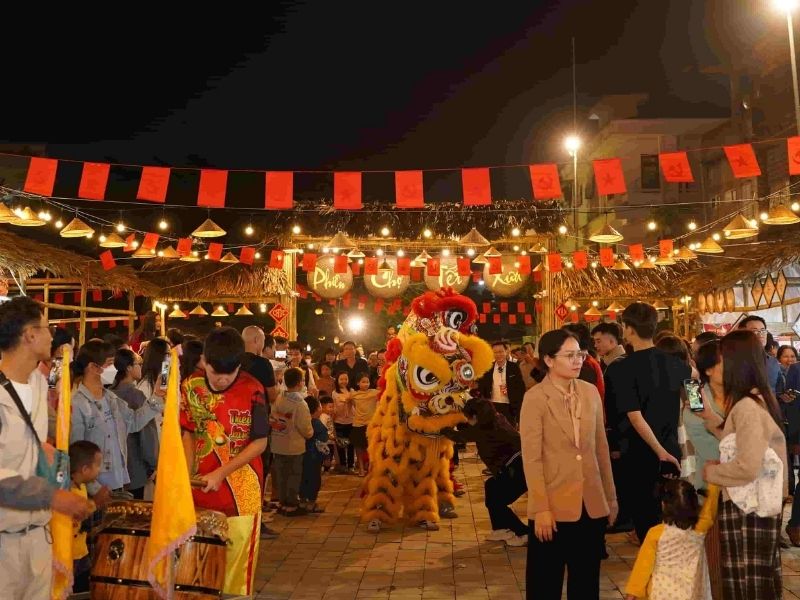
Hoa Lu Ancient Town (Phố cổ Hoa Lư) is a recreated old quarter that opened in 2022, near the city centre. It is the one that comes alive after dark, with lanterns, food and craft stalls, lake activities and cultural performances. If you are searching for Hoa Lu at night, this is the place you mean.
Hoa Lu City is the administrative name of what used to be called Ninh Binh City, renamed after the 2025 provincial merger. Booking a hotel "in Hoa Lu" now most often means here, in the city, not near the ancient capital.
The practical consequence: the ancient capital and the ancient town are about 10 km apart and are not the same visit. One is a morning, the other is an evening.
Is Hoa Lu Ancient Capital worth visiting?
Yes, if you want the historical anchor for everything else you see in Ninh Binh. This is where Dinh Bo Linh ended the era of the twelve warlords and declared Dai Co Viet, the first independent Vietnamese state after a thousand years of Chinese rule. The limestone peaks that make Trang An photogenic are the same walls that made this a defensible capital.
Now the honest part. Almost nothing of the 10th-century capital is still standing. The palaces are gone, and the two temples you walk through were built in the 17th century on the old sites, in a style several hundred years later than the kings they honour. Travelers who arrive expecting a citadel and find two temples in a courtyard often come away saying it was fine, and that is all.
The imperial capital of Hoa Lu in northwestern Ninh Binh
What changes the visit is context. With a guide, or with an hour of reading beforehand, the courtyard stops being a courtyard: the stone dragon beds in front of King Dinh's temple, the reason one throne is carved and the other left plain, the excavation pit showing the original floor level two metres below where you are standing. Without that, it is a pleasant walk among old trees.
So the fair verdict is this. Hoa Lu is a short, inexpensive, genuinely important stop that rewards preparation more than any other site in the province. If you are travelling on landscape alone and your day is already full, it is the one you can cut.
Why Hoa Lu became Vietnam's capital, and why it stopped being one
Geography chose this place. Hoa Lu sits in a flat valley closed in on all sides by limestone mountains, with the Hoang Long River running along the northwest edge and connecting, through a network of waterways, to the sea. The mountains were the walls, the river was the supply line, and the country to the north was where invasions came from.
Dinh Bo Linh took the throne in 968 as King Dinh Tien Hoang, unified the country under the name Dai Co Viet and made this his capital. After his assassination in 979, Le Hoan founded the Early Le dynasty and ruled from the same place. In total the capital lasted 42 years, split between two dynasties and ending with the brief start of the Ly.
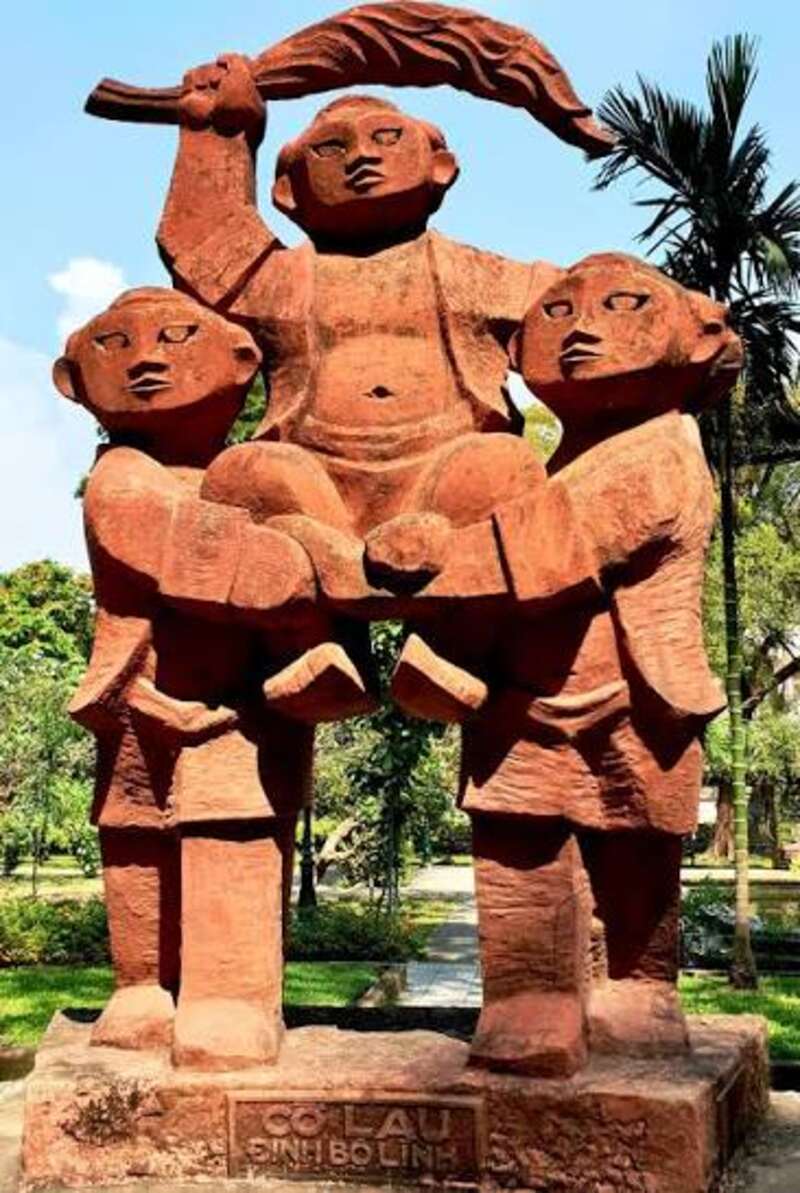
Statue of General Dinh Bo Linh
The same geography then ended it. Mountains that keep enemies out also keep trade and growth out, and by 1010 the country no longer needed a fortress. King Ly Thai To moved the capital to Dai La, renamed it Thang Long, and that city is now Hanoi. Hoa Lu was left as a place of memory, which is why the surviving buildings are temples rather than palaces.
The wider landscape, including Hoa Lu, was inscribed by UNESCO in 2014 as part of the Trang An Landscape Complex, Vietnam's first mixed natural and cultural World Heritage site.
What to see at Hoa Lu Ancient Capital
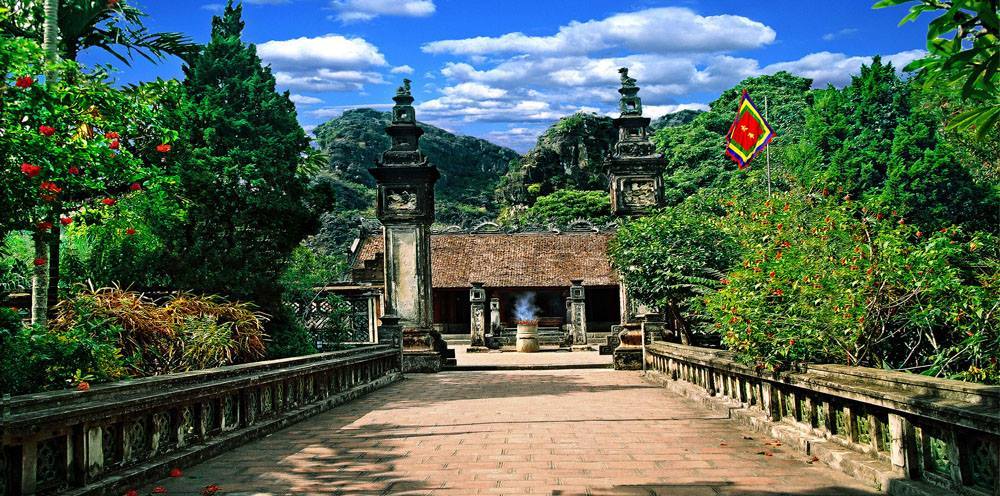
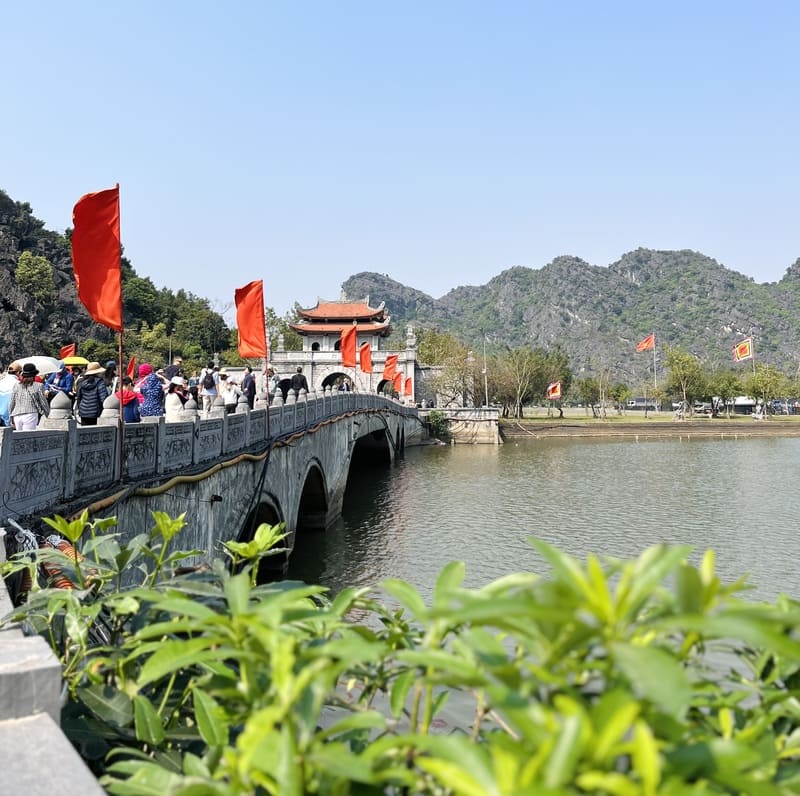
The core site is compact and walkable: two temples facing a shared courtyard, with three smaller stops within a few hundred metres. You cross a stone bridge, pass through the outer gate, and arrive in an open square with limestone rising directly behind it.
The entrance to the imperial citadel of Hoa Lu
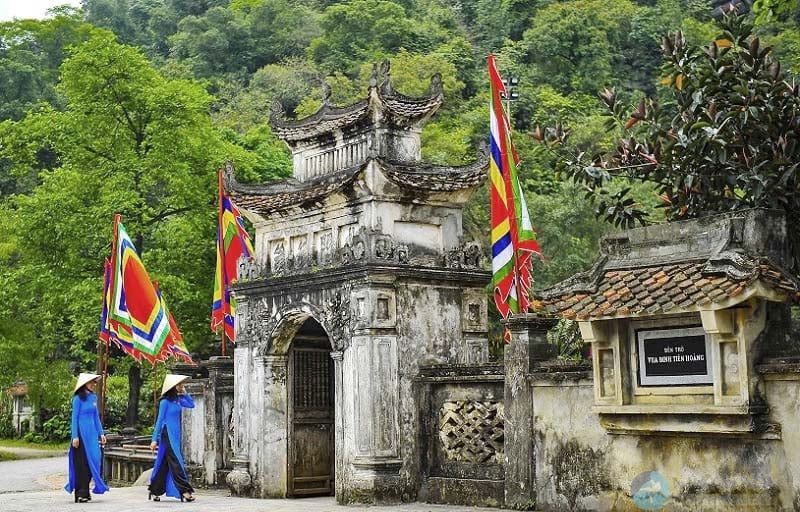
King Dinh Tien Hoang Temple
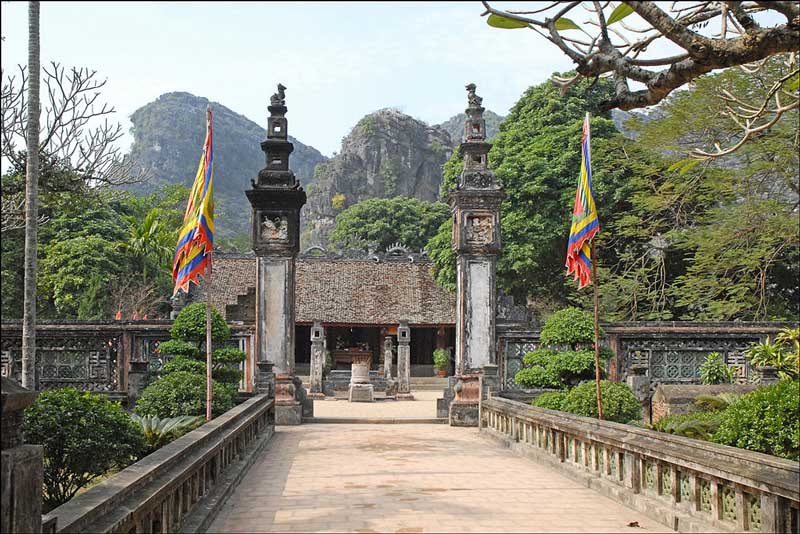
The better preserved and more finely worked of the two. It faces east across a five-hectare enclosure of old trees, and the value is in the detail: wood and stone carving by 17th-century craftsmen, lacquered columns, parallel inscriptions and painted wooden ornament. In the courtyard in front of it are the stone dragon beds, among the oldest objects on the site.
The Dinh Tien Hoang Temple in the Citadel
King Le Dai Hanh Temple
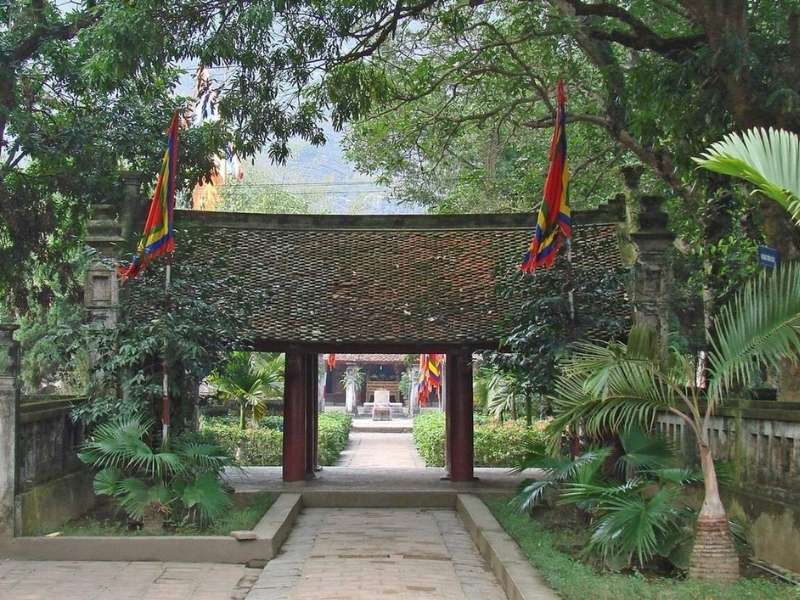
About 500 metres away, standing on the former site of the royal palace itself. Inside are statues of Le Dai Hanh, Empress Duong Van Nga and their son Le Ngoa Trieu. Duong Van Nga is the reason this temple is worth pausing at: she was King Dinh's widow, and it was she who handed the throne to Le Hoan when the Song army was massing on the border. Vietnamese visitors know that story; most foreign visitors walk past it.
The Le Dai Hanh Temple in the Citadel
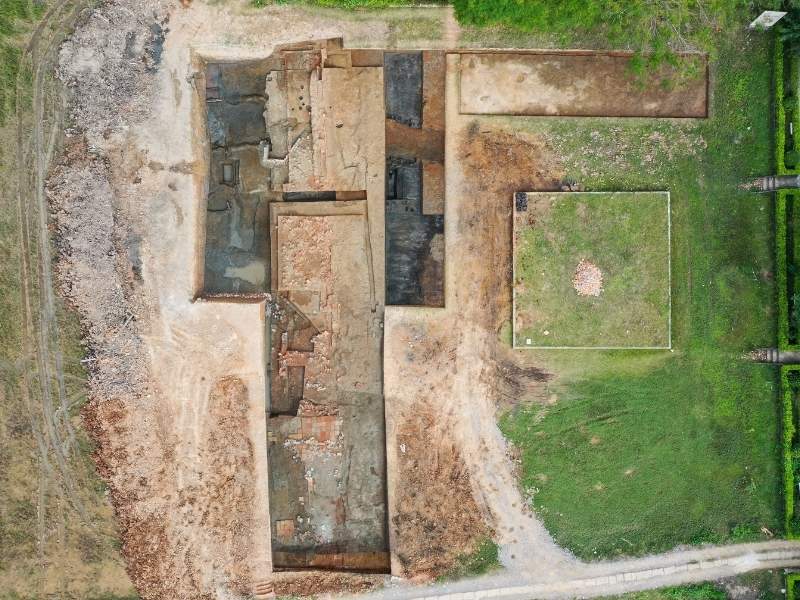
The excavation site and display house
The stop almost every guide skips, and the one that makes the rest make sense. Archaeologists have opened the ground inside the complex, exposing the original courtyard about two metres below the present surface, along with bricks, coinage and decorative fragments from the Dinh and Le period. It is covered and open to visitors, included in the same ticket, and takes 15 to 30 minutes.
If you only have time for one thing beyond the two temples, make it this. It is the only place on the site where you see the actual 10th century rather than a later commemoration of it.
Excavated remains from the Dinh and Le dynasties.
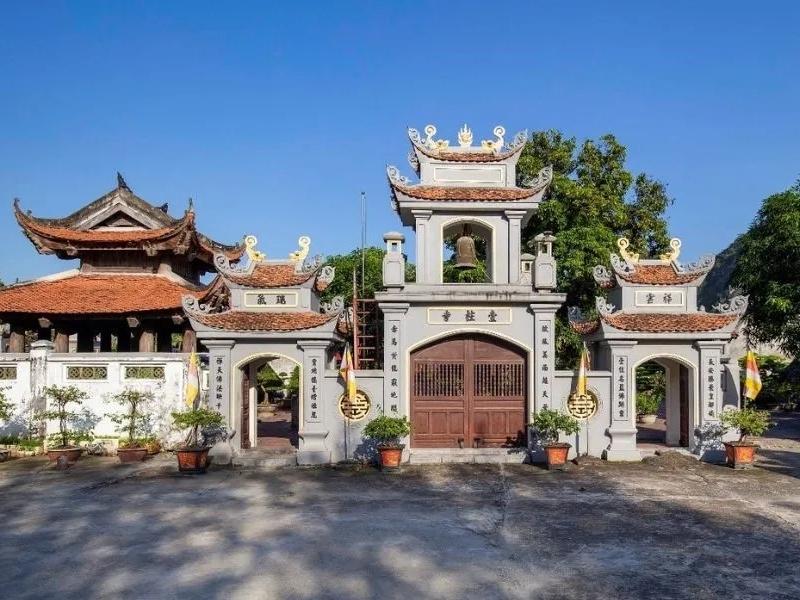
Nhat Tru Pagoda
A short walk from the temples, and older than both. Founded in the 10th century under Le Dai Hanh, its distinguishing feature is a stone pillar carved with Buddhist scripture, which is where the name comes from. Small, quiet, and one of the few things here that the kings themselves would recognise.
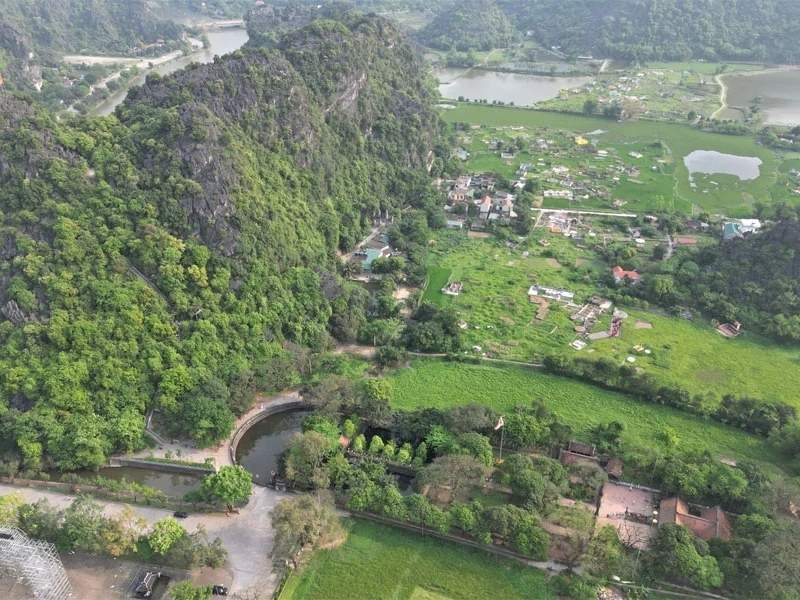
Ma Yen Mountain and Am Tien Cave
Ma Yen is the hill directly behind the temples, with King Dinh Tien Hoang's tomb at the top and a stone stairway leading up. The climb is short by Ninh Binh standards and gives you the only view that explains the site's layout: the valley floor, the temple roofs, and the ring of limestone that made this defensible.
Ma Yen Mountain overview
Am Tien Cave sits a few hundred metres north of King Dinh's temple, in a closed valley of vertical cliffs around a clear freshwater lake. Local history is darker here: this is said to be where King Dinh kept tigers to execute offenders. Ask at the gate before you set off, as access is managed separately from the main temple grounds.
Tickets, opening hours and how long you need
Entrance: 20,000 VND per adult, reduced for children. Buy at the gate, cash.
Opening hours: 7:00 AM to 5:00 PM daily. Arrive by 4:00 PM to see everything without rushing.
Time needed: 1 to 1.5 hours for the two temples; closer to 2 hours if you add the excavation site, Nhat Tru and Ma Yen.
Booking: not required and not possible in advance.
Best hour: early morning. It is cooler, quieter, and the light is better on the east-facing temple.
There is no fixed route through the site and no queue, so it absorbs whatever time you give it. The most common mistake is the opposite of what you would expect: not too little time, but arriving at midday in summer with no shade between the two temples.
Hoa Lu or Bai Dinh: which should you choose?
Choose Hoa Lu if you want history, and Bai Dinh if you want scale. They are 15 minutes apart and are often sold in the same day tour, but they are opposite experiences and most travelers only enjoy one of them.
Hoa Lu Ancient Capital
Bai Dinh Pagoda
What it is
Vietnam's 10th-century capital, now royal temples and an excavation
A modern Buddhist complex, largely built from 2003 onwards
Size
Compact and walkable
500 hectares, with electric carts to cross it
Time needed
1 to 2 hours
Half a day
Cost
20,000 VND, nothing else to pay
Grounds free, but the stupa and the carts are ticketed on top
Draws
Historical meaning, quiet, old trees
Records, statues, pilgrimage atmosphere
Best for
Travelers who read the plaques
Travelers interested in Buddhist architecture and scale
If your day already includes a boat tour, Hoa Lu is the easier of the two to fit in, because it is short and close. Bai Dinh needs its own half day, and visitors who try to squeeze it in between other stops usually end up paying for a cart and seeing very little. Full detail is in our Bai Dinh Pagoda guide.
The Truong Yen festival
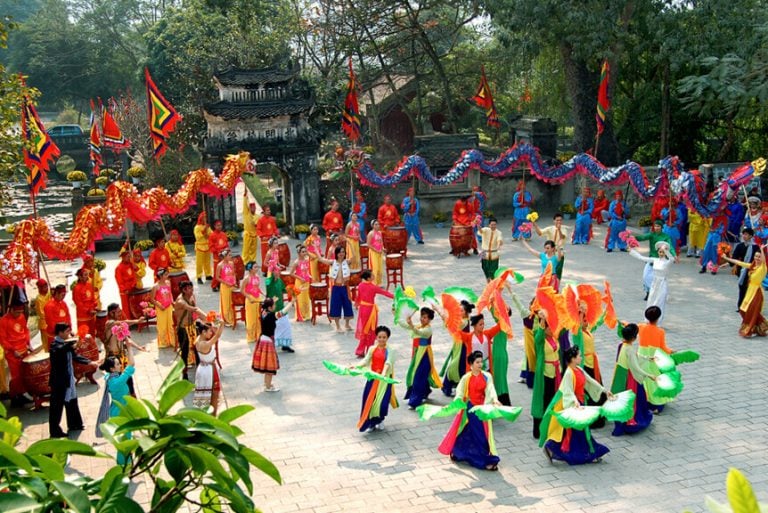
Hoa Lu's main festival runs from the 8th to the 10th day of the third lunar month, usually falling in April. It honours Kings Dinh Tien Hoang and Le Dai Hanh, and it is the one time of year the site stops being a museum.
The traditional festival in Hoa Lu
The ceremonial half includes a water procession from the Hoang Long River and rites at both temples. The festival half is the part visitors remember: the reed-flag battle reenactment of Dinh Bo Linh's childhood war games, wrestling, human chess, boat races and Cheo singing.
Come for these dates if you want the ceremony. Avoid them if you want the quiet version of Hoa Lu, and note that the wider Ninh Binh festival season from the first to the third lunar month, which also includes the Bai Dinh and Thai Vi festivals, brings large domestic crowds. Lunar dates shift each year, so check before booking flights, and see our guide to the Tet holiday if you are travelling in that window.
How to get to Hoa Lu
Hoa Lu is about 100 km south of Hanoi and roughly 10 km from the city centre in Ninh Binh. Nothing except a private car or a booked tour takes you to the gate directly, so plan the last stretch.
From the city or the train station: 15 to 20 minutes by taxi. This is the standard approach if you arrive by train.
From Tam Coc or Trang An: 10 to 20 minutes by car, or a flat, pleasant ride of around 10 km by bicycle from the Trang An side.
From Hanoi: limousine van, train, private car or bus, all with current fares in our guide to getting from Hanoi to Ninh Binh.
The map below shows how Hoa Lu sits relative to the other sites, which is easier to judge than a list of distances.
What to do at Hoa Lu Ancient Town in the evening
If you still have energy after the temples, this is where the other Hoa Lu starts to make sense. Hoa Lu Ancient Town is not an extension of the ancient capital and there are no 10th-century ruins here. It is a modern recreation beside Ky Lan Lake in the city, built around food, craft stalls, performances and an evening walk under lanterns. Entry to the town itself is free; allow one to two hours for a casual visit, or closer to three if you are staying for the main evening show.
The distinction matters. The ancient capital gives you the history; the ancient town gives you somewhere to spend the evening. Trying to treat them as the same attraction is why some visitors end up confused by both.
Walk around Ky Lan Lake after dark
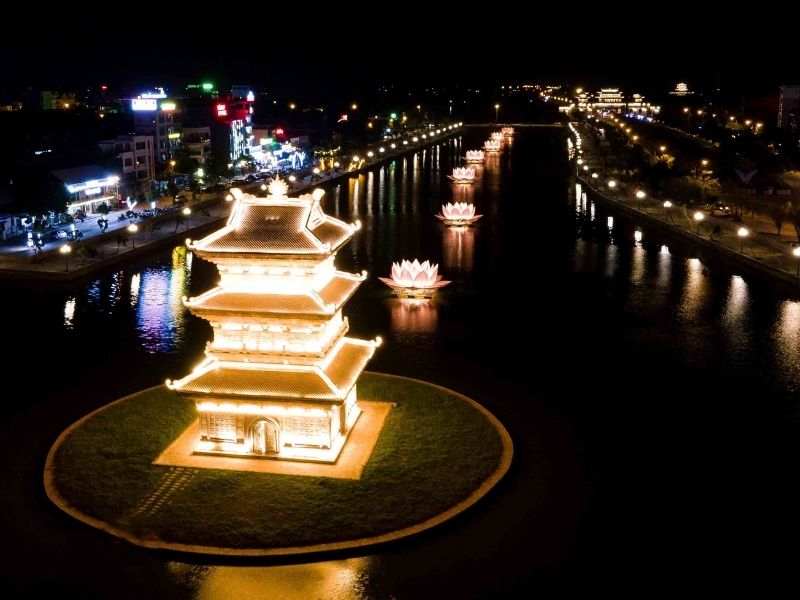
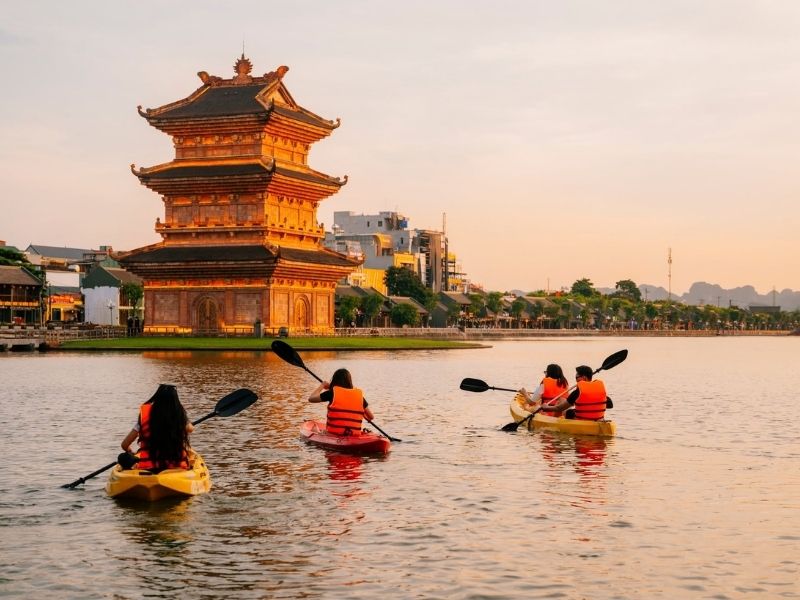
This is the simplest thing to do and, for most people, the best. The waterfront and pedestrian streets are lit with lanterns, with Tu An Tower standing on the lake and Ky Lan Pagoda, also known as Chua Bac, at the foot of the limestone hill behind it. The whole setting works better once the lights come on than it does in the middle of the day.
Ky Lan lake by night
It is also an easy final stop after a full Ninh Binh day: flat, compact and made for wandering rather than following a route. If you have spent the afternoon climbing Hang Mua or sitting in a boat at Trang An, that is exactly the point.
Take a boat onto Ky Lan Lake
Small sightseeing boats run on the lake and put you closer to Tu An Tower and the illuminated waterfront. Some visits also include floating lanterns, and the reflections on the water are the most photogenic part of the ancient town after dark.
You do not need the boat to enjoy the place. If your day already includes Trang An or Tam Coc, think of this as a short evening ride for the lights rather than another landscape cruise. Boat rides are charged separately from the free entrance to the town.
Browse the craft stalls and eat as you go
The town is divided broadly between traditional-product stalls and food. Crafts represented here include stonework from Ninh Van, embroidery from Van Lam, ceramics, lacquerware and folk painting, while the food side leans towards easy-to-try snacks such as sticky-rice cakes, honey cakes, banh gai and other regional sweets.
Do not come expecting Ninh Binh's best restaurant meal. Come hungry enough to graze. The pleasure is in walking between stalls, trying something unfamiliar and letting the evening take as long as it takes.
Watch the folk performances and join the games
Evenings are when the cultural programme becomes more visible. Programmes have included water puppetry, Cheo and Xam singing, folk dance and traditional games such as bamboo dancing, tug of war and o an quan. On festivals and special weekends, the programme can expand into workshops, exhibitions and larger staged performances.
The smaller programme can change with the season, so check what is running when you arrive.
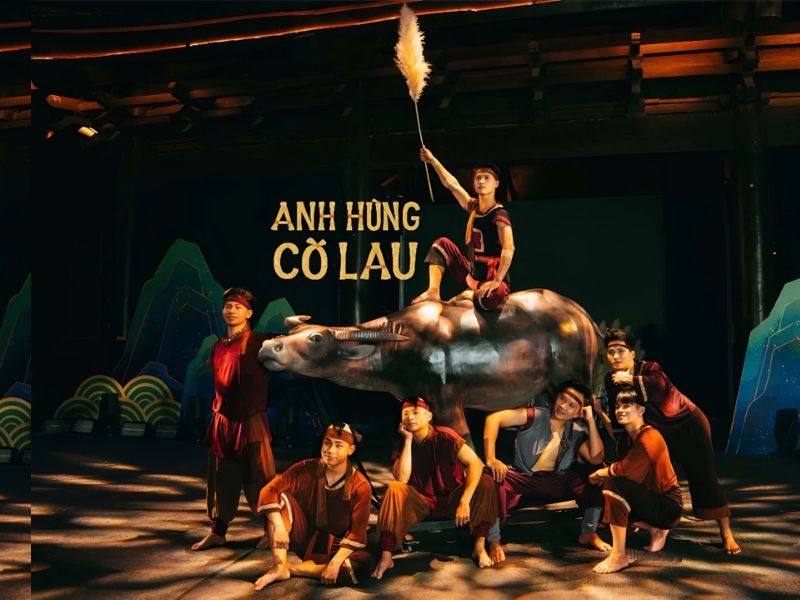
Watch the “Anh Hung Co Lau” live show
The headline evening performance at Hoa Lu Ancient Town is Anh Hung Co Lau (“The Reed-Flag Hero”), a one-hour live show built around the story of Dinh Bo Linh. It follows his rise from the childhood games in which he led other village boys with reed flags to the defeat of the twelve warlords, the reunification of the country and the founding of the Dinh dynasty.
The production combines contemporary circus, traditional martial arts, folk dance, Vietnamese music and large-scale live staging. That makes it accessible even if you arrive without much background in the history, but it works particularly well after visiting Hoa Lu Ancient Capital earlier in the day: the temples give you the historical setting, while the evening performance turns the same story into spectacle.
The show currently runs in the evening from Thursday to Sunday and lasts about one hour. If your dates line up, build the rest of your Ancient Town visit around it: arrive before dark for Ky Lan Lake and the craft stalls, have something to eat, then stay for the performance.
If you arrive before the lanterns switch on, the lake has a different use. SUP and kayak sessions have been offered in the late afternoon, when the sun drops behind the limestone and the water is quieter than it is later in the evening. It is a better choice for active travelers than the sightseeing boat, and it gives you a reason to arrive before dark rather than only after it.
What to combine with Hoa Lu
Hoa Lu takes a morning at most, and it works best as the historical half of a day whose other half is on the water. Everything below is within 20 minutes.
Trang An: the natural pairing. The temples on the boat routes belong to the same 10th-century story, and the limestone you glide between is the fortress wall Hoa Lu was built behind. Around 10 minutes away.
Tam Coc: the other boat option, shorter and more rural, at its best in rice season. The rowers here work the oars with their feet.
Hang Mua: 486 steps to the widest view in the province. Best late in the afternoon, after the heat drops.
Cycling: the roads between Hoa Lu and Trang An are flat and quiet, past rice paddies and lotus ponds, and are one of the better rides in Ninh Binh. See our guide to the best rice paddies in Vietnam.
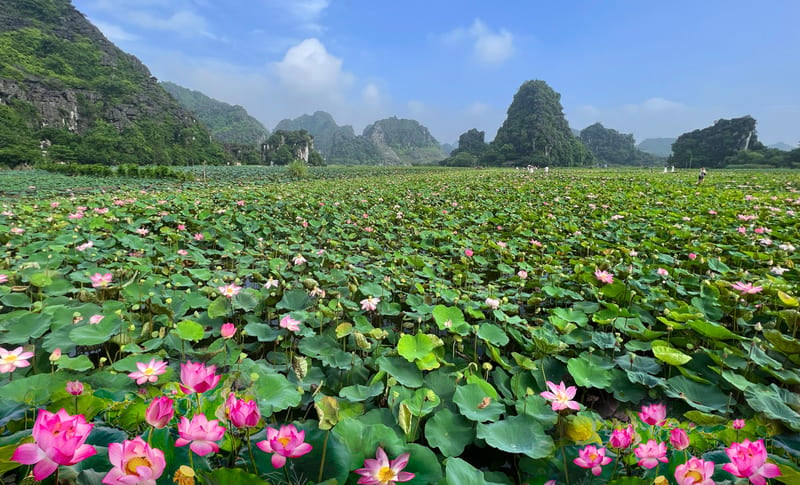
The Lotus Season of Hoa Lu, Ninh Binh
For a full picture of how these fit into one or two days, see our Ninh Binh guide. If you would rather not spend the morning arranging taxis and timings between sites, this is exactly the kind of day a private driver or a planned itinerary takes off your hands.
Cover shoulders and knees. These are working places of worship, not ruins, and the two temples are the reason people come here on pilgrimage as well as on holiday. Comfortable shoes matter too if you plan to climb Ma Yen. Bring cash, water and a hat, since there is little shade between the temples.
Is Hoa Lu good for children and older travelers?
Yes, more so than most sites in Ninh Binh. The ground is flat, the distances are short, there is no boat and no long climb unless you choose Ma Yen. It is one of the few Ninh Binh stops that works for a grandparent and a small child on the same morning.
Do you need a guide at Hoa Lu?
More than anywhere else in Ninh Binh, yes. Trang An and Hang Mua explain themselves; Hoa Lu does not. The site has limited English interpretation, and the dynastic history behind the two temples and the excavation is what makes the visit worth the time. Our guides are English-speaking, and this is one of the stops where that changes the day.
What should I eat near Hoa Lu?
Mountain goat and crispy rice, the two Ninh Binh specialities. The goat grazes the limestone hills, which gives the meat a firmer texture, and it is usually served with soy sauce, green banana and starfruit. Places nearby that work well for international visitors:
Don't miss out on trying the specialties of Ninh Binh
Family Restaurant: Ninh Hai, Hoa Lu
Bamboo Bar and Restaurant: Van Lam, Ninh Thang, Hoa Lu
T-Pub Restaurant: Tam Coc, Bich Dong, Hoa Lu
Thùy Linh Restaurant: Ninh Hai, Hoa Lu
Hoa Luân Restaurant: Van Lam, Ninh Hai, Hoa Lu
Monalisa Bar & Restaurant: Hang Mua, Ninh Xuan, Hoa Lu
Is Hoa Lu safe to visit?
Yes. It is a low-crime, flat, well-managed heritage site with no water crossings and no difficult terrain. The only real risks are heat and sun in summer, and slippery stone steps on Ma Yen after rain. For a wider view, see Is Vietnam safe to travel?
Which other cities have been capitals of Vietnam?
Three matter for travelers. Hoa Lu came first, from 968 to 1010. Thang Long, today's Hanoi, took over in 1010 and has been the capital for most of the time since. Hue was the imperial capital under the Nguyen dynasty from 1802 to 1945. Visiting Hoa Lu and Hue on the same trip gives you the two ends of Vietnamese dynastic history.
Planning your visit
Give Hoa Lu the first hour or two of a morning, before the heat and before the boats fill up, and read something about the Dinh dynasty on the drive there. That one hour of preparation is the difference between a courtyard with old trees and the place where the country started.
The Landscape of Ninh Binh in the Ripe Rice Season
Ninh Binh is part of every Kampá Tour itinerary in northern Vietnam. Contact us to have it built into your trip.











 Our team
 Our team
 Our team
 Our team






 Other
Other Add us as a preferred source