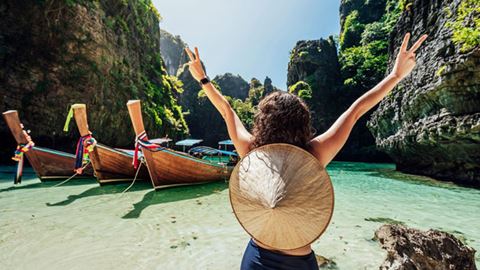
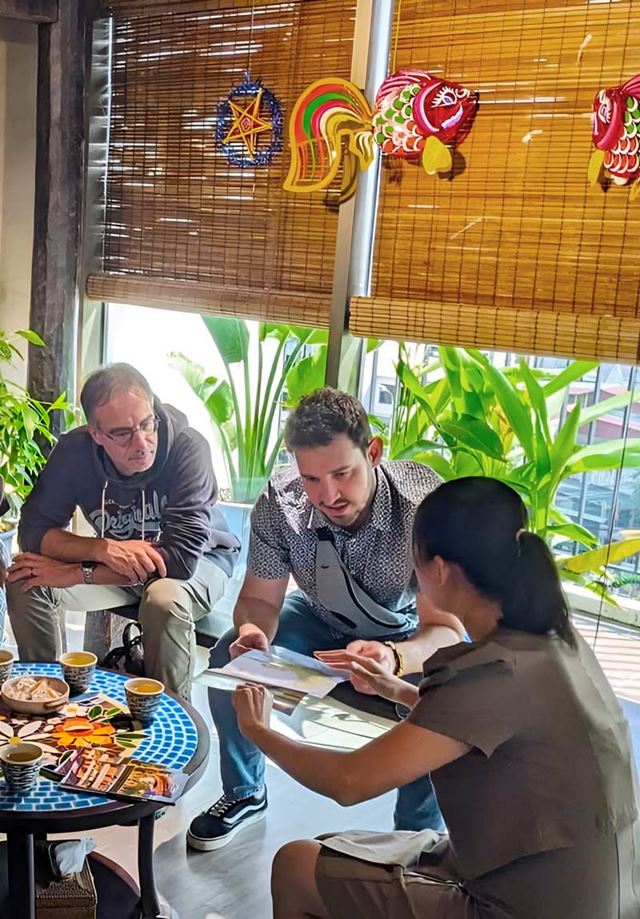
Thailand has an abundance of opportunities to discover its splendor, with its breathtaking scenery, energetic cities, and extensive cultural legacy. Knowing the best ways to get around will improve your trip, whether you're exploring Bangkok's bustling streets, seeing Chiang Mai's historic temples, or unwinding on Phuket's beaches. This comprehensive guide will ensure that you can comfortably and efficiently traverse Thailand, covering everything from the quickest air travel to the allure of traditional tuk-tuks
Written by Preetika Narula (Local Expert)
Updated on Oct 27, 2026
0 comment
At 35 years old, Preetika is an enthusiastic explorer deeply connected to Thailand, Laos and Cambodia's rich heritage. As a Bangkoker, her local insights and experiences imbue authenticity into her narratives. She discovers solace within the pages of a book as much as amidst Southern Asian vibrant landscapes and bustling street markets. With an ardent passion for travel and a profound affection for literature, Preetika effortlessly integrates her personal adventures into captivating stories, providing a perspective uniquely rooted in local experience.
If you're pressed for time or need to travel large distances quickly, flying is the most practical choice. Several domestic airlines operate in Thailand, connecting major cities and popular tourist spots.
Thai Airways, Bangkok Airways, Thai AirAsia, and Nok Air are well-known carriers. Thai Airways is the national flag carrier, and Bangkok Airways is known for routes such as Bangkok to Koh Samui. Thai Vietjet and Thai Lion Air also operate low-cost domestic flights.
Average Costs
One-way fares on routes such as Bangkok to Chiang Mai, Phuket or Krabi vary a lot by airline, season and booking date. The lowest fares can be under $40, while high-season fares are noticeably higher.
Low-cost carriers such as Thai AirAsia fly to major destinations like Krabi, Phuket, and Chiang Mai, usually with lower base fares than full-service airlines. Check baggage and seat fees before you compare prices.
Low-cost carriers connect Bangkok with Krabi, Phuket and Chiang Mai
Main Airports in Bangkok
Suvarnabhumi Airport (BKK): Thai AirAsia resumed domestic flights from here on 1 October 2026, to Chiang Mai, Phuket and Krabi. Thai Vietjet also flies Bangkok to Chiang Mai and Phuket from this airport.
Don Mueang Airport (DMK): Thai AirAsia's main base, also used by low-cost carriers such as Nok Air and Thai Lion Air.
Airlines have moved routes between the two airports before, so check the airport on your ticket before you book a transfer.
The State Railway of Thailand (SRT) runs Thailand's train network, which provides an inexpensive and beautiful means of transportation. Thailand's official train website, offers timetables, ticketing, and reservation options. The luxurious Eastern & Oriental Express, once a famous link between Bangkok and Singapore, currently lists only journeys within Malaysia for 2026.
The scenic view outside the SRT
The overnight train from Bangkok to Chiang Mai is one of the most popular rail journeys in the country. You sleep in a berth and wake up in northern Thailand, and the trip takes roughly 10.5 to 14 hours depending on the train. Day trains suit travelers who want to watch rural landscapes and coastal stretches from the window.
Sleeper berths on the overnight train from Bangkok to Chiang Mai
Average Costs:
On the Bangkok–Chiang Mai route, one-way tickets start at about 230 THB ($7) for a 3rd-class seat, and sleeper berths cost roughly 690-1,650 THB ($20-49) depending on the train, class and upper or lower berth.
Major Train Stations:
Bangkok: Krung Thep Aphiwat Central Terminal (formerly Bang Sue Grand), the main station for long-distance trains since 19 January 2023. The historic Hua Lamphong Station is still used by ordinary, commuter and excursion trains.
The best ways to get around Bangkok are the MRT (subway) and BTS (skytrain), which avoid the city's heavy traffic. The BTS has two main lines: Sukhumvit and Silom, serving key business and tourist areas, plus the short Gold Line.
The MRT includes the Blue Line and Purple Line, joined in 2023 by the Yellow Line and Pink Line monorails, reaching more commercial and residential zones.
The best ways to move around Bangkok are via the MRT (subway) and BTS (skytrain)
Tourists and residents use these systems because they are air-conditioned and avoid road traffic. They also connect to important markets, shopping centers, and tourist sites.
Average Costs:
Single journey tickets range from 17 to 65 THB (about $0.50-2) on the BTS and from 17 to 45 THB on the MRT Blue Line.
Major Stations:
BTS: Siam Station (Interchange for Sukhumvit and Silom Lines), Asok Station (Interchange with MRT)
MRT: Bang Sue Station (underground walkway to Krung Thep Aphiwat Central Terminal, the main long-distance train station), Sukhumvit Station (Interchange with BTS at Asok)
Good to know:
To avoid overpaying, purchase your BTS and MRT tickets directly at the stations (ticket offices or vending machines). The MRT Blue Line stops at Bang Sue MRT station, which has an underground walkway to Krung Thep Aphiwat Central Terminal, so it is handy if you are leaving by train.
4. Experience Traditional Thai Transport: Tuk Tuks
Tuk-tuks are three-wheeled taxis that weave through busy markets and narrow streets. They are common in cities like Bangkok, Chiang Mai, and Phuket. They may not be the cheapest or most comfortable option, but a short ride is a typical local experience.
Short rides often cost roughly 60-300 THB ($2-9) depending on the city and distance. Agree on the fare before you get in.
5. Other Local Transportation Options in Thailand
5.1 Bus/Minivan/Songthaews:
Songthaews:
Especially in areas like Chiang Mai, Phuket, and Krabi, these shared pickup trucks are a regular sight in many villages and cities. Although they can be chartered for private travels, they run on set itineraries.
Chiang Mai: Songthaews, sometimes called red trucks, are a common form of transportation. If you want to go within the city with them, you can pay a regular ticket or flag them down and bargain for a private ride.
Songthaews, sometimes called red trucks, are a common form of transportation.
Phuket: Songthaews frequently travel between the island's main town and its beaches. Depending on the distance, the fare is roughly $1 to $3 (30-100 THB).
Krabi: Songthaews, which typically cost roughly $1 to $2 (30-60 THB), connect the town with neighboring beaches including Ao Nang.
Press the buzzer on the roof to stop the vehicle at your destination. Confirm the fare with the driver before you get in, especially for private rides. For faster travel, consider other options, as songthaews may not be the quickest choice.
Songthaews in Krabi
Buses and Minivans:
These are frequently utilized for longer trips between provinces and cities. For example, buses from Bangkok go to Pattaya, Hua Hin, and even Chiang Mai. Minivans usually cost a little more than buses, so compare both options for your route.
Local bus rides cost roughly $0.30 to $2 (10-60 THB). Intercity journeys start at around $5 (150 THB) on shorter routes, and long routes such as Bangkok to Chiang Mai cost noticeably more.
Minivan rides typically cost slightly more, roughly $6 to $18 (200-600 THB) depending on the distance and destination.
Locations: In Bangkok, buses and minivans leave from the major terminals: Mo Chit (Northern) for the north and northeast, Ekkamai (Eastern) for the eastern coast, and Sai Tai Mai (Southern) for the south and the west.
In big cities, taxis are easily accessible and have meters, making them a convenient mode of transportation. Motorbike taxis suit short distances and congested areas.
Bangkok's Multi-Colored Taxis
Average Costs: In Bangkok, a standard metered taxi starts at 35 THB ($1) for the first kilometer (40 THB for larger cabs), then adds 6.5 THB ($0.20) per kilometer up to the 10th kilometer and 7 THB from the 11th to the 20th. Taxis picked up from the official queues at Suvarnabhumi and Don Mueang add a 50 THB airport fee on top of the meter. Short motorbike taxi rides in Bangkok commonly cost about 10-30 THB, though drivers in tourist areas often ask for more.
Ask the driver to use the meter to avoid unpredictable fares. Slow traffic (below 6 km/h) adds 3 baht per minute. For any issues, contact the Department of Land Transport hotline at 1584.
5.3 Longtail Boats and Ferries:
These are perfect for traveling to coastal areas and island hopping. In locations like Phuket, Krabi, and the islands in the Gulf of Thailand, they are very prevalent.
Longtail boat in Phuket
Average Costs: Ferry prices depend on the route, the boat and the season. For example, the ferry from Krabi Town (Klong Jilad pier) to Koh Phi Phi costs about 450-490 THB ($13-14) one way and takes about 2 hours. The Ao Nang Princess ferry costs about 650 THB ($19) including a van to your hotel, and speedboats take around an hour for roughly 820-1,300 THB ($24-38).
5.4 Self-Drive Adventures in Thailand
Renting a car lets you explore Thailand at your own pace, but it's important to understand local driving laws and carry a valid driving licence or international driving permit. Here's a brief guide.
Car Rentals:
Costs: Daily rates for an economy car typically range from about 700 to 1,400 THB ($21 to $41), and they are usually higher from November to March. You can find rental services easily in major tourist spots like Bangkok, Phuket, and Chiang Mai.
In Chiang Mai, a rental car makes it easier to reach Doi Inthanon National Park early in the day and to visit mountain villages and viewpoints that are harder to reach by public transport.
Renting a car gives you the flexibility to see Thailand at your own speed.
Motorbike Rentals:
Costs: Renting a motorbike is budget-friendly, with daily rates of roughly 150 to 350 THB ($4 to $10) for a standard scooter. It's a popular option in places like the islands, Pai, and Chiang Mai.
Safety Tips: Always wear a helmet and drive carefully, especially in cities where traffic can be hectic and unpredictable. If you are new to riding, practise on quiet roads before heading to hilly or remote areas.
On an island such as Koh Phangan, a rented motorbike lets you reach beaches and waterfalls that public transport does not serve, along the coastal roads.
Good to know:Since 1 June 2025, riding a motorbike without a helmet can lead to a fine of up to 2,000 baht (around USD 60), and the helmet rule applies to passengers as well as riders.
Traffic Regulations: Thailand drives on the left. Take time to learn local traffic laws and road signs.
Road Conditions: Major cities and tourist areas usually have well-maintained roads, but rural routes can be narrow or poorly maintained.
Fuel: Check the fuel policy in your rental contract, which often means collecting the car with a full tank and returning it full. Fuel stations are easy to find. Be sure to refill the tank before returning the vehicle to avoid extra charges.
Parking: Parking can be a challenge in busy areas like Bangkok. Only park in designated spots and avoid restricted zones to prevent fines or towing.
5.6 Advice:
Documentation: When driving, carry your passport, your rental agreement, and a valid licence: an international driving permit, or a licence from an ASEAN country presented with your home licence. For a motorbike, the permit must cover the motorcycle category.
Insurance: Check what the rental insurance covers, including damage, theft and injury, before you sign, and choose full coverage if the price is reasonable.
6. Local Insight & Advice
Chiang Mai to Pai: Travelers often drive from Chiang Mai to Pai. The mountain road is usually described as having 762 bends (an informal count, not an official one), with mountain views and demanding driving that calls for care. Those with more time can continue on the Mae Hong Son Loop, or head from Chiang Mai to Chiang Rai (roughly 200 km) for a wider tour of northern Thailand.
Travelers especially like taking the drive from Chiang Mai to Pai.
Phuket: You can quickly explore the island's numerous beaches and attractions by renting a motorbike in Phuket. Just use caution due to heavy traffic, particularly in Patong and other tourist hotspots.
You can quickly explore the island's numerous beaches and attractions by renting a motorbike in Phuket.
Conclusion
Thailand offers a variety of transportation options to suit every traveler. Whether you are flying, taking the train, or using the BTS, each mode suits a different distance and budget. Renting a car or motorcycle lets you explore at your own pace.
Knowing the costs and convenience of each choice helps you plan a route that fits your time and budget, from mountain villages to beaches and cities. Happy travels!
>>> Every month, everything you need to know about Thailand:
Planning your trip?
Save time and get expert advice for FREE!
✅ 15 years of local experience
✅ Save up to 40 hours of planning
✅ Travel stress-free from start to finish
Book your free consultation today!










 Our team

 Our team

 Our team

 Our team




 Other
 Add us as a preferred source