Chiang Mai, Thailand: Discovering The Rose Of The North
Chiang Mai is Thailand's 'Rose of the North, with its misty mountains and colorful hill tribes. The destination is known for trekking adventures and beautiful vistas of rice terraces rolling over hills cloaked in green outside the clamorous big cities.
This place has more to offer than just picturesque landscapes and a myriad of cultural experiences, as evidenced by its history as a one-time regional capital with many sacred Thai temples. We will provide everything you need to know about Chiang Mai in this article, as well as extra practical tips for planning your trip.
Written by Preetika Narula (Local Expert)
Updated on Sep 19, 2026
0 comment
At 35 years old, Preetika is an enthusiastic explorer deeply connected to Thailand, Laos and Cambodia's rich heritage. As a Bangkoker, her local insights and experiences imbue authenticity into her narratives. She discovers solace within the pages of a book as much as amidst Southern Asian vibrant landscapes and bustling street markets. With an ardent passion for travel and a profound affection for literature, Preetika effortlessly integrates her personal adventures into captivating stories, providing a perspective uniquely rooted in local experience.
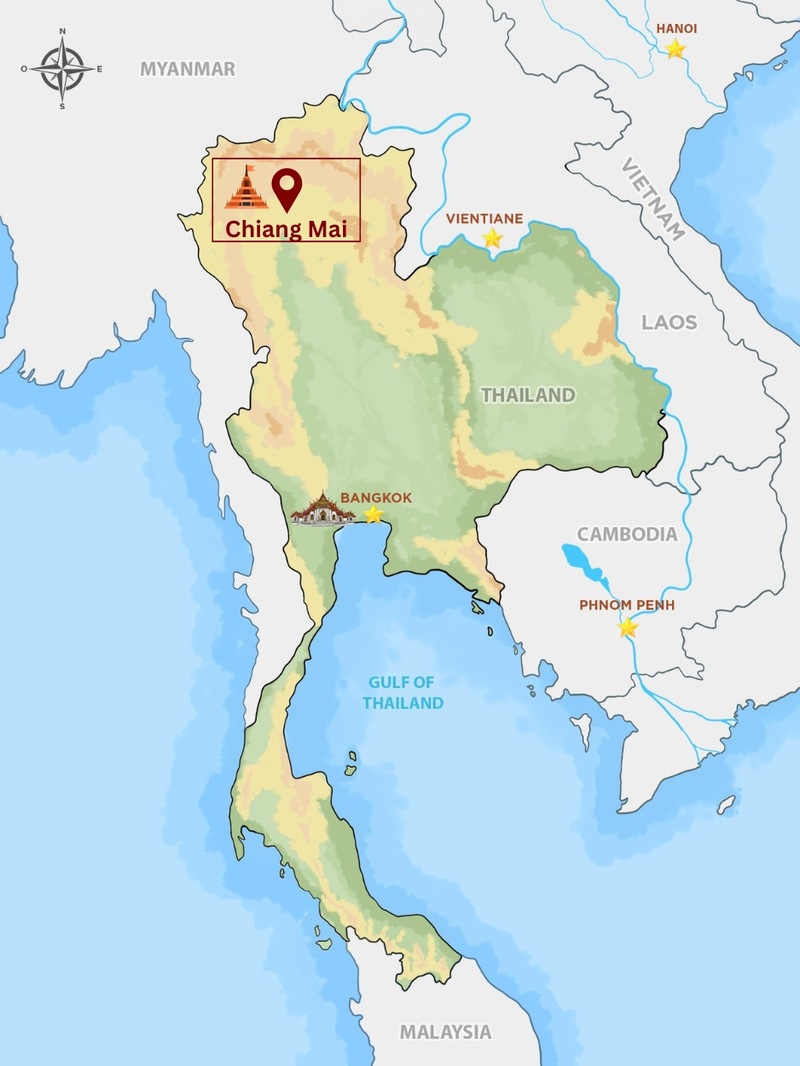
Chiang Mai, nestled about 700 km (435 miles) north of Bangkok by road, was once the capital of the ancient Lanna Kingdom (13th-18th centuries). As Thailand’s second-largest province, it is known as the capital of the north. Its geographical location makes it an ideal base for starting to discover the natural and cultural attractions and ethnic groups of northern Thailand.
Chiang Mai is in the north of Thailand
2. How Many Days in Chiang Mai Are Enough?
Your interests, travel approach, and desired experience will determine how many days you will need to see Chiang Mai. Spending at least three days in Chiang Mai is a terrific starting point for first-time visitors to Thailand. This allows you sufficient time to explore the special experiences this northern city offers.
You can start in the city's old town, which features lovely alleyways and more than 30 historic temples, and savor regional cuisine at one of the night markets. In addition, you might go on hiking trips, visit ethical elephant sanctuaries, take Thai cooking classes, and take in the breathtaking views of beautiful waterfalls...
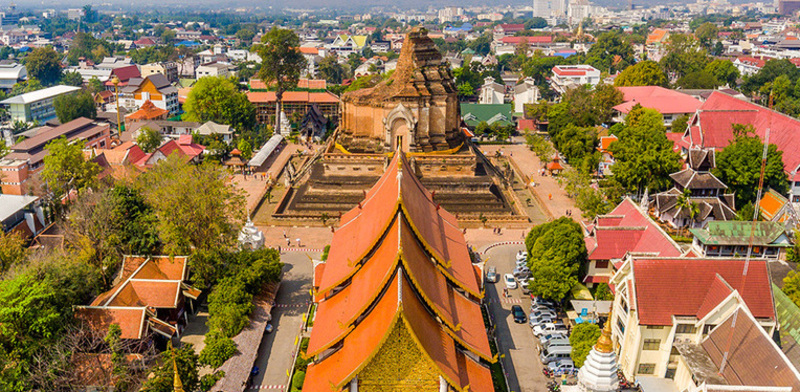
As the title indicates, the Old Town of Chiang Mai, surrounded by walls and moats, is full of remnants from the ancient Lanna kingdom. Walking through the quiet streets, you can enjoy a perfect symbiosis between historic buildings, Buddhist temples, and contemporary cafes:
Tha Pae Gate: The perfect main entrance to start your exploration.
Wat Chedi Luang: An impressive remnant of a chedi that once stood 82 meters high.
Chiang Mai's Art and Culture Museums, as well as the Lan Na Museum, are ideal places to deepen your knowledge of local history.
The Monument to the Three Kings is a symbolic location within the historic district.
Chiang Mai's Old City District
3.2 Chiang Mai's Night Markets
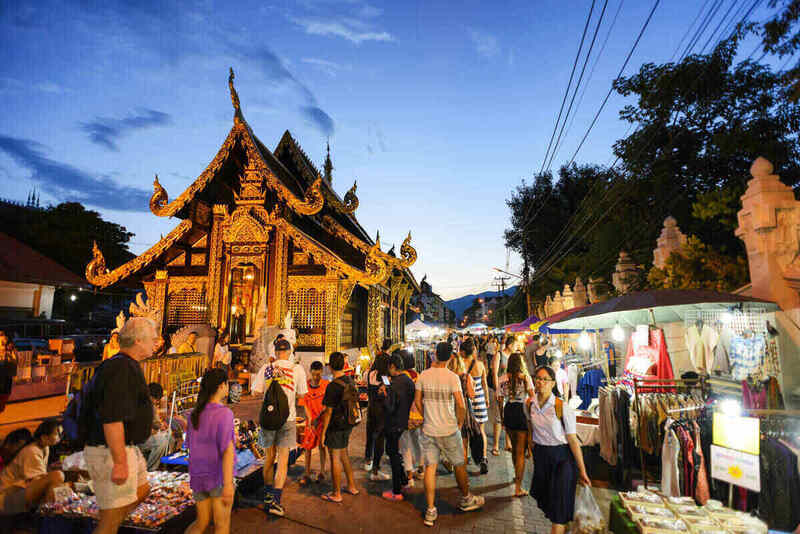
The Chiang Mai Night Bazaar on Chang Klan Road and pedestrian streets like Sunday Walking Street on Ratchadamnoen Road are perfect for experiencing street food and shopping for souvenirs. Traditional massages and a local atmosphere are waiting for you.
Night markets and bustling pedestrian streets in Chiang Mai
Another famous market for travelers and locals is Kad Luang Market (also known as Warorot Market), a bustling local market in Chiang Mai that offers an authentic culinary and shopping experience. When you come here, you should know that haggling is common at many stalls, and visitors are expected to negotiate prices politely to get the best deals.
Chiang Mai is home to a multitude of Buddhist temples, each with its own history.
Wat Phra Singh (1345): Famous for its statue of Phra Singh and ancient frescoes.
Wat Umong: Established around 1297 in a forest and mountainous environment, this temple is known for its underground tunnels, a chedi accessible by a staircase, and statues and engravings of Buddha. Its peaceful setting offers an authentic meditation experience.
Wat Chiang Man: The oldest temple in the city, founded by King Mengrai. It houses two sacred statues, which are released during the New Year.
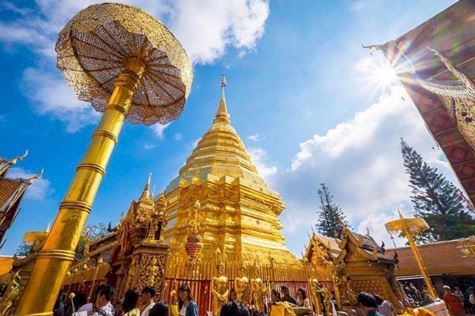
Wat Phrathat Doi Suthep: Perched at an altitude of about 1,000 meters, this iconic temple offers a breathtaking view of Chiang Mai. It houses sacred relics and offers Vipassana meditation retreats.
3.4 Doi Inthanon National Park
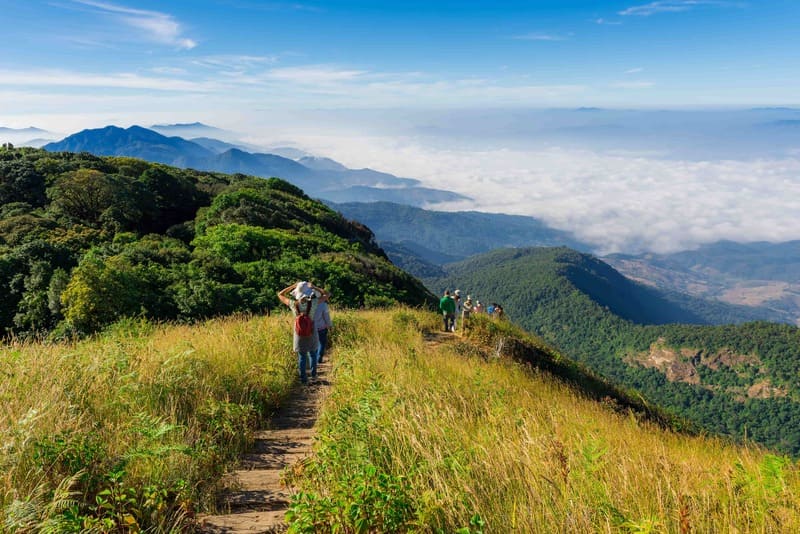
Located about 70 km southwest of Chiang Mai (1.5 to 2 hours by car), Doi Inthanon National Park is home to Thailand's highest point, nicknamed "The Roof of the Country". This exceptional natural site offers spectacular panoramas, impressive waterfalls such as Wachirathan and Mae Ya, as well as popular hiking trails, including the famous Kew Mae Pan, which allows you to admire a veritable ocean of clouds from above. Foreign adults pay a national park entrance fee of 300 baht, and a local guide is mandatory on the Kew Mae Pan trail. The trail is closed every year from June to October for forest recovery, so plan to visit between November and February for the clearest skies.
Trekking in Doi Inthanon National Park
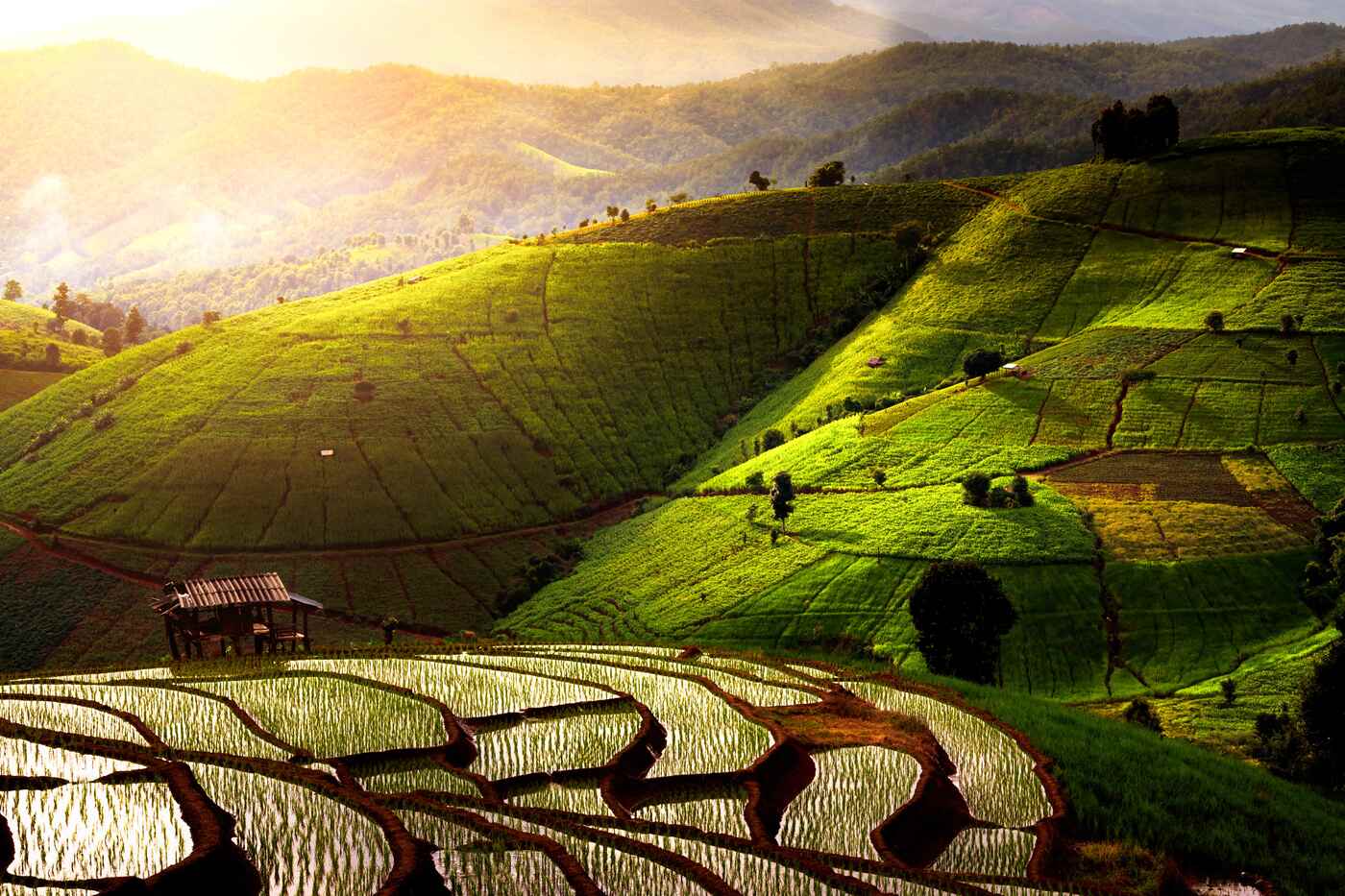
The rice terraces of Ban Pa Pong Piang offer one of the most photogenic green landscapes in the country. Set in the mountains, they attract travelers in search of calm and authenticity. The ideal access is via a private transfer from Chiang Mai, and once there you will be able to fully appreciate how isolated Pa Pong Piang is from the tourist crowds.
3.5 Doi Suthep National Park
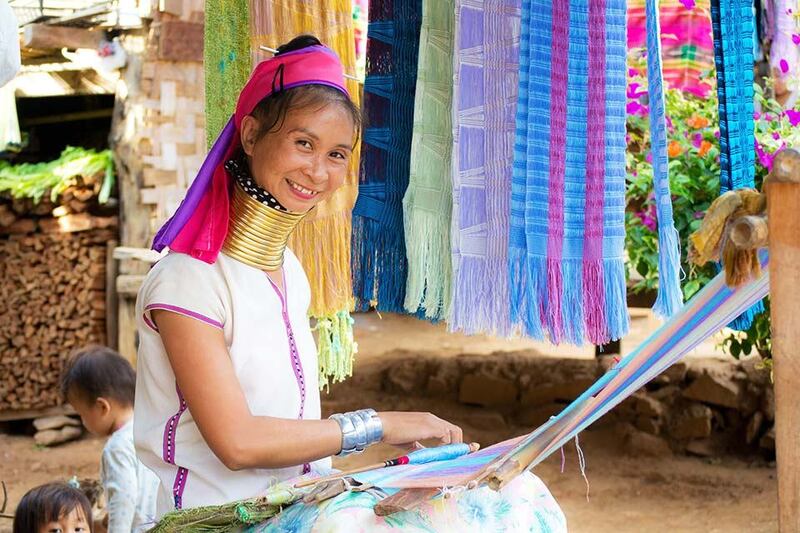
Near Doi Suthep, some villages of the Kayan people (often called the "long-neck Karen"), famous for their traditional brass neck rings, welcome visitors. It is an opportunity to learn more about their culture, but choose a reputable, community-run tour, ask before taking photos and buy crafts directly from the artisans so that you respect their way of life.
Kayan woman with traditional brass neck rings in a Chiang Mai village, Thailand
3.6 Elephant Sanctuaries
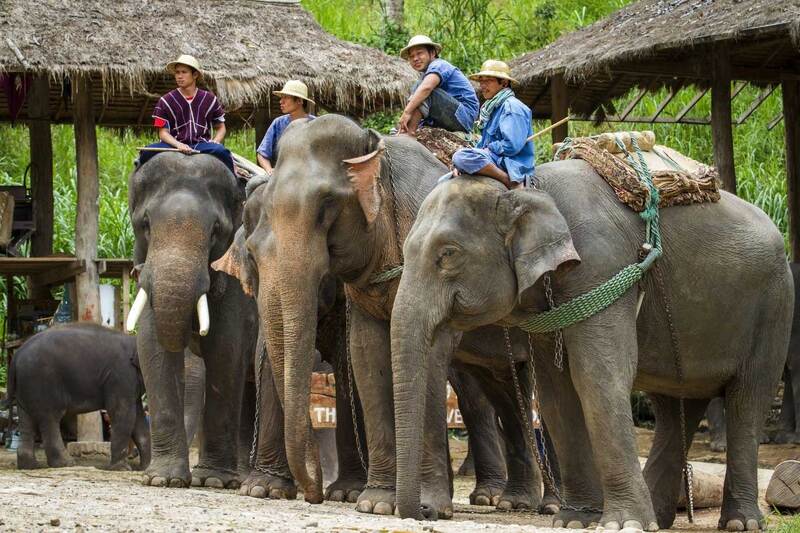
In recent years, there has been a growing awareness of the mistreatment of elephants used in logging and tourism. In the Chiang Mai region, these majestic creatures are highly revered, leading to the establishment of sanctuaries dedicated to their well-being. Riding, performances and forced bathing should always be avoided. Instead, look for places that limit contact with visitors, give the elephants plenty of space to roam and forage, and focus on observing them in a natural environment.
Visiting these elephant sanctuaries is a must-do activity
Some of the most renowned sanctuaries include Elephant Nature Park, a rescue and rehabilitation center with more than 100 elephants and a strictly hands-off approach, Elephant Jungle Sanctuary, a project run together with local Karen communities, and Kanta Elephant Sanctuary. Practices differ from one place to another (some offer mud baths or river bathing), so always check what a sanctuary allows before booking.
3.7 Watch a Muay Thai evening in Chiang Mai
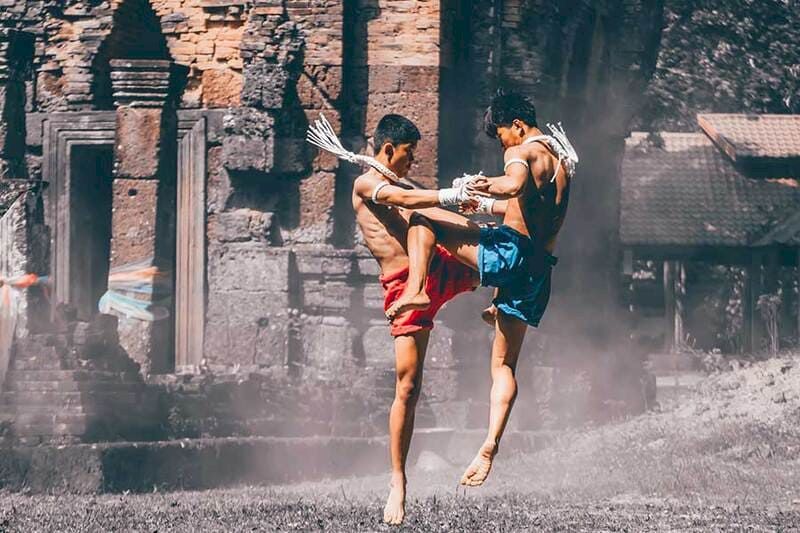
Chiang Mai provides travelers with the opportunity to encounter Muay Thai, Thailand's national sport and martial art that's tightly integrated into the nation's history and culture. As evening descends, local arenas reverberate with drumbeats and the energy of the audience. Attending a Muay Thai match in Chiang Mai is a memorable experience, offering an authentic connection to the nation's rich heritage.
The fights are a great exhibition of skill, strength, and precision. Fighters, all wrapped in colorful bandages, focus intensely on their task as they throw powerful punches and smooth kicks. The mood in the stadium is exhilarating, with both locals and visitors cheering for every move, making the atmosphere lively.
Muay Thai is the national sport of Thailand
If you would like to see a Muay Thai fight, Chiang Mai has several main stadiums: Kalare Stadium, Thapae Boxing Stadium, Loi Kroh Stadium and Chiang Mai Boxing Stadium. Fights usually start around 9 p.m., with 6 to 7 bouts per night, and the schedule differs from one stadium to another. Standard tickets cost from about 600 baht, with ringside seats around 1,000 baht and VIP seats up to 1,500 baht. To get the most out of your experience, you can book online in advance or seek the help of hotel staff, who can tell you where the fights are held on different days of the week.
Exploring the surroundings of Chiang Mai and northern Thailand gives you an unforgettable experience, where natural beauty is intertwined with rich culture and fascinating history. Here you'll immerse yourself in a variety of exciting attractions and activities:
4.1 Chiang Rai
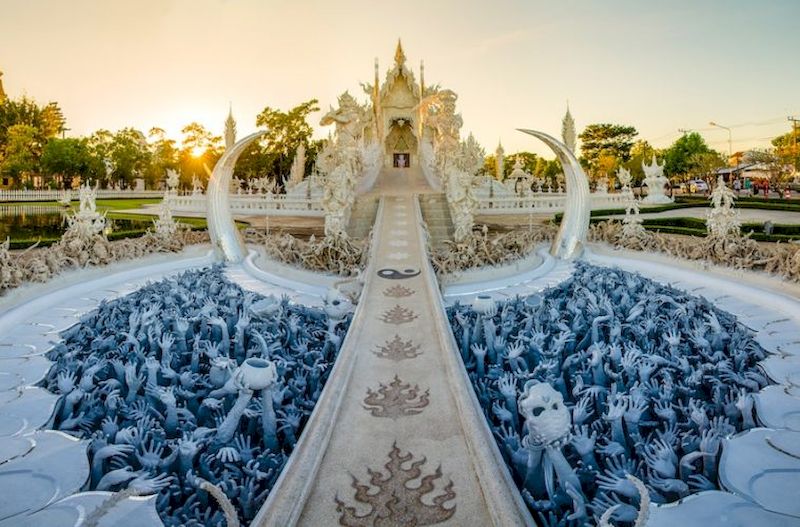
Chiang Rai, located just north of Chiang Mai, offers a mix of unique architecture, stunning temples, and natural beauty. The White Temple (Wat Rong Khun) stands out with its striking white design and modern style. Nearby, you can learn about the Long Neck Karen tribe and experience their culture in local villages. Other must-see spots include the Big Buddha (Wat Huay Pla Kang) and the Blue Temple (Wat Rong Suea Ten). While the Blue Temple is less crowded, its vibrant blue hues and intricate design make it just as captivating as the White Temple.
In Chiang Rai there are White Temple and Blue Temple
4.2 Mae Hong Son
Mae Hong Son is a beautiful mountainous province in northern Thailand, close to the border with Myanmar. Surrounded by breathtaking landscapes, it’s known for its peaceful vibe and diverse culture. The temples Wat Jong Kham and Wat Jong Klang are striking, especially with their reflections on the nearby lake. For an unforgettable view of the city and its surroundings, head to the Phra That Doi Kong Mu Pagoda.
Don’t miss the charming village of Pai, a favorite among travelers for its relaxed vibe, vibrant art scene, natural hot springs, and stunning landscapes, including waterfalls and canyons.
Mae Hong Son is close to the Burma border
5. What to Do in Chiang Mai in 3 Days?
Day 1: First steps in the "Rose of the North"
Upon arrival in Chiang Mai, the installation in a small hotel full of charm was smooth. The afternoon was spent quietly in the alleys of the old town, between local cafes and typical first dishes such as khao soi. The evening ended at the night market, where the subdued atmosphere and the smell of spices gave a nice insight into local life.
Day 2: Between heritage and panoramas
The morning was devoted to a stroll in the historic centre: ancient temples, wooden houses and small shops punctuated the discovery. Later, the path led to the heights of Doi Suthep. Up there, the view of the entire valley was bathed in a golden light. In the evening, a traditional show or simply a dinner on the terrace completed this beautiful day.
Day 3: Meet the jungle giants
Departure early in the morning to reach an elephant sanctuary committed to animal protection. The day was rich in emotions: watching the herd, feeding time, moments of complicity with the pachyderms. Back in Chiang Mai in the late afternoon, calm settled gently over an iced tea or a relaxing massage.
6. Annual Festivals And Celebrations In Chiang Mai
In Chiang Mai, three major festivals celebrate local culture in style:
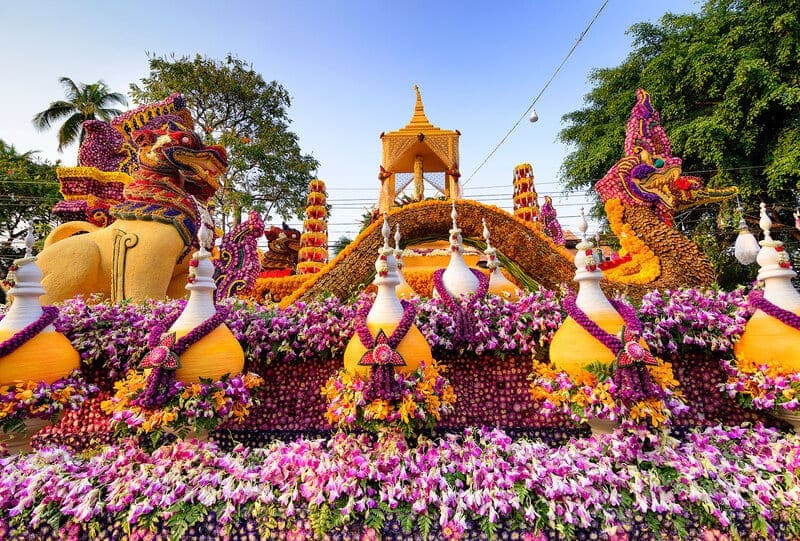
Flower Festival (February): This is a three-day event that usually takes place in early February. It’s meant to display the region’s floral magnificence, which offers a breathtaking sight.
Flower Festival in Chiang Mai
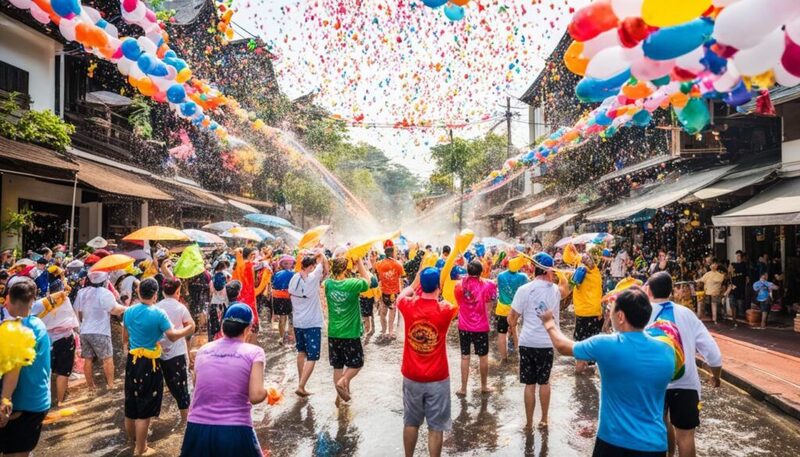
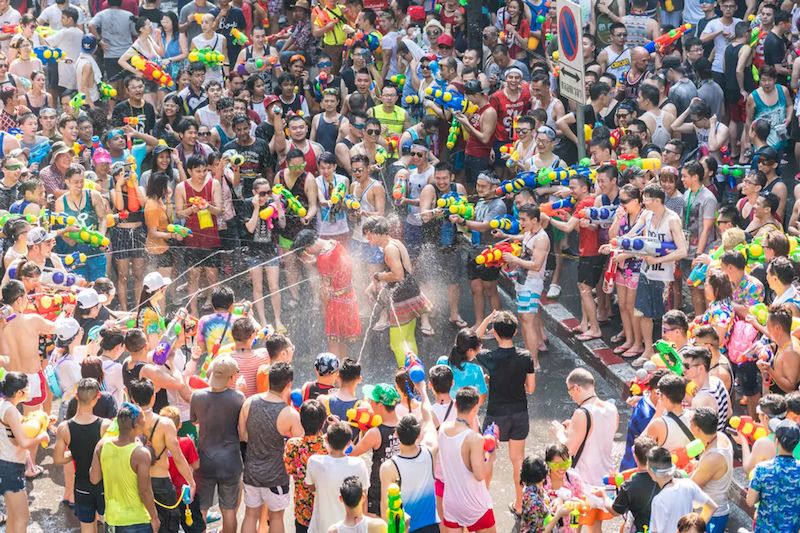
Songkran (mid-April): A water festival marking Thai New Year, celebrated from 13 to 15 April. This event is accompanied by water splashes among people, who throw it at each other for joy and cooling off.
Songkran Festival in Chiang Mai
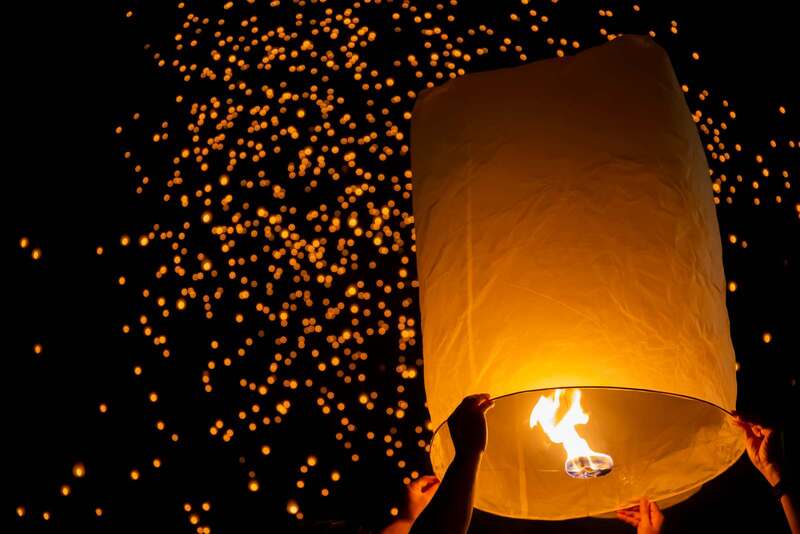
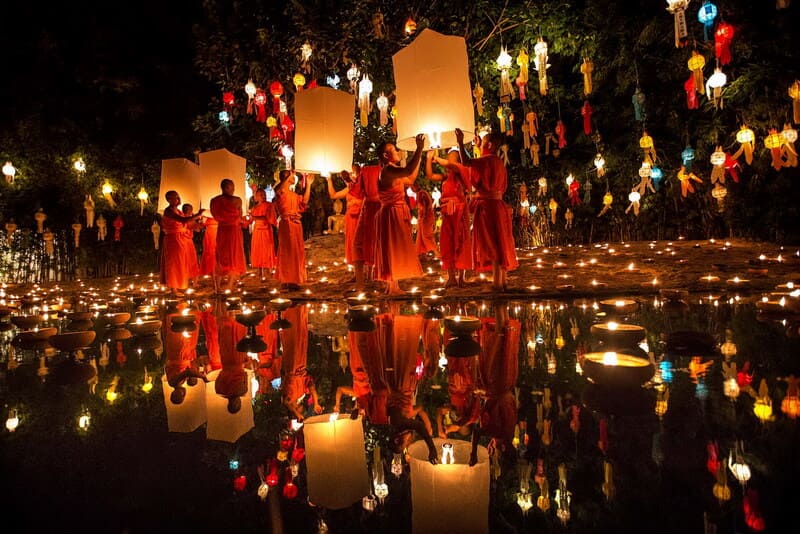
Yi Peng Lantern Festival (November): This vivid and sparkling festival is held for a few days around the full moon of the 12th month of the lunar calendar, usually in November. Buildings, roads, and monuments are adorned with colored lanterns. Participants release "khom loi" (flying lanterns) as well as hot air balloons made of paper during this occasion that fill up the night sky with brightness.
A myriad of lanterns soaring into the night sky, illuminating the starry night at Thailand's beautiful Yi Peng Festival
>>>GOOD TO KNOW: Yi Peng is a traditional festival of the Lanna people of northern Thailand, celebrated in Chiang Mai. It coincides with Loy Krathong, and the exact dates change every year. The difference between the two celebrations is the release of lanterns: Yi Peng sees lanterns flying into the sky, while Loy Krathong places floating baskets (krathongs) on the water, usually observed in Bangkok, Ayutthaya and Sukhothai. Many areas now restrict sky lanterns, and if you float a krathong, choose a biodegradable one.
Every year, thousands of people from around the world travel to Chiang Mai to witness the renowned Yee Peng and Loy Krathong festivals
7. Hotel And Restaurant Recommendations In Chiang Mai
Hotels in Chiang Mai
When staying in Chiang Mai, in addition to the classic hotels, discover a unique accommodation: the hotels perched in the trees. These establishments generally offer a perfect mix of modern comfort and immersion in the surrounding nature.
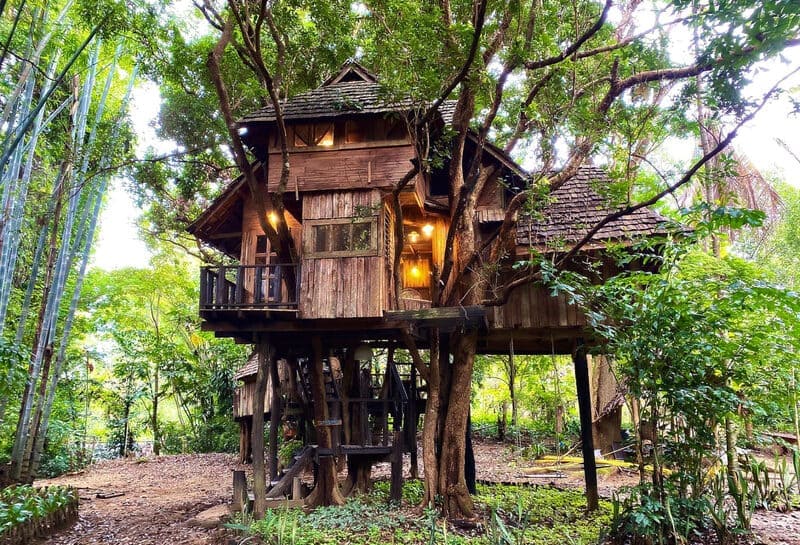
Rabeang Pasak Tree house resort
Address: Luang Nuea, Doi Saket, Chiang Mai Province, 50220, Thailand
Rabeang Pasak Tree House Resort offers a great opportunity for those who would like to experience Thailand deep within its bosom. This small family-run property, about 70 km (a 1.5-hour drive) from Chiang Mai, is enclosed in the green wilderness and provides unique accommodation in handcrafted wooden treehouses, some high in the trees and some low, with breakfast included. Multi-level family treehouses are also available. It is suitable for couples looking to spend some time together or families wishing to enjoy their holiday moments.
Rabeang Pasak Tree House Resort
The Giant Chiang Mai
Address: Baan Pok village, Huai Kaew subdistrict, Mae On, 50130 Thailand
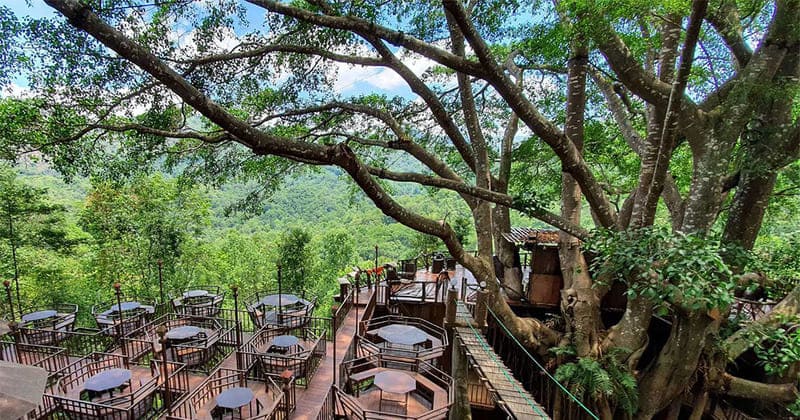
Giant Chiang Mai is a highly unusual café and accommodation complex above the trees, about 50 to 60 km from the city. Sitting on top of an old tree trunk amid a vast green forest, the cafe, made out of eco-friendly bamboo and timber, appeals to nature lovers. Adding a touch of adventure are suspension bridges that lead to tables on the treetops. From this shop, wooden balconies provide panoramic views. The road up is steep and winding, so go by car or arrange a transfer, and check opening days before you go.
The café perched atop an old tree trunk in The Giant Chiang Mai
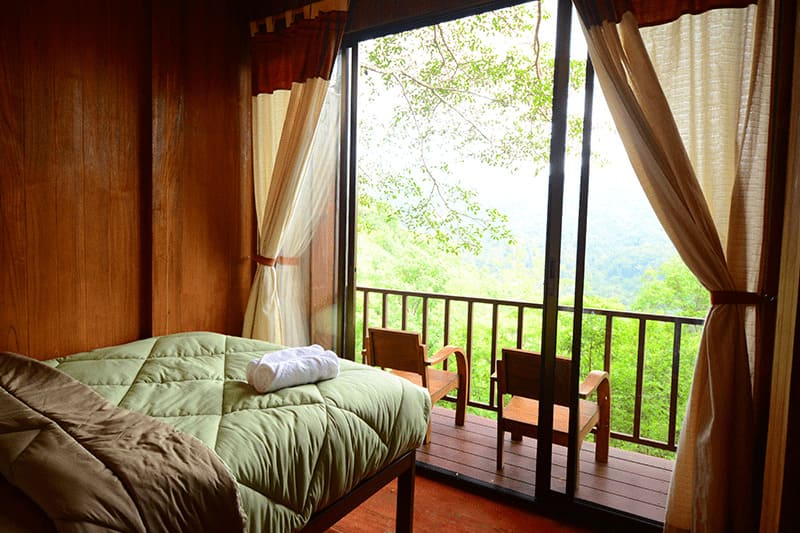
Below the café, the Giant Chiang Mai Hotel has a small number of wooden rooms, which allow visitors to experience immersive nature life with birds singing.
The Giant Chiang Mai Hotel
Recommended restaurants in Chiang Mai
Old Chiang Mai Cultural Center - Best Chiang Mai Restaurant for Khantoke Style Dinner Show
For more than five decades, the Old Chiang Mai Cultural Center has been working to preserve the Lanna culture of northern Thailand.
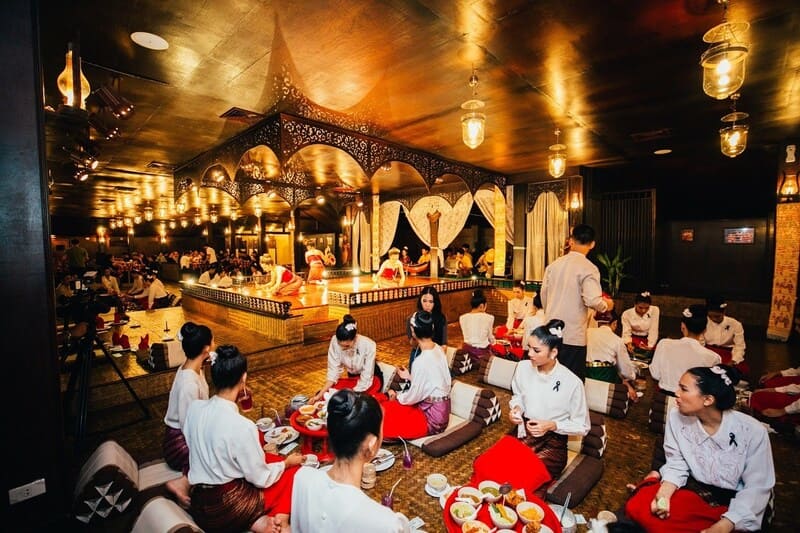
You can enjoy an authentic experience in the evening, Tuesday to Sunday (closed on Mondays), named the "Khantoke Dinner Show." The restaurant opens at 6:30 p.m., and the performances run from about 7:10 p.m. to 8:30 p.m. This traditional Thai meal is served on mats around low tables and features a set of northern Thai dishes; it is also served along with traditional Lanna dances like Fawn Leb and Ram Dab, which are very educational about the area. Vegetarian and halal sets can be requested when you book.
Old Chiang Mai Cultural Center
Oxygen Dining Room - Best Restaurant to Enjoy River View
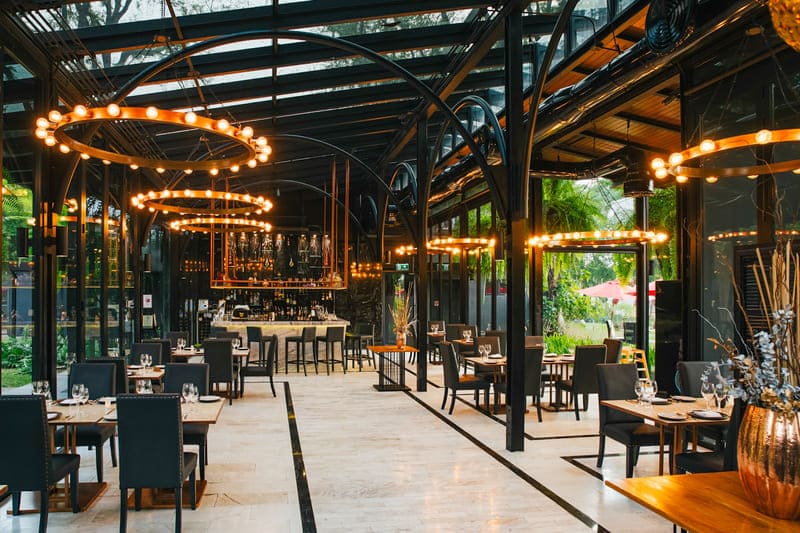
Nestled along the Ping River at Cross Chiang Mai Riverside, under centuries-old tamarind trees, Oxygen Dining Room is a place to go for anyone looking for an exceptional mix of Thai and French cuisine. Recognized by the MICHELIN Guide Thailand (check the current selection), it offers a memorable culinary experience in a glass-walled dining room, enhanced by a range of quality wines and cocktails. Give yourself that unforgettable night of great food in Chiang Mai at Oxygen Dining Room.
Oxygen Dining Room
Khaomao-Khaofang Imaginary Jungle - Best Restaurant for Dining in the Heart of Nature
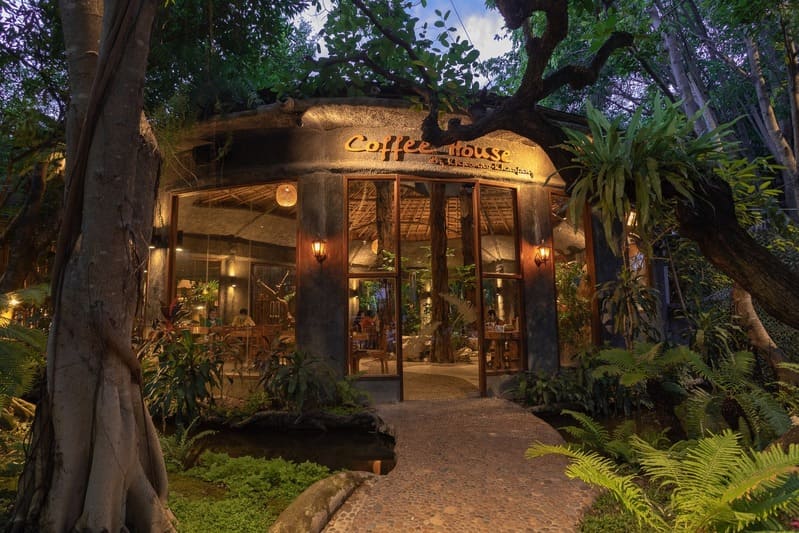
Eating at Khaomao-Khaofang, in the Hang Dong area and previously recognized by the MICHELIN Guide Thailand, provides an experience in an enchanting rainforest-style setting, full of lush greenery, ponds and waterfalls. The food selection includes tasty Thai and northern Thai dishes as well as fresh fish and shellfish. It is open daily, and it is best to reserve a table in advance. For a serene experience, select lakeside seating.
From Bangkok, it is easy to get to Chiang Mai by air; the flight takes about 1 hour 15 minutes. The route is served by airlines such as Thai AirAsia, Nok Air, Thai VietJet, Thai Lion Air, Thai Airways and Bangkok Airways.
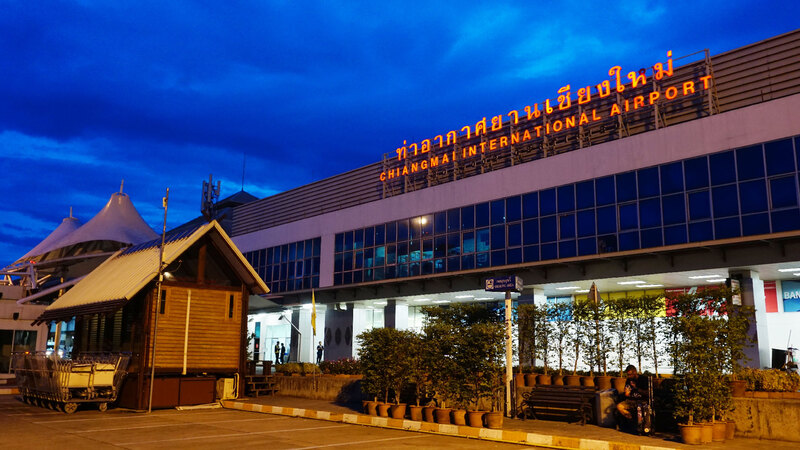
Fares differ: one-way tickets on low-cost carriers often start from around 900 to 1,400 baht (about US$26–40) when booked a few weeks ahead, and prices can reach 3,500 baht or more closer to the travel date or on full-service airlines. Chiang Mai Airport is only about 4 km from the old city. You can take a Grab or Bolt ride (roughly 80 to 180 baht), an official airport taxi (about 150 baht), a shared red songthaew (about 30 to 50 baht per person) or a city bus (about 30 baht).
Chiang Mai International Airport
By train
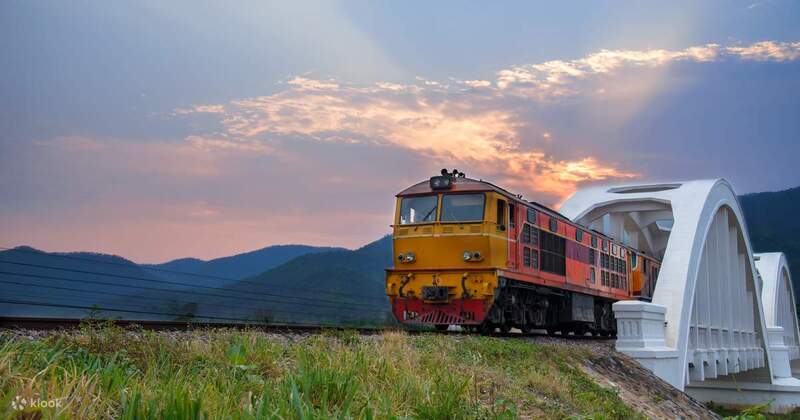
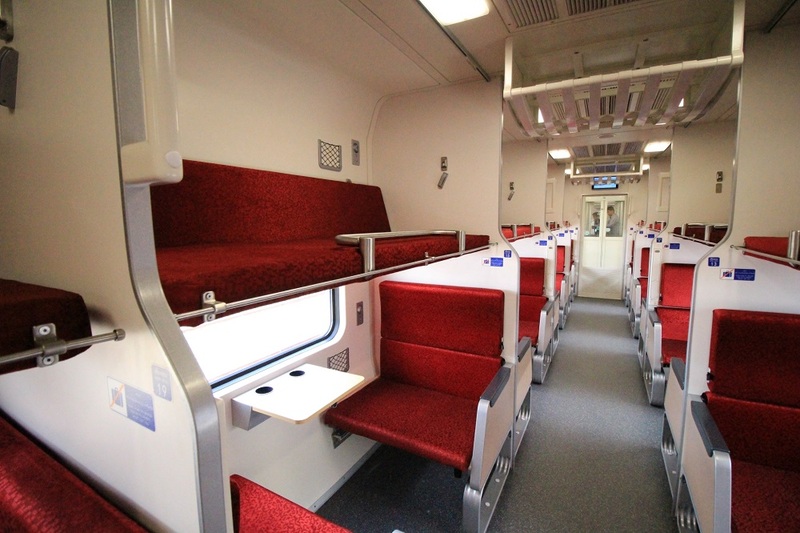
Another popular mode of travel from Bangkok to the north—or vice versa—is by train. A journey from the capital to Chiang Mai takes anywhere between 10 and 13 hours. Note that long-distance trains now depart from Krung Thep Aphiwat Central Terminal (Bang Sue), not Hua Lamphong. Taking overnight trains is a good idea when it comes to avoiding hotel costs.
Train Bangkok - Chiang Mai
Prices differ by class and berth. On the popular Special Express No. 9, a second-class air-conditioned sleeper costs about 940 baht for an upper berth and about 1,040 baht for a lower berth. In first class, a berth in a private two-berth cabin costs about 1,450 baht (upper) or 1,650 baht (lower), and booking the whole cabin for one traveler costs about 2,450 baht. Fares can vary slightly by train and over time, so check the current price on the official State Railway of Thailand booking site. Sleeper berths sell out weeks in advance, so book as soon as tickets open (up to 90 days before departure). Trains arrive at Chiang Mai's main station, a short ride east of the old city.
Train service to Chiang Mai
By local bus
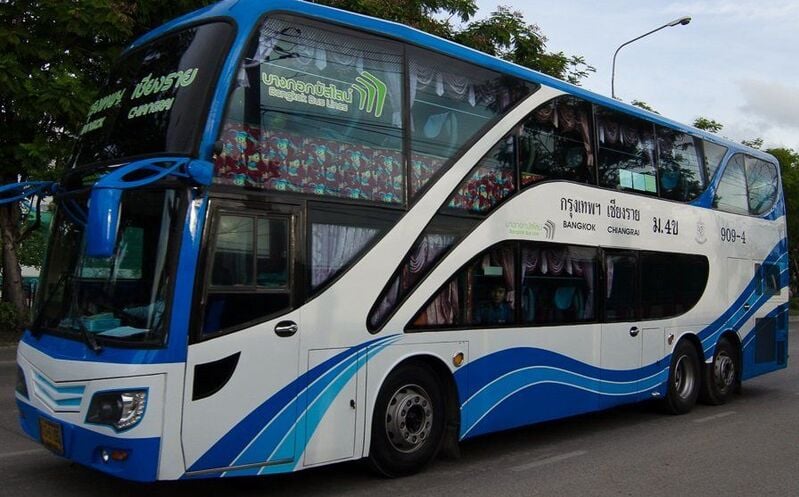
For a budget-friendly alternative to the train, consider taking a long-distance bus. Standard or express buses leave from Bangkok's Mo Chit terminal, take about 9 to 11 hours and arrive at the Chiang Mai Arcade Bus Terminal, a short songthaew or Grab ride from the old city. Fares range from around 500 baht for a standard bus to roughly 800 to 1,200 baht for a VIP or first-class seat. Several companies, such as Sombat Tour and Nakhonchai Air, operate overnight VIP services. Prices and schedules can vary, so check details when booking.
Long-distance bus from Bangkok to Chiang Mai
9. Weather in Chiang Mai
Chiang Mai, located in northern Thailand, has a tropical savannah climate, characterized by three main seasons: the warm season, the rainy season, and the cool season.
9.1 Weather in Chiang Mai
The warm season generally runs from March to June. During this period, temperatures are high and can exceed 30°C (86°F) with high humidity. From roughly February to April, farmers in the region burn their fields, and smoke haze can seriously affect air quality, so check the air quality forecast before you go.
The rainy season usually occurs from July to October, with intermittent heavy rainfall. Temperatures are slightly cooler during this time, but they can still be warm and humid.
The cool season runs from November to February. This is considered the best time to visit Chiang Mai due to the cooler and more pleasant temperatures, with lows that can drop to around 15°C (59°F). It is a popular time for tourists.
9.2 When to travel to Chiang Mai?
The best time to travel to Chiang Mai is during the cool season, from November to February. During these months, the weather is pleasant, with moderate temperatures and less rainfall, allowing you to enjoy outdoor activities and explore the city comfortably. It is ideal for participating in local festivals and events.
During this season, you can participate in the Yi Peng Lantern Festival, which usually happens in November, a magical experience where thousands of floating lanterns fill the sky. You can also join the celebrations of the Thai New Year, known as Songkran, which is celebrated in mid-April, at the end of the hot season. During this festival, the streets become a big water party.
In a nutshell
Chiang Mai is showing a lot of things too; it is not only a tourist destination. With its lively markets, appealing food scene, rich culture, and ancient temples, the city, also known as the “Rose of the North,” impresses. Festivals full of life, traditional cuisine tastes, and the quietness emanating from praying in a temple are some other striking features of Chiang Mai that people will never forget about.
Planning your trip?
Save time and get expert advice for FREE!
✅ 15 years of local experience
✅ Save up to 40 hours of planning
✅ Travel stress-free from start to finish
Book your free consultation today!








 Our team
 Our team
 Our team
 Our team

.jpg)



 Other
Other Add us as a preferred source