Ninh Binh in September: Two Weeks to Avoid, Two to Book
September is the most split month in Ninh Binh's calendar. The first half belongs to the tail of the rainy season and to the biggest domestic travel week of the autumn; the second half is when the province quietly turns into one of the best-value times to visit all year. The rice starts yellowing, the water lilies open along the Ngo Dong River, the rain eases, and the crowds vanish almost overnight. Same month, two completely different trips.
Most guides average those two halves into one bland verdict about a "pleasant shoulder season," which is how travellers end up booking the first week of September expecting quiet countryside and finding a 90% occupancy rate instead. The dates you pick matter more in September than in any other month here.
Written by Oliver PHUNG (Tour Guide)
Updated on Sep 04, 2026
0 comment
Oliver Phung is a Northern Vietnam-based tour guide and blogger. His favorite topics to write about include cuisine, culture, travel, and under-the-radar experiences. Oliver possesses a deep, detailed understanding of the region, from the indigenous culture of the Hmong in the Northwest to the highland lifestyle of the Tay in the Northeast. Whether he is exploring ancient architecture or geological landscapes, he is always eager to share his insights with his readers.
Beyond his work at Kampá Tour, he produces specialized travel content on platforms such as Reddit, Instagram, LinkedIn, and various other publications.
Weather: warm and humid at 25 to 32°C, with the rainy season fading through the month rather than stopping on a fixed date.
Landscape: water lilies open along the Ngo Dong River and the rice begins turning gold from mid-month, two seasons overlapping.
Boat tours: running, but this is the month when a heavy downpour is most likely to raise the river above the cave ceilings at Tam Coc.
Crowds: one enormous spike around National Day on September 2, then genuinely quiet for the rest of the month.
Best paired with: Halong Bay, where late September brings the same easing weather and some of the year's lowest cruise rates.
Ninh Binh Weather in September
September is warm rather than hot, typically running 25 to 32°C in the day and dropping to a comfortable low 20s at night. Humidity stays high, somewhere in the 75 to 85% range, so the air still feels heavy at midday even when the thermometer reads lower than August. Expect roughly 8 to 12 rainy days across the month.
Those rainy days are not spread evenly, and this is the single most useful thing to know about September. The first ten days or so are still functionally rainy season, with the heaviest downpours and the highest storm risk of any month covered in this series. Local residents in Ninh Binh describe August and early September plainly as heavy-rain season, and travel writers who have been through it call early September the stormiest stretch of the year here. From roughly mid-month onward the pattern shifts: showers become shorter and more predictable, arriving in the afternoon and clearing within the hour, and the sky opens up between them.
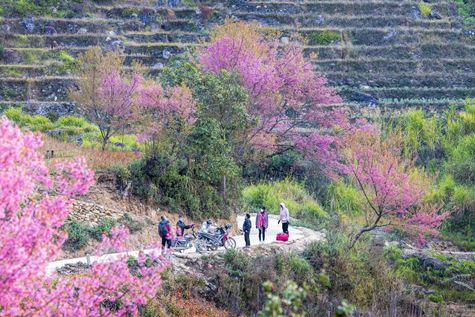
In September, the weather in Ninh Binh is clear and cool.
Daylight is generous, with sunrise around 5:40am and sunset near 6pm, so a morning start gives you a long, usable day. That matters more in September than in cooler months, because mornings are when the weather is most reliable and, as it happens, when the water lilies are open.
Good to know:
Vietnam's National Day falls on September 2, and the surrounding days form one of the country's biggest domestic travel windows. If your dates fall anywhere between roughly August 29 and September 3, book accommodation and any boat tour weeks ahead, not days. If your dates are flexible, shifting your Ninh Binh nights to the following week costs you nothing and changes the experience entirely.
What September Does to the Landscape
September is the only month when two of Ninh Binh's signature seasons overlap, and almost no English-language guide mentions the second one.
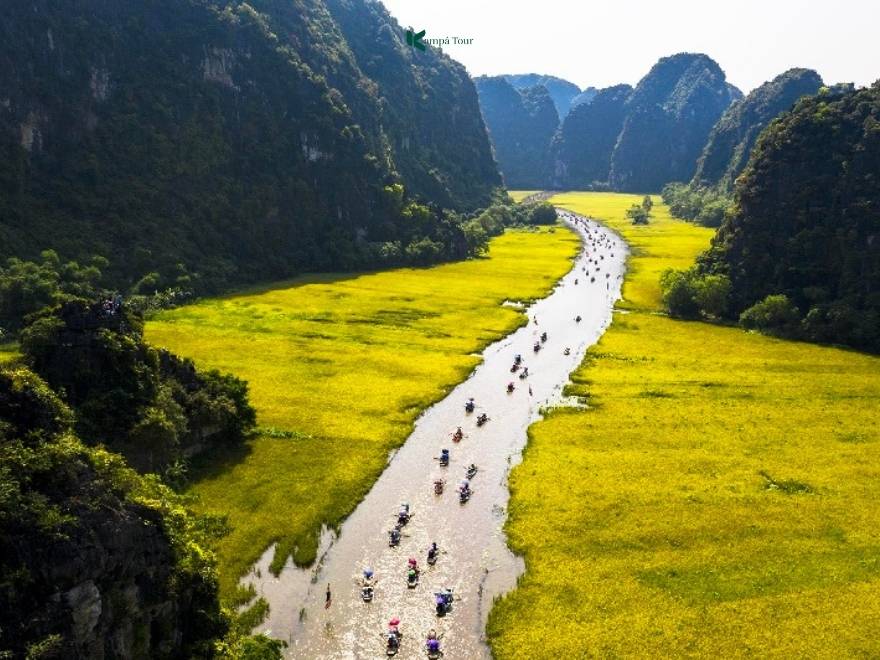
The first is the rice. The secondary crop begins yellowing from around the middle of the month, so late September gives you fields shifting from green through to gold, with the full harvest colour arriving in early October. Come in the first week and the paddies are still solidly green; come in the last week and you are seeing the beginning of the harvest palette.
The golden rice season in Tam Coc also falls in September.
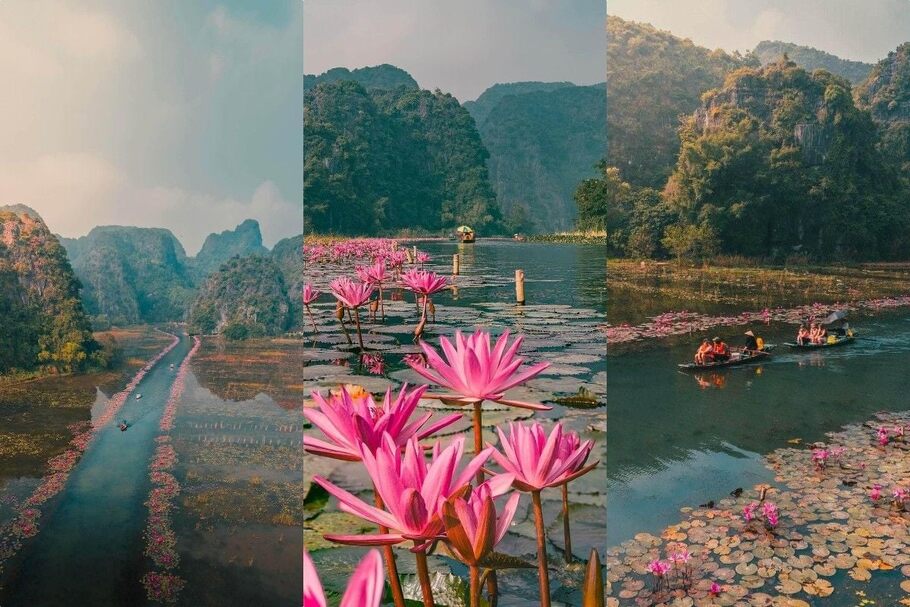
The second is the water lilies, and this is September's real advantage. Along the Ngo Dong River at Tam Coc, water lilies have been planted since 2013, and they bloom in pink and purple across the water in front of the karst. The season stretches from late summer into the end of the year, with tens of thousands of flowers opening simultaneously along the river as early as late August in recent years. September catches the beginning of that season, before the October and November peak brings the crowds that follow it. Van Long and Thung Nang carry the same bloom on quieter water.
Timing within the day is not optional here. Water lilies open in the late afternoon and stay open until around 11am the next morning, then close. A boat ride between 7:30 and 10am puts you on the river when the flowers are fully open and the light is still soft; the same ride at 2pm shows you a river of closed buds and leaves.
September is the season when water lilies are in full bloom.
What to Do in Ninh Binh in September
The bloom and the easing rain reshuffle the usual priorities, pushing the quiet wetlands up the list and the exposed viewpoints down it.
Van Long Nature Reserve: the largest freshwater wetland in northern Vietnam carries the same water lilies as Tam Coc but with a fraction of the boats, and the longer stretches of open lagoon suit a slower ride. Because the big coach itineraries skip it entirely, it stays calm even during the National Day week.
Tam Coc: the headline September experience, provided you go in the morning. The Ngo Dong route takes you directly through the lily beds, and from mid-month the surrounding fields add the first yellow to the frame.
Cuc Phuong National Park: the forest is at its greenest and most alive after a summer of rain, and the cooler mornings make the trails manageable. Expect mud on the unpaved sections, particularly early in the month.
Trang An: the reliable wet-weather choice, since the route is less dependent on morning light than a lily ride. Water levels do run higher in September, so ask at the pier which routes are running before you buy.
Hang Mua: worth saving for the second half of the month. The climb is unpleasant in early-September humidity and the panoramic view, the entire reason for the 500 steps, is often lost to haze and low cloud after rain.
Ticket prices and full timings for each are in the linked guides. September has no major traditional festival in Ninh Binh; the province's big lunar-calendar events fall around March and April.
Cuc Phuong national park
How September Rain Affects Boat Tours
Boats run throughout September, but this is the month when rain most often interferes, and the mechanism is worth understanding rather than just worrying about. At Tam Coc, the route passes through three low caves. When heavy rain raises the Ngo Dong River, the water can rise above those cave ceilings, and the route closes until levels drop, usually within a day or two. Trang An's caves work the same way. This is a genuine possibility in the first half of September and an unlikely one by the last week.
The practical response is simple. Book your Tam Coc morning early in your stay rather than on your final day, so a closure can be rescheduled rather than lost. Keep Hoa Lu, Bai Dinh, or Cuc Phuong in reserve as alternatives that do not depend on river levels. And check with your accommodation the night before rather than turning up at the pier on spec.
How Crowded Is Ninh Binh in September?
September has the most extreme crowd curve of any month in this series: an enormous spike, then near-emptiness.
The spike is National Day. Over the five-day holiday around September 2, 2026, Ninh Binh received close to 780,000 visitors province-wide, with tourism revenue passing 1,000 billion VND. Average occupancy across the province hit 76%, and in the Hoa Lu and Tam Coc areas, where most international visitors stay, many properties ran at 90 to 100% on peak days. Roads out of Hanoi are heavy with domestic traffic in both directions. Anyone arriving in that window without a reservation is in a difficult position.
Then it stops. From roughly September 5 onward, Ninh Binh returns to genuine low season: boat piers without queues, homestays with availability, and lower rates than you will find again until the following summer. This is the period the "shoulder season" descriptions are actually describing, and it is one of the best-value windows in the entire year, with the bloom already underway and the rice starting to turn.
August vs. September vs. October: Which Is Best?
These three months run from full wet season into the harvest, and each trades comfort against something else.
Factor
August
September
October
Daytime temperature
Hot and heavy, often 28 to 35°C
Warm, 25 to 32°C, easing through the month
Comfortable, 25 to 28°C
Rain
Deep in the wet season, frequent and heavy
Heavy early, tapering to short afternoon showers
Front-loaded, then largely dry
Landscape
Intensely green, dramatic storm skies
Water lilies open, rice yellowing from mid-month
Peak harvest gold in the first half
Crowds
Low, aside from domestic summer trips
One holiday spike, then very quiet
Busy from the first week to the last
Best for
Budget travellers who accept real rain
Value, quiet, and the start of the bloom
The harvest, if you book far enough ahead
October wins on weather and on rice. September wins on price, space, and the water lilies. If you want the version of Ninh Binh where a boat ride feels like your own rather than a queue, the second half of September is the answer.
What to Pack for Ninh Binh in September
Humidity first, rain second, sun third.
Light, quick-drying fabrics rather than cotton, which stays damp all day in 80% humidity
A proper rain layer, not a folding umbrella, since September showers arrive hard and a boat gives you nowhere to shelter
Footwear you can rinse off, because the countryside paths and Cuc Phuong's trails hold mud well into the second half of the month
Strong insect repellent, this is the wettest, warmest month covered in this series and the mosquitoes reflect that
Sunscreen and a hat, the sun between showers is stronger than the cloud cover suggests
A dry bag or waterproof pouch for your phone and camera on the boat
Fitting Ninh Binh into a September Trip
The National Day window is the one time this route needs extra thought: the highway out of Hanoi carries heavy domestic traffic in both directions and the usual two-hour run can take considerably longer. Outside that week, September is straightforward. Transport options are in our guide to getting from Hanoi to Ninh Binh.
Pairing with Halong Bay works particularly well in late September, and not only for the weather. This is the low-season window before the October to March rush, when cruise rates are at their most reasonable and boats sail with space to spare. We run the transfer directly between Ninh Binh and Halong Bay in both directions rather than routing back through Hanoi, which matters more in a month where an afternoon shower can slow any leg of a journey. Details are in our guide to traveling between Ninh Binh and Halong Bay.
Ticket prices for each site, a 2-day itinerary, and accommodation areas are all covered in our Ninh Binh travel guide.
Autumn, September through November, is the strongest overall season: the rain eases, the harvest turns the valleys gold, and the water lilies bloom. Spring, February through April, runs a close second with mild weather and green paddies. Summer is hot and wet but cheap and empty; winter is cool, dry, and atmospheric but without colour in the fields.
What is the weather like in Ninh Binh in September?
Warm and humid, 25 to 32°C, with 8 to 12 rainy days concentrated in the first half of the month. Early September still carries real rainy-season weather including storm risk; by the last two weeks, showers are typically short afternoon events with clear spells between them.
It depends on what you are optimising for. For weather alone, February to April and October to November. For golden rice, late May to early June, with a second window in late September to early October. For water lilies, September through November. For the lowest prices and fewest people, the second half of September or the summer months.
The version of September you get depends almost entirely on which fortnight you book. Take the second half if you can: the lilies are open, the rice is turning, the rain has settled into a manageable rhythm, and for a few weeks the whole valley is quieter and cheaper than it will be again for a long time.
>>> See more about things to do in Ninh Binh by month:
JANUARY | FEBRUARY | MARCH | APRIL | MAY | JUNE | JULY | AUGUST | SEPTEMBER | OCTOBER | NOVEMBER | DECEMBER
Planning your trip?
Save time and get expert advice for FREE!
✅ 15 years of local experience
✅ Save up to 40 hours of planning
✅ Travel stress-free from start to finish
Book your free consultation today!
















 Our team
 Our team
 Our team
 Our team






 Other
Other Add us as a preferred source