Vietnam Train Travel 2026: Essential Local Guide & Tips
If your travel experiences have been confined to buses and airplanes, you're missing out on one of the most enchanting ways to explore the world: the train. Not only increasingly budget-friendly, but a scenic train journey can even feel like a vacation in itself. Our team has booked, ridden, and troubleshot Vietnam's trains for travelers for years, and this guide pulls together everything we've learned — routes, ticket classes, booking mechanics, and the practical details most guides skip.
Written by Thao Le (Travel Consultant)
Updated on Oct 14, 2026
2 comments
Thao Le, a seasoned professional from Hanoi and a travel enthusiast, is passionate about Southeast Asia. Her extensive travels through the region have endowed her with deep insights into its various countries. Fluent in both French and English, Thao Le's thorough understanding of Vietnamese culture enhances her contributions to this blog. Currently working at Kampá Tour, she is a valued voice here. We invite you to share your comments at the bottom of her articles to engage directly with her. Your feedback is important, and she looks forward to responding to you personally.
Quick answer: is train travel in Vietnam worth it?
Yes, if you choose the right legs. Vietnam train travel is slow, as a full Hanoi to Ho Chi Minh City run takes more than 30 hours, but scenic sections such as Hue to Da Nang over the Hai Van Pass and night trains such as Hanoi to Lao Cai are worth booking.
Trains are run by state-owned Vietnam Railways, mainly on the 1,726 km North-South line. The best plan for most travelers is one or two train legs combined with flights or road transfers.
1. Vietnam's Railways at a Glance
Construction of the North-South line began in 1899 under French rule, and the full 1,726 km railway between Hanoi and Saigon opened in 1936. Badly damaged during the war, it reopened in 1976 as the Reunification Express, the name still used today.
The north-south “Reunification” line crosses the Hai Van pass
The line is still the only rail link between Vietnam's two largest cities. Trains are slow because the track is single and metre gauge: trains in opposite directions share it and wait for each other at passing points. A separate 350 km/h high-speed line is due to open in 2035, so it changes nothing for trips planned now.
Vietnam Train Map: Lines and Stations That Matter
Vietnam Railways (VNR), the state-owned operator, manages the national network: about 2,600 to 3,200 km of main line (over 4,000 km counting station and branch tracks), reaching most of the country's provinces and cities and connecting across the border to China. Three passenger lines matter most to visitors: North-South, Hanoi to Lao Cai (for Sapa) and Hanoi to Hai Phong, plus the Saigon to Phan Thiet branch and the Da Lat to Trai Mat heritage line. These are the stations most travelers use:
Vietnam train map - Source: vietnam-railway.com
Station
For
Good to know
Hanoi
The capital and the Old Quarter
Hub for the North-South, Lao Cai and Hai Phong lines
Vietnam Railways adjusted passenger fares several times in March and April 2026 as diesel prices rose, most recently with a 3% rise from 00:00 on 5 April 2026. Tickets bought before a change kept the old price. Treat the fares in this guide as indicative and check the live price when you book.
2. Is Train Travel in Vietnam Worth It?
It depends on what you want from the journey. Trains are slower than flying and standard carriages are basic, but they run between central stations and show you countryside and coastline you cannot see from a plane or a highway.
We usually suggest the shorter scenic or overnight legs, such as Hanoi to Lao Cai, Hue to Da Nang and Saigon to Nha Trang, rather than the whole north-south run. They give you the scenery without more than 30 hours on board.
The train crosses the Long Bien Bridge, Hanoi - Source: Nguyen Duc Huy
What Is the Most Famous Train Ride in Vietnam?
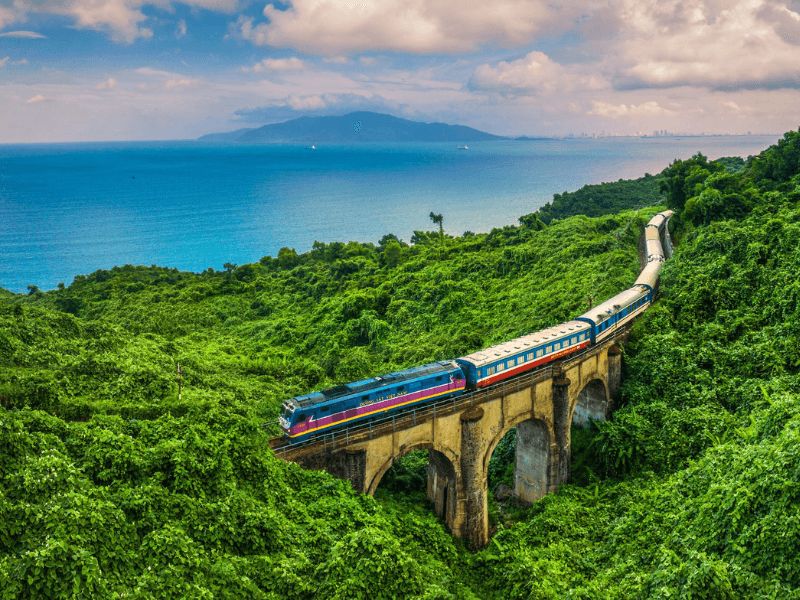
The most famous train ride in Vietnam is the Reunification Express, the North-South line between Hanoi and Ho Chi Minh City. Its best-known section runs between Hue and Da Nang, where the track climbs the Hai Van Pass above Lang Co Bay and the sea. That stretch takes about three hours.
Good to know:
Lonely Planet ranked the Reunification Express first in its list of the most incredible train journeys to book in 2025. In Condé Nast Traveler's 2026 Readers' Choice Awards, the Hue to Da Nang heritage train ranked 10th and The Vietage by Anantara 14th among the best train trips in the world.
Lonely Planet ranked the Reunification Express first among train journeys to book in 2025
BE A PART OF THE TRIP RIGHT NOW!
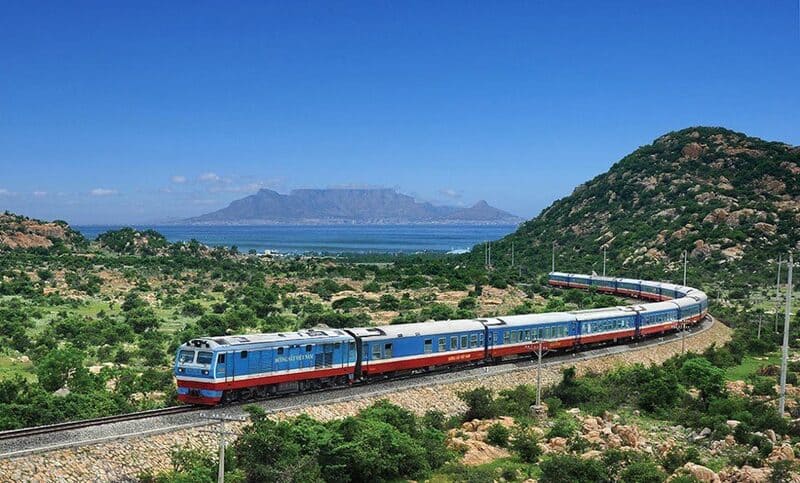
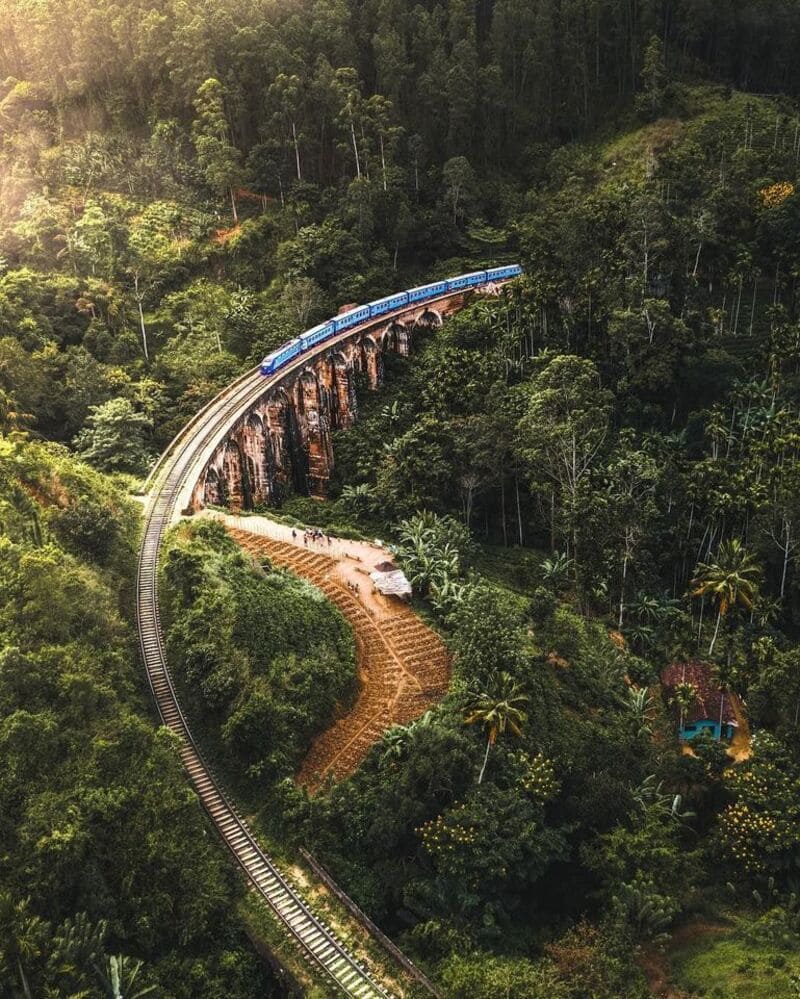
The north-south train offers a beautiful view of the mountains and forests
My honest take, as a travel consultant:
I would not recommend the train to everyone. Standard carriages are old, toilets are not always clean, and in a shared cabin you cannot choose your neighbors, so noise and night stops can cut your sleep. On long routes you may also arrive at three or four in the morning.
If you simply want to get from A to B, fly. If you want one memorable ride, take Hue to Da Nang in daylight, or book all four berths of a soft-sleeper cabin so it becomes a private room. Bring toilet paper, a light jacket and snacks. If a staff member offers to move you to an empty cabin for cash, it is an informal arrangement, not an official upgrade.
3. The Best Train Routes in Vietnam
The routes we suggest most often, from short scenic rides to overnight legs:
Route
Time on board
Why take it
Tip
Hue to Da Nang
About 3 hours
Hai Van Pass and Lang Co Bay
Travel by day and sit on the sea side
Hanoi to Lao Cai (Sapa)
About 8 hours, overnight
Saves a travel day
Lao Cai to Sapa is about 1 hour by road
Hanoi to Ninh Binh
2 to 3 hours
An easy first train ride
Short taxi ride to Tam Coc
Hanoi to Hue or Da Nang
Overnight
Long-haul sleeper experience
Book a four-berth cabin
Saigon to Nha Trang
Day or night
Beach break from Saigon
SNT1/SNT2 run daily
Saigon to Phan Thiet
About 4 hours
Mui Ne dunes
Weekend-only until 30 December 2026
Hanoi to Hai Phong
A short day trip
Gateway to Cat Ba Island
Try the VIP car of Hoa Phuong Do
3.1 Hue to Da Nang: The Hai Van Pass Train
If you take only one train in Vietnam, make it this one. Between Hue and Da Nang the line runs along Lang Co Bay and climbs the Hai Van Pass, the most scenic section of the North-South railway. The trip takes about three hours, about one of them through the mountains.
For sea views, sit on the left side when heading south from Hue to Da Nang, and on the right side when heading north. You can choose your seat when you book.
The north-south train travels along the seaside in central Vietnam
Besides the regular SE trains, two daily pairs of heritage trains, HĐ1/HĐ2 and HĐ3/HĐ4, run between Hue and Da Nang. They launched in March 2024 with a stop of about 10 minutes at Lang Co Station, and a one-way fare was about US$11 in October 2026. See our Heritage Train guide.
Sapa has no railway station. The night train runs from Hanoi to Lao Cai, and you cover the last hour to Sapa by road. Two trains run this route:
Train
Leaves Hanoi
Arrives Lao Cai
SP1
21:35
05:30
SP3
22:00
06:10
Times as listed in October 2026. Timetables can change by season, so confirm when you book.
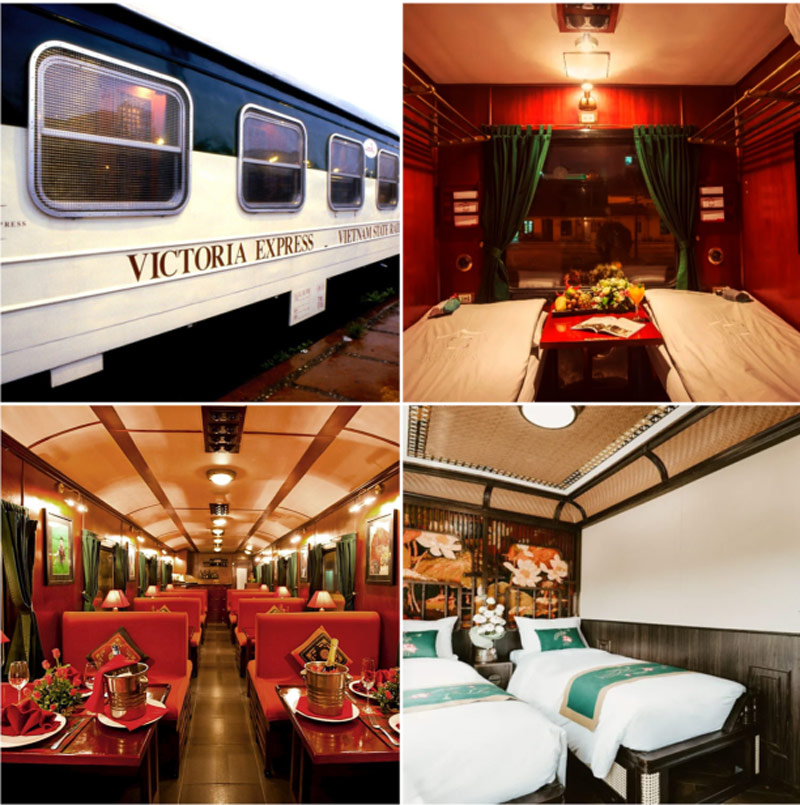
Private carriages such as Chapa Express, Sapaly and Laman are attached to the same trains. Fares for both are in the price table below.
Our tip:
Choose your berth around who you travel with, not only your budget. With friends or family, book the berths together so your group has one cabin, and the long night becomes part of the trip. Traveling solo or as a pair? A shared cabin means sharing with whoever holds the other berths, which can be an easy way to meet other backpackers: ask where they are headed next, or bring snacks and a deck of cards to share.
If quiet and privacy matter more, especially on your first night train, book all four berths of a Vietnam Railways cabin, or a four-berth cabin in a private carriage. You get cleaner bedding and no strangers, which matters more than people expect on an eight-hour night.
3.3 Hanoi to Hue and Da Nang: The Long Overnight Legs
Five pairs of Reunification Express trains, SE1/SE2 to SE9/SE10, run every day between Hanoi and Saigon, and SE19/SE20 runs daily between Hanoi and Da Nang. Main stops for visitors include Ninh Binh, Dong Hoi, Hue and Da Nang. Hanoi to Hue is an overnight trip, so most travelers book a sleeper and arrive in the morning in the Imperial City of Hue. Our Hanoi to Hue train guide covers that leg in detail.
Train
Leaves Hanoi
Leaves Saigon (return train)
SE1 / SE2
21:45
20:35
SE3 / SE4
19:20
19:20
SE5 / SE6
08:00
08:45
SE7 / SE8
06:00
06:00
SE9 / SE10
13:00
13:15
Departure times published in April 2026 for trains from 15 May to 16 August 2026. All five pairs continue to run daily, but times can change between timetable periods, so check before you book.
If Hanoi to Hue feels too long, break it at Ninh Binh (two to three hours from Hanoi) or Dong Hoi, the base for the caves of Phong Nha-Ke Bang. Heading south? Compare train, flight and bus from Hanoi to Da Nang and Hanoi to Hoi An.
3.4 Saigon to Nha Trang and Phan Thiet
Nha Trang is the easiest beach escape by train from Saigon. Besides the SE trains, the SNT1/SNT2 pair runs daily between the two cities.
Phan Thiet, the base for the Mui Ne dunes, is the shortest beach trip by train from Saigon: about four hours, the last part on a short branch line. From 11 September to 30 December 2026, the SPT1/SPT2 trains run only at weekends.
3.5 Hanoi to Hai Phong
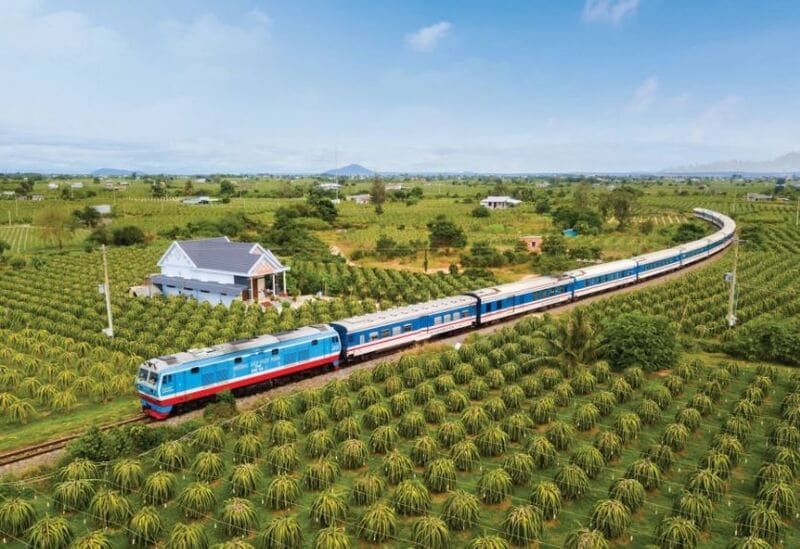
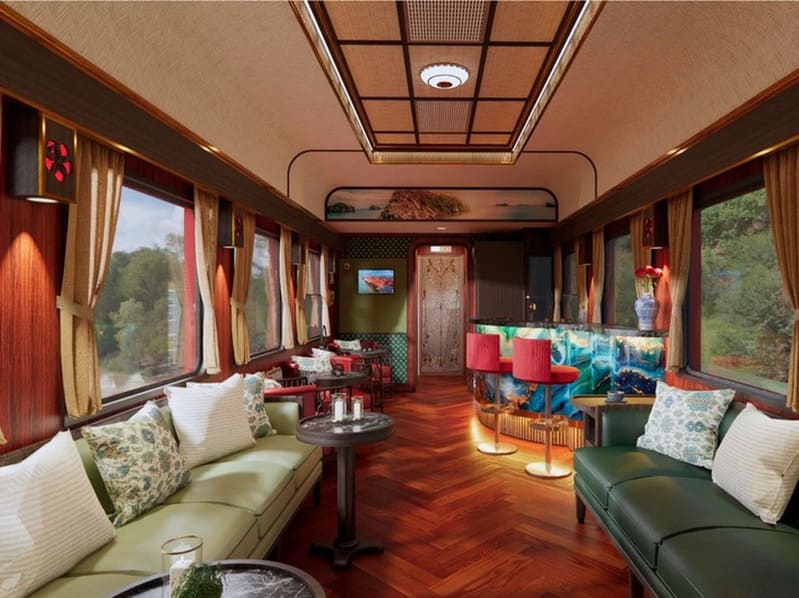
Hai Phong, the second city of the north, is a gateway to Cat Ba Island. In May 2025 the line gained Hoa Phuong Do (Red Flamboyant), a renovated train with an Indochine-style VIP car, Wi-Fi and a bar.
3.6 Trains Like No Other
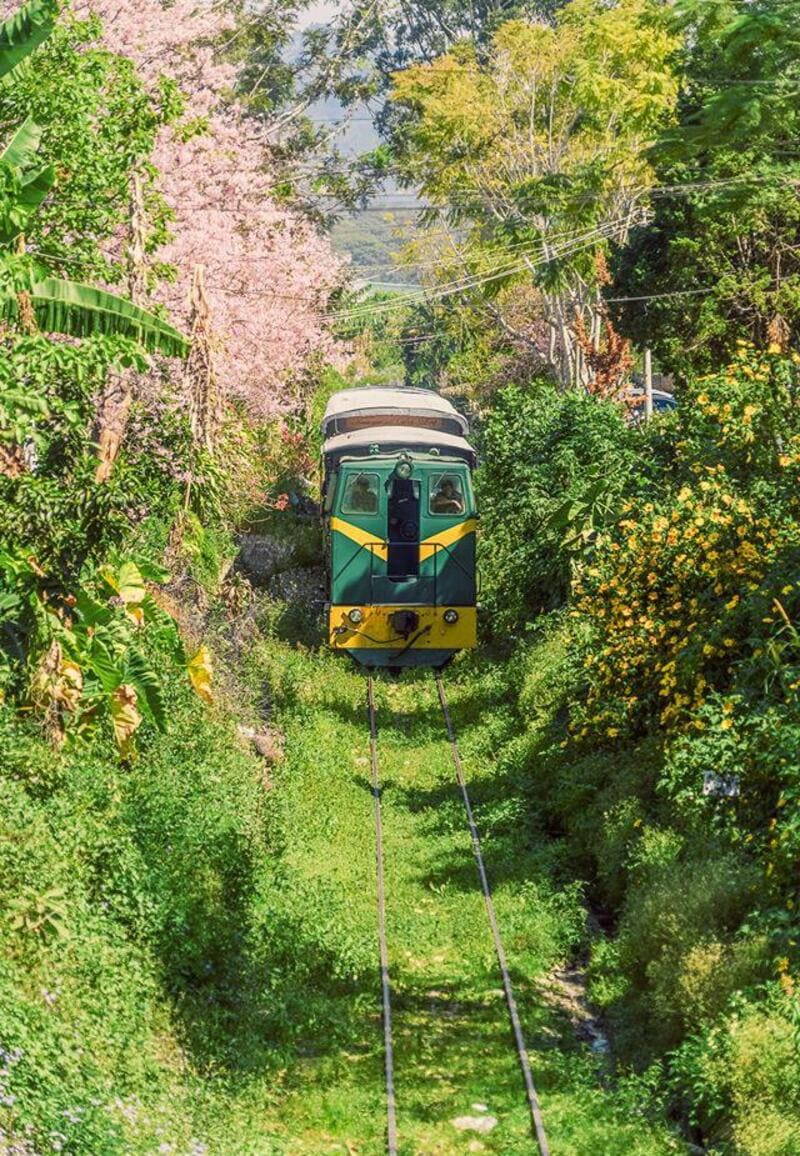
Da Lat to Trai Mat. Da Lat's Art Deco station is the start of a short heritage line to Trai Mat, the only remaining part of the old cog railway that once climbed between Da Lat and Thap Cham. In April 2024, evening departures were added.
The steam locomotive returned to its homeland and steamed again in 1993 on the Alps - Source: The STB
The Hanoi Train (Hanoi 5 Gates). Launched on 19 August 2025, this cultural train has five double-decker carriages plus two themed "check-in" cars with large windows, with 40 to 60 seats each. Passengers watch live traditional performances (quan họ, ca trù, chèo and xẩm) as the train loops from Hanoi Station via Long Bien, Gia Lam, Yen Vien and Tu Son and back in a little over an hour. At launch it ran three times a day, at 8:00, 14:00 and 20:30. Boarding uses biometric ID, with integration into the VNeID app planned.
Hanoi Train Street. Not a ride, but a street where trains pass between houses and cafés; check times in our Hanoi Train Street guide.
4. Vietnam Train Prices
How Much Is the Sleeper Train in Vietnam?
It depends on distance and berth. On the full Hanoi to Ho Chi Minh City run, a four-berth soft sleeper cost about VND 1.5 to 3.7 million and a six-berth berth VND 1.2 to 1.46 million before the April 2026 rise. Hanoi to Lao Cai costs about VND 540,000 to 790,000.
Route
Class
Indicative fare
Price date
Hanoi to Ho Chi Minh City
Four-berth soft sleeper
VND 1.5 to 3.7 million
Before the 3% rise of 5 April 2026
Hanoi to Ho Chi Minh City
Six-berth sleeper
VND 1.2 to 1.46 million
Before the 3% rise of 5 April 2026
Hanoi to Lao Cai
Hard seat / six-berth / four-berth
VND 290,000 / 540,000 / 790,000
October 2026
Hanoi to Lao Cai
Private carriage, four-berth
US$45 to 65 per berth
October 2026
Hue to Da Nang
Heritage train seat
About US$11
October 2026
Hanoi to Hai Phong
Hoa Phuong Do VIP seat
VND 250,000 to 300,000
May 2025 (launch)
Da Lat to Trai Mat
Seat
VND 72,000 to 100,000
April 2024
For trains from 17 August to 30 December 2026, Vietnam Railways gives 10% off the return leg (15% on some Hanoi to Lao Cai trains) and 5 to 15% off selected trains if you buy at least 10 days ahead. Tickets bought two days or less before departure cost 3 to 5% more.
5. How to Choose Your Seat or Berth
Vietnam Railways sells four main classes. English names vary between booking sites, so match them by layout:
Class
Layout
Best for
Watch out for
Hard seat
Basic seats, often in a fan-cooled carriage
Short daytime hops
Can get stuffy on long rides
Soft seat
Reclining seats, air-conditioned
Day trips such as Hue to Da Nang
Hard to sleep in on a night run
Six-berth sleeper (often called hard sleeper)
Six beds per compartment, three levels on each side
Short night legs and tighter budgets
Cramped when full; the top level has little headroom
Four-berth sleeper (often called soft sleeper)
Four beds per compartment, two levels on each side
Long night legs, couples, friends and families
Costs more per berth
On the carriage map, berths are numbered by level, with level 1 the lowest. Lower berths cost a little more; the top level is the cheapest.
Lowest level: the easiest for older travelers and families with children: you can sit up, reach your bags and get in and out at night.
Middle level (six-berth only): priced between the two, with more headroom than the top.
Top level: the cheapest, and some travelers find it quieter for sleeping, but you have to climb up and, in a six-berth cabin, headroom is tight.
Traveling with friends or family? Pick berths in the same compartment on the carriage map so your group stays together. For any long night leg, we recommend a four-berth cabin.
Inside a private berth of the Hanoi Sapa night train
Private companies also attach their own carriages to Vietnam Railways trains, with cleaner bedding and small extras. They cost more but run on the same timetable.
6. How to Book Vietnam Train Tickets
You can buy a ticket on the official site, through a booking platform or agency, or at a station counter. Whichever you choose, book under the name on the passport you will carry: passengers over 14 must show valid ID, and a ticket can be changed or refunded only if its details match the ID.
Book online. The official Vietnam Railways site is dsvn.vn, with an English version. Pick your train, class and exact berth on the carriage map, pay and keep the e-ticket. Foreign cards are meant to work but sometimes fail, and the phone field may need a Vietnamese-format number (+84).
Book early. Tickets usually go on sale about 60 days before departure, sometimes earlier for the full Hanoi to Saigon run, while short hops open later. For weekends, holidays and Tet, book as soon as sales open.
Use a platform or agency if the official site fails. Expect the official fare plus a booking fee, often with a card fee of a few percent. Some also sell the private carriages.
Or buy at the station. The Hanoi and Saigon ticket offices can sell most routes, including trips that start elsewhere; other stations often sell only journeys leaving from them. Pay in Vietnamese dong, since foreign cards are generally not accepted, and bring your passport.
Can You Change or Refund a Vietnam Train Ticket?
Yes. Tickets bought and paid for online can be changed once on dsvn.vn, at least 24 hours before departure, for VND 20,000 per ticket (date or time only). Refunds cost a share of the fare: about 10% at 24 hours or more before departure, 20% from 4 to under 24 hours.
Online changes have been available since 15 May 2026 for individual tickets bought online; the fee is VND 10,000 on the Hanoi to Hai Phong route, and the passenger and route must stay the same. A ticket bought at a station is changed at a station with your ID. Refund rates follow recent railway notices, with a minimum of VND 20,000 per ticket. From 29 January to 17 February 2027 (Tet), 30% applies on some trains, and refunding a ticket that was already changed also costs 30%. The site shows the fee before you confirm.
If you prefer not to handle bookings yourself, or you are linking several legs for a group, travel with a local travel agency offering private tours in Vietnam, which will arrange tickets and station transfers for you.
Passengers waiting for check in at Danang railway station
7. Does Vietnam Have Luxury Trains?
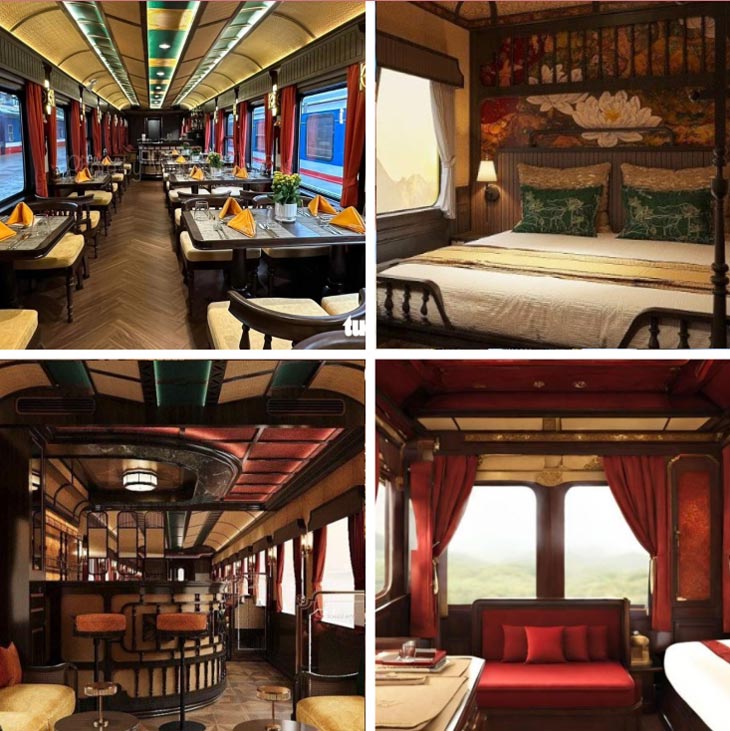
Yes. Vietnam has a handful of luxury options: private carriages attached to regular trains, such as Vic Sapa on the Lao Cai line and The Vietage by Anantara on the central coast, and SJourney, a full luxury train that runs multi-day journeys between Hanoi and Ho Chi Minh City.
Expect private cabins, meals included in the fare and, on multi-day trips, guided stops.
How Much Does the 8-Day Luxury Train in Vietnam Cost?
The eight-day luxury train is SJourney, which runs between Hanoi and Ho Chi Minh City over eight days and seven nights. In July 2026, standard cabins started at about VND 200 million (around US$7,600), while new suites priced at US$32,000 and an imperial suite at US$64,000 were due to debut in October 2026.
SJourney started service in December 2024 and also runs shorter four-day trips.
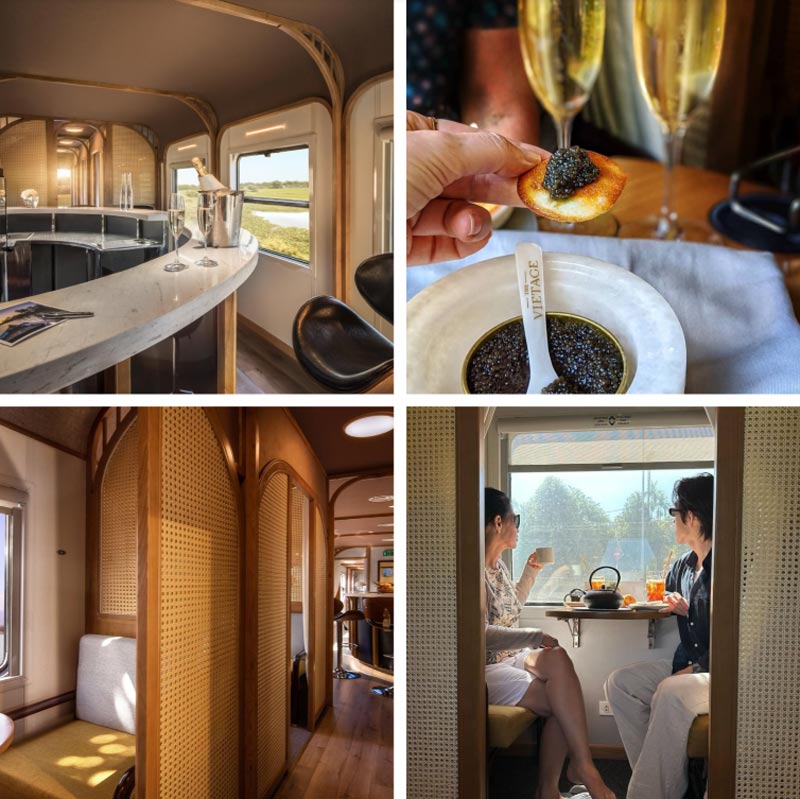
The Vietage by Anantara
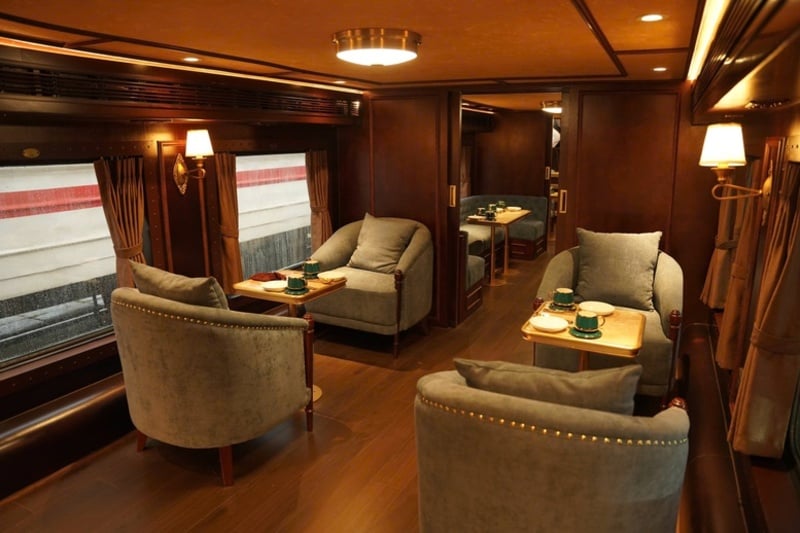
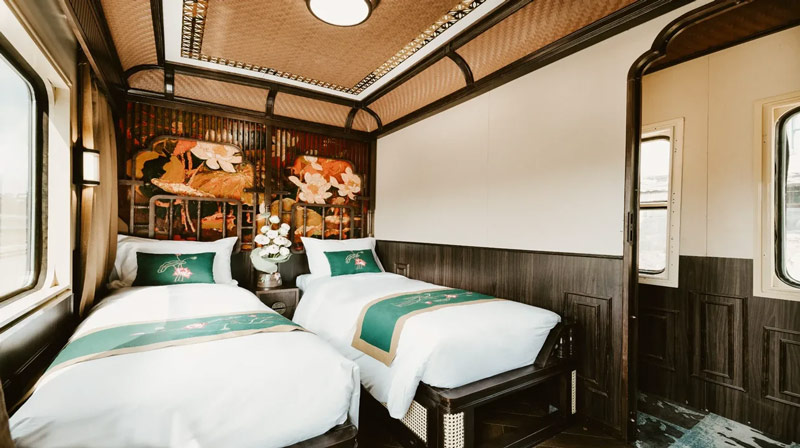
The Vietage is a luxury carriage attached to regular trains on the central coast, with six private booths for up to 12 guests. It runs from Da Nang to Quy Nhon in about six hours and from Quy Nhon to Nha Trang in about five; in 2026, one leg cost about US$450 per person.
The decoration of the “Indochina” train linking Danang and Quy Nhon
Ready to book one of these journeys? We'll help tailor every detail. Explore: Luxury Vietnam Tours
8. Frequently Asked Questions
Is train travel in Vietnam safe?
Yes, for most travelers, with normal precautions. Keep your passport, phone and money on you, store luggage under the lower bunk and lock the cabin door at night.
Is there food and Wi-Fi on Vietnamese trains?
Food trolleys sell drinks, snacks and simple rice meals, and some trains have a dining car. Wi-Fi is not reliable, so use a local SIM or eSIM. Sleeper cabins usually have power outlets.
What are the toilets like on Vietnam trains?
They vary from carriage to carriage and from trip to trip. You may find a sit-down toilet or a squat toilet, and cleanliness often drops on long night runs. Bring toilet paper and hand sanitizer, and try another carriage if the nearest toilet is in poor condition.
Can people with disabilities travel by train in Vietnam?
Yes, with planning. People with disabilities can travel by train in Vietnam, but the railway was not built with accessibility in mind. Platforms are low, so boarding means climbing a steep, narrow step, and we found no official confirmation of wheelchair-accessible cabins or toilets. Some travelers with limited mobility manage a soft-sleeper journey with assistance, ideally in a lower berth. Transport rules give people with disabilities and passengers aged 60 and over priority in ticket queues and ask operators to help passengers with severe disabilities board, so confirm what help is available with the railway or an agency before you book.
Can I hop on and off with one train ticket?
No. Vietnam has no rail pass, so you book a separate ticket for each leg, for example Hanoi to Hue, then Hue to Da Nang. Book each leg early on busy dates.
Can I take a train from Vietnam to Cambodia, Laos, Thailand or China?
Only to China. Vietnam Railways restored the Gia Lam to Nanning service on 25 May 2025, with through carriages to Beijing on some days, but check the current schedule. There are no international passenger trains to Cambodia, Laos or Thailand, so combine a train with a flight or a bus.
Should I book ahead for Tet 2027?
Yes. Tet falls on 6 February 2027, and the days around it are the busiest of the year on Vietnamese railways, as millions of people travel home. Tickets went on sale on 5 September 2026, and the railway treats 29 January to 17 February 2027 as the peak, with higher change and refund deductions. Book as soon as you know your dates.
Sources: dsvn.vn, momo.vn, Vietnam Railways official fanpage
>>> See more about things to do in Vietnam by month:
Hello, I'm visiting Vietnam in November and am planning on taking the sleeper train from Hanoi to Danang. Is there a website for booking that will let me choose whether I'm on the top or bottom bunk? I only know of the official site but was wondering if there are alternate options.
0Reply
K
Kampá Tour09 Sep 2024
Hello!
For booking the sleeper train from Hanoi to Danang, you can use 12go.asia, which is a convenient website for booking tickets. Alternatively, you can book directly at the train station. Another option is to use the MoMo app, which allows you to select your exact seat, including whether you'd like the top or bottom bunk.





















 Our team
 Our team
 Our team
 Our team

.jpg)
.jpg)
.jpg)
.jpg)
.jpg)
.jpg)
.jpg)




.jpg)
.jpg)
.jpg)
.jpg)


 Other
Other Add us as a preferred source











Hello!
For booking the sleeper train from Hanoi to Danang, you can use 12go.asia, which is a convenient website for booking tickets. Alternatively, you can book directly at the train station. Another option is to use the MoMo app, which allows you to select your exact seat, including whether you'd like the top or bottom bunk.
Have a nice day!