Cycling in Vietnam: The Ultimate Guide (Routes, Safety & Tips)
Visiting a country can be done in many ways: on your own, on a guided tour, or even on a cruise. However, choosing to ride a bicycle in Vietnam has become incredibly popular. It is a country that boasts countless sites and routes perfectly tailored for this type of adventure.
What could be better than admiring the scenery at your own pace and touring villages in an eco-friendly way, right when environmental awareness is growing globally? At Kampá Tour, we are deeply committed to responsible and sustainable tourism, designing our services with the greatest respect for local populations and the environment.
In this guide, we reveal our top routes and essential tips for cycling in Vietnam.
Written by Oliver PHUNG (Tour Guide)
Updated on Dec 15, 2025
0 comment
Oliver Phung is a Northern Vietnam-based tour guide and blogger. His favorite topics to write about include cuisine, culture, travel, and under-the-radar experiences. Oliver possesses a deep, detailed understanding of the region, from the indigenous culture of the Hmong in the Northwest to the highland lifestyle of the Tay in the Northeast. Whether he is exploring ancient architecture or geological landscapes, he is always eager to share his insights with his readers.
Beyond his work at Kampá Tour, he produces specialized travel content on platforms such as Reddit, Instagram, LinkedIn, and various other publications.
Yes. Vietnam is one of the best places to go riding since the real charm happens in the peaceful rice terraces and alleyways, not on the bustling highways.
Immersive Culture ("Slow Travel"): When you cycle, you are in the scene, unlike bus excursions that look at the nation through glass. You can smell the harvest, hear the bells of the buffalo, and high-five kids from the area. Stopping for a random coffee is the best way to really engage with locals.
Diverse Terrain (A Continent in One Country):Vietnam is 1,600 km long and has every kind of ride:
North: The majestic limestone mountains (Karst scenery) are as beautiful as the Alps.
Central: Beautiful coastal roads and old passes like Hai Van.
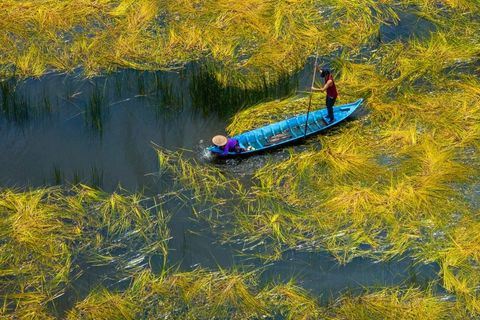
South: The Mekong Delta, which is a never-ending, flat green maze.
Best time to cycle in Vietnam
Region
Best Time
Weather Notes
NORTH (Hanoi, Ha Giang)
Oct – Apr
Cool and misty. Dec to Jan can be cold (around 10°C), ideal for climbing. Avoid July to August due to heavy rain and typhoons.
CENTRAL (Hue, Hoi An)
Feb – Aug
Sunny and dry. Best for beach and coastal rides. Avoid October to November during storm season.
SOUTH (Mekong Delta)
Nov – Apr
Dry and hot with blue skies and little rain. May to October is wetter but still rideable.
Top 5 Cycling Routes in Vietnam
Route 1: The Authentic North & Ha Giang Loop
Mai Chau, Ninh Binh, and Cat Ba and Ha Giang loop is best for flat valley rides, karst vistas, and ethnic culture in northern Vietnam.
Mai Chau
It's only a four-hour journey from Hanoi, yet it feels like a whole other universe. It is a green, quiet valley with beautiful views and traditional stilt cottages. This is the kind of spot where you can really slow down and enjoy the pleasure of living in the country.
You need to ride a bike to properly grasp this place. Pedaling through Thai ethnic villages and across rice terraces provides you a real, unvarnished look at how people live there. The trails here are easy to follow and not too steep, making this a great place to experience both culture and environment.
Gliding through the peaceful Mai Chau valley, where emerald rice paddies meet traditional Thai stilt houses
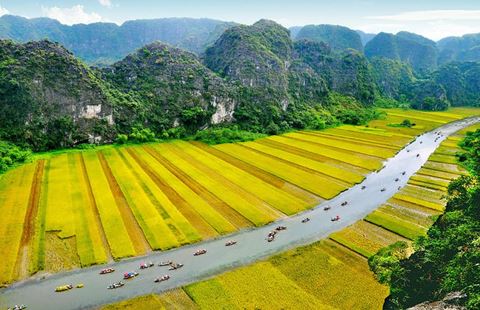
Ninh Binh is a great place to go cycling in Vietnam. Here, you may ride through "Halong Bay on Land," which is a rare chance to see beautiful limestone karsts while traveling through the pleasant, rural parts of the countryside.
The beautiful backroads are one of the best things about this place. There isn't much traffic, so you can ride your bike safely and at your own pace while taking in the stunning views surrounding you.
Pedaling through "Halong Bay on Land".
Suggested Itinerary: Take a trip to Tam Coc, stopping at rural towns along the way. Then, explore the old capital of Hoa Lu and find the Bich Dong Pagoda.
Going to Cat Ba Island from the mainland is a nice change of pace. The best part is definitely the peaceful trip to the fishing village of Viet Hai. It is a path that has a little bit of everything, from following the stunning coastline to going deep into the jungle. Travelers still love it for its wide-open views and many animals. It’s like a breath of fresh air.
Mountain biking on the coastal road of Cat Ba Island heading towards Viet Hai fishing village
While most travelers roar through this route on motorbikes, cycling the Ha Giang Loop offers a completely different dimension. Forget the engine noise; here, it is just you, your breath, and the majestic silence of the UNESCO Dong Van Karst Plateau.
This ride is not for people who are scared. You will cross famous passes like Ma Pi Leng, which winds between sharp limestone hills and Hmong communities hidden in the clouds. Every time you pedal, you have to work hard, but the vistas from the top are something that no motorbike rider really deserves.
Huế, the old imperial capital, is a great place to ride a bike since it has peaceful scenery and interesting cultural experiences.
Plan: Leave early in the morning to see the Imperial City (UNESCO). Ride your bike through traditional communities to see how incense sticks are made. Bike to the Mausoleum of Emperor Minh Mang, which is in a beautiful natural setting. Find Thuy Bieu village, which is famous for its grapefruit and pomelo, and then take a tour to Tam Giang Lagoon.
A cycling tour stopping at the historic Imperial City of Hue and green pomelo gardens in Thuy Bieu village
Agoda says that Hoi An is one of the top five places in Asia for cycling. The city is charming because it has a good mix of the historic center and the beautiful natural areas around it, which are easy to get to on two wheels.
In the morning, get on your bike and explore Hoi An's Old Town. You can see the Fujian Shrine, the Phuc Thanh Pagoda, the Tan Ky House, or the famed Japanese Bridge.
Afternoon: Get out of the city and into the country. Tra Que vegetable village is around thirty minutes from the center. This bustling village is known for its organic farming and gives you a real look at life in rural Vietnam. After that, ride your bike to the Cam Thanh coconut forest, which is full with waterways that look like the Mekong Delta. Finally, go to the beaches at An Bang or Cua Dai.
Riding a bicycle through the yellow streets of Hoi An Ancient Town and the organic vegetable fields of Tra Que
Hai Van Pass Frequently ranked among the world's top 10 coastal roads and famously dubbed by Top Gear as "a deserted ribbon of perfection," the Hai Van Pass is a bucket-list climb. Conquering this pass on a bicycle is challenging but rewarding. As you ascend, you are gifted with majestic views of the Son Tra Peninsula meeting the azure sea. Look down towards the cliff edge, and you might catch a cinematic glimpse of the North-South train winding its way through the jungle tunnels below.
Cyclist standing at the top of Hai Van Pass looking down at the winding coastal road and blue ocean
The Phong Nha - Ke Bang National Park, a UNESCO World Heritage Site, is home to some of Vietnam's most impressive natural wonders, from the imposing Paradise Cave to Son Doong (the world's largest cave). Cycling is an excellent way to appreciate all of this. Pedal through the quiet countryside, between rice paddies, and follow historic parts of the Ho Chi Minh Trail. Along the way, you can see buffaloes, geese, and local farms, giving you a real sense of rural life in Vietnam.
Cycling on the historic Ho Chi Minh Trail in Phong Nha Ke Bang National Park surrounded by limestone cliffs
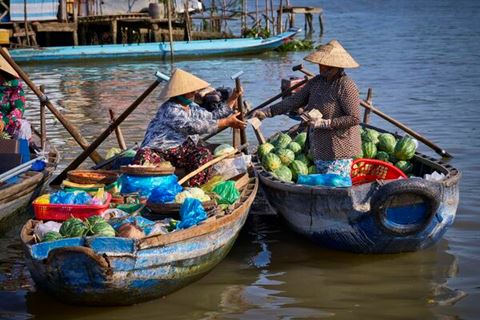
The Mekong Delta, just a few hours from Ho Chi Minh City, offers a huge variety of aquatic and terrestrial landscapes. Ben Tre, nicknamed the "land of coconuts", is a quiet and peaceful place where you can truly immerse yourself in Vietnamese nature. As you pedal along paths shaded by palm trees, coconut plantations, and green rice paddies, you will live an authentic experience, far from mass tourism. The cycling itinerary allows you to discover wonderful landscapes while exploring small local villages, where inhabitants lead a simple and serene life in harmony with their natural environment.
Cycling under the shade of coconut palms on a small concrete path in Ben Tre, Mekong Delta
Route 5: The Grand Tour (Cycling Vietnam North to South) (Keyword: Cycling the length of Vietnam)
For serious cyclists, riding across an entire country is the ultimate goal. In Vietnam, this dream is absolutely achievable by cycling from north to south, covering roughly 1,600 to 2,000 km from Hanoi to Ho Chi Minh City.
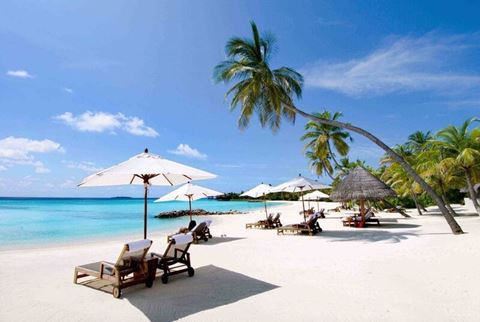
This epic journey usually takes between 14 and 21 days and offers a front-row view of Vietnam’s dramatic changes in climate, landscapes, and culture. You will pedal through the limestone mountains of the North, follow white sandy beaches along the Central Coast, and finish among the lush canals and waterways of the South.
Long distance cyclist riding along the Vietnam central coastline during a 14-day cycling Vietnam North to South tour.
Key highlights along the route: Hanoi → Mai Chau → Phong Nha → Hue → Hai Van Pass → Hoi An → Quy Nhon → Nha Trang → Da Lat → Ho Chi Minh City
💡 Local Expert Tip
Our route follows the historic Ho Chi Minh Highway and peaceful coastal backroads, instead of the busy Highway 1 featured in most guidebooks. This ensures a more scenic ride with far less traffic and a much safer cycling experience.
Difficulty Levels for Cyclists
Vietnam offers terrain for everyone, from Sunday riders to Tour de France wannabes. To help you choose the right itinerary, we categorize our routes into three levels:
🟢 Level 1: Easy / Leisure (The "Scenic" Rider)
This is the easiest level, which is great for people who are just starting out. It is great for families with little children, couples who want to get away from the noise of the city, or photographers who want to stop a lot to take pictures. In general, it's a fun and relaxed ride, not a workout.
Terrain: 90% flat paved roads or small village paths.
Daily Distance: 20–40 km.
Best Routes:
Mekong Delta: Gliding under coconut canopies with zero hills.
Tam Coc (Ninh Binh): Gentle rides between rice paddies and limestone cliffs.
Thẻ Media Gallery bicycle-in-vietnam-level-1
🟡 Level 2: Moderate / Active (The "Weekend" Warrior)
This level is great for people who ride their bikes on the weekends or who are in medium shape and work out a few times a week. You will get a little exercise, but you still want to have enough stamina for supper when you get back to your hotel.
Terrain: rolling hills, a mix of paved and dirt roads, and small climbs.
Distance each day: 50 to 70 km.
The best ways to go are:
Mai Chau: Ride your bike through verdant valleys with rice fields that are getting ready to harvest and easy hills.
Hue to Hoi An: A great mix of flat coastal roads, rolling hills, and winding trails through ancient craft communities.
Thẻ Media Gallery bicycle-in-vietnam-level-2
🔴 Level 3: Challenging / Pro (The "King of the Mountain")
This level is for people who love to ride. It makes your heart race and leaves you breathless as you go around hairpin turns and up steep mountain slopes. The prise? A rush of pure dopamine and the thrill of driving on the craziest roads in Vietnam.
Target Audience: Cyclists that have been riding for a while and are quite fit.
Terrain: steep mountain passes with slopes of 10 to 15 percent, hairpin twists, and high elevations.
Distance per day: 70 to 100 km or more (with a lot of climbing).
The best ways to get there are:
Ha Giang Loop: The hardest test of strength in the far North.
Hai Van Pass: A famous 20-kilometer climb from the sea to the skies.
Thẻ Media Gallery bicycle-in-vietnam-level-3
Guided vs. Self-Guided Cycling in Vietnam
Opting for self-guided cycling in Vietnam offers undeniable freedom, but it comes with unique challenges. While Google Maps works in cities, rural paths are often unmarked. The language barrier can make asking for directions difficult, and worst of all, finding specific spare parts (like a derailleur hanger or 700c tubes) in a remote village is nearly impossible. Local mechanics are wizards with motorbikes, but few have the tools for modern bicycle gears.
The "Supported Tour" Advantage
Booking a supported tour is not just about having a guide; it is about buying peace of mind.
The Support Van: Think of this as your mobile safety net. It carries your luggage, endless cold water, and a full toolkit. Most importantly, it offers flexibility. If the midday heat becomes unbearable or you face a dusty stretch of highway, you can simply hop in the van and skip to the scenic part.
Access & Culture: A local guide bridges the gap, helping you chat with locals and taking you to hidden trails that no map app can show you.
The Bikes
Your enjoyment depends entirely on your machine. We pride ourselves on providing the best bicycles in Vietnam for our terrain. We exclusively use high-quality Trek or Giant mountain or hybrid bikes with front suspension. Why? Because Vietnam’s roads are mixed, and you want tires that can handle both smooth tarmac and gravel paths comfortably.
The "E-Bike" Revolution: Worried about the mountains? We now offer e-bikes (electric assist). This is the great "equalizer," allowing couples or friends of different fitness levels to ride together perfectly. You still pedal, but the hills feel flat.
Accommodation: We select hotels based on logistics, not just stars. Our partner hotels are bike-friendly, offering secure overnight storage for equipment and often providing express laundry services, which are essential for getting your cycling kit ready for the next day.
Fuel Your Energy and Get to Know the Culture
As a foreigner undertaking a cycling trip in Vietnam, you must adapt to local customs, as strictly following the habits of your home country will not always lead to a fully rewarding journey on two wheels. Here are a few suggestions to help you blend more easily into Vietnamese life.
1. Roadside Energy: Forget the PowerBars
If you are a regular cyclist, you probably live on energy gels and whey protein. In Vietnam, do yourself a favor and throw them away. Vietnamese street food is tastier, cheaper, and healthier. Plus, you never have to pack a lunch, as food stalls line almost every kilometer of the road.
Here are my top 3 "fuels" for cyclists:
Banh Mi (The Perfect Cycling Fuel): It is the ultimate balance of nutrition: carbs (crispy baguette), protein (pâté, meat, or egg), and vitamins (pickled veggies). Best of all, it fits perfectly in your jersey pocket.
Ca Phe Sua Da (Rocket Fuel): Vietnamese iced coffee with condensed milk. The potent mix of strong caffeine and sugar helps your legs pedal faster than any pre-workout drink.
Nuoc Mia (Nature's Gatorade): Sugarcane juice, freshly pressed with a hint of kumquat (calamansi). It is an instant natural electrolyte replenisher, refreshing, cheap, and better than any bottled sports drink.
Thẻ Media Gallery fuel-your-energy
2. Dress modestly at temples ("The Lycra Rule").
Lycra is essential for the ride. It reduces wind resistance, and that padding is a lifesaver on long days. But while form-fitting gear is perfect for the road, it is not suitable for stopping at religious sites like temples or pagodas. Vietnam is culturally conservative, and walking into a sacred space in skintight gear is considered disrespectful.
Vietnamese people are very friendly, so it would be inappropriate to behave improperly
So, the solution is: always carry a lightweight sarong or a pair of loose shorts in your handlebar bag. Slip them on quickly before entering. Remember: "Respect opens doors".
Next, prepare to feel like a rockstar. In rural areas, children will line the streets shouting "Hello!" and running out for high-fives. Do not be shy. Smile and wave back. Connecting with the locals is often the absolute best part of the trip.
You now have the best routes and itineraries in hand. But before you hit the road, we must address the most critical topic: Traffic Safety.
One of the most common questions we receive is: "Can I ride a bicycle in Vietnam?" The answer is: Absolutely, YES.
In fact, cycling is one of the safest ways to navigate because traffic speeds in Vietnam are generally low. However, looking at the flow for the first time can be terrifying. Here is how to master the "organized chaos."
The "River" Theory Traffic in Vietnam flows like water in a river. It doesn't follow rigid lanes; it flows around obstacles.
The Golden Rule: Be Predictable. Do not make sudden turns or stop abruptly. Keep a steady pace and a straight line. If you are consistent, the thousands of motorbikes behind you will flow around you like water around a rock.
Decoding the "Honk" In the West, a honk usually means aggression ("Get out of my way!"). In Vietnam, it is simply a notification ("Hi, I am passing you on the left").
Advice: Don't get angry or startled when you hear honking. It is a safety feature, a kind of sonar system letting you know where everyone is.
Traffic in Vietnam will be a big challenge, but it's also a buff and adrenaline-pumping experience
The Hierarchy of Size (Priority) Forget the "Right of Way." In Vietnam, the Law of Physics rules the road: The Bigger Vehicle Wins.
Trucks & Buses: They are the kings of the road. They expect you to move. Never try to race them.
Cars & SUVs: Give them space.
Motorbikes & Bicycles: We share the shoulder.
Caution: Always yield to trucks and buses, even if you technically have the right of way. Safety first!
The Visa Revolution (90-Day E-Visa): Great news for adventurers! As of August 2023, Vietnam officially grants 90-day E-visas to citizens of all countries and territories.
Previously, the 30-day limit made cross-country cycling a rush. Now, you have three full months. This is perfect for our Grand Tour (North to South), allowing you to cycle at a relaxed pace and still have weeks left to relax on a beach in Phu Quoc or Con Dao.
You can apply online at the official immigration portal (avoid scam agencies).
Packing List: Survive the Tropics Vietnam is hot and humid. Your packing strategy should be: Lightweight & Breathable.
🩳 Padded Shorts (Bibs): Non-negotiable. Whether you are riding 20km or 100km, a good pair of padded shorts will save your backside from the bumps of rural roads.
👕 "No Cotton" Rule: Cotton absorbs sweat and stays wet, which is uncomfortable in high humidity. Bring synthetic, moisture-wicking jerseys.
⛑️ Helmet: Many bicycle tour provides high-quality standard helmets. However, if you have a specific fit or plan on a long-distance trip, we recommend bringing your own for maximum comfort.
👟 Shoes: You don't need professional clipped shoes (unless you want to). Sturdy sneakers or breathable hiking sandals are perfect for stopping to take photos.
FAQs
Q: Is it safe to cycle in Vietnam?
A: Yes, it is statistically safer than riding a motorbike. Traffic speeds in Vietnam are generally low (30-40km/h in cities). However, safety depends heavily on your route. Riding solo on Highway 1 can be stressful due to trucks.
Q: How much does it cost?
A: It depends on your style.
Rentals: If you are looking for a bicycle in Vietnam price for daily rentals, expect to pay $5–$15 USD/day. Be careful: $5 usually gets you an old city bike; $15+ gets you a decent Trek/Giant mountain bike.
Guided Tours: Prices vary based on accommodation and support levels. A fully supported tour (with mechanic, van, hotels, and food) ensures you don't encounter hidden costs or mechanical disasters.
Q: Can I rent a bike easily?
A: Yes and No.
In Tourist Hubs (Hanoi, Hoi An, HCMC): Rental shops are everywhere.
In Rural Areas: Almost impossible. You cannot count on finding a bike rental in a remote village in Ha Giang or Cao Bang.
Planning your trip?
Save time and get expert advice for FREE!
✅ 15 years of local experience
✅ Save up to 40 hours of planning
✅ Travel stress-free from start to finish
Book your free consultation today!









 Our team
 Our team
 Our team
 Our team



.jpg)


 Other
Other Add us as a preferred source