Hello in Lao? Top 10 Lao basic phrases you should know
When visiting a new country, learning a few local greetings is always a thoughtful gesture, and Laos is no exception. While you don’t need to speak Lao fluently before your trip, knowing a few basic words and phrases can go a long way. A simple greeting in the local language often leaves a warm impression and helps you connect more easily with locals.
Below are some common ways to say “hello” in Lao, depending on the level of formality and the situation. Learn how to greet people like a local with tips from Preetika, who has lived in Laos for five years.
Written by Preetika Narula (Local Expert)
Updated on May 08, 2026
0 comment
At 35 years old, Preetika is an enthusiastic explorer deeply connected to Thailand, Laos and Cambodia's rich heritage. As a Bangkoker, her local insights and experiences imbue authenticity into her narratives. She discovers solace within the pages of a book as much as amidst Southern Asian vibrant landscapes and bustling street markets. With an ardent passion for travel and a profound affection for literature, Preetika effortlessly integrates her personal adventures into captivating stories, providing a perspective uniquely rooted in local experience.
To greet in Laos, the most common way is to say "Sabaï dii", which means "hello" in English. "Sabaï dii" is a common greeting, Laotians often greet guests with a smile.
Hello: Sabaï dii
Good evening: None lap fan dii
Good afternoon: Sabaï dii ton suaai
Good night: naitonkangkhun thidi
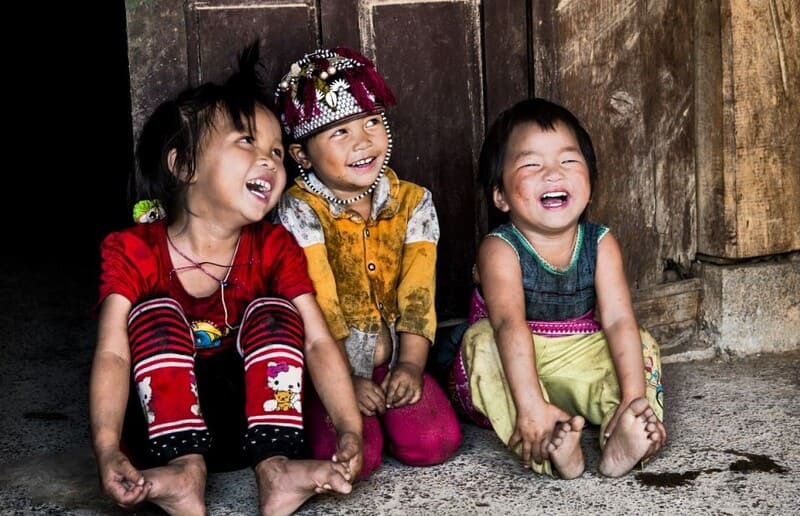
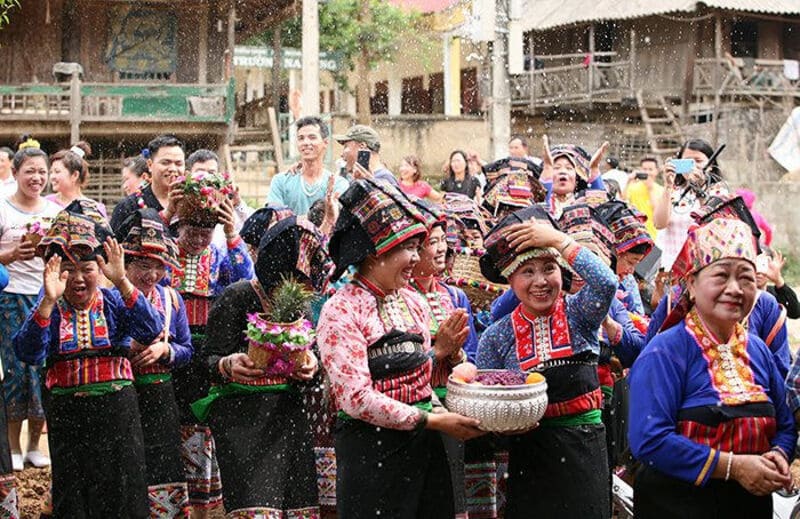
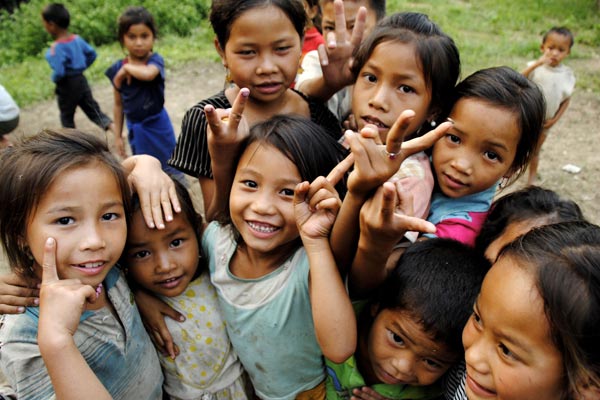
Laotians welcome with a smile.
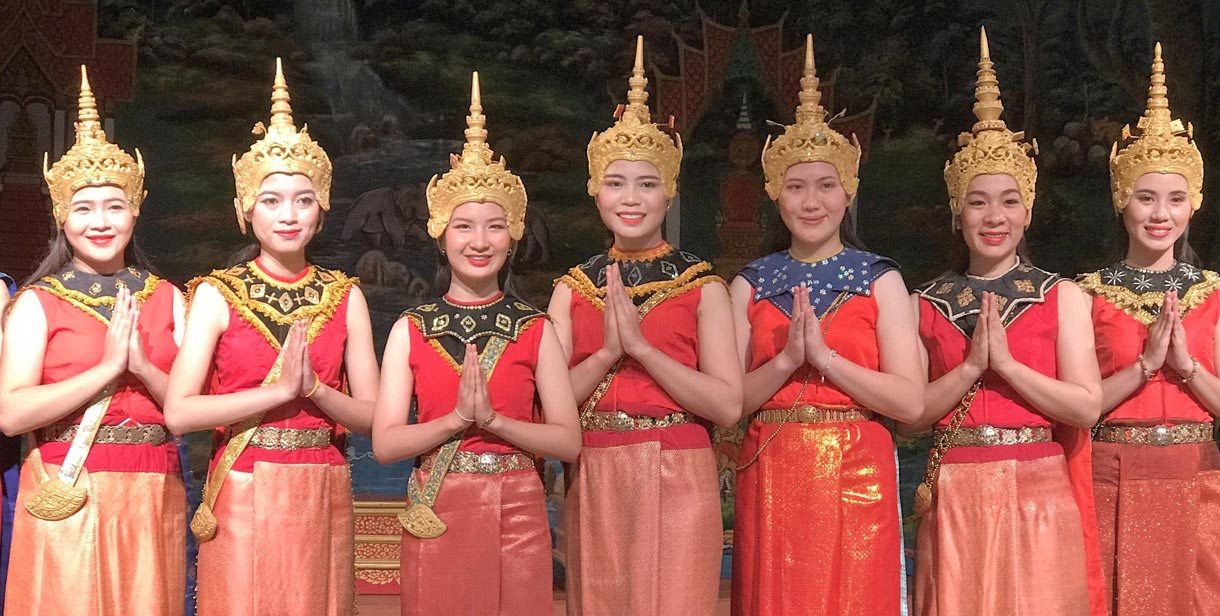
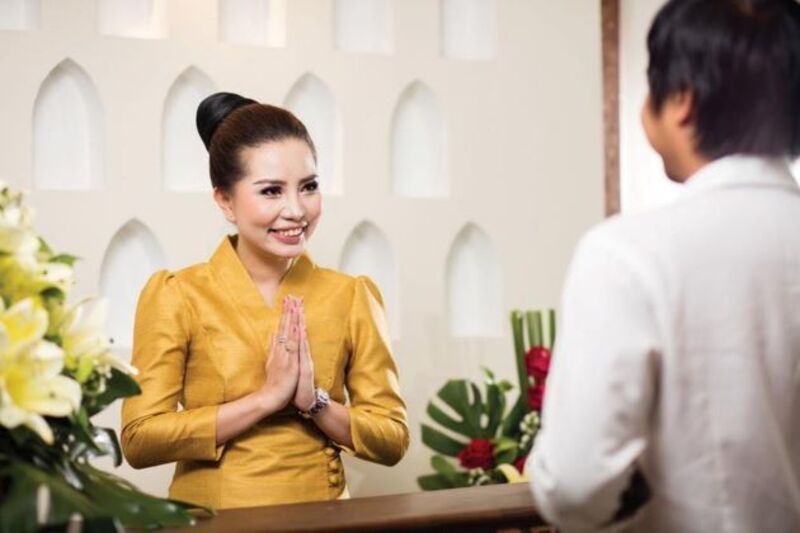
Lao people traditionally greet each other by joining their palms and bowing. The practice of Lao people greeting others by joining their hands in a prayer gesture is known as "nop."
2. Lao phrases and basic vocabulary to know
If you're traveling to Laos, learn these phrases to communicate with locals and show your respect for their culture:
Common words:
English
Laos
I
Khoi
You, you
Chao
He, she
Lao
Welcome
Nyinditonhab
How are you ?
What do you think?
Very well, thank you, and you?
Sabaï dii, khop tchaï, lè tchao dè?
Thank you, I'm fine
Khoy sa bai di khob chai
What's your name ?
Who are you, what are you?
My name is…
What is it?
It was nothing
Bor pen yang
Yes
Jao
No
Baw
Please
Khaluna
Bye
Sohk Dee Deuh
Good day !
My thidi!
Sorry
Khaw Thoht
Phrases for shopping:
English
Laos
What is this ?
An nee maen yang?
How much is it?
Laka tao dai?
It's very cheap
Bo peng
It's too expensive!
Peng photo
Can you lower the price?
What is the difference?
I would like to buy... this one!
Khaphachao yakcha su... thini
I love it/I hate it
Khaphachao hak / Khaphachao sang
Money
Ngoen
I just watch
Khaphachao phiangaet sokha
Phrases for transport:
English
Laos
I would like to go…
Yak paï...
Plane
Gnyone
Train
Kanfukobhom
Taxi
Taxi lot
Bus
Lot me
Motorcycle
Lot chak
Car
Lot keng
Bike
Lot thiip
Boat
Uh
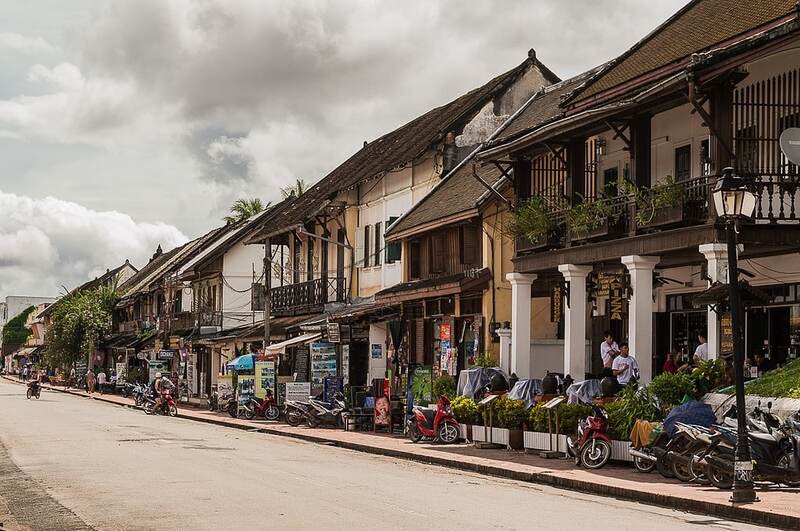
Wander through the ancient streets of Luang Prabang
Phrases for directions:
English
Laos
I'm lost
The long way to go
Can you help me?
Suay Khoy Dai Boh
I want to go to Xiengkhuang
Khoy yak pay Xieng khoang.
Where is…? / How to get to…?
Bonthi pen...? / vithikan pai...?
Bank
Thanakane
Station
Satannii
City center
Meuong
Hotel
Hong hem
Hospital
Hong Mo
Stop
yut
Here
nee
North/South/East/West
Thit neua / thit taï / Thit tavén ok / Thit tavén tok
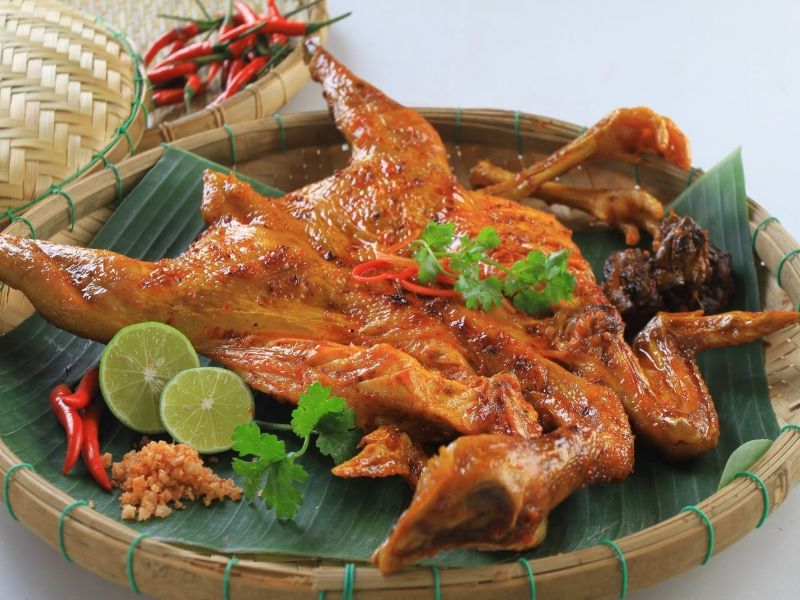
Ping Kai Savannakhet, one of the famous Lao cusines
Health / Emergency / Safety:
English
Laos
I need to see a doctor
Khaphachao choapentong paihamo dai
Call a doctor/ambulance
Othha thanmo / lot ohngmo
Where is the hospital?
Hong mo you know?
I don't feel very well
Khoi bo sabai
I have pain here
Khoï penn tchèp you nii
Where is the restroom ?
Hong name you know?
Help!
Suanyheu
Police
Tamlouat
Hazard
Antalai
I am lost
Khoi long thang
3. Practice 'nop': Greetings and respect in Lao culture
A "nop" can be used as a sign of respect for things as well as people. This is usually done when passing sacred places such as temples or other things of religious significance.
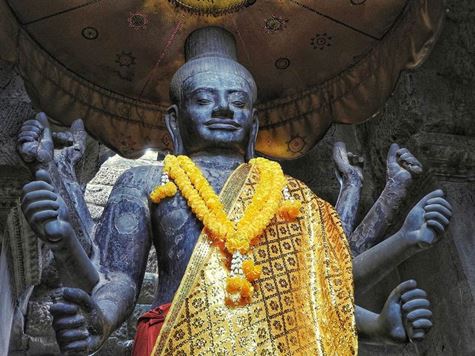
When locals encounter a Buddha or monk statue, they kneel down and do the "nop" from this position (men sit on their heels and women put their feet to the side), accompanied by a bow almost touching the ground. When their head almost touches the ground, they place their palms on the ground (right hand first), then raise their body into a squatting position.
In Lao culture, the socially inferior person usually bows first, while the elder or higher-status person responds quickly out of politeness. The higher the hands and the lower the head, the greater the respect.
For equals, hands are placed at mouth level; for higher-status people or monks, at nose level; and for younger or lower-status people, at chin level.
People often say “Sabaidee” with a respectful gesture to show politeness and modesty.
Men usually greet other men with a handshake and a slight nod. Women, or men greeting women, often press their hands together below the chin with a small bow.
Lao people also use respectful titles for elders or people of higher status, such as “Than” for men and “Than Nang” for women. Older people may also be addressed with family-like terms such as uncle, aunt, grandfather, or grandmother to show respect.
When you are in Laos, you will be impressed by the way people greet you
It is considered polite for younger people to greet elders first and use honorifics.
People of the same age or younger may be addressed by their first name without using titles.
Note: Western influence can be seen in Laos, and Lao men often greet each other with a handshake. However, physical contact between men and women is still uncommon, as Lao culture values modesty and limited touching between the opposite sex.
6. Other practical information: most used foreign language in Laos
The official language of Laos is Lao, but Laotians also use Thai, English, and French. French was introduced to Laos in the 19th century, but its influence was mainly limited to Vientiane. During the period of French rule in Indochina, French became the primary language of government officials and the Lao elite, but it was not widely spoken in rural areas.
The official language of Laos is Lao, but Laotians also use Thai, English, and French
The use of English language has also increased significantly in recent times. The growth of its use comes as a direct result of globalization, economic prosperity, and Laos' stronger relations with the global community.
English is now taught as a second language in most schools, especially in urban areas, and is considered a vital tool for accessing global opportunities.
It is commonly used in business, tourism, and higher education, particularly in institutions that collaborate with foreign universities or international organizations.
English is now taught as a second language in most schools, especially in urban areas
Laos is a beautiful country, rich in culture and history, which has become one of the most popular destinations in Southeast Asia. Lao people are known for their kindness and politeness. If you are planning to travel to Laos, it is important to greet in Lao and respect local customs.
A simple greeting with clasped hands and a smile is enough to start an intimate conversation with the locals. Learning a few Lao words like "hello" and "thank you" will earn you great sympathy from them.
We hope that the information in this article will be useful for you to have an unforgettable travel experience in Laos.
Planning your trip?
Save time and get expert advice for FREE!
✅ 15 years of local experience
✅ Save up to 40 hours of planning
✅ Travel stress-free from start to finish
Book your free consultation today!



 Our team
 Our team
 Our team
 Our team





.jpg)



 Other
Other Add us as a preferred source