1. What is the food like in Cambodia and Thailand?
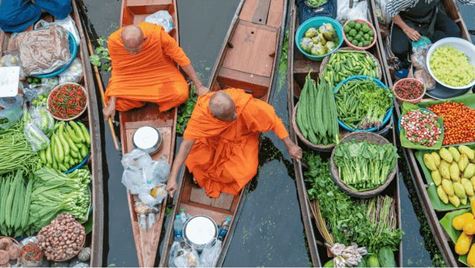
The two cuisines are related but not the same, and the contrast is one of the pleasures of this trip. Cambodian cooking is milder and often sweeter, built around dishes such as fish amok, a coconut curry steamed in banana leaf, and lok lak, stir-fried beef served with rice and a pepper and lime dip. Thai food is bolder and more layered, from pad thai and green curry to the sour and spicy salads of the north. Cooking classes are available in both countries and can be added to the itinerary if you would like to learn the dishes yourself.
2. Is this trip suitable for families with children?
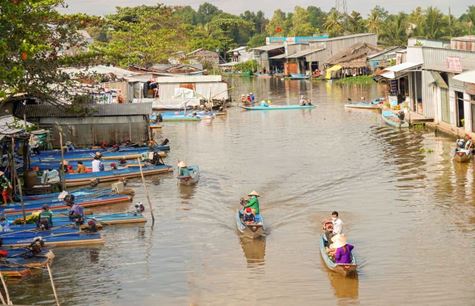
Yes, and because every trip is private the pace, the drives and the amount of walking are set around the ages of the children travelling. Where families are travelling together we try to arrange family rooms, connecting rooms or rooms next to each other, though not every hotel has them and they are in high demand in July and August, so booking early helps. Most three and four star hotels can provide a cot, confirmed hotel by hotel once the reservations are made. Alongside the private car, itineraries can include boats on the Tonle Sap, bicycles around the Angkor park and longtail boats in the south of Thailand, which usually keep younger travellers more interested than another day in the car.
3. When is the best time to travel to Cambodia and Thailand?
November to March suits both countries and is the easiest window to plan around. Cambodia's dry season runs from about mid-October to April, and Thailand's from November to February, which is also its busiest and most expensive period.
Thailand's rains fall from mid-May to mid-October and are heaviest in August and September: if you travel then, the Gulf islands such as Koh Samui usually have better weather than Phuket and Krabi.
Cambodia in the rainy months is still workable, with short afternoon showers, greener countryside and noticeably fewer visitors at Angkor.
4. How do you travel between Cambodia and Thailand?
Normally by air. Siem Reap and Phnom Penh both have direct flights to Bangkok of roughly an hour, which is the simplest way to join the two halves of the trip. There is also a land border at Poipet on the road between Siem Reap and Bangkok; it can be crossed but the journey is long and the formalities are slow, so we only suggest it when the rest of the route makes it worthwhile.
5. How many days do you need for Cambodia and Thailand together?
Ten days is the practical minimum: three or four days for Siem Reap and the Angkor temples, then Bangkok with one other part of Thailand. Two weeks lets you add either the northern hills around Chiang Mai and Chiang Rai or a stretch on the southern coast. Eighteen days is what you need to do both halves of Thailand, north and south, alongside Cambodia without moving every second day.
6. Do we need visas for Cambodia and Thailand?
The two countries are different, so check both.
For Cambodia, travellers from the United States, Canada, the United Kingdom, Australia and most EU countries need a visa: either on arrival, currently 30 USD for a single-entry tourist visa allowing 30 days, or in advance at the official site evisa.gov.kh, which is only valid at certain airports and land crossings. Separately from the visa, everyone entering Cambodia must also submit the free e-Arrival card at arrival.gov.kh within seven days before arrival: it is not a visa and does not replace one.
For Thailand, most travellers from those same countries enter without a visa, but the rules changed on 15 September 2026 and the visa-free stay is now 30 days rather than 60; one extension of up to 30 further days can be requested at a Thai immigration office for 1,900 baht. We help with these procedures when you book, but entry rules change, so please confirm the current position for your own passport before booking flights.
Last checked: September 2026.
7. Can the itinerary be customised?
Yes. Every trip we run is private, so the itineraries on this page are starting points rather than fixed departures. You can change the order of the countries, swap destinations, lengthen or shorten any part of the route, and choose the standard of hotels. A travel consultant works through it with you until the plan fits your dates, your interests and your budget.
8. How is the price calculated and what does it include?
Quoted prices are based on a group of four travellers staying in standard hotels, and they do not include international flights. Because the trips are private, the final price depends on when you travel, the category of hotels you choose and above all the number of people in your group: the same itinerary costs less per person for a group of six than for a couple. On a route crossing three or four countries the internal flights make up a large share of the total, so the dates and the order of the countries affect the price more than on a single-country trip.
9. When is the best time to travel across these four countries?
November to March is the window that works across all four. Cambodia, Laos and Thailand share a broadly similar pattern, with a dry season running from about November to April and rains from May to September or October. Vietnam is the complication, because it runs north to south through several climate zones and the regions do not share a season:
October to November and mid-March to May are usually the most comfortable overall there. Travel in the rainy months still works, since showers are normally short and fall in the afternoon, and you will find greener landscapes, lower prices and fewer people at the main sites.
10. How do you travel between the countries, and what about baggage on internal flights?
Between countries we normally fly, because the distances are long and the overland crossings eat into your time. Within Vietnam we use Vietnam Airlines or Bamboo Airways and avoid low-cost carriers, so that the service and the baggage rules are predictable. Allowances differ by airline and route, but typically run from 7 to 12 kg of hand luggage and 20 to 23 kg checked, with excess charged per kilo at check-in. The exact carriers, routings and allowances for your trip are confirmed with your final itinerary.
11. Do all of these tours include Laos?
No, and it is worth checking the itinerary before you choose. Some of the trips on this page cover all four countries, while others combine Vietnam, Cambodia and Thailand without Laos. The destination list under each tour shows exactly where it goes. If you want Laos included and the itinerary you like does not have it, we can add Luang Prabang or Vientiane to the route, which usually means three or four extra days.
12. Do we need visas for Vietnam, Cambodia, Laos and Thailand?
Each country has its own rules, so check every one on your route.
For Vietnam, citizens of the United Kingdom and of most western European countries enter without a visa for up to 45 days, while citizens of the United States, Canada, Australia and New Zealand need an e-visa, applied for online through the Vietnamese immigration authorities, which allows up to 90 days with multiple entries.
For Thailand, most travellers from Europe, North America and Australia enter without a visa, but the rules changed on 15 September 2026 and the visa-free stay is now 30 days rather than 60. For Cambodia, all of these nationalities need a visa, either on arrival at 30 USD for a 30-day stay or in advance at evisa.gov.kh, and separately everyone must also submit the free e-Arrival card at arrival.gov.kh within seven days before arrival, which is not a visa and does not replace one.
For Laos, all of these nationalities also need a visa, available on arrival or in advance at laoevisa.gov.la, allowing 30 days with fees that depend on your nationality. We help with these procedures when you book, but entry rules change, so please confirm the current position for your own passport before booking flights.
Last checked: September 2026.
13. How many days do you need for a multi-country trip across the region?
Fourteen days is the practical minimum for three countries, and at that length each stop is short. Eighteen to twenty-one days is the length most travellers choose: enough for Vietnam from north to south, the Angkor temples, and Bangkok with either the northern hills around Chiang Mai or a few nights on a southern island. Adding Laos as a fourth country needs three weeks or more, because Luang Prabang deserves at least three nights and the flights between countries take up time of their own. Below two weeks we would normally suggest dropping a country rather than compressing them all.
14. How is the price calculated and what does it include?
Quoted prices are based on a group of four travellers staying in standard hotels, and they do not include international flights. Because the trips are private, the final price depends on when you travel, the category of hotels you choose and above all the number of people in your group: the same itinerary costs less per person for a group of six than for a couple. Send us your dates and group size and we will put together a detailed quote.
15. How do you travel between Laos and Cambodia, and how do you get around?
Between the two countries we normally fly, because the overland route is very long: there are direct flights from Luang Prabang, Vientiane and Pakse to Siem Reap and Phnom Penh. Crossing by land in the far south of Laos is possible and we use it when the itinerary already takes you to the 4000 Islands. Within each country most transfers are by private car with a driver, and the itineraries also include boats on the Mekong and on Tonle Sap, bicycles in Luang Prabang and around the Angkor park, and a cyclo ride in Phnom Penh where it suits the day.




 Our team
 Our team
 Our team
 Our team