1. How is the price calculated and what does it include?
Quoted prices are based on a group of four travellers staying in standard hotels, and they do not include international flights. Because the trips are private, the final price depends on when you travel, the category of hotels you choose and above all the number of people in your group: the same itinerary costs less per person for a group of six than for a couple. On a three-country route the internal flights make up a large part of the total, so the dates you choose affect the price more than on a single-country trip.
2. Can the trip start in one country and finish in another?
Yes. Trips can begin in Hanoi, Ho Chi Minh City, Siem Reap, Phnom Penh or Luang Prabang and end in any of the others. Because everything is private there are no fixed departures, so the direction is usually decided by which international flights suit you best, which often saves both time and money.
3. Can we add Thailand to the trip?
Yes. Thailand borders both Laos and Cambodia and can be added by air or overland. Allow at least five to seven extra days: with less than that Thailand becomes a stopover rather than a proper part of the trip. Bangkok is also a common international gateway, so for some routes adding it costs less time than you would expect.
4. When is the best time to travel to Vietnam, Cambodia and Laos together?
November to March is the window that works across all three. Cambodia and Laos share a clear pattern, with a dry season from about mid-October to April and rains from May to September. Vietnam is the complication: it runs 2,000 km from north to south and the regions do not share a season, so October to November and mid-March to May are usually the most comfortable overall.
If you are travelling in the rainy months the trip is still workable, as the showers are normally short and fall in the afternoon, and you will find greener landscapes, lower prices and far fewer people at Angkor.
5. How do you travel between Vietnam, Cambodia and Laos?
Mostly by air, because the distances are long: flights of about an hour connect Hanoi, Ho Chi Minh City and Da Nang with Siem Reap, Phnom Penh, Luang Prabang and Vientiane. Between southern Vietnam and Phnom Penh there is also the option of going up the Mekong by boat, which turns the border crossing into part of the trip. Overland crossings exist on all three borders but the drives are long, so we use them only where they genuinely add something to the route.
6. How many days do you need for Vietnam, Cambodia and Laos together?
Fourteen days is the practical minimum for all three countries, and at that length each stop is short: roughly a week in Vietnam, then three days for the Angkor temples and three for Luang Prabang. Three weeks is the length that lets the trip breathe, with time for Vietnam from north to south, for Phnom Penh as well as Siem Reap, and for Vientiane or the Mekong in southern Laos alongside Luang Prabang. Below two weeks we would normally suggest dropping one country rather than compressing all three.
7. Do we need visas for Vietnam, Cambodia and Laos?
The three countries have separate rules, so check all three.
For Vietnam, citizens of the United Kingdom and of most western European countries enter without a visa for up to 45 days, while citizens of the United States, Canada, Australia and New Zealand need an e-visa, applied for online through the Vietnamese immigration authorities, which allows up to 90 days with multiple entries.
For Cambodia, all of these nationalities need a visa: either a visa on arrival, currently 30 USD for a 30-day stay, or an e-visa from the official site evisa.gov.kh. Separately from the visa, everyone entering Cambodia must also submit the free e-Arrival card at arrival.gov.kh within seven days before arrival: it is not a visa and does not replace one.
For Laos, all of these nationalities also need a visa, available on arrival at the main airports and land borders or in advance at laoevisa.gov.la, allowing 30 days and extendable twice up to 90 days; Lao fees depend on your nationality. We help with these procedures when you book, but entry rules change, so please confirm the current position for your own passport before booking flights.
Last checked: September 2026.
8. What kind of cultural experiences can I expect on a Vietnam Cambodia and Laos tour?
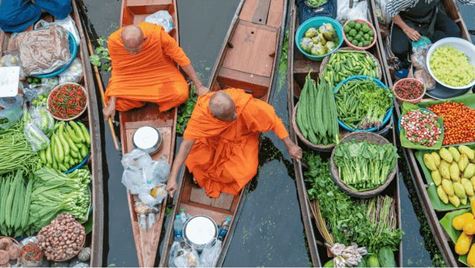
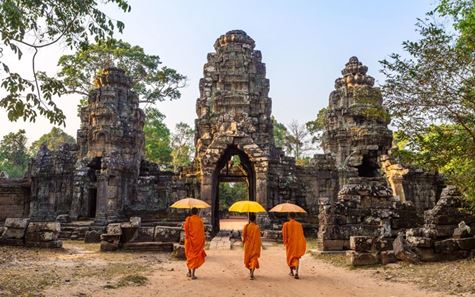
A Vietnam Cambodia and Laos tour offers rich cultural experiences across three distinct but interconnected cultures. In Vietnam, you can visit ancient temples, traditional villages, and participate in local festivals. In Cambodia, exploring the Angkor Wat complex provides a deep dive into Khmer history and architecture, while visits to local markets and villages offer insights into contemporary Cambodian life. In Laos, you can experience the serene Buddhist culture in Luang Prabang, explore traditional crafts in local villages, and participate in almsgiving ceremonies. Across all three countries, engaging with local communities, tasting traditional cuisine, and learning about their histories will provide a comprehensive cultural experience.
9. Are those tours suitable for solo travelers?
Yes, those trips are suitable for solo travelers and offer a safe and enriching experience. These countries are known for their friendly and welcoming locals, making it easy to meet new people and connect with fellow travelers. Many tour operators offer group tours that are ideal for solo travelers, providing companionship and the safety of traveling in a group. Additionally, solo travelers can customize their itineraries to focus on their interests, whether it's cultural exploration, adventure activities, or relaxation. With well-developed tourism infrastructure and numerous hostels and guesthouses, solo travelers will find it convenient and enjoyable to tour these countries.
10. What type of cuisine can I expect on this tour?
On this tour, you can expect to enjoy a diverse and flavorful array of cuisines. In Vietnam, savor iconic dishes such as pho (noodle soup), banh mi (sandwich), and fresh spring rolls. In Cambodia, try amok (coconut fish curry), lok lak (stir-fried beef), and traditional Khmer desserts. Laos offers unique flavors with dishes like laap (minced meat salad), tam mak hoong (papaya salad), and khao niaw (sticky rice). Street food is also a highlight in all three countries, providing an authentic taste of local flavors and culinary traditions. Each country's cuisine reflects its cultural heritage and uses fresh, local ingredients.



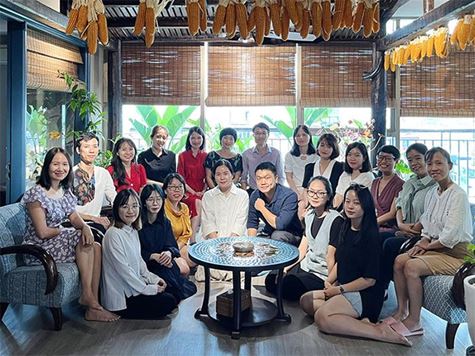
 Our team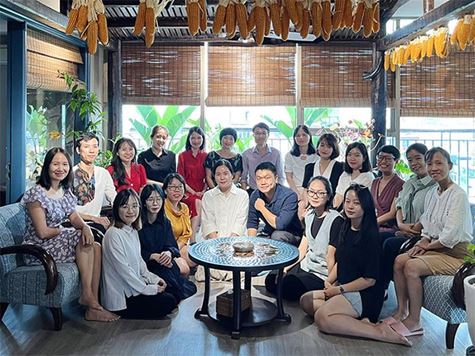
 Our team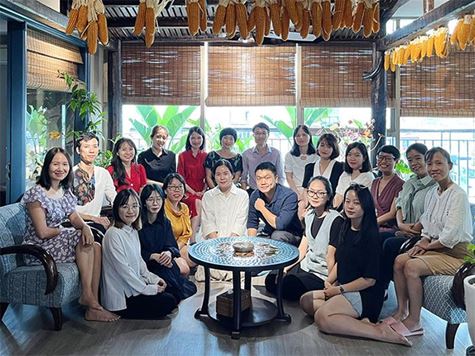
 Our team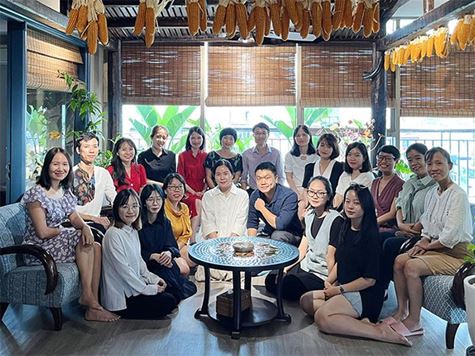
 Our team